
Last updated: July 20, 2026

Quick Answer
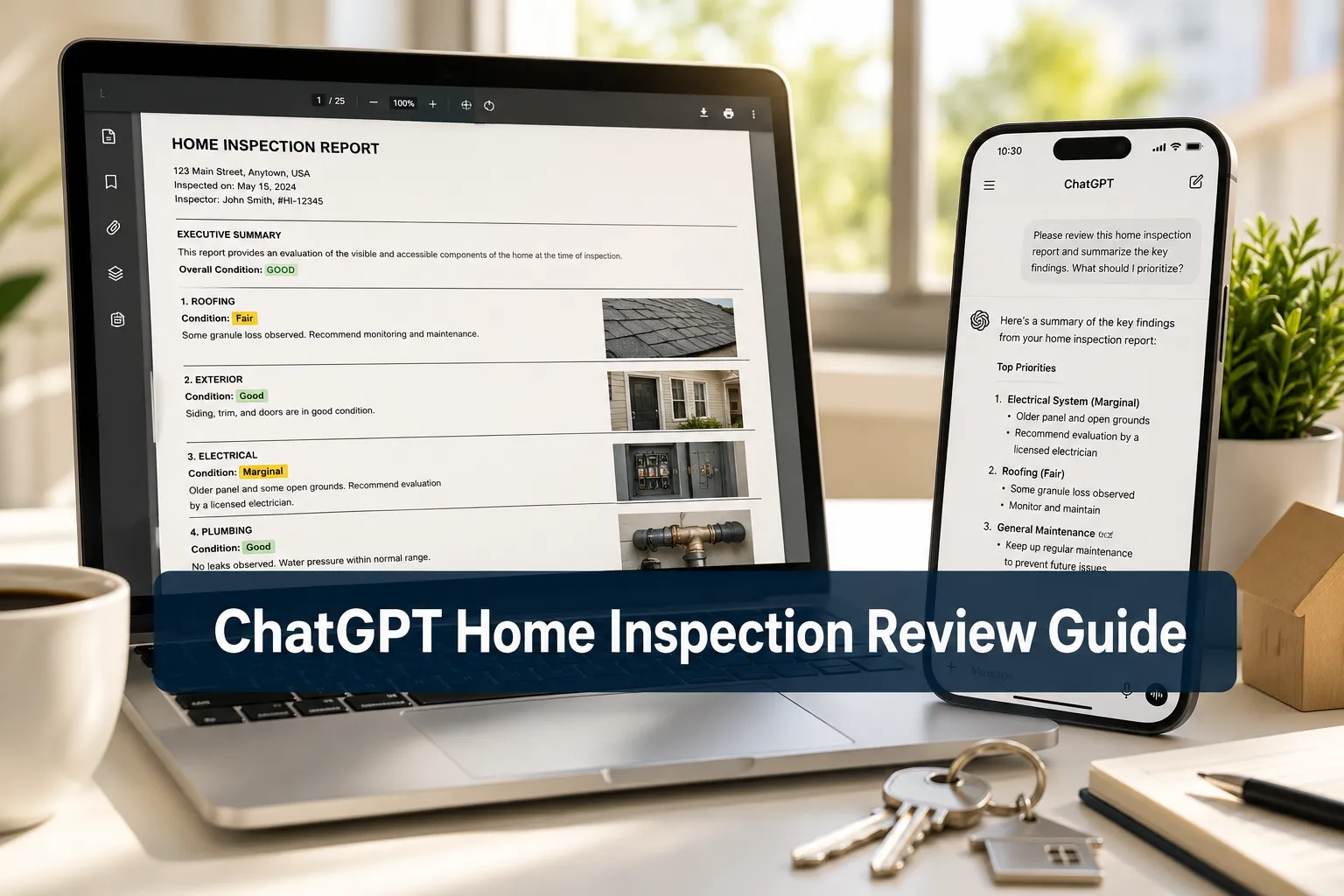
A ChatGPT home inspection review involves uploading your PDF inspection report to ChatGPT (or Claude) and using targeted prompts to summarize findings by severity, flag safety hazards, estimate repair costs, draft repair requests, and generate questions for your inspector. This AI-powered second opinion helps first-time buyers decode technical jargon and prioritize issues, but it cannot replace a licensed professional's judgment on structural integrity, code compliance, or deal-breaker defects. Use AI as a translation tool and verification assistant, not as your sole decision-maker.
Key Takeaways
- Upload your home inspection PDF directly to ChatGPT-4 or Claude (both support document analysis in 2026) to get instant summaries and explanations of technical findings.
- Run five core prompts in sequence: severity summary, safety flag review, repair cost estimates, negotiation draft, and inspector follow-up questions.
- AI tools excel at translating inspector jargon (efflorescence, GFCI, flashing) into plain English and organizing scattered findings into actionable priority lists.
- ChatGPT exhibits "sycophancy bias", if you frame your prompt as "I think I overpaid," the AI will mirror your concern and agree, even without evidence. Always prompt neutrally.
- Repair cost estimates from AI are educated guesses based on national averages; get three local contractor bids for any item over $1,000 before negotiating.
- Critical structural, electrical, and safety issues flagged by your inspector require verification by a licensed specialist (structural engineer, electrician, roofer), not just AI confirmation.
- Use AI to draft your repair request letter, but have your agent review it before submission to ensure it aligns with local market norms and contract terms.
What Is a Home Inspection Report and Why Does It Matter?
A home inspection report is a detailed written assessment of a property's condition, typically 30-80 pages long, prepared by a licensed or certified home inspector after a visual examination of the structure, systems, and components. The report documents defects, safety hazards, maintenance needs, and code violations discovered during the inspection, often accompanied by photos and recommendations for repair or further evaluation by specialists.
For home buyers, this document is your most important due diligence tool. It reveals hidden problems the seller may not disclose and gives you leverage to negotiate repairs, request credits, or walk away if the issues are too severe. In 2026, most purchase contracts include an inspection contingency period (typically 7-14 days) during which you can cancel the deal or renegotiate based on inspection findings without losing your earnest money deposit.
Why the report matters:
- Financial protection, Identifies expensive repairs (roof replacement, foundation work, HVAC failure) before you're legally obligated to buy.
- Safety awareness, Flags hazards like faulty wiring, gas leaks, mold, radon, or structural instability that could endanger your family.
- Negotiation power, Provides documented evidence to request seller concessions, price reductions, or repair credits at closing.
- Future planning, Helps you budget for upcoming maintenance (water heater nearing end of life, aging roof) even if items aren't immediate deal-breakers.
- Insurance requirements, Some insurers require specific repairs (electrical panel upgrades, roof condition) before issuing a homeowners policy.
The inspection report is not a pass/fail document. Every home, even new construction, will have some findings. Your job is to separate minor cosmetic issues from major structural or safety problems, and that's where a ChatGPT home inspection review becomes extraordinarily helpful for first-time buyers who've never seen one of these reports before.
ChatGPT Home Inspection Review: How to Read Your Report Like a Pro
Reading a home inspection report for the first time feels like decoding a foreign language. Inspectors use technical terms (efflorescence, GFCI, flashing, weep holes), reference building codes you've never heard of, and scatter findings across dozens of pages without clear prioritization. A ChatGPT home inspection review solves this problem by translating the entire document into plain English, organizing findings by severity, and helping you focus on what actually matters for your purchase decision.
Here's the step-by-step workflow we use at Real Estate Rank IQ when coaching first-time buyers through their inspection reports:
Step 1: Upload Your PDF to ChatGPT or Claude
Both ChatGPT-4 (with Advanced Data Analysis enabled) and Claude 3.5 Sonnet support PDF uploads in 2026. Open a new chat, click the attachment icon, and upload your inspection report. The AI will read the entire document, including embedded photos and tables.
Pro tip: If your report is longer than 50 pages, consider splitting it into sections (exterior, interior, mechanical systems) for more focused analysis. Some AI models have token limits that may truncate very long documents.
Step 2: Run the Severity Summary Prompt
Copy and paste this exact prompt after uploading your report:
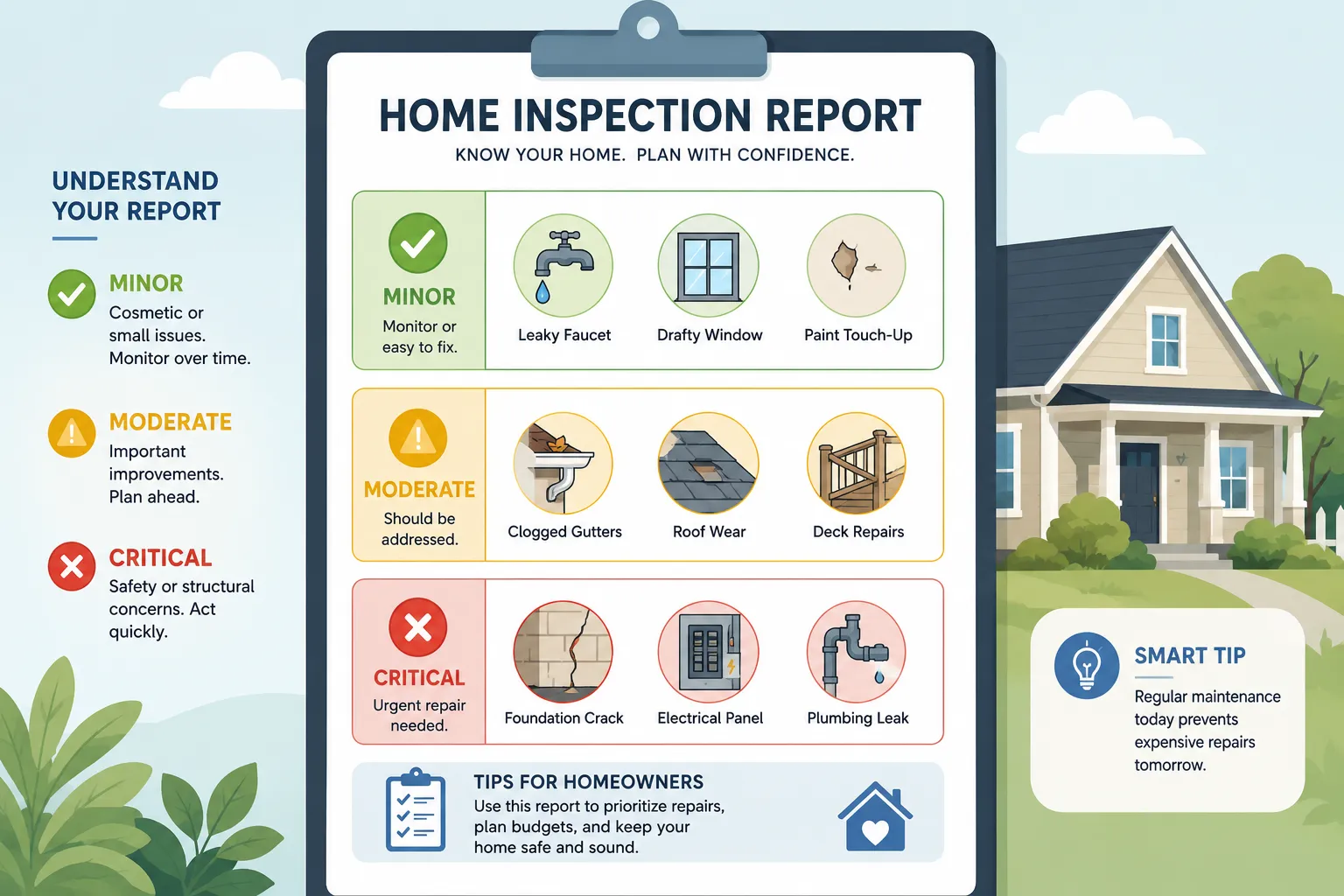
"Read this home inspection report and create a summary table organized by severity level. Use three categories: Critical (safety hazards, structural issues, code violations, or items requiring immediate repair), Moderate (functional problems or items nearing end of useful life that should be addressed within 1-2 years), and Minor (cosmetic issues, routine maintenance, or deferred items). For each finding, include the location, a brief description in plain English, and the inspector's recommendation. Do not editorialize or add opinions, only summarize what the inspector documented."
This prompt generates a clean priority list that shows you the most important issues first. It's the foundation of your ChatGPT home inspection review process.
Step 3: Flag Safety Items with a Targeted Prompt
Safety hazards require immediate attention and often become deal-breakers or mandatory repair requests. Run this follow-up prompt:
"Identify every safety hazard mentioned in this report. Include electrical hazards (exposed wiring, missing GFCI protection, overloaded circuits), fire hazards (improper venting, combustible materials near heat sources), structural hazards (foundation cracks, sagging floors, roof damage), water intrusion or mold, gas leaks, and any code violations the inspector flagged. For each item, explain why it's a safety concern and what could happen if left unaddressed."
This prompt surfaces the non-negotiable items that should appear in your repair request or become conditions for closing.
Step 4: Estimate Repair Costs with AI
One of the most valuable features of a ChatGPT home inspection review is getting ballpark repair cost estimates before you call contractors. Use this prompt:
"For each Critical and Moderate issue identified in this report, provide a rough cost estimate range for repair or replacement based on national averages. Include low, mid, and high estimates. Note any items that require a specialist evaluation (structural engineer, roofer, electrician) before accurate pricing is possible. Clarify that these are estimates only and actual costs will vary by location, contractor, and scope of work."
Important: AI repair cost estimates are educated guesses based on training data. For any item over $1,000, get three local contractor bids before negotiating with the seller. Regional labor rates and material costs vary significantly, a roof replacement in Phoenix costs 30-40% less than the same job in San Francisco.
Step 5: Draft Your Repair Request Letter
Once you've identified your priority items and estimated costs, use AI to draft your negotiation letter. This prompt works well:
"Based on the Critical and Moderate findings in this inspection report, draft a professional repair request letter to the seller. Organize items by priority: (1) safety hazards and code violations that must be corrected before closing, (2) major system failures or structural issues requiring repair or credit, (3) items we're requesting as goodwill repairs. Use a respectful, factual tone. Include estimated repair costs where available. Do not make threats or ultimatums, frame this as a collaborative problem-solving discussion."
Critical step: Before sending this letter, have your real estate agent review it. Local market conditions matter, in a hot seller's market, asking for $15,000 in repairs might kill your deal, while in a buyer's market, it's a reasonable opening position. Your agent knows what's normal in your area and can help you calibrate your requests. For more guidance on working with your agent during negotiations, check out our 5 gaslighting questions to ask your broker when your home won't sell.
Step 6: Generate Questions for Your Inspector
Most inspection contracts include a follow-up consultation period where you can call the inspector with questions. Use this prompt to prepare:
"Based on this inspection report, generate a list of 10-15 clarifying questions I should ask the inspector during our follow-up call. Focus on items where the report is vague, where the inspector recommended further evaluation by a specialist, or where I need to understand the urgency and cost implications of a finding. Phrase questions in plain English."
This ensures you don't waste your follow-up call asking questions the report already answered.
How to Understand Home Inspection Terminology for Beginners
Home inspectors write reports for other professionals, contractors, engineers, insurance adjusters, not for first-time home buyers. That's why your 50-page document is packed with terms like "efflorescence," "GFCI protection," "flashing," and "weep holes" without definitions. A ChatGPT home inspection review instantly translates this jargon into language you actually understand.
Here's how to use AI as your inspection dictionary:
Prompt for term definitions:
"This inspection report uses several technical terms I don't understand: [paste the terms or sentences]. Explain each term in plain English, why it matters for my home purchase, and what happens if the issue isn't addressed."
Common inspection terms decoded:
| Inspector Term | Plain English Translation | Why It Matters |
|---|---|---|
| Efflorescence | White, chalky mineral deposits on concrete or brick caused by water seeping through and evaporating | Indicates water intrusion or poor drainage; can lead to foundation damage if not corrected |
| GFCI protection | Ground Fault Circuit Interrupter, a safety outlet that shuts off power if it detects electrical current leaking (required in bathrooms, kitchens, garages, outdoors) | Prevents electrocution; missing GFCI is a code violation and safety hazard |
| Flashing | Metal strips installed around roof penetrations (chimneys, vents, skylights) to prevent water leaks | Improper or missing flashing causes roof leaks and interior water damage |
| Weep holes | Small openings at the bottom of brick walls that allow moisture to drain out | Blocked weep holes trap water inside walls, leading to mold and structural damage |
| Soffit and fascia | Soffit = underside of roof overhang; fascia = vertical board at roof edge where gutters attach | Rotted soffit/fascia indicates water damage and allows pests to enter attic |
| Grading | The slope of soil around your foundation | Negative grading (soil slopes toward house) causes water to pool against foundation, leading to leaks and cracks |
Pro move: After ChatGPT explains a term, ask a follow-up question: "How much does it typically cost to fix [issue], and is this something I can DIY or do I need a licensed contractor?" This builds your knowledge base for future homeownership decisions.
For buyers preparing to list their current home, understanding these terms also helps you address issues proactively, our guide on preparing your home for sale in 2026 covers pre-listing inspection strategies.
ChatGPT vs Hiring a Professional to Review Your Home Inspection Report
Let's address the elephant in the room: Should you pay a structural engineer, contractor, or home inspection consultant to review your report, or is a free ChatGPT home inspection review sufficient?
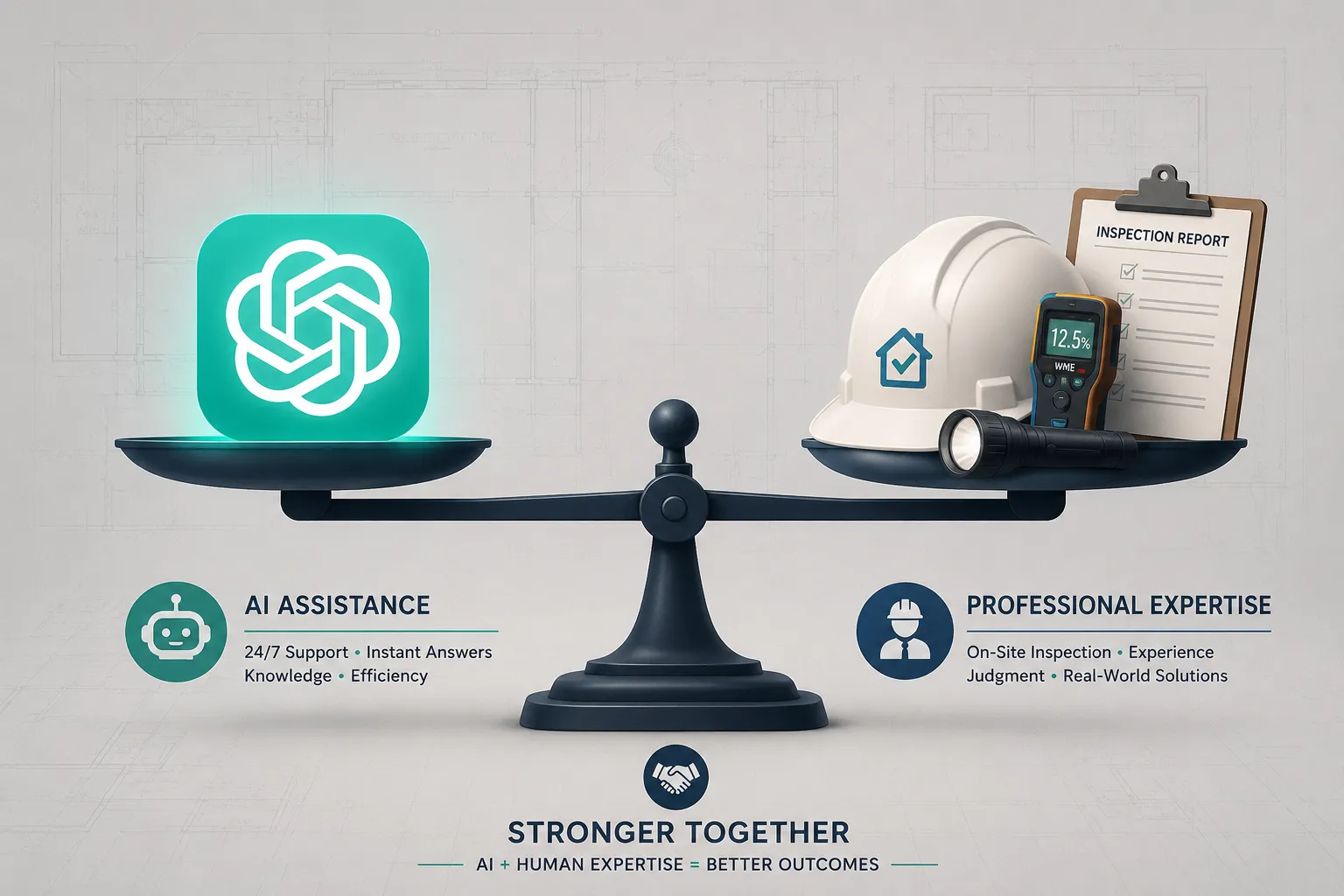
The short answer: Use both. ChatGPT is an impeccable translation and organization tool, but it cannot replace licensed professional judgment on structural integrity, code compliance, or deal-breaker defects.
What ChatGPT does better than humans:
- Speed, Summarizes a 60-page report in 2 minutes instead of 2 hours.
- Cost, Free (or $20/month for ChatGPT Plus) versus $200,$500 for a professional consultation.
- Jargon translation, Instantly explains technical terms without making you feel stupid for asking.
- Organization, Sorts findings by severity, system, or location faster than you can manually highlight a PDF.
- Availability, Works 24/7, including weekends and evenings when your inspection contingency clock is ticking.
What licensed professionals do better than AI:
- Local code knowledge, A structural engineer in your city knows which foundation cracks are normal settling versus red flags for your soil type and climate.
- Liability and insurance, If a licensed pro misses a critical defect, their errors-and-omissions insurance covers your loss. ChatGPT has no liability.
- Physical inspection, AI analyzes photos and descriptions; a specialist visits the property, opens walls, uses diagnostic tools, and sees things the inspector missed.
- Permit and contractor coordination, Professionals can pull permits, hire subs, and manage repairs if you negotiate a seller credit.
- Market context, Your real estate agent knows whether a $10,000 roof repair is a deal-killer in your market or a normal negotiation point.
Our recommendation: Use ChatGPT for the initial review and prioritization, then hire specialists for any Critical findings:
- Foundation cracks, settling, or structural movement → Structural engineer ($400,$800)
- Roof damage, missing shingles, or leaks → Licensed roofer ($150,$300 for detailed assessment)
- Electrical panel issues, knob-and-tube wiring, or code violations → Licensed electrician ($100,$250)
- HVAC failure or major system problems → HVAC contractor ($75,$150)
- Mold, water damage, or moisture intrusion → Mold remediation specialist ($300,$600)
This hybrid approach gives you the speed and cost savings of AI with the credibility and liability protection of licensed experts where it matters most.
Can ChatGPT Accurately Interpret Home Inspection Findings?
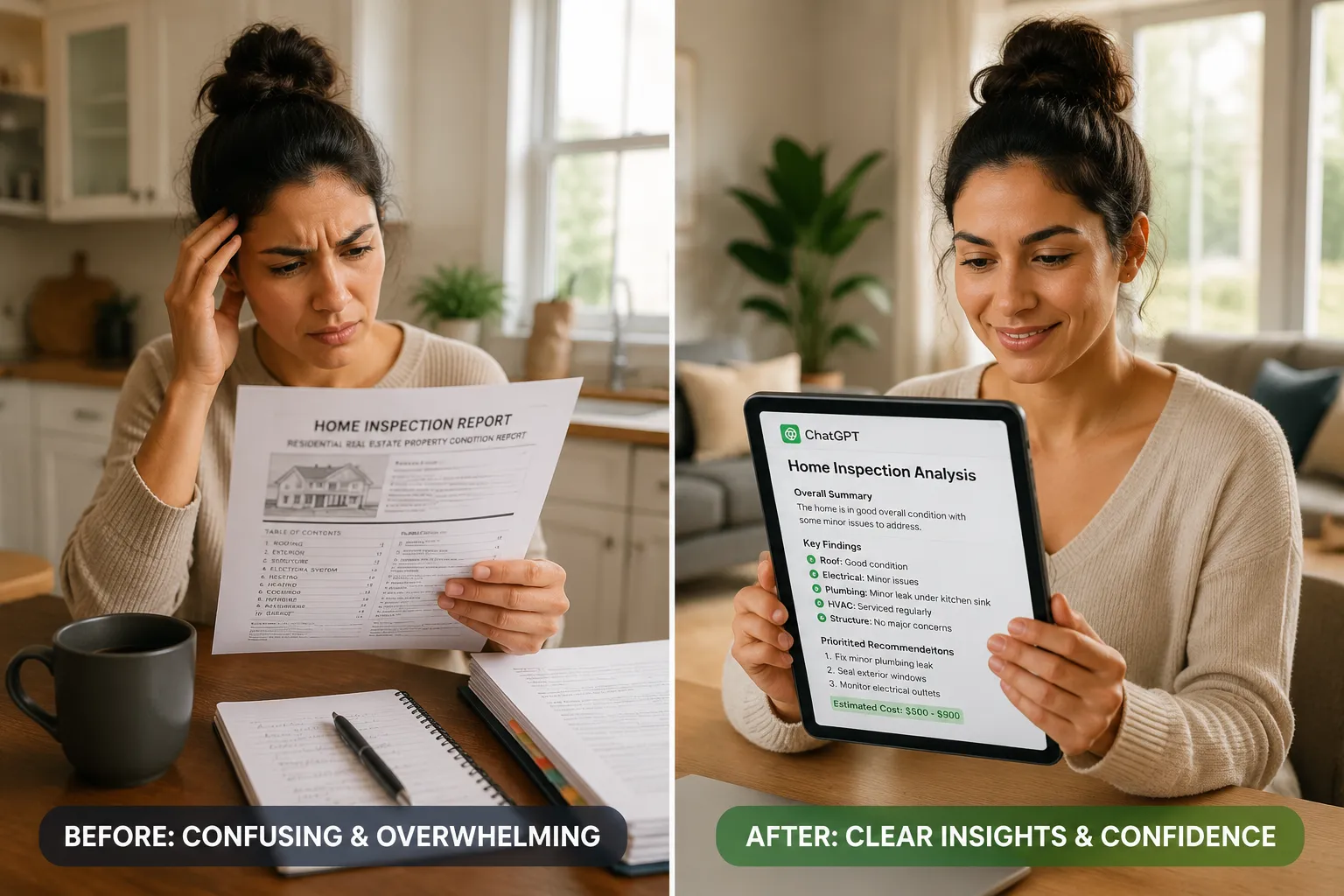
Yes, with critical limitations. ChatGPT can accurately summarize, categorize, and explain what your inspector documented, but it cannot verify whether the inspector's findings are correct, complete, or appropriately prioritized. AI tools are based on pattern recognition from training data, not real-world experience inspecting homes in your specific market.
Where ChatGPT excels:
- Reading comprehension, AI perfectly understands the literal content of your report and can extract key findings, recommendations, and photo references.
- Pattern matching, ChatGPT recognizes common inspection issues (missing GFCI outlets, roof wear, foundation cracks) and can compare your findings to typical standards.
- Cost estimation, AI aggregates pricing data from thousands of sources to provide ballpark repair cost ranges.
- Drafting assistance, ChatGPT writes clear, professional repair request letters and follow-up questions faster than most humans.
Where ChatGPT fails:
- Visual analysis, AI cannot examine your inspection photos with the trained eye of a 20-year veteran inspector. It describes what it sees in the image but may miss subtle clues (hairline cracks, water stains, improper installation).
- Local code compliance, Building codes vary by city and county. ChatGPT knows general code principles but cannot tell you whether your 1978 electrical panel meets current code in Austin, Texas versus Portland, Oregon.
- Severity judgment, AI relies on the inspector's severity ratings. If your inspector downplayed a serious issue or over-emphasized a minor one, ChatGPT will mirror that bias.
- Sycophancy bias, This is the big one. If you prompt ChatGPT with "I think the seller is hiding major problems," the AI will agree and frame its analysis to support your concern, even if the inspection report shows the opposite. Always prompt neutrally.
How to prompt neutrally and avoid AI sycophancy:
Bad prompt (biased): "This inspection report makes me think I'm overpaying for a money pit. What are the worst problems here?"
Good prompt (neutral): "Summarize the findings in this inspection report by severity level. For each Critical item, explain the potential consequences if not repaired and provide a cost estimate range."
The neutral prompt forces ChatGPT to stick to documented facts instead of mirroring your emotional framing. This is so based, AI tools are designed to be agreeable, which makes them terrible at delivering hard truths unless you explicitly ask for objectivity.
For more on using AI tools effectively in real estate transactions, see our top real estate AI tools for investors and home buyers.
What Are the Most Critical Issues to Look For in a Home Inspection Report?
Not all inspection findings are created equal. Some are cosmetic annoyances; others are safety hazards or financial disasters waiting to happen. Here's how to separate deal-breakers from negotiation points in your ChatGPT home inspection review.
Tier 1: Safety Hazards and Code Violations (Non-Negotiable)
These items must be repaired before closing or you should walk away:
- Electrical hazards, Exposed wiring, missing GFCI protection in wet areas, overloaded circuits, aluminum wiring, Federal Pacific or Zinsco panels (fire hazards)
- Structural instability, Foundation cracks wider than 1/4 inch, sagging floors, bowing walls, roof structural damage
- Gas leaks or improper venting, Carbon monoxide risk from furnace backdrafting, unvented gas appliances, cracked heat exchangers
- Water intrusion and mold, Active leaks, standing water in crawlspace, visible mold growth (especially black mold)
- Radon levels above 4 pCi/L, Requires mitigation system installation ($800,$1,500)
- Lead paint hazards, Peeling or chipping lead paint in homes built before 1978, especially if you have young children
Tier 2: Major System Failures (Negotiate Repair or Credit)
These are expensive problems that affect livability but aren't immediate safety threats:
- Roof replacement needed, Missing shingles, multiple layers, age over 20 years, active leaks ($8,000,$25,000)
- HVAC failure, Furnace or AC not functioning, age over 15-20 years, cracked heat exchanger ($4,000,$12,000)
- Water heater failure, Leaking, rusted, age over 10 years ($800,$2,500)
- Plumbing issues, Polybutylene pipes (insurance red flag), galvanized steel pipes (prone to leaks), sewer line problems ($2,000,$15,000)
- Foundation repairs, Cracks requiring structural engineer evaluation, drainage problems causing water intrusion ($3,000,$30,000+)
Tier 3: Deferred Maintenance (Budget for Future Repairs)
These items work now but will need attention within 1-5 years:
- Aging roof, 10-15 years old, minor wear, no active leaks (budget $8,000,$15,000 in 3-5 years)
- HVAC nearing end of life, 12-15 years old, functioning but inefficient (budget $5,000,$10,000 in 2-4 years)
- Exterior paint and siding, Peeling paint, minor wood rot, cosmetic issues ($3,000,$8,000)
- Deck or porch repairs, Loose railings, rotted boards, needs refinishing ($1,000,$5,000)
Tier 4: Minor Issues (Don't Sweat It)
These are normal wear-and-tear items that shouldn't affect your purchase decision:
- Caulking gaps around windows or doors
- Missing outlet covers or light switch plates
- Dripping faucets or running toilets
- Dirty furnace filters or clogged gutters
- Cosmetic cracks in drywall or paint
Pro tip: Use ChatGPT to categorize your findings into these four tiers, then focus your negotiation on Tier 1 and Tier 2 items only. Asking the seller to fix every minor issue makes you look unreasonable and can kill your deal in a competitive market.
For sellers preparing for inspection, addressing Tier 1 and Tier 2 issues before listing can significantly improve your sale price, our 60-day home selling plan walks through pre-listing inspection strategies.
How Much Does a Professional Home Inspection Review Cost?
If you decide to hire a licensed professional to review your inspection report (in addition to or instead of a ChatGPT home inspection review), here's what to expect:
Structural Engineer Consultation: $400,$800 for a detailed review of foundation, framing, and structural findings. Some engineers charge $150,$200/hour for phone or email consultations if you just need clarification on specific items.
General Contractor Review: $150,$300 for a contractor to visit the property, review the inspection report, and provide repair estimates. Many contractors offer this service free if you hire them for the work.
Specialized Inspector Re-Visit: $100,$250 for your original inspector or a different certified inspector to return and examine specific areas in more detail (roof, crawlspace, attic).
Real Estate Attorney Review: $200,$400/hour if you need legal advice on whether inspection findings justify contract termination or renegotiation.
Home Inspection Consultant (Buyer's Advocate): $300,$600 for a professional who specializes in reviewing inspection reports and advising buyers on negotiation strategy. This service is more common in high-cost markets (California, New York, Massachusetts).
Cost comparison:
- ChatGPT Plus subscription: $20/month (or free with GPT-3.5)
- Claude Pro subscription: $20/month
- Professional review: $150,$800 per consultation
For most first-time buyers, the free or low-cost AI review is sufficient for initial triage, with professional consultations reserved for Critical findings that require specialist verification.
Common Mistakes Buyers Make When Reading Home Inspection Reports
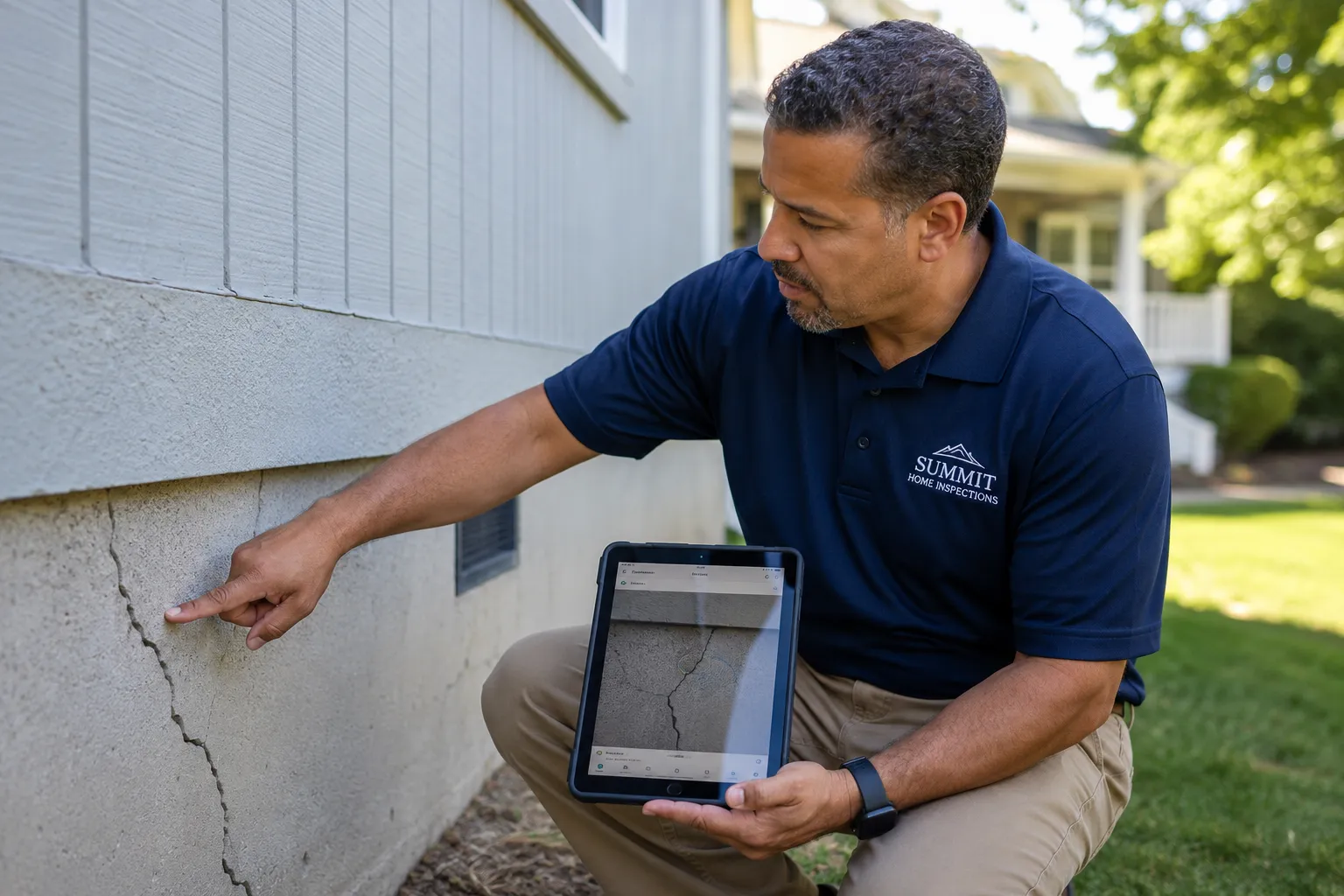
We've coached hundreds of first-time buyers through their inspection reports at Real Estate Rank IQ, and we see the same mistakes over and over. A ChatGPT home inspection review helps you avoid these pitfalls, but only if you know what to watch for.
Mistake 1: Treating the report as pass/fail
Every home has inspection findings, even brand-new construction. The question isn't "Is this house perfect?" but "Are the problems fixable, and at what cost?" Buyers who expect a clean report end up walking away from great homes over minor issues.
Fix: Use the four-tier severity framework above. Focus on safety hazards and major system failures; ignore cosmetic issues.
Mistake 2: Asking for every repair on the list
Requesting 47 repairs (including missing outlet covers and dirty air filters) makes you look unreasonable and can kill your deal. Sellers will either reject your request entirely or accept a backup offer instead.
Fix: Prioritize Tier 1 and Tier 2 items only. Bundle minor repairs into a single credit request ("$500 credit for miscellaneous repairs") instead of itemizing them.
Mistake 3: Not getting contractor bids before negotiating
Asking for a $15,000 credit based on a ChatGPT cost estimate, then discovering the actual repair costs $6,000, makes you look uninformed and damages your credibility.
Fix: Get three local contractor bids for any repair over $1,000 before submitting your repair request. Attach the bids to your letter as documentation.
Mistake 4: Ignoring the inspector's "recommend further evaluation" notes
When your inspector writes "recommend evaluation by a structural engineer," that's code for "this might be a big problem, but I'm not qualified to say for sure." Ignoring this recommendation and proceeding to closing is a recipe for buyer's remorse.
Fix: Hire the recommended specialist before your inspection contingency expires. If the specialist confirms a major issue, you can still negotiate or walk away.
Mistake 5: Not reading the inspection agreement and limitations
Most inspection contracts explicitly state that the inspector does NOT evaluate: hidden or inaccessible areas, code compliance, environmental hazards (asbestos, lead, radon), pest infestations, or future performance of systems. Buyers assume the inspector checked everything, then discover post-closing problems that were never part of the inspection scope.
Fix: Read your inspection agreement carefully. If you're concerned about specific issues (mold, radon, pests, septic system), order separate specialized inspections.
Mistake 6: Letting emotions override data
Buyers fall in love with a house, then rationalize away serious inspection findings because they don't want to lose the property. Or they panic over minor issues because they're overwhelmed by the home-buying process.
Fix: Use your ChatGPT home inspection review to get an objective, data-driven severity ranking. Share the AI summary with your agent and a trusted friend or family member who can provide emotional distance.
For more on avoiding costly mistakes during the buying process, check out our first-time home buyers tips for Gen Z.
What Do Safety Hazard Codes Mean in My Home Inspection?
Home inspectors often reference building codes, safety standards, and industry organizations in their reports. Here's a decoder for the most common references you'll see:
InterNACHI (International Association of Certified Home Inspectors), The largest home inspector trade association, which publishes inspection standards and best practices. If your inspector is InterNACHI-certified, they follow a standardized inspection protocol.
ASHI (American Society of Home Inspectors), Another major inspector certification body with rigorous training and ethics requirements. ASHI-certified inspectors must complete 250 paid inspections and pass a technical exam.
NEC (National Electrical Code), The standard for electrical safety in the U.S., updated every three years. When your inspector notes "not to current NEC standards," it means the wiring or panel doesn't meet modern safety requirements (though it may have been legal when installed).
IRC (International Residential Code), The model building code adopted by most U.S. jurisdictions, covering structural, mechanical, plumbing, and electrical requirements for one- and two-family homes.
GFCI (Ground Fault Circuit Interrupter), Required by code in bathrooms, kitchens, garages, basements, and outdoor outlets since the 1970s, 1980s (timeline varies by location). Missing GFCI protection is a common inspection finding in older homes.
AFCI (Arc Fault Circuit Interrupter), Required in bedrooms and living areas in homes built after 1999-2002 (varies by jurisdiction). Prevents electrical fires caused by damaged wiring.
Egress requirements, Bedrooms must have at least one window or door that meets minimum size requirements for emergency escape. Basement bedrooms without proper egress are code violations and safety hazards.
Handrail and guardrail codes, Stairs with four or more risers require handrails; elevated decks and balconies require guardrails at least 36 inches high with balusters spaced no more than 4 inches apart (to prevent child falls).
When your inspector writes "recommend evaluation by a licensed [specialist]," here's what they mean:
- Structural engineer, Foundation cracks, sagging floors, roof structural damage, or any issue affecting the home's structural integrity
- Licensed electrician, Electrical panel problems, knob-and-tube wiring, aluminum wiring, or complex electrical issues
- Licensed roofer, Roof damage, missing shingles, flashing problems, or any issue requiring roof access the inspector couldn't safely reach
- HVAC contractor, Furnace or AC problems, ductwork issues, or heating/cooling system failures
- Licensed plumber, Sewer line problems, water pressure issues, or complex plumbing repairs
- Mold remediation specialist, Visible mold growth, musty odors, or moisture problems that may indicate hidden mold
Pro tip: When ChatGPT summarizes your inspection findings, ask it to flag every instance where the inspector recommended further evaluation. These are your highest-priority follow-up items.
Is ChatGPT Good for First-Time Home Buyers Reviewing Inspections?
Absolutely, with one major caveat. ChatGPT is an extraordinary tool for first-time buyers who've never seen a home inspection report and don't know which findings matter. AI instantly translates technical jargon, organizes scattered findings into priority lists, and provides cost estimates that help you understand the financial implications of each issue.
Why ChatGPT works so well for first-time buyers:
- No judgment, You can ask "stupid questions" without feeling embarrassed. What's efflorescence? Why does GFCI protection matter? ChatGPT explains patiently, as many times as you need.
- Speed, Your inspection contingency period is typically 7-14 days, and you're juggling work, mortgage paperwork, and moving logistics. ChatGPT summarizes your 60-page report in minutes, not hours.
- Cost, First-time buyers are already stretched thin with down payment, closing costs, and moving expenses. A free or $20/month AI tool is more accessible than a $500 professional consultation.
- Availability, ChatGPT works at 11 PM on a Sunday when you finally have time to read your inspection report and your agent isn't answering calls.
The caveat: AI cannot replace professional judgment
ChatGPT doesn't know your local market, your risk tolerance, your budget constraints, or your long-term plans for the property. It can tell you that a foundation crack "may require $5,000,$15,000 in repairs," but it can't tell you whether that's a deal-breaker in your situation.
Use this decision framework:
- Run your ChatGPT home inspection review to get organized and educated.
- Share the AI summary with your real estate agent and ask: "Based on our local market, which of these findings should I prioritize in my repair request?"
- Hire specialists for Critical findings (foundation, roof, electrical) to verify the inspector's assessment and get accurate repair bids.
- Make your decision based on the combination of AI analysis, agent advice, and specialist verification.
This hybrid approach gives you the best of all worlds: AI speed and cost savings, agent market knowledge, and specialist technical expertise.
For buyers who want to dive deeper into the home-buying process, our best home buying sites in the U.S. for 2026 guide covers the tools and platforms that complement your AI-powered inspection review.
How to Tell If a Home Inspection Issue Is a Deal-Breaker
This is the million-dollar question, literally. When should you walk away from a house based on inspection findings, and when should you negotiate repairs or credits and move forward?
Automatic deal-breakers (walk away unless seller fixes):
- Major structural damage, Foundation failure, severe settling, load-bearing wall damage, roof structural collapse
- Active safety hazards, Exposed electrical wiring, gas leaks, carbon monoxide sources, severe mold infestation
- Unpermitted additions or major renovations, Finished basements, room additions, or electrical/plumbing work done without permits (creates title and insurance problems)
- Environmental hazards, Asbestos insulation, underground oil tanks, contaminated soil, radon levels above 10 pCi/L
- Severe water damage or flooding history, Rotted framing, foundation water intrusion, repeated flood claims (insurance may be unavailable or unaffordable)
Negotiate or walk (depends on cost and seller cooperation):
- Roof replacement needed, If the roof is shot and the seller won't credit you $10,000,$15,000, walk. If they agree to a credit, proceed.
- HVAC or water heater failure, Negotiate a credit or replacement. These are expensive but predictable repairs.
- Electrical panel upgrade required, Federal Pacific or Zinsco panels are fire hazards. Negotiate a $2,000,$4,000 credit for replacement.
- Plumbing issues, Polybutylene or galvanized pipes require eventual replacement ($5,000,$15,000). Negotiate a credit or price reduction.
Proceed with eyes open (budget for future repairs):
- Aging systems nearing end of life, 15-year-old HVAC, 12-year-old water heater, 18-year-old roof. These work now but will need replacement soon. Factor the cost into your offer price or budget.
- Deferred maintenance, Peeling paint, minor wood rot, cosmetic issues. Annoying but not deal-breakers.
Decision factors:
- Your budget, Can you afford to fix the problems after closing, or do you need the seller to handle repairs before you move in?
- Market conditions, In a hot seller's market, asking for $20,000 in repairs may kill your deal. In a buyer's market, it's a reasonable request.
- Your timeline, If you need to move in 30 days and the house requires major repairs, walking away may be smarter than managing a renovation while living in the property.
- Your risk tolerance, Some buyers are comfortable with fixer-uppers; others want move-in-ready homes. Know yourself.
Use ChatGPT to model scenarios:
"Based on this inspection report, create three scenarios: (1) Best case, seller agrees to fix all Critical and Moderate items; (2) Middle case, seller provides a $10,000 credit and I handle repairs myself; (3) Worst case, seller refuses all repairs and I walk away. For each scenario, outline the pros, cons, and total cost implications."
This exercise clarifies your decision and helps you communicate your position to your agent and the seller.
ChatGPT Home Inspection Review vs Structural Engineer Opinion
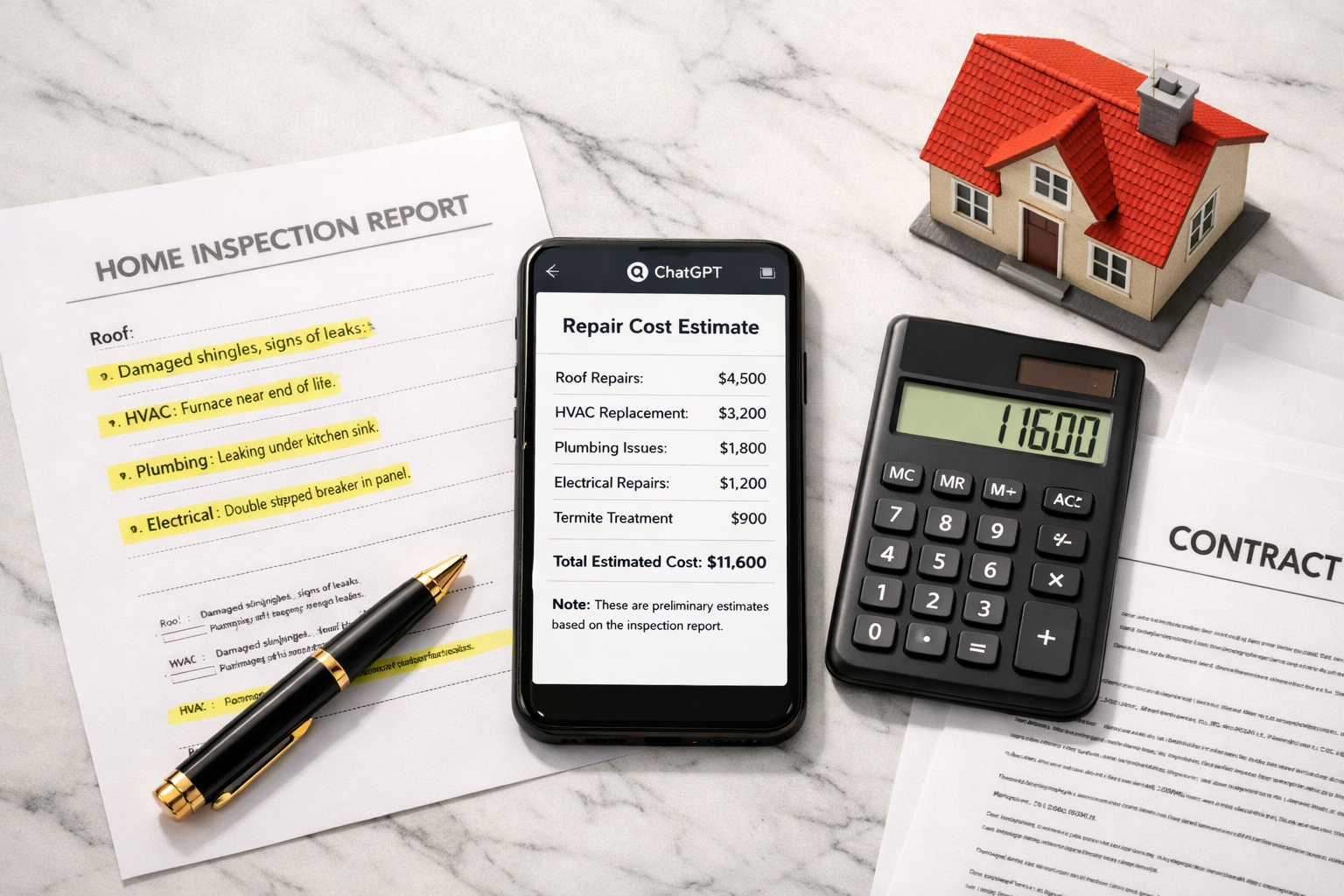
Let's get specific about when AI is sufficient and when you need a licensed structural engineer to evaluate your inspection findings.
Use ChatGPT alone for:
- Minor cosmetic issues (caulking gaps, paint touch-ups, loose doorknobs)
- Routine maintenance items (dirty filters, clogged gutters, dripping faucets)
- Clear-cut problems with known solutions (missing GFCI outlets, worn roof shingles, aging water heater)
- Initial triage and prioritization of all findings
Hire a structural engineer when your inspection report mentions:
- Foundation cracks wider than 1/4 inch or cracks that are horizontal, stair-step, or accompanied by displacement
- Sagging or sloping floors (more than 1 inch of slope over 20 feet)
- Bowing or leaning walls, especially in basements or crawlspaces
- Roof structural damage (sagging ridge line, broken trusses, inadequate support)
- Large cracks in exterior brick or masonry
- Doors or windows that no longer open/close properly due to settling
- Water intrusion or drainage problems affecting the foundation
- Any finding where the inspector wrote "recommend evaluation by a structural engineer"
What a structural engineer provides that ChatGPT cannot:
- On-site inspection, Engineers visit the property, take measurements, use diagnostic tools (laser levels, moisture meters), and examine areas the home inspector couldn't access.
- Load calculations, Engineers determine whether structural members (beams, joists, foundations) are adequate for the loads they're carrying.
- Repair specifications, Engineers provide detailed repair plans that contractors can bid on and building departments will approve for permits.
- Liability and insurance, If the engineer misses a critical defect, their professional liability insurance covers your damages. ChatGPT has no liability.
- Expert testimony, If you end up in a legal dispute with the seller over undisclosed defects, an engineer's report is admissible evidence. An AI summary is not.
Cost-benefit analysis:
- Structural engineer: $400,$800 for a comprehensive evaluation
- Potential savings: Avoiding a $30,000,$100,000 foundation repair disaster, or negotiating a $15,000 seller credit based on documented engineer findings
The engineer's fee is cheap insurance when you're making a $300,000,$500,000 purchase decision.
Pro tip: If your ChatGPT home inspection review flags multiple structural concerns, hire the engineer before your inspection contingency expires. Don't wait until after closing when you've lost your negotiation leverage.
For investors evaluating rental properties, structural issues have even bigger implications, our apartment investing guide covers due diligence strategies for multifamily properties.
What Questions Should I Ask My Inspector After Reading the Report?
Most home inspection contracts include a follow-up consultation period (typically 7-14 days) where you can call or email the inspector with questions. Use your ChatGPT home inspection review to prepare a focused list of clarifying questions that maximize the value of this consultation.
Use this prompt to generate your question list:
"Based on this inspection report, generate 15 clarifying questions I should ask the inspector during our follow-up call. Focus on: (1) items where the report is vague or unclear, (2) findings where the inspector recommended further evaluation by a specialist, (3) issues where I need to understand urgency and cost implications, (4) areas the inspector couldn't fully access or evaluate. Phrase questions in plain English and organize by priority."
Sample questions ChatGPT might generate:
- "You noted several foundation cracks in the basement. Which cracks are normal settling versus signs of a structural problem?"
- "The report says the roof has 5-7 years of remaining life. What specific signs are you seeing that indicate it's nearing replacement?"
- "You recommended evaluation by a structural engineer for the sagging floor in the master bedroom. How urgent is this, and what's the worst-case scenario if we don't address it immediately?"
- "The electrical panel is labeled as a Federal Pacific brand. You noted this is a fire hazard, can you explain why, and is replacement required before closing?"
- "You couldn't access the crawlspace due to standing water. Should we hire a specialist to pump out the water and re-inspect, or is this a red flag that we should walk away?"
- "The HVAC system is 18 years old and 'nearing end of useful life.' Is it functioning properly now, or are there signs of imminent failure?"
- "You noted 'efflorescence' on the basement walls. What's causing this, and what repairs are needed to prevent future water intrusion?"
- "The report mentions missing GFCI protection in the kitchen and bathrooms. How much does it typically cost to install GFCI outlets, and is this something a homeowner can DIY?"
- "You flagged the deck railing as 'loose and not meeting current code.' Is this a safety hazard, and what's involved in bringing it up to code?"
- "The attic insulation is rated R-19, and you recommend upgrading to R-38. How much energy savings would we see, and what's the typical cost for this upgrade?"
Questions to avoid (because the report already answers them):
- "What did you find during the inspection?" (Read the report first.)
- "Is this a good house?" (Inspectors can't give purchase advice, that's your agent's job.)
- "How much will repairs cost?" (Inspectors estimate; contractors bid.)
Pro tip: Record your follow-up call (with the inspector's permission) or take detailed notes. You'll refer back to this conversation when negotiating with the seller and planning post-closing repairs.
Can ChatGPT Help Negotiate Repairs Based on Inspection Findings?
Yes, ChatGPT is an extraordinary tool for drafting repair request letters, organizing your negotiation strategy, and modeling different scenarios. But the AI cannot replace your real estate agent's market knowledge and negotiation experience.
How to use ChatGPT for inspection negotiation:
Step 1: Generate a prioritized repair list
Use the severity summary prompt from earlier to create a clean list of Critical and Moderate findings. This becomes the foundation of your repair request.
Step 2: Draft your repair request letter
Use this prompt:
"Based on the Critical and Moderate findings in this inspection report, draft a professional repair request letter to the seller. Organize items into three categories: (1) Safety hazards and code violations that must be corrected before closing, (2) Major system failures requiring repair or credit, (3) Items we're requesting as goodwill repairs. Use a respectful, factual tone. Include estimated repair costs where available. Frame this as a collaborative problem-solving discussion, not an ultimatum."
ChatGPT will generate a well-structured letter that you can customize and send through your agent.
Step 3: Model negotiation scenarios
Use this prompt to prepare for different seller responses:
"Create three negotiation scenarios based on this inspection report: (1) Seller agrees to fix all Critical items and provides a $5,000 credit for Moderate items; (2) Seller refuses all repairs but reduces purchase price by $8,000; (3) Seller refuses all repairs and price reduction. For each scenario, calculate my total out-of-pocket costs, timeline implications, and pros/cons. Help me decide which outcome is acceptable."
This exercise clarifies your walk-away point before you enter negotiations.
Step 4: Review with your agent before sending
Critical step: Before submitting your repair request, share the ChatGPT draft with your real estate agent and ask:
- "Is this request reasonable for our local market?"
- "Are we asking for too much or too little?"
- "How should we prioritize if the seller pushes back?"
- "What's the typical seller response to requests like this in our area?"
Your agent knows whether a $15,000 repair request will kill your deal or is standard practice. Let AI do the drafting; let your agent do the strategy.
For sellers facing repair requests from buyers, our marketing your home with AI tools guide covers how to position inspection findings in your listing to minimize post-inspection surprises.
Does ChatGPT Miss Important Details in Home Inspection Reports?
Yes, ChatGPT can miss or misinterpret details in three specific situations:
1. Embedded photos and diagrams
While ChatGPT-4 and Claude can "see" images in PDFs, their visual analysis is not as sophisticated as human pattern recognition. An experienced inspector or contractor can spot subtle clues in photos (hairline cracks, water stains, improper installation) that AI might describe generically without flagging the significance.
Fix: When your inspection report includes photos of Critical findings, ask ChatGPT to describe what it sees in each image, then compare that description to the inspector's written notes. If there's a discrepancy, call the inspector for clarification.
2. Vague or incomplete inspector notes
If your inspector writes "recommend monitoring" or "typical for age of home" without specifics, ChatGPT will repeat that vague language without adding context. AI cannot infer what the inspector meant if the report doesn't explicitly state it.
Fix: Use ChatGPT to flag every instance of vague language ("recommend monitoring," "further evaluation needed," "typical wear"), then ask the inspector to clarify during your follow-up call.
3. Local code and market context
ChatGPT knows general building code principles but cannot tell you whether a specific finding violates local code in your city or whether it's a deal-breaker in your market. For example, knob-and-tube wiring is a major issue in some markets (insurance companies won't cover it) but less concerning in others (if it's been professionally maintained and supplemented with modern wiring).
Fix: Share your ChatGPT summary with your real estate agent and ask: "Which of these findings are red flags in our local market, and which are normal for homes of this age?"
What ChatGPT does NOT miss:
- Text-based findings clearly stated in the report
- Severity ratings assigned by the inspector
- Recommendations for specialist evaluation
- Cost estimates based on national averages
- Technical term definitions and explanations
Bottom line: Use ChatGPT as your first-pass analysis tool, then verify Critical findings with licensed professionals and your agent before making final decisions. The AI is impeccable at organization and translation but cannot replace human judgment on complex or ambiguous issues.
Frequently Asked Questions
Can I upload my home inspection report to ChatGPT for free?
Yes, if you use ChatGPT-3.5 (the free version), but with limitations, GPT-3.5 cannot analyze PDF files or images. You'll need to copy and paste text from your report into the chat. For full PDF upload and image analysis, you need ChatGPT-4 (ChatGPT Plus subscription, $20/month) or Claude Pro ($20/month). Both paid versions support direct PDF uploads and can analyze embedded photos.
How long does a ChatGPT home inspection review take?
2-5 minutes for a typical 30-60 page report. Upload the PDF, run the five core prompts (severity summary, safety flags, cost estimates, repair request draft, inspector questions), and you'll have a complete analysis faster than you can read the original report.
Will ChatGPT tell me if I should buy the house or walk away?
No, and you shouldn't want it to. ChatGPT can summarize findings, estimate costs, and explain implications, but it cannot make your purchase decision. That requires human judgment based on your budget, risk tolerance, market conditions, and long-term plans. Use AI for analysis; make the decision yourself with input from your agent and trusted advisors.
Can I use ChatGPT to negotiate directly with the seller?
No. All repair requests and negotiations must go through your real estate agent (if you're represented) or directly to the seller's agent (if you're unrepresented). Use ChatGPT to draft your repair request letter, then give it to your agent to send on your behalf. Never send AI-generated letters directly to the seller without your agent's review.
What if my inspection report is too long for ChatGPT to process?
ChatGPT-4 and Claude have token limits (roughly 25,000-50,000 words depending on the model). If your report exceeds this, split it into sections (exterior, interior, mechanical systems, roof/attic, foundation/crawlspace) and upload each section separately. Run the same prompts on each section, then combine the results.
Can ChatGPT analyze inspection photos to find problems the inspector missed?
No. ChatGPT can describe what it sees in photos (cracks, stains, damage) but cannot perform the detailed visual analysis of an experienced inspector or contractor. If you're concerned the inspector missed something, hire a specialist to re-inspect that area, don't rely on AI photo analysis.
Is it legal to use AI to review my home inspection report?
Yes. Your inspection report is your property, and you can use any tool you want to analyze it. There are no legal restrictions on using AI for this purpose. However, remember that AI-generated analysis is not a substitute for licensed professional opinions and carries no liability or insurance coverage.
Should I tell my inspector I'm using ChatGPT to review their report?
You don't need to, but there's no reason to hide it either. Most inspectors would appreciate that you're taking the time to thoroughly understand their findings. If you have follow-up questions based on your AI review, the inspector will answer them regardless of how you generated the questions.
Can I use ChatGPT for new construction inspections?
Yes. New construction homes should still be inspected (builders make mistakes, and warranty coverage has limits), and ChatGPT can analyze new construction inspection reports the same way it handles resale home reports. The findings will be different (fewer aging system issues, more construction defect concerns), but the analysis process is identical.
What if ChatGPT's cost estimates don't match my contractor bids?
Trust your contractor bids. ChatGPT uses national average pricing data, which may not reflect your local market's labor rates, material costs, or scope-of-work requirements. Always get three local contractor bids for any repair over $1,000 before negotiating with the seller.
Can I use ChatGPT to review inspection reports for rental properties or investment properties?
Absolutely. The same process works for investment properties, with one addition: ask ChatGPT to estimate how each finding affects rental income, tenant safety, and property value. Use this prompt: "For each Critical and Moderate finding, explain how it impacts my ability to rent this property and what repairs are required to meet local rental housing codes."
Does using AI to review my inspection make me look inexperienced to my agent or the seller?
No. Smart buyers use every tool available to make informed decisions. Your agent will appreciate that you've done your homework and come to them with organized, specific questions instead of vague concerns. The seller never needs to know what tools you used to analyze the report.
Conclusion
A ChatGPT home inspection review is a fresh, so based tool that transforms a confusing 60-page technical document into a clear, actionable priority list in minutes. For first-time home buyers who've never seen an inspection report, AI instantly translates jargon, organizes findings by severity, estimates repair costs, and drafts professional repair request letters, all for free or $20/month.
But let's be clear: ChatGPT is a translation and organization tool, not a replacement for licensed professional judgment. Use AI for initial triage and education, then verify Critical findings (foundation, structural, electrical, safety hazards) with specialists before making your final purchase decision. The hybrid approach, AI speed and cost savings combined with human expertise where it matters, gives you the best of both worlds.
Your action plan:
- Upload your inspection PDF to ChatGPT-4 or Claude immediately after receiving it.
- Run the five core prompts: severity summary, safety flags, cost estimates, repair request draft, inspector questions.
- Share the AI summary with your real estate agent and ask which findings are red flags in your local market.
- Hire specialists (structural engineer, electrician, roofer) to verify any Critical findings before your inspection contingency expires.
- Get three local contractor bids for repairs over $1,000 before negotiating with the seller.
- Use ChatGPT to draft your repair request letter, then have your agent review and send it.
- Make your purchase decision based on the combination of AI analysis, agent advice, specialist verification, and your own budget and risk tolerance.
The home inspection is your most important due diligence opportunity. Don't let it cook without understanding what you're looking at, use every tool available, including AI, to read your report like a pro and protect your investment.
For more guidance on the home buying process, explore our property inspections hub and first-time home buyers resources.
SEO Meta Title: ChatGPT Home Inspection Review: Read Reports Like a Pro
Tags: chatgpt home inspection, home inspection report, ai home inspection analysis, home buying tips, first time home buyers, inspection red flags, repair cost estimates, home inspection negotiation, real estate technology, property inspection guide, chatgpt for real estate, home inspection review