

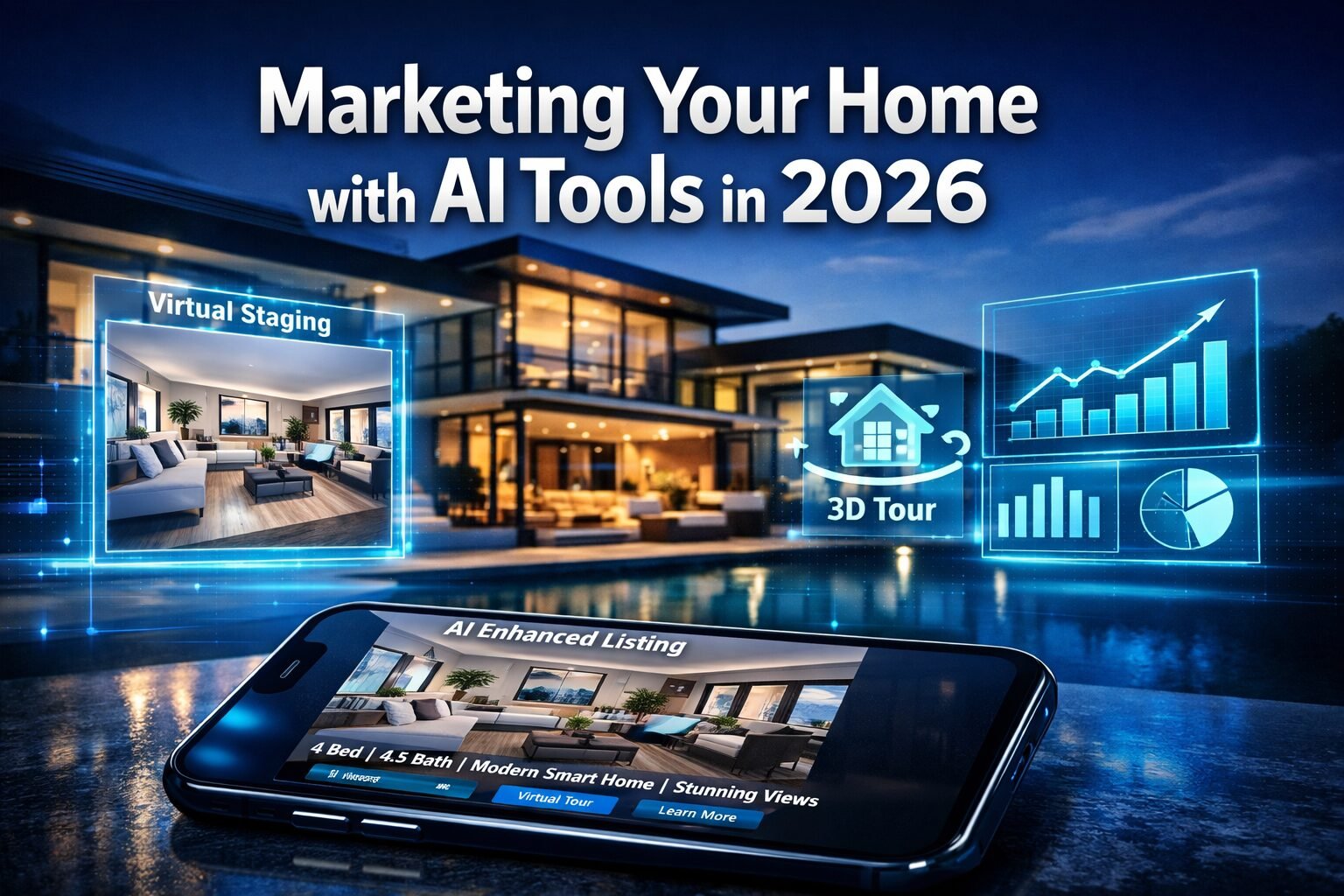

Let’s be real—selling your home in 2026 without AI tools is like showing up to a Formula 1 race on a bicycle. The real estate game has evolved, and marketing your home with AI tools isn’t just some tech-bro fantasy anymore. It’s the extraordinary difference between your listing sitting stale for months and getting multiple offers within days. According to recent industry data, 82% of Americans now use AI for housing market information[10], and if sellers aren’t leveraging these same tools, they’re basically gatekeeping themselves from serious buyer attention.
The shift happened fast. What started as experimental tech in 2023 has become standard practice by 2026, with over 60% of real estate agencies planning major AI investments this year[7]. From AI-generated property descriptions that actually sound human (finally!) to virtual staging that costs pennies compared to physical staging, the tools available today would’ve seemed like science fiction just three years ago. And here’s the kicker: marketing your home with AI tools doesn’t require a computer science degree or a massive budget—just the willingness to let it cook and embrace what’s already working for top-performing sellers.
This isn’t about replacing the human touch in real estate. It’s about amplifying it. Think of AI as your impeccable assistant that never sleeps, never takes a coffee break, and processes market data faster than any human possibly could. Whether you’re a homeowner preparing to sell, an agent looking to level up your listings, or an investor managing multiple properties, understanding how to harness these tools in 2026 is absolutely based—and absolutely necessary.
Key Takeaways
- AI-powered virtual staging and 3D tours have become essential listing features, with platforms like Matterport integrated across major portals, though sellers should diversify beyond single-platform dependency
- Content creation AI tools (ChatGPT, Jasper, Copy.ai) can generate property descriptions, social media posts, and email campaigns in minutes, creating 24 hours of marketing content in just 2 hours
- Predictive analytics and lead scoring help identify serious buyers and optimize pricing strategies, with AI tools providing real-time market intelligence that traditional methods can’t match
- 67% of home buyers now trust ChatGPT recommendations for choosing agents, yet less than 1% of sellers optimize their listings for AI search visibility—creating a massive competitive advantage opportunity
- Platform integration matters: Multi-channel AI marketing across Zillow, Realtor.com, and Homes.com maximizes exposure while avoiding vendor lock-in risks
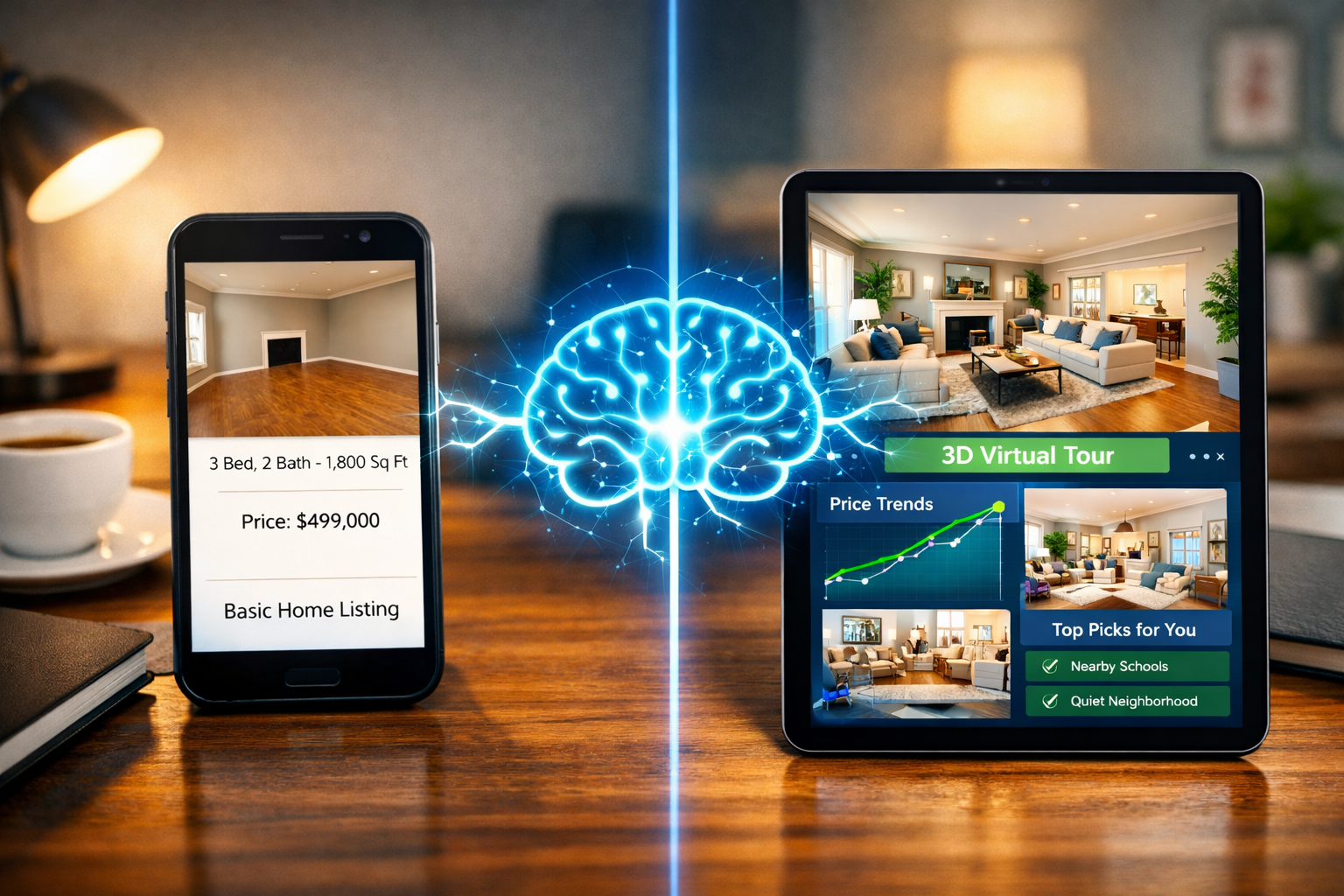
Understanding AI Tools That Transform Home Marketing in 2026
The AI revolution in real estate isn’t coming—it’s already here, and it’s fresh. The landscape of marketing your home with AI tools has expanded dramatically, with solutions ranging from simple description generators to sophisticated predictive pricing algorithms that analyze thousands of comparable sales in seconds.
The Core AI Marketing Categories Every Seller Should Know
Visual Enhancement Tools lead the pack in 2026. Virtual staging platforms powered by AI can transform empty rooms into beautifully furnished spaces for a fraction of traditional staging costs. According to industry analysis, AI-enhanced photos can increase buyer engagement by up to 40%[5]. Tools like BoxBrownie, Virtual Staging AI, and Apply Design use machine learning to understand design trends and buyer preferences, creating images that resonate with your target market.
But here’s where it gets interesting: the 3D virtual tour landscape experienced a major shake-up. CoStar’s $1.6 billion acquisition of Matterport in 2023 fundamentally reshaped how virtual tours work across major platforms. Zillow removed native Matterport integration in 2024, while Homes.com (CoStar-owned) now pushes Matterport as a competitive advantage. Meanwhile, Realtor.com became the first platform with a direct Matterport syndication feed, streamlining 3D tour integration. Smart sellers in 2026 aren’t putting all their eggs in one basket—they’re using multi-platform approaches with alternatives like iGUIDE, Kuula, and CloudPano to avoid dependency on any single provider.
Content Generation AI represents the second major category transforming home marketing. Platforms like ChatGPT, Jasper, and Copy.ai can generate compelling property descriptions, social media posts, email campaigns, and even blog content in minutes[4]. The key difference in 2026? These tools now understand real estate-specific language patterns, local market nuances, and buyer psychology at an impeccable level. They’re not just spitting out generic templates anymore—they’re creating personalized content that speaks directly to your ideal buyer’s desires and concerns.
“As market dynamics and consumer expectations continue to evolve rapidly in our industry, we have leaned in, empowering our clients by launching new AI-enabled products like HomeSearch AI and Folio-powered deals, pursuing strategic acquisitions, and strengthening integrations to ensure they are on the bleeding edge of what’s available.” — Julia Laurin, CPO at Inside Real Estate[2]
Predictive Analytics and Lead Intelligence form the third pillar. AI tools now analyze buyer behavior patterns, predict which leads are most likely to convert, and even suggest optimal pricing strategies based on real-time market conditions[8]. Platforms like HubSpot, Mailchimp, and Drift have integrated behavioral trigger workflows and dynamic content personalization that automatically adjusts your marketing message based on how potential buyers interact with your listing[4].
The AI Search Revolution: Why Traditional SEO Isn’t Enough
Here’s something so based it’ll change how you think about listing visibility: AI search is replacing traditional Google search for real estate research. According to recent analysis, 67% of home buyers are now comfortable choosing their real estate agent based on ChatGPT recommendations, yet less than 1% of agents (and by extension, their listings) are optimized to appear in ChatGPT’s top 5 recommendations.
This creates an extraordinary opportunity for sellers who understand the shift. When potential buyers ask ChatGPT “What are the best homes for sale in [your neighborhood]?” or “Should I buy this property at [your address]?”, your listing needs to be positioned to appear in those AI-generated responses. This requires a different approach than traditional SEO—it’s about creating comprehensive, factual, well-structured content that AI models can parse and recommend with confidence.
For sellers, this means working with agents who understand how to use social media and AI tools to sell real estate effectively, or taking the time to optimize your own listing content for AI discoverability. The complete home sale checklist with AI tips can guide you through this process systematically.
Platform Integration: Building Your AI Marketing Stack
The most successful home marketing campaigns in 2026 don’t rely on a single AI tool—they integrate multiple platforms into a cohesive marketing stack. Think of it like building a championship sports team: each player (tool) has a specific role, but they work together to win the game.
A typical AI marketing stack for home sellers might include:
- Visual Tools: AI virtual staging + 3D tour platform + photo enhancement
- Content Creation: ChatGPT or Jasper for descriptions + Canva AI for social graphics
- Distribution: Automated posting tools that syndicate across Zillow, Realtor.com, social media
- Analytics: AI-powered lead tracking and buyer behavior analysis
- Communication: AI chatbots for initial inquiry responses + automated email sequences
The key is integration. According to industry research, over 65% of institutional real estate firms have integrated AI into at least one core workflow by early 2026, with market research and intelligence adoption at 68%[7]. For individual home sellers, the barrier to entry is lower than ever—many of these tools offer free tiers or affordable monthly subscriptions that cost less than a single traditional staging consultation.
For agents looking to build comprehensive systems, exploring real estate marketing automation platforms can provide the infrastructure to manage multiple AI tools efficiently.

Implementing AI Tools for Maximum Marketing Impact
Knowing about AI tools is one thing. Actually implementing them to sell your home faster and for more money? That’s where the rubber meets the road. Marketing your home with AI tools effectively requires a strategic approach that combines the right technologies with proven real estate fundamentals.
Creating Compelling Visual Content with AI
Let’s start with what buyers see first: your listing photos. Traditional professional photography remains important, but AI enhancement tools can take those photos from good to extraordinary. Here’s the practical workflow top-performing sellers use in 2026:
Step 1: Professional Base Photos – Start with quality photos taken during optimal lighting conditions. AI can enhance images, but it can’t fix fundamentally poor photography. If you’re working with an agent, ensure they understand AI photo enhancement and virtual staging best practices.
Step 2: AI Enhancement – Upload photos to AI enhancement platforms that automatically adjust lighting, remove minor imperfections, enhance colors, and even improve sky replacements. Tools like Luminar AI and Topaz Labs can transform flat, uninspiring photos into magazine-worthy images in seconds.
Step 3: Virtual Staging – For empty rooms or outdated furniture, AI virtual staging tools can add contemporary furnishings that appeal to your target demographic. The cost? Often $29-99 per room versus $2,000-4,000 for physical staging. The key is choosing staging styles that match current design trends and your neighborhood’s aesthetic.
Step 4: 3D Virtual Tours – Create immersive 3D experiences using platforms like Matterport, iGUIDE, or alternatives. According to Matterport data, listings with 3D tours receive 95% more inquiries than those without[5]. With Realtor.com’s direct Matterport integration now active, these tours sync automatically across major platforms, maximizing exposure.
AI-Powered Content That Converts Browsers to Buyers
Here’s where AI really shines: content creation at scale. The average home seller in 2026 needs content for multiple channels—listing descriptions, social media posts, email campaigns, property websites, and more. Creating all this manually could take days. With AI? Hours.
Property Descriptions That Sell – Tools like ChatGPT and Jasper can generate compelling property descriptions that highlight key features while incorporating emotional triggers that resonate with buyers. The trick is providing the right prompts. Instead of “Write a property description for my 3-bedroom house,” try:
“Write a compelling 200-word property description for a renovated 3-bedroom Craftsman home in [neighborhood] targeting young families. Emphasize the updated kitchen with quartz countertops, the fenced backyard perfect for children and pets, proximity to top-rated elementary schools within walking distance, and the home’s energy-efficient features that reduce utility costs. Use warm, inviting language that helps buyers envision their life in this home.”
The difference in output quality is night and day. AI tools in 2026 understand context and nuance when given proper direction[3].
Social Media Content Calendar – AI can generate weeks of social media content in one sitting. Create posts highlighting different home features, neighborhood amenities, local market insights, and buyer testimonials. Tools like Lately.ai and Copy.ai specialize in creating platform-specific content optimized for Instagram, Facebook, and LinkedIn engagement.
According to marketing research, behavioral trigger workflows and dynamic content personalization have become standard features across major platforms[4]. This means your AI-generated content can automatically adjust based on who’s viewing it and how they’ve interacted with your listing previously.
Email Marketing Sequences – AI-powered email platforms can create personalized drip campaigns that nurture interested buyers from initial inquiry to showing request. These sequences automatically adjust based on recipient behavior—if someone clicks on kitchen photos, subsequent emails emphasize kitchen features and nearby dining options.
Pricing Strategy and Market Intelligence with AI
One of the most impeccable applications of AI in home marketing? Predictive pricing analytics. Traditional comparative market analysis (CMA) looks at recent sales of similar properties. AI-powered pricing tools analyze thousands of data points including:
- Historical sales data and seasonal trends
- Current inventory levels and days on market
- Neighborhood development patterns
- Economic indicators and mortgage rate trends
- Buyer search behavior and preference patterns
- Social media sentiment about your area
Platforms like HouseCanary and Skyline AI provide institutional-grade analytics that were previously only available to large investment firms. For individual sellers, tools like Zillow’s Zestimate (now AI-enhanced) and Redfin’s pricing tools offer sophisticated estimates, though working with an agent who understands how to avoid pricing mistakes remains crucial.
The real power comes from combining AI insights with local market expertise. AI can tell you that homes in your neighborhood with updated kitchens sell for 8% more on average, but a skilled agent knows that your specific street commands a premium because of the mature trees and quiet cul-de-sac location.
Lead Management and Buyer Engagement Automation
Here’s where marketing your home with AI tools gets seriously efficient. AI-powered lead management systems can:
Qualify Leads Automatically – AI chatbots can engage with potential buyers 24/7, answering common questions about your property, collecting contact information, and qualifying leads based on their responses. Inside Real Estate’s HomeSearch AI showed a 40x increase in conversations from agents’ databases in early results[2].
Prioritize Serious Buyers – Predictive lead scoring algorithms analyze buyer behavior—how long they viewed your listing, which photos they zoomed in on, whether they returned multiple times—to identify the most serious prospects. This lets you (or your agent) focus follow-up efforts where they’ll have the greatest impact.
Personalize Communication – AI tools can automatically send personalized follow-up messages referencing specific features the buyer showed interest in. If someone spent extra time viewing backyard photos, the follow-up email highlights outdoor entertainment features and nearby parks.
Schedule Showings Efficiently – AI scheduling assistants can coordinate showing times, send reminders, collect feedback, and even suggest optimal showing times based on historical data about when buyers are most likely to make offers.
For agents managing multiple listings, virtual assistants specialized in real estate combined with AI tools create an unstoppable efficiency machine.
Multi-Platform Distribution Strategy
The biggest mistake sellers make? Focusing all their AI marketing efforts on a single platform. The smart play in 2026 is multi-channel distribution that maximizes visibility while avoiding platform dependency risks.
Zillow Strategy – Despite removing native Matterport integration, Zillow remains the highest-traffic listing portal. Use workarounds to include 3D tour links, optimize your description for Zillow’s search algorithm, and leverage Zillow’s Premier Agent advertising if working with an agent.
Realtor.com Advantage – With direct Matterport integration, Realtor.com offers seamless 3D tour syndication. Ensure your listing takes full advantage of this feature, as properties with 3D tours receive significantly more engagement.
Homes.com Opportunity – As CoStar pushes Matterport integration on their platform, early adopters who create comprehensive 3D tours may receive preferential visibility. This platform is growing fast and represents an opportunity to reach buyers before it becomes saturated.
Social Media Amplification – AI tools can automatically create and schedule platform-specific content for Facebook, Instagram, and LinkedIn. Video content (AI-generated property tours, neighborhood highlights) performs exceptionally well, with some sellers seeing 10x engagement compared to static posts.
Direct Website – Create a dedicated property website (many AI tools can build these automatically) optimized for AI search engines. When potential buyers ask ChatGPT about properties in your area, a well-optimized dedicated site increases the chances of your listing appearing in recommendations.
This multi-platform approach ensures you’re not vulnerable to algorithm changes, platform policy shifts, or competitive disadvantages on any single channel. It’s the same diversification principle smart investors apply to their portfolios—don’t put all your eggs in one basket.

Advanced AI Marketing Strategies for Competitive Markets
In hot markets where multiple sellers compete for buyer attention, basic AI implementation isn’t enough. The sellers who win in 2026 are those who leverage advanced AI strategies that most competitors haven’t discovered yet.
Hyper-Personalized Buyer Targeting
Generic marketing is dead. AI enables hyper-personalization at a scale that was impossible just a few years ago. Here’s how sophisticated sellers are using this in 2026:
Buyer Persona AI Analysis – Advanced AI tools can analyze your property characteristics and automatically identify the most likely buyer personas. Is your home ideal for young families, empty nesters, remote workers, or investors? AI can determine this based on features, location, price point, and local demographic data.
Once personas are identified, AI generates customized marketing materials for each group. The same 3-bedroom home might be marketed as “perfect for growing families” on Facebook ads targeting 30-40 year olds, while LinkedIn ads targeting professionals emphasize the home office space and proximity to business districts.
Predictive Buyer Behavior Modeling – AI platforms now predict which specific buyers in your area are most likely to be interested in your property based on their search history, saved listings, and browsing patterns. While privacy regulations limit some data access, platforms like Zillow and Realtor.com use AI to serve your listing to the most relevant prospects automatically[9].
Dynamic Content Adjustment – The most advanced AI marketing systems adjust your listing content in real-time based on market conditions and buyer feedback. If analytics show buyers are spending more time viewing outdoor photos, AI automatically prioritizes these images in your listing carousel and emphasizes outdoor features in descriptions.
Competitive Intelligence and Market Positioning
AI tools provide unprecedented competitive intelligence that helps position your home strategically. Here’s what top sellers monitor in 2026:
Real-Time Competitive Analysis – AI platforms track every competing listing in your area, analyzing their pricing changes, photo updates, description modifications, and time on market. Tools like Perplexity provide real-time market intelligence with source citations, allowing sellers to adjust strategy based on what competitors are doing[7].
Sentiment Analysis – AI analyzes buyer comments, social media discussions, and review patterns to understand what buyers love and hate about properties in your neighborhood. This intelligence informs which features to emphasize and which potential objections to address proactively in your marketing.
Optimal Timing Predictions – AI algorithms analyze historical data to predict the best time to list your property, when to adjust pricing, and even which days of the week generate the most showing requests. According to research, AI adoption in real estate is accelerating faster than predicted, with these timing optimizations proving to directly boost efficiency and profit margins[7].
AI-Enhanced Negotiation Support
Once offers start coming in, AI tools provide negotiation support that gives sellers a significant advantage:
Offer Analysis and Comparison – AI platforms can instantly analyze multiple offers, comparing not just price but also contingencies, financing strength, closing timelines, and historical data about the buyers’ agents. This comprehensive analysis helps identify the truly best offer, which isn’t always the highest price.
Counteroffer Optimization – Based on analysis of thousands of successful negotiations, AI tools can suggest optimal counteroffer strategies that maximize your final sale price while minimizing the risk of losing qualified buyers. These suggestions consider current market conditions, buyer behavior patterns, and your specific priorities.
For sellers navigating complex negotiations, understanding negotiation power moves combined with AI insights creates an unbeatable combination.
Integration with Smart Home Technology
Here’s an emerging trend that’s absolutely fresh: integrating AI marketing with smart home technology. Homes with smart features sell faster and for more money in 2026, and AI marketing tools can showcase these features effectively.
Virtual Smart Home Demonstrations – AI-powered virtual tours can include interactive demonstrations of smart home features—showing how the smart thermostat adjusts automatically, how the security system works, or how voice commands control lighting and entertainment systems.
Energy Efficiency Projections – AI tools can analyze your home’s smart technology and energy-efficient features to generate personalized utility cost projections for potential buyers. “Based on this home’s solar panels, smart thermostat, and LED lighting, the average family will save approximately $2,400 annually on utilities compared to similar homes without these features.”
This type of specific, data-driven marketing resonates strongly with buyers, especially those concerned about ongoing ownership costs. For sellers who’ve invested in green building materials and sustainable features, AI tools can quantify and communicate the value of these improvements effectively.
Measuring ROI and Continuous Optimization
The final piece of advanced AI marketing? Comprehensive analytics and continuous optimization. The best AI marketing campaigns in 2026 aren’t “set it and forget it”—they’re continuously refined based on performance data.
Key Metrics to Track:
- Listing view counts across different platforms
- Time spent viewing listing (engagement depth)
- Photo carousel interaction (which images get the most attention)
- 3D tour completion rates
- Inquiry volume and quality
- Showing request conversion rates
- Offer timeline (days from listing to first offer)
AI analytics platforms aggregate this data and provide actionable insights: “Your listing is receiving high view counts but low showing requests. Analysis suggests the primary bedroom photos may be underperforming. Consider AI-enhanced staging for this space.”
According to industry projections, AI is paving the way for $34 billion in efficiency gains through digital automation and optimized workflows[6]. For individual sellers, this translates to faster sales, higher prices, and lower marketing costs.
The sellers who embrace continuous optimization—testing different AI-generated descriptions, trying various virtual staging styles, adjusting pricing based on AI recommendations—consistently outperform those who create static listings and hope for the best.
Avoiding Common AI Marketing Pitfalls
Let’s keep it real: AI isn’t perfect, and there are pitfalls to avoid when marketing your home with AI tools:
Over-Automation Risk – AI should enhance human judgment, not replace it. Buyers still want to connect with real people during the home buying process. Use AI for efficiency and insights, but maintain personal communication for important interactions.
Generic Content Problem – AI-generated content can sound generic if not properly customized. Always review and personalize AI-generated descriptions, adding specific details and local knowledge that AI might miss.
Platform Dependency – As the CoStar-Matterport-Zillow situation demonstrated, relying too heavily on a single platform or tool creates vulnerability. Diversify your AI marketing stack across multiple platforms and providers.
Data Privacy Concerns – Ensure any AI tools you use comply with data privacy regulations and don’t share sensitive information inappropriately. This is especially important when using AI chatbots that interact with potential buyers.
Accuracy Verification – AI can occasionally generate inaccurate information. Always verify facts, statistics, and property details in AI-generated content before publishing. Inaccurate listing information can create legal liability and damage credibility.
For sellers preparing their homes for market, following a comprehensive home sale checklist that incorporates AI tools while maintaining quality control ensures you get the benefits of automation without the risks.
Conclusion
Marketing your home with AI tools in 2026 isn’t optional anymore—it’s the baseline expectation for competitive listings. The extraordinary results sellers are achieving through AI-powered virtual staging, content creation, predictive analytics, and automated lead management prove that this technology delivers real, measurable value. From creating impeccable property descriptions in minutes to leveraging 3D virtual tours that generate 95% more inquiries, AI tools provide capabilities that would have required entire marketing teams just a few years ago.
The key takeaway? Success comes from strategic implementation, not just tool adoption. The sellers who win combine AI efficiency with human expertise, use multi-platform distribution to avoid dependency risks, and continuously optimize based on performance data. They understand that 67% of buyers now trust AI recommendations, and they position their listings to appear in those AI-generated results. They leverage platforms like Realtor.com’s direct Matterport integration while maintaining flexibility with alternative tools.
Whether you’re a homeowner preparing to sell, an agent looking to provide cutting-edge service, or an investor managing multiple properties, the time to embrace AI marketing is now. Start with the basics—AI-enhanced photos and virtual staging—then expand to content generation, predictive pricing, and automated lead management as you become comfortable with the technology.
The real estate market waits for no one, and in 2026, the gap between AI-powered listings and traditional approaches is widening rapidly. Don’t get left behind gatekeeping yourself from the tools that could sell your home faster and for thousands more. Let it cook, embrace the technology, and watch your marketing results transform.
Ready to implement AI tools for your home sale? Start by exploring marketing automation platforms that integrate multiple AI capabilities, review the latest design trends to ensure your staging appeals to 2026 buyers, and consider working with agents who understand how to leverage social media and AI tools effectively. The future of home marketing is here—and it’s powered by AI.
References
[1] Ai Tools Real Estate – https://www.housingwire.com/articles/ai-tools-real-estate/
[2] Inside Real Estate Reveals New Corehome Powered Ai Innovations As Industrys Top Teams And Brokerages Drive Results With Boldtrail 302585343 – https://www.prnewswire.com/news-releases/inside-real-estate-reveals-new-corehome-powered-ai-innovations-as-industrys-top-teams-and-brokerages-drive-results-with-boldtrail-302585343.html
[3] How Real Estate Agents Can Use Ai In 2026 For More Sales – https://www.homestack.com/blog/how-real-estate-agents-can-use-ai-in-2026-for-more-sales
[4] Best Ai Tools Marketing 2026 – https://thesmarketers.com/blogs/best-ai-tools-marketing-2026/
[5] Ai Real Estate – https://matterport.com/blog/ai-real-estate
[6] Unlock Your Potential Top Real Estate Ai Tools For 2026 Bf760 – https://www.myaifrontdesk.com/blogs/unlock-your-potential-top-real-estate-ai-tools-for-2026-bf760
[7] 5 Ai For Real Estate Trends Every Team Should Watch Heading Into 2026 – https://fello.ai/academy/5-ai-for-real-estate-trends-every-team-should-watch-heading-into-2026
[8] Ai In Real Estate – https://www.v7labs.com/blog/ai-in-real-estate
[9] Abnewswire 2026 1 20 Top 5 Ai Driven Real Estate Platforms Disrupting The 13t Housing Market In 2026 – https://markets.financialcontent.com/concordmonitor/article/abnewswire-2026-1-20-top-5-ai-driven-real-estate-platforms-disrupting-the-13t-housing-market-in-2026
[10] Home Services Ai Marketing Impact Report 2026 – https://www.invoca.com/reports/home-services-ai-marketing-impact-report-2026
For more home selling strategies and expert tips, visit the Home Selling Hub.