

Last updated: October 3, 2026

Quick Answer
Mortgage rates just hit 7.28%, the highest 30-year fixed average Freddie Mac has logged in nearly three years, after jumping 25 basis points in a single week [1]. Rates move with bond market pressure, not a single lender's whim, so the path to a lower number runs through your credit profile, your lender comparison list, your down payment, and whether you pay for points at closing.
Key Takeaways
- The 30-year fixed average climbed from 7.03% to 7.28% between September 24 and October 1, 2026, and the 15-year fixed rose to 6.60% [1].
- Mortgage rates track the 10-year Treasury yield and mortgage-backed securities pricing, not the Fed funds rate directly [2].
- Mortgage applications fell about 6% week over week as the rate jump hit buyers and refinance candidates alike [4].
- Adjustable-rate mortgages climbed to 10.3% of applications, the highest share since October 2025, because ARM pricing ran roughly 80 basis points below fixed rates [4].
- 66% of homebuilders reported using sales incentives in September, including temporary rate buydowns and closing-cost credits [4].
- Shopping multiple lenders, buying points, raising your credit score, and increasing your down payment are the four levers you actually control.
- A fixed rate protects you from this kind of 25-point weekly swing. An ARM makes sense mainly if you plan to sell or refinance within four to five years [4].
What's Driving Mortgage Rates to 7.28% Right Now
Mortgage rates rise and fall with the 10-year Treasury yield, inflation expectations, and investor demand for mortgage-backed securities, not with a direct vote from the Federal Reserve. The Fed sets short-term borrowing costs, but 30-year mortgage pricing is a long-term bond product that trades off a different curve entirely.
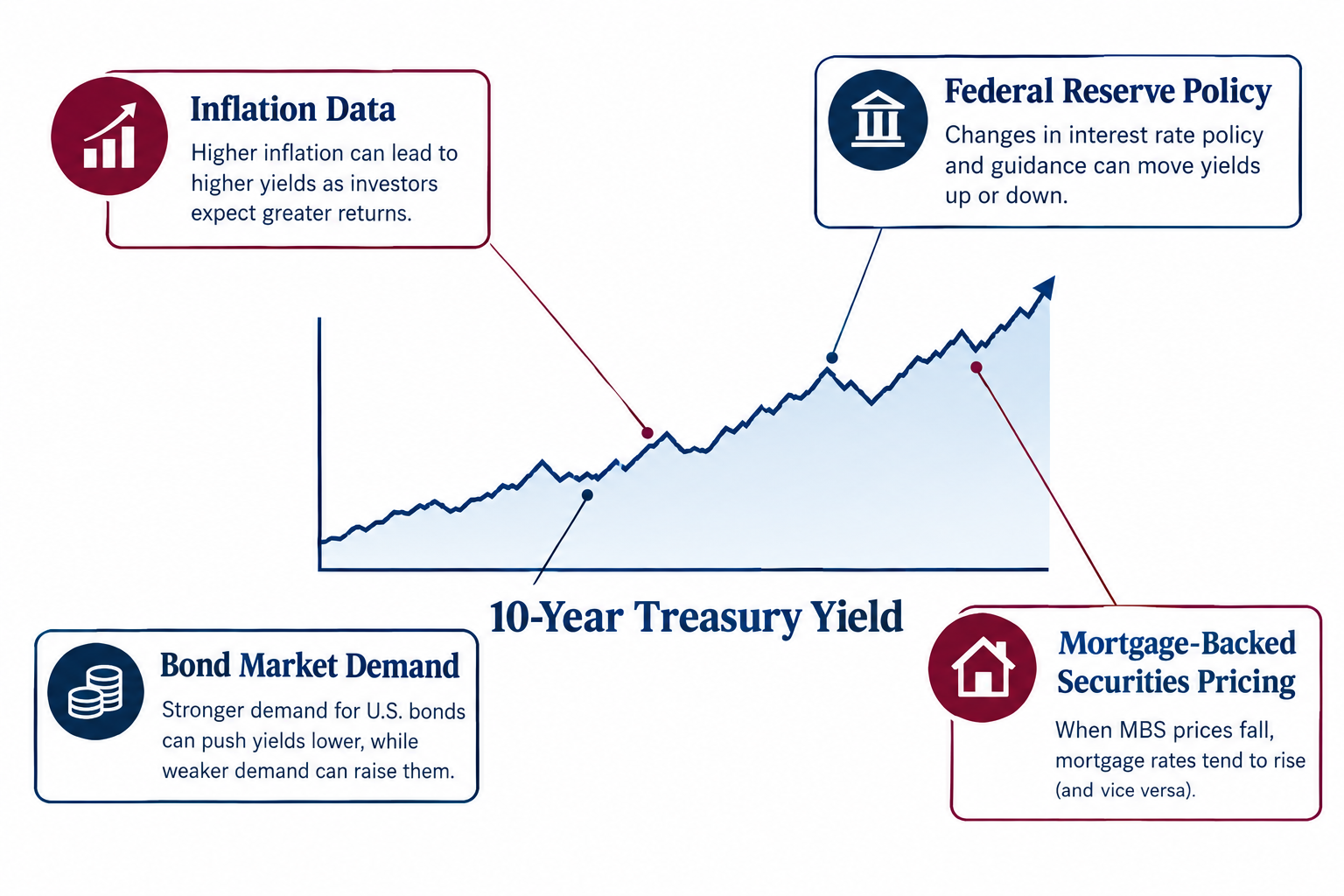
That's the "extraordinary" part of this move. A 25-basis-point jump in seven days is a big swing for a market that usually crawls [1]. The 10-year Treasury yield pushed well above where it sat earlier in 2026, and that spike dragged mortgage pricing up with it [2]. Add in energy-price volatility, federal deficit concerns, and geopolitical risk, and lenders price in extra caution across every loan they write [4].
Common mistake: assuming your rate is tied to whatever the Fed announces that week. It isn't. Treasury yields move daily; Fed meetings happen eight times a year. Watch the bond market, not the headline about the Fed.
Fresh data from the Mortgage Bankers Association backs up how fast buyers reacted: total mortgage applications dropped about 6% in the week ending September 25 as affordability tightened for both purchase and refinance borrowers [4].
How to Get a Lower Mortgage Rate Even With Mortgage Rates at 7.28%
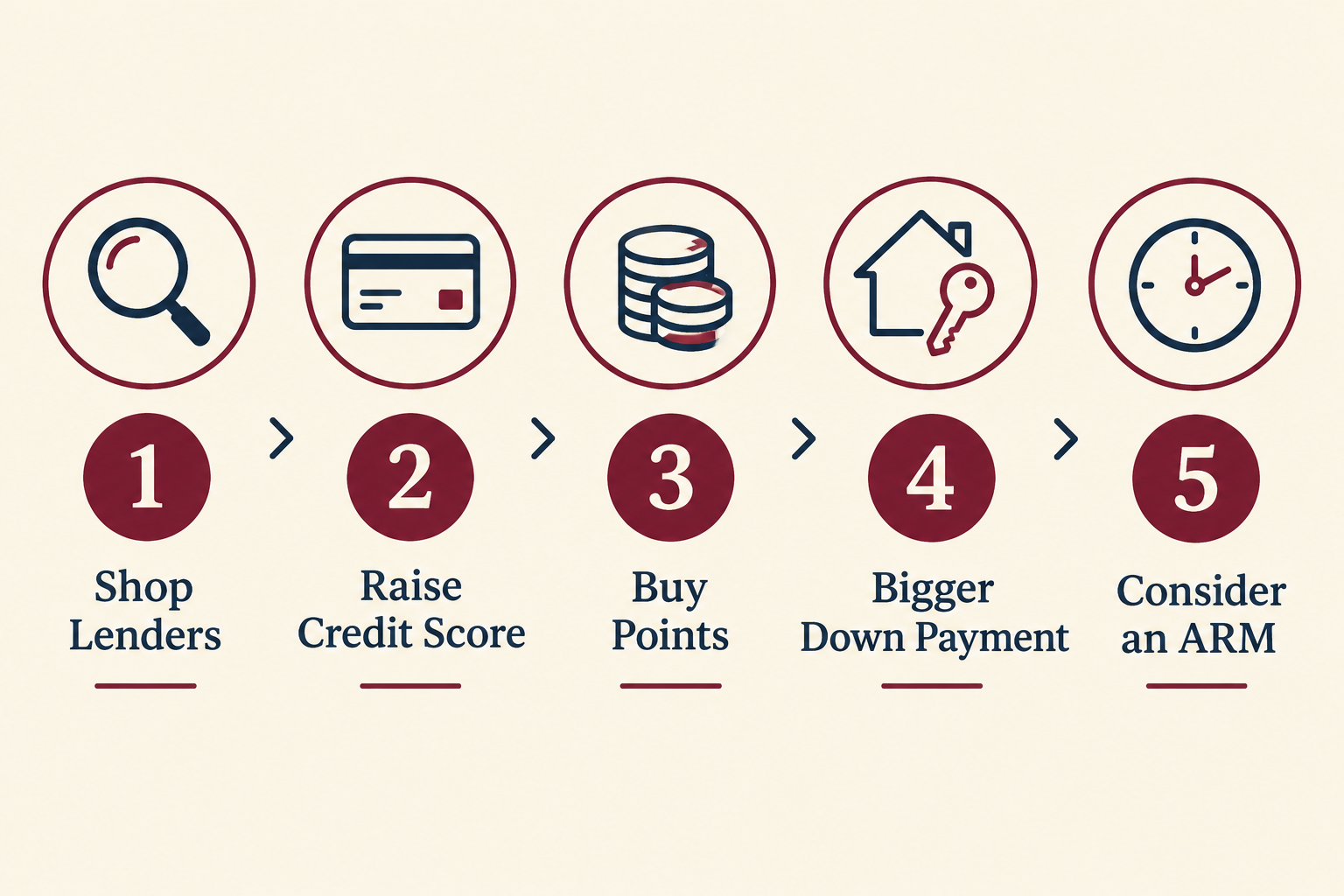
You don't control the Treasury market, but you control almost everything a lender uses to price your individual quote. Credit score, debt-to-income ratio, down payment size, loan type, and lender selection all move the number you're actually offered, and that number can land well below or above the national 7.28% average [4].
Here's where the real savings live.
Shop at Least Three Lenders
Getting multiple quotes is the single easiest way to lower your rate without changing your finances at all. Lenders price risk differently, and one loan officer's "aggressive" quote can be another's standard offer. Pull three to five Loan Estimates on the same day so the comparison reflects the same market conditions, and compare the APR line, not just the headline interest rate.
Decision rule: if your rate quotes vary by more than 0.25%, keep shopping. That gap is real money over 30 years.
Raise Your Credit Score
Lenders generally reserve their sharpest pricing for borrowers with the most impeccable credit files, meaning scores in the high 700s and above. Pay down revolving balances, fix any reporting errors, and avoid opening new credit lines in the 90 days before you apply. A jump from the high 600s into the mid-700s can shave a meaningful chunk off your quoted rate.
Edge case: if your score sits in a borderline tier (think 719 versus 720), waiting 30 to 60 days to push it over the line can be worth more than rushing into a rate lock. Let it cook before you see results on a refinance or a purchase application.
Buy Down Your Rate With Points
One mortgage point costs 1% of your loan amount upfront and typically lowers your rate by roughly a quarter point, though the exact math varies by lender. Whether points are worth it depends on how long you'll keep the loan. If you plan to stay put past your breakeven period (the point where monthly savings catch up to what you paid), points pay off. If you expect to sell or refinance within three to five years, skip them.
For a deeper breakdown of how different loan structures stack up side by side, our guide to comparing mortgage types walks through the tradeoffs loan officers won't always volunteer on their own.
Put More Money Down
A bigger down payment lowers your loan-to-value ratio, and lenders reward that with better pricing because they're taking on less risk per dollar lent. Moving from 10% down to 20% down often improves your rate tier and also removes private mortgage insurance, which stacks two savings into one move.
Consider an Adjustable-Rate Mortgage
ARMs picked up to 10.3% of applications recently because their starting rate ran roughly 80 basis points below comparable fixed loans [4]. Jeremy Luke of Chase Home Lending says an ARM can make sense for borrowers who expect to move or refinance within four or five years, but he's clear it isn't the right fit for everyone, since payments can climb once the fixed period ends [4]. Choosing an ARM when your timeline actually matches that window is so based. Choosing one because the teaser rate looks good is how people get burned.
Should You Lock In Your Rate Now or Wait for Rates to Drop
Lock your rate once you're under contract and comfortable with the payment, because waiting on a prediction is a gamble, not a strategy. Nobody, including the economists making forecasts, can promise rates drop on your timeline.
Some economists do see room for relief. Capital Economics projects the 30-year fixed could average closer to 6.25% by the end of 2027 if energy prices ease and markets price out further tightening expectations [9]. That's over a year away, and forecasts shift monthly. Meanwhile, every half-point increase in rates has already cut roughly $19,000 off a typical buyer's purchasing power, according to housing economists tracking the impact of 2026's rate climb [10].
Choose to lock now if: you've found a home that fits your budget and you don't want to re-shop financing in three weeks. Choose a float-down option (if your lender offers one) if: you're nervous about locking into 7.28% right before a possible dip. Ask about float-down terms before you sign anything.
APR vs Interest Rate: What's the Real Difference
Your interest rate is the cost of borrowing the principal, while your APR (annual percentage rate) wraps that rate together with lender fees, points, and certain closing costs into one yearly percentage. APR is almost always the higher number, and it's the one that lets you compare loans apples to apples.
A lender can advertise a lower interest rate while burying extra fees that push the APR above a competitor's offer. Always put the APR lines from each Loan Estimate side by side before picking a lender. That's the real comparison tool, not the rate printed in bold on a flyer.
Can You Refinance Your Mortgage If Rates Are High
Yes, refinancing at 7.28% can still make sense if you're not refinancing to chase a lower rate. Common reasons include pulling equity through a cash-out refinance, dropping mortgage insurance, switching loan terms, or consolidating higher-interest debt.
If your current mortgage already carries a rate below today's average, a rate-and-term refinance probably doesn't pencil out right now. But if you're sitting on built-up equity and need cash for a renovation or investment move, a first lien HELOC can outperform a traditional cash-out refinance for investors who want to keep their original low rate intact while still tapping equity.
Common mistake: refinancing purely because "rates might drop later" without running the breakeven math on closing costs first.
Fixed-Rate vs Adjustable-Rate Mortgages: Which Makes Sense Right Now
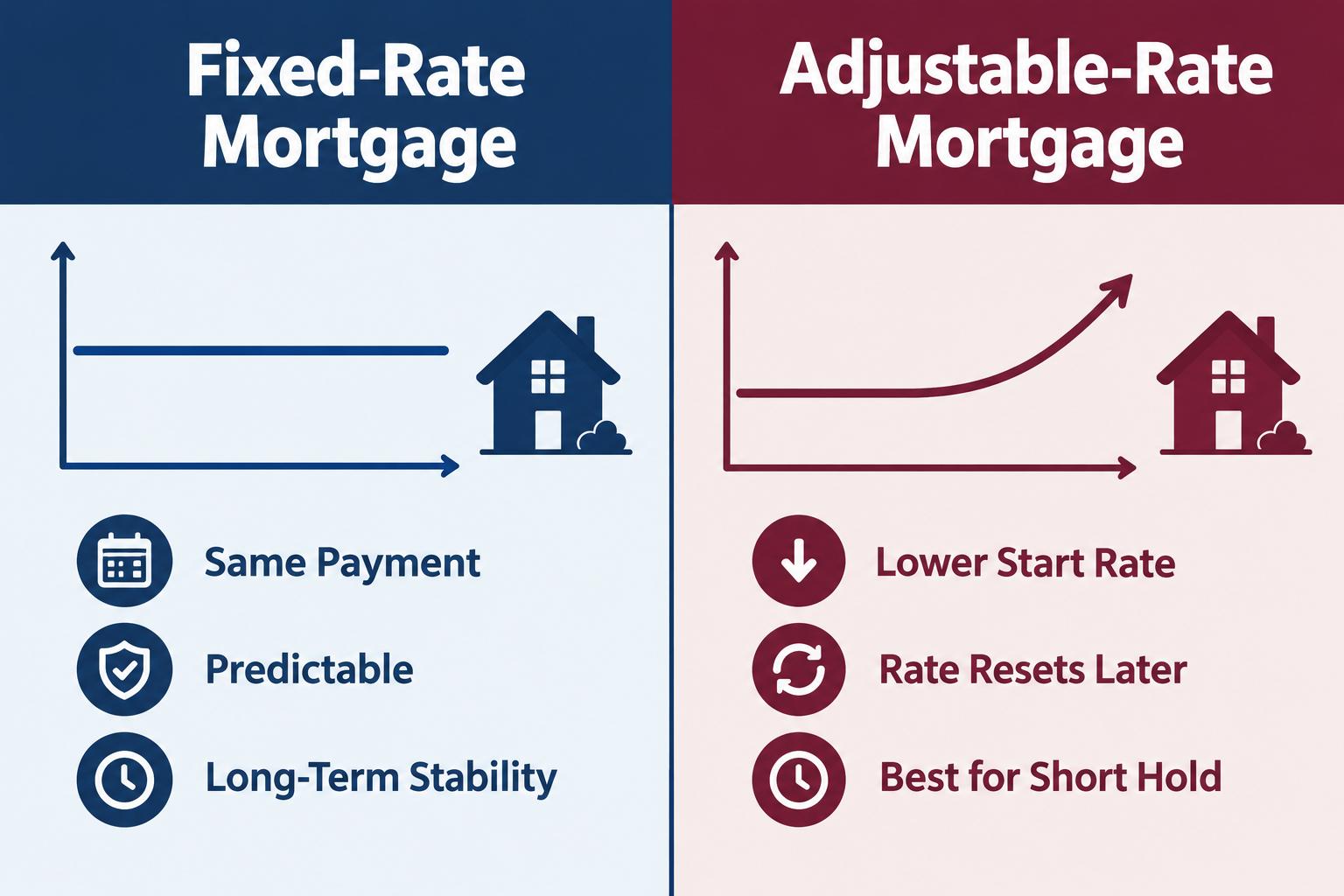
Fixed-rate loans lock your payment for the life of the loan, while ARMs start lower and adjust after an initial period, usually five, seven, or ten years. At 7.28%, the choice comes down almost entirely to how long you plan to keep the loan.
| Factor | Fixed-Rate Mortgage | Adjustable-Rate Mortgage |
|---|---|---|
| Starting rate | Higher, but locked | Roughly 80 basis points lower at reset start [4] |
| Payment stability | Same payment for 15 or 30 years | Can rise sharply after the fixed period ends |
| Best fit | Staying 10+ years, want predictability | Selling or refinancing within 4 to 5 years |
Quick example: a buyer planning to relocate for work in four years and confident they'll sell before any rate reset could reasonably choose an ARM to capture the lower starting payment. A buyer planning to raise kids in the same house for 15 years is better served locking in a fixed rate, even at 7.28%.
For a fuller side-by-side on how these loan structures compare against FHA, VA, and conventional options, check our guide comparing mortgage types.
How Long Does It Take to Close on a Mortgage at Current Rates
Most purchase loans close in 30 to 45 days from the date you go under contract, and that timeline hasn't meaningfully changed because rates rose. The slowdown buyers are feeling right now comes from pre-approval delays and lenders double-checking income and asset documentation more closely in a tighter-margin environment.
Edge case: cash-out refinances and loans with appraisal complications can stretch past 45 days. Build in a buffer if your purchase contract has a tight closing deadline and your lender is backed up.
What Closing Costs Look Like When Mortgage Rates Hit 7.28%
Closing costs typically run 2% to 5% of your loan amount and cover lender fees, title insurance, appraisal, recording fees, and prepaid items like property tax and homeowners insurance. Higher rates don't directly raise closing costs, but they do raise your prepaid interest line and your first escrow deposit slightly, since both are calculated off your rate.
Builders have responded by leaning harder into incentives. In September, 66% of homebuilders offered some form of sales incentive, up from 63% the month before, and the most common forms were temporary rate buydowns, permanent rate reductions, and straight closing-cost credits [4]. If you're buying new construction, ask directly whether any of those three are on the table before you negotiate price.
Is Now a Good Time to Buy a House With Rates at 7.28 Percent
Now can be a reasonable time to buy if you've found a home that fits your budget, you're planning to stay put for several years, and you're not betting the purchase on a rate drop that may or may not arrive. Waiting indefinitely for "lower rates" has its own cost, since home prices rarely pause while buyers sit on the sidelines.
Mike Fratantoni, chief economist at the Mortgage Bankers Association, has pointed to bond-market reaction following Federal Reserve developments and shifting inflation expectations as the real driver behind the recent climb in longer-term mortgage rates [10]. Sam Khater, Freddie Mac's chief economist, has noted the housing market is still getting support from otherwise favorable economic conditions, even with rates elevated [3]. Translation: the fundamentals underneath the housing market haven't collapsed, they're just more expensive to finance than they were a year ago.
For investors weighing whether to buy now or redirect capital elsewhere, our breakdown of real estate investment strategies and alternatives to REITs for passive income covers how rate environments like this one shift the math on rental yield and leveraged purchases. First-time buyers weighing financing options should also look at our mortgage guide built for Gen Z buyers, which breaks down loan types for buyers entering the market for the first time at a tougher rate point than their parents faced.
Choose to buy now if: you're financially ready, found the right property, and plan to refinance later if rates fall. Choose to wait if: your budget only works at a rate meaningfully below today's average and you have flexibility on timing.
Frequently Asked Questions
Why did mortgage rates jump to 7.28% so fast?
Rates rose 25 basis points in one week because the 10-year Treasury yield spiked, driven by inflation concerns, energy-price volatility, and federal deficit worries pushing bond investors to demand higher returns [1][4].
Is 7.28% the highest mortgage rate in 2026?
It's the highest 30-year fixed average Freddie Mac has reported recently, following a six-week climb up from the mid-6% range over the summer [1].
Do all lenders charge 7.28% right now?
No. 7.28% is a national average. Your actual quote depends on your credit score, down payment, debt-to-income ratio, and loan type, so individual offers can land above or below that number [4].
Should I wait for rates to fall before buying?
Only if your budget genuinely depends on a lower rate. Some forecasts see rates easing toward 6.25% by late 2027, but that's a projection, not a guarantee, and home prices typically keep climbing while buyers wait [9].
Are mortgage points worth it at 7.28%?
Points are worth it if you plan to keep the loan past the breakeven point, generally several years. If you expect to move or refinance sooner, the upfront cost likely won't pay off in time.
Is an ARM a bad idea right now?
Not automatically. ARMs carried rates roughly 80 basis points below fixed loans recently, which can work well for buyers planning to sell or refinance within four to five years [4]. It's a poor fit for buyers planning to stay long-term.
What credit score gets the best mortgage rate?
Lenders generally save their sharpest pricing for scores in the high 700s and above, with noticeable rate increases as scores drop below the high 600s.
Can I still refinance if rates are higher than my current loan?
Yes, but it usually only makes sense for reasons other than lowering your rate, such as a cash-out refinance, dropping mortgage insurance, or consolidating debt.
Conclusion
Mortgage rates just hit 7.28%, and that number is a national average, not a sentence. The real move is shopping three or more lenders on the same day, cleaning up your credit before you apply, deciding whether points actually pay off for your timeline, and sizing your down payment to get the best loan-to-value tier available to you. Pair that with an honest answer about how long you'll keep the loan, since that single answer decides whether fixed or adjustable makes more sense.
We're not gate keeping any of this. Pull your Loan Estimates, run the APR comparison, ask builders about rate buydowns if you're buying new, and lock your rate once the numbers work for your budget instead of waiting on a forecast nobody can guarantee.
References
[1] Mortgage Rates Average 728 – https://freddiemac.gcs-web.com/news-releases/news-release-details/mortgage-rates-average-728
[2] Mortgage30us – https://fred.stlouisfed.org/series/mortgage30us
[3] Pmms – https://www.freddiemac.com/pmms
[4] How To Get A Lower Mortgage Rate – https://www.cnn.com/2026/10/01/economy/how-to-get-a-lower-mortgage-rate
[7] Mortgage Rates Average 7 Pzbsu7fzde4c – https://www.stocktitan.net/news/FMCC/mortgage-rates-average-7-pzbsu7fzde4c.html
[9] 30 Year Mortgage Rate – https://tradingeconomics.com/united-states/30-year-mortgage-rate
[10] Mortgage Rates – https://finance.yahoo.com/personal-finance/mortgages/best/mortgage-rates/