

Last updated: July 20, 2026

Quick Answer: A first time home buyer conventional loan with 3% down is a real, widely available mortgage product, not a myth. Programs like Fannie Mae's HomeReady and Freddie Mac's Home Possible let qualified buyers put down as little as 3% on a conventional loan, skipping the FHA route entirely. You'll need a minimum 620 credit score, a debt-to-income ratio under 45%, and the home must be a primary residence.
Key Takeaways
- First time home buyers can qualify for a conventional loan with just 3% down through the Conventional 97 loan, HomeReady, or Home Possible programs.
- The minimum credit score for a 3% down conventional loan is typically 620, though some lenders prefer 640 or higher for the best rates.
- Private mortgage insurance (PMI) is required when putting less than 20% down, but it cancels automatically once you reach 20% equity, unlike FHA mortgage insurance.
- Conventional 97 loan requirements allow gift funds from family members to cover the entire 3% down payment.
- The FHA loan vs conventional loan debate comes down to your credit score and long-term costs, conventional wins for buyers with scores above 680.
- Closing costs on a 3% down conventional loan typically run 2% to 5% of the purchase price and are separate from the down payment.
- Student loan debt does not automatically disqualify you, lenders use your actual monthly payment (or 0.5-1% of the balance) in DTI calculations.
- A low home appraisal on a 3% down loan can create real problems, the gap between the appraised value and purchase price must be covered out of pocket or renegotiated.
What Is a Conventional Loan With 3% Down Payment?
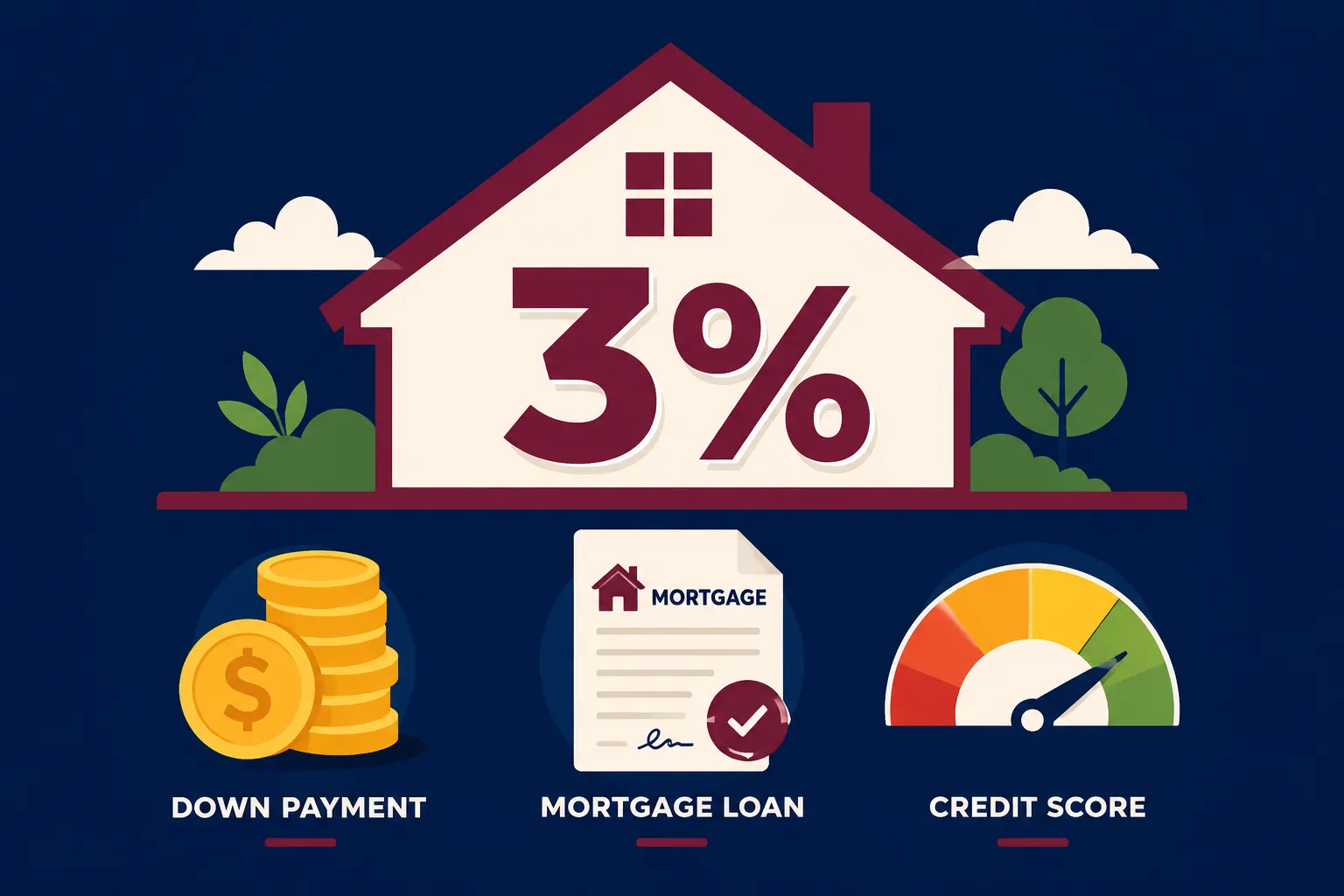
A conventional loan with 3% down is a mortgage not backed by a government agency (like the FHA or VA) that allows qualifying buyers to purchase a home with a down payment as low as 3% of the purchase price. Three specific programs make this possible: the Conventional 97, Fannie Mae HomeReady, and Freddie Mac Home Possible.
Here's how each one breaks down:
| Program | Backed By | Who It's For | Income Limit? |
|---|---|---|---|
| Conventional 97 | Fannie Mae / Freddie Mac | First-time buyers only | No |
| HomeReady | Fannie Mae | Low-to-moderate income buyers | Yes (80% AMI) |
| Home Possible | Freddie Mac | Low-to-moderate income buyers | Yes (80% AMI) |
The Conventional 97 is the most flexible of the three for first-time buyers because it has no income cap. HomeReady and Home Possible are built for buyers in lower income brackets and come with additional perks like reduced PMI rates.
Decision rule: If your income is above the area median, go with Conventional 97. If your income falls at or below 80% of the area median income (AMI), HomeReady or Home Possible will likely save you more money on PMI.
First Time Home Buyer Conventional Loan: What You Actually Need to Qualify
A first time home buyer conventional loan is absolutely within reach for most buyers, but the requirements are specific. Here's the full picture of what lenders look at:
Credit Score
- Minimum: 620 for most lenders
- Sweet spot: 680+ for competitive rates
- Ideal: 740+ for the best pricing
Down Payment
- Minimum: 3% of the purchase price
- On a $350,000 home, that's $10,500
Debt-to-Income Ratio (DTI)
- Maximum: 45% for most conventional programs
- Some lenders allow up to 50% with compensating factors (strong credit, reserves)
Employment and Income
- Two years of consistent employment history preferred
- Self-employed borrowers need two years of tax returns
- W-2 employees need recent pay stubs and tax returns
Property Requirements
- Must be a primary residence (no investment properties at 3% down)
- Single-family homes, condos, and 2-unit properties may qualify
- The home must meet conventional appraisal standards
Common mistake: Many first-time buyers assume the 3% down is the only money they need. It's not. Closing costs are separate, and they're significant. More on that below.
For a full breakdown of the home buying process from start to finish, the first-time home buyer guide at Real Estate Rank IQ covers every stage.
Can a First Time Home Buyer Get a Conventional Loan, Even With Student Debt?
Yes, student loan debt does not disqualify you from a first time home buyer conventional loan. What matters is how that debt affects your debt-to-income ratio.
Lenders calculate DTI by adding your monthly debt payments (including the projected mortgage payment) and dividing by your gross monthly income. For student loans specifically:
- If you're on an income-driven repayment plan, lenders use your actual monthly payment.
- If your loans are in deferment or forbearance, lenders typically use 0.5% to 1% of the total balance as a monthly payment estimate.
Example: You have $45,000 in student loans in deferment. At 1%, the lender counts $450/month against your DTI, even though you're not currently paying it.
So based strategy: Get your student loans out of deferment and onto an income-driven repayment plan before applying. A $0 or $50/month payment is far better for your DTI than a $450 estimated payment.
The key is keeping total DTI under 45%. If student debt is pushing you over that threshold, paying down other debts (credit cards, car loans) first will have a faster impact on your DTI than making extra student loan payments.
What Credit Score Do You Need for a 3% Down Conventional Loan?
The minimum credit score for a 3% down conventional loan is 620. That's the floor, but the rate you get at 620 looks very different from the rate at 740.
Here's why this matters: conventional loans use risk-based pricing. The lower your credit score, the higher your interest rate and PMI premium. This is called a Loan Level Price Adjustment (LLPA), and it can add thousands of dollars to your loan cost over time.
Credit score impact on rate (general estimate):
- 620-639: Expect a rate roughly 1.5-2% higher than the best available rate
- 640-679: Moderate pricing adjustment, still manageable
- 680-719: Solid pricing, PMI costs begin to drop
- 720-739: Near-best pricing
- 740+: Best available rates and lowest PMI premiums
Edge case: If your score is between 620 and 639, it's worth asking whether spending 3-6 months improving your score to 640 or 660 would save more money long-term than buying now. Sometimes waiting 90 days to let it cook before you see results saves you $20,000+ over the life of the loan.
How Much Does Mortgage Insurance Cost on a 3% Down Conventional Loan?
PMI on a conventional loan with 3% down typically runs between 0.5% and 1.5% of the loan amount annually, depending on your credit score, loan size, and lender. On a $350,000 loan, that's roughly $145 to $437 per month added to your payment.
The impeccable advantage of conventional PMI over FHA mortgage insurance: it cancels. Once you reach 20% equity in your home, either through payments, appreciation, or a combination, you can request PMI removal. By law (Homeowners Protection Act), lenders must automatically cancel PMI when you reach 22% equity based on the original amortization schedule.
FHA loans charge a mortgage insurance premium (MIP) for the life of the loan if you put less than 10% down. That's a major cost difference over a 30-year mortgage.
PMI cost factors:
- Credit score (higher score = lower PMI)
- Loan-to-value ratio (closer to 80% = lower PMI)
- Loan type (fixed vs. adjustable)
- Lender-specific pricing
For a deeper comparison of how these costs play out over time, check out the FHA loan vs conventional loan breakdown, it runs the actual numbers side by side.
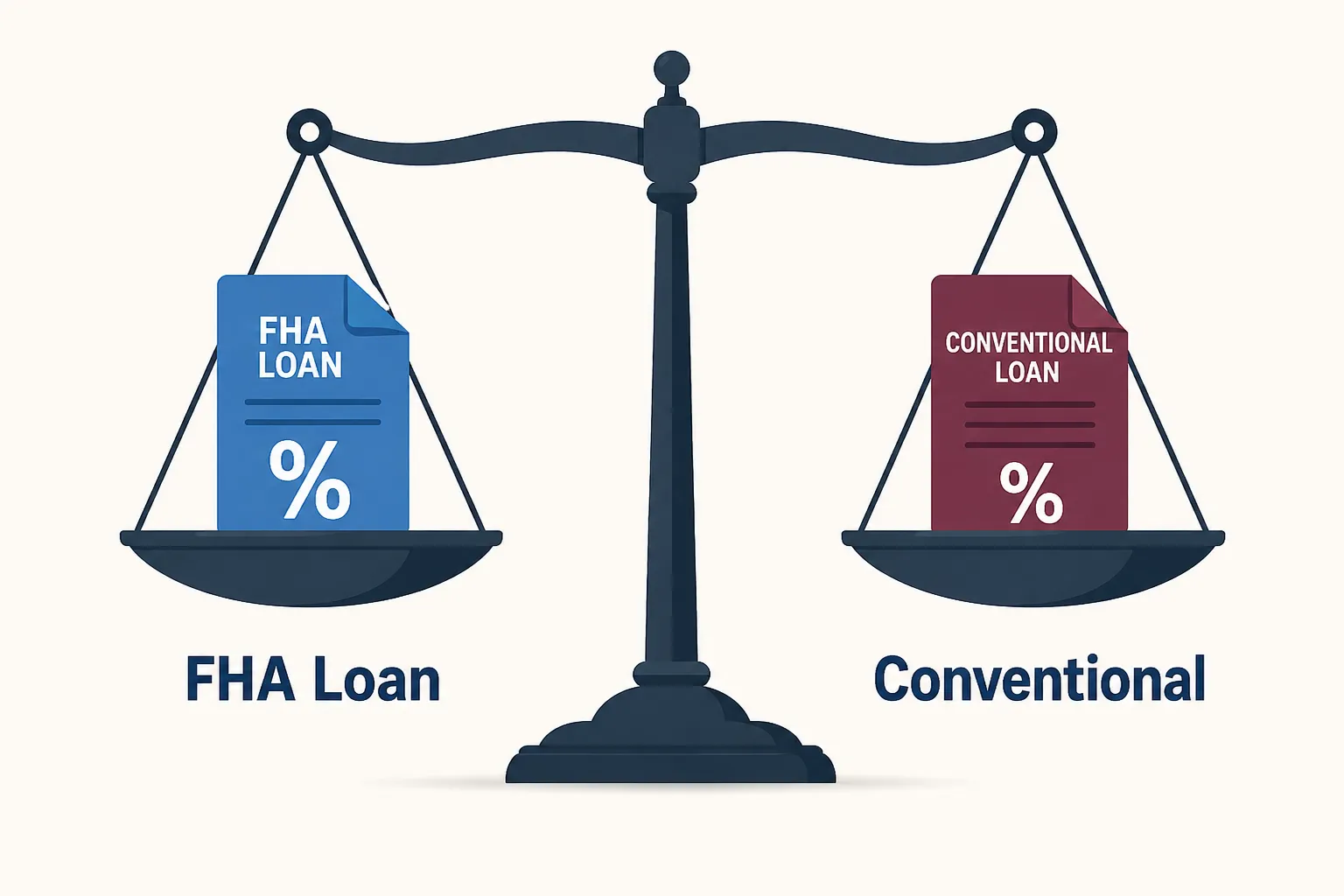
FHA Loan vs Conventional 3% Down: Which One Wins?
The difference between FHA and conventional 3% down comes down to three variables: your credit score, your income, and how long you plan to stay in the home.
Choose a conventional loan if:
- Your credit score is 680 or higher
- You plan to stay in the home long enough to cancel PMI
- Your income is stable and well-documented
- You want to avoid lifetime mortgage insurance
Choose an FHA loan if:
- Your credit score is below 640
- You have a higher DTI (FHA allows up to 57% in some cases)
- You have recent credit events (bankruptcy, collections)
- You need more flexibility on the property condition
The FHA loan vs conventional loan question is not one-size-fits-all. A buyer with a 610 credit score and a recent late payment is going to have a much better experience with FHA. A buyer with a 700 score and clean credit history will almost always pay less over time with a conventional loan.
The gatekeeping reality: Some lenders push buyers toward FHA loans because the approval is easier, not because it's better for the buyer. Always ask your lender to run both scenarios and show you the total cost comparison over 5 and 10 years.
What Are the Income Requirements for a 3% Down Conventional Loan?
There is no minimum income requirement for a standard Conventional 97 loan, but there is a debt-to-income ceiling. Your income must be high enough that your total monthly debts (including the new mortgage) don't exceed 45% of your gross monthly income.
For HomeReady and Home Possible programs, there is an income cap: your income must be at or below 80% of the Area Median Income (AMI) for your location. This varies significantly by market.
Example: In a metro area where the AMI is $90,000, the income limit for HomeReady would be $72,000. In a rural area where AMI is $55,000, the cap drops to $44,000.
Income types that count:
- W-2 wages and salary
- Self-employment income (2-year average from tax returns)
- Rental income (with documentation)
- Social Security and disability income
- Child support and alimony (if documented and likely to continue)
- Part-time income (if consistent for 2+ years)
If your income fluctuates, seasonal work, commission-heavy roles, gig economy income, lenders will average it over 24 months. Fresh employment history matters here. Less than two years at a job isn't automatically disqualifying, but it requires a stronger overall file.
For buyers navigating tighter budgets, the top down payment strategies guide covers how to stack savings programs alongside a conventional loan.
What Closing Costs Should You Expect With a 3% Down Conventional Loan?
Closing costs on a conventional loan typically run 2% to 5% of the purchase price, and they're paid separately from your down payment. On a $350,000 home, that's an additional $7,000 to $17,500 due at closing.
Common closing cost line items:
- Loan origination fee: 0.5%,1% of the loan amount
- Appraisal fee: $400,$700
- Title insurance: $1,000,$2,500 (varies by state)
- Escrow/attorney fees: $500,$1,500
- Prepaid interest: depends on closing date
- Homeowners insurance (first year): $800,$2,000+
- Property tax escrow: 2-6 months of taxes upfront
- Recording fees: $50,$250
Ways to reduce closing costs:
- Negotiate seller concessions (ask the seller to cover some costs)
- Shop multiple lenders, origination fees vary widely
- Close at the end of the month to reduce prepaid interest
- Look for lender credits in exchange for a slightly higher rate
You can also use an AI tool to estimate your specific closing costs before you even talk to a lender. The closing cost calculator guide using ChatGPT or Gemini walks through exactly how to do that.
Is 3% Down Enough to Avoid PMI on a Conventional Loan?
No, 3% down is not enough to avoid PMI on a conventional loan. PMI is required any time your down payment is less than 20%. At 3% down, your loan-to-value ratio is 97%, which is well above the 80% threshold needed to skip PMI.
The only ways to avoid PMI with less than 20% down:
- Lender-paid PMI (LPMI): the lender covers PMI in exchange for a higher interest rate
- Piggyback loan (80/10/10): a second loan covers 10%, you put 10% down, first mortgage is at 80% LTV
- Some credit union programs with their own PMI waiver policies
For most first-time buyers, accepting PMI and planning to cancel it once equity hits 20% is the most straightforward path. The extraordinary thing about conventional PMI is that it's temporary, and home appreciation can accelerate the timeline significantly.
Can You Use Gift Money for a 3% Down Conventional Loan?
Yes, the entire 3% down payment on a Conventional 97 loan can come from a gift from a family member. HomeReady and Home Possible programs also allow gift funds.
Gift fund rules for conventional loans:
- The gift must come from a family member (parent, sibling, grandparent, spouse, domestic partner)
- A gift letter is required stating the funds are a gift, not a loan
- The lender will verify the transfer via bank statements
- No repayment is expected or allowed, if repayment is implied, it becomes a loan and affects DTI
What you cannot do: Use a gift from a non-family member (friend, employer, unrelated third party) without additional documentation. Some programs have stricter definitions of acceptable donors.
Fresh tip: If you're receiving gift funds, make sure the money is in your bank account at least 60 days before applying. Large deposits that appear right before application trigger additional scrutiny and documentation requirements.
What Happens If My Home Appraisal Comes in Low on a 3% Down Loan?
A low appraisal on a 3% down conventional loan creates a real problem, and it's one of the most common surprises first-time buyers face. The lender will only loan based on the appraised value, not the purchase price. If the appraisal comes in below the contract price, you have three options:
- Renegotiate the price, ask the seller to lower the price to the appraised value
- Cover the gap out of pocket, pay the difference between the appraised value and the purchase price in cash
- Walk away, if your contract includes an appraisal contingency, you can exit without penalty
Example: You agreed to pay $380,000. The appraisal comes in at $360,000. The lender will base the loan on $360,000. You either need to come up with an extra $20,000, get the seller to drop the price, or walk.
At 3% down, you're already stretching your cash reserves. A $20,000 appraisal gap can be devastating if you haven't budgeted for it. This is why having a real estate agent who knows how to write a strong appraisal contingency is not optional, it's essential.
How Long Does It Take to Get Approved for a 3% Down Conventional Loan?
The approval timeline for a conventional loan typically runs 30 to 45 days from application to closing, though some lenders can close in as few as 21 days with a clean file.
The approval timeline broken down:
- Pre-approval: 1-3 business days (sometimes same day)
- Underwriting (after accepted offer): 7-14 days
- Appraisal: 5-10 days (can run parallel with underwriting)
- Conditional approval and clearing conditions: 3-7 days
- Clear to close and closing: 1-3 days
What slows it down:
- Missing documents (tax returns, bank statements, pay stubs)
- Employment verification delays
- Appraisal scheduling backlogs in hot markets
- Title issues on the property
- Last-minute credit inquiries or new debt
What speeds it up:
- Getting pre-approved before you start house hunting
- Having all documents ready before you make an offer
- Choosing a lender with strong local appraisal networks
- Avoiding new credit applications after pre-approval
Best Lenders for First Time Home Buyer Conventional Loans With 3% Down
The best lenders for a first time home buyer conventional loan with 3% down are those who actively originate Conventional 97, HomeReady, and Home Possible loans, and who have experience working with first-time buyers specifically.
Types of lenders to consider:
- National banks (Chase, Bank of America, Wells Fargo): competitive rates, strong online tools, but can be slower on communication
- Credit unions: often have lower fees and more flexible underwriting for members
- Mortgage brokers: access to multiple lenders, can shop your file for the best rate
- Online lenders (Rocket Mortgage, Better, loanDepot): fast pre-approvals, strong digital experience, may lack local market knowledge
- Community Development Financial Institutions (CDFIs): excellent for buyers with non-traditional income or credit histories
What to compare when shopping lenders:
- Interest rate AND annual percentage rate (APR)
- Origination fees
- PMI premium quotes
- Estimated closing costs
- Timeline to close
- Communication and responsiveness
For a ranked list of lenders who move fast and work well with first-time buyers, the best mortgage lenders for first-time investors guide covers the approval speed and requirements in detail.
Common Mistakes First Time Buyers Make With 3% Down Loans
The first time home buyer conventional loan with 3% down is an extraordinary tool, but it gets misused constantly. Here are the mistakes that cost buyers the most:
1. Forgetting closing costs exist
The 3% down payment is just part of the cash needed. Closing costs add another 2-5%. Buyers who show up to closing underfunded lose their earnest money and the deal.
2. Opening new credit accounts after pre-approval
Buying furniture, a car, or opening a new credit card after pre-approval can tank your credit score or push your DTI over the limit. Lenders pull credit again right before closing.
3. Changing jobs mid-process
Switching employers, even for a higher salary, can pause or kill your approval if the new job is in a different industry or is a commission-based role.
4. Skipping the rate comparison
Accepting the first rate quote is leaving money on the table. Getting quotes from at least three lenders is the minimum. The difference between a 6.75% and 7.25% rate on a $350,000 loan is roughly $115/month, or $41,400 over 30 years.
5. Underestimating PMI costs
PMI is real money. Factor it into your monthly budget before you commit to a purchase price.
6. Maxing out the approval amount
Being approved for $400,000 doesn't mean $400,000 is the right purchase price. Leave room for repairs, maintenance, and life.
For Gen Z buyers navigating this process specifically, the first-time home buyer tips for Gen Z article at Real Estate Rank IQ is worth a read.
FAQ: First Time Home Buyer Conventional Loan With 3% Down
Q: What is the minimum down payment for a conventional loan for a first-time home buyer?
A: The minimum down payment for a conventional loan as a first-time home buyer is 3%, available through the Conventional 97, HomeReady, and Home Possible programs.
Q: Can a first-time home buyer get a conventional loan with no down payment?
A: No, conventional loans require at least 3% down. If you want zero down, look at VA loans (for veterans) or USDA loans (for rural properties). Some state and local first-time buyer programs offer down payment assistance that can effectively bring your out-of-pocket cost to zero, but the loan itself still has a down payment.
Q: What is the difference between a first-time home buyer loan and a conventional loan?
A: "First-time home buyer loan" is not a single product, it's a category. A conventional loan with 3% down IS a first-time home buyer loan when structured through Conventional 97, HomeReady, or Home Possible. The difference is that some first-time buyer programs (like FHA or state bond programs) have different backing, insurance structures, and eligibility rules.
Q: Is FHA or conventional better for a first-time home buyer?
A: Conventional is better if your credit score is 680 or above, because PMI cancels and total costs are lower long-term. FHA is better if your score is below 640 or you have a recent credit event, because the approval standards are more flexible.
Q: What are the Conventional 97 loan requirements?
A: You must be a first-time buyer (no ownership in the past 3 years), have a 620+ credit score, put 3% down, and the property must be a primary residence. No income limits apply.
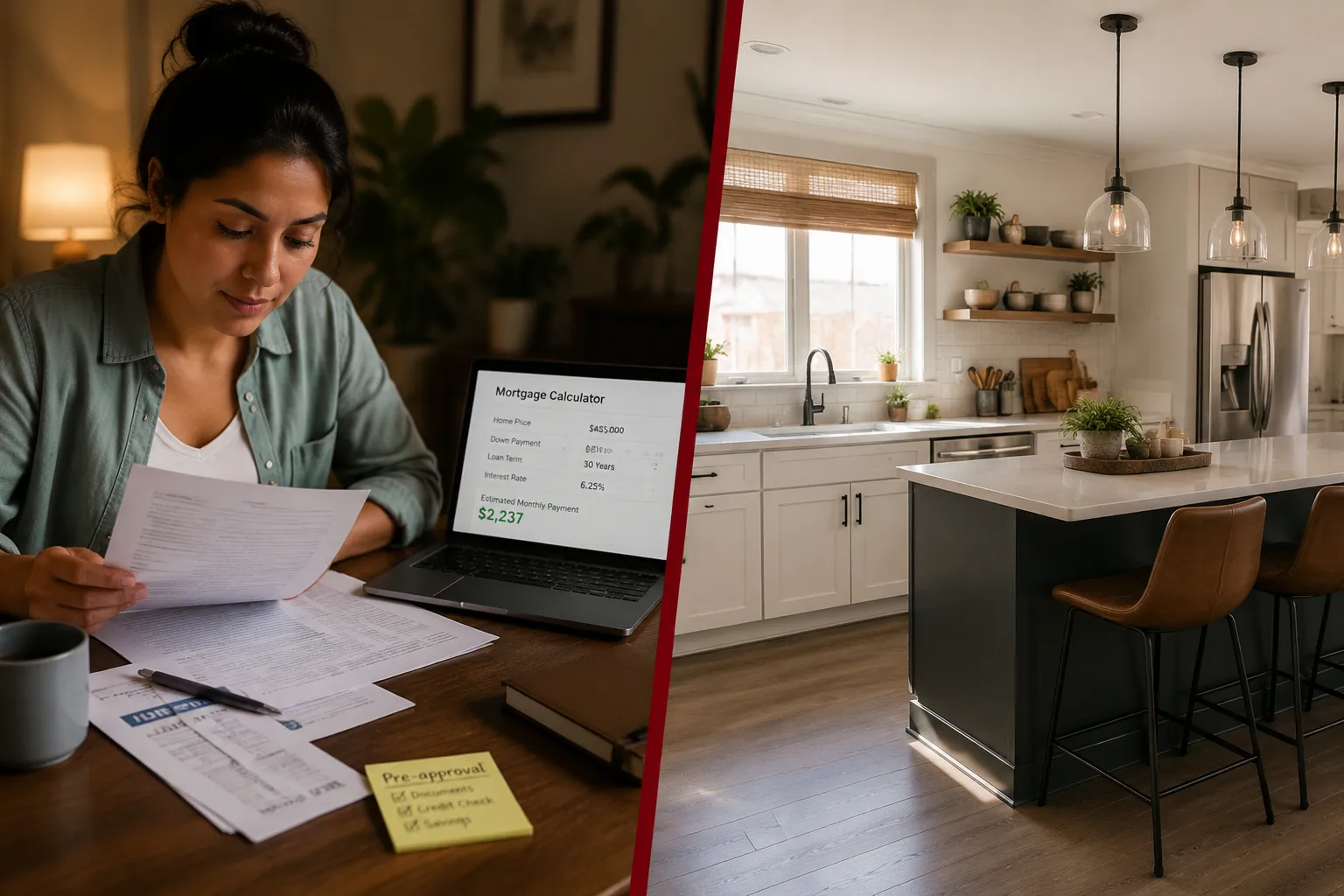
Q: Can I use a conventional loan calculator to estimate my payment?
A: Yes, any conventional loan calculator that allows you to input PMI will give you a realistic monthly payment estimate. Make sure to include PMI (estimate 0.5-1% of loan amount annually), property taxes, and homeowners insurance for the full picture.
Q: How is a 5% down conventional loan different from 3% down?
A: The 5% down conventional loan requirements are slightly less restrictive, it's available to both first-time and repeat buyers, and PMI costs are lower at 5% down vs 3% down because the loan-to-value ratio is better. If you can comfortably put 5% down, it reduces your PMI premium and monthly payment.
Q: Do first-time home buyer conventional loans have income limits?
A: The Conventional 97 program has no income limit. HomeReady and Home Possible cap income at 80% of the Area Median Income for your location.
Q: What happens to PMI if my home value goes up?
A: If your home appreciates and you reach 20% equity faster than expected, you can request a new appraisal and ask the lender to cancel PMI early. The lender is not required to cancel based on appreciation alone until you reach 80% LTV, but many will with a formal request and appraisal.
Q: Are there first-time home buyer conventional loans with zero down?
A: Not through standard conventional programs. However, some state housing finance agencies offer down payment assistance grants that can be layered on top of a conventional loan, effectively reducing your out-of-pocket cost to zero. These programs vary by state, check your state's housing finance agency website.
Conclusion: Your 3% Down Conventional Loan Action Plan
The first time home buyer conventional loan with 3% down is one of the most underused tools in the home buying playbook. Too many buyers assume they need 20% down or that FHA is their only option. That's gatekeeping that costs people years of unnecessary renting.
Here's your straight-line action plan:
- Check your credit score now. If it's below 620, spend 3-6 months improving it before applying. If it's between 620 and 680, get quotes anyway, but also ask what a 90-day credit improvement could save you.
- Calculate your DTI. Add up all monthly debt payments, divide by gross monthly income. If you're above 45%, pay down revolving debt first.
- Save for more than the down payment. Budget 3% down plus 3-4% for closing costs, plus 1-2% for immediate move-in expenses.
- Get pre-approved from at least three lenders. Compare APR, not just rate. Compare PMI quotes. Compare origination fees.
- Ask specifically about Conventional 97, HomeReady, and Home Possible. Not every loan officer will volunteer these options.
- Don't touch your credit after pre-approval. No new cards, no new loans, no large purchases until after closing.
The 2026 market has more inventory than buyers have seen in years, and that means more negotiating power, more seller concessions, and more time to make smart decisions. For a full picture of where the market stands right now, the U.S. home buyers market trends for 2026 is the right place to start.
The path to homeownership at 3% down is real, it's fresh, and it's available right now. Let it cook, do the prep work, get the right lender, and make your move.
Have questions about your specific situation? Reach out to the Real Estate Rank IQ team at news@realestaterankiq.com or explore more at realestaterankiq.com.