
Last updated: August 23, 2026

Quick Answer
Buying a house as a single woman is not a niche move. Single women account for 21% of all U.S. home buyers, making them the second-largest buyer group in the country, behind married couples. You can qualify for a mortgage on one income, and there are first-time buyer programs, down payment assistance, and grant options specifically designed for solo buyers. The process takes preparation, but it is absolutely doable.
Key Takeaways
- Single women home buyers statistics from NAR's 2025 Profile of Home Buyers and Sellers confirm that 21% of all buyers are single women, outpacing single men at 9%
- You can buy a house on one income. Lenders evaluate your debt-to-income ratio, credit score, and employment history, not your household size
- The median single female buyer earns $76,400 annually. That income can support a mortgage in many U.S. markets, especially with down payment assistance
- A credit score of 620 is the typical FHA minimum; conventional loans generally want 640 to 680 or higher for the best rates
- Down payment assistance programs exist in every state. Most buyers do not know they qualify
- Your emergency fund should cover 3 to 6 months of all housing costs before you close
- Lenders cannot legally treat you differently based on sex or marital status under the Fair Housing Act and Equal Credit Opportunity Act
- Pre-approval is not optional. It sets your real budget and makes your offer competitive
- Closing costs typically run 2% to 5% of the purchase price, on top of your down payment
- A co-signer can help if your income or credit is borderline, but solo approval is possible with the right preparation
The Real Story Behind Single Women Home Buyers Statistics
Single women have been buying homes in serious numbers for decades, and the data keeps getting more striking. According to NAR's 2025 Profile of Home Buyers and Sellers, single women made up 21% of all home purchases in the survey period covering July 2024 through June 2025. That is more than four times the rate of single male buyers at 9%.
Gen Z women are leading the charge in a new way. Among Gen Z buyers specifically, 35% are single women, the highest share of any generation. These are buyers who are not waiting for a partner, a perfect market, or permission from anyone.
The median single female buyer earns $76,400 per year, which is the lowest median income of any buyer household type. And yet this group still closes 21% of all transactions. That gap between income and market share tells you everything about how motivated and prepared these buyers are. They are not asking anyone for permission. They are going and getting it.
For a broader look at where the overall buyer market stands right now, the U.S. Home Buyers Market Trends in 2026 covers the full picture.
Buying a House as a Single Woman: What You Actually Need to Qualify
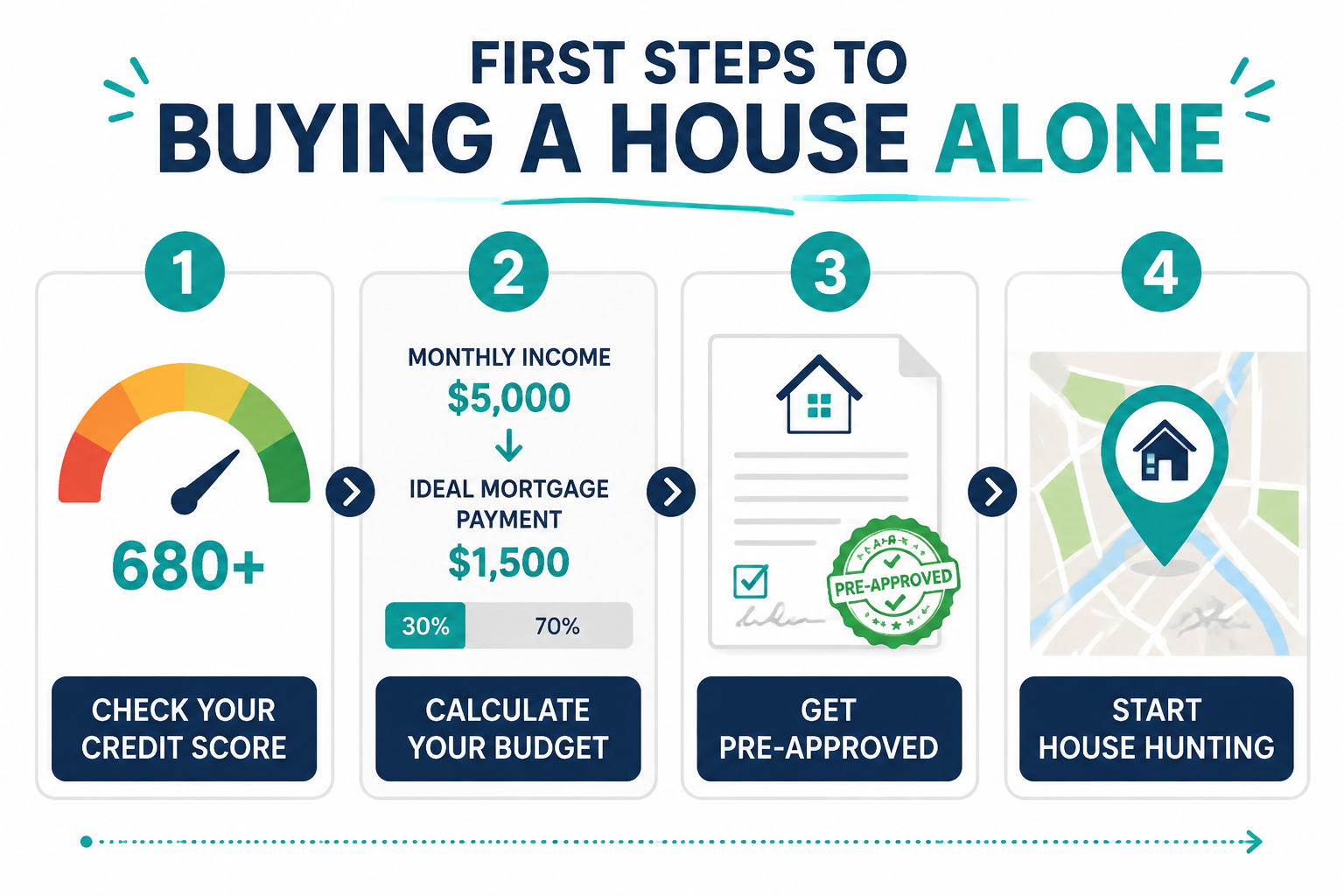
A single income mortgage approval works the same way any mortgage approval works. Lenders look at four things: your credit score, your debt-to-income ratio (DTI), your employment history, and your assets. They do not look at whether you have a spouse.
Credit score minimums by loan type:
| Loan Type | Minimum Score | Notes |
|---|---|---|
| FHA | 580 (3.5% down) or 500 (10% down) | Most flexible for first-time buyers |
| Conventional | 620 to 640 minimum | Better rates above 740 |
| VA | No official minimum (lenders typically want 620+) | For veterans and active duty |
| USDA | 640 recommended | Rural and suburban properties only |
Debt-to-income ratio: Most lenders want your total monthly debt payments, including the new mortgage, to stay below 43% of your gross monthly income. Some FHA loans allow up to 50% with compensating factors like strong savings.
Employment: Two years of steady employment in the same field is the standard. Self-employed buyers need two years of tax returns showing consistent income.
Common mistake: Applying for new credit cards or financing a car in the six months before your mortgage application. New accounts lower your score and raise your DTI. Get this settled before you start shopping for a house.
For a deeper look at financing options, the Financing and Mortgages hub has clear step-by-step guidance.
Can You Buy a House on a Single Income? How Much House Can You Afford?
Yes, buying a house on one income is possible, and millions of people do it every year. The honest answer to how much house you can afford on one salary depends on three numbers: your gross monthly income, your existing monthly debts, and the current interest rate.
A rough affordability formula:
Take your gross annual income and multiply it by 2.5 to 3. That gives you a conservative purchase price range. At $76,400 per year, that puts a target range between $191,000 and $229,200. In higher-cost markets, FHA loans, down payment assistance, and choosing a condo or townhouse over a detached single-family home can extend that range.
The numbers lenders actually run:
- Monthly gross income: $76,400 / 12 = $6,367
- Maximum housing payment at 28% front-end ratio: $1,783
- Maximum total debt at 43% back-end ratio: $2,738
At a 6.7% rate on a 30-year fixed loan, a $1,783 monthly payment (before taxes and insurance) supports a loan of roughly $265,000. Add a 10% down payment and you are looking at a purchase price near $294,000.
That math works in a lot of U.S. markets, especially if you explore areas covered in Best States for First Time Home Buyers: The Real Rankings 2026.
Decision rule: If your DTI is above 43% before adding a mortgage, pay down revolving debt first. A $200 monthly credit card payment eliminated before you apply can add $40,000 to your buying power.
Do Lenders Treat Single Women Differently? Is It Harder Without a Co-Signer?
Lenders cannot legally treat you differently based on sex or marital status. The Equal Credit Opportunity Act (ECOA) and the Fair Housing Act both prohibit discrimination in mortgage lending on those grounds. A lender who asks whether you plan to have children or comments on your marital status is breaking federal law.
That said, buying a house as a single woman does come with one real structural difference: you have one income instead of two. That affects your buying power, not your eligibility.
Co-signer vs. solo mortgage application:
A co-signer can help if your income is borderline or your credit needs support. The co-signer's income and credit are added to the application, which can improve your approval odds and your rate. The trade-off is that the co-signer is legally responsible for the debt if you cannot pay. That is a serious ask of anyone.
Solo approval is absolutely achievable with a credit score above 680, a DTI below 40%, and a stable two-year employment history. If you are close but not quite there, spending six months paying down debt and building savings is usually more effective than finding a co-signer.
Edge case: If you are buying with a non-spouse partner, that is an unmarried couple purchase. Both incomes count, but both credit profiles count too. If one partner has a significantly lower score, it may make sense to apply solo using only the stronger borrower's income and credit.
What Are the First Steps to Buying a House Alone?
The first step is getting your financial picture clear before you talk to a single agent or browse a single listing. Buying a house as a single woman on one income means your preparation has to be airtight, because you have no financial backup if something goes sideways.
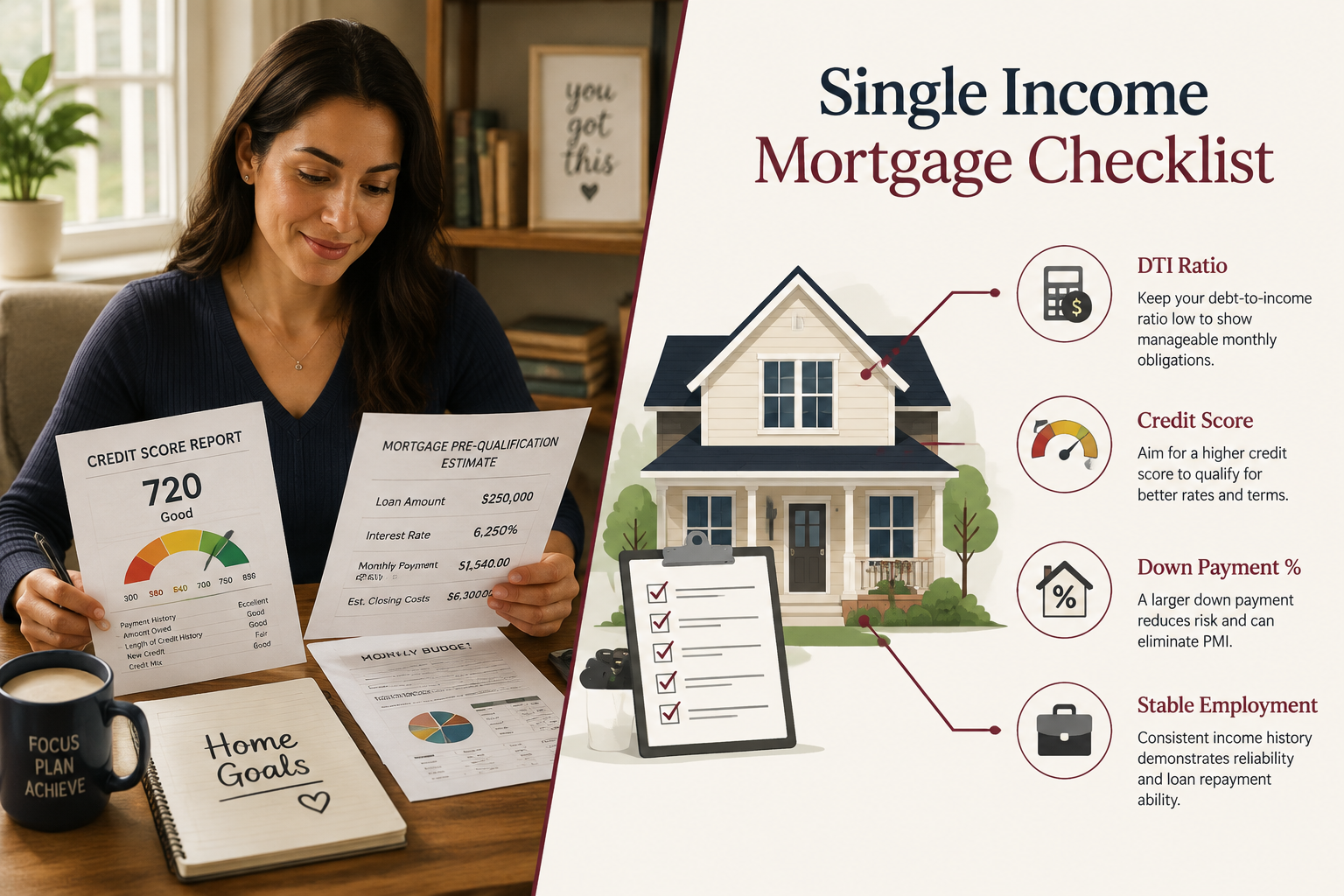
Step-by-step starting sequence:
- Pull your credit reports from all three bureaus at AnnualCreditReport.com. Dispute any errors immediately.
- Calculate your DTI. Add up all monthly minimum debt payments, divide by gross monthly income.
- Build your emergency fund to 3 to 6 months of estimated total housing costs (mortgage, taxes, insurance, maintenance). This is non-negotiable before you close.
- Research first-time home buyer programs and down payment assistance programs in your target state.
- Get pre-approved, not just pre-qualified. Pre-approval requires documentation and gives you a real number.
- Define your must-haves versus nice-to-haves before you start touring homes.
- Hire a buyer's agent who has experience working with solo buyers. Their commission is typically paid by the seller.
For a full breakdown of the buying process, the First Time Home Buyer Tips: A Real Estate Agent's Full Guide covers every stage.
Should You Get Pre-Approved Before House Hunting?
Yes, always. Pre-approval before house hunting is not a suggestion. In a market where the median home sits at $434,100 and days on market average just 29 days (NAR, July 2026), sellers will not take an offer seriously without a pre-approval letter.
Pre-approval also protects you. It tells you your actual budget, not an estimate. Many buyers discover during pre-approval that their DTI is higher than expected or that a collection account on their credit report needs to be resolved. Finding that out before you fall in love with a house is far better than finding out after.
What you need for pre-approval:
- Last two years of W-2s or tax returns (self-employed: two years of returns plus year-to-date profit and loss)
- Last two to three months of pay stubs
- Last two to three months of bank statements for all accounts
- Photo ID
- Landlord contact information for rental history (if applicable)
- Documentation of any other income sources (alimony, rental income, side income)
Pre-approval typically takes 1 to 3 business days and is valid for 60 to 90 days. If your search runs longer, you can refresh it with updated documents.
How Much Should You Save for a Down Payment?
The minimum down payment depends on your loan type. For FHA loans, 3.5% down is the floor with a 580+ credit score. Conventional loans can go as low as 3% with certain programs. VA loans for eligible veterans require zero down.
Down payment by loan type:
| Loan Type | Minimum Down | Notes |
|---|---|---|
| FHA | 3.5% | Requires mortgage insurance premium (MIP) |
| Conventional | 3% to 5% | PMI required below 20% down |
| VA | 0% | Veterans and active duty only |
| USDA | 0% | Rural/suburban eligible areas only |
| Conventional (no PMI) | 20% | Eliminates private mortgage insurance |
On a $300,000 home, 3.5% down is $10,500. That is achievable for many buyers, but closing costs add another $6,000 to $15,000 on top of that. Your emergency fund for post-purchase repairs and maintenance should sit separately from these funds.
Down payment assistance programs exist in every state and many counties. These programs offer grants, forgivable loans, or low-interest second mortgages to cover part or all of the down payment. Income limits apply, but many programs serve buyers earning up to 80% to 120% of the area median income. The HUD website and your state housing finance agency are the right starting places.
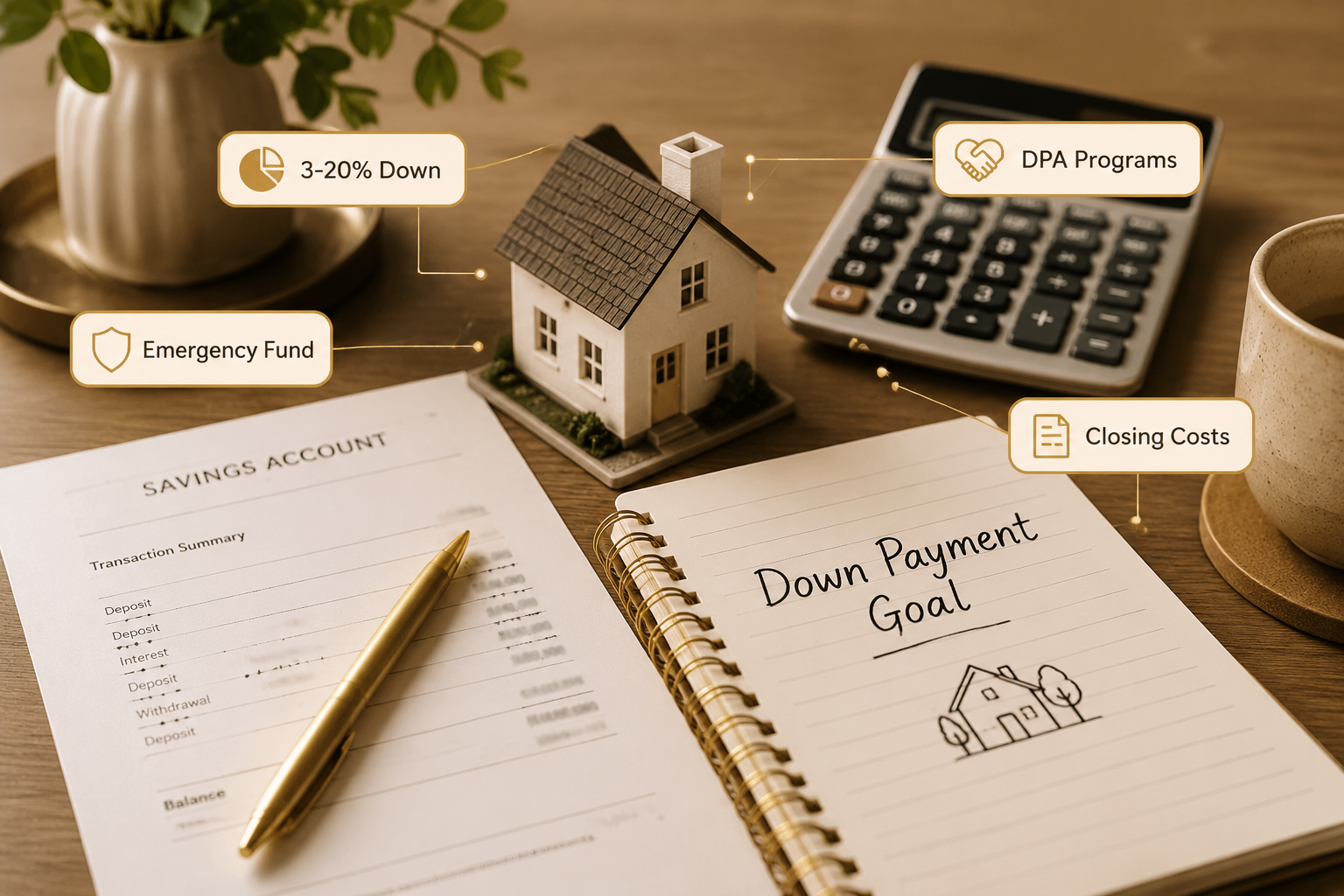
NAR data shows only 6% of first-time buyers used a government down payment assistance program. That means 94% either did not qualify or did not know these programs existed. Do not be in that 94%.
What Closing Costs Should You Expect?
Closing costs for a buyer typically run 2% to 5% of the purchase price. On a $300,000 home, that is $6,000 to $15,000 paid at closing, separate from your down payment.
Typical closing cost line items:
- Loan origination fee: 0.5% to 1% of the loan amount
- Appraisal: $400 to $700
- Home inspection: $300 to $500
- Title search and title insurance: $500 to $1,500
- Attorney fees (required in some states): $500 to $1,000
- Prepaid homeowners insurance: first year paid upfront
- Property tax escrow: 2 to 3 months of taxes prepaid
- Recording fees: $100 to $250
You can ask the seller to cover some closing costs as part of your offer negotiation. This is called a seller concession. For context on what buyers typically ask for, see The Home Seller Credit Buyers Ask For Most.
You can also use an AI tool to estimate your closing costs before you get to the table. The guide on How to Calculate Home Buyers Closing Costs in Minutes Using ChatGPT or Gemini AI walks through that process.
Condo vs. Single-Family Home on One Income
For single women buying on one income, the choice between a condo and a single-family home comes down to budget, lifestyle, and long-term equity goals. Neither is automatically the right answer.
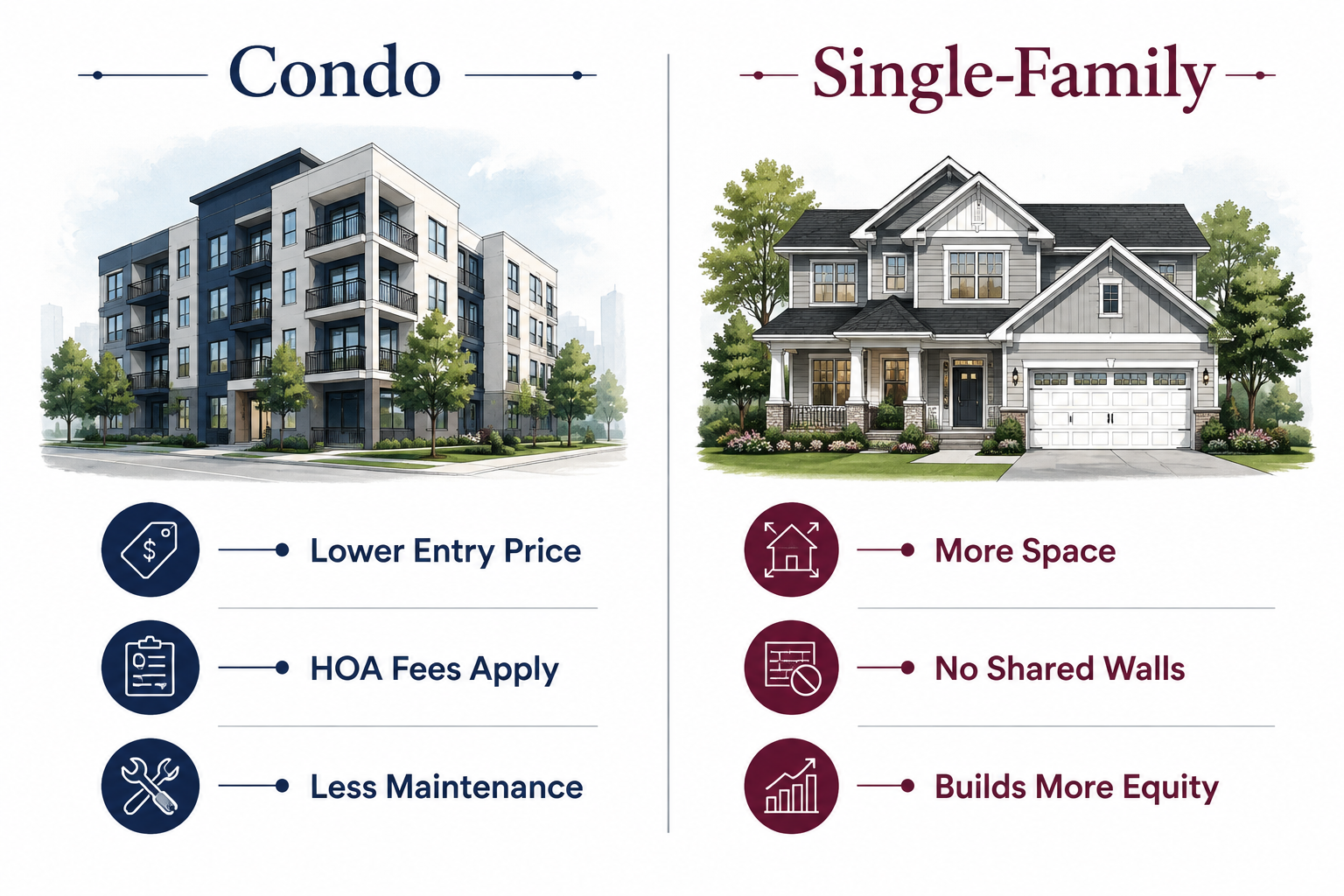
Condos on one income:
- Lower purchase price in most markets
- Exterior maintenance handled by the HOA
- HOA fees add $200 to $600+ per month to your housing cost
- Less privacy, shared walls, shared amenities
- Resale can be slower in some markets
Single-family homes on one income:
- Higher purchase price but more control over the asset
- You handle all maintenance, which requires a bigger emergency fund
- More space, no shared walls, typically a yard
- Historically stronger long-term appreciation and equity building
The condo market has faced real headwinds in 2026. Rising HOA fees and special assessments have pushed many buyers toward detached homes. The full breakdown is in Condo Market Slump 2026: Why Rising HOA Fees Are Pushing Buyers Toward Detached Homes.
Decision rule: Choose a condo if your budget is tight and you want lower maintenance responsibility. Choose a single-family home if your budget allows and you want maximum control over your property and equity growth.
What Happens If You Get Laid Off With a Mortgage?
This is the question nobody asks at the closing table, and it is the most important financial scenario to plan for before you buy. Building equity as a single buyer is entirely doable, but you are also carrying the entire mortgage on your own.
Before you close, make sure you have:
- 3 to 6 months of total housing costs (mortgage, taxes, insurance, utilities) in a liquid savings account
- A home warranty for a first-time owner, which covers major systems and appliances for $400 to $700 per year and can prevent a $5,000 surprise from becoming a financial crisis
- Homeowners insurance that is reviewed annually, not just set and forgotten
If you do lose your job after buying:
- Contact your lender immediately. Many servicers offer forbearance programs before you miss a payment
- File for unemployment benefits the same week
- Review your budget and cut discretionary spending immediately
- Do not touch retirement accounts first. Explore all other options before that
The emergency fund is not optional. For a single buyer, it is the difference between a temporary setback and a foreclosure.
Programs and Grants That Help Single Women Buy Homes
There is no federal grant specifically labeled "for single women," but there are dozens of programs that single women disproportionately benefit from because they are designed for first-time buyers, low-to-moderate income buyers, and buyers in specific professions.
Programs worth researching:
- HUD-approved housing counseling: Free one-on-one guidance on the buying process and available assistance in your area
- State Housing Finance Agency (HFA) programs: Every state has one. Many offer below-market interest rates, down payment assistance, and closing cost help
- FHA loans: The 3.5% down requirement and flexible credit standards make these the most common loan for single first-time buyers
- Fannie Mae HomeReady: Conventional loan with 3% down, reduced mortgage insurance, and income limits set at 80% of area median income
- Freddie Mac Home Possible: Similar to HomeReady, also 3% down, available to buyers at or below 80% AMI
- Good Neighbor Next Door (HUD): 50% discount on HUD-owned homes for teachers, law enforcement, firefighters, and EMTs
- USDA loans: Zero down in eligible rural and suburban areas, income limits apply
- VA loans: Zero down for veterans and active duty service members
For a full resource on the buying process from start to finish, the First Time Home Buyers hub is a solid starting point.
Neighborhood Safety and Other Factors Single Buyers Should Evaluate Alone
Neighborhood safety when buying alone deserves real attention, not just a quick check on a crime map. As a solo buyer, you are evaluating a neighborhood without a second person to gut-check your instincts.
What to actually check:
- Visit the neighborhood at different times of day, including evenings and weekends
- Check local crime data through the city or county police department's public portal, not just third-party apps that can be outdated
- Talk to neighbors. Knock on two or three doors near the home you are considering
- Check walkability, proximity to grocery stores, hospitals, and your workplace
- Research the school district even if you do not have children. School quality affects resale value
- Look up the flood zone status on FEMA's flood map. Flood insurance can add $1,000 to $3,000 per year to your housing cost in high-risk zones
For help choosing the right location, the Choosing the Right Location hub has resources organized by the specific factors that matter most.
FAQ
Is buying a house as a single woman harder than buying as a couple?
It is not harder in terms of eligibility, but you are working with one income instead of two. That limits your purchase price range. Preparation, a strong credit score, and down payment assistance programs close most of that gap.
What credit score do I need to buy a house on my own?
580 is the FHA minimum with 3.5% down. For conventional loans, most lenders want 620 to 640 at minimum, and scores above 740 get the best rates. Higher is always better.
Can a single woman with student debt still qualify for a mortgage?
Yes. Student debt affects your DTI, not your eligibility. Lenders count the monthly payment, not the total balance. Income-driven repayment plans with low monthly payments can help keep your DTI manageable.
What is the debt-to-income ratio I need for mortgage approval?
Most lenders want total monthly debts including the new mortgage payment to stay below 43% of gross monthly income. FHA loans can go higher with compensating factors.
Do I need a real estate agent when buying alone?
You are not legally required to use one, but it is strongly recommended. A buyer's agent represents your interests, helps you negotiate, and their commission is typically paid by the seller.
What is a home warranty and do I need one?
A home warranty covers repair or replacement of major systems and appliances for a flat annual fee, typically $400 to $700. For a solo buyer without a partner to split unexpected repair costs, it is valuable protection in the first few years of ownership.
How long does the home buying process take?
From pre-approval to closing, the average is 30 to 60 days once you have an accepted offer. The search itself can take 10 weeks or more depending on your market and budget.
What if I can't afford 20% down?
Most buyers do not put 20% down. FHA loans start at 3.5%, and conventional loans go as low as 3%. You will pay mortgage insurance until you reach 20% equity, but that is a manageable cost compared to waiting years to save a larger down payment.
Can I buy a house without a co-signer?
Yes. A co-signer is not required. It can help if your income or credit is borderline, but solo approval is fully achievable with solid credit, a stable income, and a DTI below 43%.
Are there grants specifically for single women buying homes?
No federal grant is labeled exclusively for single women, but state HFA programs, Fannie Mae HomeReady, Freddie Mac Home Possible, and local down payment assistance programs are all accessible to single female buyers and often have income limits that align with the median single female buyer income.
Conclusion
Buying a house as a single woman is not a workaround or a compromise. It is a financial decision that 1 in 5 buyers makes every year, backed by data, supported by real programs, and absolutely achievable on one income with the right preparation.
The path is clear: check your credit, calculate your real DTI, research down payment assistance programs in your state, build your emergency fund before you close, and get pre-approved before you tour a single home. Do not skip the emergency fund. Do not apply for new credit before closing. Do not assume you need a co-signer before you actually run the numbers.
The median single female buyer earns $76,400 and still closes. That is not luck. That is preparation meeting opportunity.
If you are ready to start, the Home Buying Hub has every resource you need organized by stage. And if you want to see how the 2026 market is shaping up for buyers right now, the Spring 2026 Housing Market Outlook is worth reading before you make your first move.