

Last updated: May 24, 2026

Quick Answer: The best states for first-time home buyers in 2026 are concentrated in the Midwest and parts of the South — states like Ohio, Indiana, North Carolina, and Texas consistently rank highest when you weigh median home prices, first-time buyer programs, property tax rates, and job market strength together. California, Hawaii, and Massachusetts rank at the bottom for entry-level affordability despite strong economies. Where you buy matters as much as how you buy.
Key Takeaways 🏡
- Ohio, Indiana, and North Carolina are the top three states for first-time buyers in 2026 based on affordability, down payment assistance availability, and job growth.
- Midwest housing markets — Columbus, Indianapolis, and Kansas City — are producing extraordinary value for entry-level buyers right now.
- The 6% mortgage rate is the new norm in 2026, per NAR housing forecast data. Buyers who wait for 3% rates are likely waiting forever.
- FHA first-time buyer loans require as little as 3.5% down with a 580 credit score — and most states layer additional grant programs on top.
- Property taxes vary wildly by state — Illinois and New Jersey have effective rates above 2%, while Hawaii and Alabama sit below 0.5%.
- Most first-time buyers underestimate total cash needed — budget for down payment, closing costs (2–5% of purchase price), and 3–6 months of reserves.
- Down payment assistance programs exist in every U.S. state, but the amounts, income caps, and eligibility rules differ significantly.
- Rural states can offer lower purchase prices but may come with limited job markets, higher insurance costs, and slower appreciation.
- Bad credit doesn't disqualify you — FHA loans go down to 500 with 10% down, and several states have credit-flexible grant programs.
- The fastest home buying processes are in states with non-judicial foreclosure laws and streamlined title processes — Texas, Georgia, and Indiana close faster on average.
Best States for First-Time Home Buyers: The Real Rankings in 2026
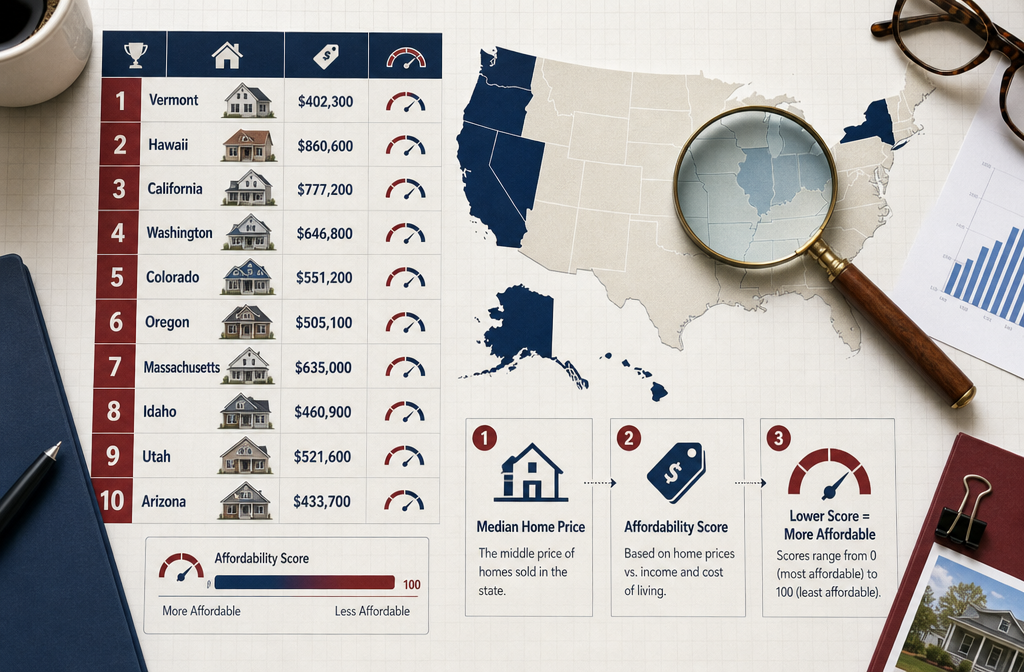
The best states for first-time home buyers balance five factors: median home price relative to local income, availability of down payment assistance programs, property tax burden, job market strength, and overall cost of living. No single state is perfect, but the states that score well across all five categories are where first-timers are winning right now.
Here's the RERIQ breakdown for 2026:
| Rank | State | Median Home Price (est.) | Avg. Property Tax Rate | First-Time Buyer Programs | Overall Score |
|---|---|---|---|---|---|
| 🥇 1 | Ohio | ~$220,000 | ~1.53% | Strong (Ohio Housing Finance Agency) | ⭐⭐⭐⭐⭐ |
| 🥈 2 | Indiana | ~$230,000 | ~0.85% | Strong (IHCDA programs) | ⭐⭐⭐⭐⭐ |
| 🥉 3 | North Carolina | ~$295,000 | ~0.80% | Very Strong (NCHFA) | ⭐⭐⭐⭐½ |
| 4 | Missouri | ~$210,000 | ~1.01% | Moderate | ⭐⭐⭐⭐ |
| 5 | Texas | ~$305,000 | ~1.60% | Strong (TDHCA) | ⭐⭐⭐⭐ |
| 6 | Tennessee | ~$285,000 | ~0.71% | Moderate (THDA) | ⭐⭐⭐⭐ |
| 7 | Georgia | ~$290,000 | ~0.92% | Strong (Georgia Dream) | ⭐⭐⭐⭐ |
| 8 | Michigan | ~$215,000 | ~1.54% | Strong (MSHDA) | ⭐⭐⭐½ |
| 9 | Kansas City area (KS/MO) | ~$200,000 | ~1.30% | Moderate | ⭐⭐⭐½ |
| 10 | Pennsylvania | ~$240,000 | ~1.58% | Moderate (PHFA) | ⭐⭐⭐½ |
So based: The Midwest is not gatekeeping affordability — it's just that most buyers aren't looking there. Columbus, Indianapolis, and Kansas City real estate in 2026 are delivering fresh opportunities that coastal markets stopped offering a decade ago.
For a broader look at where the data points for investment-grade markets, check out our best states to invest in real estate data rankings.
What Makes a State Good for First-Time Home Buyers?
A state earns its spot on the best states for first-time home buyers list by scoring well across multiple categories — not just having cheap houses. A $150,000 home in a state with no jobs, 3% property taxes, and no buyer assistance programs is not actually a deal.
The five factors that matter most:
- Home price-to-income ratio — Can a median-income household in that state realistically qualify for a median-priced home? States where this ratio is below 4:1 are generally accessible.
- First-time homebuyer programs — Does the state housing finance agency offer down payment assistance, closing cost grants, or below-market rate mortgages?
- Property tax rate — A low purchase price can be offset by high annual taxes. Illinois buyers, for example, often pay 2%+ of their home's value every year in taxes.
- Job market and income growth — Affordable housing only helps if you can earn enough to sustain the mortgage. States with growing job markets (tech, healthcare, logistics) are safer long-term bets.
- Cost of living beyond housing — Insurance, utilities, groceries, and transportation all affect what you can actually afford to put toward a mortgage.
Common mistake: Buyers focus only on the purchase price and ignore the monthly total cost. A $250,000 home in Texas with 1.6% property taxes costs more annually than a $270,000 home in Tennessee with 0.71% taxes.
What Are the Most Affordable Housing Markets Right Now?
The most affordable housing markets for first-time buyers in 2026 are concentrated in the Midwest and parts of the South, where median home prices remain below $250,000 and income-to-price ratios are still workable at current mortgage rates.
Top affordable markets in 2026:
- Columbus, OH — Median home price around $225,000, strong job market (tech, finance, healthcare), and Ohio Housing Finance Agency programs available statewide.
- Indianapolis, IN — Median around $235,000, low property taxes (~0.85%), and IHCDA offers multiple down payment assistance tracks.
- Kansas City, MO/KS — Median around $200,000, consistent Midwest housing growth in 2026, and a surprisingly strong startup and logistics job base.
- Memphis, TN — Entry-level prices under $180,000 in many zip codes, though insurance costs and neighborhood selection require more due diligence.
- Birmingham, AL — One of the lowest median prices in the country, with strong first-time buyer programs through Alabama Housing Finance Authority.
- Greensboro/Winston-Salem, NC — North Carolina's Triad cities offer sub-$250,000 median prices with access to NCHFA programs.
The U.S. home buyers market trends in 2026 confirm that Midwest housing growth in 2026 is outpacing many Sun Belt markets that overheated post-pandemic.
Are There First-Time Buyer Programs in Texas vs. California?
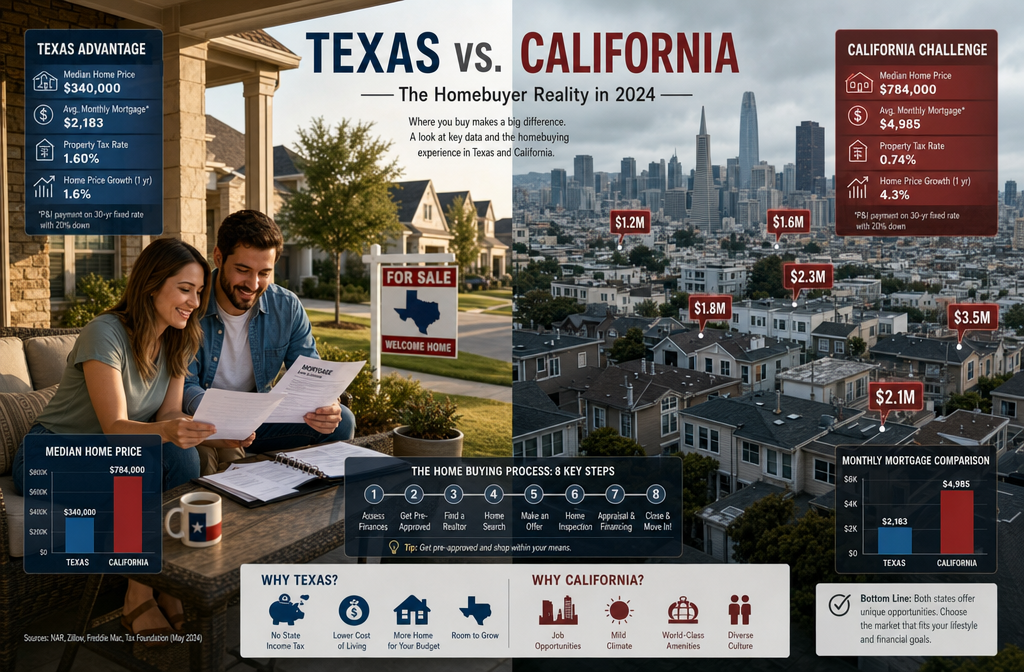
Yes — both Texas and California have first-time buyer programs, but they work very differently and serve very different buyer profiles. Texas programs are more accessible at moderate income levels; California programs are better funded but harder to qualify for due to the state's high home prices.
Texas (TDHCA — Texas Department of Housing and Community Affairs):
- My First Texas Home program offers 30-year fixed mortgages at below-market rates
- Down payment assistance up to 5% of the loan amount
- Income limits vary by county and family size
- Works with FHA, VA, USDA, and conventional loans
- Texas has no state income tax, which helps with overall affordability despite higher property taxes (~1.6%)
California (CalHFA — California Housing Finance Agency):
- MyHome Assistance Program offers deferred-payment junior loans for down payment and closing costs
- Dream For All Shared Appreciation Loan — the state shares in your home's appreciation in exchange for a larger down payment loan
- Income limits are higher (reflecting California's cost of living) but so are home prices — median around $750,000+ statewide
- The math is harder: even with assistance, many first-timers in California need household incomes of $120,000+ to qualify for median-priced homes
Bottom line: If you're choosing between Texas and California purely as a first-time buyer, Texas wins on affordability and program accessibility at most income levels. California programs are impeccable for what they do — they just can't fully offset a $500,000 price gap.
For a full breakdown of financing options, our first-time home buyer tips guide from licensed agents covers this in detail.
Which States Have the Lowest Down Payment Requirements?
No state legally requires a higher down payment than federal loan minimums — so the lowest down payment options are available nationwide. What varies by state is the assistance available to cover that down payment for you.
Federal minimums by loan type:
- FHA loan: 3.5% down with a 580+ credit score; 10% down with a 500–579 score
- Conventional (Fannie/Freddie): 3% down for first-time buyers through HomeReady or Home Possible programs
- USDA loan: 0% down — but only in eligible rural and suburban areas
- VA loan: 0% down — for eligible veterans and active military
States with the strongest down payment assistance layered on top:
| State | Program | Max Assistance |
|---|---|---|
| Ohio | Ohio Housing Finance Agency | Up to 5% of purchase price |
| Indiana | IHCDA Next Home | Up to 6% of purchase price |
| North Carolina | NCHFA NC Home Advantage | Up to 3% of loan amount |
| Georgia | Georgia Dream | Up to $10,000 grant |
| Texas | TDHCA My First Texas Home | Up to 5% of loan amount |
| Florida | Florida Assist | Up to $10,000 deferred loan |
| Colorado | CHFA | Up to 4% of first mortgage |
Edge case: Some city and county programs stack on top of state programs. Columbus, OH buyers, for example, can sometimes combine Ohio Housing Finance Agency assistance with city-level grants — effectively covering the entire down payment on a modest home.
Our breakdown of top down payment strategies ranked for buyers goes deeper on how to layer these programs.
How Much Money Do You Really Need to Buy Your First Home?
Most first-time buyers underestimate the total cash required. The down payment is just one piece — closing costs, prepaid items, and reserves all add up fast.
Here's the real math for a $250,000 home:
| Cost Item | Low Estimate | High Estimate |
|---|---|---|
| Down payment (3.5% FHA) | $8,750 | — |
| Closing costs (2–5%) | $5,000 | $12,500 |
| Home inspection | $300 | $600 |
| Appraisal | $400 | $700 |
| Moving costs | $500 | $3,000 |
| Cash reserves (2–3 months PITI) | $3,000 | $6,000 |
| Total cash needed | ~$18,000 | ~$23,000 |
That's before any repairs or furniture. The fresh reality of 2026 home buying is that "I have $10,000 saved" often isn't enough — unless down payment assistance covers a significant chunk.
Ways to reduce the cash required:
- Use a state or local down payment assistance program (can eliminate or reduce the down payment)
- Negotiate seller concessions to cover closing costs (more common in buyer-friendly markets)
- Use gift funds from family (allowed under FHA and most conventional programs)
- Apply for closing cost assistance separately from down payment assistance — many states offer both
What Income Do You Need to Qualify as a First-Time Home Buyer?
Income requirements depend on the loan amount, your debt load, and the loan type — not a fixed dollar figure. As a general rule, lenders want your total monthly debt payments (including the new mortgage) to stay at or below 43–50% of your gross monthly income.
Quick qualification estimate for a $250,000 home at 6.5% interest (30-year fixed):
- Estimated monthly principal + interest: ~$1,580
- Add property taxes + insurance + HOA: ~$400–$700/month
- Total housing payment estimate: ~$2,000–$2,280/month
- Minimum gross monthly income needed (at 43% DTI, no other debt): ~$4,650–$5,300/month
- Annualized: roughly $56,000–$64,000/year minimum
With student loans, car payments, or credit card minimums, that income threshold goes up. A buyer with $500/month in existing debt obligations needs to earn closer to $75,000–$80,000 annually to qualify for the same home.
Choose this path if: You're self-employed or have variable income — bank statement loans and DSCR products exist, but they typically require 10–20% down and stronger reserves. Our mortgage financing and market update resource covers non-traditional loan options in detail.
Can You Buy a Home With Bad Credit in Any State?
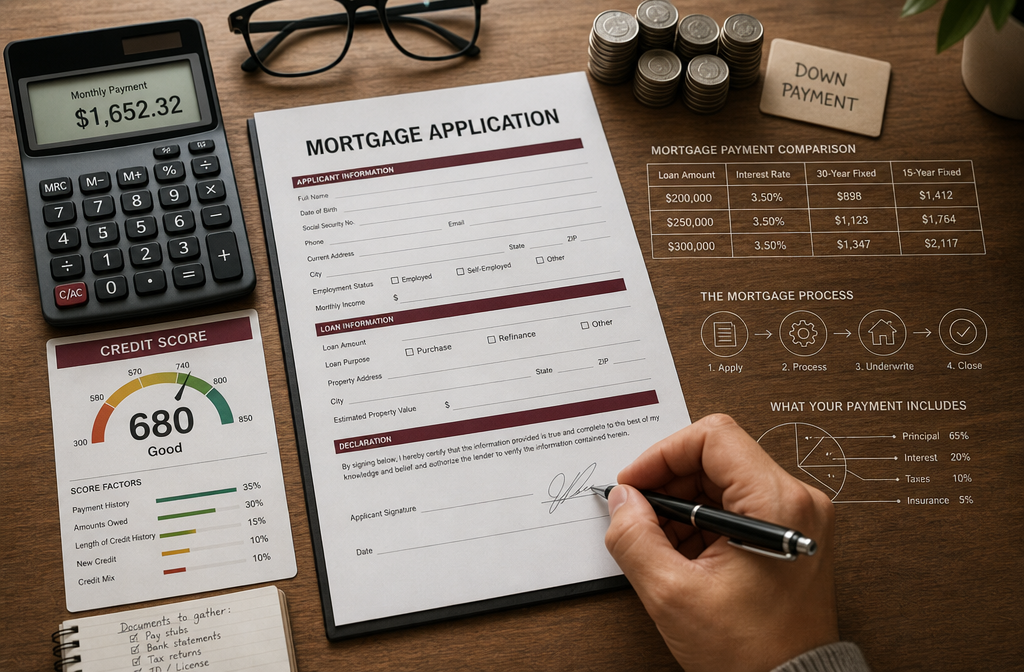
Yes — bad credit doesn't automatically disqualify you from buying a home in any state. FHA loans are available nationwide with credit scores as low as 500 (with 10% down) or 580 (with 3.5% down). Some state programs have their own credit score minimums, but most align with FHA standards.
Credit score tiers and what they mean for buying:
| Credit Score | Loan Options Available | Down Payment Required |
|---|---|---|
| 760+ | All loan types, best rates | As low as 3% |
| 700–759 | All loan types, good rates | As low as 3% |
| 640–699 | FHA, some conventional | 3.5–5% |
| 580–639 | FHA (most lenders), some state programs | 3.5% |
| 500–579 | FHA (limited lenders) | 10% |
| Below 500 | Very limited — non-QM lenders only | 20%+ |
States with credit-flexible first-time buyer programs:
- Ohio — OHFA accepts 640 minimum for most programs
- Indiana — IHCDA works with 640+
- Georgia Dream — 640 minimum credit score
- North Carolina NCHFA — 640 minimum
What actually moves the needle on credit fast:
- Pay down revolving balances below 30% utilization
- Dispute inaccurate collections
- Become an authorized user on a family member's old, well-managed card
- Don't open new credit in the 12 months before applying
Gen Z buyers especially should read our first-time home buyers tips for Gen Z — it covers credit building alongside the buying process in a way that actually resonates.
What Credit Score Do You Actually Need to Buy Your First Home?
The minimum credit score to buy a home with an FHA loan is 500. The practical minimum that most lenders will work with is 580. For conventional loans, most lenders want 620 or higher. For the best interest rates, you want 740+.
Here's the thing nobody tells you: the difference between a 620 and a 740 credit score on a $250,000 loan can cost you $40,000–$60,000 more over 30 years in higher interest payments. That's not a small gap.
The real credit score targets for 2026:
- 500–579: FHA only, 10% down, limited lender options
- 580–619: FHA with 3.5% down — workable but expect higher rates
- 620–679: Opens conventional options, but rates are still elevated
- 680–739: Solid — most programs available, competitive rates
- 740+: Extraordinary rates, all programs available, best terms
Let it cook before you see results with credit repair. Most scoring models take 3–6 months to reflect positive changes. Don't rush into a purchase with a 580 if 6 months of focused effort could get you to 640 and save you significantly on the rate.
Which States Offer the Best First-Time Homebuyer Grants?
The states with the strongest first-time homebuyer grant programs in 2026 are Ohio, North Carolina, Georgia, Indiana, and Florida. These states offer a combination of down payment grants, closing cost assistance, and below-market mortgage rates through their state housing finance agencies.
Top grant programs by state:
- Ohio (OHFA): Offers grants equal to 2.5% or 5% of the home's purchase price — not a loan, an actual grant that doesn't need to be repaid if you stay in the home for the required period.
- North Carolina (NCHFA): NC Home Advantage Mortgage offers down payment assistance up to 3% of the loan amount, forgivable after 15 years.
- Georgia (Georgia Dream): Up to $10,000 in down payment assistance ($12,500 for certain professions like teachers and healthcare workers).
- Indiana (IHCDA): Next Home program offers 3.5% assistance; First Place program offers 6% for first-time buyers specifically.
- Florida (Florida Housing): Florida Assist offers up to $10,000 as a 0% deferred second mortgage.
- Texas (TDHCA): My First Texas Home offers up to 5% of loan amount in assistance, usable for down payment or closing costs.
Important: Grant programs almost always have income limits, purchase price limits, and require you to use an approved lender. Always check your state housing finance agency's website directly for current 2026 limits.
How Do Property Taxes Impact Home Affordability by State?
Property taxes are one of the most underrated affordability factors — they directly affect your monthly payment and long-term cost of ownership. A $300,000 home in New Jersey (effective rate 2.2%) costs roughly $6,600/year in taxes. The same home in Alabama (0.41%) costs about $1,230/year. That's a $445/month difference in your housing cost.
Property tax rates by state (approximate effective rates):
| State | Effective Property Tax Rate | Annual Tax on $250K Home |
|---|---|---|
| New Jersey | ~2.2% | ~$5,500 |
| Illinois | ~2.1% | ~$5,250 |
| Texas | ~1.6% | ~$4,000 |
| Ohio | ~1.5% | ~$3,750 |
| Michigan | ~1.5% | ~$3,750 |
| North Carolina | ~0.80% | ~$2,000 |
| Indiana | ~0.85% | ~$2,125 |
| Tennessee | ~0.71% | ~$1,775 |
| Alabama | ~0.41% | ~$1,025 |
| Hawaii | ~0.29% | ~$725 |
The catch with low-tax states: Hawaii's low property tax rate sounds impeccable until you see that the median home price is over $800,000. Alabama's low tax rate is real, but job market limitations and insurance costs in certain areas offset the savings.
Texas is a special case: No state income tax, but property taxes are among the highest in the country. For buyers moving from California, the math often still works — you trade income tax for property tax. For buyers coming from Indiana or Tennessee, Texas property taxes are a real budget hit.
Check our Spring 2026 housing price shifts by state for the latest on where tax burdens are shifting alongside prices.
Are Rural States or Urban States Better for a First Home Purchase?
Rural areas offer lower purchase prices but come with trade-offs that urban and suburban markets don't have. The best answer depends on your job situation, lifestyle preferences, and long-term investment goals.
Rural advantages:
- Lower median home prices (often $100,000–$180,000 in rural Midwest and South)
- USDA loans available with 0% down payment
- Less competition — fewer bidding wars
- More land, more space for the money
Rural disadvantages:
- Limited job markets — remote work dependency is a real risk
- Higher insurance costs in some rural areas (flood, wind)
- Slower appreciation — rural homes don't build equity as fast
- Fewer services — healthcare, schools, and amenities can be limited
- Harder to sell quickly if life circumstances change
Urban/suburban advantages:
- Stronger job markets and income growth
- Better appreciation potential over time
- More buyer assistance programs available
- Easier to refinance and sell
The sweet spot in 2026: Mid-size suburban cities — Columbus, OH; Indianapolis, IN; Raleigh, NC; Kansas City, MO — are delivering the best of both worlds. Prices are still reasonable, job markets are strong, and first-time buyer programs are fully available.
What Are the Biggest Mistakes First-Time Home Buyers Make?
The biggest mistakes first-time buyers make are financial — not doing enough research before applying, underestimating total costs, and making emotional decisions in competitive markets. These mistakes are avoidable with the right preparation.
Top 8 mistakes (and how to avoid them):
Getting pre-approved for the maximum and buying at the limit — Just because a lender will give you $350,000 doesn't mean you should spend $350,000. Budget for what's comfortable, not the ceiling.
Skipping the home inspection — Never skip this. A $400 inspection can save you from a $40,000 foundation problem. Our property inspection guide covers what to look for.
Opening new credit before closing — New credit inquiries and new accounts can tank your score right before closing and kill your loan approval.
Not shopping multiple lenders — Getting one mortgage quote is like accepting the first offer on a home. Shop at least 3–5 lenders. Rate differences of even 0.25% matter over 30 years.
Ignoring first-time buyer programs — Thousands of buyers leave down payment assistance money on the table because they didn't know it existed or assumed they wouldn't qualify.
Buying in a market they haven't researched — Buying in a city because it's cheap without understanding the local job market, school ratings, or neighborhood trajectory is a recipe for regret.
Underestimating ongoing costs — Maintenance, HOA fees, utilities, and repairs add 1–3% of home value annually on average.
Waiting for the "perfect" market — With mortgage rate 6% now considered the new norm per NAR housing forecast projections for 2026, waiting for rates to drop to 3–4% is not a strategy. Buying when you're financially ready beats timing the market.
Which States Have the Fastest Home Buying Processes?
States with non-judicial foreclosure processes and streamlined title and closing procedures tend to close transactions faster. Texas, Georgia, Indiana, and North Carolina are among the fastest states for completing a home purchase.
What affects closing speed:
- Attorney vs. title company states — Some states require attorneys at closing (NY, SC, GA, MA), which can add time but varies by market
- Judicial vs. non-judicial foreclosure — Affects lender risk appetite and how quickly they process approvals
- Local title company efficiency — Varies by market more than by state
- Loan type — FHA and VA loans typically take 30–45 days; conventional can close in 21–30 days with a strong file; USDA loans often take 45–60 days
Fastest closing states (average 30-day close or less in normal market conditions):
- Texas
- Georgia
- Indiana
- North Carolina
- Missouri
Slowest closing states (often 45–60+ days):
- New York (attorney requirements, complex title searches)
- Hawaii (unique title and land court issues)
- New Jersey (attorney review periods built into contracts)
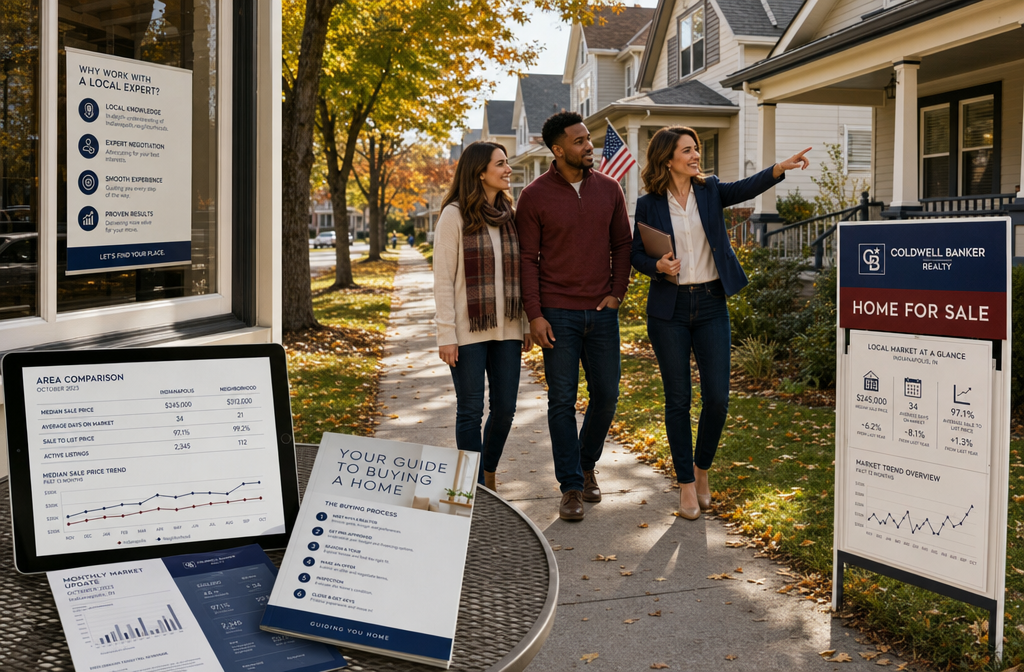
Midwest Housing Growth 2026: Why Columbus, Indianapolis, and Kansas City Are Leading
The Midwest is having a moment that most coastal buyers are still sleeping on — and that's not gatekeeping, that's just facts. Columbus, Indianapolis, and Kansas City real estate in 2026 are three of the most extraordinary markets for entry-level buyers in the country.
Columbus, OH:
- Home to Ohio State University, a booming tech sector, and Intel's massive semiconductor plant investment
- Median home prices around $225,000 — still accessible for buyers earning $65,000+
- Ohio Housing Finance Agency programs cover down payment assistance statewide
- Strong rental market if you ever want to convert to investment property
Indianapolis, IN:
- Low property tax rate (~0.85%) keeps monthly costs down
- IHCDA's First Place program offers 6% down payment assistance for first-time buyers
- Growing healthcare, logistics, and tech job base
- Median prices around $235,000 with strong appreciation trends
Kansas City, MO/KS:
- Median prices around $200,000 — one of the most affordable major metros in the U.S.
- Straddling two states means buyers can choose Missouri or Kansas depending on tax preference
- Strong logistics, finance, and healthcare employment
- Consistent Midwest housing growth in 2026 with less volatility than Sun Belt markets
For investors considering these markets beyond a primary residence, our best real estate markets for flipping houses in 2026 covers the investment angle in depth.
FAQ: Best States for First-Time Home Buyers
Q: What is the #1 best state for first-time home buyers in 2026?
A: Ohio ranks #1 in 2026 based on median home price (~$220,000), strong Ohio Housing Finance Agency grant programs, a growing job market in Columbus, and a property tax rate that's high but offset by purchase price affordability.
Q: Can I use a first-time buyer program if I've owned a home before?
A: Most programs define "first-time buyer" as someone who hasn't owned a primary residence in the past 3 years. If you sold or lost a home more than 3 years ago, you likely qualify again.
Q: Is the 6% mortgage rate permanent?
A: No one can guarantee that, but NAR's housing forecast for 2026 treats 6% as the baseline. Waiting for sub-4% rates before buying is not a sound strategy for most buyers — focus on what you can control (credit score, down payment, loan type).
Q: What's the difference between a grant and down payment assistance loan?
A: A grant doesn't need to be repaid. A down payment assistance loan is a second mortgage — often deferred or forgivable after a set period (typically 5–15 years). Both reduce your upfront cash need, but grants are obviously preferable.
Q: Are there first-time buyer programs for self-employed borrowers?
A: Yes, but it's more complex. Most state programs require you to qualify through an approved lender using standard income documentation. Self-employed buyers often need 2 years of tax returns showing consistent income. Bank statement loans exist but typically don't pair with state grant programs.
Q: Which states are most landlord-friendly if I want to eventually rent my first home?
A: Texas, Indiana, Georgia, and North Carolina are among the most landlord-friendly states with streamlined eviction processes and fewer rent control restrictions. This matters if you plan to convert your first home into a rental property down the road.
Q: How do I find first-time buyer programs in my specific state?
A: Search "[your state] housing finance agency" — every state has one. Also check HUD.gov's state resource page. Your mortgage lender should know the current programs, but do your own research first.
Q: What's the fastest way to save for a down payment?
A: Open a high-yield savings account specifically for your down payment, automate transfers on payday, and look into down payment assistance programs that can reduce how much you need to save. Some buyers also use gift funds from family, which are allowed under FHA and most conventional loan programs.
Q: Is it better to buy in a city or a suburb as a first-time buyer?
A: For most first-time buyers, suburbs of mid-size cities offer the best balance of affordability, appreciation potential, and quality of life. Think suburbs of Columbus, Indianapolis, Raleigh, or Kansas City rather than the urban core or deep rural areas.
Q: Do property taxes go up after I buy?
A: Yes, in most states. Property taxes are reassessed periodically (annually in some states, every few years in others). Some states cap annual increases (California's Prop 13 is the famous example), but most don't. Budget for property tax increases over time.
Q: What's the best loan type for a first-time buyer with limited savings?
A: FHA loans are the most accessible for buyers with limited savings and moderate credit. If you're in a rural area, USDA loans offer 0% down. Veterans should always explore VA loans first — 0% down with competitive rates and no PMI.
Q: Can I buy a home in 2026 with $5,000 saved?
A: Possibly — if you combine a down payment assistance program with seller concessions for closing costs, some buyers close with very little cash out of pocket. It requires being in the right state, the right price range, and having a strong enough credit score and income to qualify. It's not common, but it happens.
Conclusion: Stop Waiting, Start Ranking Your Options
The best states for first-time home buyers in 2026 aren't secrets — they're just underrated. Ohio, Indiana, North Carolina, and Missouri are delivering impeccable value for buyers who are willing to look beyond the coasts. The Midwest housing growth story in 2026 is real, the first-time buyer programs are funded, and the mortgage rate 6% environment isn't going anywhere fast.
Here's your action plan:
- Check your credit score today — Know exactly where you stand before talking to any lender.
- Research your state's housing finance agency — Find out what down payment assistance programs exist for your income level and target price range.
- Get pre-approved (not just pre-qualified) — A pre-approval gives you real buying power and shows sellers you're serious.
- Shop at least 3 lenders — Rate differences and fee structures vary more than most buyers expect.
- Target mid-size suburban markets — Columbus, Indianapolis, Kansas City, Raleigh, and similar cities are where the extraordinary deals are in 2026.
- Budget for total cash needed, not just the down payment — Include closing costs, inspection fees, and reserves in your savings target.
- Stop waiting for perfect conditions — The buyers winning right now are the ones who prepared and moved. Let it cook before you see results — but you have to start cooking.
For everything you need to know about navigating the buying process from start to close, our complete first-time home buyer guide is the resource to bookmark. And if you want to track what's happening in the market week by week, the RERIQ Hub keeps you current without the noise.
The best time to buy your first home is when you're financially ready. The best state to do it in? Now you know.
Questions? Reach us at news@realestaterankiq.com | Subscribe to our newsletter for weekly market updates | Follow us @real_estate_rankiq
#realestaterankiq