
Last updated: August 23, 2026

Quick Answer
The purchase or build price of a tiny house is only the beginning. Ongoing tiny house cost includes lot rent, insurance, utilities, maintenance, permits, and financing fees that together can run $1,200 to $2,500 per month depending on location, structure type, and how the home is sited. Many buyers are blindsided because the sticker price looks appealing compared to a conventional home, but the post-move-in bills close that gap fast.
Key Takeaways
- Tiny home cost ranges from $30,000 for a basic DIY shell to $150,000+ for a fully custom build, with the national average sitting around $60,000 to $80,000 as of 2026.
- Lot rent or land lease costs are the single biggest ongoing expense, running $400 to $1,200 per month at most tiny house communities and RV parks.
- Tiny house insurance cost runs $500 to $1,500 per year for a THOW (tiny house on wheels) and $800 to $2,000 for a foundation-based unit, depending on coverage type and location.
- Utility bills are genuinely lower than a conventional home, typically $30 to $100 per month for electricity in a well-insulated tiny house.
- Property taxes on a tiny house on a foundation average $500 to $2,000 per year; a THOW registered as an RV may pay little to none.
- Septic and water system maintenance can cost $300 to $600 per year in routine service, with major repairs running $3,000 to $10,000.
- Tiny house zoning rules vary wildly by county and state, and permit fees alone can run $500 to $5,000 before a single nail is driven.
- Financing a tiny house is harder than a conventional mortgage, and RV loans for tiny homes carry interest rates of 7% to 12% as of 2026.
- Resale value for tiny houses remains unpredictable, with THOW units depreciating like vehicles in many markets.
- The total cost of tiny house ownership over five years often exceeds apartment renting in the same area once all fees are counted.
What Does a Tiny House Actually Cost to Buy or Build?
The baseline tiny house cost before move-in ranges from $30,000 to $180,000 depending on build method, size, and finish level. A low cost tiny house built on a trailer with basic finishes and owner labor runs $30,000 to $50,000. A professionally built THOW with high-end fixtures and full appliances lands between $80,000 and $120,000. Foundation-based tiny homes and accessory dwelling units (ADUs) on permanent slabs push $100,000 to $180,000 in most U.S. markets in 2026.
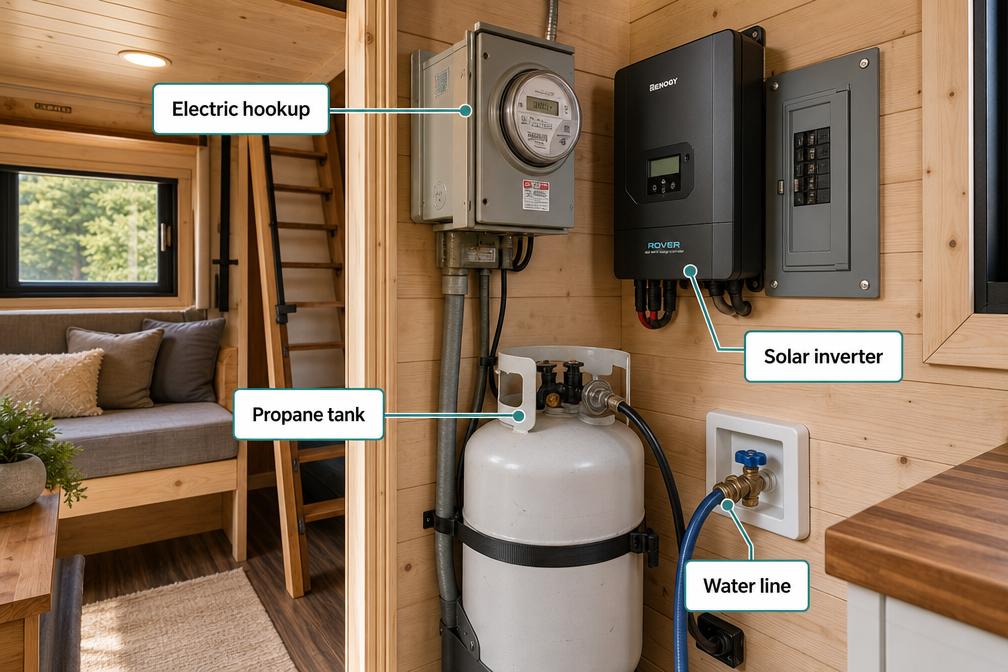
Tiny house prices by build type (2026 estimates):
| Build Type | Low End | High End | Notes |
|---|---|---|---|
| DIY THOW | $30,000 | $55,000 | Owner provides labor |
| Pro-built THOW | $70,000 | $120,000 | Full turnkey |
| Shipping container tiny house | $25,000 | $80,000 | Varies by container count |
| Modular/prefab tiny home | $50,000 | $100,000 | Excludes land |
| Foundation ADU | $90,000 | $180,000 | Includes permits and site work |
A shipping container tiny house cost sits lower on the front end but adds significant conversion labor. A single 20-foot container shell costs $2,000 to $5,000, but full conversion with insulation, plumbing, electrical, and finishes runs $20,000 to $50,000 more.
The tiny house build cost also changes dramatically based on location. The same 300-square-foot build in rural Tennessee costs 30% to 40% less than the same unit in coastal California, largely due to labor rates and material delivery costs.
Common mistake: buyers focus entirely on the build or purchase price and skip modeling the post-move-in cost. That is where the real financial picture lives.
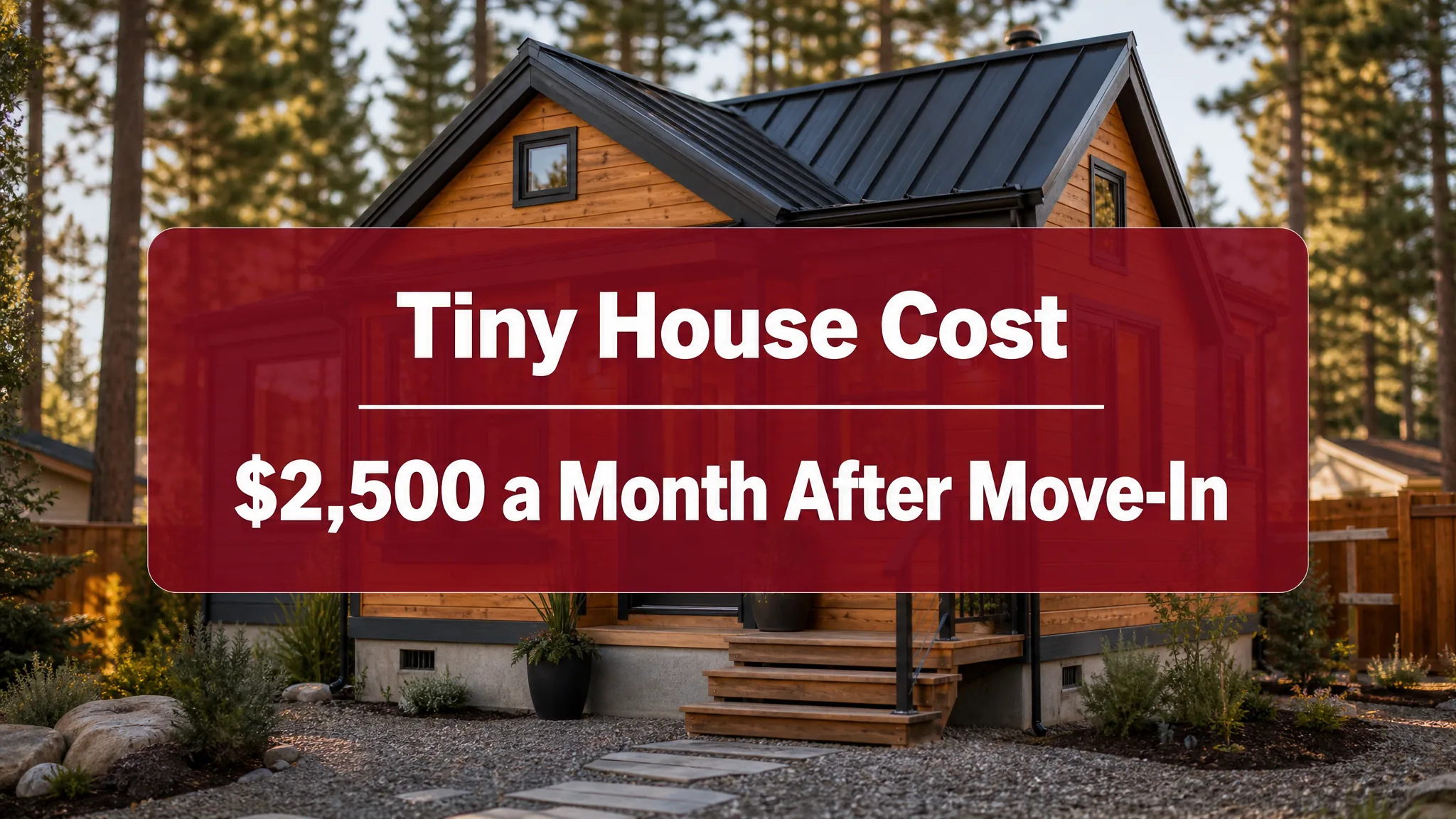
Tiny House Cost: Sticker Price Hides $2,500 a Month
This is the section most tiny house content skips. The tiny house cost conversation almost always stops at the purchase price. So based on what licensed brokers see in the field, the monthly carrying costs are what determine whether this lifestyle actually saves money.
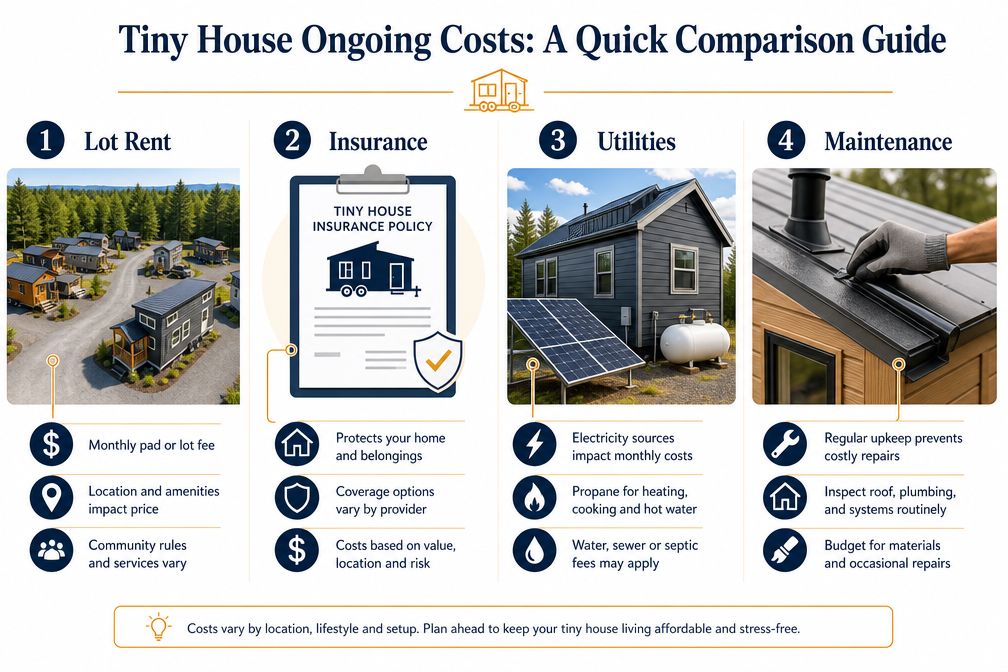
Here is a realistic monthly cost model for a THOW owner renting a lot at a tiny house community in 2026:
| Cost Category | Monthly Estimate |
|---|---|
| Lot rent / land lease | $500 to $1,200 |
| Insurance | $42 to $125 |
| Utilities (electric, water, trash) | $75 to $200 |
| Propane or heating fuel | $30 to $80 |
| Internet | $50 to $100 |
| Loan payment (RV loan, 7-10%) | $350 to $800 |
| Maintenance reserve | $100 to $200 |
| Total | $1,147 to $2,705 |
That range puts a tiny house on wheels at roughly the same monthly cost as a one-bedroom apartment in a mid-sized U.S. city. The math only wins decisively if the lot is owned, the home is paid off, or both.
For a foundation-based tiny home on owned land, the monthly picture shifts. The lot rent disappears, but property taxes, HOA fees, and a higher insurance premium replace part of it.
Tiny House Parking and Lot Rental Fees
Tiny house parking fees monthly run $400 to $1,200 at most dedicated tiny house communities and RV parks. The wide range reflects location, amenity level, and whether utilities are included. A basic RV park hookup in a rural area might charge $400 to $500 per month. A curated tiny house community with Wi-Fi, laundry, and shared green space in a desirable metro area charges $800 to $1,200.
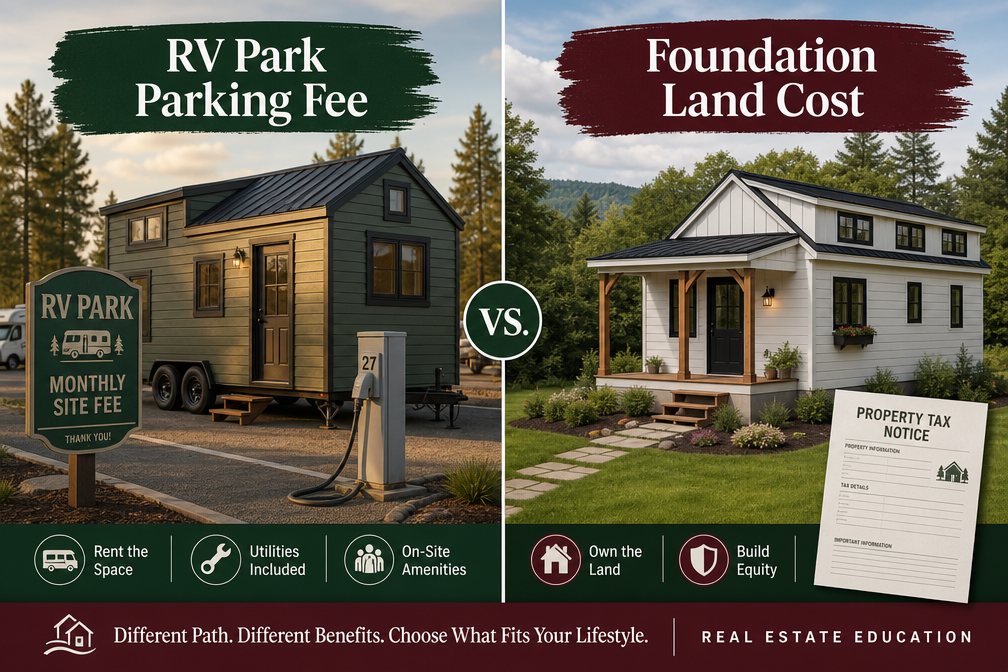
Tiny house land lease cost is the dominant ongoing expense for the majority of THOW owners who do not own land. Unlike a conventional mortgage where monthly payments build equity, lot rent builds zero ownership stake.
What to watch for in a land lease:
- Month-to-month versus annual lease terms (month-to-month offers flexibility but no rent protection)
- Whether water, sewer, and trash are bundled or billed separately
- Pet fees, guest fees, and vehicle storage fees that get added on top
- Rules about structural modifications, decks, or additions
- Eviction notice periods, which in some states are as short as 30 days for RV park residents
A tiny house on wheels vs foundation decision often comes down to this: the THOW offers mobility and lower upfront land cost, but the foundation unit builds equity and avoids the perpetual lot rent drain. For buyers comparing rent vs buy in 2026, the foundation tiny home with owned land is almost always the stronger long-term financial position.
Tiny House Permit and Zoning Fees by State
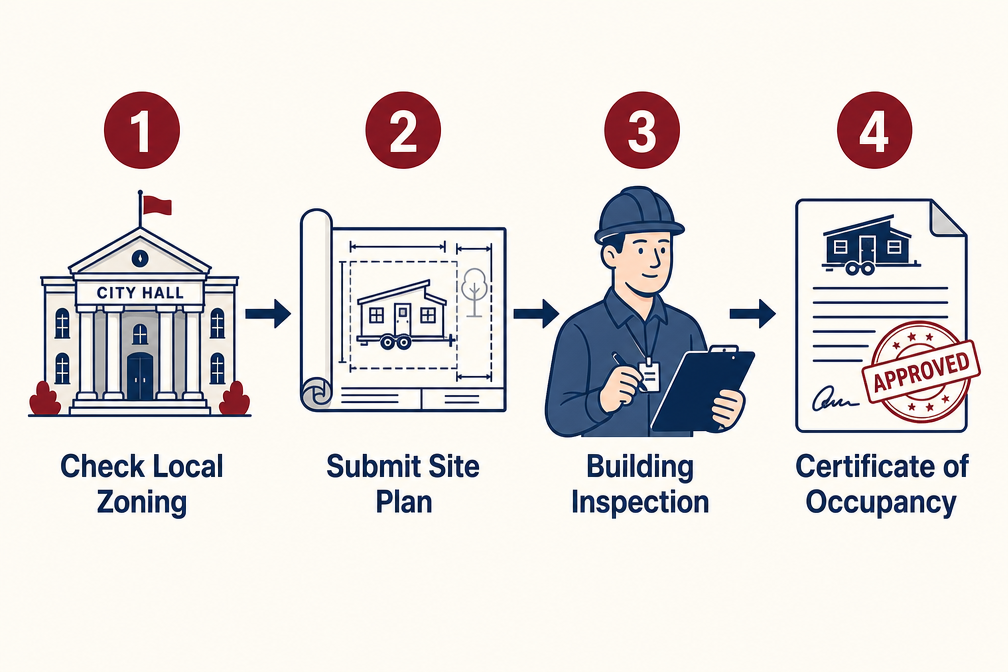
Tiny house zoning rules are the most inconsistent cost variable in the entire ownership equation. Some counties welcome tiny homes with fast-track ADU permits. Others effectively ban them through minimum square footage requirements, setback rules, or outright exclusion from residential zones.
Permit and zoning fees by structure type in 2026:
- Foundation tiny home or ADU: Building permits typically run $500 to $5,000 depending on jurisdiction and square footage. Some California counties charge 1% to 2% of construction value.
- THOW in a residential zone: Most municipalities do not permit permanent THOW occupation in residential zones at all. Variance applications, if allowed, run $500 to $2,000.
- THOW in an RV park: No building permit required in most states, but the park itself holds the land use permit.
- THOW on rural land: Many rural counties allow it with a simple site plan review costing $100 to $500.
States with the most active tiny house-friendly legislation as of 2026 include Oregon, Texas, Colorado, and North Carolina. States with the most restrictive zoning for non-standard structures include much of the Northeast and parts of the Midwest.
Edge case: some buyers purchase land in an unincorporated county specifically to avoid municipal zoning. That works until the county updates its land use code, which several have done between 2023 and 2026 in response to housing pressure.
For anyone planning a renovation or addition after move-in, the design vs renovation framework is worth reading before pulling a permit.
What Are Typical Monthly Utility Costs for a Tiny House?
Tiny house utility bills are genuinely lower than a conventional home, but not as low as most marketing materials suggest. A well-insulated tiny house with efficient appliances runs $30 to $100 per month on electricity. Add water ($20 to $50), trash ($15 to $30), and propane or heating fuel ($30 to $80 in winter), and the realistic monthly utility total lands at $95 to $260.
For comparison, the U.S. Energy Information Administration reported the average American household electricity bill at approximately $137 per month in 2024. A tiny house cuts that, but not to zero.
Factors that raise tiny house utility costs:
- Electric resistance heating in a poorly insulated unit (can spike to $150+ per month in cold climates)
- Off-grid solar systems that require propane backup
- Older THOW units with minimal insulation in the walls and roof
- Locations with extreme temperature swings
For owners interested in cutting utility costs further, the 7 sustainable home design moves that actually pay off covers insulation upgrades, solar sizing, and heat pump options that apply directly to small structures.
Tiny House Insurance: How Much Does It Cost?
Tiny house insurance cost runs $500 to $1,500 per year for a THOW and $800 to $2,000 per year for a foundation-based unit. Standard homeowners insurance policies typically will not cover a THOW because it does not meet the legal definition of a permanent dwelling in most states. This creates a coverage gap that catches many new owners off guard.
Coverage options by structure type:
- THOW registered as an RV: RV insurance through carriers like National General, Progressive, or Good Sam. Expect $600 to $1,200 per year for full-timer coverage.
- THOW not registered as an RV: Specialty tiny house insurance through carriers like Foremost or American Modern. Rates vary significantly by state.
- Foundation tiny home: Standard homeowners insurance applies in most cases. Rates run $800 to $2,000 per year depending on location, rebuild value, and claims history.
- Tiny home in a flood zone: Add $500 to $2,000 per year for NFIP flood coverage.
For a deeper look at how insurance coverage differs by property type, the comparison of homeowners insurance vs rental property insurance covers the structural differences in policy language that matter when a claim hits.
What most tiny house insurance policies exclude: damage from improper towing, wear and tear on the trailer frame, and mold from condensation inside poorly ventilated walls. Read the exclusions before signing.
Property Taxes on Tiny Houses: How Much Do You Pay?
Property taxes on a tiny house depend almost entirely on how the structure is classified and whether it sits on owned land. A THOW registered as a vehicle pays no real property tax in most states, only annual vehicle registration fees of $50 to $300. A foundation tiny home on owned land is assessed like any other real property.
For foundation units, assessed value typically tracks construction cost. A $90,000 foundation tiny home in a county with a 1.2% effective tax rate generates roughly $1,080 per year in property taxes. In high-tax states like New Jersey or Illinois, that same unit could generate $2,000 to $3,500 per year.
Three scenarios:
- THOW at an RV park: Near-zero property tax. Pay vehicle registration instead.
- THOW on leased land: No property tax on the structure; the landowner pays taxes on the land.
- Foundation tiny home on owned land: Full property tax applies, assessed on both structure and land value.
Tiny House HOA Fees and Community Costs
Tiny house community fees range from $0 at self-managed co-ops to $300 per month at amenity-rich planned communities. These fees are separate from lot rent and cover shared infrastructure like roads, common areas, laundry facilities, and community management.
Some tiny house communities operate as HOAs with formal governance, CC&Rs, and architectural review boards. Others are informal co-ops. The HOA structure matters because it affects resale value, financing eligibility, and your ability to modify the unit.
What community fees typically cover:
- Road maintenance and snow removal
- Shared water and sewer infrastructure
- Community building or laundry facilities
- Landscaping of common areas
- Management fees for professionally run communities
Red flag: communities that charge both lot rent and a separate HOA fee without a clear breakdown of what each covers. Get the full fee schedule in writing before signing a lease or purchase agreement.
Tiny House Septic System Maintenance Costs
Tiny house septic system maintenance costs run $300 to $600 per year for routine pumping and inspection, with major repairs ranging from $3,000 to $10,000. Off-grid tiny homes that rely on composting toilets or alternative waste systems have lower routine costs but face different replacement expenses.
For tiny homes connected to municipal sewer, this cost disappears into the utility bill. For rural or off-grid setups, it is a real budget line.
Septic cost breakdown:
- Annual pump-out: $250 to $500 depending on tank size and access
- Inspection: $100 to $300
- Drain field repair: $2,000 to $10,000 if lines fail
- Full system replacement: $5,000 to $20,000 depending on soil and local regulations
- Composting toilet unit: $800 to $2,000 upfront, minimal ongoing cost
Tiny homes on wheels that connect to RV park sewer hookups pay nothing for septic maintenance. The park handles it as part of the lot fee.
Tiny House Financing and Loan Costs Explained
Getting a mortgage on a tiny house is genuinely difficult, and most buyers end up with a personal loan, RV loan, or construction loan instead. Traditional mortgage lenders require the property to meet minimum square footage standards (usually 400 to 600 square feet), be on a permanent foundation, and be titled as real property rather than a vehicle.
A THOW almost never qualifies for a conventional mortgage. An RV loan for a tiny home is the most common financing path for THOW buyers, carrying interest rates of 7% to 12% as of 2026 and terms of 10 to 20 years. On a $75,000 THOW at 9% over 15 years, the monthly payment runs approximately $760, and total interest paid over the life of the loan exceeds $61,000.
Financing options by structure type:
- THOW (RVIA-certified): RV loan, 7% to 12%, 10 to 20 year terms
- THOW (non-certified): Personal loan, 8% to 15%, 5 to 7 year terms
- Foundation tiny home on owned land: Conventional mortgage if it meets lender minimums; construction loan during build phase
- ADU on existing property: HELOC or home equity loan against the primary residence
For buyers exploring equity-based financing for an ADU build, the HELOAN vs HELOC comparison breaks down which product fits which scenario and what the rate difference actually costs over time.
Can you get a mortgage on a tiny house? Yes, but only if it is on a permanent foundation, titled as real property, and meets your lender's minimum size requirements. Most THOWs do not qualify. Foundation ADUs built on a lot you already own often do qualify, especially if financed through a construction-to-permanent loan.
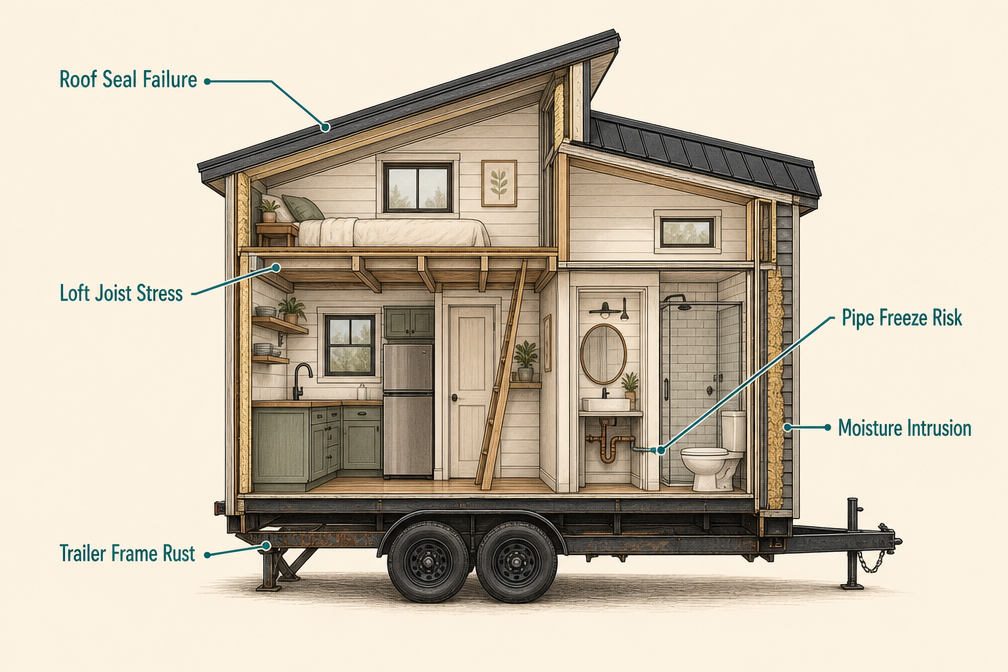
Common Expensive Repairs in Tiny Houses: What Should I Budget For?
The most expensive repairs in tiny houses involve the roof, trailer frame, plumbing, and moisture intrusion. Budget a maintenance reserve of $100 to $200 per month, or roughly 1% to 2% of the home's value per year.
Top repair categories and estimated costs:
- Roof seal failure (THOW): $500 to $3,000. Metal roofs on tiny homes need resealing every 5 to 10 years. Flat or low-pitch roofs fail faster.
- Trailer frame rust (THOW): $1,500 to $8,000. Galvanized steel trailers last longer, but road salt and moisture attack welds over time.
- Pipe freeze (off-grid or poorly insulated): $500 to $4,000. Tiny homes in cold climates need heat tape on exposed pipes.
- Loft floor joist stress: $1,000 to $5,000. Loft floors in THOWs take concentrated load. Joists crack or deflect over years of use.
- Moisture intrusion and mold: $2,000 to $15,000. The single most expensive tiny house repair. Condensation builds in small, poorly ventilated spaces. Once mold is in the walls, remediation is expensive relative to the home's value.
- Appliance replacement: $300 to $2,500. Compact appliances designed for RV use have shorter lifespans than full-size residential units.
Choose a THOW if you plan to move locations regularly and can tolerate higher maintenance vigilance. Choose a foundation unit if you want lower long-term maintenance costs and conventional financing options.
Tiny House Resale Value: What Buyers Need to Know
Tiny house resale value is one of the weakest arguments for buying. THOWs depreciate like vehicles in most markets. A $90,000 THOW purchased in 2022 may resell for $55,000 to $70,000 in 2026, depending on condition, certification, and local demand.
Foundation tiny homes on owned land hold value better because the land itself appreciates. But the structure alone, especially a sub-400-square-foot unit, appeals to a narrow buyer pool and can sit on the market for months in areas without active tiny house communities.
Factors that help resale:
- RVIA certification (required for RV loan financing by most lenders)
- Permanent foundation on owned land
- Location in a state with active tiny house zoning support
- High-quality build with documented maintenance records
- Proximity to an existing tiny house community
Factors that hurt resale:
- Non-certified build
- Aging trailer frame
- Evidence of moisture damage or mold
- Location in a county with restrictive zoning (limits the buyer pool)
- Unusual or highly personalized interior layouts
For buyers comparing this against conventional property types, the single-family homes vs condos vs townhouses breakdown gives a useful framework for thinking about resale risk across structure types.
Is a Tiny House Cheaper to Own Than an Apartment Long Term?
Over a five-year horizon, a tiny house is often not cheaper than renting an apartment once all costs are counted. This surprises most buyers who run only the purchase price comparison.
Five-year cost comparison (2026 estimates, mid-market U.S. city):
| Cost Item | Tiny House (THOW, lot rent) | 1BR Apartment Rental |
|---|---|---|
| Monthly housing payment | $1,400 to $2,200 | $1,200 to $1,800 |
| Move-in costs | $10,000 to $30,000 (down payment) | $2,400 to $5,400 (deposit + first/last) |
| Maintenance over 5 years | $6,000 to $12,000 | $0 (landlord responsibility) |
| Insurance over 5 years | $2,500 to $7,500 | $600 to $1,500 (renters) |
| Equity built | Minimal to negative (THOW depreciates) | $0 |
The tiny house wins financially only when lot rent is eliminated (owned land), the home is paid off, and the owner maintains it impeccably. That combination is real, but it requires significant upfront capital and patience. Patience is the right mindset here.
For buyers exploring lower-cost real estate markets where this math works better, the top 9 safest affordable U.S. cities identifies metros where land costs are low enough to make the foundation tiny home equation pencil.
What Hidden Costs Come With Owning a Tiny House?
The most common hidden costs in tiny house ownership are the ones nobody includes in the brochure: moving fees, storage costs, community application fees, and the cost of code compliance upgrades after purchase.
Hidden costs that catch buyers off guard:
- Towing and transport: Moving a THOW costs $1 to $3 per mile plus $200 to $500 for a professional driver. A 500-mile move runs $700 to $2,000.
- Community application and setup fees: Many tiny house communities charge $200 to $500 to apply, plus a setup fee of $300 to $1,000 to connect utilities.
- Storage for belongings that do not fit: Downsizing to 300 square feet means putting furniture, tools, and seasonal items somewhere. A 10×10 storage unit runs $100 to $200 per month.
- Code compliance retrofits: Buying a used THOW and placing it in a new jurisdiction sometimes requires electrical or plumbing upgrades to meet local code. Budget $1,000 to $5,000.
- Internet and cell service: Rural tiny house sites often lack fiber. Starlink satellite service runs $120 per month. Mobile hotspot backup adds $30 to $60 more.
- Vehicle costs for the tow rig: If you move the THOW yourself, you need a truck rated for the weight. A used 3/4-ton pickup capable of towing 14,000 pounds costs $25,000 to $45,000.
For anyone doing a full renovation or upgrade on a used tiny house after purchase, the best apps for home renovations covers the planning tools that keep small-space projects from blowing the budget.
Frequently Asked Questions
How much does a tiny house cost per month to own?
A realistic monthly cost for a THOW owner paying lot rent runs $1,200 to $2,500, including lot rent, insurance, utilities, loan payment, and a maintenance reserve. A paid-off tiny home on owned land can run as low as $300 to $600 per month in ongoing costs.
What is the average tiny house build cost in 2026?
The average tiny house construction cost for a professionally built THOW runs $70,000 to $120,000. DIY builds with owner labor run $30,000 to $55,000. Foundation ADUs run $90,000 to $180,000 depending on location and finish level.
Can you get a mortgage on a tiny house?
Only if the tiny house is on a permanent foundation, titled as real property, and meets your lender's minimum square footage requirements (typically 400 to 600 square feet). Most THOWs do not qualify. RV loans are the most common financing path for THOW buyers.
What does tiny house insurance cost per year?
Tiny house insurance cost runs $500 to $1,500 per year for a THOW and $800 to $2,000 for a foundation unit. Standard homeowners policies typically do not cover THOWs. Specialty RV or tiny house insurance is required.
How much is lot rent at a tiny house community?
Tiny house parking fees monthly range from $400 to $1,200 depending on location, amenities, and whether utilities are included. High-demand metro areas with curated communities charge $800 to $1,200. Rural RV parks charge $400 to $600.
Do tiny houses have lower utility bills than regular homes?
Yes, but not dramatically. A well-insulated tiny house runs $30 to $100 per month on electricity versus the national average of roughly $137 for a conventional home. Total utilities including water, trash, and heating fuel run $95 to $260 per month.
What are property taxes on a tiny house?
A THOW registered as a vehicle pays vehicle registration fees of $50 to $300 per year instead of property tax. A foundation tiny home on owned land pays full property taxes, typically $500 to $2,000 per year depending on assessed value and local tax rate.
What is the resale value of a tiny house?
Tiny house resale value is weak for THOWs, which depreciate like vehicles. A $90,000 THOW may resell for $55,000 to $70,000 after four years. Foundation tiny homes on owned land hold value better because the land appreciates even if the structure does not.
How much does tiny house septic system maintenance cost?
Routine annual maintenance runs $300 to $600 for pumping and inspection. Major repairs like drain field replacement run $3,000 to $10,000. Full system replacement costs $5,000 to $20,000.
What is a low cost tiny house option?
A DIY THOW build with the owner providing most of the labor runs $30,000 to $55,000. A shipping container conversion is another low cost tiny house path, with shell costs of $2,000 to $5,000 and conversion costs of $20,000 to $50,000. Both require significant time investment and skill.
Are tiny house zoning rules changing?
Yes. States like Oregon, Texas, Colorado, and North Carolina have passed legislation making it easier to place tiny homes in residential zones. Many other counties still ban permanent THOW occupation in residential areas. Always verify local zoning before purchasing land or a structure.
Is a tiny house a good investment?
For most buyers, a tiny house is a lifestyle choice, not a wealth-building tool. The exception is a foundation ADU on owned land in an appreciating market, which can generate rental income and appreciate with the land value. A THOW at a rented lot rarely builds equity.
Conclusion
The tiny house cost conversation does not end at the purchase price. The real financial picture lives in the monthly bills: lot rent, insurance, utilities, loan payments, maintenance reserves, and the permit and zoning fees that come before any of that. Buyers who run the full five-year model before committing, rather than after, are the ones who make this lifestyle work.
Actionable next steps:
- Build a full monthly cost model before buying, including lot rent or land cost, insurance, utilities, loan payment, and a $150 per month maintenance reserve.
- Verify local zoning rules for the specific county and parcel before purchasing land or a structure.
- Get RVIA certification on any THOW you plan to finance or resell. It opens up RV loan options and expands the buyer pool.
- If a foundation tiny home is the goal, explore HELOC or construction loan options against existing equity rather than defaulting to a personal loan.
- Price out lot rent in at least three communities before committing to a location. The spread between $400 and $1,200 per month is $9,600 per year.
- Budget for the hidden costs: towing, storage, community setup fees, and the code compliance retrofits that used THOWs often need.
The tiny house lifestyle is a different approach to homeownership that can absolutely work financially. Getting there requires the same careful planning that any real estate decision demands. The bills are tiny. The surprises are not.