
Last updated: August 23, 2026

Quick Answer
What does title insurance cover depends entirely on which policy you're talking about, and that distinction is the part nobody explains at the closing table. The lender's policy protects the bank's financial interest in your home. The owner's policy protects yours. You almost always pay for both, but only one of them shows up for you if something goes wrong with the title after closing.
Key Takeaways
- Title insurance covers defects in a property's ownership history, including forged deeds, undisclosed liens, unpaid taxes, and boundary disputes
- There are two separate policies: the lender's policy (required) and the owner's policy (optional but strongly recommended)
- The lender's policy protects the mortgage lender only, not the homebuyer
- Owner's title insurance covers the full purchase price and lasts as long as you own the property
- A one-time premium paid at closing covers both policies; owner's policy typically costs 0.5% to 1% of the purchase price
- Title insurance does NOT cover defects you created yourself, zoning violations, or issues that arise after the policy is issued
- You can shop for your own title insurance provider in most states; you are not required to use the lender's preferred company
- If a claim is denied, you have the right to appeal and, in some cases, pursue legal action against the insurer
- Title insurance is different from homeowners insurance; the two cover completely separate risks
- Even with title insurance, title issues can surface after closing, and having an owner's policy is what determines whether you pay out of pocket
What Is Title Insurance and Why Do You Need It
Title insurance protects against financial loss from defects in a property's ownership history. Before any home sale closes, a title company runs a title search, digging through public records to verify that the seller actually owns the property free and clear. Title insurance exists because that search, no matter how thorough, can miss things.
Unlike car or health insurance, which protect against future events, title insurance protects against past events that nobody discovered yet. A deed recorded incorrectly 30 years ago. A lien from a contractor who was never paid. An heir who was left out of a will. These problems existed before you bought the house. Title insurance is what stands between you and the legal bill when they surface after closing.
You need it because real estate ownership history is messy, records are imperfect, and the consequences of a title defect can include losing your home entirely.
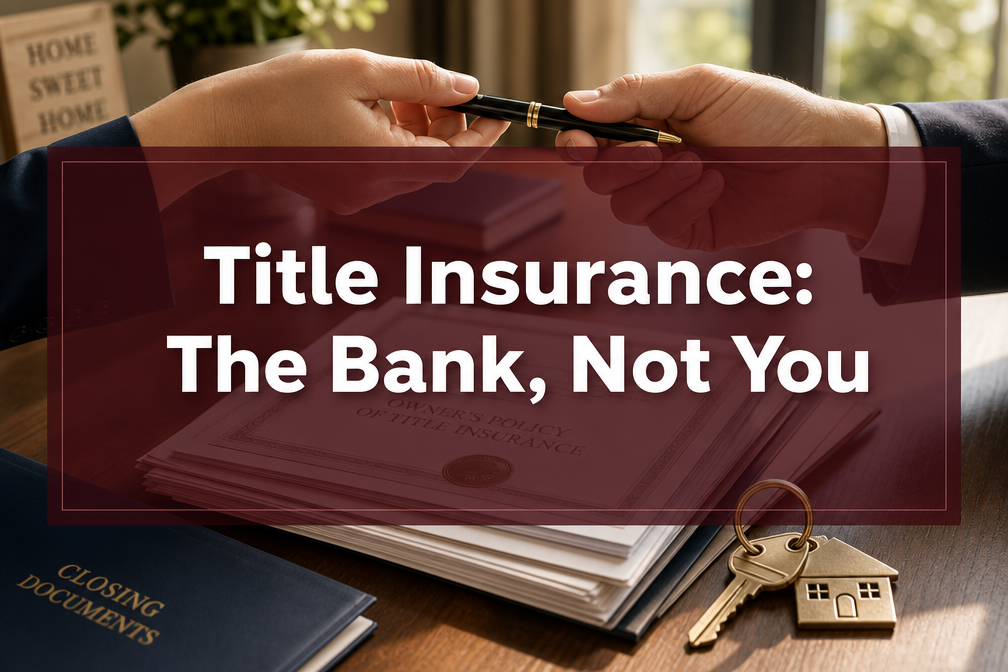
What Does Title Insurance Cover? The Bank, Not You
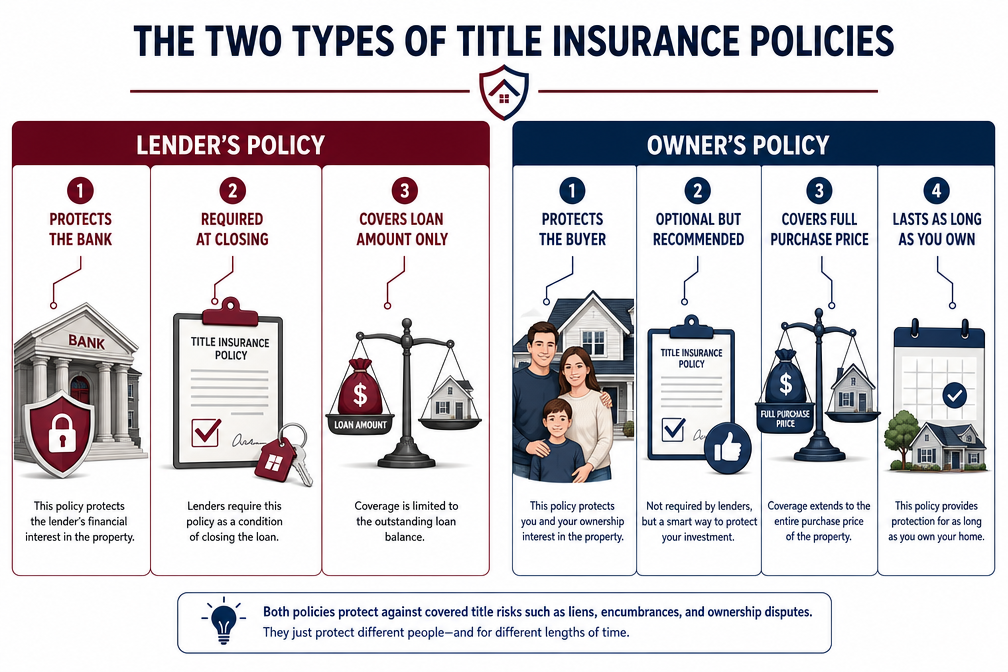
This is the answer most buyers never get until it's too late. What does title insurance cover at a standard closing comes down to two separate policies with two completely different beneficiaries.
The lender's policy (also called a loan policy) covers the mortgage lender up to the outstanding loan balance. If a title defect surfaces and a court rules against you, the lender gets paid. You do not.
The owner's policy covers the homebuyer up to the full purchase price of the property. If the same defect surfaces, you get legal defense costs covered and financial compensation up to your policy limit.
Here's the part that stings: at most closings, the buyer pays for both policies. The lender's policy is almost always required when you finance a purchase. The owner's policy is technically optional in most states. Skipping it to save a few hundred dollars at closing is one of the more expensive mistakes a buyer can make.
What does owner's title insurance cover specifically:
- Legal fees to defend your ownership in court
- Financial losses if you lose ownership due to a covered defect
- Costs related to clearing liens, judgments, or encumbrances that predate your purchase
- Losses from forged or fraudulent deeds in the chain of title
- Claims from undisclosed heirs or missing signatures on prior deeds
- Unpaid property taxes or assessments from before closing
- Easement and encroachment disputes tied to historical records
What does lender's title insurance cover:
- The bank's loan balance only
- Legal costs the lender incurs defending the mortgage lien
- Nothing for the homebuyer's equity or out-of-pocket losses
For a deeper look at how closing costs break down, see our guide to seller closing costs explained.
What Are Common Title Defects That Insurance Covers
Title defects fall into a few predictable categories, and most of them are invisible during a standard walkthrough or even a title search.
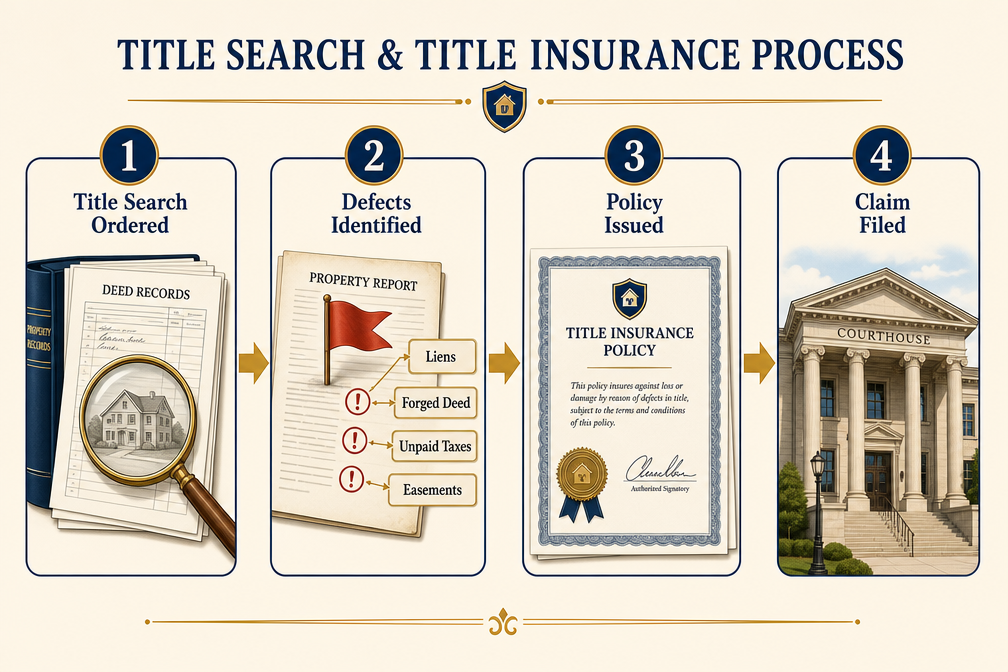
Forged deed title claims are more common than buyers expect. If someone in the ownership chain forged a signature on a deed decades ago, that forgery can invalidate every transfer that followed, including yours.
Unpaid liens from contractors, lenders, or the IRS can attach to a property and survive a sale if they were not properly discharged. A mechanic's lien from a renovation the previous owner never paid can become your problem at closing or after.
Missing heirs are a classic title nightmare. If a prior owner died without a proper will, or if an heir was overlooked in a probate proceeding, that heir can surface years later with a legitimate legal claim to the property.
Easement and encroachment title claims arise when a neighbor's fence, driveway, or structure sits on your property, or when an undisclosed easement gives a utility company or neighbor legal access to part of your land. These are often not visible in the deed itself.
Errors in public records include clerical mistakes in deeds, surveys, or tax records that create gaps or conflicts in the ownership chain.
Boundary disputes rooted in old surveys that conflict with newer measurements can trigger claims long after closing.
What Is Not Covered by Title Insurance
Title insurance has real limits, and knowing them before closing prevents unpleasant surprises.
What title insurance does NOT cover:
- Defects you knew about before closing and did not disclose
- Zoning violations or changes in zoning after the policy is issued
- Environmental hazards or contamination
- Eminent domain (government taking of the property)
- Issues that arise after the policy's effective date
- Physical conditions visible during a property inspection, like encroachments you could see with your own eyes
- Deed restrictions or covenants that are listed in public records but not flagged as defects
- Mechanic's liens from work you commissioned after closing
The distinction between what is covered and what is not often comes down to timing and knowledge. If the problem existed before closing and was not discoverable through a reasonable title search, you're likely covered. If it happened after closing or was something you could have found yourself, you're probably not.
Title Insurance vs Homeowners Insurance: What's the Difference
These two policies cover completely different risks, and confusing them is one of the most common mistakes first-time buyers make.
| Feature | Title Insurance | Homeowners Insurance |
|---|---|---|
| What it covers | Past defects in ownership history | Future physical damage or liability |
| When you pay | One-time premium at closing | Annual premium, ongoing |
| Who it protects | Lender (required) and/or owner (optional) | Homeowner |
| Duration | Lender's policy: until loan is paid off; Owner's policy: as long as you own | Renewed annually |
| Examples of claims | Forged deed, undisclosed lien, missing heir | Fire, theft, storm damage, slip-and-fall |
Homeowners insurance is about what happens to the house going forward. Title insurance is about what happened to the house before you owned it. You need both. They do not overlap.
For investors comparing coverage types across different property categories, our breakdown of homeowners insurance vs rental property insurance covers the cost and coverage differences in detail.
How Much Does Title Insurance Cost
Title insurance cost is a one-time premium paid at closing, not an ongoing expense. The exact amount varies by state, purchase price, and the title company you use.
Owner's policy: typically 0.5% to 1% of the purchase price. On a $434,000 home (the U.S. median as of mid-2026), that's roughly $2,170 to $4,340.
Lender's policy: usually slightly less than the owner's policy, often discounted when purchased simultaneously.
Simultaneous issue discount: buying both policies from the same title company at the same time almost always gets you a reduced combined rate. Ask for it specifically.
Who pays for title insurance varies by state and local custom. In many markets, the seller pays for the owner's policy as part of closing costs. In others, the buyer pays for both. In some states, it's negotiable. Your purchase contract should spell this out.
How much is title insurance at closing also depends on whether your state regulates title insurance rates. Texas, Florida, and several other states set fixed rates, so shopping around won't change the premium. In states without rate regulation, prices can vary meaningfully between providers.
Owner's Policy vs Lender's Policy: The Full Breakdown
The owner's policy vs lender's policy distinction is the core of what does title insurance cover, and it's worth being direct about which one actually matters for you as a buyer.
Lender's policy:
- Required by virtually every mortgage lender
- Covers the loan balance, which decreases as you pay down the mortgage
- Expires when the loan is paid off or refinanced
- Protects the bank's investment, not yours
Owner's policy:
- Optional in most states, but skipping it is a real financial risk
- Covers the full purchase price, not just the loan balance
- Protects your equity, which grows as you pay down the mortgage
- Lasts as long as you own the property, and typically extends to heirs
Is owner's title insurance worth it? For most buyers, yes. The one-time cost is small relative to the purchase price, and the protection covers the full value of your investment. The scenario where you'd regret skipping it, a forged deed or undisclosed heir claim, is exactly the kind of thing you cannot predict or prevent through due diligence alone.
Can You Get Title Insurance Without a Mortgage
Yes. If you're paying cash, no lender is involved, so there's no lender's policy requirement. But that doesn't mean you should skip title insurance entirely.
Cash buyers actually face more risk without title insurance, not less. There's no lender doing their own due diligence on the title. No one is requiring a title search as a condition of funding. The only protection you have is what you arrange yourself.
Cash buyers should always purchase an owner's policy. The cost is the same whether you have a mortgage or not, and the coverage is identical. If you're buying a home outright and something in the title history is wrong, you're the only one who loses.
For buyers considering cash purchase strategies, our guide to best home buying companies and what they pay covers how cash transactions work in different contexts.
Do You Have to Buy Title Insurance From the Lender's Choice
No. Federal law under RESPA (the Real Estate Settlement Procedures Act) prohibits lenders from requiring you to use a specific title insurance company as a condition of the loan. You have the right to shop for your own title insurer.
That said, lenders can recommend a preferred provider, and many buyers simply go along with it. In states where rates are regulated, shopping won't change the premium. In unregulated states, getting quotes from two or three title companies can save real money.
What to watch for: some lenders or real estate agents have affiliated business arrangements with title companies and receive referral fees. This is legal and must be disclosed, but it's worth knowing the recommendation may not be purely in your interest.
Title search vs title insurance is also worth clarifying here. The title search is the research process, examining public records to identify potential defects. Title insurance is the policy that covers you if the search misses something. You pay for both, but they're separate services.
What Happens If Title Insurance Denies a Claim
Title insurance companies do deny claims, and it happens more often than buyers expect. The most common reasons for denial include the defect falling into an exclusion category, the buyer having prior knowledge of the issue, or the claim being filed incorrectly.
If your claim is denied:
- Request the denial in writing with the specific policy exclusion cited
- Review your policy carefully against the stated reason for denial
- File a formal appeal with the title insurance company
- Contact your state's Department of Insurance if the denial seems improper
- Consult a real estate attorney, especially if the claim involves significant money
Title insurance companies are regulated at the state level, and most states have a complaints process through the insurance commissioner's office. An attorney specializing in real estate or insurance disputes can assess whether the denial was legitimate or whether you have grounds to push back.
Can Title Issues Come Up After Closing Even With Insurance
Yes, and this is exactly why having an owner's policy matters. Title issues can surface months or even years after a transaction closes, and the owner's policy is what determines whether you're protected when they do.
Common post-closing title issues include:
- A previously unknown heir who was left out of a probate filing surfaces with a claim
- A forged deed from 20 years ago is discovered during a subsequent sale
- An old mortgage that was paid off but never properly released creates a cloud on the title
- A survey dispute with a neighbor reveals an encroachment that predates your purchase
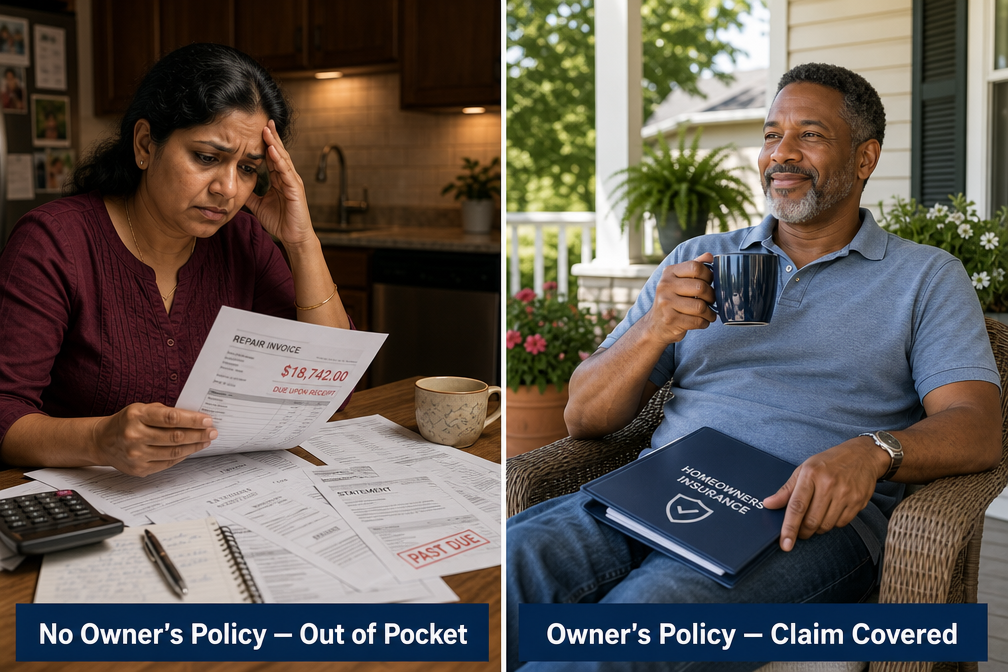
With an owner's policy, the title insurance company covers your legal defense and any financial loss up to your policy limit. Without one, those costs come entirely out of your pocket, and they can easily run into the tens of thousands of dollars before a resolution.
Title insurance red flags and common mistakes to avoid:
- Skipping the owner's policy to save money at closing
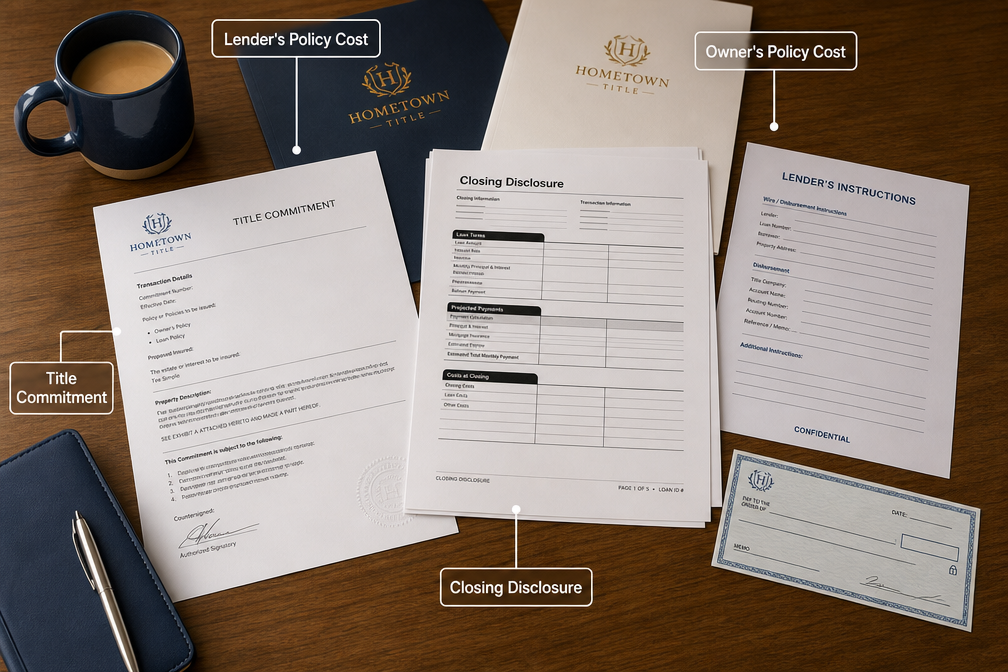
- Not reading the title commitment before closing (it lists all known exceptions to coverage)
- Assuming the lender's required policy protects you
- Buying from the lender's preferred provider without comparing quotes in unregulated states
- Failing to ask whether the policy includes enhanced coverage for post-policy forgery or fraud
- Not verifying that all prior liens were properly released before closing
For buyers working through the full closing process, our breakdown of seller closing costs explained covers the full picture of what both sides pay.
How Long Does Title Insurance Coverage Last
The lender's policy lasts until the mortgage is paid off or refinanced. When you refinance, the lender requires a new lender's policy for the new loan. The old one expires.
The owner's policy lasts as long as you or your heirs have an interest in the property. There are no renewal premiums. The one-time payment at closing covers you indefinitely. If you sell the property 20 years later and a title defect from before your purchase surfaces during that transaction, your owner's policy still covers you.
This is one of the strongest arguments for the owner's policy. The premium is paid once. The protection is permanent.
FAQ
What is covered by title insurance?
Title insurance covers financial losses from defects in a property's ownership history that existed before the policy was issued, including forged deeds, undisclosed liens, missing heirs, unpaid taxes, and easement disputes. The owner's policy covers the buyer; the lender's policy covers the mortgage lender.
Is title insurance required?
The lender's policy is required by virtually all mortgage lenders. The owner's policy is optional in most states but is strongly recommended for any buyer who wants to protect their equity.
Who pays for title insurance?
It depends on state and local custom. In some markets the seller pays for the owner's policy; in others the buyer pays for both. It is negotiable in most transactions and should be addressed in the purchase contract.
What does title insurance not cover?
Title insurance does not cover zoning violations, environmental issues, physical defects visible during inspection, eminent domain, or problems that arise after the policy is issued. It also excludes defects the buyer knew about before closing.
What is the difference between a title search and title insurance?
A title search is the research process of examining public records to identify potential ownership defects. Title insurance is the policy that covers financial loss if the search missed something. You pay for both, but they serve different functions.
Can I shop for my own title insurance company?
Yes. Federal law prohibits lenders from requiring you to use a specific title insurer. You can compare quotes, especially in states where rates are not regulated.
What does lender's title insurance cover?
It covers the mortgage lender's financial interest up to the outstanding loan balance. It does not protect the homebuyer's equity or cover the buyer's legal costs.
How much is title insurance at closing?
The owner's policy typically costs 0.5% to 1% of the purchase price. On a $434,000 home, that's roughly $2,170 to $4,340, paid once at closing. The lender's policy is usually slightly less.
What happens if a title defect surfaces after I close?
With an owner's policy, the title insurance company covers your legal defense and financial losses up to your policy limit. Without one, all costs come out of your pocket.
Does title insurance cover easement and encroachment claims?
Yes, if the easement or encroachment existed before the policy was issued and was not disclosed or visible at the time of purchase. Encroachments you could see during a walkthrough are typically excluded.
What is an enhanced owner's title insurance policy?
An enhanced policy (sometimes called an ALTA Homeowner's Policy) extends standard coverage to include post-policy forgery, certain zoning issues, and other risks not covered by a standard policy. It costs more but offers broader protection.
How long does the owner's policy last?
For as long as you or your heirs have an interest in the property. There are no renewals and no additional premiums after the one-time payment at closing.
Conclusion
The short version of what does title insurance cover is this: the lender's policy covers the bank, and the owner's policy covers you. You almost always pay for both at closing, but only the owner's policy is in your corner when something goes wrong.
Skipping the owner's policy to trim a few hundred dollars from closing costs is a real risk, not a smart shortcut. One forged deed, one undisclosed heir, one lien that slipped through the title search, and the out-of-pocket legal costs will dwarf whatever you saved.
Actionable next steps before your closing:
- Confirm whether the owner's policy is included in your closing costs or if you need to request it separately
- Ask your title company for the title commitment before closing and review the listed exceptions carefully
- In states without regulated rates, get quotes from at least two title companies
- Ask specifically about enhanced coverage options if your property has a complex ownership history
- If you're paying cash, treat the owner's policy as non-negotiable
For buyers who want to understand the full financial picture before signing anything, our coverage of current mortgage rates and what buyers need to know and our guide on home tax assessed value vs market value are worth reading before you get to the closing table.
Title insurance is one of those things where the people who needed it and didn't have it are the ones who wish someone had explained it clearly before they signed. Now you have the straight answer.