

Last updated: July 20, 2026

Quick Answer: Yes, you can legally buy a house with no money down in 2026, and it's more accessible than most people think. VA loans, USDA loans, and several state-level down payment assistance programs offer zero-down mortgage options to qualified buyers. The catch? You still need to meet income, credit, and property eligibility requirements, and closing costs don't disappear just because your down payment does.
Key Takeaways
- VA loans and USDA loans are the two primary federal programs that allow a zero-down payment on a home purchase, both are legitimate, government-backed options.
- No down payment first-time home buyer programs exist at the state and local level too, including free grants for first-time home buyers that never have to be repaid.
- Most zero-down mortgage programs require a minimum credit score between 580 and 640, depending on the loan type.
- Buying a house with no money down does NOT mean buying with zero costs, closing costs, PMI, and reserves are still real expenses.
- Seller concessions can be negotiated to cover closing costs, which brings your total out-of-pocket expense close to zero.
- USDA loans are geographically restricted to eligible rural and suburban areas; VA loans are exclusively for veterans, active-duty service members, and surviving spouses.
- Buying a home with no down payment and bad credit is harder but not impossible, FHA loans with gift funds or down payment assistance can bridge the gap.
- Knowing how to buy a house with no money down legally means understanding which programs you qualify for before you ever talk to a lender.
How to Buy a House With No Money Down (Legally), The Full Picture
Knowing how to buy a house with no money down legally starts with one key truth: the money doesn't vanish, it shifts. Instead of you bringing cash to the table, a government program, employer benefit, or negotiated seller contribution covers what would have been your down payment. That's the entire framework.
Here's what actually makes this work in 2026:
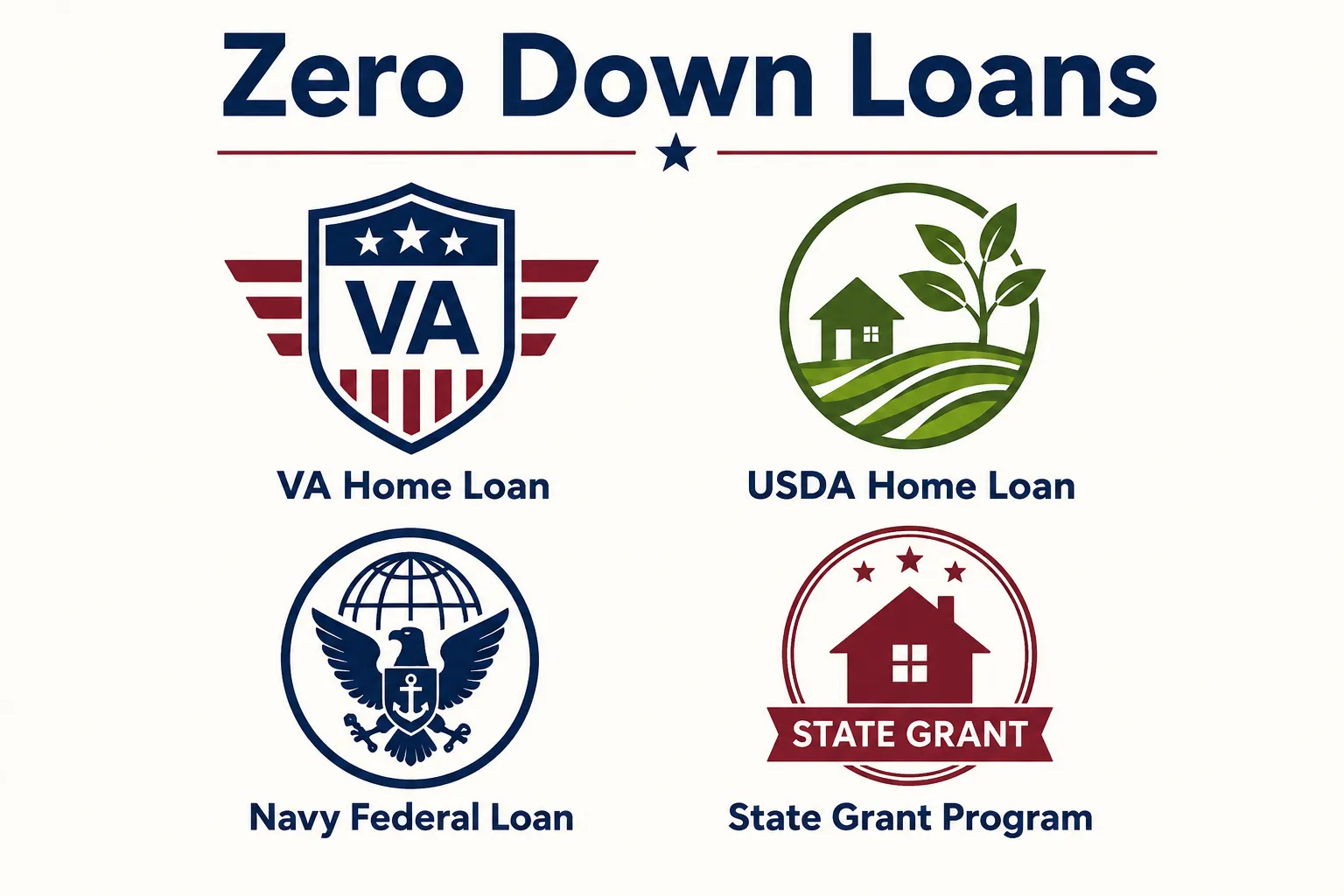
- Government-backed zero-down loans, VA and USDA loans eliminate the down payment requirement entirely for eligible borrowers.
- Down payment assistance (DPA) programs, State housing finance agencies (HFAs) offer grants and forgivable second loans that cover the down payment on your behalf.
- Seller concessions, A motivated seller can contribute toward your closing costs, reducing what you need to bring to closing.
- Gift funds, Family members can gift money for a down payment on FHA and conventional loans, with proper documentation.
- Employer-assisted housing programs, Some employers and unions offer housing grants or forgivable loans as a benefit.
The legal part matters here. There are predatory schemes, inflated purchase prices, undisclosed kickbacks, fake gift letters, that can constitute mortgage fraud. The programs covered in this article are 100% legitimate, federally recognized, and used by thousands of buyers every month.
For a deeper look at how down payment strategies stack up against each other, check out our top 7 down payment strategies ranked, it's an extraordinary breakdown of what actually works.
What Does "No Money Down" Actually Mean When Buying a House?
"No money down" means your down payment, the upfront percentage of the home's purchase price you'd normally pay out of pocket, is covered by a loan program, grant, or other approved source rather than your personal savings.
It does NOT mean:
- No closing costs (those still exist and typically run 2%,5% of the loan amount)
- No income or credit requirements
- No monthly mortgage payment
- No financial risk
Think of it like getting a Netflix subscription through your phone carrier, you're still paying, just not in the way you expected. The cost structure shifts; it doesn't disappear.
What "no money down" covers:
- The 3%, 3.5%, 5%, or 20% down payment that lenders typically require
- Sometimes a portion of closing costs (when combined with seller concessions or DPA programs)
What it does NOT cover:
- Your monthly principal, interest, taxes, and insurance (PITI)
- Home inspection fees
- Appraisal fees
- Moving costs
- Emergency repair reserves
Is It Actually Possible to Buy a House With No Money Down?
Absolutely, and it's not some fringe loophole. Millions of Americans have used VA and USDA loans to purchase homes with zero down payment. According to the U.S. Department of Veterans Affairs, VA loans have helped over 28 million veterans and service members purchase homes since the program launched in 1944. USDA's Single Family Housing Guaranteed Loan Program serves hundreds of thousands of low-to-moderate income buyers annually in eligible rural areas.
So yes, this is real, it's legal, and it's impeccable when used correctly.
Who it works best for:
- Veterans and active-duty military (VA loan)
- Buyers in rural or suburban areas with moderate income (USDA loan)
- First-time buyers in states with strong DPA programs
- Buyers with solid income but limited savings
Who it's harder for:
- Buyers with credit scores below 580
- Buyers in high-cost urban markets where USDA doesn't apply
- Non-veterans buying in competitive markets where sellers prefer conventional offers
What Are the Legal Ways to Buy a House With No Money Down?
There are six primary legal paths to buying a house with no money down. Each has different eligibility rules, property requirements, and trade-offs.
1. VA Loan (Best Zero-Down Option Available)
VA loans are the gold standard for zero-down home buying. No down payment, no private mortgage insurance (PMI), and competitive interest rates. Eligibility is limited to veterans, active-duty service members, National Guard members, reservists, and eligible surviving spouses.
Key facts:
- No down payment required
- No PMI
- VA funding fee applies (1.25%,3.3% of loan amount, can be rolled into the loan)
- No maximum loan limit for full entitlement borrowers (as of 2020 Blue Water Navy Act)
- Minimum credit score: typically 620 (lender-specific, not VA-mandated)
2. USDA Loan (Best for Rural and Suburban Buyers)
The USDA loan no down payment program is one of the most underused tools in real estate. The USDA's Guaranteed Loan Program covers homes in eligible rural and suburban areas, and "rural" is broader than most people assume. Many suburban communities within commuting distance of major cities qualify.
Key facts:
- No down payment required
- Annual guarantee fee (0.35% of loan balance) replaces PMI
- Income limits apply, typically 115% of the area median income
- Property must be in a USDA-eligible area (check eligibility at usda.gov)
- Minimum credit score: typically 640 for automated approval
3. Down Payment Assistance (DPA) Programs
State and local housing finance agencies offer DPA programs that function as grants or forgivable second mortgages. These are free grants to buy a home in the truest sense, some never require repayment if you stay in the home for a set number of years.
Examples of what's out there:
- Florida's Florida Housing Finance Corporation offers the Florida Assist program, a $10,000 deferred second mortgage at 0% interest
- California's CalHFA MyHome Assistance Program offers a deferred junior loan for down payment and closing costs
- Texas offers the My First Texas Home program with up to 5% in down payment assistance
These are fresh programs that update regularly, so checking your state's HFA website is always the right move.
4. Navy Federal Credit Union HomeSquad / 100% Financing
Navy Federal Credit Union offers a 100% financing conventional mortgage for members, no down payment, no PMI. This is exclusive to Navy Federal members (active military, veterans, DoD employees, and their families).
5. Employer-Assisted Housing (EAH) Programs
Some employers, especially hospitals, universities, and government agencies, offer housing grants or forgivable loans as a recruitment benefit. If your employer has an EAH program, this is worth stacking with other assistance.
6. Gift Funds
FHA loans allow the entire down payment (3.5%) to come from a gift from a family member, employer, or approved nonprofit. With a gift covering the down payment and seller concessions covering closing costs, your out-of-pocket can legitimately approach zero.
For a complete breakdown of mortgage types and how financing structures work, our real estate financing guide covering mortgages, credit, and down payments is required reading before you apply for anything.
What Credit Score Do You Need for a No Money Down Mortgage?
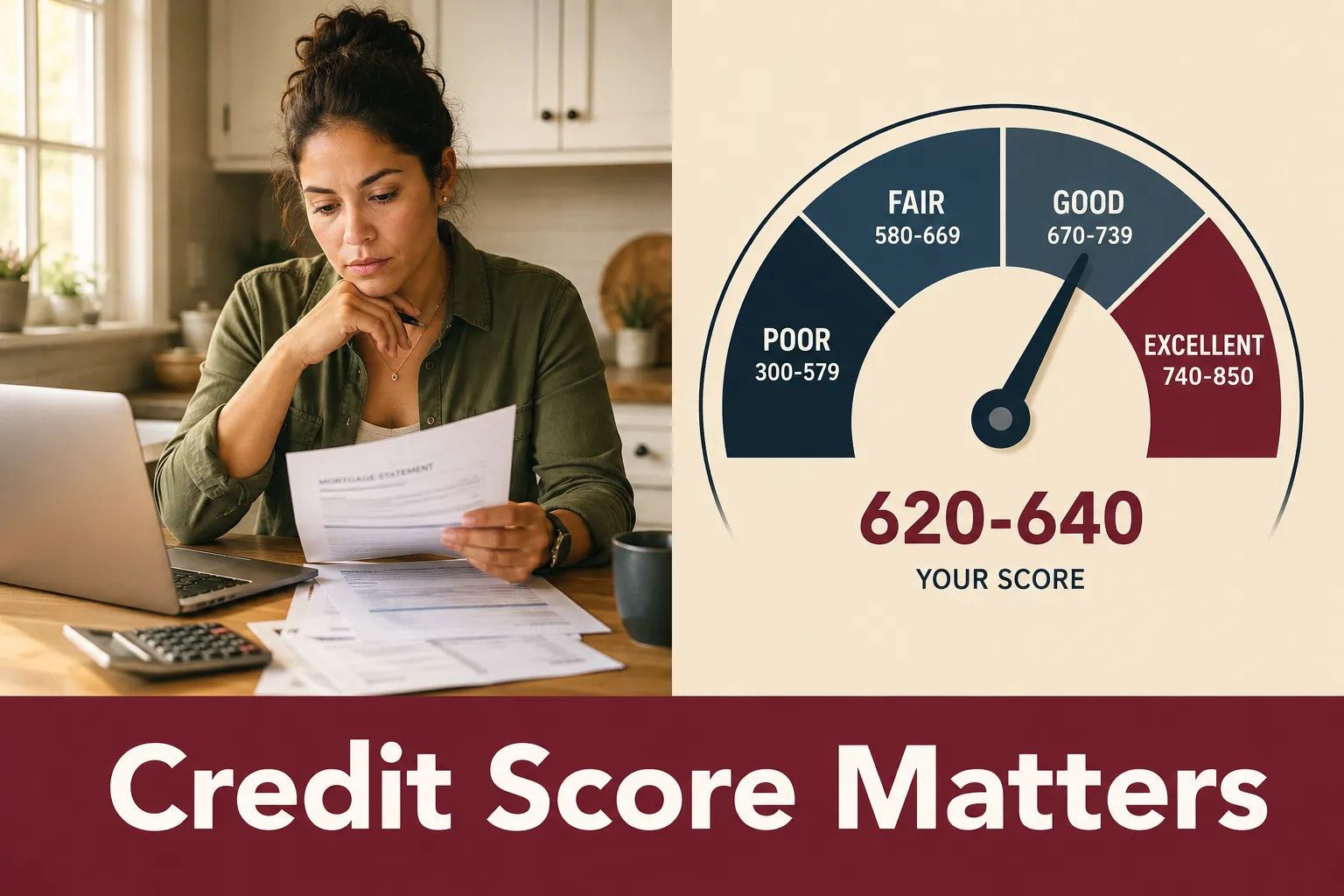
Your credit score requirements vary by loan program, but here's the honest breakdown:
| Loan Program | Minimum Credit Score (Typical) |
|---|---|
| VA Loan | 620 (lender-set, not VA-mandated) |
| USDA Loan | 640 for automated approval; 580+ with manual underwriting |
| FHA Loan (3.5% down) | 580 for 3.5% down; 500-579 for 10% down |
| Navy Federal 100% | 620+ (member-specific) |
| State DPA Programs | Varies; typically 620-640 |
What credit score do I need to buy a house with no money down? For most zero-down programs, a 620 is the practical floor. A 640+ opens up more options and better rates. Below 580, you're in "buying a home with no down payment and bad credit" territory, possible, but you'll need compensating factors like low debt-to-income ratio, stable employment history, or a co-borrower.
Common mistake: Assuming your credit score is the only factor. Lenders also look at:
- Debt-to-income ratio (DTI), most programs cap at 41%,45%
- Employment history (2 years preferred)
- Payment history on existing accounts
- Collections and judgments
If your score is below 620, spend 3-6 months paying down revolving debt and disputing any errors on your credit report before applying. Let it cook before you see results, a 40-point score jump in 90 days is realistic with the right moves.
How Do Seller Concessions Work for Down Payment and Closing Costs?
Seller concessions are one of the most underrated tools for buyers trying to minimize out-of-pocket costs. A seller concession is when the seller agrees to pay a portion of your closing costs as part of the purchase negotiation.
How it works in practice:
- You make an offer on a home at or near asking price
- You request the seller contribute 2%,6% of the purchase price toward your closing costs
- If accepted, the seller's proceeds at closing are reduced by that amount, and your closing costs are covered
Concession limits by loan type:
- VA loans: up to 4% of purchase price in seller concessions
- USDA loans: no specific cap, but must not exceed actual closing costs
- FHA loans: up to 6% of purchase price
- Conventional loans: 3%,9% depending on down payment amount
Can I buy a house with no money down and no closing costs? Yes, if you combine a zero-down loan (VA or USDA) with seller concessions that cover your closing costs. This is the closest you'll get to a truly zero-out-of-pocket purchase. It requires a motivated seller and a market where concessions are negotiable.
Our article on RERIQ's 7 predictions on seller concessions in 2026 breaks down exactly where the market is headed on this, so based on current data, concessions are more common now than they've been in years.
Is PMI Required If You Put No Money Down?
This depends entirely on which loan program you use.
- VA loans: No PMI. Ever. This is one of the biggest financial advantages of the VA loan program.
- USDA loans: No traditional PMI, but there's an annual guarantee fee of 0.35% of the remaining loan balance, paid monthly.
- FHA loans (with DPA covering the 3.5%): Yes, FHA mortgage insurance premium (MIP) is required, an upfront premium of 1.75% plus an annual premium of 0.55%,1.05%, depending on loan term and amount.
- Conventional loans with DPA: PMI is required until you reach 20% equity. Rates typically range from 0.5%,1.5% of the loan amount annually.
Bottom line: If avoiding PMI is a priority, VA loans are the clear winner. If you're not VA-eligible, USDA's guarantee fee is significantly cheaper than conventional PMI on most loan amounts.
What Are the Hidden Costs When Buying With No Money Down?
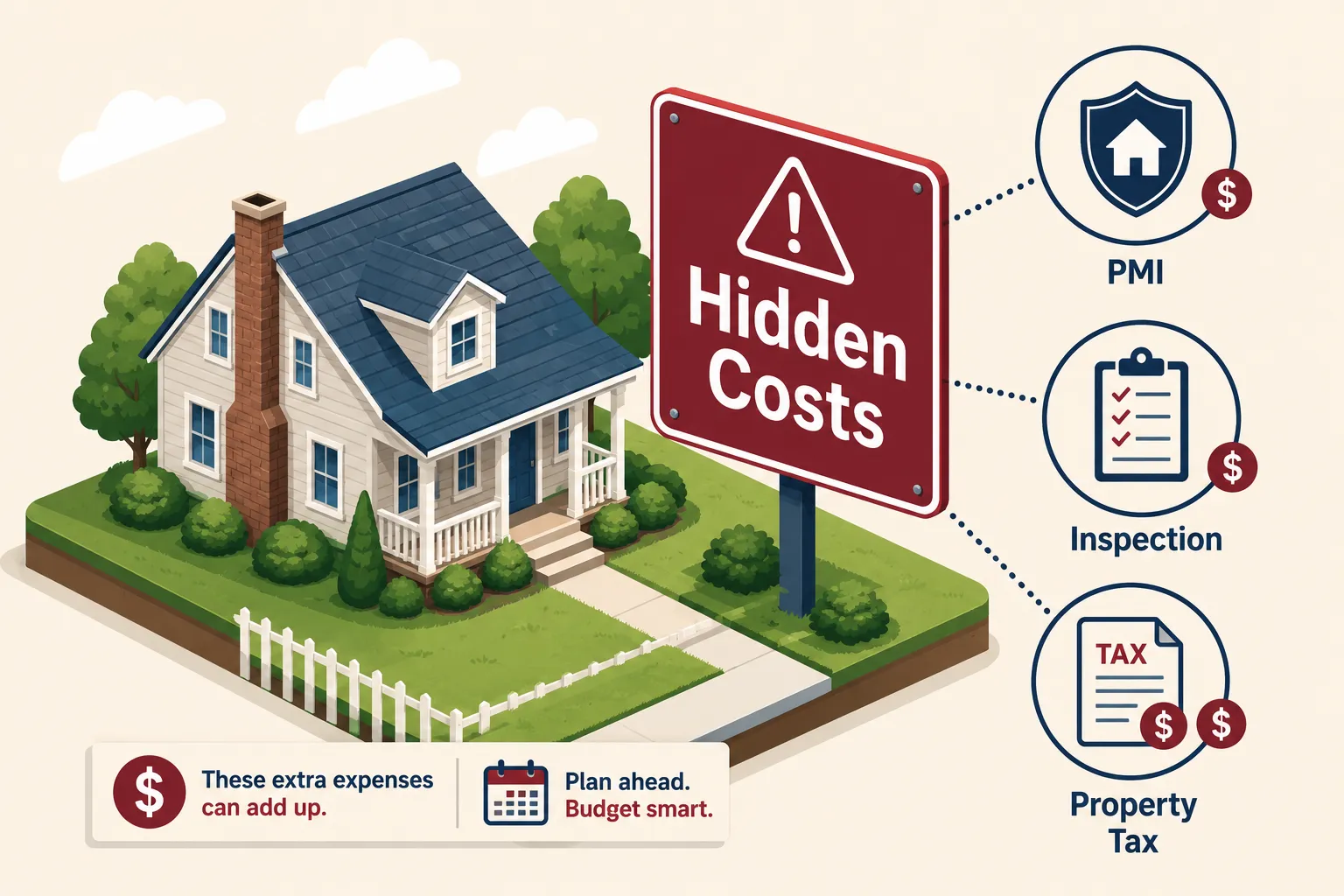
Zero down payment does not mean zero costs. This is where a lot of first-time buyers get blindsided, and where we'd be gatekeeping if we didn't spell it out clearly.
Costs that don't go away with a zero-down loan:
- Closing costs: Typically 2%,5% of the loan amount. On a $300,000 home, that's $6,000,$15,000. These can be covered by seller concessions or rolled into the loan on some programs, but they exist.
- Home inspection: $300,$600 on average. Non-negotiable if you're a smart buyer.
- Appraisal fee: $400,$700, usually paid upfront.
- Prepaid items: Homeowners insurance (first year), property tax escrow (2-3 months), and prepaid interest, these are typically $2,000,$4,000 at closing.
- VA funding fee: 1.25%,3.3% of the loan amount for VA loans (waived for veterans with service-connected disabilities).
- Moving costs: $1,000,$5,000+ depending on distance and volume.
- Immediate repairs: Even a move-in-ready home often needs small fixes in the first 90 days.
Total realistic out-of-pocket on a zero-down purchase: $3,000,$8,000 after seller concessions and DPA, depending on loan type and negotiation skill. Plan for it.
Who Qualifies for No Down Payment Home Loans?
Eligibility depends on the specific program, but here's a clean breakdown of who qualifies for the main zero-down options:
VA Loan Eligibility:
- Veterans with honorable or general discharge
- Active-duty service members (90+ days of continuous service)
- National Guard and Reserve members (6+ years of service, or 90 days active duty under Title 32)
- Surviving spouses of veterans who died in service or from service-connected disability
USDA Loan Eligibility:
- U.S. citizen or permanent resident
- Property in a USDA-eligible area
- Household income at or below 115% of area median income
- Primary residence only (no investment properties)
- Stable income and credit history
State DPA Program Eligibility (varies by state):
- Often restricted to first-time buyers (defined as not owning a home in the past 3 years)
- Income limits apply (typically 80%,120% of area median income)
- Must complete a HUD-approved homebuyer education course
- Property must meet purchase price limits
How to buy a house with no money down in Florida specifically: Florida Housing Finance Corporation programs like Florida Assist and the HFA Preferred Grant are available statewide. The HFA Preferred Grant offers 3%,4% of the loan amount as a non-repayable grant. Combine that with a conventional or FHA loan, and you have a legitimate path to zero down.
For buyers exploring options beyond traditional mortgages, our guide on how to invest in real estate with $5,000 or less covers creative entry points worth knowing.

Can You Use Gift Funds and Free Grants for a Down Payment?
Yes, and this is one of the most legitimate ways to get to zero out of pocket on a home purchase.
Gift funds are allowed on FHA, VA, conventional, and most DPA-backed loans, with documentation requirements:
- A signed gift letter stating the funds are a gift, not a loan
- Proof of the donor's ability to give (bank statement)
- Proof the funds were transferred to your account
Free grants for first-time home buyers come from several sources:
- State housing finance agencies (non-repayable grants)
- HUD-approved nonprofits (e.g., NeighborWorks America, Chenoa Fund)
- Federal Home Loan Bank (FHLB) Affordable Housing Program, member banks can access grant funds for qualifying buyers
- Local government programs (city and county-level)
Edge case: Some "grants" are actually forgivable second mortgages, meaning they're forgiven after 5-10 years of living in the home. If you sell before the forgiveness period ends, you may owe a prorated portion back. Read the fine print.
Free grants for first-time home buyers are real, but they're not unlimited. Many programs have annual funding caps and close their application windows once funds are exhausted. Apply early in the calendar year when funding is freshest.
Is It Harder to Get Approved With Zero Down Payment?
Honestly? Yes, slightly. Here's why.
Lenders view zero-down borrowers as higher risk because there's no equity cushion from day one. If the market dips 5% and you have zero equity, you're immediately underwater. That risk gets priced into the underwriting.
What makes approval harder with no down payment:
- Stricter DTI requirements on some programs
- More scrutiny on employment stability
- Higher reserve requirements (some lenders want 2-3 months of mortgage payments in savings after closing)
- Competitive offer situations where sellers prefer conventional buyers with larger down payments
What helps offset the risk in lenders' eyes:
- Credit score above 680
- Low DTI (under 36% is strong)
- Stable employment (same employer 2+ years)
- Clean payment history (no late payments in 12-24 months)
- Larger cash reserves
Is it harder to buy a house with no money down and bad credit? Yes, this is the hardest combination. Below 580 with no down payment, your options narrow to manual underwriting on FHA loans with compensating factors, or waiting to build credit while saving a small down payment. The FHA loan vs. conventional loan comparison is worth reading if you're navigating this exact scenario.
How to Buy a House With No Money Down as a First-Time Home Buyer, Step by Step
Here's the actual process. No fluff, no filler.
Step 1: Check your eligibility for VA and USDA loans first.
These are the strongest zero-down programs. If you're a veteran or buying in a USDA-eligible area, start here.
Step 2: Pull your credit report and score.
Use AnnualCreditReport.com for free reports. Know your FICO score from your bank or credit card app. If it's below 620, address it before applying.
Step 3: Research your state's DPA programs.
Go to the National Council of State Housing Agencies (ncsha.org) or your state's HFA website. Look for grants, forgivable loans, and first-time buyer programs.
Step 4: Get pre-approved with a lender who specializes in your target program.
Not all lenders offer VA, USDA, or DPA programs. Find one who does. A pre-approval letter is required before making offers.
Step 5: Calculate your actual out-of-pocket costs.
Even with zero down, you'll need money for closing costs unless the seller agrees to concessions. Budget $3,000,$8,000 as a realistic floor.
Step 6: Make offers with seller concessions built in.
Ask your agent to structure offers that include a seller concession request for closing costs. In a buyer's market, this is very achievable.
Step 7: Complete homebuyer education if required.
Most DPA programs require a HUD-approved homebuyer education course (typically $75,$125 online, 6-8 hours). Do it early.
Step 8: Close and own.
Your lender handles the coordination of DPA funds, VA/USDA approval, and closing logistics. Stay responsive, provide documents quickly, and don't open new credit lines during this period.
For buyers also thinking about how to buy a second house with no money down or how to buy a rental house with no money down, the calculus changes, investment properties don't qualify for VA or USDA loans. You'd be looking at house hacking, DSCR loans, or seller financing. Our DSCR cash-out refinance guide covers how investors pull equity without W-2 income, an extraordinary tool once you own your first property.
Common Mistakes People Make Buying a House With No Money Down
These are the moves that blow up deals or cost buyers thousands.
- Applying for new credit before closing. A new car loan or credit card during underwriting can tank your approval.
- Assuming no down payment means no savings needed. Closing costs, inspection fees, and reserves are still real. Buyers who show up to closing without enough cash get delayed or denied.
- Not comparing lenders. Rates and fees vary significantly. Get at least 3 quotes.
- Ignoring the USDA eligibility map. Many buyers assume they don't qualify because they think "rural" means farmland. Check the actual USDA map, you might be surprised.
- Skipping homebuyer education. Some DPA programs require it. Even when they don't, it's worth doing.
- Overestimating seller concession willingness in a seller's market. In a hot market, sellers won't always accept concession requests. Have a backup plan.
- Not reading the DPA forgiveness terms. If you sell in year 3 of a 5-year forgiveness period, you may owe money back. Know the terms.
Frequently Asked Questions
Q: Can I buy a house with no money down and no closing costs?
Yes, if you combine a VA or USDA loan with seller concessions that cover your closing costs. This requires negotiation and a motivated seller, but it's legally possible and done regularly.
Q: What is the minimum credit score to buy a house with no money down?
Most zero-down programs require a 620-640 minimum. USDA automated approval typically requires 640. VA loans are lender-set, usually 620. Below 580, options are very limited.
Q: How to buy a house with low income and no down payment?
USDA loans are specifically designed for low-to-moderate income buyers. Combined with state DPA grants, buyers at 80% of area median income often qualify for both programs simultaneously.
Q: Are there free grants to buy a home that don't have to be repaid?
Yes. Many state HFA programs offer true grants (not loans) that are non-repayable. The HFA Preferred Grant in Florida and similar programs in other states are legitimate examples. Funding is limited and often exhausted mid-year.
Q: Can I use a VA loan to buy a rental property with no money down?
No. VA loans are for primary residences only. However, you can use a VA loan to buy a multi-unit property (up to 4 units) if you live in one unit, this is a common house-hacking strategy.
Q: Is a zero-down mortgage a bad financial decision?
Not necessarily. If you're in a stable market, plan to stay 5+ years, and have solid income, a zero-down loan can be an impeccable wealth-building move. The risk increases if you buy in a declining market or need to sell quickly.
Q: How to buy a house with no money down and bad credit?
This is the hardest combination. Your best path is FHA with a gift fund covering the 3.5% down payment, manual underwriting, and strong compensating factors (low DTI, stable employment). Or spend 6-12 months improving your credit first.
Q: What's the difference between a DPA grant and a DPA second mortgage?
A grant is free money, no repayment required. A second mortgage must be repaid, either when you sell/refinance or at the end of a forgiveness period. Some second mortgages are 0% interest and deferred, making them nearly as good as a grant.
Q: Can I buy a house with no money down in any state?
VA and USDA loans are available nationwide (with USDA's geographic restrictions). State DPA programs vary significantly by state. Some states have extremely generous programs; others have limited funding. Florida, California, Texas, and Georgia have some of the strongest programs.
Q: Does buying with no money down affect my mortgage rate?
Sometimes. VA loans often offer rates at or below market. USDA rates are competitive. DPA programs that use FHA or conventional loans may carry slightly higher rates than a standard purchase with 20% down, but the difference is typically 0.25%,0.5%.
Conclusion: Your Next Steps to Buying a House With No Money Down
Knowing how to buy a house with no money down legally is genuinely extraordinary knowledge that most buyers never get because someone's been gatekeeping it behind paid consultations or vague advice. The framework is clear: VA and USDA loans eliminate the down payment for eligible buyers, state DPA programs fill the gap for everyone else, and seller concessions can handle closing costs when negotiated correctly.
Here's your action plan:
- Determine your eligibility today. Check VA status at va.gov. Check USDA property eligibility at usda.gov. Research your state HFA for DPA programs.
- Pull your credit report and identify any issues to address before applying.
- Get pre-approved with a lender who actively originates VA, USDA, or DPA-backed loans, not just any lender.
- Budget for out-of-pocket costs even with zero down. Plan for $3,000,$8,000 minimum.
- Work with an agent who understands how to structure offers with seller concessions.
The path to homeownership without a down payment is real, legal, and well-documented. You just have to know where to look, and now you do.
For more on the current rent vs. buy decision in 2026, check out our rent vs. buy analysis for 2026, the numbers might surprise you. And if you're a first-time buyer still figuring out the full home buying process, our home buying hub has everything you need in one place.