

Last updated: July 20, 2026

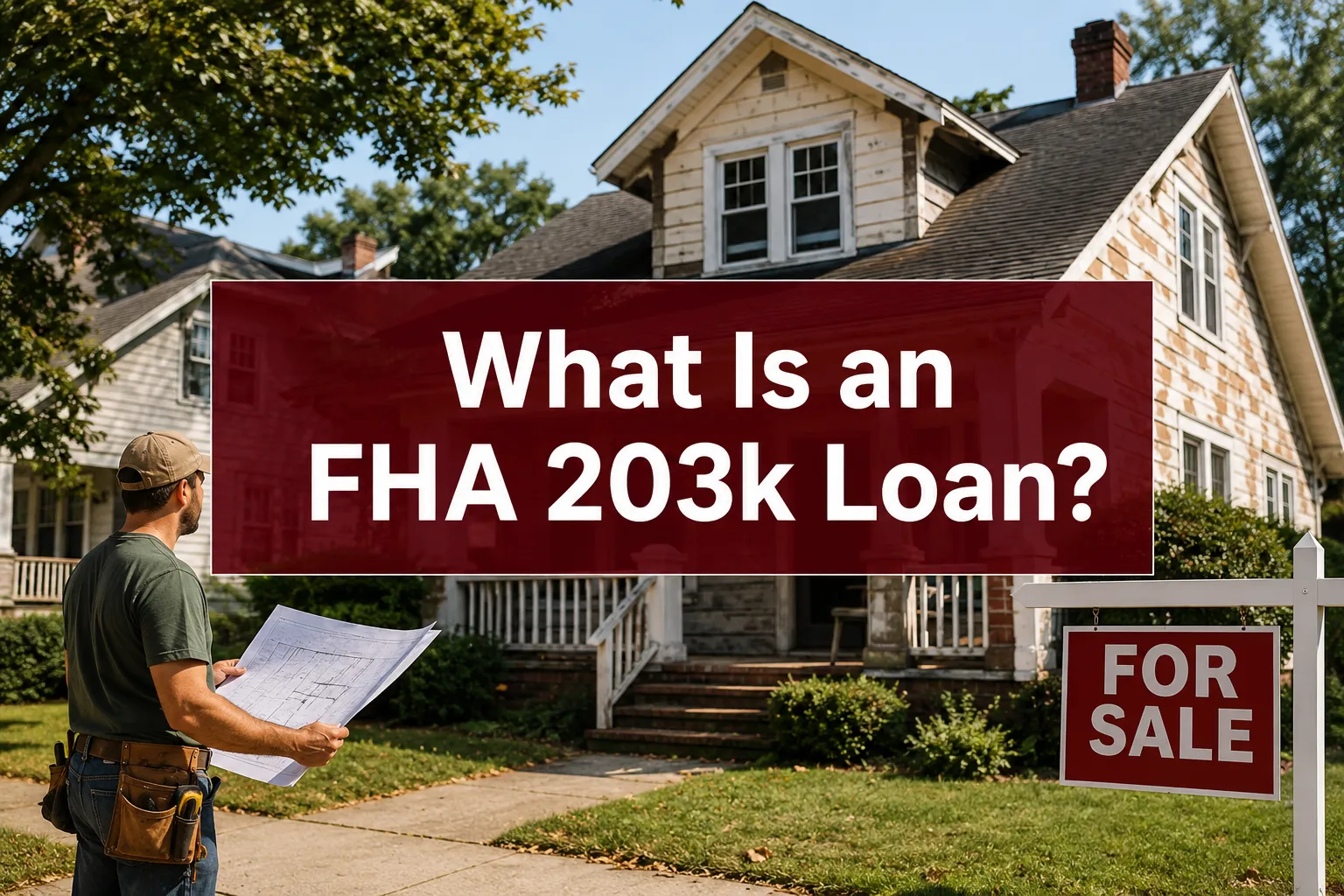
Quick Answer: An FHA 203k loan is a government-backed mortgage that lets buyers finance both the purchase price and renovation costs of a home into a single loan. It's backed by the Federal Housing Administration and designed for properties that need repairs. If you're eyeing a fixer-upper but don't have cash reserves to renovate after closing, this loan could be the tool that makes it possible, but it comes with real trade-offs worth understanding before you sign anything.
Key Takeaways
- An FHA 203k rehab loan combines home purchase and renovation financing into one mortgage, eliminating the need for a separate construction loan.
- There are two versions: the Standard 203k (for major renovations over $35,000) and the Limited 203k (for smaller repairs under $35,000).
- Minimum credit score is typically 580 for a 3.5% down payment; scores between 500-579 may qualify with 10% down.
- FHA 203k loan rates run slightly higher than conventional mortgage rates, typically 0.5% to 1% above standard FHA rates.
- The loan process takes 60 to 90 days on average, longer than a traditional mortgage.
- FHA 203k loan limits vary by county and are tied to FHA conforming loan limits for your area.
- Not every contractor qualifies, lenders require approved, licensed contractors with verifiable experience.
- This loan is not ideal for investors buying non-owner-occupied properties; it requires the borrower to live in the home.
- Mortgage insurance premiums (MIP) are required for the life of the loan if your down payment is under 10%.
- The disadvantages of FHA 203k loans are real, cost overruns, paperwork, and timeline delays are common complaints.
What Is an FHA 203k Loan?
An FHA 203k loan, also called an FHA 203k rehab loan or FHA 203k renovation loan, is a mortgage product insured by the Federal Housing Administration that allows borrowers to purchase (or refinance) a home and include the cost of repairs or renovations in a single loan. Instead of buying a house and then scrambling to find separate financing for a new roof or updated kitchen, everything rolls into one monthly payment.
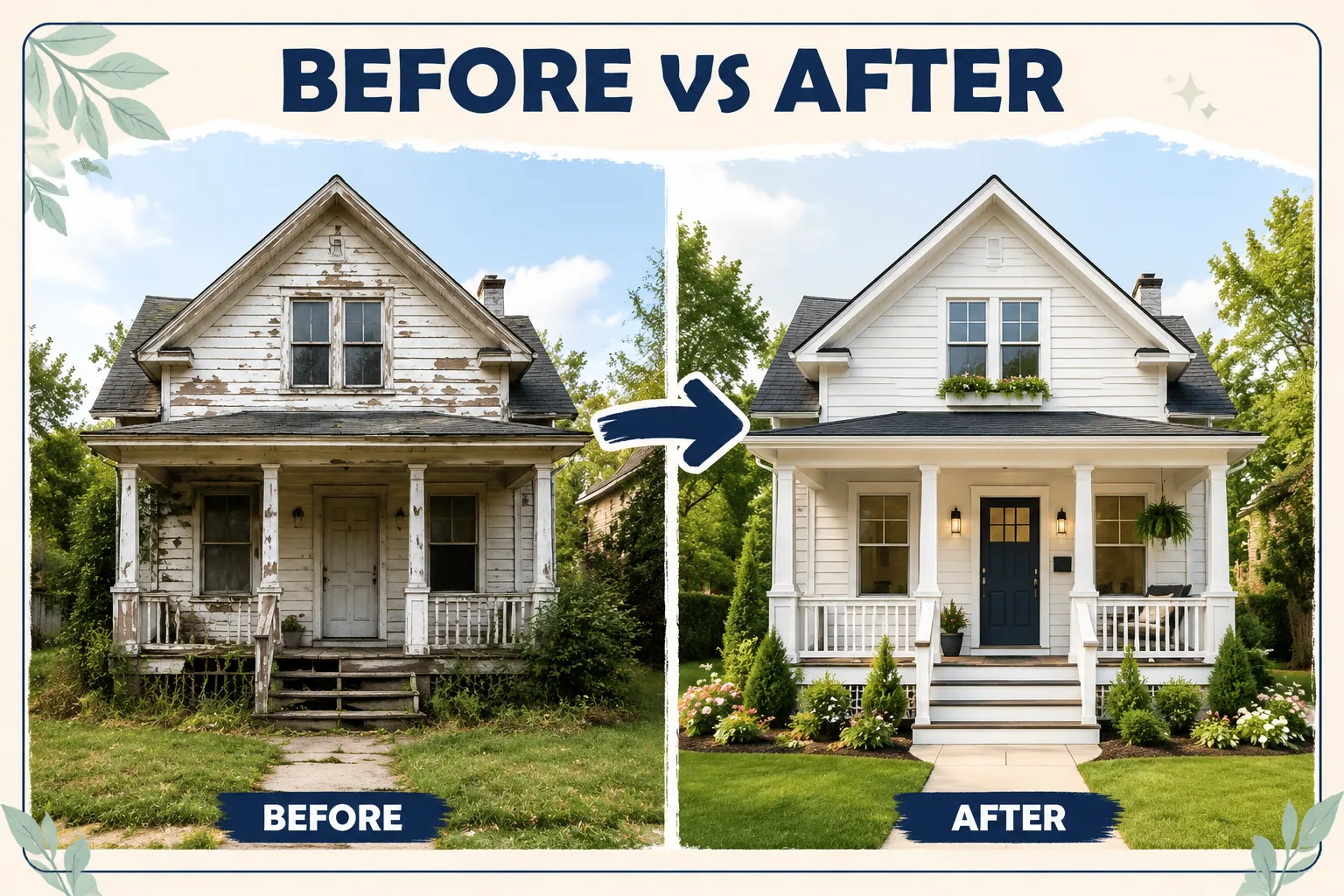
The program was created specifically for homes that need work, properties that might not even qualify for a standard mortgage because of their condition. Think: outdated electrical, structural damage, outdated plumbing, or homes that have been sitting vacant. The FHA 203k renovation loan essentially says, "We'll back this deal even if the house isn't move-in ready, as long as the borrower commits to fixing it."
Two versions exist:
- Standard FHA 203k, For major renovations, structural repairs, or projects exceeding $35,000. Requires a HUD-approved consultant to oversee the work.
- Limited FHA 203k (formerly called the Streamline), For smaller cosmetic repairs and non-structural upgrades up to $35,000. No consultant required.
This is what is an FHA 203k loan for a house in plain terms: it's a renovation-purchase hybrid. And in 2026, with a housing market still packed with aging inventory and limited move-in-ready options, it's getting fresh attention from buyers who want to build equity from day one.
How Does an FHA 203k Loan Work?
The FHA 203k loan works by wrapping your home purchase price and your estimated renovation costs into a single mortgage. The lender calculates the loan amount based on the home's projected "after-improved value", what the property will be worth once the repairs are complete, not what it's worth in its current beat-up condition.
Here's the basic flow:
- Find an FHA 203k-approved lender. Not every bank or mortgage company offers this product. You'll need to search specifically for FHA 203k loan lenders.
- Get pre-approved. The lender evaluates your credit, income, and debt-to-income ratio before you shop.
- Find a qualifying property. The home must be at least one year old and intended as your primary residence.
- Get contractor bids. You'll need licensed contractor estimates for all planned work. For Standard loans, a HUD consultant reviews and approves the scope of work.
- Appraisal based on after-improved value. The appraiser estimates what the home will be worth after renovations are complete.
- Loan closes. Funds for the purchase go to the seller. Renovation funds are held in an escrow account.
- Work begins. Contractors are paid in draws from the escrow account as work is completed and inspected.
- Final inspection. Once all work is done, a final inspection confirms completion before the last draw is released.
The renovation funds never go directly to the borrower, they go to the contractor through the escrow process. That's an important detail that surprises some buyers.
FHA 203k Loan Requirements and Eligibility
The FHA 203k loan requirements follow standard FHA guidelines with a few renovation-specific additions. Here's who qualifies for a 203k loan:
Borrower Requirements:
- Minimum credit score of 580 for 3.5% down payment
- Credit scores between 500-579 may qualify with 10% down
- Debt-to-income ratio (DTI) generally at or below 43%, though some lenders allow up to 50% with compensating factors
- Must be a U.S. citizen, permanent resident, or eligible non-citizen
- The property must be your primary residence, not a vacation home or investment property
FHA 203k Loan Income Requirements:
There is no specific income cap for this loan. The FHA 203k loan income requirements focus on your debt-to-income ratio, not a maximum earnings ceiling. What matters is that your total monthly debt payments (including the new mortgage) don't exceed the lender's DTI threshold.
Property Requirements:
- Must be at least one year old
- Must be a 1-4 unit property (single-family, duplex, triplex, or fourplex, as long as you occupy one unit)
- Condos may be eligible for the Limited 203k only
- Mixed-use properties may qualify if the residential portion is the primary use
FHA 203k Loan Contractor Requirements:
This is where many deals hit a snag. Contractors must be licensed, insured, and approved by the lender. They cannot be the borrower or a family member of the borrower. For Standard 203k loans, a HUD-approved 203k consultant must also be involved to review the work write-up and inspect completed phases.
If you're thinking about how to apply for FHA 203k loan financing, start by locking in an approved lender first, they'll walk you through contractor vetting as part of the process.
FHA 203k Loan Costs and Fees, How Much Does It Really Cost?
The FHA 203k renovation loan costs more than a standard mortgage. That's not gatekeeping, it's just the honest answer. Here's what adds up:
FHA 203k Loan Rates:
FHA 203k loan rates typically run 0.5% to 1% higher than standard FHA mortgage rates. As of mid-2026, with conventional 30-year rates hovering around the mid-6% range (see our breakdown of current mortgage rates for 2026), expect FHA 203k loan rates to land somewhere in the 7% to 8% range depending on your credit profile and lender.
Fees Specific to the 203k Program:
| Fee | Estimated Cost |
|---|---|
| HUD 203k Consultant (Standard only) | $400, $1,000+ |
| Supplemental Origination Fee | Greater of $350 or 1.5% of renovation amount |
| Inspection Fees (per draw) | $100, $350 per inspection |
| Contingency Reserve | 10%,20% of renovation costs held in escrow |
| MIP (Upfront) | 1.75% of loan amount |
| MIP (Annual) | 0.55% of loan balance (paid monthly) |
FHA 203k Loan Limits:
FHA 203k loan limits are tied to FHA conforming loan limits, which vary by county. In 2026, the FHA loan limit floor for single-family homes in lower-cost areas is $498,257, while high-cost areas can go up to $1,149,825. The total loan amount (purchase + renovation) cannot exceed the FHA limit for your county.
Use an FHA 203k loan calculator to estimate your total loan amount, monthly payment, and renovation escrow. Most FHA-approved lenders have one on their website, or you can find standalone calculators through HUD-affiliated resources.
Can You Use an FHA 203k Loan for Any Repairs?
Not every repair type qualifies, and the Standard vs. Limited distinction matters here. The FHA 203k rehab loan covers a wide range of work, but luxury upgrades and certain project types are off the table.
Eligible Repairs and Improvements:
- Roof replacement and structural repairs
- HVAC, plumbing, and electrical system upgrades
- Kitchen and bathroom remodels
- Flooring, windows, and doors
- Accessibility improvements (ramps, wider doorways)
- Energy efficiency upgrades
- Landscaping and site improvements (Standard only, limited scope)
- Additions to the structure (Standard only)
Not Eligible:
- Luxury items like swimming pools, outdoor kitchens, or hot tubs
- Work that takes more than six months to complete
- Improvements that don't become a permanent part of the property
- Any work started before the loan closes
For investors wondering if this loan works for a fix-and-flip, check out our guide on best loans for flipping houses. The short answer: the FHA 203k is not built for flippers. It requires owner-occupancy.

FHA 203k Loan Timeline, How Long Does It Take?
Expect 60 to 90 days from application to closing on an FHA 203k loan, sometimes longer for Standard loans with complex scopes of work. This is significantly slower than a traditional mortgage, which often closes in 30 to 45 days.
Why it takes longer:
- The HUD consultant review (Standard loans) adds time
- Contractor bids must be submitted and approved before closing
- The after-improved appraisal requires more detail than a standard appraisal
- Lender underwriting is more complex with two funding components
After closing, renovation timelines:
- Limited 203k: Work must be completed within 6 months
- Standard 203k: Work must also be completed within 6 months of closing
That six-month window sounds generous until you factor in contractor scheduling, permit delays, and material lead times. Let it cook before you see results, but make sure your contractor has a realistic schedule before you close.
FHA 203k Loan vs. Traditional Mortgage, What's the Difference?
The core difference is simple: a traditional mortgage only finances the purchase of a move-in-ready home, while the FHA 203k renovation loan finances both purchase and renovation together. But the differences run deeper than that.
Key Differences:
| Factor | FHA 203k Loan | Traditional Mortgage |
|---|---|---|
| Renovation Financing | Included | Not included |
| Credit Score Minimum | 580 (3.5% down) | Typically 620+ |
| Down Payment | 3.5% (with 580+ score) | 3% to 20% |
| Mortgage Insurance | Required (often for life) | Can be removed at 20% equity |
| Interest Rate | Higher (0.5%,1% above FHA) | Lower |
| Closing Timeline | 60-90 days | 30-45 days |
| Property Condition | Fixer-uppers acceptable | Must meet lender standards |
For a deeper look at how FHA products stack up overall, our FHA loan vs. conventional loan comparison breaks down the full cost picture.
FHA 203k Loan vs. Home Equity Line of Credit
The FHA 203k loan and a HELOC serve different buyers at different stages of homeownership. The 203k is for buyers at purchase; a HELOC is for existing homeowners tapping built-up equity.
Choose an FHA 203k if:
- You're buying a fixer-upper and don't own a home yet
- You have limited cash for a down payment (3.5% minimum)
- The property needs significant work before it's livable
Choose a HELOC if:
- You already own a home with substantial equity
- You want a revolving credit line for phased renovations
- You want lower interest rates and more flexibility
The HELOC route typically offers lower rates and fewer restrictions on contractors, but you need existing equity to qualify. For more on that comparison, see our breakdown of HELoan vs. HELOC costs and differences.
FHA 203k Loan Disadvantages and Drawbacks
So based as this loan sounds on paper, the disadvantages of FHA 203k loans are real and worth taking seriously before you commit.
The honest list of drawbacks:
- Mortgage insurance for life, If your down payment is under 10%, you pay annual MIP for the entire loan term. The only exit is refinancing into a conventional loan once you hit 20% equity.
- Higher interest rates, You're paying a premium for the renovation financing component.
- Contractor restrictions, You can't use your cousin who does great work for cheap. Contractors must be licensed, insured, and lender-approved.
- Slower closing, If you're competing in a hot market, a 60-90 day timeline puts you at a disadvantage against conventional buyers.
- Renovation escrow complexity, Funds are disbursed in draws, not lump sums. Contractors who aren't familiar with this process may walk away.
- Limited to primary residences, Real estate investors cannot use this for rental properties.
- Cost overruns hit differently, If renovation costs exceed estimates, you may need to cover the gap out of pocket. The contingency reserve helps, but it's not unlimited.
- Six-month completion window, Delays from permits, weather, or contractor issues can create real stress.
For buyers considering renovation financing for investment properties instead, our guide on DSCR loan requirements for real estate investors covers a more investor-friendly path.
Can I Get an FHA 203k Loan With Bad Credit?
Yes, with conditions. The FHA 203k loan is one of the more accessible mortgage products for borrowers with imperfect credit, but "bad credit" has a floor.
- 580+ credit score: Qualifies for the standard 3.5% down payment
- 500-579 credit score: May qualify, but requires a 10% down payment
- Below 500: Generally not eligible for FHA-backed loans
Beyond the score itself, lenders will look at your full credit profile, recent late payments, collections, bankruptcies, and overall payment history. A score of 580 with a clean recent history reads better than a 620 with a string of 30-day lates in the past year.
If your credit is in rough shape, it may be worth spending 6-12 months improving your score before applying. The difference between a 580 and a 640 can mean a meaningfully lower rate and better loan terms.
For first-time buyers working on their financial foundation, our first-time home buyer tips for Gen Z covers credit-building strategies alongside the home buying process.
FHA 203k Loan Inspection Requirements and Appraisal
The FHA 203k appraisal process is more involved than a standard home appraisal. The appraiser must assess the property's current condition AND estimate its value after all planned renovations are complete. This "after-improved value" is what the lender uses to calculate your maximum loan amount.
What the appraisal covers:
- Current as-is value of the property
- Projected after-improved value based on the approved work write-up
- Confirmation that planned improvements are typical for the area (no over-improvements)
Inspection requirements during renovation:
For Standard 203k loans, a HUD-approved 203k consultant inspects the work at each draw stage before funds are released to the contractor. This protects both the borrower and the lender.
For Limited 203k loans, the lender may require a final inspection before the last draw is released, but the process is less intensive.
Common appraisal issue: If the after-improved value comes in lower than expected, your loan amount gets capped, which could leave a funding gap on your renovation budget. Getting accurate contractor bids upfront reduces this risk significantly.
Our property inspections guide is an extraordinary resource for understanding what inspectors look for and how to prep for the process.
Who Should Get an FHA 203k Loan, and Who Shouldn't?
This is the real question behind "what is an FHA 203k loan and should you use one?", and the answer depends entirely on your situation.

The FHA 203k loan is a strong fit if you:
- Are buying a primary residence that needs significant repairs
- Have a credit score of 580 or higher
- Have limited cash beyond a 3.5% down payment
- Want to build equity by buying below market value and improving the property
- Are patient with a longer process and comfortable with contractor coordination
Skip the FHA 203k if you:
- Are buying an investment property or rental, it's not eligible
- Want to close quickly in a competitive market
- Plan to use unlicensed or family contractors
- Are buying a newly built home or a move-in-ready property
- Have strong credit and equity, a conventional renovation loan or HELOC may cost less
For real estate investors specifically, the FHA 203k is essentially off the table. Look instead at hard money loans, DSCR loans, or our roundup of the best loans for flipping houses for renovation-focused investment strategies.
FHA 203k Loan Common Mistakes to Avoid
Impeccable planning matters here. The buyers who struggle with FHA 203k loans are almost always the ones who underestimated the complexity.
Mistake 1: Underestimating renovation costs
Contractor bids are estimates. Material prices shift. Always factor in the full contingency reserve (10%,20%) and assume costs will run higher, not lower.
Mistake 2: Choosing the wrong contractor
The FHA 203k loan contractor requirements are strict. Hiring a contractor who isn't familiar with the draw process, or who isn't licensed, can kill your deal at the worst possible moment. Vet contractors early. Our guide on how to hire the right contractors for renovations covers the red flags to watch for.
Mistake 3: Not using an experienced 203k lender
This is not a product every loan officer handles regularly. An inexperienced lender will slow down your timeline and miss details that experienced FHA 203k loan lenders catch automatically. Ask specifically how many 203k loans they've closed in the past 12 months.
Mistake 4: Ignoring the six-month completion deadline
The renovation must be completed within six months of closing. Buyers who don't hold contractors accountable to a schedule often find themselves scrambling near the deadline.
Mistake 5: Skipping the FHA 203k loan calculator
Before you fall in love with a property, run the numbers. The total loan amount, monthly MIP, and higher interest rate can significantly change your monthly payment compared to a standard FHA loan.

Conclusion, Is the FHA 203k Loan Right for You?
What is an FHA 203k loan and should you use one? Here's the straight answer: it's an extraordinary tool for the right buyer in the right situation, and a genuinely frustrating experience for the wrong one.
If you're a first-time buyer with limited cash, a credit score above 580, and the patience to navigate a longer process, the FHA 203k rehab loan can turn an overlooked fixer-upper into a fresh, equity-rich home. You're essentially buying at a discount and financing the upgrade, that's a smart play when executed well.
If you're an investor, a buyer in a time-sensitive market, or someone who wants the simplest possible path to homeownership, this isn't your loan. The disadvantages of FHA 203k loans, higher rates, mortgage insurance, contractor restrictions, and timeline delays, are real costs that don't disappear just because the concept sounds appealing.
Your next steps:
- Check your credit score and run your numbers through an FHA 203k loan calculator.
- Search specifically for experienced FHA 203k loan lenders in your market, not just any FHA lender.
- Get a realistic renovation estimate before you make an offer on a property.
- Read up on the FHA loan vs. conventional loan breakdown to confirm this is the right product for your financial profile.
- If you're an investor, explore alternative renovation financing paths before assuming the 203k is your only option.
The 2026 housing market still has plenty of aging inventory that needs work. The buyers who know how to use tools like the FHA 203k renovation loan, and when not to, are the ones who come out ahead.
Frequently Asked Questions
What is an FHA 203k loan in simple terms?
It's a government-backed mortgage that lets you buy a home and finance renovation costs in one loan. Instead of two separate loans, you have one monthly payment covering both the purchase price and the repairs.
What is the minimum credit score for an FHA 203k loan?
580 for a 3.5% down payment. Scores between 500-579 may qualify but require a 10% down payment. Below 500 is generally not eligible.
What is the difference between a Standard and Limited FHA 203k?
The Standard 203k is for major renovations or projects over $35,000 and requires a HUD consultant. The Limited 203k covers smaller repairs up to $35,000 and has a simpler approval process.
Can I use an FHA 203k loan to buy a rental property?
No. The FHA 203k loan requires the borrower to occupy the property as their primary residence. It cannot be used for pure investment or rental properties.
How long does an FHA 203k loan take to close?
Typically 60 to 90 days, longer than a standard mortgage. The additional time accounts for contractor bid review, HUD consultant involvement (Standard loans), and the after-improved appraisal.
What are current FHA 203k loan rates in 2026?
FHA 203k loan rates typically run 0.5% to 1% above standard FHA rates. With conventional 30-year rates in the mid-6% range in 2026, most borrowers are seeing 203k rates in the 7% to 8% range depending on credit and lender.
What are the FHA 203k loan limits?
Loan limits are tied to FHA conforming limits by county. In 2026, limits range from $498,257 in lower-cost areas to $1,149,825 in high-cost markets. The combined purchase price plus renovation costs cannot exceed your county's limit.
Can I do the renovation work myself on an FHA 203k loan?
Generally no. The FHA 203k loan contractor requirements mandate licensed, insured, lender-approved contractors. Self-performed work is not permitted under the program.
Is mortgage insurance required on an FHA 203k loan?
Yes. All FHA loans require both an upfront MIP (1.75% of the loan amount) and an annual MIP paid monthly. If your down payment is under 10%, MIP stays for the life of the loan.
What repairs are not allowed under the FHA 203k?
Luxury improvements like pools, outdoor kitchens, and hot tubs are not eligible. Work must also be permanently attached to the property and completed within six months of closing.
How do I find FHA 203k loan lenders?
Search HUD's lender search tool at hud.gov for FHA-approved lenders in your area. Always ask specifically how many 203k loans the loan officer has closed, experience with this product varies widely.
What is an FHA 203k rehab loan used for most often?
Most commonly used for roof replacements, HVAC upgrades, kitchen and bathroom remodels, electrical and plumbing updates, and structural repairs on homes that wouldn't qualify for a standard mortgage in their current condition.
Meta Title: What Is an FHA 203k Loan and Should You Use One? 2026
Meta Description: Learn what an FHA 203k loan is, how it works, requirements, costs, rates, and whether it's the right renovation loan for your home purchase in 2026.