
Last updated: August 23, 2026

Quick Answer
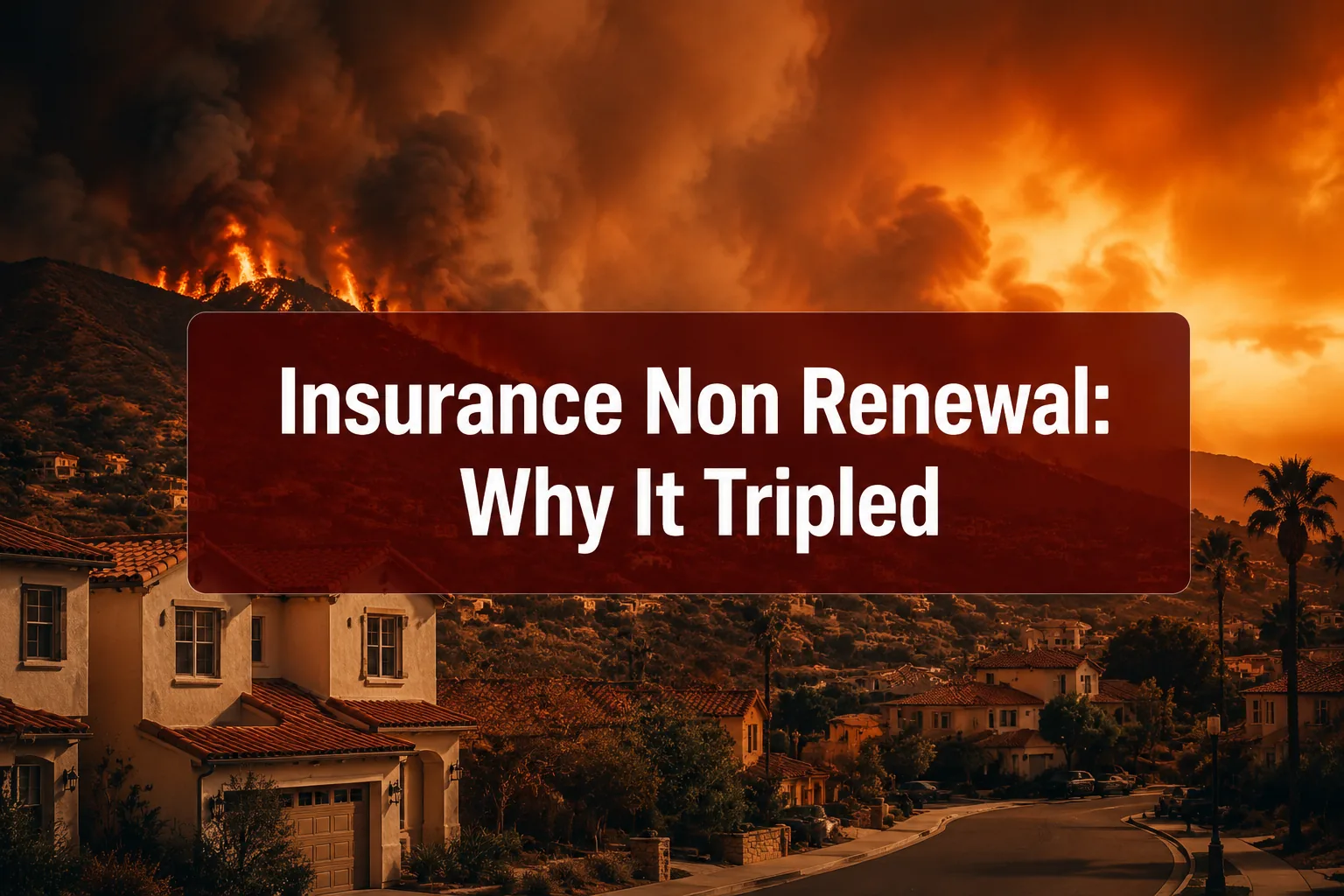
Homeowners insurance non renewal: why it tripled out West comes down to one brutal math problem, insurers are paying out far more in wildfire, drought, and extreme weather claims than they collect in premiums, and state regulations in California and other western states have historically blocked them from raising rates fast enough to cover those losses. So they stopped writing new policies and declined to renew existing ones. Between 2020 and 2024, non renewal rates in high-risk California ZIP codes tripled in some counties, according to data tracked by the California Department of Insurance. Homeowners who never filed a claim, maintained their property impeccably, and paid on time are getting dropped anyway, because their ZIP code is the problem, not their record.
Key Takeaways
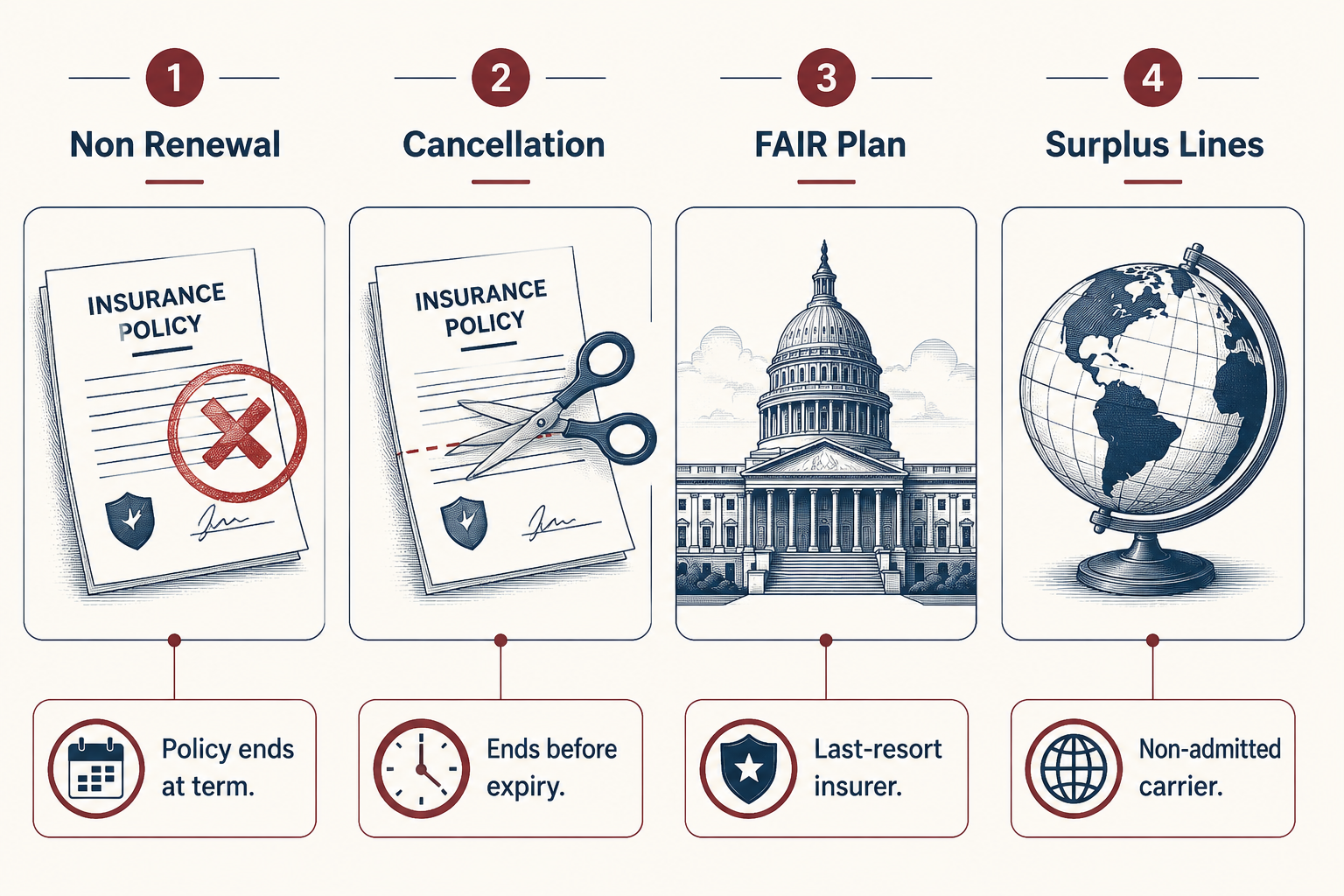
- Non renewal means your insurer chose not to continue your policy at the end of its term. It is not the same as cancellation, which ends coverage mid-term.
- California, Arizona, Colorado, and Oregon have seen the steepest non renewal increases, driven by wildfire exposure and reinsurance costs.
- Insurers must give advance notice before non renewal, typically 45 to 75 days depending on the state.
- If your insurer drops your home policy, your mortgage lender will place force placed insurance on the property, which costs significantly more and protects only the lender.
- The FAIR Plan is your state's insurer of last resort. It covers the basics but often excludes liability and personal property.
- Surplus lines insurance is a legitimate alternative when standard carriers won't write your risk, but expect higher premiums and less consumer protection.
- You can appeal an insurance non renewal decision, and in some states you can file a complaint with the Department of Insurance.
- Your CLUE report (Comprehensive Loss Underwriting Exchange) is the claims history document insurers check. You can request it free once per year.
- Roof condition is one of the most common triggers for non renewal, especially roofs over 15 to 20 years old.
- Shopping for new coverage immediately after receiving a non renewal notice is critical. Gaps in coverage can void your mortgage agreement.
What Does Non Renewal Mean in Homeowners Insurance
Non renewal means your insurance company has decided not to offer you a new policy term when your current one expires. Your coverage does not end immediately, it runs through the expiration date on your declarations page. After that date, you are uninsured unless you find a replacement policy.
This matters because homeowners insurance non renewal is entirely legal in every state. Insurers are not required to keep writing policies in markets they consider unprofitable. The only requirement is that they give you proper advance notice and a written reason.
What triggers non renewal:
- Your property sits in a high-risk wildfire, flood, or wind zone
- Your roof is aging (many carriers set a hard cutoff at 15 to 20 years)
- You filed multiple claims within a short window (typically two or more in three years)
- The insurer is withdrawing from your state or region entirely
- Your home has an unresolved inspection issue, old wiring, a deteriorating deck, a trampoline without netting
The key distinction from cancellation: non renewal is a business decision made at the end of a policy term. Cancellation is a mid-term termination, which carries stricter rules and is harder for insurers to execute without cause.
Homeowners Insurance Non Renewal: Why It Tripled Out West
The numbers are stark. In Los Angeles County alone, non renewals in wildfire-adjacent ZIP codes increased by more than 200% between 2019 and 2023, based on data reported to the California Department of Insurance. Across the entire state, insurers filed to non-renew over 2.8 million policies between 2020 and 2023. That is not a rounding error, that is a structural exit from a market.
Three forces are driving this simultaneously:
1. Reinsurance costs exploded.
Insurers buy their own insurance, called reinsurance, to cover catastrophic losses. After back-to-back wildfire seasons, reinsurers raised their rates dramatically. When the cost of reinsurance doubles, a carrier writing homeowners policies in Ventura County or Maricopa County faces a choice: raise premiums significantly or stop writing policies. California's rate approval process historically made rapid premium increases difficult, so many carriers chose exit.
2. Climate-driven loss ratios broke the model.
A loss ratio above 100% means an insurer pays out more in claims than it collects in premiums. Several major carriers in California reported loss ratios well above that threshold after the 2017 and 2018 fire seasons. State Farm, Allstate, and Farmers all announced non-renewal programs or paused new business in California between 2022 and 2024. AIG and Chubb pulled back from high-value homes in fire zones.
3. Rebuilding costs outpaced inflation.
The cost to rebuild a home in California, Arizona, and Colorado is now significantly higher than it was when most existing policies were underwritten. Labor shortages, lumber costs, and fire-resistant building code requirements all pushed replacement costs up. Insurers carrying policies at outdated coverage limits faced massive underinsurance exposure, another reason to exit rather than reprice.
Arizona and Colorado are not far behind California. In Maricopa County, extreme heat and monsoon-related flooding have pushed surplus lines market share up sharply. In Colorado's Front Range, wildfire risk from the Marshall Fire (2021) and subsequent seasons pushed several carriers to non-renew entire ZIP codes along the foothills.
For a broader look at how these market shifts are affecting homeowners across the country, see our U.S. homeowners national real estate updates for 2026.
Is Non Renewal the Same as Cancellation
Non renewal and cancellation are not the same thing, and the difference matters for your rights and your timeline.
| Non Renewal | Cancellation | |
|---|---|---|
| When it happens | At the end of a policy term | Mid-term |
| Coverage end date | Policy expiration date | Date specified in notice |
| Insurer's burden | Low, business decision | Higher, must cite cause |
| Notice required | 45 to 75 days (varies by state) | Typically 10 to 30 days |
| Common reasons | Risk zone, underwriting change, market exit | Non-payment, fraud, material misrepresentation |
| Effect on CLUE report | Not reported as a claim | Not reported as a claim |
| Effect on future shopping | Noted on your insurance history | Can make shopping harder |
Can you be dropped for filing a claim? Technically, a single claim rarely triggers non renewal on its own. But two or more claims within a three-year window, especially water damage or liability claims, can put you on an insurer's watchlist. Some carriers will non-renew after one large claim if the payout exceeded a threshold. This is buried deep enough that most homeowners don't realize it until the notice arrives: filing a claim is your right, but it goes on your CLUE report and stays there for seven years.
Your CLUE report is the claims history document every insurer checks when you apply for coverage. You can request your free copy once per year through LexisNexis at consumer.risk.lexisnexis.com. Review it before you start shopping after a non renewal, errors on a CLUE report are more common than people expect, and disputing them is possible.
Which States Have the Highest Homeowners Insurance Non Renewal Rates
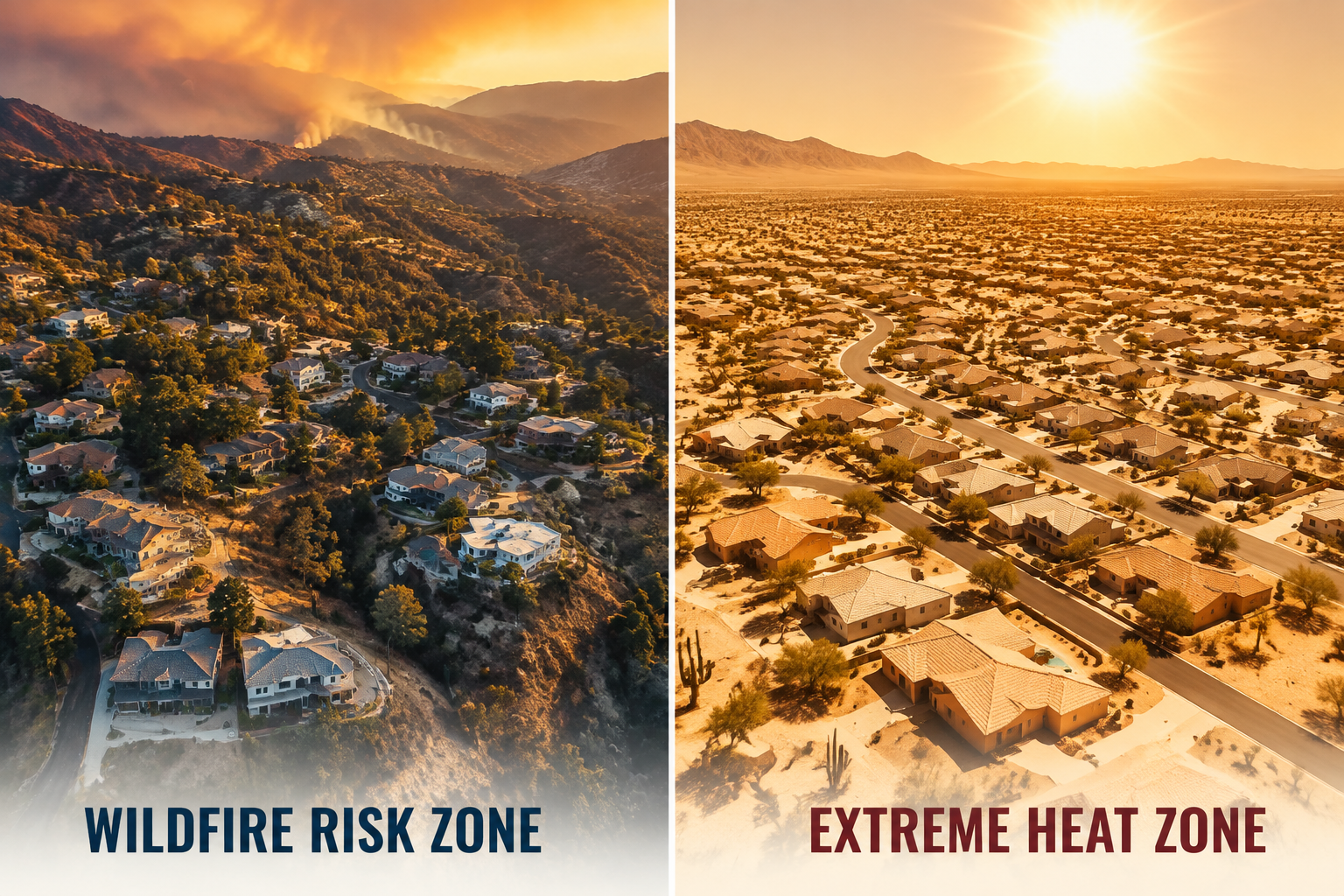
California leads the country by a significant margin, but it is not alone. The western states facing the most acute non renewal pressure as of 2026 are:
California, The epicenter. After the 2018 Camp Fire destroyed nearly 19,000 structures and the 2021 Dixie Fire burned over 963,000 acres, the insurer math simply stopped working. The California Department of Insurance reported that non renewals in the highest-risk ZIP codes tripled between 2019 and 2022. The state's FAIR Plan enrollment grew from roughly 154,000 policies in 2018 to over 400,000 by 2024.
Colorado, The Marshall Fire in December 2021 destroyed over 1,000 homes in Boulder County in a single day. Carriers responded by non-renewing policies across the entire wildland-urban interface from Fort Collins to Colorado Springs. Surplus lines market share in Colorado's mountain communities has grown substantially since 2022.
Arizona, Extreme heat, monsoon flooding, and wildfire risk in the White Mountains and Prescott areas have pushed several carriers to reduce their footprint. Maricopa County homeowners have reported premium increases of 40% to 80% at renewal, with some receiving non renewal notices instead.
Oregon and Washington, The 2020 Labor Day fires burned nearly a million acres across Oregon in 72 hours. Non renewals in the Willamette Valley and Cascade foothills increased sharply in 2021 and 2022.
Louisiana and Florida are not western states, but they are worth mentioning because the mechanism is identical, catastrophic loss ratios driving carrier exits. Louisiana saw seven insurers become insolvent between 2021 and 2023. Florida's Citizens Insurance (the state FAIR Plan equivalent) grew to over 1.4 million policies by 2024.
What Should I Do If My Homeowners Insurance Is Not Renewed
The clock starts the moment you receive the notice. Most states require 45 to 75 days of advance notice before non renewal takes effect, California requires 75 days, Arizona requires 45 days. Do not wait.
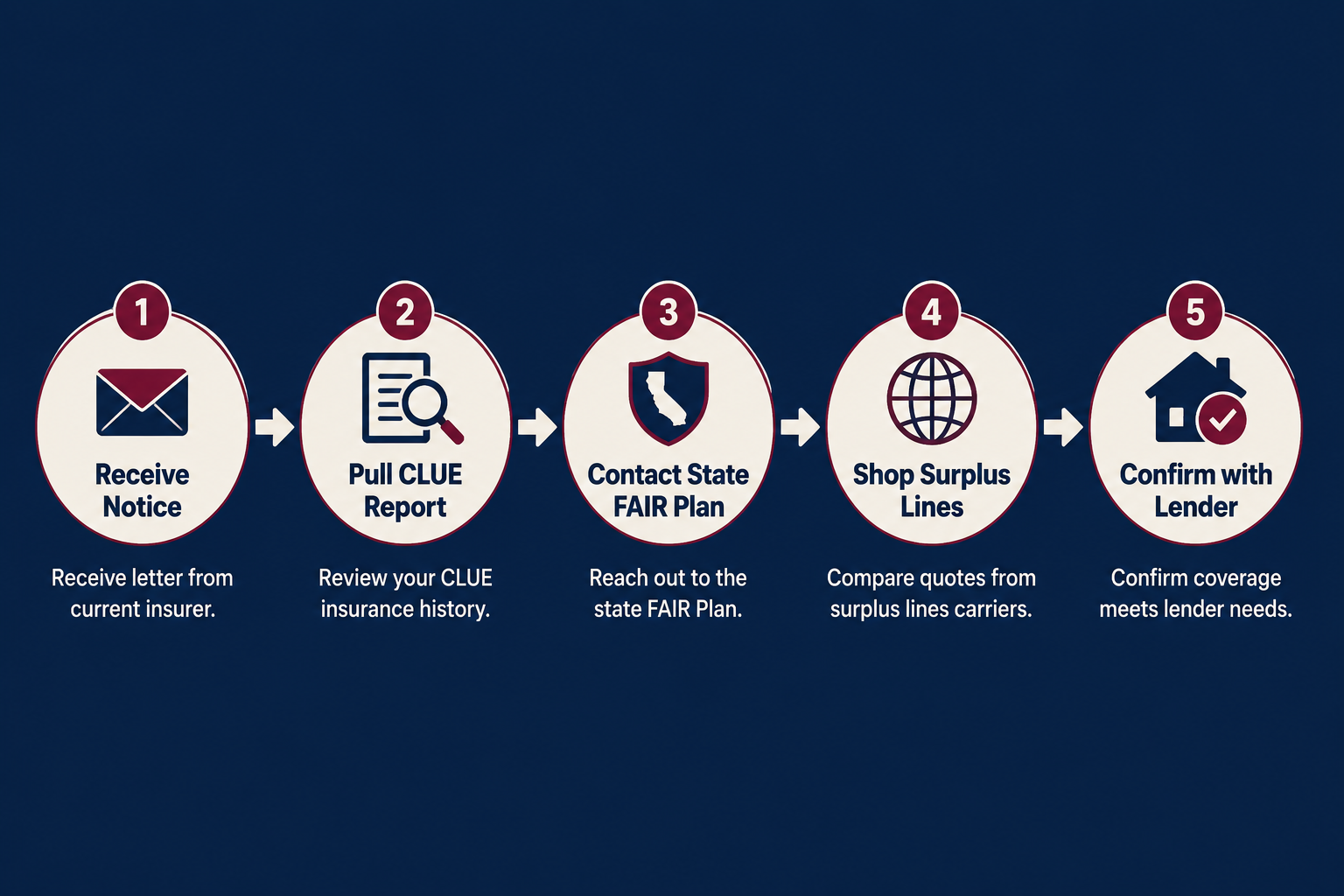
Step 1: Read the notice carefully.
The insurer must state the reason for non renewal. Common reasons include roof condition, wildfire risk score, claims history, or a company-wide underwriting change. The reason matters because it tells you what to fix before you shop.
Step 2: Pull your CLUE report.
Request it immediately from LexisNexis. Verify that every claim listed is accurate. If you see an error, a claim that was never paid, a date that is wrong, a property that is not yours, dispute it in writing before applying for new coverage.
Step 3: Contact your state's FAIR Plan.
Every state with a significant insurance availability problem has a FAIR Plan, a state-backed insurer of last resort. California's FAIR Plan, Colorado's FAIR Plan, and similar programs in other states will insure properties that standard carriers won't touch. Coverage is more limited (typically fire and certain perils only, no liability or personal property without a separate "difference in conditions" policy), but it keeps your mortgage in compliance.
Step 4: Contact a surplus lines broker.
Surplus lines insurance is written by non-admitted carriers, companies that are not licensed in your state but are authorized to write unusual or high-risk coverage. Lloyd's of London is the most recognizable example. Surplus lines coverage is legitimate and often the only option in high-risk zones, but it is typically more expensive and has less state consumer protection than standard admitted carriers.
Step 5: Notify your mortgage lender.
Your mortgage requires homeowners insurance. If you go uninsured, even for a single day, your lender has the contractual right to place force placed insurance on the property. Force placed insurance protects only the lender's interest, not your personal property or liability. It typically costs two to five times what a standard policy costs, and the lender adds it to your monthly payment without your approval.
Step 6: Consider what you can fix.
If the non renewal was triggered by roof condition, get a roofing estimate. If you can replace the roof before the policy expires, some carriers will reconsider. If it was triggered by a wildfire risk score, ask your insurer what mitigation steps, ember-resistant vents, cleared defensible space, Class A roofing material, would change your score.
For homeowners weighing whether to stay in a high-insurance-cost market or make a move, our sell, stay, or rent it out 2026 decision guide for homeowners sitting on big equity walks through the full financial picture.
How Much Notice Do I Have for Non Renewal, and Will My Rates Go Up After
State law sets the minimum notice period. Here is what the major western states require:
| State | Minimum Non Renewal Notice |
|---|---|
| California | 75 days |
| Arizona | 45 days |
| Colorado | 45 days |
| Oregon | 30 days (45 for policies over 3 years) |
| Washington | 45 days |
| Nevada | 60 days |
Will your rates go up after a non renewal? Almost certainly, yes, but not because of the non renewal itself. The reason you were non-renewed (wildfire zone, claims history, roof age) is what drives higher rates at your next carrier. A homeowners insurance non renewal does not get reported to your CLUE report the way a claim does, but insurers will ask whether you have been non-renewed in the past three to five years on their application. Answering dishonestly is material misrepresentation and can void your new policy entirely.
The honest answer is: expect to pay more. In California's FAIR Plan, premiums for a standard home in a high-risk zone can run two to four times what an admitted carrier charged before the market tightened. Surplus lines policies in wildfire zones often run 50% to 150% higher than standard market rates.
Can I Appeal a Homeowners Insurance Non Renewal Decision
Yes, and it is worth doing, especially if the reason given seems inaccurate or if you have taken mitigation steps since the underwriting decision was made.
How to appeal an insurance non renewal:
Write a formal appeal letter to the insurer's underwriting department. Reference your policy number, the stated reason for non renewal, and the specific evidence that contradicts or addresses that reason.
Attach documentation. If the reason was roof condition, attach a recent inspection report showing the roof is in good condition. If it was wildfire risk, attach documentation of defensible space clearing, ember-resistant vents installed, or a Wildfire Home Assessment from your local fire department.
Request a re-inspection. Some insurers will send an inspector to re-evaluate the property if you have made improvements.
File a complaint with your state's Department of Insurance. In California, the CDI has a complaint process specifically for non renewals. In Colorado, the Division of Insurance handles similar complaints. This does not guarantee reinstatement, but it creates a record and sometimes prompts the insurer to reconsider.
Contact your state insurance commissioner's office. California's Proposition 103 gives the Department of Insurance significant authority over insurer conduct. Other states have varying levels of regulatory leverage.
Be realistic about outcomes. If the insurer is exiting your ZIP code entirely, an appeal is unlikely to succeed. If the non renewal was triggered by a specific, correctable property condition, an appeal has a reasonable chance.
What Are the Main Reasons Insurers Are Leaving Western States
The exit is not personal, it is math. Insurers are for-profit businesses, and the western market stopped being profitable for standard carriers. The specific drivers:
Wildfire frequency and severity. The ten most destructive California wildfires in recorded history all occurred after 2017. Insurers that modeled their risk exposure on historical data were caught badly underpriced when fire seasons became dramatically more destructive.
Reinsurance market tightening. After the 2017-2018 California fire seasons produced insured losses exceeding $25 billion, global reinsurers raised their rates for California wildfire exposure by 50% or more. That cost gets passed to primary insurers, who then face the choice of raising retail premiums or exiting.
California's rate approval process. Under Proposition 103 (passed 1988), California insurers must get state approval before raising rates, and the process has historically been slow. Carriers could not reprice fast enough to stay solvent in the current loss environment. California Insurance Commissioner Ricardo Lara introduced new regulations in late 2023 allowing insurers to use forward-looking catastrophe models in rate filings, a significant change intended to bring carriers back to the market, but the effects are still working through the system as of 2026.
Building code and replacement cost gaps. Homes built before current fire-resistant building codes are significantly more expensive to rebuild to code after a total loss. Insurers carrying older policies at outdated replacement cost values face massive exposure gaps.
Secondary perils stacking. In Arizona, it is not just wildfire, it is wildfire plus extreme heat damage to roofing materials plus monsoon flooding plus hail. Multiple peril exposures in a single market make the risk math worse than any single peril alone.
If you own rental property in one of these markets, the coverage question is even more complex. Our comparison of homeowners insurance vs. rental property insurance cost and coverage breaks down how the two policy types differ and what investors need to watch for.
Are There State Programs for Homeowners Who Cannot Get Insurance
Yes. Every state with a significant insurance availability problem has established some form of last-resort coverage. These programs are good at providing a floor, but they are not a substitute for standard market coverage.
FAIR Plans by state:
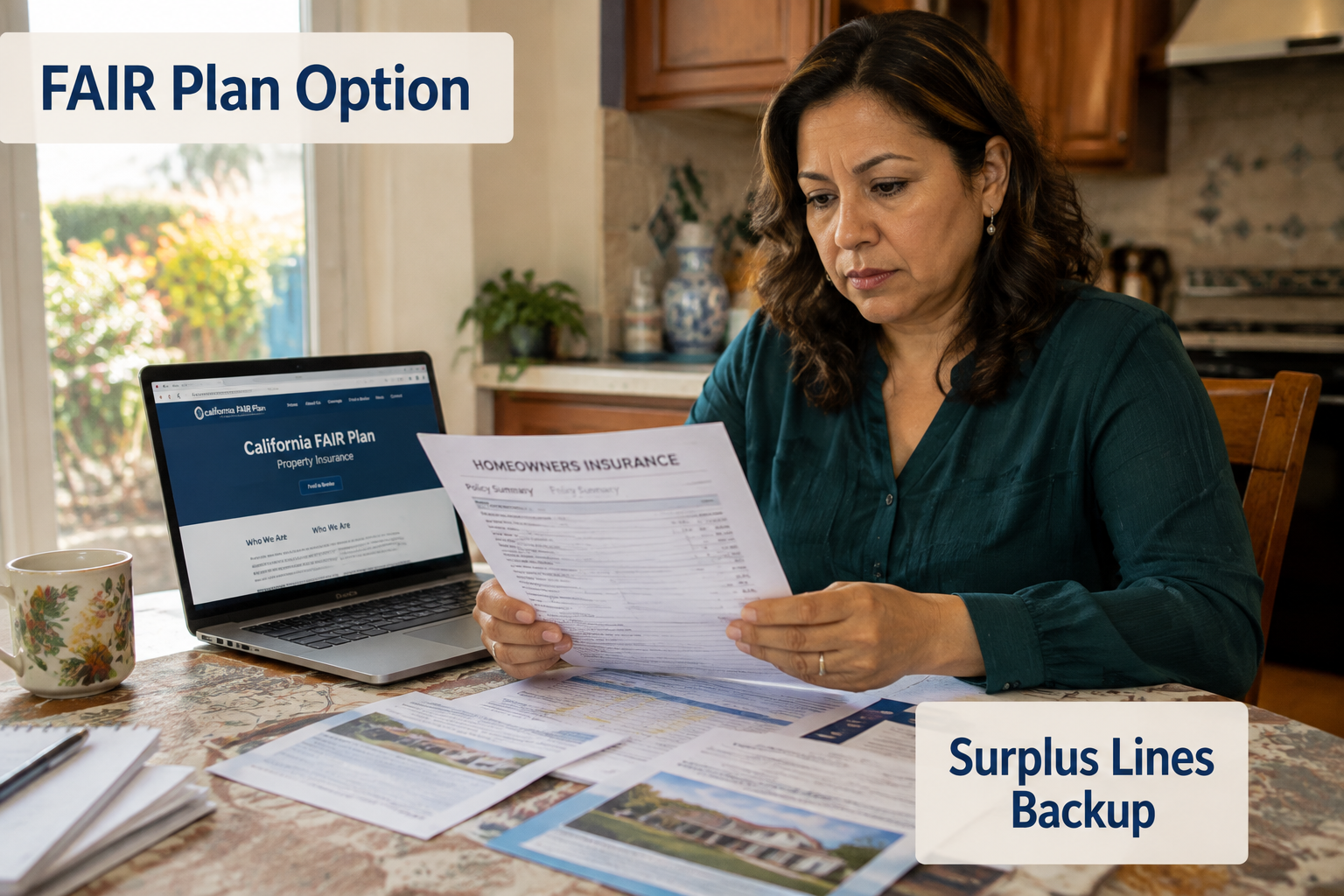
- California FAIR Plan, Covers fire, lightning, internal explosion, and smoke. Does not include liability or personal property theft without a supplemental "difference in conditions" (DIC) policy. Enrollment exceeded 400,000 policies by 2024.
- Colorado FAIR Plan, Similar structure, covers fire and certain perils. Premiums are significantly higher than standard market rates.
- Washington State's insurer of last resort, Washington does not have a formal FAIR Plan but has a Joint Underwriting Association for high-risk properties.
- Oregon FAIR Plan, Covers fire and basic perils. Limited personal property and no liability without a DIC policy.
What FAIR Plans do not cover (without a DIC policy):
- Personal liability
- Personal property theft
- Water backup
- Additional living expenses after a loss (in some states)
Surplus lines as an alternative. A surplus lines broker can access non-admitted carriers, companies like Lloyd's of London syndicates, Scottsdale Insurance, and others, that specialize in high-risk properties. These carriers are not licensed in your state but are authorized to write unusual risks. They are legitimate, but they operate with less state consumer protection than admitted carriers. If a surplus lines carrier becomes insolvent, your state's guaranty fund does not cover you the way it would with an admitted carrier.
The practical path for most homeowners: FAIR Plan as the base policy, DIC policy layered on top for liability and personal property, and a surplus lines quote for comparison. A licensed independent broker who specializes in high-risk homeowners insurance is worth the consultation fee.
Common Mistakes Homeowners Make After Receiving a Non Renewal Notice
The most expensive mistake is waiting. Homeowners who receive a non renewal notice and assume they have time to figure it out often discover they have fewer options than they expected, and that the FAIR Plan enrollment process takes longer than anticipated.
Other mistakes worth avoiding:
Not telling the lender. Your mortgage requires homeowners insurance. If coverage lapses, your lender can place force placed insurance on the property immediately. That policy protects only the lender, not you, and it costs significantly more.
Assuming the FAIR Plan covers everything. FAIR Plans are bare-bones. Without a difference in conditions policy layered on top, you have no liability coverage. If someone is injured on your property, you are exposed.
Ignoring the roof. Roof condition non renewal is one of the most common triggers, and it is one of the most fixable. A new roof can open up standard market options that were previously unavailable.
Not shopping surplus lines. Many homeowners assume that if standard carriers won't write them, they are stuck with the FAIR Plan. Surplus lines brokers access a different market entirely and can sometimes find better coverage at competitive rates.
Misrepresenting claims history. Every new insurer will check your CLUE report. If you omit a prior claim on an application and the insurer discovers it, they can rescind the policy, leaving you uninsured after a loss.
Frequently Asked Questions
What is the difference between non renewal and cancellation in homeowners insurance?
Non renewal happens at the end of a policy term and is a business decision by the insurer. Cancellation ends coverage mid-term and requires a specific cause, typically non-payment, fraud, or material misrepresentation. Non renewal is harder to fight but gives you more time to find replacement coverage.
How long do I have to find new insurance after a non renewal notice?
Your coverage runs through the expiration date on your policy. State law requires advance notice, 45 to 75 days depending on the state. Start shopping the day you receive the notice. Do not wait until the last week.
Can my insurance company drop me for filing a claim?
A single claim rarely triggers non renewal on its own. Two or more claims within three years, especially water damage or liability claims, can put your policy at risk. Some carriers will non-renew after one large payout. Claims stay on your CLUE report for seven years.
What is force placed insurance and how does it affect me?
Force placed insurance is a policy your lender buys on your behalf if your homeowners coverage lapses. It protects only the lender's financial interest, not your personal property or liability. It typically costs two to five times more than standard coverage and gets added to your mortgage payment without your approval.
What is a FAIR Plan and who qualifies?
A FAIR Plan is a state-backed insurer of last resort for homeowners who cannot get coverage in the standard market. Qualification requirements vary by state, but generally any homeowner who has been declined by standard carriers qualifies. Coverage is limited, typically fire and basic perils only, without liability or personal property theft.
What is surplus lines insurance for homeowners?
Surplus lines insurance is written by non-admitted carriers that specialize in high-risk or unusual properties. It is legal and legitimate but carries less state consumer protection than standard admitted carrier policies. A surplus lines broker is the right person to contact if standard carriers and the FAIR Plan are your only current options.
Does a non renewal show up on my CLUE report?
Non renewal itself does not appear on your CLUE report. Your claims history does. However, new insurers will ask on their application whether you have been non-renewed in the past three to five years. Answer honestly, misrepresentation is grounds for policy rescission.
Can I appeal a non renewal decision?
Yes. Write a formal appeal to the insurer's underwriting department with documentation addressing the stated reason. If the reason was a correctable property condition (roof, defensible space), provide evidence of the correction. You can also file a complaint with your state Department of Insurance.
Will my new insurance cost more after a non renewal?
Almost certainly. The underlying risk factor that triggered the non renewal, wildfire zone, claims history, aging roof, will make new carriers price your risk higher. FAIR Plan premiums in high-risk California ZIP codes can run two to four times standard market rates.
What does roof condition have to do with non renewal?
Roof age and condition is one of the most common non renewal triggers. Most carriers set a threshold of 15 to 20 years. An aging roof increases the probability of a water damage or weather-related claim. Replacing the roof before your policy expires can reopen standard market options.
What is a CLUE report and how do I get mine?
A CLUE (Comprehensive Loss Underwriting Exchange) report is a seven-year claims history document that insurers check when you apply for coverage. You can request your free annual copy from LexisNexis at consumer.risk.lexisnexis.com. Review it for errors before shopping for new coverage.
Are there any protections for homeowners in wildfire zones who keep getting non-renewed?
California passed legislation in 2018 (AB 1816) creating a moratorium on non renewals in areas affected by declared disasters. The California Department of Insurance has expanded those protections in subsequent years. Other western states have implemented varying levels of protection. Contact your state's Department of Insurance to understand what protections apply to your specific situation.
Conclusion
Homeowners insurance non renewal is not a personal failure, it is a market failure playing out in slow motion across the western United States. The math stopped working for standard carriers, and the exit is real. But so are the options.
Actionable next steps if you are facing non renewal:
- Pull your CLUE report immediately and check it for errors.
- Call your state's FAIR Plan and get an enrollment quote before your policy expires.
- Contact a surplus lines broker, not just a standard insurance agent, for a second quote.
- Notify your mortgage lender in writing that you are transitioning coverage. This prevents force placed insurance from being triggered.
- Address any correctable property conditions, roof age, defensible space, ember-resistant vents, that could reopen standard market options.
- If the stated reason for non renewal seems inaccurate, file a formal appeal with documentation.
- Check your state Department of Insurance website for any active moratoriums or consumer protections that apply to your ZIP code.
The homeowners who come out of this situation in the best position are the ones who treat the non renewal notice as a 75-day project, not a crisis. Expect a slow fix. The insurance market in California and other western states is in the middle of a regulatory and actuarial reset that will take years to stabilize. In the meantime, the FAIR Plan plus a difference in conditions policy is a workable floor for most homeowners who have run out of standard market options.
For homeowners tracking the full picture of costs in 2026, insurance, taxes, and equity decisions, our sell, stay, or rent it out 2026 decision guide and U.S. home buyers market trends in 2026 are worth reading together.