


The housing market is finally waking up from its multi-year slumber, and the U.S Homeowners National Real Estate Updates for 2026 are bringing extraordinary shifts that nobody saw coming. After years of inventory constraints, sky-high mortgage rates, and pricing volatility that had both buyers and sellers sitting on the sidelines, fresh data reveals a market in transition—one that’s equal parts opportunity and uncertainty.
Whether you’re a homeowner watching your equity grow, a buyer waiting for the perfect entry point, or a real estate professional navigating this evolving landscape, understanding these national real estate updates isn’t just helpful—it’s essential. Let’s break down what’s actually happening across America’s housing markets and what it means for your next move.
Key Takeaways
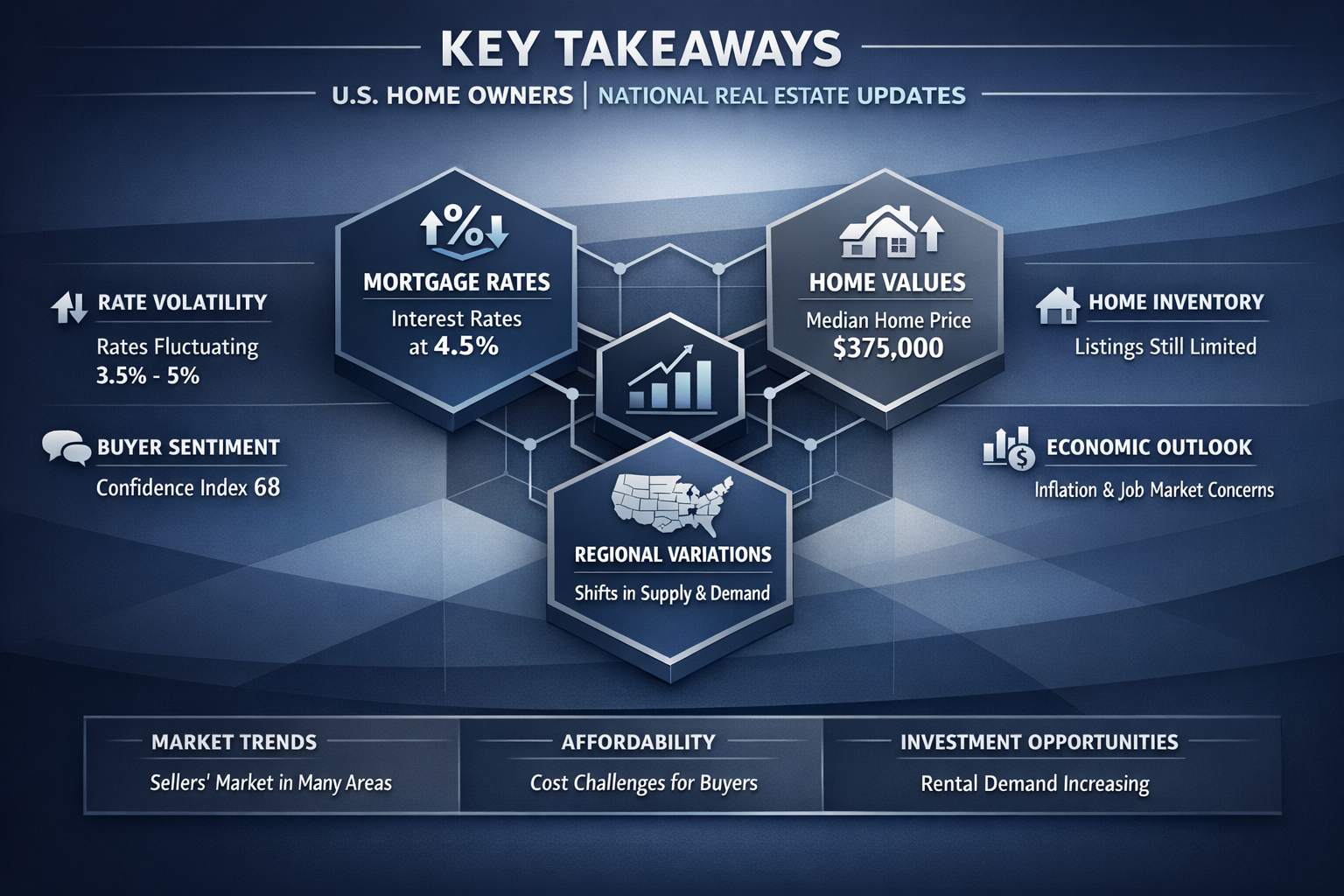
- Historic bipartisan legislation passed: The Housing for the 21st Century Act cleared the House with a 390-9 vote, aiming to streamline construction and expand housing supply nationwide [4][2]
- Price growth hits multi-year low: U.S. home price appreciation slowed to just 0.7% year-over-year in January 2026, down from 3.5% at the start of 2025 [2][1]
- Mortgage rates reach three-year lows: Rates dropped near 6.10% in late February 2026, creating fresh opportunities for buyers who’ve been priced out [4]
- Two-speed market emerges: Coastal and sunbelt regions face price corrections while Midwest and Northeast markets show resilience and stability [2][1]
- Sales forecast looks optimistic: NAR predicts a 14% nationwide increase in home sales for 2026 as affordability slowly improves [3][5]
Major Legislative Breakthrough: The Housing for the 21st Century Act
Bipartisan Support Signals Real Change
In what can only be described as an impeccable display of political cooperation, the Housing for the 21st Century Act passed the House on February 9, 2026, with an overwhelming 390-9 vote [4][2]. This isn’t your typical partisan gridlock—this is Congress actually agreeing that America’s housing crisis demands immediate action.
The legislation targets three critical areas:
🏗️ Regulatory Barriers Reduction
- Streamlines local zoning approval processes
- Reduces bureaucratic delays that add months (or years) to construction timelines
- Encourages municipalities to adopt builder-friendly policies
💰 Expanded Financing Options
- Creates new pathways for first-time buyers to access affordable mortgages
- Supports innovative programs like rent-to-own structures
- Provides incentives for lenders to serve underbanked communities
📈 Construction Approval Acceleration
- Fast-tracks permits for qualifying residential developments
- Reduces environmental review timelines for infill projects
- Establishes federal grants for cities that meet housing production targets
This legislative push couldn’t come at a better time. For years, homebuilders have been gatekeeping their plans, waiting for regulatory clarity and economic stability. Now they’re ready to let it cook.
The Million-Home Proposal
Perhaps the most ambitious component involves homebuilders exploring a proposal to construct up to 1 million entry-level homes with innovative rent-to-own structures [4][2]. Under this framework, renters could apply up to three years of rent payments toward their eventual down payment—a game-changing opportunity for households stuck in the rent trap.
While federal backing remains tentative, the concept represents a fresh approach to homeownership accessibility. This aligns perfectly with emerging market trends for 2026 that prioritize creative financing solutions.
National Market Metrics: The Numbers Tell a Complex Story
Price Growth Hits Historic Lows
The U.S Homeowners National Real Estate Updates for early 2026 reveal something extraordinary: home price growth has essentially stalled. According to the latest data, U.S. home prices increased just 0.7% year-over-year in January 2026, a dramatic cooldown from the 3.5% appreciation rate seen at the beginning of 2025 [2][1].
This marks one of the lowest appreciation rates in recent history—so based for buyers who’ve been watching prices climb relentlessly for years. But what’s driving this shift?
| Metric | January 2025 | January 2026 | Change |
|---|---|---|---|
| Year-over-Year Price Growth | 3.5% | 0.7% | -2.8 pts |
| Mortgage Rates (30-Year Fixed) | ~7.2% | ~6.1% | -1.1 pts |
| Existing Home Sales (Annual Pace) | 4.27M | 3.91M | -8.4% |
| New Listings Growth | -2.1% | +3.2% | +5.3 pts |
| Inflation Rate | 2.7% | 2.4% | -0.3 pts |
Mortgage Rates Drop to Three-Year Lows
Here’s where things get interesting: mortgage rates hit a three-year low in late February 2026, hovering near 6.10% as of February 24 [4]. This represents a significant decline from the 7%+ rates that dominated much of 2024 and early 2025.
Lower rates mean improved affordability, which typically stimulates buyer demand. However, the market hasn’t responded with the explosive activity you might expect. Why? The answer lies in the complex interplay between rates, inventory, and buyer psychology.
For homeowners considering refinancing or tapping into equity, understanding current mortgage options becomes crucial. Many are choosing HELOCs over traditional refinancing to avoid trading their low-rate mortgages for higher ones.
Sales Decline Sharply Despite Rate Relief
Despite falling rates, existing home sales fell 8.4% month-over-month in January 2026 to a 3.91 million annual pace—the sharpest one-month drop in nearly four years [4][2]. This counterintuitive trend highlights the lock-in effect still gripping millions of homeowners who secured ultra-low rates during the pandemic era.
The lock-in effect versus inventory dynamics creates a fascinating standoff: homeowners don’t want to sell and lose their 3% mortgage, while buyers can’t find enough inventory to choose from.
Inventory Finally Shows Signs of Life
After years of supply constraints, new listings rose 3.2% year-over-year in early 2026 [4][2]—the first sustained improvement in inventory levels since the pandemic disrupted normal market patterns. While this increase seems modest, it represents a meaningful shift in market dynamics.
More inventory means:
- Greater buyer choice and negotiating power
- Reduced bidding wars in most markets
- Slower price appreciation as competition eases
- Opportunities for strategic buyers to negotiate better deals
Real estate professionals should prepare for a market where listing preparation and strategic pricing matter more than ever. Check out these pricing strategies that avoid triggering lowball offers to stay competitive.
U.S Homeowners National Real Estate Updates for 2026…
Regional Variations: The Two-Speed Housing Market
Coastal and Sunbelt Corrections
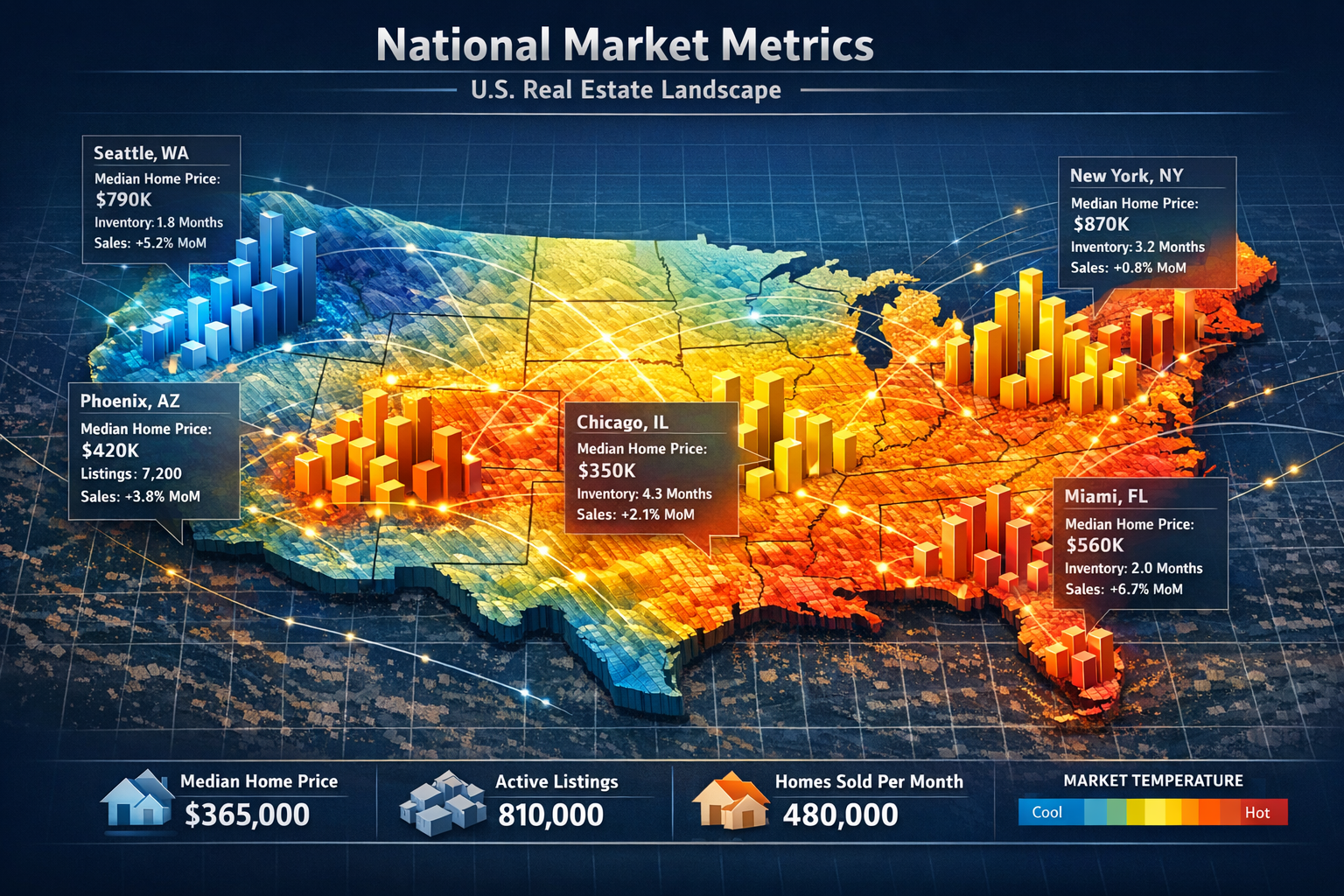
Dr. Selma Hepp, Chief Economist at Cotality, describes the current environment as a “two-speed housing market” where different regions experience vastly different conditions [2][1]. High-cost coastal markets and previously hot sunbelt destinations are undergoing price corrections as affordability constraints finally catch up with demand.
Markets experiencing notable cooling include:
- San Francisco Bay Area: Tech sector layoffs and remote work flexibility reducing demand
- Austin, Texas: Overbuilding and population growth slowdown creating surplus inventory
- Phoenix, Arizona: Extreme heat concerns and insurance cost increases dampening enthusiasm
- South Florida: Insurance crisis and climate concerns triggering reassessment
Midwest and Northeast Resilience
Meanwhile, Midwest and Northeast markets remain resilient due to relative affordability and stable employment bases [2][1]. Cities like Columbus, Indianapolis, and Kansas City are showing outsized growth according to Robert Dietz, Chief Economist at the National Association of Home Builders [5].
Why these markets are thriving:
✅ Affordability advantage: Median home prices 30-50% below coastal equivalents
✅ Stable employment: Diversified economies less vulnerable to tech sector volatility
✅ Quality of life: Lower cost of living attracts remote workers and families
✅ Infrastructure investment: Federal funding improving transportation and utilities
For investors looking to capitalize on these trends, understanding neighborhood market data and investment strategies becomes essential for identifying the next growth markets.
Economic Factors Shaping the 2026 Housing Landscape

Inflation Cooling Provides Relief
Inflation cooled to 2.4% year-over-year in January 2026, down from 2.7% in December—the lowest reading since early 2021 [2]. This easing pressure on housing costs creates a more favorable environment for both buyers and sellers.
Lower inflation typically leads to:
- Reduced pressure on the Federal Reserve to maintain restrictive monetary policy
- Potential for further rate cuts if economic conditions warrant
- Improved consumer confidence as purchasing power stabilizes
- Better affordability as wage growth outpaces price increases
Home Equity Reaches Record Levels
National home-equity balances climbed to $434 billion [4][2], representing a massive wealth accumulation for existing homeowners. Rather than refinancing into higher rates, savvy homeowners are increasingly using HELOCs to access this equity while preserving their low-rate first mortgages.
This equity boom creates opportunities for:
- Home renovations that increase property value
- Investment property purchases using equity as down payments
- Debt consolidation at rates lower than credit cards
- Emergency reserves without liquidating retirement accounts
Before tapping home equity, homeowners should consider which home renovation ideas actually boost ROI versus vanity projects that don’t add value.
Expert Forecasts: What Leading Economists Predict
NAR’s Optimistic Sales Projection
Lawrence Yun, NAR Chief Economist, forecasts a 14% nationwide increase in home sales for 2026 following 2025’s stagnating levels [3][5]. He expects home prices to climb approximately 4%, supported by job growth and persistent supply shortages.
“The combination of improving affordability and gradually increasing inventory will unlock pent-up demand that’s been building for years. We’re not returning to the frenzy of 2021, but we are moving toward a healthier, more balanced market.” — Lawrence Yun, NAR Chief Economist
Homebuilder Projections Show Modest Growth
Robert Dietz projects about a 1% gain in single-family home building and 1% gain in new-home sales for 2026 [5]. While these numbers seem modest, they represent stabilization after years of volatility and supply chain disruptions.
New construction remains concentrated in markets with:
- Available land at reasonable prices
- Pro-development local governments
- Strong job growth attracting new residents
- Affordable price points for first-time buyers
Affordability Improvements Lead the Way
Danielle Hale, Chief Economist at realtor.com, identifies improving affordability as the biggest trend for 2026, stating it will help move home sales away from the 4 million sales floor that has constrained the market [5].
The affordability equation improves through:
- Falling mortgage rates reducing monthly payment burdens
- Wage growth outpacing home price appreciation
- Increased inventory reducing competition and bidding wars
- Creative financing options expanding access to homeownership
For buyers trying to navigate this complex landscape, AI-powered tools can help identify opportunities and streamline the search process.
Strategic Implications for Homeowners, Buyers, and Investors
For Current Homeowners
The U.S Homeowners National Real Estate Updates suggest current homeowners should:
📊 Monitor Local Market Conditions
National trends don’t always reflect local realities. Use neighborhood-specific market analysis to understand your property’s position.
💡 Consider Strategic Improvements
With price appreciation slowing, strategic renovations that increase value become more important. Focus on high-ROI projects rather than personal preferences.
🔍 Evaluate Equity Opportunities
With $434 billion in national home equity, explore HELOC options for strategic investments or improvements without refinancing your primary mortgage.
⏰ Timing Matters More Than Ever
If selling is in your future, understanding when your local market is heating up can mean tens of thousands in additional proceeds.
For Prospective Buyers
Buyers face a complex but increasingly favorable environment:
✅ Improved Negotiating Position
Rising inventory and slower price growth shift power toward buyers. Learn negotiation strategies that save thousands on your purchase.
✅ Lower Rates Create Opportunities
With rates near 6.10%, monthly payments are significantly lower than just six months ago. Run the numbers on 15-year versus 30-year mortgages to optimize your financing.
✅ Regional Arbitrage Potential
The two-speed market creates opportunities to relocate from high-cost coastal areas to affordable Midwest or Northeast markets with strong fundamentals.
✅ Seller Credits Becoming Common
In slower markets, asking for strategic seller credits can reduce your out-of-pocket costs significantly.
For Real Estate Investors
Savvy investors should focus on:
🎯 Supply-Constrained Markets
Despite national inventory improvements, certain submarkets remain undersupplied. Identify investor plays for low-supply neighborhoods before competition increases.
🎯 Midwest and Northeast Opportunities
With coastal markets correcting, Midwest resilience creates compelling value plays with better cash flow potential and lower entry costs.
🎯 Rent-to-Own Partnerships
The proposed million-home rent-to-own initiative could create partnership opportunities with builders targeting entry-level buyers.
🎯 Technology Leverage
Use AI-driven lead generation and market analysis tools to identify opportunities faster than competitors.
Conclusion: Navigating the New Normal
The U.S Homeowners National Real Estate Updates for 2026 paint a picture of a market in transition—moving from the extreme volatility and affordability crisis of recent years toward a more balanced, sustainable environment. While challenges remain, the combination of legislative action, improving inventory, falling mortgage rates, and cooling inflation creates genuine opportunities for those who understand the landscape.
The two-speed market means location matters more than ever. What works in Columbus might fail in San Francisco. What’s overpriced in Phoenix might be a bargain in Indianapolis. Success requires moving beyond national headlines to understand hyperlocal dynamics.
Your Next Steps:
- Assess your local market using data-driven analysis rather than national trends
- Calculate your affordability with current 6.10% rates versus waiting for further declines
- Explore creative financing including HELOCs, seller credits, and rent-to-own options
- Connect with experienced professionals who understand your specific market’s nuances
- Stay informed as conditions continue evolving throughout 2026
Whether you’re buying your first home, selling to upgrade, or building an investment portfolio, the market is shifting in ways that create real opportunities—but only for those prepared to act strategically.
The housing market is finally waking up. The question is: are you ready?
About Real Estate Rank IQ
Real Estate Rank IQ provides clear, step-by-step guidance on real estate market trends, home buying and selling strategies, property investment opportunities, and financial education fundamentals. Our content is created by licensed brokers with over 15 years of experience to help you make informed decisions in today’s complex real estate landscape.
📧 Contact: news@realestaterankiq.com
🌐 Website: https://realestaterankiq.com/
📺 YouTube: @Realestaterankiq
References
[1] Property Prices Uk February 2026 Nationwide B2929978 – https://www.the-independent.com/news/uk/home-news/property-prices-uk-february-2026-nationwide-b2929978.html
[2] Us Home Price Insights March 2026 – https://www.cotality.com/insights/articles/us-home-price-insights-march-2026
[3] Housing Market Set For A 2026 Comeback Nar Predicts – https://www.nar.realtor/magazine/real-estate-news/economy/housing-market-set-for-a-2026-comeback-nar-predicts
[4] February 2026 Real Estate Market Update Forecast – https://www.churchillmortgage.com/articles/february-2026-real-estate-market-update-forecast
[5] 2026 Real Estate Outlook What Leading Housing Economists Are Watching – https://www.nar.realtor/magazine/real-estate-news/2026-real-estate-outlook-what-leading-housing-economists-are-watching













Comments 2