
Last updated: August 23, 2026

Quick Answer: An appraisal gap happens when a home's appraised value comes in lower than the agreed purchase price, and in most cases the buyer is the one who has to cover the difference out of pocket. Roughly 10% of purchase transactions hit one, and in competitive markets that number climbs higher. Knowing what triggers a low appraisal, what your options are, and whether to pay, negotiate, or walk away can save you thousands.
Key Takeaways
- An appraisal gap is the dollar difference between what a buyer agreed to pay and what a licensed appraiser says the home is worth.
- Lenders will only finance up to the appraised value, so the gap becomes the buyer's problem immediately.
- Roughly 10% of home purchase deals encounter a low appraisal, according to NAR transaction data.
- Buyers have four main options: pay the gap in cash, negotiate a price reduction, split the difference with the seller, or exit using an appraisal contingency.
- An appraisal contingency clause is the buyer's legal exit ramp if the appraisal comes in low and no deal can be reached.
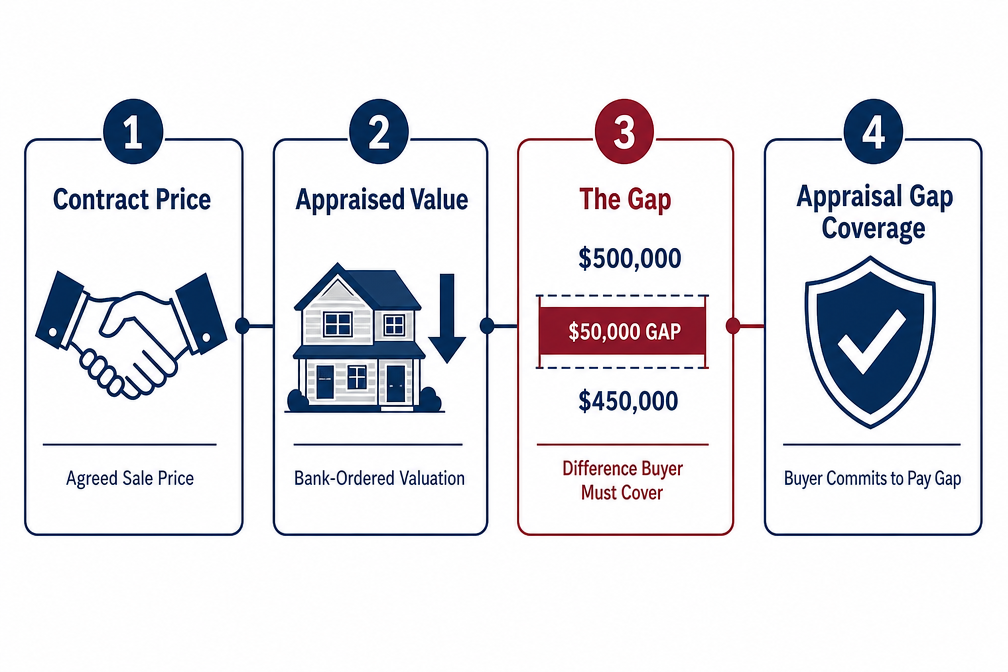
- Appraisal gap coverage is a written commitment in the offer stating the buyer will cover a specific dollar amount above the appraised value.
- Sellers are not required to lower the price after a low appraisal, but many do, especially in slower markets.
- Buyers can dispute a low appraisal through a formal reconsideration of value request backed by better comparable sales data.
- In hot markets, buyers routinely waive appraisal contingencies to win offers, which means they are on the hook for the full gap.
- Walking away is a real option, but only if the appraisal contingency was not waived.
What Is an Appraisal Gap in Real Estate
An appraisal gap is the difference between the purchase price a buyer and seller agreed to in a contract and the lower value a licensed appraiser assigns to the property during the home appraisal process. If a buyer offers $450,000 on a home and the appraiser values it at $420,000, the appraisal gap is $30,000.
The gap matters because mortgage lenders base their loan on the appraised value, not the contract price. A lender offering 80% financing will lend 80% of $420,000 ($336,000), not 80% of $450,000. The buyer still owes the seller $450,000 per the contract. That $30,000 shortfall has to come from somewhere, and in most deals it comes from the buyer's own pocket.
This is the mechanic that catches buyers off guard. The appraisal gap is not a technicality. It is a real cash demand that shows up after the inspection, after the excitement, and after the buyer has already mentally moved in.
Appraisal Gap: 10% of Deals Hit One, and Buyers Pay
About 10% of residential purchase transactions run into an appraisal gap at some point in the deal, based on National Association of Realtors transaction reporting. In markets with heavy bidding competition, that rate goes higher because buyers push offers above asking price, which widens the spread between what they agree to pay and what the data supports.
The "buyers pay" part of this equation is not a negotiating position. It is the default outcome written into how mortgage lending works. The lender's appraisal protects the bank, not the buyer. When the appraised value comes in lower than the purchase price, the bank does not absorb the difference. The buyer does, unless the contract says otherwise or a negotiation changes the terms.
Why this number matters for your deal:
- In a market where the median existing-home price sits at $434,100 as of July 2026, a 10% gap on an average deal is roughly $43,000 in unexpected cash the buyer needs to produce.
- First-time buyers putting down 10% are especially exposed because they may not have extra reserves sitting around after the down payment.
- Buyers who waived their appraisal contingency to win a bidding war have no contractual exit. They are committed to paying whatever the gap turns out to be.
For buyers facing this right now, our breakdown of 2026 real estate trends and how stable rates are reshaping buyer strategies adds useful context on what the broader market is doing to offer prices.
Why Do Appraisals Come In Low
Appraisals come in low when the data available to the appraiser does not support the price a buyer agreed to pay. The home appraisal process relies on comparable sales, called comps, which are recent closed sales of similar homes in the same area. When buyers bid aggressively and push prices above what recent comps show, the appraiser's math does not catch up in time.
The most common reasons a low appraisal happens:
- Bidding wars drove the price above market comps. The most frequent cause in competitive markets. Buyers outbid each other, but appraisers are anchored to closed sales that may be 60 to 90 days old.
- The neighborhood has limited comparable sales. Rural areas, unique properties, or new developments often have thin comp data, which makes appraisers conservative.
- The property has condition issues. Deferred maintenance, outdated systems, or visible damage pulls the appraised value down even if the buyer loves the house.
- The appraiser is from outside the local market. Lenders sometimes assign appraisers from a different area who are less familiar with local price trends.
- Rising prices outpaced the comp window. In fast-moving markets, prices can jump significantly in the time between when comps closed and when the appraisal is ordered.
Understanding how often do appraisals come in low depends heavily on market conditions. In a flat or declining market, appraisals rarely cause problems. In a hot seller's market with multiple offers, the gap between contract price and appraised value becomes a routine obstacle.
What Happens If the Appraisal Is Lower Than the Offer Price
When the appraisal came in lower than the purchase price, the transaction hits a decision point. The lender will not fund above the appraised value, so the deal cannot close as written without one of the parties adjusting.
Here is exactly what happens in sequence:
- The lender receives the appraisal report and issues a notice that the loan amount is being capped at the appraised value.
- The buyer's agent notifies the buyer of the gap and the dollar amount.
- The contract's appraisal contingency clause, if one exists, gives the buyer a defined window (typically 5 to 10 days) to decide how to respond.
- The buyer, seller, and their agents negotiate one of four outcomes.
The four outcomes when the appraisal came in lower than the purchase price:
| Outcome | Who Bears the Cost | When It Works |
|---|---|---|
| Buyer pays the gap in cash | Buyer | Buyer has reserves and wants the house |
| Seller reduces the price | Seller | Slow market, seller is motivated |
| Both parties split the gap | Shared | Both sides want to close |
| Buyer exits using appraisal contingency | Neither (deal dies) | Buyer has contingency and no deal is reached |
If the buyer waived the appraisal contingency, option four is off the table. That buyer is contractually obligated to close at the agreed price regardless of what the appraisal says.
For buyers who want to understand all the costs that hit at closing, including how a gap affects your cash-to-close number, our guide on how to calculate home buyer closing costs using AI tools walks through the math step by step.
Can You Negotiate After a Low Appraisal
Yes, and negotiation is the most common resolution. A low appraisal does not automatically kill a deal. It restarts a conversation between buyer and seller about who absorbs the financial hit.
What buyers can ask for:
- A full price reduction to the appraised value
- A partial price reduction with the buyer covering the remaining gap
- Seller credits toward closing costs to offset the buyer's out-of-pocket increase
- A combination of price reduction and credits
What sellers are thinking: A seller who rejects any negotiation is betting that the next buyer will either pay the gap or that a new appraisal will come in higher. In a slow market, that bet rarely pays off. In a hot market, it sometimes does.
The seller won't lower price after appraisal situation is more common than buyers expect. Sellers who received multiple offers often feel the market validated their price, even if the appraiser disagrees. This is where having a skilled negotiator matters. Our resource on proven negotiation strategies for closing deals covers the specific tactics that work in post-appraisal standoffs.
One move buyers often skip: asking the seller to contribute toward closing costs instead of a price cut. Sellers sometimes resist a price reduction because it affects their net sheet perception, but a credit feels different to them even though the math is similar for the buyer.
Appraisal Gap in Hot vs. Slow Markets
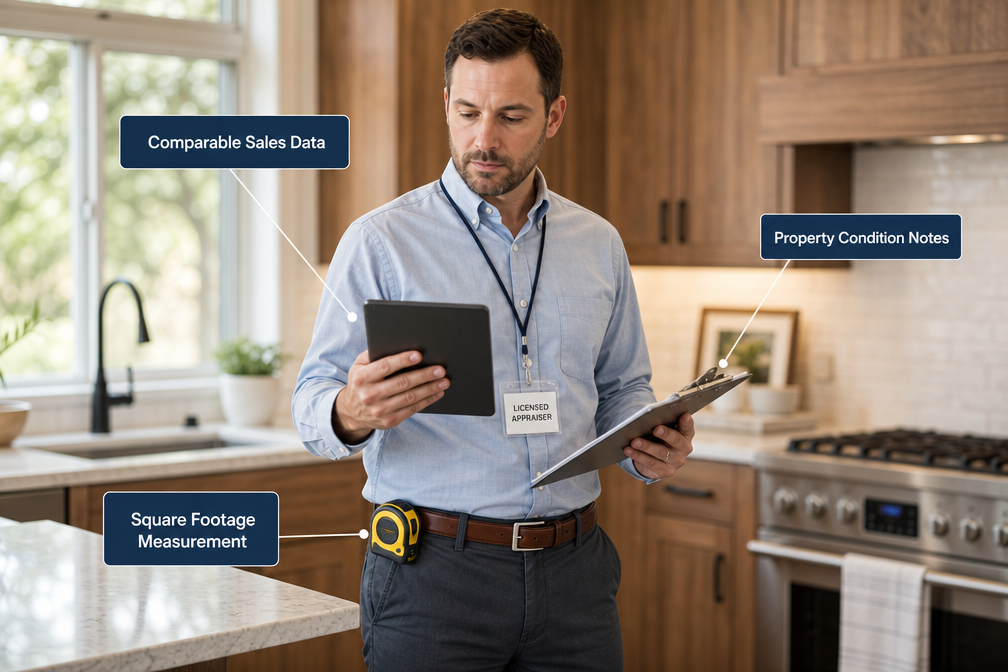
Market conditions determine how often appraisal gaps happen and how much leverage each party has when one does.
In a hot seller's market:
- Buyers are routinely offering 5% to 15% above asking price to win bidding wars.
- Appraisals frequently come in below the contract price because comps lag behind rapidly rising prices.
- Sellers have leverage. They can reject a buyer's request for a price reduction and wait for the next offer.
- Buyers often include appraisal gap coverage language in their offers to be competitive, committing in writing to cover a set dollar amount above the appraised value.
- Waiving the appraisal contingency entirely is common in the hottest markets, which eliminates the buyer's exit option.
In a slow buyer's market:
- Homes sit longer and sellers are more motivated to close.
- Appraisals are less likely to come in low because offer prices are closer to or below asking.
- When a gap does happen, sellers have less leverage and are more likely to negotiate a price reduction.
- Buyers rarely need to include gap coverage language because it is not necessary to win offers.
- Appraisal contingencies are standard and rarely waived.
The 2026 market sits in an interesting middle ground. Inventory has improved from pandemic-era lows, but prices are still rising, with the median existing-home price up 2.0% year over year as of July 2026. That means appraisal gaps are still happening, just not at the frequency of 2021 and 2022. For a current read on where inventory stands, see our spring 2026 housing market outlook.
Appraisal Gap Contingency Clause Explained
An appraisal contingency is a clause in the purchase contract that gives the buyer the right to renegotiate or exit the deal without losing their earnest money deposit if the home appraises below the purchase price. It is the buyer's primary protection against being forced to pay a gap they cannot afford.
How the appraisal contingency works:
- The contract specifies a minimum acceptable appraised value, usually the purchase price.
- If the appraisal comes in below that number, the buyer has a defined window to act, typically 5 to 10 days after receiving the appraisal report.
- During that window, the buyer can request a price reduction, negotiate, or terminate the contract and receive their earnest money back.
- If the buyer does nothing within the window, the contingency expires and the buyer is treated as if they accepted the gap.
Appraisal gap coverage vs. appraisal contingency: These are two different things that often get confused.
- An appraisal contingency protects the buyer's right to exit or renegotiate.
- Appraisal gap coverage is language the buyer adds to an offer stating they will pay up to a specific dollar amount above the appraised value. It is the opposite of a contingency. It is a commitment, not a protection.
A buyer can include both in one offer: "I will cover up to $20,000 above the appraised value, but if the gap exceeds $20,000, I have the right to terminate." That structure gives the seller confidence while capping the buyer's exposure.
Can a seller back out after a low appraisal? Generally no. Once a contract is signed, the seller is bound to the terms. A low appraisal does not give the seller a unilateral right to exit. The seller's options are to negotiate, wait for the buyer to decide, or if the buyer terminates using their contingency, relist the property.
Who Pays the Appraisal Gap: Buyer or Seller
The buyer pays the appraisal gap by default. The lender will not increase the loan to cover the difference, so the buyer must bring additional cash to closing. The seller has no legal obligation to reduce the price or contribute to the gap.
That said, who actually ends up paying depends on negotiation and market conditions.
Scenarios where the buyer pays the full gap:
- The buyer waived the appraisal contingency to win a competitive offer.
- The buyer included appraisal gap coverage language and the gap falls within that committed amount.
- The seller refuses to negotiate and the buyer wants the house badly enough.
Scenarios where the seller helps cover the appraisal gap:
- The market is slow and the seller needs to close.
- The seller accepts a price reduction to the appraised value.
- The seller offers closing cost credits to offset the buyer's increased cash-to-close.
- Both parties agree to split the gap, each absorbing a portion.
Can a seller help cover the appraisal gap? Yes. A seller can reduce the purchase price, offer credits, or agree to any split the buyer and seller negotiate. There is no rule preventing a seller from absorbing part or all of the gap. The seller just has no obligation to do so.
Who pays the appraisal gap in practice comes down to who has more to lose if the deal falls apart. In 2026, with sellers holding a median 11 years of equity, many can afford to negotiate. Buyers, especially first-timers with tight reserves, often cannot afford to pay a large gap out of pocket, which makes the appraisal contingency their most important contract protection.
How to Dispute a Low Appraisal
Buyers and sellers can formally challenge a low appraisal through a process called a reconsideration of value (ROV). This is a written request submitted to the lender asking the appraiser to review specific comparable sales or correct factual errors in the report.

When a reconsideration of value makes sense:
- The appraiser used comps that are significantly older, smaller, or in a less comparable location than the subject property.
- There are recent closed sales the appraiser missed that support a higher value.
- The report contains factual errors, such as wrong square footage, incorrect bedroom count, or missing upgrades.
How to dispute a low appraisal step by step:
- Get a copy of the full appraisal report. Buyers have a right to this.
- Review every comparable sale the appraiser used. Check the dates, locations, sizes, and sale prices.
- Identify better comps. Look for closed sales within the last 90 days, within a half-mile, with similar size and condition.
- Have your real estate agent pull those comps from the MLS with full detail.
- Submit a written ROV request through your lender with the alternative comps attached. Do not contact the appraiser directly.
- The appraiser reviews the request and either adjusts the value, partially adjusts, or maintains the original opinion.
The honest reality: ROV success rates are modest. Appraisers are licensed professionals and they do not change their opinion easily. The best ROV submissions are factual, specific, and free of emotional arguments about how much the buyer loves the house. Stick to data.
If the ROV fails and no negotiation resolves the gap, buyers with a valid appraisal contingency can walk. For buyers who want to understand their full range of options before making that call, our guide on first-time home buyer tips from a real estate agent covers the full decision framework.
Should You Pay the Appraisal Gap or Walk Away
Pay the gap if the home is genuinely worth it to you, you have the cash reserves to cover it without depleting your emergency fund, and the gap is a small percentage of the total purchase price. Walk away if the gap is large, you stretched your budget to make the offer, or you have a valid appraisal contingency and no deal can be reached.
Pay the gap when:
- The gap is under 2% to 3% of the purchase price and you have reserves.
- The home has specific features that justify a premium above comps (location, condition, renovations).
- You are in a competitive market and similar homes will also likely appraise low.
- You have already spent money on inspections and due diligence and the deal is otherwise clean.
Walk away when:
- The gap would require you to drain your emergency fund or retirement savings.
- The appraisal revealed the home is genuinely overpriced relative to the neighborhood.
- The seller refuses any negotiation and the gap is significant.
- You have an appraisal contingency and your gut says the price is not right.
The middle path most buyers miss: a partial gap payment combined with a seller credit. If the gap is $25,000, a buyer might offer to pay $12,000 and ask the seller to drop the price by $13,000. Both sides give something. Both sides get to close. This structure works more often than buyers expect, especially when the seller has already mentally moved on.
One thing that gets missed in the appraisal gap conversation is how rarely anyone talks about the emotional sunk cost. Buyers who have already paid for an inspection, an appraisal, and a few weeks of stress feel locked in. That feeling is real, but it should not be the reason you pay a $40,000 gap on a house that is not worth it.
How to Avoid an Appraisal Gap When Buying
The most direct way to avoid an appraisal gap is to make offers that stay close to what the data supports. That is not always possible in competitive markets, but there are specific steps that reduce the risk.
Before making an offer:
- Ask your agent for a comparative market analysis (CMA) on the property before you offer, not after.
- Look at the price per square foot of recent closed sales in the same neighborhood.
- Be cautious about offering more than 5% above the last comparable closed sale without a specific reason.
- In markets where bidding wars are common, factor in that your offer may need gap coverage language to be competitive.
In the offer itself:
- Keep the appraisal contingency in place unless you have the cash reserves to cover any gap and you are fully informed of the risk.
- If you must include gap coverage to compete, cap it at a dollar amount you can actually pay.
- Consider asking for a seller's disclosure and inspection upfront to spot condition issues that could pull the appraised value down.
After the offer is accepted:
- Order the appraisal quickly. Delays extend your exposure window.
- Provide the appraiser with a list of recent upgrades, permits, and improvements the seller has made. Appraisers can use this information.
- Have your agent attend the appraisal if the lender and appraiser allow it, to answer questions about the property.
For buyers looking at specific markets where appraisal gaps are more or less common, our Zillow top markets for home buyers in 2026 breakdown includes affordability data that signals where offers are likely to stay close to appraised values.
Appraisal Gap vs. Inspection Issues: What Is the Difference
An appraisal gap and an inspection issue are two separate problems that sometimes overlap but require completely different responses.
Appraisal gap: A valuation problem. The appraiser says the home is worth less than the contract price. The issue is financial, not physical.
Inspection issue: A condition problem. The inspector finds something wrong with the physical property, such as a failing roof, foundation cracks, or faulty electrical. The issue is structural or mechanical, not about price.
Where they overlap: A bad inspection finding can cause a low appraisal. If an inspector finds a roof that needs replacement, the appraiser may reduce the property's value to account for the deferred maintenance cost. In that case, the buyer faces both a repair negotiation and a potential appraisal gap at the same time.
How to handle each:
- For inspection issues, buyers typically request repairs, a price reduction, or a credit before closing.
- For an appraisal gap, buyers use the appraisal contingency, negotiate a price reduction, or cover the gap in cash.
- If both problems exist simultaneously, address the inspection issue first. A price reduction for repairs may also close part of the appraisal gap.
The key distinction is that inspection contingencies and appraisal contingencies are separate clauses in the contract. Waiving one does not waive the other. Buyers who waived their appraisal contingency still have full inspection rights unless they waived that separately.
What to Do If You Are Stuck With an Appraisal Gap Right Now
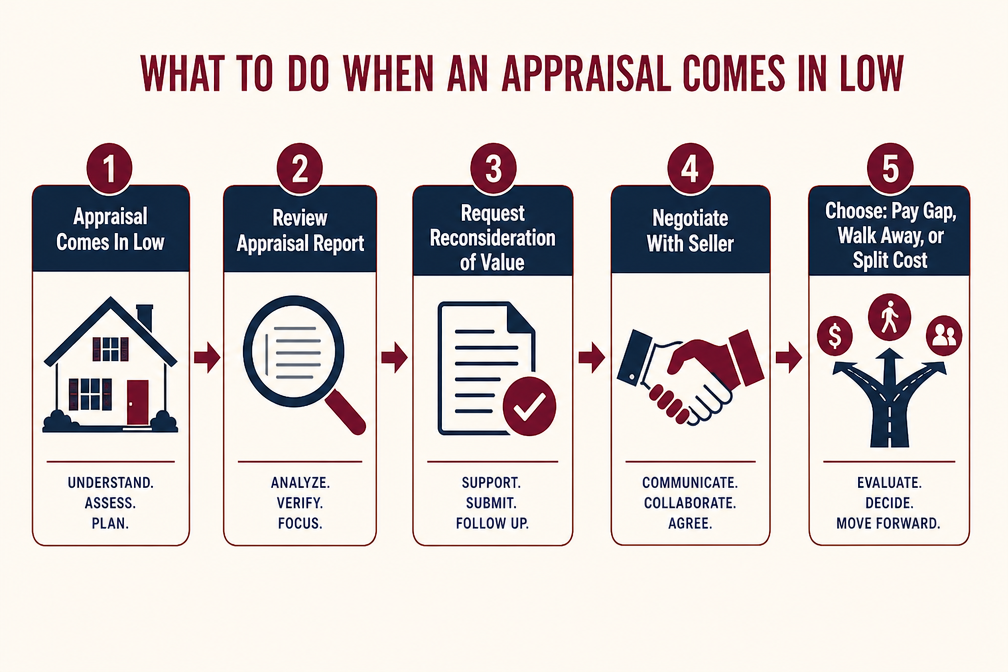
If the appraisal came in low and you are in the middle of a deal today, here is the sequence that gives you the most options.
Step 1: Get the full appraisal report. You are entitled to a copy. Read every page, including the comparable sales section.
Step 2: Check your contract for the appraisal contingency clause. Confirm whether it is in place and when it expires. Your window to act may be shorter than you think.
Step 3: Decide if the ROV is worth pursuing. If you can identify two or three better comps the appraiser missed, submit the ROV through your lender. Give it 3 to 5 business days.
Step 4: Open negotiation with the seller. Do not wait for the ROV result if time is short. Start the conversation with the seller in parallel. Come with a specific number, not a general complaint.
Step 5: Run your cash numbers honestly. Calculate exactly what paying the gap would do to your reserves. Include your down payment, closing costs, moving expenses, and a three-month emergency fund. If paying the gap wipes out your cushion, that is a real financial risk, not just an inconvenience.
Step 6: Make a decision before the contingency expires. If no deal is reached and you have a valid appraisal contingency, terminate in writing before the deadline. Missing that window can cost you your earnest money deposit.
Unusual situations call for careful preparation. The buyers who handle appraisal gaps best are the ones who read their contract before the appraisal comes back, not after. For buyers who want to understand the full closing process before this moment arrives, our first-time home buyers resource hub covers every stage of the transaction.
Frequently Asked Questions
What is an appraisal gap in simple terms?
An appraisal gap is the difference between what a buyer agreed to pay for a home and the lower value a licensed appraiser assigned to it. The buyer's lender will only lend based on the appraised value, so the buyer must cover the shortfall in cash or renegotiate the price.
How often do appraisals come in low?
Roughly 10% of residential purchase transactions encounter a low appraisal, based on NAR transaction data. That rate increases in competitive markets where buyers are offering above asking price.
Does the buyer always have to pay the appraisal gap?
Not always, but the buyer pays by default. The lender will not cover the gap. The buyer can negotiate a price reduction with the seller, split the gap, or exit using an appraisal contingency if one is in the contract.
What is appraisal gap coverage?
Appraisal gap coverage is language a buyer includes in their offer committing to pay a specific dollar amount above the appraised value. For example, "buyer will cover up to $15,000 above appraised value." It is used to make offers more competitive in hot markets.
Can a seller refuse to lower the price after a low appraisal?
Yes. Sellers are not legally required to reduce the price. In a hot market, a seller may wait for a buyer who will pay the gap or waive the contingency. In a slow market, sellers are more likely to negotiate.
What is a reconsideration of value?
A reconsideration of value (ROV) is a formal written request submitted through the lender asking the appraiser to review specific comparable sales or correct factual errors in the appraisal report. It is the buyer's best tool for challenging a low appraisal.
What happens if I waived my appraisal contingency and the appraisal comes in low?
You are contractually obligated to close at the agreed price. You must either pay the full gap in cash or attempt to negotiate with the seller voluntarily. You cannot exit the contract without losing your earnest money deposit.
Can a seller back out after a low appraisal?
No. A low appraisal does not give the seller a contractual right to exit. The seller must honor the contract terms. If the buyer terminates using a valid appraisal contingency, the seller can relist, but the seller cannot unilaterally cancel because of the appraisal.
How long does a buyer have to respond to a low appraisal?
The appraisal contingency clause in the contract defines the window, typically 5 to 10 days after the buyer receives the appraisal report. Missing this deadline can waive the contingency and lock the buyer into the deal.
Is appraisal gap coverage the same as appraisal gap insurance?
No. Appraisal gap coverage is a contractual commitment the buyer makes in the offer. Some lenders and third parties offer products marketed as appraisal gap insurance, but these are not widely standardized. The most common form of protection is the appraisal contingency clause in the purchase contract.
Does a low appraisal affect the seller's ability to relist?
Not directly. However, if the appraisal report is shared with future buyers or their agents, it can influence subsequent offers. Some sellers order a new appraisal after a deal falls through to get a fresh opinion of value.
Should first-time buyers ever waive the appraisal contingency?
Rarely. First-time buyers typically have less cash reserves and less experience managing unexpected costs. Waiving the appraisal contingency makes sense only if the buyer has verified cash reserves to cover any possible gap and fully understands the risk of doing so.
Conclusion
An appraisal gap is one of those deal mechanics that nobody explains until it is already happening to you. The number is real: roughly 10% of deals hit one, and in most cases the buyer is the one who has to figure it out fast.
The good news is that this is a solvable problem in most transactions. Sellers negotiate. ROV requests sometimes work. Gap coverage language can be structured to cap your exposure. And if none of that works, a valid appraisal contingency is your clean exit.
Actionable next steps:
- Before making any offer, ask your agent for a CMA and compare the offer price to recent closed comps within 90 days.
- Read the appraisal contingency clause in your contract before you sign, not after the appraisal comes back.
- If you are in a bidding war situation, decide in advance exactly how much gap you can afford to pay in cash, and write that number into your gap coverage language.
- If a gap has already happened, pull the appraisal report, check your contingency deadline, and start the seller negotiation and ROV process simultaneously.
- Never let the contingency window expire without a written decision. That deadline is the most expensive mistake buyers make.
For buyers who want to get current on where the 2026 market stands before making their next move, our U.S. home buyers market trends for 2026 is worth a read before you write your next offer.
The negotiation side takes patience. Sellers who say no on day one often come back to the table by day five when they realize the deal is genuinely at risk.