

Last updated: July 20, 2026

Quick Answer: After your offer is accepted on a house, you enter a 30-day sprint that covers earnest money deposit, home inspection, mortgage underwriting, appraisal, title search, and final walkthrough before closing day. Each step has a deadline, and missing one can cost you the deal. Here's exactly what to expect, day by day.
Key Takeaways
- The under contract to closing timeline typically runs 30 to 45 days, though 30-day closings are achievable with a strong pre-approval in place.
- Your earnest money deposit (usually 1%,3% of the purchase price) is due within 1-3 business days of acceptance.
- The home inspection contingency window is typically 7-14 days after acceptance, schedule it immediately.
- Mortgage underwriting is the biggest wildcard; avoid new debt, job changes, or large bank withdrawals during this period.
- A low home appraisal doesn't automatically kill the deal, you have options.
- Both buyers and sellers have limited rights to back out after acceptance, but contingencies are the buyer's primary protection.
- Title commitment, homeowners insurance before closing, and the final walk-through all happen in the final week before closing day.
- Closing costs for buyers typically run 2%,5% of the loan amount, confirm your Closing Disclosure at least three business days before closing.
The Full Picture: What Happens After Your Offer Is Accepted on a House
What happens after your offer is accepted on a house is a structured sequence of events, not a waiting game. From the moment the seller signs, the clock starts on multiple parallel tracks, financing, inspections, title work, and insurance, all converging on closing day.
Think of it like a season finale where every subplot has to resolve at the same time. The good news? Every step is predictable. The stress comes from not knowing what's coming. So let's fix that.
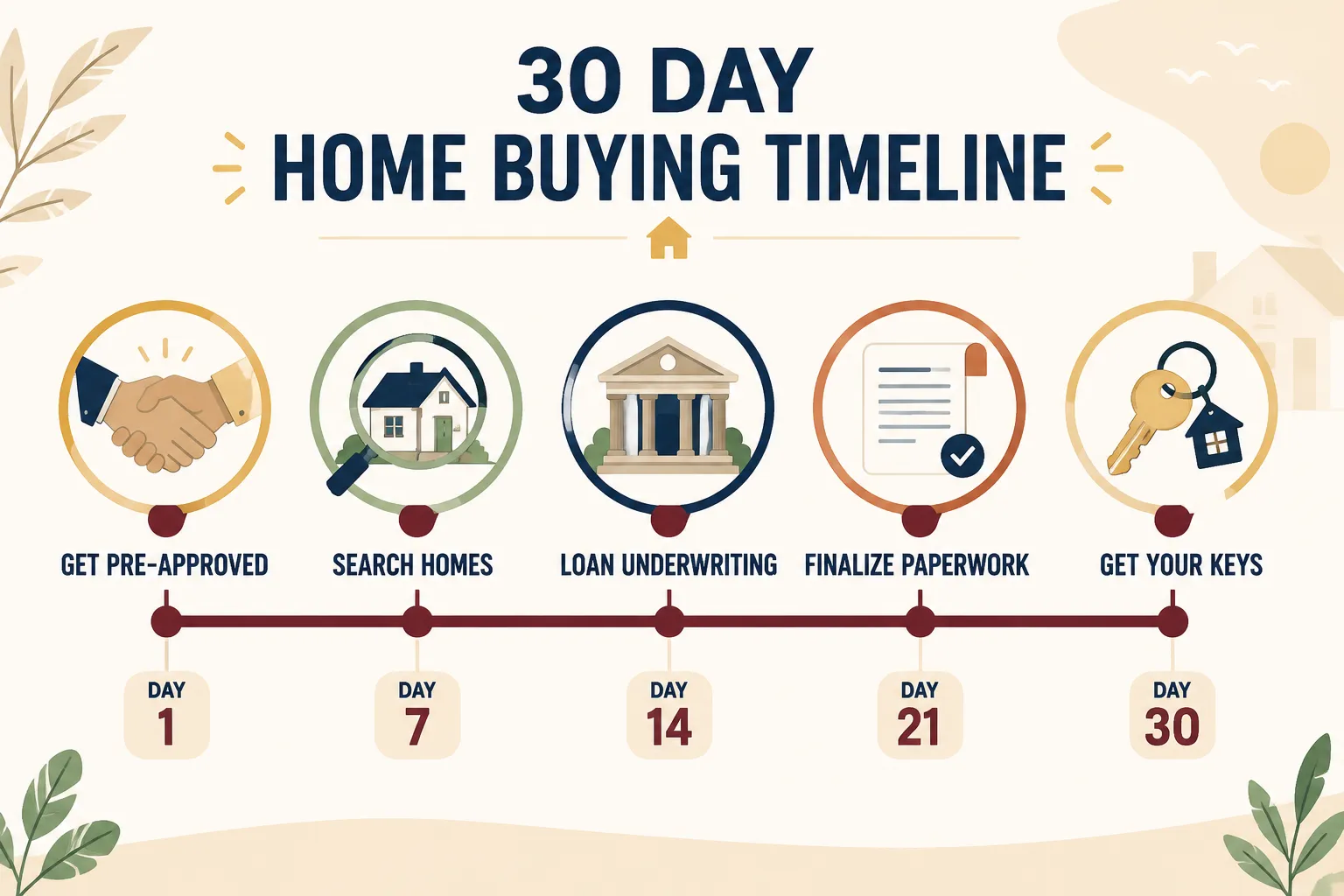
Here's the full under contract to closing timeline broken into phases:
Days 1-3: Earnest Money and Opening Escrow
- Submit your earnest money deposit to the escrow or title company.
- Your agent opens escrow and delivers the signed contract to the title company.
- The lender receives a copy of the purchase agreement.
Days 1-7: Schedule the Home Inspection
- Contact a licensed inspector immediately, good ones book fast.
- Most contracts give you 7-10 days for the home inspection contingency period.
Days 3-10: Loan Application and Appraisal Order
- Submit your full mortgage application (if not already done).
- The lender orders the home appraisal, this takes 1-2 weeks to complete.
Days 7-21: Underwriting and Title Search
- Your loan file goes to underwriting.
- The title company runs the title search and prepares the title commitment.
Days 21-28: Conditional Approval and Clear to Close
- Respond to any underwriting conditions (pay stubs, letters of explanation, etc.).
- Receive your "clear to close" from the lender.
- Review your Closing Disclosure, required at least 3 business days before closing.
Days 28-30: Final Walkthrough and Closing Day
- Complete the final walk-through of the property.
- Sign documents, wire closing funds, and receive keys.
What Happens After Your Offer Is Accepted: The Earnest Money Deposit
The earnest money deposit is due almost immediately, typically within 1 to 3 business days of the seller accepting your offer. This is your "skin in the game" payment that tells the seller you're serious.
What you need to know:
- Amounts vary by market, but 1%,3% of the purchase price is standard. In competitive markets, sellers may expect more.
- The deposit goes into an escrow account held by the title company or escrow agent, not the seller's pocket.
- If the deal closes, the earnest money is credited toward your down payment or closing costs.
- If you back out for a reason covered by a contingency (inspection, financing, appraisal), you get it back.
- If you walk away without a valid contingency reason, you likely forfeit it.
"The earnest money deposit is the handshake with real money behind it. Protect it by understanding your contingencies cold before you waive any of them."
How Long After Offer Accepted to Inspection, And Why It Matters
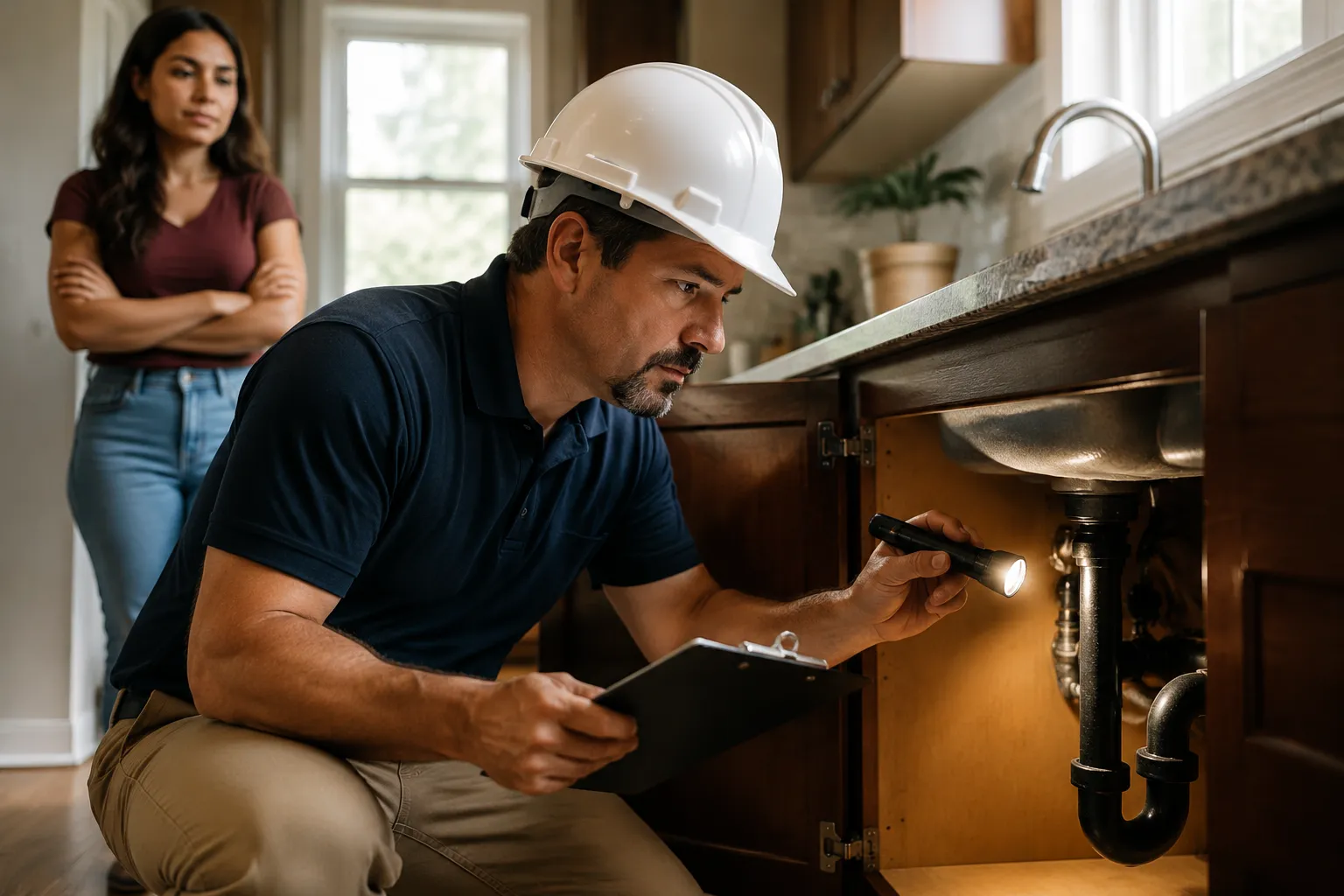
Schedule your home inspection within 24-48 hours of offer acceptance. Most contracts give buyers 7 to 14 days for the inspection contingency period, but good inspectors book up fast, especially in spring and summer markets.
What a home inspection covers:
- Structural components (foundation, roof, framing)
- Electrical systems
- Plumbing
- HVAC systems
- Windows, doors, and insulation
- Visible signs of water damage or mold
After the inspection, you have three options:
- Accept the property as-is and move forward.
- Request repairs or a price reduction from the seller.
- Walk away and recover your earnest money deposit (within the contingency window).
The home inspection contingency is one of the most powerful protections a buyer has. Don't waive it unless you're buying a property you've already had professionally evaluated or you're an experienced investor who knows what they're taking on. Even then, think twice. This is not a place to be gatekeeping information from yourself.
What Happens After Your Offer Is Accepted Mortgage, The Financing Timeline
After an offer is accepted, the mortgage process kicks into high gear. If you were pre-approved before making the offer (which you absolutely should have been, check out our pre-approval pro tips guide for the full breakdown), your lender now converts that pre-approval into a full loan application.
The mortgage sequence after acceptance:
- Loan application submission (Days 1-3): Submit all required documents, W-2s, pay stubs, bank statements, tax returns.
- Loan Estimate (within 3 business days of application): Your lender is legally required to provide this document showing estimated interest rate, monthly payment, and closing costs.
- Appraisal ordered (Days 3-7): The lender orders an independent home appraisal to verify the property's value.
- Processing (Days 7-14): The loan processor reviews your file and prepares it for underwriting.
- Underwriting (Days 14-21): An underwriter reviews everything, income, assets, credit, and the appraisal.
- Conditional approval (Days 18-24): The underwriter approves the loan with conditions (additional documents, explanations, etc.).
- Clear to close (Days 24-28): All conditions are satisfied. The loan is approved.
- Closing Disclosure (3 business days before closing): Final loan terms, costs, and cash-to-close amount confirmed.
The golden rule during underwriting: Do not open new credit cards, finance a car, quit your job, make large cash deposits, or change bank accounts. Underwriters re-verify employment and credit right before closing. One surprise can delay or kill the deal.
The Appraisal Process After Offer Accepted, And What If It Comes In Low
The home appraisal is ordered by your lender and conducted by a licensed, independent appraiser. Its job is to confirm the property is worth at least what you agreed to pay. The appraisal typically takes 1-2 weeks to complete after it's ordered.
What happens if the appraisal comes in low?
A low appraisal means the lender will only finance based on the appraised value, not the purchase price. If you agreed to pay $400,000 but the appraisal comes in at $380,000, you have a $20,000 gap to resolve.
Your options:
- Renegotiate the price, ask the seller to reduce the purchase price to the appraised value.
- Pay the difference in cash, cover the gap out of pocket (only if you have the funds and the property is worth it to you).
- Split the difference, negotiate a compromise between the appraised value and the original price.
- Challenge the appraisal, your agent can submit a "reconsideration of value" with comparable sales data the appraiser may have missed.
- Walk away, if your contract includes an appraisal contingency, you can exit and recover your earnest money.
The appraisal contingency is your financial safety net here. Don't waive it without fully understanding the risk.
Title Search and Title Commitment After Offer Accepted
The title company runs a title search to confirm the seller actually has the legal right to sell the property and that there are no outstanding liens, judgments, or ownership disputes attached to it.
This process typically takes 1-2 weeks and results in a title commitment, a document from the title insurance company promising to issue title insurance once the sale closes.
What title issues can surface:
- Unpaid property taxes
- Mechanic's liens from contractors
- Unresolved estate claims from prior owners
- Errors in public records
- Undisclosed easements
Most title issues are resolved before closing. But some, like a disputed heir claim or a fraudulent prior deed, can delay or derail the transaction. This is exactly why title insurance exists.
Two types of title insurance:
- Lender's title insurance, required by your mortgage lender, protects their investment.
- Owner's title insurance, optional but strongly recommended, protects you as the buyer.
For a deeper look at what sellers pay in this process, our seller closing costs breakdown covers the full picture from the other side of the table.
What Is the Underwriting Process After Offer Accepted
Underwriting is the lender's deep-dive review of your entire financial profile against the property you're buying. An underwriter is the person who actually approves or denies your loan, not your loan officer.
What underwriters review:
- Credit score and credit history
- Debt-to-income ratio (DTI)
- Employment history and income stability
- Bank statements and asset verification
- The appraisal report
- The title commitment
- Homeowners insurance binder
Common underwriting conditions (things they'll ask for):
- A letter of explanation for a large bank deposit
- Proof that a gift fund is not a loan
- Updated pay stubs if your closing date extends
- Clarification on a credit inquiry
Underwriting is where most 30-day closing delays originate. Respond to every condition request within 24 hours. The faster you respond, the faster you close.

Can a Seller Back Out After Offer Accepted, And Can the Buyer?
Both parties have limited rights to exit after acceptance, but the rules are not equal.
Can the buyer back out?
If an offer is accepted on a house, the buyer can typically back out without penalty if they exercise a valid contingency, inspection, financing, or appraisal, within the specified timeframe. Outside of contingencies, backing out usually means forfeiting the earnest money deposit.
Can the seller back out?
Once an offer is accepted on a house, the seller backing out is legally riskier. Sellers generally cannot simply change their mind without consequences. Depending on the contract and state law, a buyer could sue for specific performance (forcing the sale) or recover damages beyond just the earnest money.
Legitimate seller exit scenarios include:
- The buyer failed to meet a contractual deadline (e.g., missed the inspection period response window).
- A kick-out clause was triggered by a better offer (only if the original contract included one).
- Mutual agreement to cancel.
The bottom line: contracts are binding. Both parties should read every contingency clause before signing.
What Can Go Wrong After Offer Is Accepted, Common Delays in the 30-Day Closing Period
The 30-day closing process is achievable, but it's not automatic. Here are the most common reasons deals slow down or fall apart:
- Financing falls through, new debt, job loss, or a credit score drop during underwriting.
- Low appraisal, gap between appraised value and purchase price that neither party will bridge.
- Inspection issues, major defects (foundation problems, roof failure, mold) that create renegotiation standoffs.
- Title problems, liens, unpaid taxes, or ownership disputes that take time to resolve.
- Slow document response, buyers who take days to respond to underwriting conditions.
- Homeowners insurance issues, properties in flood zones, with prior claims, or older roofs can be hard to insure.
- Survey problems, encroachments or boundary disputes discovered late.
- Buyer's remorse leading to slow cooperation, not a legal exit, but it gums up the process.
The best defense against delays is a fully documented pre-approval, a responsive agent, and a buyer who understands that the 30 days after acceptance require active participation, not passive waiting. Let it cook before you see results, but make sure the right ingredients are in the pot from day one.
What Documents Do You Sign After Offer Accepted
The paperwork volume between acceptance and closing is extraordinary. Here's what to expect:
Immediately after acceptance:
- Escrow instructions
- Seller disclosures (review carefully, these reveal known property defects)
- HOA documents (if applicable)
During the loan process:
- Full mortgage application (1003 form)
- Loan Estimate acknowledgment
- Intent to proceed
- Income and asset verification authorizations
Before closing:
- Closing Disclosure (review at least 3 business days before closing)
- Homeowners insurance binder (required before the lender funds the loan)
At closing:
- Promissory note (your promise to repay the loan)
- Deed of Trust or Mortgage (secures the lender's interest in the property)
- Closing Disclosure final acknowledgment
- Transfer documents
The Closing Disclosure is the most important document to review carefully. Compare it line by line to your original Loan Estimate. If numbers shifted significantly, ask your lender to explain every change before you sit down at the closing table.
The Final Walkthrough Before Closing, What to Check
The final walk-through happens 24-48 hours before closing. It's not a second inspection, it's a verification that the property is in the same condition as when you made the offer, and that any agreed-upon repairs were completed.
Final walkthrough checklist:
- All appliances included in the sale are present and functioning
- Agreed repairs have been completed (ask for receipts)
- No new damage since the inspection
- All seller-owned items have been removed
- Utilities are still on (test lights, run faucets, check HVAC)
- No new leaks, stains, or damage visible
If something is wrong at the final walk-through, you have options, request a credit at closing, delay closing until repairs are made, or in serious cases, consult your agent about your contractual rights. Don't skip this step. It's your last chance to catch a problem before the property is legally yours.
How to Prepare for Closing Day
Closing day is the finish line, but showing up unprepared can cause same-day delays. Here's how to make it smooth:
Before closing day:
- Confirm the exact cash-to-close amount with your title company (wire transfer amounts must be exact).
- Wire funds at least 24 hours in advance, never wire same-day without confirming instructions directly by phone.
- Confirm closing time, location, and what ID to bring (government-issued photo ID is required).
- Secure homeowners insurance before closing, your lender requires a paid binder.
- Do your final walk-through.
On closing day:
- Bring your photo ID (two forms is better).
- Bring your checkbook as backup for small adjustments.
- Review every document before signing, you have the right to ask questions.
- After signing, the lender funds the loan, the title company records the deed, and you receive keys.
For buyers thinking about what comes next after closing, our guide on how soon you can do a HELOC after purchasing a home is worth bookmarking now.

Homeowners Insurance Before Closing, Don't Wait on This
Your lender requires proof of homeowners insurance before they will fund your loan. This is not optional, and waiting until the last week is a mistake, especially for properties with older roofs, prior claims, or location in a flood zone.
What to do:
- Shop for homeowners insurance as soon as your offer is accepted.
- Get at least 3 quotes, rates vary significantly between carriers.
- Confirm the policy covers the replacement cost of the home, not just the purchase price.
- Ask your lender exactly what documentation they need (typically a paid binder and declarations page).
- If the property is in a FEMA flood zone, you may also need separate flood insurance.
For a full breakdown of coverage types and costs, our homeowners vs. rental property insurance guide covers what every buyer and investor needs to know before they sign.
FAQ: What Happens After Your Offer Is Accepted
How long after offer accepted to inspection?
Schedule your inspection within 24-48 hours of acceptance. Most contracts allow 7-14 days for the inspection contingency, but inspectors book fast, don't wait.
After an offer is accepted, how long does it take to close?
The standard timeline is 30-45 days. Cash buyers can close in 10-14 days. FHA and VA loans sometimes take 45-60 days due to additional requirements.
What is earnest money and when is it due?
Earnest money is a good-faith deposit, typically 1%,3% of the purchase price, due within 1-3 business days of acceptance. It's held in escrow and credited toward your costs at closing.
Can the seller back out after accepting an offer?
Sellers have very limited legal grounds to exit after accepting. Doing so without cause can expose them to a lawsuit for specific performance or financial damages.
What happens if my appraisal comes in low?
You can renegotiate the price, pay the gap in cash, challenge the appraisal, or walk away using your appraisal contingency to recover your earnest money.
What is a title commitment?
A title commitment is the title insurance company's promise to issue title insurance once the sale closes. It confirms the title search found no unresolved ownership issues.
What documents do I need for underwriting?
Typically: two years of tax returns, recent W-2s, 30 days of pay stubs, 60 days of bank statements, and a copy of the purchase agreement. Your lender will give you a full list.
Do I need homeowners insurance before closing?
Yes. Your lender requires a paid homeowners insurance binder before funding the loan. Shop early, some properties are harder to insure than others.
What is the final walkthrough?
A buyer's last visit to the property (24-48 hours before closing) to verify condition, confirm repairs were completed, and ensure nothing changed since the inspection.
Can I back out after my offer is accepted without losing my earnest money?
Yes, if you exercise a valid contingency (inspection, financing, or appraisal) within the timeframe specified in your contract. Outside of contingencies, you risk forfeiting the deposit.
What are closing costs for buyers?
Closing costs typically run 2%,5% of the loan amount and include lender fees, title insurance, prepaid interest, property taxes, and homeowners insurance escrow. Review your Closing Disclosure carefully.
What's the biggest cause of delays in a 30-day closing?
Slow response to underwriting conditions is the most common cause. Respond to every lender request within 24 hours to keep the timeline on track.
Conclusion: Your 30-Day Playbook Starts Now
What happens after your offer is accepted on a house is one of the most information-dense periods in the entire home buying process, and most buyers go in blind. That's the real problem. The 30-day closing window isn't stressful because it's complicated. It's stressful because no one explained the sequence clearly.
Now you have the full picture. From the earnest money deposit on day one to the final walk-through hours before closing, every step has a purpose and a deadline. The buyers who close on time are the ones who stay responsive, stay organized, and stay out of their own way during underwriting.
Your immediate action steps:
- If your offer was just accepted, submit your earnest money within 24 hours and call your lender today.
- Book your home inspection now, not tomorrow.
- Start shopping homeowners insurance this week.
- Respond to every lender document request within 24 hours, no exceptions.
- Read your Closing Disclosure line by line before you sit down to sign.
The deal isn't done until the deed is recorded. Stay fresh, stay engaged, and let the process work. This is so based, buyers who know the playbook close on time. Now you're one of them.
For more on navigating the market right now, check out our 2026 real estate trends breakdown and our spring 2026 housing market outlook, both are worth reading before you close.