
Last updated: August 23, 2026

Quick Answer: Knowing how to buy a foreclosed home means understanding that the advertised discount is real but so is the risk. Bank-owned and auctioned properties sell at an average 27% below comparable market-rate homes according to ATTOM data, but they transfer in as-is condition, often with deferred maintenance, possible liens, and zero seller disclosure. Buyers who go in prepared can capture excellent deals. Buyers who skip due diligence often spend that discount fixing problems they never saw coming.
Key Takeaways
- Foreclosed homes sell at roughly 27% below market value on average, but the discount varies widely by property condition, location, and sale type.
- There are three distinct purchase paths: pre-foreclosure (short sale), foreclosure auction, and REO (bank-owned). Each carries different risks and timelines.
- Bank-owned (REO) properties allow inspections and standard financing. Auction properties often do not.
- A title search is non-negotiable. Foreclosed homes can carry unpaid liens, back taxes, and HOA arrears that transfer to the new owner.
- FHA 203k renovation loans and conventional rehab loans exist specifically for distressed properties and can cover both purchase and repair costs.
- Occupied foreclosures are a real scenario. Evicting a former owner or tenant adds months and legal costs.
- Cash offers move faster and win more deals, but financing is available for REO properties.
- The homeowner deciding between a short sale and walking away faces a different set of consequences. A short sale damages credit less than a completed foreclosure.
What Is a Foreclosed Home and How Does the Foreclosure Process Work
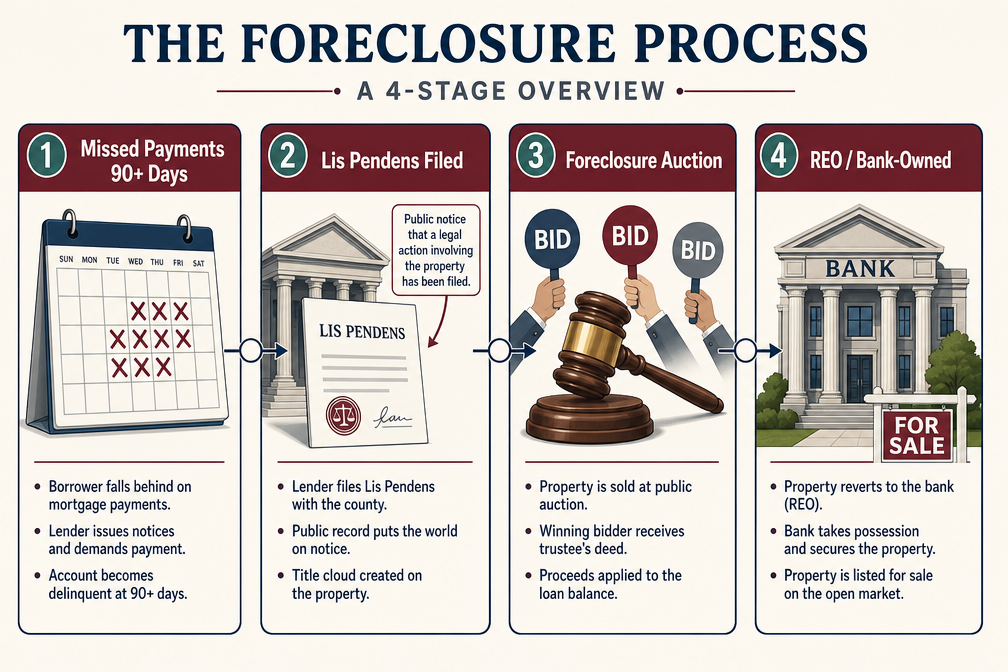
A foreclosed home is a property the lender has taken back after the owner stopped making mortgage payments and the legal process ran its course. The timeline from first missed payment to bank ownership typically spans 6 to 18 months depending on the state.
The process moves in stages:
- Default (90+ days missed) – The lender files a Notice of Default or Lis Pendens, a public court filing that signals foreclosure has begun.
- Pre-foreclosure – The homeowner still owns the property and can sell it as a short sale (selling for less than the mortgage balance with lender approval) or pay off the arrears to stop the process.
- Foreclosure auction – If no resolution happens, the property goes to a public auction. The opening bid is usually the outstanding loan balance plus fees.
- REO (Real Estate Owned) – If no one bids enough at auction, the bank takes title. The property becomes a bank-owned home, listed through a real estate agent and available for standard purchase.
For homeowners currently behind on payments: the pre-foreclosure window is the most important one. A short sale closes the chapter with less credit damage than a completed foreclosure, which can stay on a credit report for seven years. Walking away and letting the bank foreclose is not automatically the easier path.
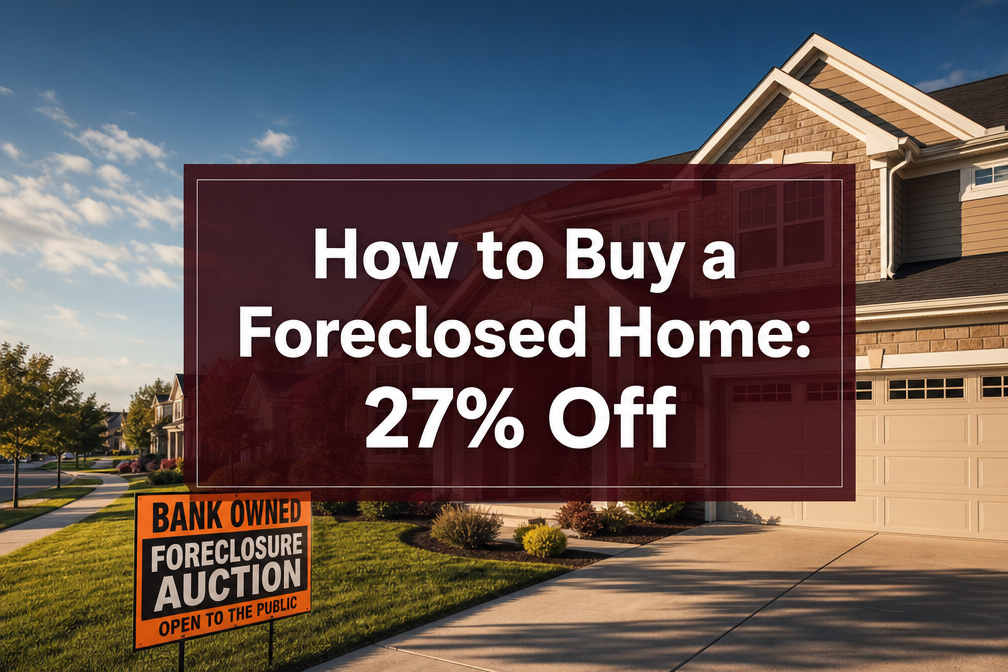
How to Buy a Foreclosed Home: 27% Off, and the Catch Explained
The 27% discount figure comes from ATTOM Data Solutions research tracking distressed property sales against non-distressed comparable sales in the same markets. That number is a median across a wide range of properties, not a guarantee on any specific deal.
Where the discount actually comes from:
- Banks are not in the business of owning real estate. They want the asset off their books.
- Properties sit vacant for months or years during the foreclosure process. Deferred maintenance accumulates.
- Banks price to move, not to maximize. They accept lower offers to avoid carrying costs.
- Auction buyers take on significant risk, which the market prices in.
The catch, stated plainly:
The discount is compensation for uncertainty. You may be buying a home with a failed HVAC system, stripped copper plumbing, a roof that has three years left, and a basement that floods every spring. None of that will be disclosed because the bank never lived there and has no legal obligation to tell you what it does not know.
A $300,000 home at 27% off is $219,000. If it needs $60,000 in repairs, the effective price is $279,000, and you did the work. That can still be a good deal. It can also be a disaster if the repair estimate was wrong.
The risks of buying a foreclosed home are real and specific. They are not reasons to avoid the purchase. They are reasons to go in with eyes open and a solid inspection plan.
Foreclosed Home vs Regular Home Purchase: What's the Difference
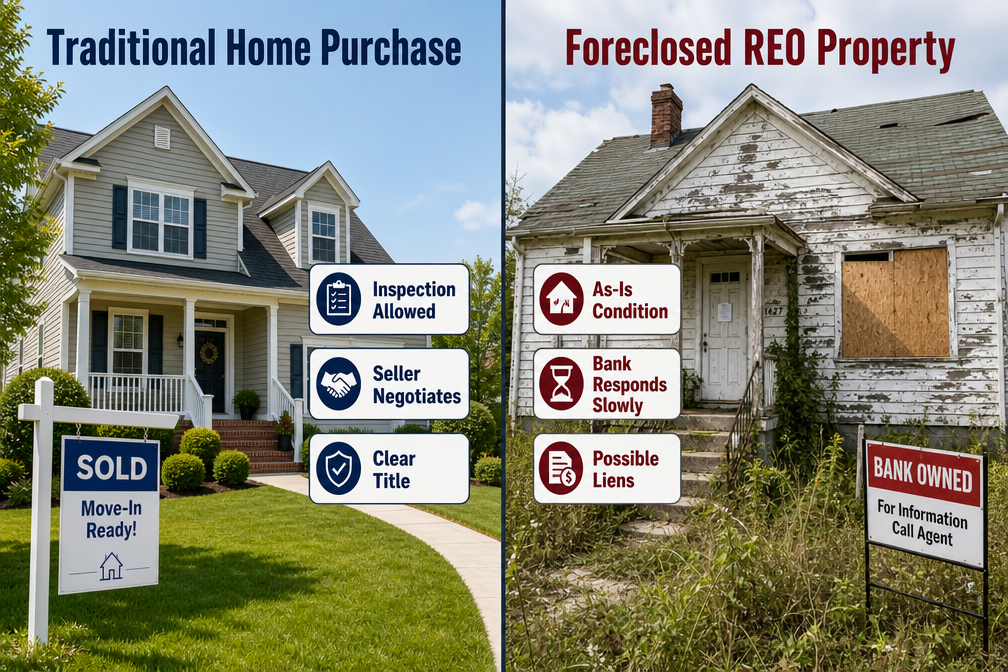
The core difference is seller motivation and disclosure. A traditional seller wants the best price and has lived in the home. A bank wants the asset gone and has never been inside.
| Factor | Traditional Purchase | Foreclosed / REO Purchase |
|---|---|---|
| Seller disclosure | Required in most states | None (bank has no knowledge) |
| Inspection | Standard, negotiable | Allowed on REO, rarely on auction |
| Condition | Typically maintained | As-is, often distressed |
| Negotiation | Flexible, emotional | Limited, committee-driven |
| Timeline | 30 to 45 days typical | 45 to 120 days, sometimes longer |
| Title risk | Low with standard title search | Higher, liens possible |
| Financing | All loan types | REO: most loans work. Auction: usually cash only |
The biggest practical difference most buyers feel is pace. Banks respond slowly. An offer that would get a counteroffer in 24 hours from a private seller might sit in a bank's asset management queue for two weeks. Patience is not optional when buying a foreclosed home.
Foreclosure Auction vs REO Direct Purchase: Which Is Better
For most buyers, especially first-timers, REO direct purchase is the safer path. For experienced investors with cash and a high risk tolerance, auctions can produce the deepest discounts.
Foreclosure auction:
- Properties sell to the highest bidder, often at the courthouse steps or online.
- No inspection period. You are bidding on a property you may not have entered.
- Payment is typically required same day or within 24 to 48 hours, in cash or certified funds.
- You inherit whatever liens, back taxes, and occupancy issues come with the property.
- Discount potential is high. Risk is also high.
REO (bank-owned) direct purchase:
- The bank lists the property through a real estate agent after taking title.
- Standard purchase contract, inspection period, and title search are all available.
- Financing works. FHA, conventional, VA (if the property meets condition standards), and renovation loans are all on the table.
- The bank negotiates slowly but the process is recognizable.
- Discount is real but usually less extreme than auction.
So based on your situation: if you have cash, construction experience, and can absorb a worst-case outcome, auctions are worth learning. If you need financing and want a process that resembles a normal home purchase, REO is the right lane.
For homeowners considering whether to let the bank foreclose versus pursuing a short sale, the auction outcome matters too. Once the bank sells at auction, the deficiency judgment question (whether you owe the difference between the sale price and your loan balance) depends on state law. Some states prohibit it. Others allow it. That is a conversation to have with a real estate attorney before the Notice of Default becomes a sale date.
Why Are Foreclosed Homes 27% Cheaper Than Market Value
The discount exists because the bank is a motivated, non-emotional seller carrying a non-performing asset. Every month the property sits vacant, the bank absorbs property taxes, insurance, maintenance, and the opportunity cost of capital tied up in a depreciating asset.
The math behind the motivation:
A bank holding a $300,000 REO property might pay $800 per month in carrying costs. Six months of carrying costs is $4,800 before any repairs. The bank's incentive to price aggressively and close fast is real.
Why the discount varies:
- Hot markets shrink the gap. In a market where every home gets multiple offers, even distressed properties attract competition.
- Condition drives the number. A cosmetically distressed property (dated finishes, worn carpet) might sell at 10% below market. A structurally compromised property might sell at 40% below.
- Auction versus REO changes the floor. Auctions can go below the 27% median. REO properties in good condition sometimes sell close to market.
The 2026 home buyer market trends show that even in a supply-constrained environment, distressed properties move at a meaningful discount because the pool of buyers willing to take on the uncertainty is smaller.
How to Find Foreclosed Homes for Sale in Your Area
Finding foreclosed homes for sale requires knowing where to look, because they do not all appear on the standard MLS at the same time.
Primary sources:
- HUD.gov – Lists FHA-insured foreclosures (HUD homes) with a bidding process that favors owner-occupants in the first 30 days.
- Fannie Mae HomePath (fanniemae.com/homepath) – Fannie Mae-owned REO properties, often with special financing programs.
- Freddie Mac HomeSteps (freddiemac.com/homesteps) – Similar to HomePath for Freddie-owned properties.
- Bank websites – Wells Fargo, Bank of America, and most major lenders have REO sections on their websites.
- MLS and Zillow/Realtor.com – REO properties are listed here once the bank engages a listing agent. Filter by "foreclosure" or "bank-owned."
- County courthouse records – Lis Pendens filings are public record. Pre-foreclosure properties appear here before they hit the market.
- Auction platforms – Auction.com and Hubzu list both courthouse-step auctions and online bank-owned auctions.
The agent advantage: A buyer's agent who specializes in distressed properties knows which local banks list REO inventory first and can get you in before the property hits Zillow. This is one area where qualified home buyer leads and agent networking genuinely matters.
What Inspections Can You Do on a Foreclosed Home Before Buying
On an REO property, you can order a full inspection during the standard due diligence period, usually 10 to 15 days. On an auction property, your access is typically limited to a drive-by or a brief walkthrough before bidding.
Inspections worth ordering on a foreclosed home:
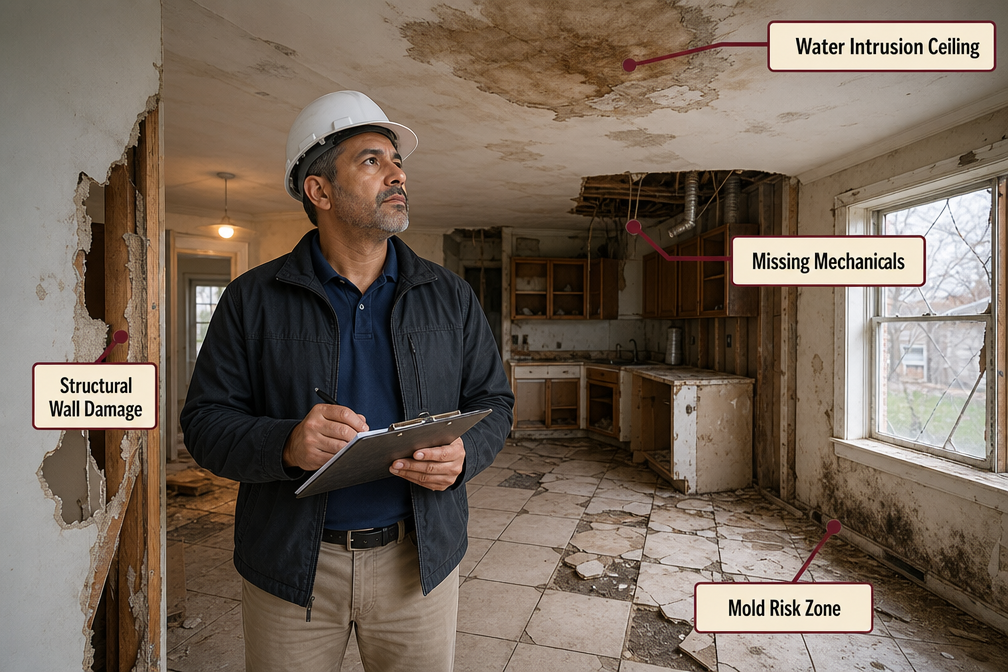
- General home inspection – The baseline. A licensed inspector covers structure, roof, electrical, plumbing, HVAC, and visible water damage.
- Sewer scope – A camera inspection of the sewer line from the house to the street. Foreclosed homes frequently have root intrusion or collapsed lines from years of low or no use.
- Mold inspection – Vacant homes with deferred maintenance are mold incubators. A general inspector may flag it, but a dedicated mold test gives you a remediation estimate.
- Pest inspection – Termites and wood-boring insects move into vacant properties. Required by most lenders anyway.
- Roof inspection – Separate from the general inspection if the roof shows any age or damage.
- Structural engineer – If the general inspector flags foundation cracks, settling, or framing concerns, a structural engineer's report is worth the cost before you commit.
The honest answer on auction properties: you are largely buying blind. Experienced auction buyers drive the neighborhood, look at the exterior, pull permit records, and check the county assessor's data for square footage and last sale price. Some auction platforms offer a brief open-house window. Use every minute of it.
One of the most impactful things you can do before closing is calculate your full closing costs including inspection fees, title insurance, and any repair escrow your lender requires.
Can You Get a Mortgage for a Foreclosed Home or Do You Need Cash
You do not need cash to buy a foreclosed home, but the loan options depend heavily on the property's condition.
Financing options for REO properties:
- Conventional loan – Works if the property meets minimum condition standards (functional utilities, no major health or safety issues, intact roof). Many REO properties qualify.
- FHA loan – Requires the property to meet HUD's Minimum Property Standards. Distressed properties often fail this standard, which is why many REO listings explicitly say "not FHA eligible."
- FHA 203k renovation loan – This is the impactful option for distressed properties. The 203k wraps purchase price and renovation costs into a single loan. A standard 203k covers major structural repairs. A limited 203k (formerly called the streamlined 203k) covers cosmetic work up to $35,000. This is one of the most underused tools in the foreclosure buyer's toolkit.
- Fannie Mae HomeStyle Renovation loan – Similar to the 203k but available on conventional terms with potentially better rates for buyers with strong credit.
- Hard money or bridge loan – Short-term, higher-rate financing used by investors who plan to renovate and refinance or sell quickly.
- Cash offer – A cash offer on a foreclosed home moves faster, wins more often, and eliminates the lender's property condition requirements. Banks prefer cash because there is no financing contingency to kill the deal.
If you are weighing down payment options for a distressed property purchase, the top down payment strategies ranked covers both conventional and government-backed paths in detail.
What Happens If a Foreclosed Home Has Liens or Back Taxes Owed
Liens and back taxes are the most gate-keeping issue in foreclosure purchases, and most buyers do not think about them until it is almost too late.
What can attach to a foreclosed property:
- Unpaid property taxes – These are senior liens. They survive the foreclosure in most states and transfer to the new owner.
- HOA dues and fines – HOA liens can be significant in communities where the property sat vacant for years.
- IRS federal tax liens – Federal liens have a 120-day right of redemption after the foreclosure sale, meaning the IRS can technically reclaim the property within that window.
- Mechanic's liens – Contractors who did work and were never paid can file liens that attach to the property.
- Second mortgages – In a judicial foreclosure, junior liens are typically wiped. In a non-judicial (trustee's sale) state, the situation is more complex and state-specific.
The solution is a title search, every time. A title company researches the full chain of ownership and every recorded lien before closing. Title insurance then protects you if something was missed. Skipping either one on a foreclosed property is a serious financial risk.
On REO properties, the bank typically provides a clear title because they went through the judicial process to extinguish liens. On auction properties, you may be buying subject to whatever is still attached. This is why experienced auction buyers run their own title search before bidding, not after.
Foreclosed Homes As-Is Condition: What Repairs Should You Expect
Foreclosed homes sell as-is. The bank will not fix anything, credit you for repairs, or negotiate based on inspection findings the way a private seller might.
Common repair categories and rough cost ranges (2026 estimates):
- HVAC replacement – $5,000 to $15,000 depending on system type and home size
- Roof replacement – $8,000 to $25,000 for a standard residential roof
- Water heater – $1,000 to $3,500
- Electrical panel upgrade – $2,500 to $6,000
- Plumbing repairs (copper theft or freeze damage) – $3,000 to $20,000+
- Mold remediation – $1,500 to $15,000 depending on scope
- Foundation repair – $5,000 to $50,000+, the widest range and the scariest unknown
These are not exotic problems. They are what happens to a house that sits vacant for 18 months with no one maintaining it.
Before making an offer, get a contractor walkthrough alongside your inspector. Inspectors identify problems. Contractors price them. You need both numbers before you can evaluate whether the foreclosure discount is actually a deal.
For renovation planning after closing, the high-ROI home renovation ideas and best home improvements before selling resources are worth bookmarking for the work ahead.
How Long Does It Take to Buy a Foreclosed Home
Buying a foreclosed home takes longer than a standard purchase in almost every scenario. Plan for 45 to 120 days for an REO purchase, and potentially longer if the bank's asset management team is slow or the property has title complications.
Timeline breakdown for REO purchase:
- Offer submission to bank response: 5 to 20 business days (banks are not motivated by weekend deadlines)
- Inspection and due diligence period: 10 to 15 days
- Financing and appraisal: 21 to 30 days
- Title search and clearance: 10 to 20 days
- Closing: 3 to 5 days once all conditions are met
What slows it down:
- Bank asset managers handle dozens of properties. Your file is not urgent to them.
- Properties with title issues require additional legal work before closing.
- Occupied foreclosures (former owner or tenant still in the home) add an eviction timeline that can run 30 to 90 additional days depending on state law.
Occupied foreclosure and eviction: this is one of the most overlooked risks of buying a foreclosed home. Some properties transfer with occupants who have no legal right to remain but are still physically present. The new owner must go through the formal eviction process, which is time-consuming, costs money, and can result in additional property damage before the occupant leaves. Always verify occupancy status before closing.
Can You Negotiate the Price on a Foreclosed Home
Yes, but the negotiation dynamic is different from a private sale. Banks respond to data, not emotion.
What works in foreclosure price negotiation:
- Comparable sales (comps) – A solid CMA showing recent sales of similar distressed properties in the same area is the most effective tool. Banks have their own BPO (Broker Price Opinion) but they respond to documented market evidence.
- Inspection-based repair credits – Banks rarely reduce the price after inspection, but they sometimes accept a lower offer if you present a detailed repair estimate alongside it. Frame it as adjusted market value, not as a complaint.
- Cash or fast close – Offering cash or a 21-day close with strong pre-approval is worth more than a higher offer with a 60-day financing contingency to a bank that wants the asset off its books.
- Days on market – A property that has been listed for 90+ days gives you more leverage. Banks become more flexible as carrying costs accumulate.
What does not work: emotional appeals, deadline pressure, or escalation clauses designed to beat out other buyers. Banks do not respond to urgency the way individual sellers do. They respond to clean offers with minimal contingencies and documented justification.
For a deeper look at negotiation tactics that translate to distressed property deals, the negotiation power moves guide covers the mechanics that actually move banks.
Is Buying a Foreclosed Home a Good Investment for Beginners
For a first-time buyer or beginning investor, a bank-owned REO property in livable condition is a reasonable starting point. An auction property with unknown condition is not.
When foreclosure buying works for beginners:
- You are buying an REO (not an auction) with full inspection access
- The property needs cosmetic work, not structural repair
- You have 10% to 20% above the purchase price in cash reserves for repairs
- You are using a 203k or renovation loan that wraps the repair budget into the mortgage
- You have a licensed contractor who can give you a realistic estimate before you close
When it does not work for beginners:
- You are bidding at auction without inspection access
- You are stretching your budget to the purchase price with nothing left for repairs
- You are relying on the seller to disclose problems (they will not)
- You are expecting a fast process (it will not be)
The first-time home buyer complete guide covers the baseline knowledge every buyer needs before adding the complexity of a distressed purchase. Get the fundamentals solid first.
For small investors, the real potential of a 27% discount on a buy-and-hold rental property is real, but the math has to work after repairs, not before. Run the cap rate and cash-on-cash return with a realistic repair budget included. The property management costs and benefits guide is worth reading before you close on your first rental.
What Should You Avoid When Buying a Foreclosed Property
The most expensive mistakes in foreclosure buying are almost always the same ones.
Avoid these:
- Skipping the title search – The single most dangerous shortcut. A title search on a foreclosed property is not optional.
- Skipping the sewer scope – Sewer line replacement costs $5,000 to $15,000 and is not visible in a standard inspection.
- Underestimating the repair budget – Add 20% to whatever your contractor estimates. Distressed properties hide surprises behind walls.
- Buying at auction without a title search – Some investors pull title before auction day. The ones who do not occasionally discover they bought a property with a $40,000 IRS lien attached.
- Assuming the bank will negotiate quickly – Build extra time into every deadline. Missing a financing contingency deadline because the bank took three weeks to respond is a real scenario.
- Ignoring the occupied foreclosure question – Ask before you make an offer. An occupied property is a different transaction with different costs and timeline.
- Using the wrong loan type – Applying for a standard FHA loan on a property that does not meet HUD's minimum standards wastes everyone's time. Know your loan options before you write the offer.
- Falling in love with the discount – The 27% below market figure is a median, not a promise. Do the repair math first. If the numbers do not work after repairs, the discount is irrelevant.
Pre-Foreclosure vs Foreclosure: What Homeowners Need to Know
For homeowners behind on payments, the pre-foreclosure window is the most financially important period of the entire process. Once the bank completes the foreclosure and sells the property, most options are gone.
Short sale vs foreclosure: the credit impact difference
A short sale typically results in a credit score drop of 75 to 150 points and remains on your credit report for 7 years, but many lenders treat it more favorably than a completed foreclosure when you apply for credit later. A foreclosure drops scores by 100 to 160 points or more and signals a more severe default to future lenders.
What a short sale requires:
- Lender approval of a sale price below the outstanding mortgage balance
- A buyer willing to wait through the bank's approval process (30 to 90 days is common)
- Documentation of financial hardship
- Potentially a deficiency waiver, meaning the bank agrees not to pursue you for the difference
The homeowner who is six months behind and has a buyer willing to pay $280,000 on a $310,000 mortgage has options. The homeowner who waits until the auction date has almost none.
If you are on the selling side of this decision, the home sellers pricing strategies playbook and the home selling hub have resources on preparing a distressed property for sale and setting realistic price expectations with a lender involved.
Frequently Asked Questions
What is an REO property?
REO stands for Real Estate Owned. It is a property the lender took back after a foreclosure auction where no one bid enough to cover the outstanding loan. The bank now owns it and lists it for sale, usually through a real estate agent.
Can I use an FHA loan to buy a foreclosed home?
Yes, but only if the property meets HUD's Minimum Property Standards. Many distressed foreclosures do not qualify for standard FHA financing. The FHA 203k renovation loan is specifically designed for properties that need work and wraps purchase and repair costs into one loan.
Do foreclosed homes come with a clear title?
REO properties typically come with a clear title because the bank cleared liens through the foreclosure process. Auction properties may not. Always order a title search and purchase title insurance regardless of the purchase path.
What is a pre-foreclosure home?
A pre-foreclosure property is one where the owner has defaulted and the lender has filed a Notice of Default, but the bank has not yet taken title. The owner can still sell it as a short sale during this window.
How much below market value are foreclosed homes?
ATTOM Data Solutions research shows distressed properties sell at roughly 27% below comparable non-distressed sales on average. The actual discount on any specific property depends on condition, location, and whether it sold at auction or as an REO.
Can I live in a foreclosed home I buy at auction?
Yes, but verify occupancy status first. Some foreclosed homes have former owners or tenants still living in them. You would need to go through the legal eviction process before taking possession.
What is a 203k loan and how does it work for foreclosures?
An FHA 203k renovation loan combines the purchase price and renovation costs into a single mortgage. The standard 203k covers major structural repairs. The limited 203k covers cosmetic improvements up to $35,000. It is one of the most useful financing tools for buying a distressed foreclosed home with financing.
How long does a short sale take?
Short sales typically take 60 to 120 days from accepted offer to close because the lender must approve the below-market sale price. Some take longer if the lender is managing a high volume of distressed assets.
What happens to back taxes on a foreclosed home?
Unpaid property taxes are senior liens and typically survive the foreclosure process. They transfer to the new owner. A title search will reveal any outstanding tax obligations before you close.
Is it better to buy a foreclosure or a fixer-upper from a private seller?
A private seller fixer-upper usually comes with disclosure, negotiation flexibility, and a faster timeline. A foreclosure offers a deeper discount but no disclosure, slower bank response times, and greater title risk. For buyers who want the renovation project with less uncertainty, a private fixer-upper is often the cleaner deal. For buyers chasing the maximum discount and willing to do the due diligence, foreclosures are worth the complexity.
Conclusion
Buying a foreclosed home at 27% below market is a real opportunity if you treat the process like the professional transaction it is. The discount is not a gift. It is compensation for taking on uncertainty that a conventional buyer would not accept.
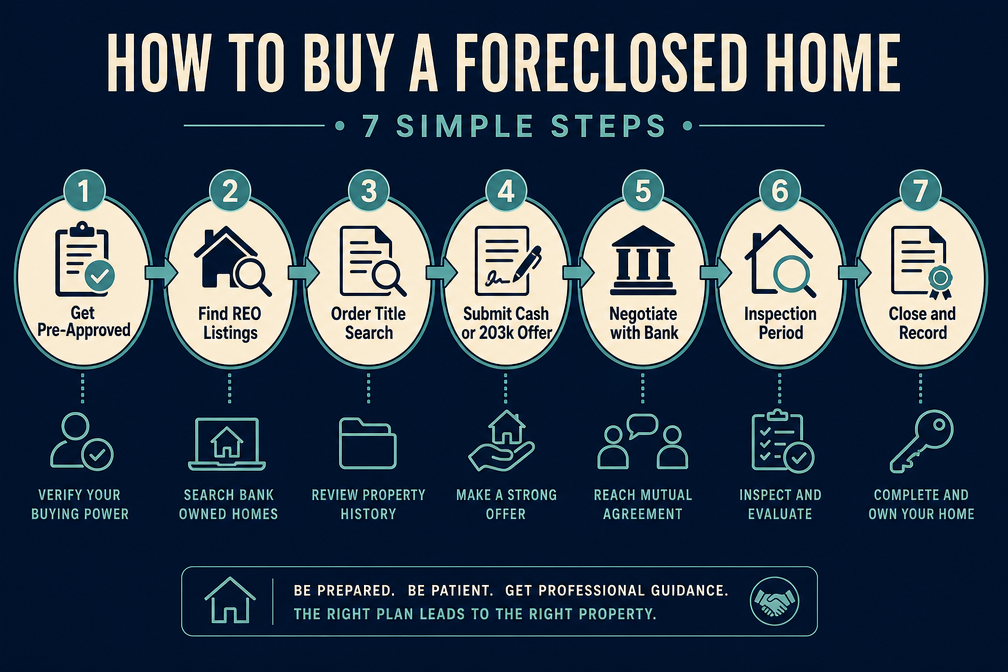
For buyers and investors, the path forward is methodical: get pre-approved or confirm your cash position, identify the right purchase channel (REO for most, auction for experienced investors with cash), run a full title search, order every relevant inspection, and build a repair budget with a real contractor before you commit.
For homeowners behind on payments, the pre-foreclosure window is the most valuable real estate you have right now. A short sale is not a failure. It is a controlled exit that preserves more of your financial future than a completed foreclosure does. Do not assume the bank has all the power, because in the pre-foreclosure stage, you still have options.
The better approach to foreclosure buying is not about finding the biggest discount. It is about knowing exactly what you are buying, what it will cost to make it right, and whether the numbers work after all of that. The buyers who do that math before they fall in love with the price are the ones who walk away with a great deal instead of an expensive lesson.