
Last updated: July 20, 2026

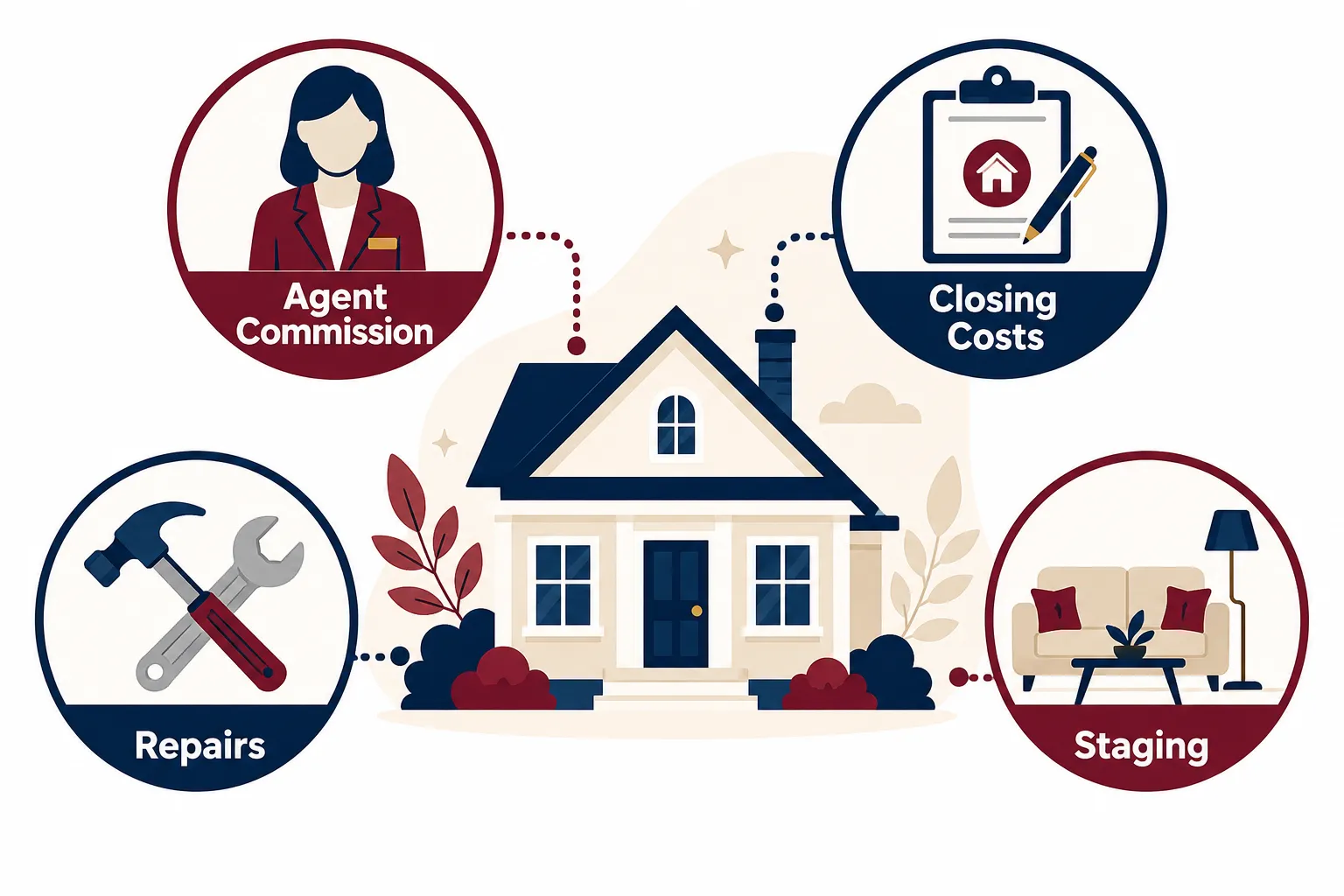
Selling a house costs most homeowners between 8% and 10% of the sale price once you add up every fee, agent commissions, closing costs, repairs, and staging. On a $400,000 home, that's $32,000 to $40,000 walking out the door before you see a single dollar of profit. Knowing exactly where that money goes is the only way to protect your net proceeds.
This guide breaks down how much does it cost to sell a house, every fee, so you go into closing with zero surprises.
Key Takeaways
- Seller costs typically run 8%,10% of the final sale price, according to data from the National Association of Realtors (NAR) and Bankrate (2024).
- Real estate agent commissions average 5%,6% of the sale price, though the NAR settlement that took effect in August 2024 changed how buyer-agent compensation is structured.
- Seller closing costs, separate from commissions, usually add another 1%,3% of the sale price.
- Pre-sale repairs and staging can cost $1,000 to $10,000+ depending on the home's condition and your market.
- The IRS allows a capital gains exclusion of up to $250,000 (single filers) or $500,000 (married filing jointly) on a primary residence sale, per IRS Publication 523.
- Selling without a realtor (FSBO) can save on commission but typically results in a lower sale price, NAR data from 2023 shows FSBO homes sold for a median of $310,000 vs. $405,000 for agent-assisted sales.
- State and local transfer taxes vary widely, from zero in states like Texas to over 2% in parts of New York and Pennsylvania.
What Are All the Fees Involved in Selling a House?
Selling a house comes with a longer list of fees than most people expect. The costs fall into four main buckets: agent commissions, closing costs, pre-sale preparation costs, and taxes.
Here's the full breakdown at a glance:
| Cost Category | Typical Range | % of Sale Price |
|---|---|---|
| Real estate agent commission | $12,000,$24,000 on $400K home | 3%,6% |
| Seller closing costs | $4,000,$12,000 on $400K home | 1%,3% |
| Pre-sale repairs & staging | $1,000,$10,000+ | 0.25%,2.5% |
| Capital gains tax | $0 for most primary residence sellers | 0%,20%+ on gains above exclusion |
| State/local transfer taxes | $0,$8,000+ | 0%,2%+ |
| Mortgage payoff (if applicable) | Varies by remaining balance | N/A |
How Much Does It Cost to Sell a House in Real Estate Agent Commissions?
Agent commissions are the single largest cost of selling a home. Traditionally, sellers paid 5%,6% of the sale price, split between the listing agent and the buyer's agent. That structure shifted significantly after the NAR settlement that took effect in August 2024.
What changed: Sellers are no longer required to offer buyer-agent compensation through the MLS. Buyers now negotiate their agent's fee directly. In practice, many sellers still offer a buyer-agent concession to attract more offers, but it's now a negotiation, not a mandate.
What this means for you in 2026:
- Listing agent fee: Typically 2.5%,3% of the sale price.
- Buyer-agent concession (optional): 0%,3%, depending on your market and negotiation.
- Total commission exposure: Anywhere from 2.5% to 6%, depending on what you agree to.
On a $400,000 home, even a 3% listing-only commission is $12,000. That's real money. Our seller closing costs breakdown goes deeper on how these numbers shake out at the closing table.
So based: Negotiating your listing agent's commission is completely normal in 2026. Don't be afraid to ask, most agents expect it.
What Is the Difference Between Realtor Fees and Closing Costs?
Realtor fees and closing costs are two separate charges, though both come out of your proceeds at closing. Realtor fees are the commissions paid to the agents involved in the transaction. Closing costs are the administrative, legal, and government fees required to transfer ownership of the property.
Seller closing costs typically include:
- Title insurance (owner's policy): $500,$3,500 depending on home value and state.
- Escrow or settlement fees: $500,$2,000.
- Attorney fees (required in some states): $500,$1,500.
- Transfer taxes and recording fees: Varies by state, from $0 in Texas to 1%,2%+ in New York and Pennsylvania.
- Prorated property taxes: You pay your share of taxes up to the closing date.
- HOA transfer fees (if applicable): $200,$500.
- Wire transfer or courier fees: $25,$100.
Think of realtor fees as the cost of the sales service and closing costs as the cost of the paperwork and legal transfer. Both are real, and both reduce your net proceeds.
For a full line-item walkthrough, check out our seller closing costs explained guide.
What Fees Do You Pay at Closing When Selling?
At the closing table, sellers typically sign off on a settlement statement (called a Closing Disclosure or HUD-1) that itemizes every deduction from the sale price. The net proceeds check, or wire, is what's left after all of it.
The closing day deductions sellers see most often:
- Remaining mortgage payoff balance (your biggest deduction if you still have a loan).
- Listing agent commission.
- Buyer-agent concession (if you agreed to one).
- Title insurance premium.
- Escrow/settlement company fees.
- Transfer taxes and recording fees.
- Prorated property taxes and HOA dues.
- Any seller concessions negotiated in the purchase contract (repairs, closing cost credits).
- Home warranty (if offered to buyer, typically $300,$600).
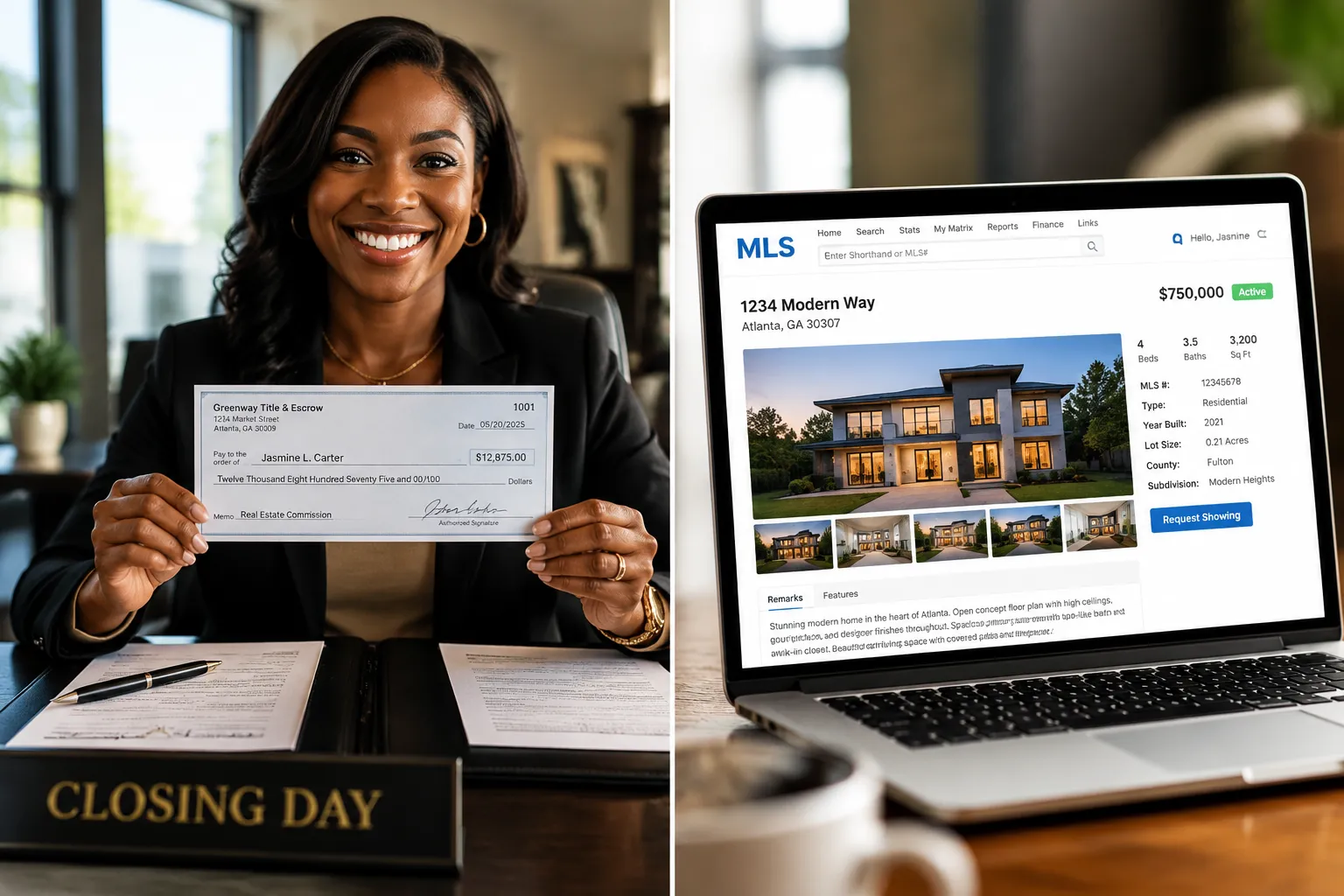
Common mistake: Sellers focus on the sale price and forget about the mortgage payoff. If you owe $280,000 on a $400,000 home and your total selling costs are $36,000, your actual take-home is roughly $84,000, not $120,000.
Can You Sell a House Without Paying Realtor Commission?
Yes, you can sell without paying a realtor commission, but it comes with real trade-offs. Selling as a For Sale By Owner (FSBO) eliminates the listing agent fee (typically 2.5%,3%), which sounds extraordinary on paper.
The reality check: NAR's 2023 Profile of Home Buyers and Sellers found that FSBO homes sold for a median of $310,000 compared to $405,000 for agent-assisted sales. That's a $95,000 gap. Even after subtracting a 3% commission on $405,000 ($12,150), the agent-assisted seller still comes out roughly $82,000 ahead.
FSBO makes the most sense when:
- You're selling to a known buyer (family member, neighbor, tenant).
- You have real estate or contract negotiation experience.
- Your market is extremely hot and the home will sell itself.
What fees still apply if you sell FSBO:
- You may still offer a buyer-agent concession (1%,3%) to attract buyers with agents.
- Closing costs, transfer taxes, and title insurance still apply.
- You'll likely pay a flat-fee MLS listing service ($100,$500) to get on the MLS.
- Attorney fees are strongly recommended and required in some states.
See our full first-time home sellers guide for a step-by-step walkthrough of the FSBO process.
Should You Use a Discount Broker to Save on Selling Costs?
Discount brokers offer listing services at a reduced commission, typically 1%,2% instead of the traditional 2.5%,3%. Companies like Redfin, Clever Real Estate, and similar platforms fall into this category.
The honest breakdown:
- A 1% listing fee on a $400,000 home saves you $6,000,$8,000 compared to a full-commission agent.
- Service levels vary widely. Some discount brokers provide full service; others are closer to a flat-fee MLS listing with limited support.
- In competitive markets, a well-connected full-commission agent may negotiate a higher sale price that offsets the fee difference.
Choose a discount broker if: Your home is in a high-demand market, you're comfortable handling some of the process yourself, and you've done your research on the specific company's service model.
Stick with a full-service agent if: Your home needs strategic pricing, professional marketing, or you're in a slower market where negotiation and exposure matter more.
This is not gatekeeping, it's just math. Run the numbers for your specific home and market before deciding.
Do You Have to Pay Capital Gains Tax When You Sell Your House?
Most primary residence sellers pay zero capital gains tax, thanks to the IRS Section 121 exclusion. Single filers can exclude up to $250,000 in profit from capital gains tax; married couples filing jointly can exclude up to $500,000, per IRS Publication 523.
To qualify for the full exclusion, you must:
- Have owned the home for at least 2 of the last 5 years.
- Have lived in it as your primary residence for at least 2 of the last 5 years.
- Not have used this exclusion within the past 2 years.
When capital gains tax does apply:
- Your profit exceeds the exclusion limit ($250K/$500K).
- You're selling a rental or investment property (different rules apply, see our real estate investment taxes guide).
- You owned the home for less than 2 years (short-term capital gains rates apply, which match your ordinary income tax rate).
Capital gains tax rates for 2026 (long-term): 0%, 15%, or 20% depending on your taxable income. High earners may also owe the 3.8% Net Investment Income Tax (NIIT). Always consult a tax professional for your specific situation.
What Happens If You Sell a House for Less Than You Paid for It?
Selling for less than you paid, called a short sale or a loss, means you typically won't owe capital gains tax because there's no profit. But it creates other financial complications worth knowing.
If the sale price covers your mortgage: You simply pay off the loan at closing and absorb the loss. You cannot deduct a personal residence loss on your federal taxes (IRS rules prohibit this for primary homes).
If the sale price doesn't cover your mortgage (underwater): You'll need lender approval for a short sale. The lender may forgive the remaining balance or pursue a deficiency judgment depending on your state's laws and the loan terms. Forgiven mortgage debt may be taxable income, consult a tax advisor.
For investment properties: A loss on sale may be deductible against other capital gains or ordinary income, subject to IRS passive activity loss rules.
How Much Does It Cost to List a House for Sale?
Beyond the agent commission, listing a home has its own set of pre-market costs. These are the fees sellers often overlook when calculating how much does it cost to sell a house, every fee adds up fast.
Pre-listing costs to budget for:
- Professional photography: $150,$500. Non-negotiable in 2026. Listings with professional photos sell faster and for more money. Our real estate photos guide for sellers covers exactly what to prep.
- Home staging: $500,$5,000+ depending on whether you rent furniture or just get a consultation.
- Pre-listing home inspection: $300,$500. Optional but smart, it prevents buyers from using inspection findings as a price reduction weapon.
- Repairs and touch-ups: $500,$10,000+. Fresh paint, landscaping, and minor fixes are almost always worth it. See our best home improvements before selling guide for what actually moves the needle.
- Flat-fee MLS (FSBO only): $100,$500.
- Yard sign and lockbox: Usually provided by your agent, but FSBO sellers pay $50,$200.
Let it cook before you see results, the prep work you put in before listing directly impacts your final sale price. Sellers who skip staging and photography are essentially leaving money on the table.
Do Selling Costs Vary by State or Location?
Absolutely, state and local rules create significant cost differences across the country. Transfer taxes alone can swing from $0 to over 2% of the sale price depending on where you live.
High-cost states for sellers:
- New York: Transfer taxes can reach 1.825% of the sale price, plus additional NYC mansion tax for homes over $1 million.
- Pennsylvania: Realty transfer tax of 1% state + 1%,2% local (Philadelphia is 3.278% combined).
- California: State transfer tax is $1.10 per $1,000 of value, but many counties add their own.
Low/no transfer tax states:
- Texas, Montana, New Mexico, Wyoming, and Alaska have no state real estate transfer tax.
Attorney requirements: Some states require a real estate attorney at closing (New York, New Jersey, Georgia, South Carolina, among others). Budget $500,$1,500 for this.
Title insurance customs: In some states, the seller traditionally pays for the owner's title policy; in others, it's the buyer's expense. This varies by county in many states.
The 2026 real estate trends report has current context on how market conditions are affecting seller costs and concessions across different regions.
Are There Ways to Reduce Costs When Selling a House?
Yes, and this is where sellers who do their homework pull ahead. The total cost of selling isn't fixed; it's negotiable and manageable with the right moves.
Fresh strategies that actually work in 2026:
- Negotiate the listing commission. In most markets, 2%,2.5% for the listing agent is achievable, especially if you're also buying through the same agent.
- Limit buyer-agent concessions. In a seller's market, you may not need to offer one at all. In a buyer's market, a smaller concession (1%,1.5%) may still attract strong offers.
- Price it right the first time. Price reductions kill your negotiating power and extend days on market. Our home sellers pricing strategies playbook covers this in depth.
- Skip the renovations that don't pay off. Not every upgrade adds value. Our kitchen upgrades to skip before selling guide is impeccable for avoiding expensive mistakes.
- Request seller concession limits in your listing strategy. Work with your agent to set expectations upfront so buyers don't pile on repair requests after inspection.
- Time your sale. Spring and early summer historically produce higher sale prices and faster closings, which reduces carrying costs (mortgage payments, utilities, insurance while the home sits).
For a full 60-day prep plan that covers every step from listing prep to closing, check out our 60-day home selling plan with AI tools.
What Are Common Mistakes Sellers Make With Fees and Costs?
The mistakes that cost sellers the most money are almost always the ones made before the listing goes live. Here's what brokers see repeatedly:
- Underestimating the total cost. Sellers calculate commission and forget about transfer taxes, prorated taxes, title fees, and staging. The gap between expected and actual net proceeds causes real problems.
- Skipping the pre-listing inspection. Buyers will find issues. It's better to know first and price accordingly than to face a renegotiation mid-contract.
- Over-improving before sale. Spending $30,000 on a kitchen remodel in a neighborhood where homes top out at $350,000 doesn't add $30,000 in value.
- Ignoring carrying costs. Every month the home sits on market, you're paying mortgage interest, taxes, insurance, and utilities. A slightly lower offer that closes fast can net more than a higher offer that drags on.
- Not reading the Closing Disclosure in advance. Sellers have the right to review this document before closing day. Errors happen, and catching them early prevents closing delays.
Our ranked list of spring home selling mistakes that cost real money is worth a read before you list.

How Much Does It Cost to Sell a House? Putting It All Together
On a $400,000 home sale in 2026, here's a realistic total cost estimate:
- Listing agent commission (2.5%): $10,000
- Buyer-agent concession (2%): $8,000
- Title insurance and escrow fees: $2,500
- Transfer taxes (varies by state, using 1% estimate): $4,000
- Pre-listing repairs and staging: $3,500
- Professional photography: $300
- Prorated property taxes and HOA: $1,200
- Attorney fees (if applicable): $800
- Miscellaneous (home warranty, courier, etc.): $500
Estimated total selling costs: ~$30,800 (about 7.7% of sale price)
Net proceeds before mortgage payoff: $369,200. Subtract your remaining mortgage balance to find your actual cash out.
This is why understanding how much does it cost to sell a house, every fee, matters before you set your asking price or make plans for the proceeds.
FAQ: Selling a House Costs
How much does it cost to sell a $300,000 house?
Expect to pay roughly $24,000,$30,000 in total selling costs on a $300,000 home, assuming 8%,10% of the sale price. Agent commissions account for the largest share.
Who pays closing costs, the buyer or the seller?
Both parties pay closing costs, but they pay different ones. Sellers typically cover transfer taxes, title insurance (in many states), agent commissions, and prorated taxes. Buyers cover lender fees, their own title insurance, and prepaid items. Sellers can also agree to pay a portion of the buyer's closing costs as a concession.
Can you negotiate realtor fees in 2026?
Yes. Since the NAR settlement took effect in August 2024, commission structures are more openly negotiable than ever. Most listing agents will discuss their fee, especially in competitive markets or if you're a repeat client.
What is a seller concession and how does it affect my costs?
A seller concession is money you agree to credit the buyer at closing, often to cover their closing costs or buy down their interest rate. It reduces your net proceeds dollar for dollar. Our guide on how to get a home seller to pay closing costs explains how buyers use this strategy and how sellers can limit exposure.
Do you pay taxes when you sell your house?
Most primary residence sellers owe no capital gains tax, thanks to the IRS Section 121 exclusion ($250,000 single / $500,000 married). If your profit exceeds the exclusion, you'll owe long-term capital gains tax (0%, 15%, or 20%) on the excess.
How long does it take to get your money after selling a house?
In most cases, sellers receive their net proceeds wire on the same day as closing or within 1-2 business days. Some states have a rescission period that can delay disbursement.
What happens to my mortgage when I sell my house?
Your mortgage is paid off at closing from the sale proceeds. The title company or closing attorney handles the payoff directly. If you owe more than the home sells for, you'll need to bring cash to closing or negotiate a short sale with your lender.
Is it cheaper to sell a house in some states than others?
Yes, significantly. States with no transfer tax (Texas, Wyoming, Montana) and lower attorney/title fee customs can save sellers thousands compared to high-tax states like New York or Pennsylvania.
The Bottom Line on What It Costs to Sell a House
Selling a home is one of the largest financial transactions most people ever make, and the fees are extraordinary in their variety and scope. From agent commissions to transfer taxes to the staging costs nobody talks about, the total bill typically runs 8%,10% of your sale price.
The sellers who come out ahead are the ones who plan for every fee before they list, negotiate where they can, and price their home right from day one. That's not luck, that's preparation.
For more straight-talk on selling strategy, pricing, and what the market looks like right now in 2026, visit Real Estate Rank IQ, ranked by brokers, read by everyone.
Sources
- National Association of Realtors, 2023 Profile of Home Buyers and Sellers, nar.realtor, 2023
- IRS Publication 523, Selling Your Home, irs.gov, 2024
- Bankrate, How Much Does It Cost to Sell a House, bankrate.com, 2024
- NAR Settlement Agreement and MLS Policy Changes, nar.realtor, 2024
- IRS, Topic No. 409 Capital Gains and Losses, irs.gov, 2024