

Last updated: July 20, 2026

Quick Answer: Knowing how to buy a fixer upper house without regret comes down to three things, accurate renovation budgeting, a thorough inspection before you make an offer, and the right financing in place. Skip any one of those and you're not buying a deal; you're buying a problem. The buyers who win with fixer uppers are the ones who treat it like a business decision, not an HGTV fantasy.
Key Takeaways
- A fixer upper is a property priced below market value because it needs repairs, cosmetic or structural, and the profit potential depends entirely on how well you estimate those costs upfront.
- Budget at least 10-20% above your renovation estimate as a contingency buffer; experienced investors often go higher on older homes.
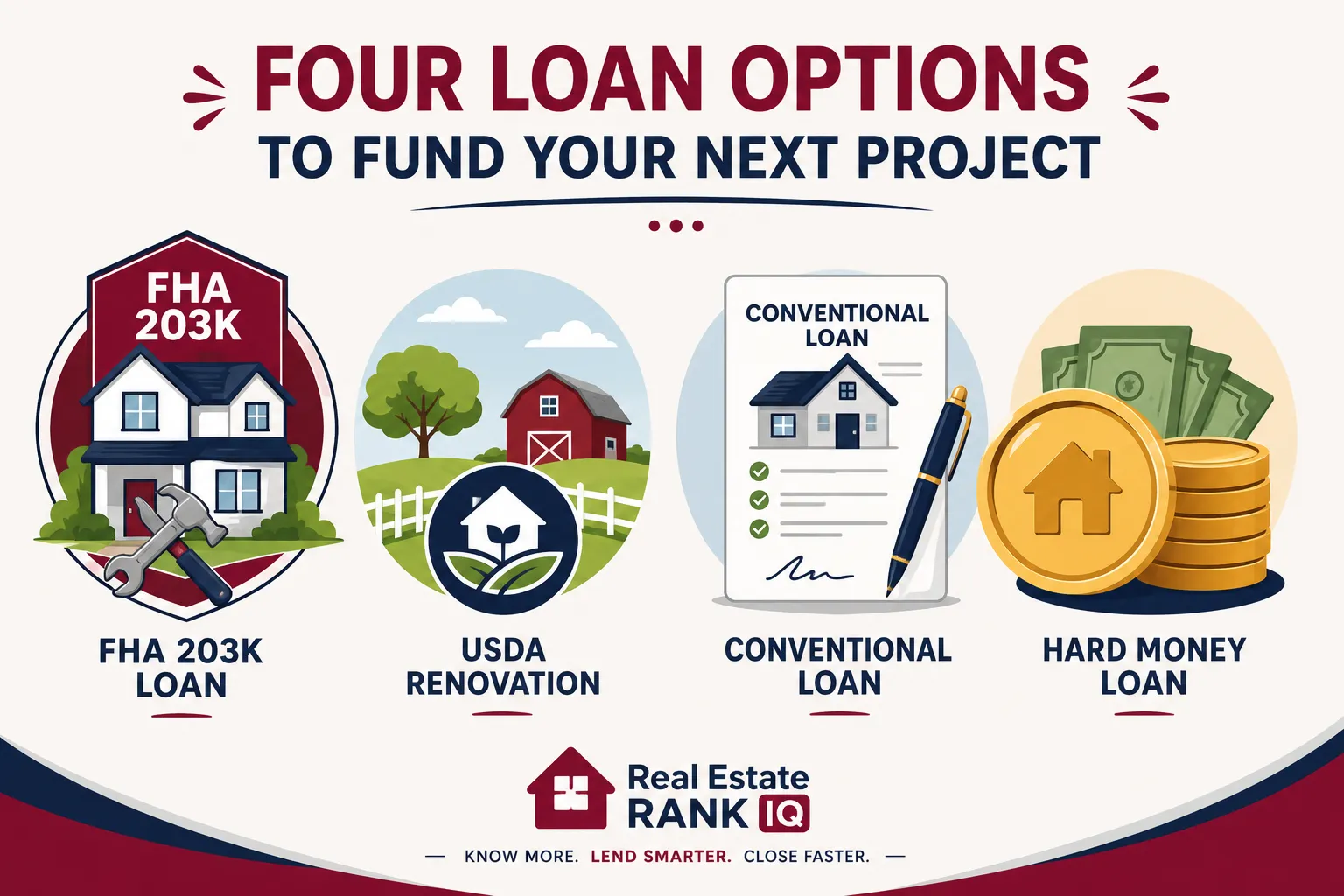
- The FHA 203k loan, USDA renovation loan, and conventional renovation loans are the primary financing tools for buying a fixer upper with a loan.
- Always order a professional home inspection AND a specialist inspection (structural engineer, electrician, plumber) before committing.
- The biggest mistake buyers make is underestimating the true cost of renovation and overestimating their own DIY abilities.
- Location still drives resale value, a beautifully renovated home in a declining neighborhood is still a tough sell.
- Cosmetic fixes (paint, flooring, fixtures) are manageable; structural problems (foundation, roof, electrical, plumbing) can erase your entire budget.
- Fixer uppers are not the right move for every buyer, if you need to move in immediately or have no renovation budget, a move-in ready home wins.
What Is a Fixer Upper House and What Makes It Different From a Regular Home
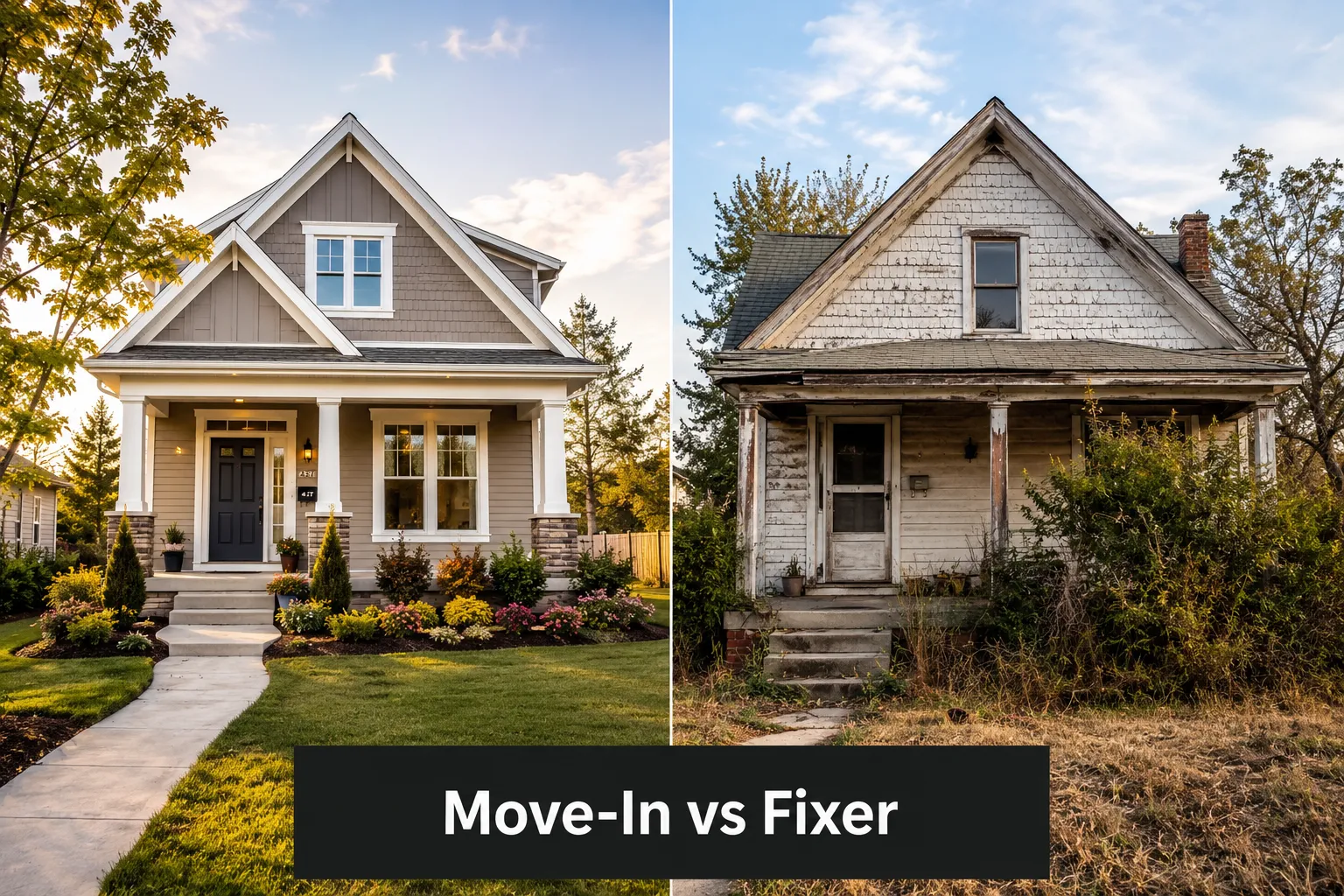
A fixer upper is a residential property sold at a discounted price because it requires repairs, renovations, or updates, ranging from cosmetic touch-ups to major structural overhauls. Unlike a move-in ready home, a fixer upper demands time, money, and planning beyond the purchase price.
The core difference is this: a move-in ready home is priced to reflect its current condition. A fixer upper is priced to reflect its current condition minus the cost of bringing it up to market standard. The buyer absorbs that gap, and if they do it right, they pocket the difference as equity.
What typically qualifies a home as a fixer upper:
- Outdated kitchens or bathrooms that haven't been touched in 20+ years
- Deferred maintenance (aging roof, old HVAC, worn flooring)
- Cosmetic damage (peeling paint, cracked drywall, dated fixtures)
- Structural issues (foundation cracks, water damage, faulty electrical)
- Properties that have been vacant, foreclosed, or estate-sold
The key distinction buyers miss is the difference between a cosmetic fixer upper and a structural fixer upper. One is a weekend warrior project. The other is a full-scale renovation that requires licensed contractors and serious capital. More on that distinction below.
How to Buy a Fixer Upper House Without Regret: The Full Playbook
This is where most buyers go wrong, they fall in love with the price tag and skip the process. Knowing how to buy a fixer upper house without regret is not about being the most optimistic person in the room. It's about being the most prepared.
Step 1: Define your renovation budget before you shop.
Before you search a single listing, decide how much you can realistically spend on repairs, separate from your down payment and closing costs. This number drives every decision that follows.
Step 2: Get pre-approved for the right loan product.
Not every lender handles fixer upper financing. You'll need either a renovation loan (FHA 203k, USDA renovation, or conventional renovation loan) or cash/hard money if you're investing. More on loan types below.
Step 3: Find properties with real upside.
Use Zillow filters, local MLS searches, and off-market leads to find homes priced below neighborhood comps. The best real estate markets for flipping houses right now in 2026 are a solid starting point for identifying where fixer upper deals are actually moving.
Step 4: Run the numbers, not feelings.
Calculate your all-in cost: purchase price + estimated renovation + carrying costs + closing costs. Compare that to the after-repair value (ARV) of comparable homes in the area. If the math doesn't work, the charm of the house doesn't matter.
Step 5: Inspect everything before you commit.
Order a full home inspection. Then order specialist inspections for anything flagged. This is non-negotiable.
Step 6: Negotiate based on repair costs.
Use your inspection findings and contractor estimates to negotiate the purchase price down. Sellers of fixer uppers expect this.
Step 7: Build your team before closing.
Have a licensed general contractor, a real estate attorney, and your lender aligned before you sign. Surprises after closing are expensive.
How Much Money Should I Budget for a Fixer Upper Renovation
Budget more than you think you need, always. A standard rule of thumb is to add 10-20% on top of your contractor estimates as a contingency. On older homes (pre-1980), experienced investors often push that buffer to 25-30% because the likelihood of discovering hidden issues behind walls is significantly higher.
General renovation cost ranges (2026 estimates, U.S. averages):
| Renovation Type | Estimated Cost Range |
|---|---|
| Full kitchen remodel | $25,000, $75,000+ |
| Bathroom remodel | $8,000, $25,000 |
| Roof replacement | $8,000, $20,000 |
| HVAC system replacement | $7,000, $15,000 |
| Electrical rewiring (full) | $10,000, $30,000 |
| Foundation repair | $5,000, $50,000+ |
| Flooring (whole home) | $5,000, $20,000 |
| Fresh interior paint | $2,000, $6,000 |
Note: These are ballpark figures. Actual costs vary by region, home size, and material choices. Always get 3 contractor bids before budgeting.
The buyers who regret their fixer upper purchases almost always underestimated this number. They budgeted for the cosmetic work they could see and got blindsided by the structural work they couldn't. That's not a renovation, that's a financial ambush.
If you're buying a fixer upper as a first home with limited cash reserves, the renovation budget question is even more critical. Buying a fixer upper as a first home can absolutely work, but only if you have a realistic cash cushion beyond your loan funds.
What Are the Biggest Mistakes People Make When Buying Fixer Uppers
The biggest mistakes fall into three categories: financial miscalculation, emotional decision-making, and skipping due diligence. Any one of these can turn a promising deal into a money pit.
The most common fixer upper mistakes:
- Skipping the specialist inspection. A general home inspection is not enough for a fixer upper. If the inspector flags anything structural, electrical, or related to water damage, you need a licensed specialist, not just a second opinion from a contractor who wants the job.
- Underestimating renovation costs. The HGTV effect is real. TV renovations are edited for entertainment, not accuracy. Real renovations take longer and cost more.
- Overestimating DIY capability. Painting a room is DIY-friendly. Rewiring a panel is not. Misreading this line costs buyers thousands in rework and failed inspections.
- Ignoring the neighborhood. A beautifully renovated home in a declining market still struggles to sell. Location drives ARV, period.
- Falling in love before running numbers. Emotional attachment to a property clouds judgment on renovation costs. The numbers have to work before the feelings matter.
- Not having a contractor lined up before closing. Waiting to find a contractor after you own the property adds weeks of delay and often means paying premium rates.
The pros and cons of buying a fixer upper are real on both sides. The upside, equity, customization, lower entry price, is genuine. So is the downside. Knowing how to buy a fixer upper house without regret means going in with your eyes open on both.
How Do I Inspect a Fixer Upper Before Making an Offer
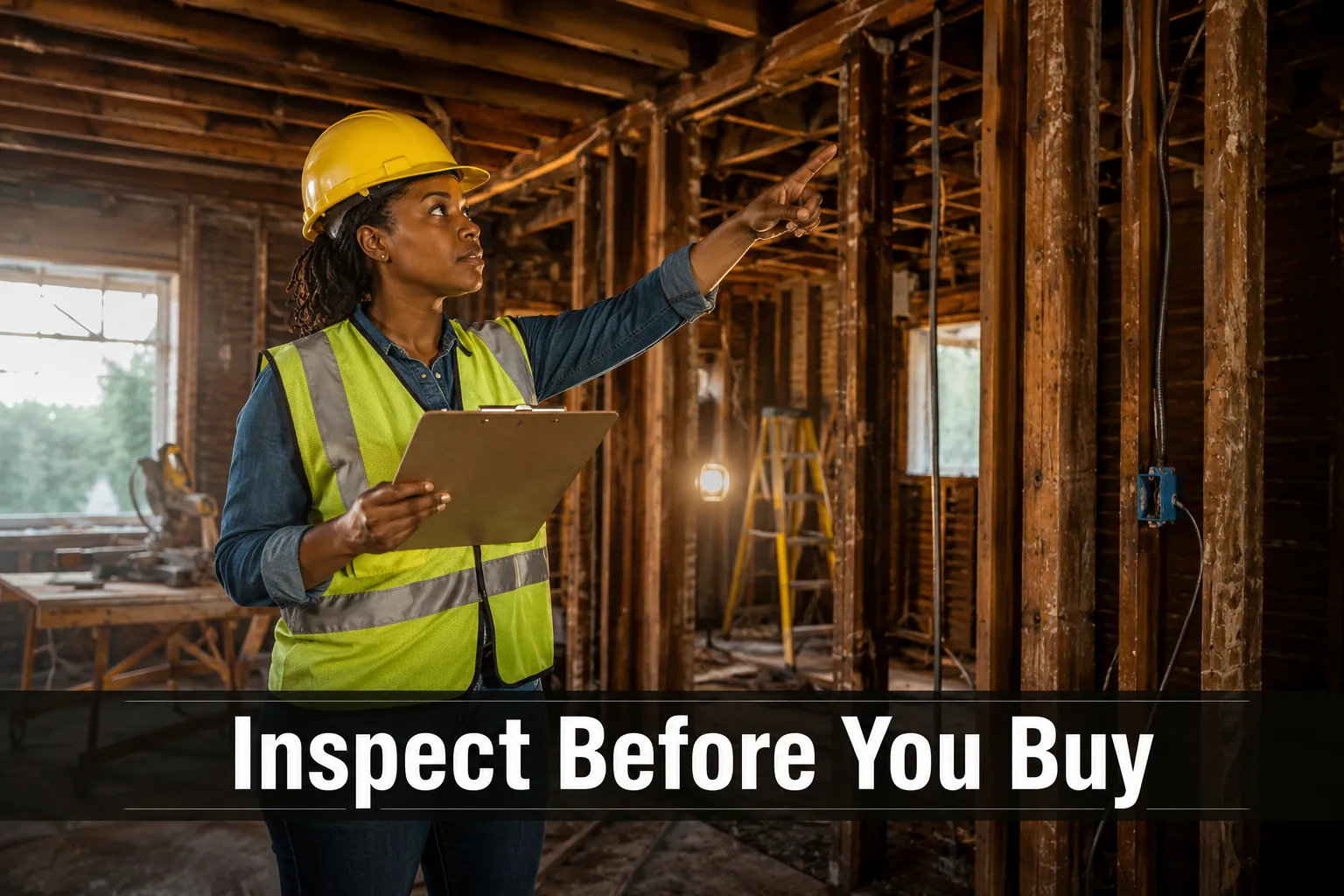
Order a professional home inspection before submitting your final offer, or at minimum, include an inspection contingency in your contract. For fixer uppers specifically, a standard inspection is the floor, not the ceiling.
Inspection checklist for fixer upper buyers:
- General home inspection, covers roof, foundation, HVAC, plumbing, electrical, and structural components at a surface level
- Structural engineer inspection, required if foundation cracks, uneven floors, or bowing walls are present
- Electrical inspection, critical for homes built before 1980 that may have aluminum wiring or outdated panels
- Plumbing inspection, check for galvanized pipes, sewer line condition (scope it), and water pressure issues
- Mold and moisture inspection, especially important in humid climates or homes with water damage history
- Pest inspection, termite damage can be invisible until it's catastrophic
- Roof inspection, age, condition, and remaining life expectancy
Decision rule: If the inspection reveals foundation issues, major structural damage, or a full electrical/plumbing overhaul is needed, get hard numbers from licensed contractors before proceeding. If those numbers push your all-in cost above 90% of the home's ARV, walk away.
Common mistake: Buyers use the inspection as a formality rather than a decision-making tool. The inspection report is your negotiating weapon and your exit ramp, use it as both.
Should I Buy a Fixer Upper or a Move-In Ready Home
Buy a fixer upper if you have renovation budget, time flexibility, and a clear plan. Buy a move-in ready home if you need to occupy the property immediately, have no cash reserves beyond the down payment, or aren't prepared to manage a renovation project.
Choose a fixer upper if:
- You want to build equity faster than appreciation alone would allow
- You have access to renovation financing (FHA 203k, conventional renovation loan)
- You're comfortable managing contractors and timelines
- The neighborhood has strong comparable sales that justify the renovation investment
- You're buying a fixer upper as a first home and have a realistic cash cushion
Choose move-in ready if:
- You need to move in within 30-60 days
- Your savings are fully committed to the down payment and closing costs
- You have no experience managing renovation projects
- The fixer upper's renovation costs would push your total investment above neighborhood comps
For a deeper look at how this decision plays out financially in 2026, the rent vs. buy math has also shifted in ways that affect how much equity upside you actually need from a fixer upper to make it worth the effort.
What Hidden Costs Do Fixer Uppers Have That Buyers Miss
Beyond the renovation estimate, fixer uppers carry a set of costs that first-time buyers consistently overlook. These aren't rare edge cases, they're standard expenses that come with the territory.
Hidden costs buyers regularly miss:
- Permit fees, Most structural, electrical, and plumbing work requires permits. Fees vary by municipality but can add $500,$5,000+ depending on scope.
- Temporary housing costs, If the home is uninhabitable during renovation, you're paying rent or a hotel while also carrying a mortgage.
- Carrying costs, Property taxes, insurance, and utilities continue during renovation, even if you're not living there.
- Design and architectural fees, Major renovations often require drawings and approvals before a contractor can begin.
- Material cost overruns, Supply chain fluctuations in 2026 mean material prices can shift significantly between your estimate and your build-out.
- Contractor delays, Every week of delay is another week of carrying costs. Build buffer time into your timeline.
- Upgraded code compliance, Older homes often require bringing systems up to current building code when any permitted work is done. This can trigger electrical panel upgrades, egress window additions, and more.
These costs are not gatekeeping information, they're just rarely discussed upfront. Knowing how to buy a fixer upper house without regret means pricing all of these into your budget before you make an offer, not after.
How Do I Know If a Fixer Upper Is Actually Worth the Investment
A fixer upper is worth the investment when the after-repair value (ARV) significantly exceeds your total all-in cost. The standard investor formula is the 70% rule: don't pay more than 70% of the ARV minus repair costs. For primary residence buyers, the math is slightly different, you're also factoring in lifestyle value, but the ARV calculation still matters for long-term equity.
How to calculate fixer upper value:
- Research comparable sold homes (comps) in the same neighborhood that are fully updated, this is your ARV target
- Get 3 contractor bids for the full renovation scope
- Add purchase price + renovation costs + carrying costs + closing costs
- Subtract that total from the ARV
- If the spread is positive and meaningful (generally $30,000+ for primary buyers, more for investors), the deal has merit
Use AI tools to speed up your analysis. Tools like those covered in our top real estate AI tools for investors guide can help you pull comps, estimate ARV, and model renovation scenarios faster than manual research.
Edge case: A fixer upper in a rapidly appreciating neighborhood can still be worth buying even if the current math is thin, because the ARV will be higher by the time you finish renovating. But this is a bet on market timing, not fundamentals. Let it cook before you see results, but make sure the foundation of your deal is solid before you rely on appreciation to bail you out.
Can I Get a Mortgage on a Fixer Upper House
Yes, several loan programs are specifically designed for buying a fixer upper with a loan. The right choice depends on your income, credit score, down payment, and the scope of renovation needed.
What Is a Fixer-Upper Loan
A fixer-upper mortgage loan is a financing product that combines the home purchase price and renovation costs into a single loan. Instead of buying the home and separately financing repairs, you borrow one amount that covers both, and the lender releases renovation funds in draws as work is completed.
FHA 203k Loan
The FHA 203k loan is the most widely used first-time home buyer fixer-upper loan. It's backed by the Federal Housing Administration and allows buyers to finance up to the home's expected post-renovation value with as little as 3.5% down.
Two versions:
- Standard 203k, for major structural renovations over $35,000
- Limited 203k (Streamline), for cosmetic repairs under $35,000
FHA 203k fixer-upper loan requirements:
- Minimum 580 credit score for 3.5% down
- Property must be your primary residence
- Work must be completed by a HUD-approved contractor
- Renovation must begin within 30 days of closing and complete within 6 months
USDA Renovation Loan
The USDA renovation loan combines the USDA's rural development guarantee with renovation financing. It's a strong option for buyers purchasing in eligible rural or suburban areas with limited cash. Income limits apply, and the property must be in a USDA-eligible zone.
Conventional Loan for Fixer Upper
Fannie Mae's HomeStyle Renovation loan and Freddie Mac's CHOICERenovation loan are the primary conventional loan for fixer upper options. These allow renovation financing on primary residences, second homes, and investment properties, with more flexibility than FHA products but typically requiring a higher credit score (usually 620+) and a larger down payment.
Fixer-Upper Loan Rates
Fixer upper loan rates in 2026 vary by product, lender, and borrower profile. Renovation loans generally carry slightly higher rates than standard purchase mortgages because of the added complexity and draw management. Expect rates to run 0.25-0.75% higher than a comparable conventional purchase loan, though this varies. For a broader look at mortgage products, our FHA loan vs. conventional loan comparison breaks down which option saves more money depending on your situation.
How to Buy a Fixer Upper House With No Money
Buying a fixer upper with no money down is possible through specific programs. USDA renovation loans offer zero down payment for eligible rural properties. VA renovation loans (for veterans) also offer zero down. Some state and local housing programs offer down payment assistance that can be layered with FHA 203k financing. It's not easy, but it's not a myth either, it requires strong credit, income documentation, and an eligible property.
For more creative approaches to getting into real estate with minimal capital, see our guide on how to invest in real estate with $5,000 or less.
What Should I Look for in a Fixer Upper Location
Location determines your ARV ceiling, and no amount of impeccable renovation work can push a home's value above what the neighborhood supports. Before you fall for a fixer upper's price, evaluate the location with the same rigor you'd apply to any investment.
Location factors that drive fixer upper ROI:
- Comparable sales (comps), Are fully renovated homes in the area selling at prices that justify your renovation budget? If the best homes on the block top out at $280,000 and your all-in cost is $260,000, your margin is razor thin.
- School district quality, One of the most consistent drivers of residential home values in the U.S. market.
- Proximity to employment centers, Homes near job hubs have stronger demand and faster appreciation.
- Neighborhood trajectory, Is the area improving (new businesses, infrastructure investment, rising comps) or declining? Buying in an improving neighborhood is so based, you're getting in before the market catches up.
- Crime rates and safety, Directly affects buyer demand and resale speed.
- Walkability and amenities, Access to grocery stores, parks, transit, and restaurants adds measurable value. Our deep-dive on how amenity proximity multiplies home value is worth reading before you commit to any location.
How to find fixer upper homes near me:
Search Zillow using the "Fixer Upper" filter under listing type, or filter by "Price Reduced" and "Days on Market 60+" to surface motivated sellers. For off-market leads, check probate listings, tax delinquent properties, and foreclosure auctions through your county recorder's office. Driving neighborhoods you're interested in and looking for neglected properties with code violation notices is still one of the most fresh and underrated sourcing strategies in the market.
How to find fixer upper homes on Zillow:
Go to Zillow's search filters, select "Home Type," then look for distressed or foreclosure listings. You can also search "as-is" in the keyword field or filter by price range below neighborhood median to surface potential fixer uppers. Pair this with your own comp research to validate whether the discount is real.
How Long Does It Usually Take to Renovate a Fixer Upper
Most fixer upper renovations take 3-12 months from closing to completion, depending on the scope of work. Cosmetic-only renovations (paint, flooring, fixtures, landscaping) can be done in 4-8 weeks with a good contractor. Full gut renovations involving structural, electrical, and plumbing work routinely run 6-12 months or longer.
Timeline factors that extend renovations:
- Permit approval delays (can add 4-8 weeks in many markets)
- Contractor availability, skilled trades are in high demand in 2026
- Material delivery delays
- Discovery of hidden issues once walls are opened
- Weather delays for exterior work
Realistic timeline by renovation type:
| Scope | Typical Timeline |
|---|---|
| Cosmetic only | 4-8 weeks |
| Kitchen + bath remodel | 3-5 months |
| Full interior renovation | 5-8 months |
| Structural + full renovation | 8-14 months |
Build buffer time into your financial plan. Every extra month of renovation is another month of carrying costs, mortgage, taxes, insurance, and possibly rent elsewhere.
Is It Better to Hire a Contractor or Do Fixer Upper Work Myself
Hire a licensed contractor for anything structural, electrical, plumbing, or that requires permits. DIY is reasonable for cosmetic work, painting, installing flooring, replacing fixtures, landscaping, where the failure risk is low and the work doesn't require inspections.
DIY-friendly tasks:
- Interior painting
- Flooring installation (luxury vinyl plank, laminate)
- Cabinet hardware and fixture replacement
- Landscaping and curb appeal improvements
- Tile backsplash (with proper prep)
Always hire a licensed professional for:
- Electrical panel work or rewiring
- Plumbing rough-in or sewer line work
- Structural repairs (beams, load-bearing walls, foundation)
- Roof replacement
- HVAC installation
The honest truth: most first-time fixer upper buyers overestimate how much DIY they'll realistically complete while working full-time. Extraordinary results come from extraordinary planning, not from burning yourself out on a renovation you're not equipped for. Know your limits, hire for the rest, and stay focused on managing the project timeline and budget rather than swinging a hammer on work that requires a license.
What's the Difference Between Cosmetic Fixes and Structural Problems
Cosmetic fixes are surface-level updates that improve appearance without affecting the home's structural integrity or core systems. Structural problems involve the foundation, framing, roof structure, or major mechanical systems, and they're exponentially more expensive to fix.
Cosmetic fixes (manageable, predictable cost):
- Paint, wallpaper, and wall texture
- Flooring replacement
- Kitchen and bathroom fixture updates
- Cabinet refacing or replacement
- Landscaping and exterior paint
Structural problems (high cost, high risk):
- Foundation cracks or settlement
- Bowing or damaged load-bearing walls
- Roof decking damage or structural failure
- Knob-and-tube or aluminum wiring
- Galvanized or failing plumbing
- Water intrusion and mold from structural failures
The rule: If the problem is visible on the surface, it's probably cosmetic. If fixing it requires opening walls, lifting the home, or replacing core systems, it's structural. Never buy a fixer upper with known structural issues without getting hard contractor bids first, not estimates, not ballparks. Actual bids with scope of work included.
When Is a Fixer Upper Not Worth Buying
A fixer upper is not worth buying when the total cost of repairs and purchase price approaches or exceeds the home's after-repair value, when structural problems are too severe or unknown in scope, or when the buyer has no financial cushion to absorb surprises.
Walk away from a fixer upper when:
- Foundation damage is extensive and the repair scope is unclear
- The home has active mold, asbestos, or lead paint that requires professional remediation at scale
- The neighborhood's best comparable sales don't support your renovation investment
- You have no renovation budget beyond the loan amount
- The seller won't negotiate after inspection findings
- Multiple contractors have declined to bid or given wildly different estimates (a sign the scope is unclear or the risk is high)
- You're emotionally attached to the point where you're rationalizing away red flags
Buying a fixer upper as a first home is a real and achievable goal, but not every fixer upper is the right one. The deal that looks extraordinary on paper can turn into a regret if the fundamentals don't hold up. Knowing when to walk away is just as important as knowing how to buy a fixer upper house without regret.

How Do I Find a Good Fixer Upper Deal in My Area
The best fixer upper deals rarely show up on the first page of Zillow. They come from a combination of active searching, off-market sourcing, and moving fast when something real surfaces.
Where to find fixer upper deals:
- MLS/Zillow filters, Use "as-is," "price reduced," "days on market 90+," and foreclosure filters
- Probate court listings, Estate sales often produce below-market fixer uppers
- Tax delinquent lists, Available through your county assessor's office; owners behind on taxes are often motivated to sell
- Foreclosure auctions, Higher risk but potentially the deepest discounts; requires cash or hard money financing
- Direct mail and driving for dollars, Identify neglected properties and contact owners directly
- Real estate wholesalers, Wholesalers specialize in finding off-market distressed properties and assigning contracts to buyers
For investors specifically, our guide on the best loans for flipping houses covers the financing side of sourcing and closing deals quickly in competitive markets.
FAQ: Buying a Fixer Upper House
What credit score do I need for an FHA 203k loan?
A minimum 580 credit score qualifies you for 3.5% down with an FHA 203k loan. Scores between 500-579 may qualify with 10% down, depending on the lender.
Can I live in a fixer upper while renovating it?
Yes, if the home is habitable, meaning it has functioning plumbing, electrical, and a safe structure. Many buyers live in the home during cosmetic renovations. Structural or full gut renovations typically require temporary housing.
How do I find fixer upper homes on Zillow?
Search your target area, then filter by "Foreclosures," "Price Reduced," or type "as-is" in the keyword search. Sort by days on market (longest first) to find motivated sellers.
What is a fixer-upper loan?
A fixer-upper mortgage loan combines the home purchase price and renovation costs into one loan. The FHA 203k, USDA renovation loan, and Fannie Mae HomeStyle are the most common options.
Is buying a fixer upper as a first home a good idea?
It can be, if you have a realistic renovation budget, access to a first-time home buyer fixer-upper loan, and patience for the process. It's not the right move if your savings are fully committed to the down payment with nothing left for repairs.
How do I buy a fixer upper house with no money?
USDA renovation loans and VA renovation loans offer zero down payment options for eligible buyers. Down payment assistance programs can also be layered with FHA 203k financing to reduce or eliminate upfront cash requirements.
What's the 70% rule for fixer uppers?
Investors use the 70% rule as a quick filter: don't pay more than 70% of the ARV minus repair costs. For example, if a home's ARV is $300,000 and repairs cost $50,000, the max purchase price would be $160,000.
How long does an FHA 203k loan take to close?
FHA 203k loans typically take 45-60 days to close, longer than a standard purchase loan because of the additional documentation and contractor bid requirements.
What hidden costs should I expect with a fixer upper?
Permit fees, temporary housing, carrying costs during renovation, material overruns, code compliance upgrades, and contractor delays are the most commonly missed expenses.
Can I use a conventional loan for a fixer upper?
Yes, Fannie Mae's HomeStyle Renovation loan and Freddie Mac's CHOICERenovation loan are conventional options that allow renovation financing with more flexibility than FHA products.
How do I know if a fixer upper neighborhood is worth investing in?
Look at recent comparable sales for fully renovated homes, school district ratings, employment proximity, and whether local businesses and infrastructure are improving or declining. A neighborhood on the rise is where the real fixer upper equity gets built.
What's the difference between a standard and limited FHA 203k?
The Standard 203k covers major structural renovations over $35,000. The Limited (Streamline) 203k is for cosmetic repairs under $35,000 and has a simpler approval process.
Conclusion: How to Buy a Fixer Upper House Without Regret
The buyers who regret their fixer upper purchases almost always share the same story, they moved on emotion, skipped due diligence, and got hit by costs they never saw coming. The buyers who build real equity from fixer uppers share a different story: they ran the numbers first, inspected everything, secured the right financing, and treated the whole process like a business decision.
Knowing how to buy a fixer upper house without regret isn't about being pessimistic, it's about being impeccable with your preparation. The deal is only as good as the homework behind it.
Your next steps:
- Set your renovation budget before you start shopping, separate from your down payment
- Get pre-approved for a fixer-upper mortgage loan (FHA 203k, USDA renovation, or conventional renovation)
- Use Zillow filters and off-market sourcing to find properties priced below neighborhood comps
- Order a full inspection plus specialist inspections on anything flagged
- Run the ARV calculation before making any offer
- Build your contractor team before closing, not after
If you're also weighing whether to flip the property or hold it as a rental, our breakdown of fix-and-flip strategies and market trends covers the investment side in detail.
The fixer upper market rewards the prepared and punishes the impulsive. Go in with a plan, let the process cook, and the equity you build will be extraordinary.
Have questions about buying a fixer upper? Reach out to the RERIQ team at news@realestaterankiq.com or explore more guides at the RERIQ Hub.