

Last updated: May 24, 2026

Quick Answer: Digital real estate investing is a legitimate and growing asset class that includes websites, domain names, tokenized properties, and metaverse land. It can generate real income — but it carries unique risks that traditional real estate investors aren’t always prepared for. Whether it’s real wealth or hype depends entirely on which type of digital asset you choose and how well you understand what you’re buying.
Key Takeaways 🔑
- Digital real estate covers a wide range of assets: income-producing websites, domain names, tokenized physical properties, fractional real estate shares, and metaverse land parcels.
- Tokenized real estate (via platforms like Fundrise and Arrived) is the most accessible entry point for beginners — some platforms let you start with as little as $10.
- Website flipping and domain investing are the highest-skill, highest-reward categories — not passive income plays.
- Metaverse real estate (NFT real estate, virtual land) is the most speculative category and has seen dramatic value crashes since 2022.
- Blockchain real estate and Web3 real estate platforms are still early-stage, but institutional interest is growing fast in 2026.
- Digital real estate is not a get-rich-quick scheme — the investors seeing real returns are treating it like a business.
- Beginners can absolutely make money here, but they need to let it cook before they see results — there’s no overnight success story that holds up under scrutiny.
- The biggest mistakes new investors make: overpaying for hype assets, ignoring liquidity risk, and skipping due diligence on platform legitimacy.

What Exactly Is Digital Real Estate Investing?
Digital real estate investing means buying, owning, and profiting from digital assets that hold or grow in value — similar to how physical property works, but entirely online. These assets generate income through advertising revenue, rental-equivalent fees, appreciation, or resale.
The term covers more ground than most people realize. Here’s a breakdown of the main categories:
| Category | What You’re Buying | How It Makes Money |
|---|---|---|
| Tokenized Real Estate | Fractional shares of physical properties via blockchain | Rental income + appreciation |
| Fractional Real Estate Investing | Partial ownership in real properties (non-blockchain) | Dividends, appreciation |
| Website Flipping | Income-producing websites | Ad revenue, affiliate income, resale |
| Domain Name Investing | Premium web addresses | Resale to businesses |
| Metaverse Real Estate | Virtual land in platforms like Decentraland | Advertising, events, resale |
| NFT Real Estate | Blockchain-based property tokens | Speculation, utility access |
| Web3 Real Estate | Smart contract-based property ownership | Rental income, governance tokens |
The most important distinction: not all digital real estate is equal in risk or legitimacy. Tokenized physical property sits on one end of the spectrum — it’s backed by real assets. Metaverse land sits on the other — its value is almost entirely speculative.
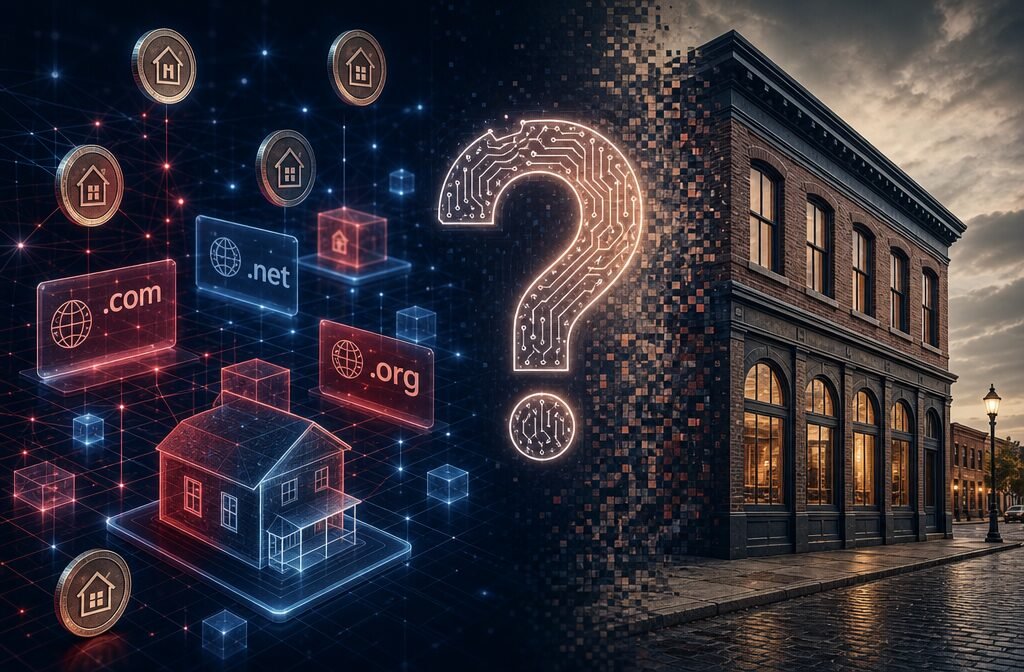
Digital Real Estate Investing: Real Wealth or Hype? — The Honest Answer
This is the question everyone’s actually asking, and the answer is: both, depending on which lane you’re in.
The “real wealth” side of digital real estate investing is well-documented. Platforms like Fundrise have paid out hundreds of millions in dividends to investors since launching. Website flipping — buying content sites and reselling them at 30-40x monthly revenue multiples — has created a legitimate cottage industry. Domain investors have sold single domains for seven figures.
The “hype” side is equally real. Metaverse land that sold for hundreds of thousands of dollars in 2021 and early 2022 lost 80-90% of its value within 18 months. NFT real estate projects collapsed. Dozens of Web3 real estate platforms launched with extraordinary promises and delivered nothing.
So the framework is simple:
- ✅ Real wealth: Tokenized physical property, fractional real estate investing, website flipping (with skills), domain investing (with research)
- ⚠️ Proceed with caution: Web3 real estate platforms, blockchain real estate startups without track records
- 🚨 High hype risk: Metaverse real estate, NFT real estate, any platform promising guaranteed returns
The investors who are actually building wealth in digital real estate aren’t chasing the flashiest assets. They’re treating it like any other investment — with due diligence, patience, and realistic expectations.
How Much Money Can You Actually Make From Digital Real Estate?
Returns vary dramatically by asset type. Here’s what the data and market evidence actually support:
Tokenized Real Estate / Fractional Investing:
- Platforms like Fundrise have historically reported annualized returns in the 8-12% range (before fees), though past performance doesn’t guarantee future results.
- Arrived, which lets investors buy shares in single-family rental homes, targets rental yields in the 3-7% range annually, plus potential appreciation.
- These are closer to REIT-style returns — steady, not spectacular.
Website Flipping:
- Income-producing websites typically sell for 30-40x their monthly net profit on platforms like Flippa and Empire Flippers.
- A site earning $2,000/month in ad and affiliate revenue could sell for $60,000-$80,000.
- The skill ceiling is high — you need to grow traffic, maintain content, and time the sale right.
Domain Name Investing:
- Most domains sell for under $1,000. The big wins (six and seven-figure sales) are rare and require either luck or deep industry knowledge.
- Average domain investors hold large portfolios and accept that most domains will never sell.
Metaverse Real Estate:
- Honest answer: most investors have lost money here since 2022. The market has not recovered to peak valuations as of 2026.
For beginners looking at their first move, our guide on how to invest in real estate with $5,000 or less covers fractional and tokenized options that fit smaller budgets.
Is Digital Real Estate Investing Safer Than Traditional Real Estate?
Not exactly — it’s differently risky, not less risky. Traditional real estate has well-understood risks: vacancy, maintenance, interest rates, and local market conditions. Digital real estate swaps those risks for a different set.
Digital real estate risks that traditional investors aren’t used to:
- Liquidity risk: You can’t always sell quickly. Some tokenized platforms have lock-up periods of 3-5 years.
- Platform risk: If the platform shuts down, your investment could be worthless.
- Regulatory risk: Tokenized securities and blockchain real estate are under increasing SEC scrutiny.
- Technology risk: Smart contracts can have bugs. Platforms can be hacked.
- Valuation risk: Many digital assets have no established pricing history, making fair value nearly impossible to determine.
Where digital real estate is actually safer:
- No tenants, no toilets, no 2am maintenance calls.
- Lower entry costs mean less capital at risk per position.
- Geographic diversification is easy — you can hold assets across markets without managing anything locally.
The bottom line: digital real estate is a different risk profile, not a lower one. Accredited investors and experienced real estate investors who understand portfolio diversification will find it more manageable than complete beginners.
What Platforms Are Best for Buying Digital Property?
The best platform depends entirely on what type of digital real estate you’re buying. Here’s a practical breakdown:
For Tokenized / Fractional Real Estate:
- Fundrise — One of the most established platforms. Offers eREITs and eFunds backed by real properties. Minimum investment starts around $10.
- Arrived — Focuses on single-family rentals and vacation properties. Lets non-accredited investors participate.
- RealT — Blockchain-based fractional ownership of U.S. rental properties, with income paid in stablecoins.
For Website Flipping:
- Flippa — The largest marketplace for buying and selling websites, apps, and online businesses.
- Empire Flippers — More curated, higher-quality listings with verified revenue.
- Motion Invest — Specializes in content sites under $100K.
For Domain Name Investing:
- GoDaddy Auctions — High volume, wide selection.
- Sedo — International domain marketplace with brokerage services.
- Namecheap Marketplace — Good for lower-cost domain hunting.
For Metaverse / NFT Real Estate:
- Decentraland — Virtual world with tradeable land parcels (LAND tokens).
- The Sandbox — Gaming-focused metaverse with LAND NFTs.
- OpenSea — General NFT marketplace where virtual real estate trades.
Our 7 real estate crowdfunding platforms compared guide goes deeper on the fractional investing platforms if that’s the direction you’re leaning.
How Much Does It Cost to Start Investing in Digital Real Estate?
This is where digital real estate genuinely shines compared to traditional property investing. The entry costs are dramatically lower across every category.
- Tokenized real estate: As low as $10 (Fundrise) to $100 (Arrived)
- Domain investing: $10-$15 for a new registration; $50-$5,000+ for premium domains at auction
- Website flipping: $500-$5,000 for entry-level content sites; $10,000+ for established income-producing sites
- Metaverse land: Ranges from under $100 to tens of thousands depending on location and platform
- NFT real estate: Highly variable — from a few dollars to hundreds of thousands
For context, the average down payment on a traditional investment property in 2026 is still $40,000-$80,000+ in most U.S. markets. Digital real estate removes that barrier almost entirely.
That said, lower entry cost doesn’t mean lower risk. A $500 website purchase can go to zero just as easily as a $500,000 property can lose value. The beginner’s blueprint for real estate investing covers how to think about risk-adjusted entry points across both physical and digital assets.

What Are the Biggest Risks of Digital Real Estate Investing?
The risks are real, and anyone gatekeeping this information from beginners is doing them a disservice. Here’s what you actually need to know:
1. Platform Failure
If Fundrise, Arrived, or any tokenized platform goes under, your investment is tied up in a legal process — not instantly accessible. Always check a platform’s financial backing, regulatory filings, and how long they’ve been operating.
2. Liquidity Traps
Many digital real estate investments are illiquid by design. Fundrise’s redemption program, for example, has had restrictions during market stress periods. You can’t always get your money out when you want it.
3. Regulatory Uncertainty
The SEC has been increasingly active in regulating tokenized securities. Blockchain real estate and Web3 real estate platforms face a shifting legal environment that could affect how — or whether — they can operate.
4. Metaverse Volatility
Metaverse real estate has been one of the worst-performing asset classes since 2022. The user base for platforms like Decentraland has remained far smaller than projected, and virtual land values have not recovered. This is a speculative bet, not an investment.
5. Scams and Fraud
The question “is digital real estate legit?” gets asked a lot — and for good reason. The space attracts fraudulent platforms that promise extraordinary returns with no underlying asset. If a platform guarantees returns, that’s a red flag. Always verify SEC registration for any investment offering.
6. Technology Obsolescence
A website that earns income today can be wiped out by a Google algorithm update. A domain that seems valuable now may be worthless in five years if the industry it serves disappears.
Can Beginners Make Money in Digital Real Estate, or Is It Just for Experts?
Beginners can absolutely make money in digital real estate — but the path matters. Some categories are genuinely beginner-friendly; others will eat your capital if you don’t know what you’re doing.
Best starting points for beginners:
- Fractional real estate investing via Fundrise or Arrived — Passive, low-minimum, backed by physical assets. This is the most beginner-safe entry point. You’re essentially buying into a diversified property portfolio without managing anything.
- Domain investing at the low end — Buying and holding a handful of $10-$15 domains based on keyword research is a low-risk way to learn the market. Don’t expect fast returns.
- Content website investing (small scale) — Buying a small website for $500-$2,000 and learning to maintain or grow it teaches you the fundamentals before you commit serious capital.
What beginners should avoid early on:
- Metaverse land and NFT real estate — too speculative without deep market knowledge
- High-priced domain auctions — premium domain valuation is a skill that takes years to develop
- Any platform promising guaranteed digital real estate returns
The best real estate investing apps for beginners covers several platforms that make the fractional investing entry point genuinely accessible.
What Types of Digital Properties Are Most Profitable Right Now?
In 2026, the most consistently profitable categories in digital real estate are:
1. Tokenized Fractional Real Estate
Backed by real physical assets, generating rental income, and increasingly regulated — this is the most stable category. Platforms like Fundrise and Arrived continue to attract capital because the underlying assets are real.
2. Income-Producing Websites
Content sites, niche affiliate sites, and SaaS tools with recurring revenue are selling at strong multiples. The key word is income-producing — a website with no revenue is just a domain name with a design.
3. Premium Domain Names
Short, memorable .com domains tied to high-value industries (finance, health, real estate, AI) continue to command strong prices. The supply of great domains is genuinely finite.
4. Web3 Real Estate (Selective)
Some blockchain real estate projects with real underlying assets and regulatory compliance are gaining traction with institutional investors. This is still early-stage but worth watching.
What’s underperforming in 2026:
- Metaverse land (Decentraland, The Sandbox) — user adoption has not materialized at scale
- Speculative NFT real estate projects — most have lost significant value
How Is Digital Real Estate Different From Buying Land in the Metaverse?
This distinction matters enormously, and it’s one of the most misunderstood points in the entire space.
Digital real estate (broad category) includes assets tied to real economic activity: websites generating ad revenue, domains used by businesses, tokenized shares of physical rental properties. These have measurable cash flows and underlying value.
Metaverse land is a specific type of digital asset — a virtual plot in a computer-generated world, represented as an NFT on a blockchain. Its value is entirely dependent on:
- How many people use that virtual world
- Whether developers build on it
- Whether the platform itself survives
Metaverse real estate peaked in hype around late 2021 and early 2022, when plots in Decentraland and The Sandbox sold for hundreds of thousands of dollars. By 2024-2025, active user counts on these platforms remained in the low thousands daily — nowhere near the millions needed to justify those valuations.
Buying metaverse land is closer to buying a lottery ticket than buying an investment property. That’s not gatekeeping — that’s just the data.

Is Digital Real Estate Investing Legit, or Just Another Online Scam?
Digital real estate investing is legitimate as an asset class — but it contains both legitimate investments and outright scams, often marketed in similar language.
Legitimate signals to look for:
- SEC registration or Regulation A/D filings for investment platforms
- Audited financials and transparent fee structures
- Verifiable track record of paying investors
- Physical assets backing the investment (for tokenized real estate)
- Established marketplaces with escrow and verification (for websites and domains)
Red flags that signal a scam:
- Guaranteed returns (“earn 20% monthly on your digital land”)
- No verifiable underlying asset
- Pressure to recruit other investors
- Anonymous founders or unverifiable company registration
- Platforms that only exist on social media with no regulatory filings
Platforms like Fundrise and Arrived are registered with the SEC and have published financials. Flippa and Empire Flippers have established reputations with verifiable transaction histories. These are legitimate.
A random Telegram group selling “metaverse real estate packages” with guaranteed returns? That’s a scam.
The 4 types of real estate investments guide helps put digital real estate in context alongside traditional investment categories.
How Does Digital Real Estate Investing Work for Someone With No Tech Background?
No tech background required for the most accessible categories — and that’s so based, because the industry has done a lot of work to make entry points genuinely simple.
For fractional/tokenized real estate (zero tech skills needed):
- Create an account on Fundrise or Arrived
- Verify your identity (standard KYC process)
- Link a bank account
- Choose a portfolio or specific property
- Invest your chosen amount
- Receive quarterly income distributions and annual statements
This is no more technical than opening a brokerage account.
For website investing (low-to-moderate tech skills needed):
- You’ll need to understand basic website analytics (Google Analytics is learnable in a weekend)
- WordPress management is beginner-friendly
- Revenue sources (Google AdSense, Amazon Associates) are well-documented
For domain investing (minimal tech skills):
- Buying and holding domains requires only a domain registrar account
- Understanding keyword value helps — tools like Google Keyword Planner are free
For metaverse/NFT real estate (moderate-to-high tech skills):
- Requires a crypto wallet (MetaMask is standard)
- Understanding blockchain transactions, gas fees, and NFT marketplaces
- Higher learning curve, higher risk
The real estate investment technology overview breaks down how technology is reshaping the investment landscape for investors at every experience level.
What Skills Do You Need to Succeed in Digital Real Estate?
The skills you need depend on which type of digital real estate you’re pursuing. But there are a few that apply across the board:
Universal skills:
- Due diligence — Verifying claims, reading financials, researching platforms
- Risk assessment — Understanding what can go wrong and sizing positions accordingly
- Patience — Digital real estate investing, like traditional investing, rewards those who let it cook before they see results
Category-specific skills:
For fractional/tokenized investing:
- Reading investment prospectuses
- Understanding REIT-like structures and fee impacts on returns
For website flipping:
- SEO fundamentals (traffic is the product)
- Content strategy and editorial management
- Basic financial analysis (revenue, expenses, net profit margins)
For domain investing:
- Keyword research
- Industry trend awareness
- Negotiation
For Web3/blockchain real estate:
- Crypto wallet management
- Smart contract basics
- Understanding tokenomics
The good news: most of these skills are learnable, free to develop, and transfer across categories. The best alternatives to REITs for passive income article is a solid companion read for investors building a diversified income strategy.
What Mistakes Do New Digital Real Estate Investors Usually Make?
These are the patterns we see repeatedly — and they’re avoidable with the right information upfront.
Mistake #1: Chasing the flashiest asset
New investors hear about metaverse land or NFT real estate and go all-in on the most exciting-sounding option. The impeccable move is starting with the most boring, stable option (fractional real estate) and learning from there.
Mistake #2: Skipping platform due diligence
Not all digital real estate platforms are created equal. Some are SEC-registered with audited financials. Others are unregistered and operating in legal gray areas. Always verify before investing.
Mistake #3: Treating it like a savings account
Digital real estate is an investment, not a bank account. Liquidity can be limited, values can drop, and platforms can fail. Only invest what you can afford to leave untouched for 3-5 years.
Mistake #4: Ignoring fees
Platform fees on tokenized real estate (management fees, advisory fees, early redemption penalties) can significantly eat into returns. Read the fee structure before committing capital.
Mistake #5: Buying websites or domains without revenue verification
On platforms like Flippa, sellers can misrepresent traffic and revenue. Always request Google Analytics access and payment processor records before buying any income-producing website.
Mistake #6: Expecting overnight results
Digital real estate investing rewards patience. A domain might sit unsold for years before the right buyer appears. A website needs months of SEO work before traffic compounds. Let it cook before you see results — that’s the honest timeline.

Frequently Asked Questions
Q: Is digital real estate investing the same as buying property in the metaverse?
A: No. Digital real estate is a broad category that includes tokenized physical properties, websites, and domains. Metaverse real estate is one specific — and highly speculative — subcategory.
Q: Can I invest in digital real estate with no money?
A: Not realistically. Some platforms start at $10, but you need at least some capital. The lowest-risk entry point is fractional real estate platforms like Fundrise starting around $10-$100.
Q: Is Fundrise considered digital real estate investing?
A: Yes. Fundrise is a digital platform offering fractional ownership in real estate portfolios. It’s one of the most legitimate and accessible forms of digital real estate investing available to non-accredited investors.
Q: How liquid is digital real estate?
A: It varies widely. Domain names can sell in days or sit for years. Tokenized real estate platforms often have redemption restrictions. Metaverse land liquidity depends entirely on market demand. Assume most digital real estate is illiquid for 1-5 years.
Q: Is blockchain real estate regulated?
A: In the U.S., tokenized real estate offerings that qualify as securities must be registered with the SEC or qualify for an exemption. Regulation is increasing in 2026, which is generally a positive sign for the space’s legitimacy.
Q: What’s the difference between Arrived and Fundrise?
A: Arrived focuses on individual single-family rental homes and vacation properties where investors buy fractional shares. Fundrise offers pooled funds (eREITs and eFunds) across diversified property portfolios. Both are legitimate platforms with different risk profiles.
Q: Can digital real estate replace traditional real estate investing?
A: For most investors, no — it’s a complement, not a replacement. Traditional real estate offers leverage, tax benefits (depreciation, 1031 exchanges), and inflation hedging that most digital real estate categories don’t replicate.
Q: How do I know if a digital real estate platform is a scam?
A: Check for SEC registration, audited financials, verifiable track record, and transparent fee structures. If a platform guarantees returns or can’t be found in SEC EDGAR filings, treat it as a red flag.
Q: What is website flipping and is it passive income?
A: Website flipping is buying income-producing websites, improving them, and selling at a profit. It is not passive — it requires active management. The income from holding a site can be semi-passive, but growing and selling it requires real work.
Q: Is NFT real estate worth investing in right now?
A: As of 2026, NFT real estate remains highly speculative with most projects significantly below their 2021-2022 peak values. It’s a high-risk category suitable only for investors who can afford to lose their entire position.
Conclusion: Where Digital Real Estate Investing Actually Stands in 2026
Digital real estate investing is a fresh and genuinely evolving asset class — not a monolith. The question isn’t whether it’s “real wealth or hype” in the abstract. The question is which specific type you’re buying, from which platform, with what level of due diligence.
Here’s the actionable breakdown for 2026:
Start here if you’re new:
- Open a Fundrise or Arrived account and invest $100-$500 in fractional real estate. Learn how the distributions work and read the quarterly reports. This is your foundation.
Level up when ready:
- Research income-producing websites on Flippa. Study a few listings. Understand how revenue is verified. Don’t buy yet — just learn the market for 60-90 days.
Approach with extreme caution:
- Metaverse real estate and NFT real estate. If you’re going to participate at all, treat it as a small speculative position (under 5% of your total investment portfolio) — not a wealth-building strategy.
Always verify:
- Any platform asking for your money should have SEC filings, a verifiable track record, and transparent fees. No exceptions.
The investors building real wealth in digital real estate are the ones who treat it like a business, not a trend. They do the research, diversify across categories, and let it cook before they see results. That’s not exciting advice — but it’s the advice that actually works.
For more on building a diversified investment strategy, check out our complete beginner’s blueprint for real estate investing and our breakdown of 2026 real estate market trends to see how digital and traditional assets fit together in today’s market.
Tags: digital real estate investing, tokenized real estate, fractional real estate investing, website flipping, domain name investing, metaverse real estate, blockchain real estate, NFT real estate, Fundrise, Arrived investing, Web3 real estate, passive income real estate
For more rental analysis and investing guides, visit the Investment Hub.