


Last updated: April 23, 2026

Quick Answer: The best real estate investing apps for beginners in 2026 are Fundrise, Arrived Homes, Groundfloor, Roofstock, and RealtyMogul — depending on your budget, goals, and whether you’re accredited. Most of these platforms let you start with as little as $10 to $100, require no prior investing experience, and handle the heavy lifting of property management for you. The right pick depends on whether you want passive income, equity growth, or direct rental ownership.
Key Takeaways
- Fundrise is the top pick for most beginners — $10 minimum, no accreditation required, strong mobile app, and a diversified REIT portfolio.
- Arrived Homes is ideal for fractional rental property investing with as little as $100 per share.
- Groundfloor is the best short-term option for beginners who want 6–12 month real estate debt investments.
- CrowdStreet and Yieldstreet are geared toward accredited investors with higher minimums but stronger deal flow.
- Roofstock is the go-to app if you want to buy a full rental property (or fractional shares) with data-backed analysis.
- Most platforms lock up your money for 1–5 years — liquidity is the biggest risk beginners overlook.
- Fractional real estate investing through apps has made property ownership accessible to people who can’t afford a down payment on a traditional rental.
- None of these platforms guarantee returns — always read the offering documents before investing.
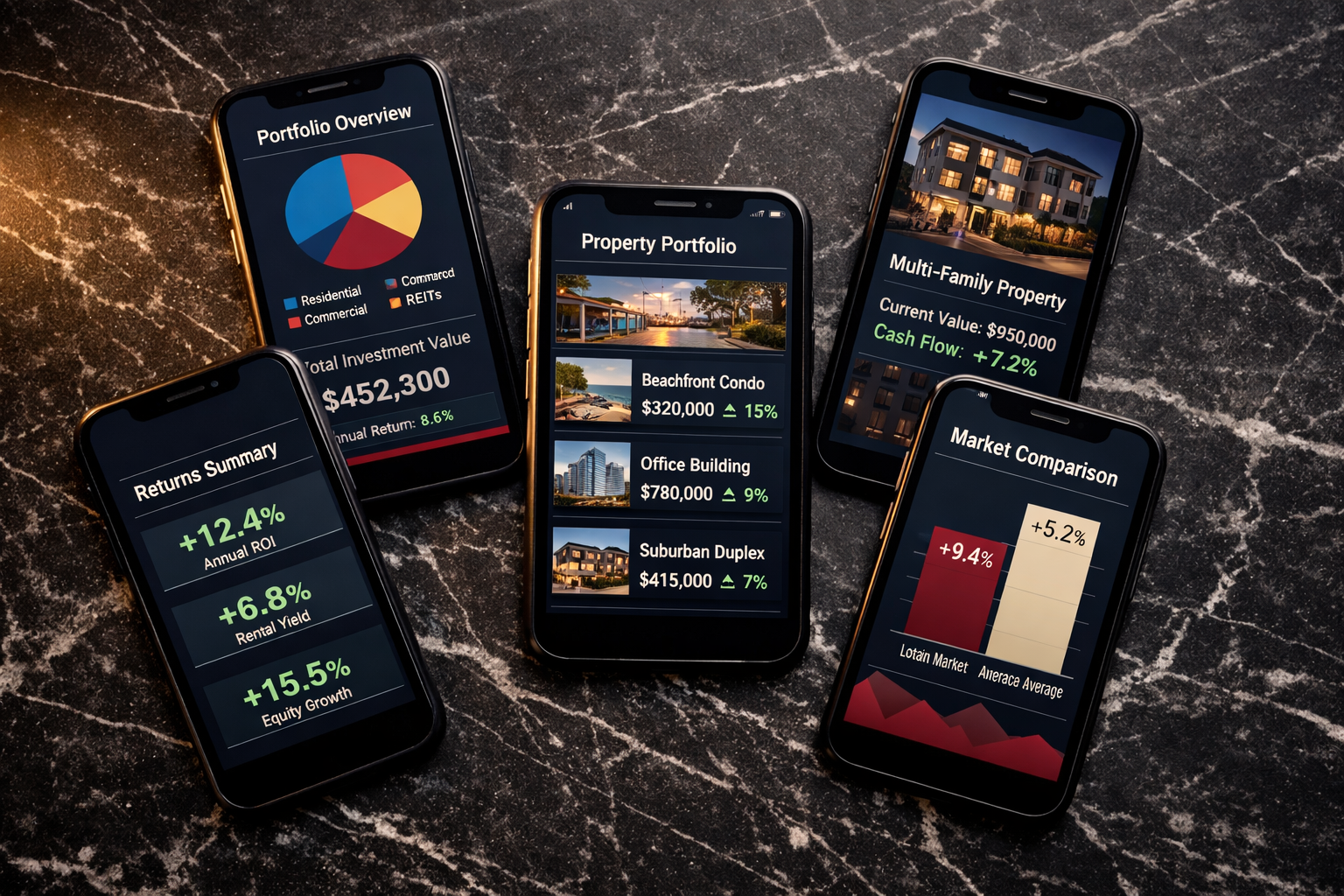
What Are Real Estate Investing Apps and How Do They Work?
Real estate investing apps are digital platforms that let everyday people invest in properties — or property-backed loans — without buying a house outright. Instead of needing $50,000 for a down payment, you can put in $10, $100, or $1,000 and own a fractional stake in a rental home, commercial building, or real estate debt portfolio.
Here’s how the model works across the main categories:
- Crowdfunding platforms pool money from multiple investors to fund a real estate deal. You earn returns when the property generates income or sells.
- Fractional ownership apps let you buy shares in specific rental properties. You receive a proportional cut of rental income and appreciation.
- REIT investing apps give you exposure to a diversified portfolio of properties managed by professionals, similar to owning stock in a real estate company.
- Rental property platforms like Roofstock let you buy actual investment properties (or fractional shares) with full transparency on financials.
This model — often called digital real estate investing — has exploded in popularity. According to the Cambridge Centre for Alternative Finance, alternative investment platforms collectively raised over $1.2 trillion globally by 2023, with real estate crowdfunding representing one of the fastest-growing segments. (Cambridge Centre for Alternative Finance, 2023)
If you’re just getting started, our Beginner’s Blueprint to Real Estate Investing breaks down the full landscape before you commit a single dollar.
Best Real Estate Investing Apps for Beginners: Ranked and Reviewed
These platforms are ranked based on beginner-friendliness, minimum investment, liquidity, expected returns, accreditation requirements, and mobile app quality. No gatekeeping here — this is the full breakdown.
🏆 1. Fundrise — Best Overall for Beginners
Minimum Investment: $10
Accreditation Required: No
Expected Returns: Historically 8–12% annualized (varies by fund)
Liquidity: Low — quarterly redemption windows, 5-year recommended hold
Mobile App Rating: 4.8/5 (App Store), 4.6/5 (Google Play)
Fundrise is the gold standard when it comes to real estate investing apps for beginners. The platform pools investor money into eREITs (electronic Real Estate Investment Trusts) and eFunds that hold residential and commercial properties across the U.S.
The Fundrise Flagship Fund is their most popular offering — a diversified portfolio of income-producing real estate assets designed for long-term wealth building. It’s not a get-rich-quick play. Let it cook before you see results. Most investors see meaningful compounding after 3–5 years.
Is Fundrise a good investment? For most beginners, yes. The platform is transparent about fees (0.85% annual management fee + 0.15% advisory fee), provides quarterly updates, and has a track record going back to 2012. Is Fundrise legitimate? Absolutely — it’s SEC-registered and has over 400,000 active investors.
Verdict: Best all-around pick for beginners who want passive, diversified real estate exposure with a low barrier to entry.
🏠 2. Arrived Homes — Best for Fractional Rental Property Investing
Minimum Investment: $100 per share
Accreditation Required: No
Expected Returns: 4–8% annual dividends + appreciation (varies by property)
Liquidity: Low — shares held until property sells (typically 5–7 years)
Mobile App Rating: 4.7/5 (App Store)
Arrived Homes lets you buy fractional shares in individual single-family rental homes. You pick the actual property, review its financials, and receive quarterly rental income distributions. It’s one of the most transparent real estate investment apps on the market.
Is Arrived a good investment? For people who want to feel connected to a real, tangible property — not just a fund — Arrived delivers that experience. You can see the address, the tenant occupancy rate, and the projected return before you invest. Is Arrived legit? Yes. Backed by Jeff Bezos’ investment firm among others, and SEC-qualified. Their track record is fresh and still building, but early reviews are solid.
Arrived reviews across platforms consistently highlight the clean interface and low minimum as major wins for first-time investors.
Verdict: Extraordinary choice for beginners who want fractional real estate investing tied to actual homes, not abstract funds.
📈 3. Groundfloor — Best for Short-Term Real Estate Debt Investing
Minimum Investment: $10
Accreditation Required: No
Expected Returns: 8–14% annualized (on individual loans)
Liquidity: Medium — loans typically mature in 6–12 months
Mobile App Rating: 4.5/5 (App Store)
Groundfloor is different from the others. Instead of owning equity in a property, you’re lending money to real estate developers (typically fix-and-flip operators) and earning interest when they repay the loan. It’s a real estate debt investment, not equity.
This makes Groundfloor the most liquid option on this list for beginners. When a loan matures in 6–12 months, you get your principal plus interest back. You can then reinvest or withdraw.
The risk? If a borrower defaults, you could lose part of your investment. Groundfloor grades each loan (A through G) by risk level, so you can build a conservative or aggressive portfolio depending on your comfort level.
Verdict: So based for beginners who want shorter time horizons and higher yield potential without locking up money for years.
🏢 4. Roofstock — Best for Buying Actual Rental Properties
Minimum Investment: Varies (fractional shares start around $5,000; full properties vary by market)
Accreditation Required: No (for fractional); varies for direct purchase
Expected Returns: 5–12% cash-on-cash return depending on market
Liquidity: Low to medium (secondary market available for fractional shares)
Mobile App Rating: 4.4/5 (App Store)
Roofstock is built for investors who want to own real rental properties — not just a slice of a fund. The platform lists tenant-occupied single-family homes with full financial disclosures: rent rolls, inspection reports, neighborhood grades, and projected returns.
Their Roofstock One product offers fractional ownership of individual rental homes, making it accessible for beginners who aren’t ready to buy a full property. For those who want to go deeper on data, pairing Roofstock with tools like HouseCanary vs Skyline AI analysis gives you an impeccable edge on underwriting deals.
Verdict: Best pick if you’re serious about building a rental portfolio and want real data on real properties.
🌐 5. CrowdStreet — Best for Accredited Investors Seeking Commercial Deals
Minimum Investment: $25,000
Accreditation Required: Yes
Expected Returns: 15–25% IRR (target, not guaranteed)
Liquidity: Very Low — 3–10 year hold periods
Mobile App Rating: 4.3/5 (App Store)
Fundrise vs CrowdStreet is one of the most common comparisons beginners encounter. Here’s the honest answer: CrowdStreet is not for true beginners. The $25,000 minimum and accreditation requirement put it out of reach for most first-time investors. But if you’re accredited and looking for institutional-quality commercial real estate deals — office buildings, multifamily complexes, industrial parks — CrowdStreet’s marketplace is extraordinary.
Verdict: Skip this one if you’re just starting out. Revisit it once you’ve built capital and hit accredited investor status.
💼 6. Yieldstreet — Best Alternative Investment Platform for Diversification
Minimum Investment: $10,000 (Prism Fund); $500 for some offerings
Accreditation Required: Varies by offering
Expected Returns: 8–20% target (varies widely)
Liquidity: Low — varies by investment term
Mobile App Rating: 4.5/5 (App Store)
Yieldstreet is an alternative investment platform that goes beyond real estate — offering art, marine finance, legal finance, and private credit alongside property deals. For beginners who want real estate as part of a broader alternative portfolio, it’s a strong option.
Their Yieldstreet Prism Fund is the most beginner-accessible product, offering a diversified basket of alternative assets including real estate debt.
Verdict: Great for beginners who want real estate exposure alongside other alternative assets. Not a pure-play real estate app, but impeccable for diversification.
🏘️ 7. RealtyMogul — Best REIT Platform for Income-Focused Investors
Minimum Investment: $5,000
Accreditation Required: No (for REITs); Yes (for individual deals)
Expected Returns: 4.5–8% annual dividends (MogulREIT products)
Liquidity: Low — redemption available after 3 years
Mobile App Rating: 4.2/5 (App Store)
RealtyMogul offers two non-traded REITs — MogulREIT I (focused on income) and MogulREIT II (focused on growth) — plus individual commercial real estate deals for accredited investors. The REIT products are accessible to non-accredited investors with a $5,000 minimum.
Verdict: Solid choice for income-focused beginners who want steady dividend distributions from a commercial real estate portfolio.
🔑 8. Streitwise — Best for Consistent Dividend History
Minimum Investment: $5,000
Accreditation Required: No
Expected Returns: Historically around 8% annualized dividend
Liquidity: Low — quarterly redemption after 1 year
Mobile App Rating: 3.8/5 (App Store)
Streitwise is a smaller platform but has one of the most consistent dividend track records in the non-traded REIT space. They focus primarily on commercial office properties and have maintained steady payouts since 2017.
Verdict: Fresh option for investors who prioritize dividend consistency over flashy returns. The lower app rating is worth noting — the platform experience is functional but not as polished as Fundrise.
📚 9. BiggerPockets — Best Free Education and Deal-Finding Community
Minimum Investment: Free (premium membership ~$32/month)
Accreditation Required: No
Expected Returns: N/A (education platform, not investment platform)
Liquidity: N/A
Mobile App Rating: 4.6/5 (App Store)
BiggerPockets isn’t a real estate investment app in the traditional sense — you don’t invest through it. But no list of real estate investing apps for beginners is complete without it. The platform is the largest real estate investing community in the U.S., with forums, calculators, podcasts, and deal analysis tools that are genuinely useful for new investors.
Their rental property calculator alone is worth the free signup. Before you put money into any of the platforms above, spending time on BiggerPockets will sharpen your judgment considerably.
Verdict: Not gatekeeping this one — BiggerPockets is a must-use resource before you invest a single dollar through any app.

Master Comparison Table: Best Real Estate Investing Apps for Beginners
| App | Min. Investment | Accreditation | Expected Returns | Liquidity | App Rating | Category |
|---|---|---|---|---|---|---|
| Fundrise | $10 | No | 8–12% | Low | 4.8 ⭐ | REIT / Crowdfunding |
| Arrived Homes | $100 | No | 4–8% + appreciation | Low | 4.7 ⭐ | Fractional Ownership |
| Groundfloor | $10 | No | 8–14% | Medium | 4.5 ⭐ | Real Estate Debt |
| Roofstock | ~$5,000 (fractional) | No | 5–12% | Low–Medium | 4.4 ⭐ | Rental Property |
| CrowdStreet | $25,000 | Yes | 15–25% IRR | Very Low | 4.3 ⭐ | Commercial CRE |
| Yieldstreet | $500–$10,000 | Varies | 8–20% | Low | 4.5 ⭐ | Alternative Investments |
| RealtyMogul | $5,000 | No (REITs) | 4.5–8% | Low | 4.2 ⭐ | REIT / Commercial |
| Streitwise | $5,000 | No | ~8% | Low | 3.8 ⭐ | REIT |
| BiggerPockets | Free | No | N/A | N/A | 4.6 ⭐ | Education / Community |
How to Choose the Right Real Estate Investing App for Your Situation
The best real estate investing apps for beginners aren’t one-size-fits-all. Here’s a simple decision framework:
Choose Fundrise if:
- You’re starting with under $1,000
- You want a fully hands-off, diversified approach
- You’re not accredited and want a reputable, long-standing platform
Choose Arrived Homes if:
- You want to invest in specific rental homes
- You like the idea of fractional real estate investing tied to real addresses
- You’re comfortable with a 5–7 year hold
Choose Groundfloor if:
- You want shorter investment windows (6–12 months)
- You’re comfortable with real estate debt (not equity)
- You want to reinvest returns more frequently
Choose Roofstock if:
- You’re ready to buy or partially own an actual rental property
- You want deep data on individual properties before committing
- You’re building toward a full rental portfolio
Choose CrowdStreet or Yieldstreet if:
- You’re an accredited investor with $25,000+ to deploy
- You want access to institutional-quality commercial deals
For a deeper look at how technology is reshaping investment decisions, check out our guide on real estate investment technology tools — it pairs well with this breakdown.

What Beginners Get Wrong About Real Estate Investing Apps
This is where most guides stop short. The apps above are legitimate, but beginners consistently make the same mistakes that hurt their returns.
Mistake #1: Ignoring liquidity risk
Most real estate investing apps lock your money up for 1–7 years. If you invest emergency fund money and need it back in 6 months, you’re in trouble. Only invest money you won’t need for the full hold period.
Mistake #2: Chasing the highest advertised return
A platform advertising 20% returns is almost always taking on more risk to get there. Compare risk-adjusted returns, not just headline numbers. Groundfloor’s Grade A loans yield less than Grade G loans — for a reason.
Mistake #3: Skipping the offering documents
Every legitimate platform is required to file offering documents with the SEC. Read them. They contain the fee structures, risk disclosures, and redemption terms that the marketing page glosses over.
Mistake #4: Treating these like stock market investments
Real estate investing apps don’t have the same liquidity as stocks. You can’t panic-sell during a market dip. This is actually a feature for disciplined investors — but a trap for people who aren’t mentally prepared for it.
Mistake #5: Not diversifying across platforms
Putting all your real estate app money into one platform concentrates your risk. A $1,000 budget could be split: $500 in Fundrise for diversified REIT exposure and $500 in Groundfloor for short-term debt deals.
For a broader look at the risks involved, our article on real estate investment risks is worth bookmarking before you commit capital.
Are Real Estate Investing Apps Safe for Beginners?
Real estate investing apps are regulated and generally safe from a fraud standpoint — but “safe” doesn’t mean “risk-free.” Here’s the honest picture:
- Platform risk: If a platform goes bankrupt, your underlying assets (properties, loans) are typically held in separate legal entities. Fundrise, for example, holds assets in separate LLCs. Your investment doesn’t disappear if the company struggles, but recovery can be complicated.
- Market risk: Real estate values can decline. If a platform’s properties lose value, your returns suffer. The 2008 housing crisis is the historical reference point here — though modern platforms are structured differently.
- Liquidity risk: Already covered above, but worth repeating. This is the most underestimated risk for beginners.
- Concentration risk: Platforms that focus on one asset class (e.g., only office buildings) can get hit hard when that sector underperforms.
The bottom line: these are legitimate, SEC-registered investment platforms. They’re not scams. But they carry real investment risk, and beginners should start small, diversify, and read every disclosure.

Frequently Asked Questions
Q: What is the best real estate investing app for a complete beginner with $100?
A: Fundrise ($10 minimum) or Arrived Homes ($100 per share). Both require no accreditation, are SEC-registered, and have beginner-friendly interfaces. Fundrise gives you broader diversification; Arrived gives you exposure to specific rental homes.
Q: Is Fundrise a good investment for beginners?
A: Yes, for most beginners. Fundrise has a 10+ year track record, low fees (1% annually), no accreditation requirement, and a $10 minimum. Historical returns have ranged from 8–12% annualized, though past performance doesn’t guarantee future results.
Q: Is Arrived Homes legit?
A: Yes. Arrived Homes is SEC-qualified, backed by institutional investors, and has paid out dividends on completed investments. It’s a legitimate fractional real estate investing platform with a transparent property selection process.
Q: What is the difference between Fundrise and CrowdStreet?
A: Fundrise is for everyone — no accreditation required, $10 minimum, diversified REIT-style funds. CrowdStreet requires accredited investor status, a $25,000 minimum, and offers individual commercial real estate deals. Fundrise is better for beginners; CrowdStreet is for experienced investors with significant capital.
Q: What does “accredited investor” mean for real estate apps?
A: An accredited investor meets SEC criteria — either earning over $200,000 annually (or $300,000 with a spouse) for two consecutive years, or having a net worth over $1 million excluding a primary residence. Platforms like CrowdStreet and certain Yieldstreet offerings are restricted to accredited investors only.
Q: Can I make passive income from real estate investing apps?
A: Yes. Platforms like Fundrise, Arrived Homes, RealtyMogul, and Streitwise distribute rental income and interest payments on a quarterly basis. The income is passive — you don’t manage properties. However, returns vary and are not guaranteed.
Q: What is fractional real estate investing?
A: Fractional real estate investing means owning a percentage of a property rather than the whole thing. Arrived Homes, for example, lets you buy shares in a specific rental home starting at $100. You own a fraction of that property and receive a proportional share of rental income and eventual sale proceeds.
Q: How liquid are real estate investing apps?
A: Most are illiquid compared to stocks. Fundrise offers quarterly redemption windows but recommends 5-year holds. Arrived Homes locks capital until the property sells (5–7 years). Groundfloor is the most liquid, with loan maturities of 6–12 months. Always check the specific liquidity terms before investing.
Q: Are returns from real estate investing apps taxable?
A: Yes. Dividend distributions are typically taxed as ordinary income. Capital gains from property sales may qualify for long-term capital gains treatment depending on the hold period. Consult a tax professional for your specific situation.
Q: What is the Fundrise Flagship Fund?
A: The Fundrise Flagship Fund is Fundrise’s primary diversified real estate fund, holding a mix of residential and commercial properties across the U.S. It’s designed for long-term investors seeking a balance of income and appreciation. It’s the most popular product on the platform.
Q: Is micro investing in real estate worth it?
A: Starting with $10–$100 in real estate apps builds the habit of investing and gives you real exposure to the asset class. The returns on small amounts won’t change your life quickly, but the compounding effect over 5–10 years is real — and the education you gain is worth more than the dollars at that stage.
Q: How do real estate crowdfunding platforms make money?
A: Most platforms charge management fees (typically 0.5–2% annually) and sometimes origination fees on deals. Fundrise charges 1% total annually. These fees are deducted from your returns, which is why reading the fee disclosure before investing matters.
Conclusion: Your Next Move in 2026
The best real estate investing apps for beginners in 2026 have genuinely democratized an asset class that used to require six figures and a real estate license to access. Whether you start with $10 on Fundrise, $100 on Arrived Homes, or $5,000 on Roofstock, the barrier to entry has never been lower.
Here’s the actionable path forward:
- Start with Fundrise if you have under $1,000 and want diversified, hands-off exposure.
- Add Arrived Homes when you’re ready to connect your investment to a specific rental property.
- Explore Groundfloor if you want shorter-term real estate debt deals with more frequent reinvestment cycles.
- Graduate to Roofstock or CrowdStreet as your capital and knowledge grow.
- Use BiggerPockets throughout — it’s free, and the community and calculators will make you a sharper investor at every stage.
Real estate investing doesn’t require a down payment, a contractor, or a landlord license anymore. These apps are the fresh entry point that a generation of new investors has been waiting for. The key is starting — and then letting it cook before you see results.
For more on building a real estate investment strategy from the ground up, explore our 4 Types of Real Estate Investments guide and our pro tips to maximize your returns. The tools are there. Now it’s your move.
References
- Cambridge Centre for Alternative Finance. (2023). Global Alternative Finance Market Benchmarking Report. University of Cambridge Judge Business School.
- Fundrise. (2024). Annual Report and Historical Returns. https://fundrise.com
- Arrived Homes. (2024). SEC Offering Circulars and Investor FAQs. https://arrived.com
- Groundfloor. (2024). Loan Performance Data and Platform Disclosures. https://groundfloor.us
- U.S. Securities and Exchange Commission. (2023). Regulation Crowdfunding: Rules and Forms. https://www.sec.gov/crowdfunding
- Roofstock. (2024). Marketplace Data and Roofstock One Product Overview. https://roofstock.com
- CrowdStreet. (2024). Platform Performance and Deal History. https://crowdstreet.com
- Yieldstreet. (2024). Investment Offerings and Prism Fund Disclosures. https://yieldstreet.com
- BiggerPockets. (2024). Real Estate Investing Community and Calculator Tools. https://biggerpockets.com
Tags: real estate investing apps, fundrise review, arrived homes review, fractional real estate investing, crowdfunding platforms, best apps for investing, micro investing apps, real estate investment app, passive income real estate, roofstock review, groundfloor review, digital real estate investing