


Last updated: May 24, 2026

Quick Answer: Land investments involve purchasing raw or undeveloped property with the goal of appreciation, income generation, or future development. They’re one of the most overlooked wealth-building strategies in real estate — often requiring less capital than buying a house, carrying no tenants or maintenance costs, and offering extraordinary long-term upside when bought right. The catch? You have to know what you’re doing before you write that check.
Key Takeaways
- Raw land can be purchased for a few thousand dollars in rural markets, making it one of the most accessible entry points in real estate investing
- Land doesn’t depreciate, doesn’t need repairs, and won’t call you at 2 a.m. about a broken water heater
- Zoning laws, access rights, and water availability are the three factors that most directly control land value — and most beginners ignore all three
- Seller financing is widely available in land deals, making it possible to buy land with little or no credit history
- Agricultural land, recreational land, and infill lots near growing metros are the three strongest categories for long-term appreciation in 2026
- Hidden costs — including property taxes, title insurance, environmental assessments, and survey fees — can add 10–20% to your purchase price if you’re not prepared
- Platforms like LandWatch and LandModo have made land investing online more accessible than ever before
- Land flipping (buying cheap, selling fast) is a legitimate strategy generating real returns for investors who master due diligence
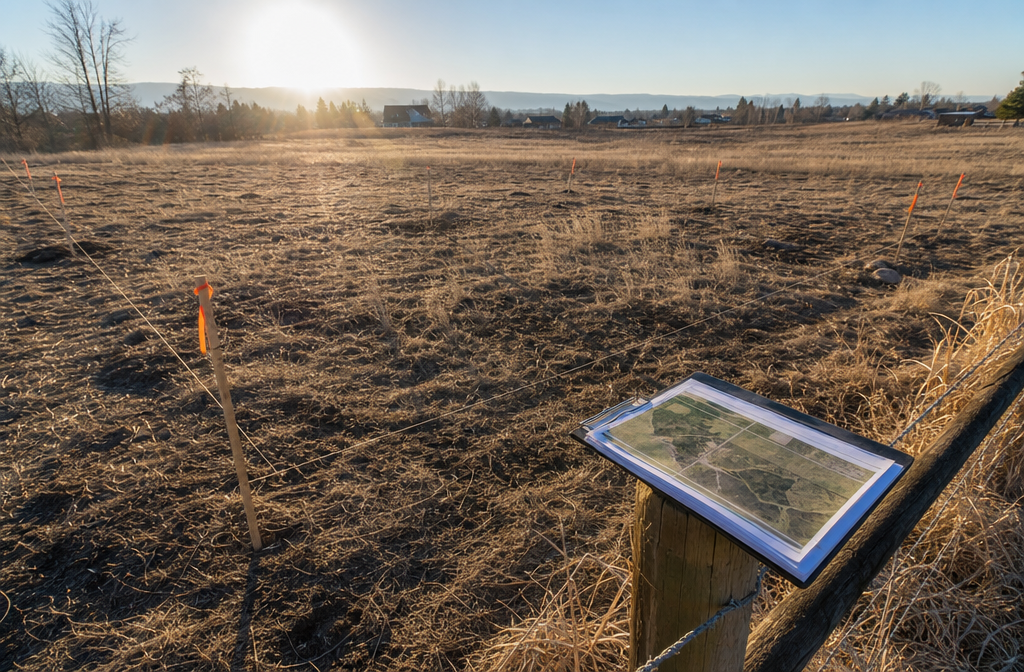
What Exactly Is Land Investment and How Does It Work?
Land investment means buying a parcel of real property — typically undeveloped or minimally improved — with the expectation that it will increase in value, generate income, or serve as the foundation for future development. Unlike buying a rental house, you’re not acquiring a building. You’re acquiring the ground itself.
Here’s how it works in practice:
- Buy and hold: Purchase land in a path-of-growth area, hold it for years, and sell when demand pushes prices up
- Land flipping: Buy undervalued parcels (often from motivated sellers or tax delinquent lists), then resell quickly at a markup — sometimes within weeks
- Lease for income: Rent land to farmers, hunters, cell tower operators, or billboard companies for passive income land cash flow
- Develop or subdivide: Add value by getting permits, splitting parcels, or installing utilities before selling to developers at a premium
Land investments: the quiet wealth strategy most investors miss works precisely because most investors are chasing the same rental properties and fix-and-flips. The land market is less competitive, less efficient, and full of sellers who just want out — which creates real buying opportunities for those paying attention.
Land Investments: The Quiet Wealth Strategy Most Investors Miss — Why It Actually Works
The reason land investing flies under the radar is simple: it’s not flashy. There’s no renovation reveal, no tenant success story, no Airbnb income screenshot. But the fundamentals are impeccable.
Land is the one asset they’re not making more of. That quote gets attributed to Mark Twain, and whether he actually said it or not, the logic holds. As population centers expand, as infrastructure pushes outward, and as agricultural demand grows globally, land in the right locations becomes more valuable — often without the owner doing a single thing.
Consider what land investing offers that most other strategies don’t:
| Feature | Land Investment | Rental Property |
|---|---|---|
| Maintenance costs | Near zero | Ongoing |
| Tenant management | None | Active |
| Entry price point | Can start under $5,000 | Typically $50,000+ down |
| Depreciation (tax) | Not applicable | Available |
| Appreciation potential | High in growth areas | Moderate to high |
| Financing options | Seller financing common | Traditional mortgage |
| Liquidity | Lower | Moderate |
The trade-off is real: land is less liquid than a rental and produces no immediate cash flow unless you lease it. But for investors who want to build a real estate investment portfolio without the headaches of property management, land is extraordinarily compelling.
So based, honestly. The investors quietly accumulating land near expanding metros and agricultural corridors aren’t gatekeeping — they just haven’t been loud about it. Until now.
How Much Money Do You Need to Start Investing in Land?
You can start investing in land for as little as $1,000–$5,000 in rural or low-demand markets. That’s not a typo. Unlike residential real estate, where even a modest down payment can run $20,000–$50,000, land investing for beginners is genuinely accessible at lower price points.
Here’s a realistic breakdown by entry level:
Under $5,000: Rural parcels in low-demand counties, desert land in the Southwest, cutover timber land in the Southeast. These deals exist, but require more due diligence — check for road access, utilities, and zoning before buying anything.
$5,000–$25,000: Small recreational lots, rural residential parcels, agricultural land in secondary markets. This range opens up seller financing land deals where you put 10–20% down and pay the rest over time.
$25,000–$100,000: Infill lots in suburban markets, agricultural acreage with income potential, land near expanding metros. This is where the strongest appreciation plays tend to live.
$100,000+: Commercial land, development-ready parcels, larger agricultural tracts. Accredited investors often operate here.
If you’re working with limited capital, check out our guide on how to invest in real estate with $5,000 or less — several of those strategies pair well with land investing.
Common mistake: Buying the cheapest land you can find without checking if it’s landlocked (no road access), in a flood zone, or zoned for a use that doesn’t match your plan. Cheap land can be cheap for a very good reason.
Raw Land vs. Developed Land: Which Is Better for Returns?
Raw land investing typically offers higher percentage returns but requires more patience and expertise. Developed or partially improved land offers lower risk and faster liquidity but costs more upfront.
Raw land means zero improvements — no utilities, no roads, no structures. The upside: you’re buying at the lowest point on the value curve. The downside: you may wait years before the market catches up to your vision, and carrying costs (property taxes) are entirely on you in the meantime.
Partially developed land — think a lot with a well, septic, and driveway already in — is closer to being “builder-ready.” It costs more, but it’s easier to sell, easier to finance, and attracts a broader buyer pool.
Choose raw land if:
- You have a long time horizon (5–15 years)
- You’re buying in a proven path-of-growth corridor
- You can afford to carry the property tax with no income
Choose developed or partially improved land if:
- You want faster resale potential
- You’re targeting builders or developers as buyers
- You’re newer to land investing and want lower complexity
For investors exploring the full spectrum of property types, our complete guide to the 4 essential property types for investments breaks this down further.

What Are the Biggest Risks of Buying Undeveloped Property?
The biggest risks in raw land investing are lack of access, zoning restrictions, environmental contamination, and illiquidity. Most of these risks are avoidable with proper due diligence — but they destroy returns when ignored.
Top risks to know before you buy:
- Landlocked parcels — No legal road access means the land is nearly worthless. Always verify a deeded easement or direct road frontage.
- Zoning restrictions — A parcel zoned agricultural can’t be used for residential development without a rezoning, which is never guaranteed. Check with the county before closing.
- Environmental issues — Old dump sites, underground storage tanks, or wetland designations can make land unbuildable and expensive to remediate.
- No utilities — Extending water, sewer, or electricity to a remote parcel can cost $20,000–$100,000+. Factor this in before assuming you got a deal.
- Illiquidity — Land takes longer to sell than houses. If you need cash fast, land is not your best vehicle.
- Title problems — Unclear ownership, back taxes, or liens can cloud a title. Always get title insurance and a proper title search.
For a deeper look at real estate investment risks across asset types, our real estate investment risks resource covers the full picture.
Edge case: Some investors buy landlocked parcels intentionally at steep discounts, then negotiate an easement with the neighboring landowner. It’s a higher-risk play, but the spread between purchase price and post-easement value can be extraordinary.
How Much Can You Actually Make From Land Investments?
Returns from land investing vary widely — from modest 10–20% annual appreciation in stable markets to 200–500%+ gains on well-timed raw land flips near high-growth areas. There’s no guaranteed number, but the ceiling is genuinely high for investors who buy right.
Here’s how the money actually gets made:
Land appreciation: In markets where population is growing and developable land is scarce, values can double or triple over a 5–10 year hold. Texas, Florida, Tennessee, and the Carolinas have seen some of the strongest land appreciation in recent years.
Land flipping: Buy a $3,000 rural parcel, market it to recreational buyers or homesteaders, sell it for $8,000–$12,000. Repeat. Many land flippers run this as a volume business, closing 10–30 deals per year with relatively small capital.
Passive income land: Lease your acreage to a farmer, hunter, or cell tower company. Agricultural leases typically run $50–$300 per acre annually depending on soil quality and location. A 100-acre farm lease can generate $5,000–$30,000 per year with zero management.
Development upside: Buy raw land, get it entitled (permits, zoning approvals, utility connections), and sell to a developer at a significant premium. Entitlement alone can double or triple land value.
Let it cook before you see results — that’s the honest truth about land investing. The biggest gains usually come to investors who buy early, hold patiently, and sell when demand catches up.
Is Land Investing Good for Beginners or Just for Experienced Investors?
Land investing is genuinely beginner-friendly in terms of entry cost and management simplicity, but it requires more research upfront than buying a turnkey rental. The learning curve is real — but it’s learnable.
Why it works for beginners:
- Lower price points mean smaller mistakes cost less
- No tenants, no maintenance calls, no property management fees
- Seller financing land deals often don’t require a credit check
- The due diligence checklist is shorter than for residential properties
Where beginners get tripped up:
- Skipping the title search to save money
- Not verifying road access before closing
- Buying in markets with no buyer demand
- Overestimating how quickly land will sell
If you’re brand new to real estate investing, start with our beginner’s blueprint for how to invest in real estate before committing capital to land. Understanding the broader investment landscape makes land decisions sharper.
Decision rule: If you have $5,000–$20,000 to invest, a long time horizon, and zero interest in managing tenants, land investing for beginners is one of the most practical starting points available in 2026.
What Mistakes Do New Land Investors Typically Make?
The most common mistakes in land investing come down to skipping due diligence, misjudging the exit market, and underestimating carrying costs. These aren’t fatal errors, but they can turn a promising deal into a years-long headache.
Top mistakes — and how to avoid them:
- Buying without a site visit: Photos lie. Always visit or hire someone local to walk the property before closing.
- Ignoring the buyer pool: Who will you sell this land to, and when? If there’s no local demand from builders, farmers, or recreational buyers, your exit is a problem.
- Miscalculating property taxes: Land taxes are typically lower than residential, but on large acreage they add up. Know your annual carry cost before you buy.
- Skipping the survey: Boundary disputes are expensive and slow. A current survey is worth every dollar.
- Assuming appreciation is automatic: Land in a declining rural county with no growth drivers doesn’t appreciate. Location still matters — maybe more with land than with houses.
- Not understanding land loans: Land and construction loans have different underwriting standards than residential mortgages. Expect higher down payments (typically 20–50%) and shorter terms unless you use seller financing.
How Do Property Taxes and Zoning Laws Impact Land Value?
Property taxes and zoning are the two biggest external forces controlling what your land is worth — and what you can do with it. Get these wrong and even a well-located parcel becomes a liability.
Property taxes: Land is taxed based on assessed value, which varies dramatically by county and state. Agricultural land often qualifies for preferential tax treatment (Greenbelt or agricultural exemptions) that can reduce your annual bill by 50–90%. Losing that exemption when you sell or change use can trigger a significant tax recapture. Know the rules in your target county before you buy.
Zoning laws: Zoning determines what can legally be built or done on a parcel. The main categories:
| Zoning Type | What It Allows | Impact on Value |
|---|---|---|
| Residential (R1, R2) | Single or multi-family homes | High near metros |
| Agricultural (A1) | Farming, limited structures | Moderate, income potential |
| Commercial (C1, C2) | Retail, office, mixed-use | High in growth corridors |
| Industrial (I1) | Warehouses, manufacturing | High near logistics hubs |
| Conservation/Wetland | Very limited use | Low to no development value |
Key insight: Buying land zoned agricultural adjacent to a growing suburb — then pursuing a rezoning to residential — is one of the most powerful value-add plays in land investing. It’s not easy, but the upside can be extraordinary.
Can You Invest in Land With Little Money or No Credit?
Yes — and this is one of the features that makes land investments: the quiet wealth strategy most investors miss so compelling for people who’ve been shut out of traditional real estate. Seller financing land deals are common, and many don’t require a credit check at all.
How to buy land with no money down or bad credit:
Seller financing: The landowner acts as the bank. You agree on a price, put down 0–20%, and pay monthly installments directly to the seller. Terms are negotiable. Many rural landowners prefer this arrangement for the steady income stream and tax benefits.
Land contract (contract for deed): Similar to seller financing — you make payments over time and receive the deed when the balance is paid. Common in the Midwest and South.
Partner with a cash buyer: Bring the deal and the due diligence; a partner brings the capital. Split the profit at exit.
Wholesaling land: Find a motivated seller, get a contract at a low price, then assign that contract to a cash buyer for a fee. No purchase required — just the ability to find deals.
Platforms that help: LandWatch and LandModo both list seller-financed properties with filters to find them quickly. Land investing online has never been more accessible — you can find, research, and close deals from your laptop.

What Types of Land Are Best for Long-Term Appreciation?
The land types with the strongest long-term appreciation track record are infill lots in growing metros, agricultural land with water rights, and recreational land near population centers. Each serves a different investor profile.
Top land categories for 2026 and beyond:
1. Infill lots near expanding metros
As cities like Austin, Nashville, Raleigh, and Phoenix continue growing outward, raw land in their path becomes extraordinarily valuable. These are the deals where patient investors see 3–5x returns over a decade.
2. Agricultural land investments
Farmland has historically appreciated 5–7% annually over long periods while generating lease income. The global food security conversation has only strengthened demand. Agricultural land investments are increasingly attracting institutional capital — which tends to be a leading indicator of where retail investors should be paying attention.
3. Recreational land investments
Hunting land, fishing properties, and off-grid parcels have surged in demand since 2020. Remote work made rural recreational land a lifestyle purchase for millions of buyers. Recreational land investments near lakes, rivers, or national forests in states like Montana, Tennessee, and Arkansas have seen sharp appreciation.
4. Timber land
Timber land generates income from harvesting cycles while the underlying land appreciates. It’s a slow-burn play, but the dual income stream (timber sales + land value) makes it compelling for long-horizon investors.
5. Land near infrastructure projects
New highways, airports, data centers, and industrial parks create land value spikes in surrounding areas. Tracking infrastructure announcements is a legitimate edge for land investors.
How Does Agricultural Land Investing Compare to Residential?
Agricultural land investing offers steadier, income-backed appreciation with lower volatility than residential land, but it requires understanding farming economics, water rights, and soil quality. Residential land near growth corridors can deliver faster and larger gains, but carries more timing risk.
Agricultural land advantages:
- Lease income from day one (farmers pay to use your land)
- Lower property taxes with agricultural exemptions
- Less speculation-driven — values tied to crop yields and commodity prices
- Institutional demand (pension funds, REITs) provides a price floor
Residential land advantages:
- Faster appreciation near growing population centers
- More buyer types at exit (builders, developers, homeowners)
- Easier to finance and sell in smaller parcels
The honest comparison: Agricultural land investments are the tortoise — steady, income-producing, boring in the best way. Residential land near a metro growth corridor is the hare — potentially faster, but you need to time the market correctly.
For investors interested in the broader passive income picture, our roundup of best alternatives to REITs for passive income includes several strategies that pair well with land.
What Are the Hidden Costs Most People Don’t Consider When Buying Land?
The hidden costs of buying land typically add 10–20% to your all-in purchase price and include survey fees, title insurance, environmental assessments, closing costs, and ongoing property taxes. Ignoring these turns a great deal into a break-even.
Hidden costs checklist:
- Survey: $500–$2,500 depending on acreage and terrain. Non-negotiable.
- Title search and title insurance: $300–$1,500. Protects against ownership disputes and liens.
- Environmental assessment (Phase I): $1,500–$3,500 for larger parcels or any land with prior industrial use.
- Perc test (for septic): $300–$1,000 if you plan to build or sell to someone who does.
- Property taxes: Varies by county — budget 0.5–2% of assessed value annually.
- Land loan fees: If using a land loan or land and construction loan, expect origination fees, higher interest rates, and potentially required surveys before closing.
- HOA or deed restrictions: Some rural subdivisions have covenants that restrict use. Read these before buying.
- Access improvements: If the parcel has no road, a basic gravel driveway can run $5,000–$30,000.
Bottom line: Always build a full cost model before closing. The purchase price is just the starting number.
How to Find Good Land Investment Opportunities in Your Area
The best land investment opportunities come from combining online platforms, county records, and direct outreach to motivated sellers — not from waiting for a deal to land in your inbox.
Where to look:
Online platforms:
- LandWatch — One of the largest land listing databases in the U.S. Filter by state, county, acreage, price, and seller financing availability
- LandModo — Aggregates listings from multiple sources, useful for price comparison and market research
- Zillow and Realtor.com — Less specialized but useful for tracking price trends on residential lots
- County tax assessor websites — Search for tax-delinquent properties, which often signal motivated sellers
Direct outreach:
- Mail letters to landowners in your target area (especially absentee owners who live out of state)
- Contact county tax offices for delinquent tax lists
- Network with local surveyors, title companies, and rural real estate agents — they know about deals before they hit the market
Data tools:
- PropStream and similar platforms let you filter land by ownership type, tax status, and time owned — powerful for finding motivated sellers
- Our guide to top real estate AI tools for investors covers several tools that work for land research
Decision rule: Start with one county you know well. Learn the zoning map, the average price per acre by zone, and the active buyer types. Depth in one market beats shallow coverage across ten.
FAQ: Land Investments Answered Directly
Q: Is land a good investment in 2026?
Yes — particularly in markets with population growth, infrastructure expansion, or agricultural demand. Land remains one of the few asset classes with near-zero carrying costs and no depreciation risk.
Q: How do I make money with land if it doesn’t produce income?
You can lease it (farming, hunting, cell towers, billboards), flip it for a profit, subdivide it, develop it, or simply hold it for appreciation. Income-producing land strategies exist at every price point.
Q: What is land flipping?
Land flipping is buying undervalued parcels — often from motivated or distressed sellers — and reselling them quickly at a higher price. Many land flippers use seller financing to buy, then resell on seller financing terms to their buyers, creating a note (monthly payment stream) as the exit.
Q: Can I get a mortgage to buy raw land?
Traditional mortgages don’t apply to raw land. You’ll need a land loan or land and construction loan, which typically requires 20–50% down, carries higher interest rates, and has shorter terms (3–10 years). Seller financing is often a better option for raw land purchases.
Q: What’s the difference between a land loan and a construction loan?
A land loan finances the purchase of the parcel only. A land and construction loan covers both the land purchase and the cost of building on it, disbursed in phases as construction progresses. Construction loans convert to a permanent mortgage once building is complete.
Q: How do I find cheap land to buy?
County tax delinquent lists, direct mail to absentee landowners, LandWatch, LandModo, estate sales, and foreclosure auctions are the most reliable sources for below-market land. The key is targeting motivated sellers, not just low-priced listings.
Q: Is agricultural land a good investment?
Yes — farmland has historically delivered consistent appreciation plus lease income, with lower volatility than residential real estate. It’s particularly strong for long-horizon investors who want passive income land without tenant management.
Q: What states have the best land investment opportunities in 2026?
Texas, Tennessee, Florida, North Carolina, Georgia, and Montana consistently rank among the strongest markets for land appreciation, driven by population growth, infrastructure investment, and recreational demand.
Q: Do I need a real estate agent to buy land?
Not always — many land deals are sold directly by owners or through specialized land brokers. If you’re buying through a listing, a buyer’s agent costs you nothing (seller pays). For off-market deals, you can negotiate directly.
Q: How long does it take to make money from land?
Land flipping can generate returns in 30–90 days. Buy-and-hold land appreciation typically takes 3–10 years to fully materialize. Lease income starts immediately if you have a tenant lined up.
Q: What is the best way to invest in land online?
LandWatch and LandModo are the primary platforms for land investing online. Combine them with county GIS maps (free, available for most counties) to verify boundaries, zoning, and access before making any offer.
Q: Is land investing passive?
Raw land investing is about as passive as real estate gets — no tenants, no maintenance, no management. The active work happens at acquisition (due diligence) and disposition (marketing the sale). Everything in between is mostly waiting.
Conclusion: Start Looking at What Others Keep Scrolling Past
Land investments: the quiet wealth strategy most investors miss isn’t some obscure secret — it’s just an asset class that doesn’t come with a renovation montage or an Instagram-worthy before-and-after. That’s exactly why the opportunity is still there.
The fundamentals are fresh and they’re real: low entry costs, minimal carrying expenses, no tenants, seller financing options that bypass traditional credit requirements, and appreciation potential that’s extraordinary in the right locations. Agricultural land investments and recreational land investments are drawing institutional attention. Infill lots near growing metros are getting harder to find. And the investors who got in early? They’re not complaining.
Your next steps:
- Pick one target market — one county, one region you know or want to know. Study the zoning map and average price per acre.
- Set up alerts on LandWatch and LandModo for your target area and price range.
- Run your full cost model before any offer — purchase price, survey, title, taxes, and carry costs.
- Explore financing options — check seller financing listings first, then compare land loan terms from local community banks and credit unions.
- Start small — a $5,000–$15,000 first deal teaches you more than any course. Learn the market, make the mistakes small, and scale from there.
For investors ready to go deeper on building a broader portfolio, our real estate investment strategies hub and investment hub are solid next stops.
The land is out there. The deals are real. Most investors are just too busy chasing the obvious plays to notice. Don’t be most investors.
Have questions about land investing or want to see us cover a specific market? Reach us at news@realestaterankiq.com or follow us at @realestaterankiq for weekly real estate intelligence — free, unbiased, built by brokers.
Tags: land investments, raw land investing, land flipping, agricultural land investments, recreational land investments, land investing for beginners, seller financing land, passive income land, how to invest in land, land appreciation, LandWatch, land and construction loans