

Last updated: July 20, 2026

Quick Answer: For most homeowners sitting on significant equity, 2026 is still a solid time to sell, inventory remains below historical norms in most U.S. markets, and home prices have held steady despite elevated mortgage rates. That said, sellers with low locked-in rates and no urgent reason to move may find 2027 worth the wait if rate relief materializes as predicted.
Key Takeaways
- The National Association of Realtors (NAR) reported median existing-home prices rose approximately 3.9% year-over-year as of early 2026, keeping seller equity strong.
- Mortgage rates have hovered in the 6.5%,7% range through mid-2026 (Freddie Mac), suppressing buyer demand but also limiting competing inventory from other sellers.
- Fannie Mae's 2026 housing forecast projects modest price growth of 2%,4% through 2027, meaning waiting may yield marginal gains, not a windfall.
- Homeowners with sub-4% mortgage rates face a real financial penalty if they sell and rebuy at current rates, this "rate lock-in effect" is a legitimate reason to pause.
- The average days-on-market for U.S. homes sat at approximately 53 days as of spring 2026 (Redfin), up from pandemic lows but still manageable for well-priced homes.
- Federal capital gains exclusions ($250K single / $500K married) still apply in 2026, sellers who qualify should factor this into their timing decision.
- Seller concessions are rising in 2026, meaning buyers are negotiating harder, pricing strategy and home condition matter more than ever.

What Are the Current Housing Market Conditions in 2026?
The U.S. housing market in 2026 is best described as a slow simmer, not the boiling frenzy of 2021, but far from frozen. Prices are still elevated, inventory is still lean in most metros, and buyers are still buying. Just more carefully.
According to the National Association of Realtors, existing-home sales have stabilized after the sharp correction of 2022-2023. Median home prices nationally sit around $415,000,$420,000 as of mid-2026, representing modest year-over-year appreciation. That's extraordinary staying power given how aggressively the Federal Reserve raised rates.
Here's what's driving the current market:
- Inventory shortage persists. New housing construction has improved but hasn't closed the gap. The U.S. is still estimated to be short roughly 4 million homes (NAR, 2025).
- Rate lock-in effect. Millions of homeowners with 3%,4% mortgages are reluctant to sell and trade into a 6.5%+ rate. This keeps supply tight.
- Buyer demand is selective. Buyers are still active but pickier. Overpriced or poorly staged homes sit. Well-priced, move-in-ready homes still attract multiple offers in desirable markets.
- Regional divergence is real. Sun Belt markets like Austin and Phoenix have cooled significantly. Northeast and Midwest metros like Columbus, Cleveland, and Hartford remain competitive.
So is it a good time to sell a house, or wait for 2027? The answer depends heavily on your local market, your financial situation, and what you're moving into next. For a deeper look at how stable rates are reshaping both buyer and seller behavior, check out our breakdown of 2026 real estate trends and how 6% rates are reshaping market strategies.
How Do Mortgage Rates Affect Home Selling Decisions?
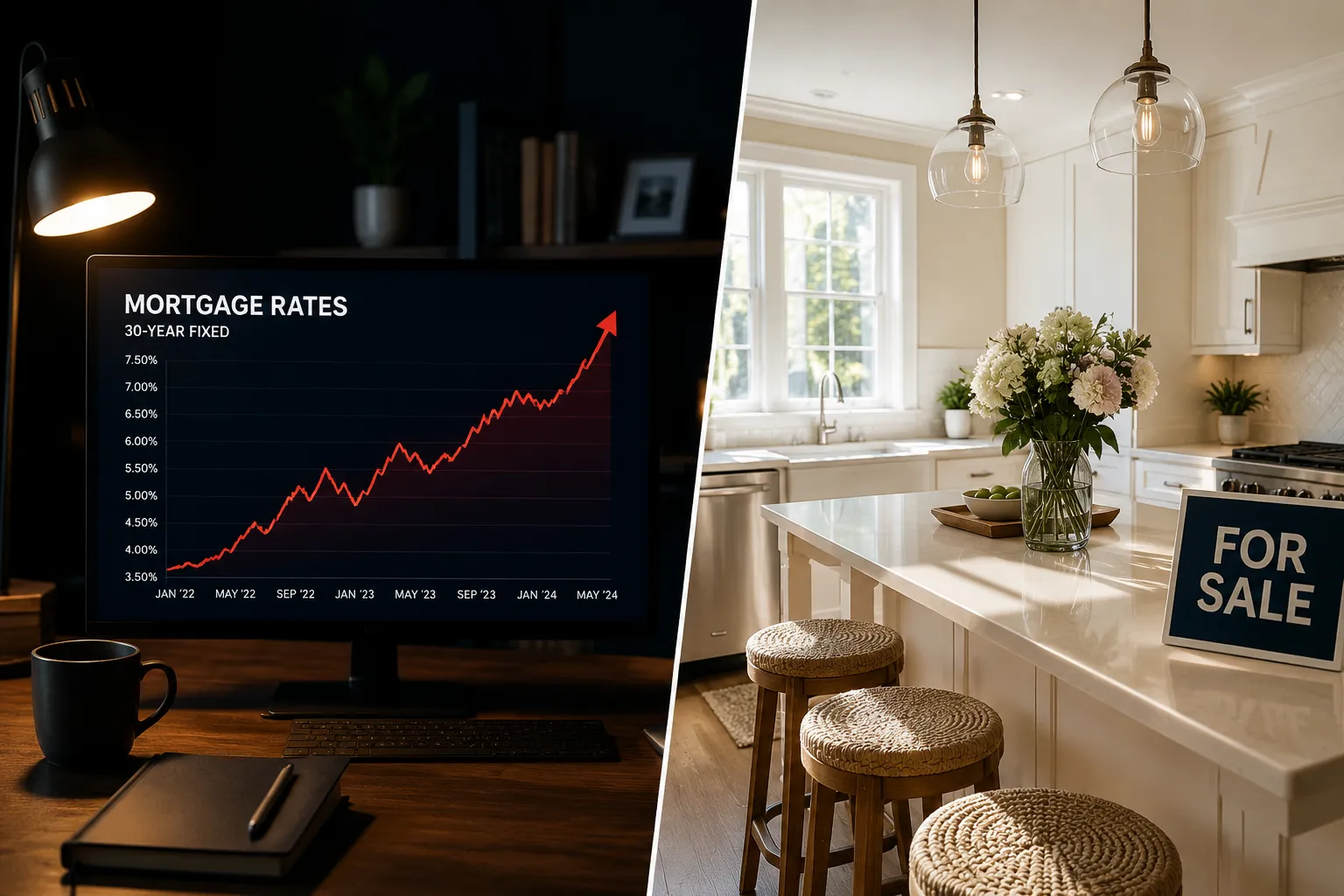
High mortgage rates don't just affect buyers, they directly impact sellers. Rates near 6.5%,7% reduce the pool of qualified buyers, slow price appreciation, and increase the time it takes to sell.
Here's the chain reaction: when rates rise, monthly payments on the same home price increase significantly. A buyer who could afford a $450,000 home at 3.5% now qualifies for roughly $350,000,$370,000 at 6.75% (assuming standard debt-to-income ratios). That's a real compression of purchasing power that sellers feel in their offers.
What this means for sellers in 2026:
- Expect more contingencies and longer negotiations
- Buyer inspection requests and repair asks are more aggressive
- Seller concessions (rate buydowns, closing cost credits) are increasingly common, our 2026 seller concessions predictions cover exactly what buyers are asking for
- Pricing at or slightly below comparable sales tends to generate more activity than testing the ceiling
The silver lining? Rates are expected to ease modestly by late 2026 into 2027, according to Fannie Mae's June 2026 forecast, which projects 30-year fixed rates declining toward the 6%,6.25% range by mid-2027. That could bring more buyers off the sidelines, but it could also bring more competing sellers.
Should I Sell My House Now or Wait for Prices to Drop, or Rise?
This is the question everyone's asking, and the honest answer is: prices are unlikely to drop significantly, and they're also unlikely to spike. Waiting for a big price jump is not a sound strategy for most sellers.
Fannie Mae's Housing Forecast (updated June 2026) projects home price appreciation of roughly 2%,4% nationally through 2027. That's real money on a $400,000 home, potentially $8,000,$16,000, but it doesn't account for the carrying costs of waiting: property taxes, maintenance, insurance, and opportunity cost.
Run the actual math before deciding:
| Scenario | Estimated Gain from Waiting to 2027 | Carrying Costs (12 months) | Net Benefit |
|---|---|---|---|
| $400K home, 3% appreciation | +$12,000 | -$8,000,$12,000 (taxes, insurance, upkeep) | $0,$4,000 |
| $400K home, 2% appreciation | +$8,000 | -$8,000,$12,000 | Negative |
| $600K home, 3% appreciation | +$18,000 | -$12,000,$18,000 | $0,$6,000 |
The math rarely makes a compelling case for waiting purely on price speculation. Where waiting does make sense: if you're in a cooling market that's expected to recover, or if you need more time to prepare the home properly. Don't rush a sale just because the calendar says 2026, but don't wait for a payday that may not come either.
What Do Experts Predict for the Real Estate Market in 2027?
Most major housing forecasters, Fannie Mae, Freddie Mac, NAR, and Zillow, agree on a few things for 2027: modest price growth, slowly improving inventory, and gradual rate relief. None of them are predicting a crash. None are predicting a boom.
Key 2027 predictions (as of mid-2026 forecasts):
- Fannie Mae projects 30-year fixed rates falling to approximately 6.0%,6.3% by end of 2026 and into 2027, which would improve affordability and buyer demand.
- NAR forecasts existing-home sales to increase modestly in 2027 as rate relief draws sidelined buyers back.
- Zillow's 2026 market outlook suggests markets with strong job growth, particularly in the Midwest and Southeast, will outperform national averages.
- Redfin economists have noted that a meaningful inventory unlock would require rates to drop to the 5.5%,6% range before locked-in sellers feel comfortable moving.
So based on the data, 2027 is likely to be a slightly better buyer's market than 2026, which means it could be a slightly more competitive seller's market if more buyers enter. That's a reasonable argument for holding if your home needs work or if you're in a market that's currently soft.
That said, nobody, not Fannie Mae, not Zillow, not us, can guarantee what 2027 brings. Geopolitical events, Fed policy shifts, and labor market changes can all move the needle fast. Waiting for perfect conditions is gatekeeping yourself out of real money sitting on the table today.
Is It a Good Time to Sell a House If You Have a Low Mortgage Rate?
This is one of the most real financial dilemmas homeowners face in 2026. If you locked in a 3% or 3.5% mortgage, selling means giving that up and buying into a 6.5%+ rate environment. That's not a small thing.
Let's say you have a $300,000 mortgage balance at 3.25%. Your monthly payment is roughly $1,305. If you sell, move, and take on a new $350,000 mortgage at 6.75%, your new payment jumps to approximately $2,270. That's nearly $1,000 more per month, $12,000 per year, just in mortgage payments.
Who should still sell despite a low rate:
- Life circumstances demand it (divorce, job relocation, growing family, downsizing)
- Your equity is substantial and you're moving to a lower cost-of-living area
- You plan to pay cash or put down 50%+ in the new purchase
- You're converting to a rental and keeping the low-rate property
Who should seriously consider waiting:
- You have no urgent reason to move
- You'd be buying a comparable or more expensive home in the same market
- Your current home needs work that would increase its value if done first
Our sell, stay, or rent it out decision guide walks through exactly this scenario with real numbers.
What Are the Tax Implications of Selling a House in 2026?
The federal capital gains exclusion is one of the most underused tools in a homeowner's financial arsenal, and it's still fully intact in 2026. If you've lived in your home as your primary residence for at least 2 of the last 5 years, you can exclude up to $250,000 in profit from capital gains taxes ($500,000 for married couples filing jointly).
Key tax facts for sellers in 2026:
- The 2-of-5-year rule must be met to qualify for the exclusion (IRS Section 121)
- Gains above the exclusion threshold are taxed at long-term capital gains rates: 0%, 15%, or 20% depending on your income
- Depreciation recapture applies if you've rented the property at any point
- State taxes vary, California, for example, taxes capital gains as ordinary income
Common mistake: Sellers who've owned their home for 10+ years and have seen significant appreciation sometimes forget to account for gains above the exclusion. If your home has appreciated $600,000 and you're a single filer, $350,000 of that is taxable. That's a conversation to have with a CPA before you list.
For investors selling rental or investment properties, a 1031 exchange may defer capital gains taxes entirely, worth knowing before you close.
How Long Does It Take to Sell a House in 2026, and What Will It Cost?
The average days-on-market for U.S. homes was approximately 53 days as of spring 2026 (Redfin), but that number varies wildly by market, price point, and condition. In hot Midwest markets, well-priced homes still move in under 2 weeks. In softer Sun Belt markets, 60-90 days is common.
Typical seller costs to budget for:
- Agent commissions: Typically 2.5%,3% for the listing agent, plus buyer's agent compensation (now negotiated separately post-NAR settlement)
- Closing costs: Sellers typically pay 1%,3% of the sale price in closing costs (title, escrow, transfer taxes, attorney fees depending on state)
- Pre-sale repairs and staging: $1,000,$10,000+ depending on condition
- Carrying costs during listing: Mortgage, taxes, insurance, utilities for every month the home sits
On a $450,000 home, total selling costs often land between $25,000,$40,000 before you see a net check. For a detailed breakdown, our seller closing costs guide lays out exactly what you'll pay and where you can cut.
What Home Improvements Increase Resale Value the Most Before Selling?
Not all renovations are created equal. The projects that feel expensive and impressive to you may not move the needle for buyers, and some can actually work against you.
Highest ROI improvements before selling (2026 data, Remodeling Magazine Cost vs. Value Report):
- Garage door replacement: Estimated 193% ROI, the single best return in recent years
- Entry door replacement (steel): Approximately 188% ROI
- Minor kitchen remodel: 96% ROI (fresh cabinet faces, hardware, countertops, not a full gut)
- Manufactured stone veneer (exterior): Approximately 153% ROI
- Deck addition (wood): Around 83% ROI
What to skip before selling:
- Full kitchen or bathroom gut renovations, buyers often prefer to customize themselves
- Swimming pools, rarely recoup full cost and can limit buyer pool
- High-end finishes in entry-level neighborhoods, the market won't support the price
Our best home improvements before selling guide ranks the top projects with actual return data. Let it cook before you see results on the bigger reno projects, but for a quick sale, focus on curb appeal and cleanliness first.
Who Should Sell Now Versus Who Should Wait for 2027?
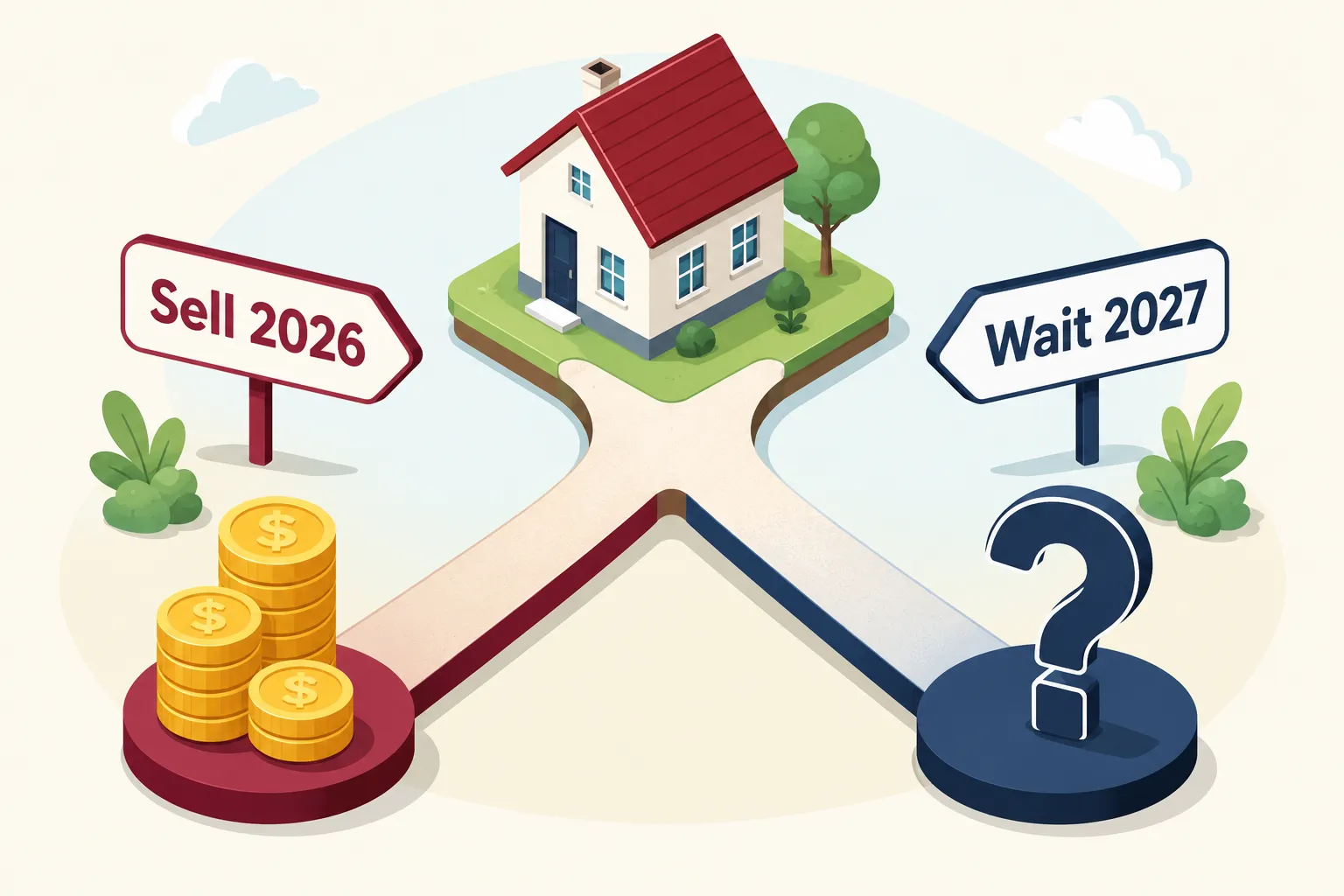
So is it a good time to sell a house, or wait for 2027? Here's the straight answer broken down by situation.
Sell in 2026 if:
- You have a life event driving the move (job change, family growth, divorce, health)
- You're downsizing and plan to buy a lower-priced home or move to a lower-cost market
- Your home is in excellent condition and priced competitively
- You've held the property long enough to qualify for the capital gains exclusion
- You're in a market where inventory is still tight and demand is steady
Wait for 2027 if:
- Your home needs significant work that would meaningfully increase its value
- You have a sub-4% mortgage and no compelling reason to move
- You're in a market that's currently oversupplied and softening
- You need more time to build equity or meet the 2-of-5-year tax rule
- You're waiting for a specific life event (retirement, kids finishing school)
The fresh take: The best time to sell is when your personal situation aligns with reasonable market conditions, not when you've perfectly timed the market. Nobody rings a bell at the top. The sellers who did extraordinarily well in 2021 weren't geniuses; they were ready. Being ready matters more than being perfect.
For sellers who are ready to move forward, our 60-day home selling plan with AI tools is an impeccable starting point.
What Mistakes Do Homeowners Make When Timing a Home Sale?
Timing mistakes cost sellers real money. Here are the most common ones we see, and how to avoid them.
1. Waiting for a "perfect" market that never comes.
The market doesn't owe you a peak. Sellers who held out in 2022 hoping for one more year of appreciation watched prices flatten and rates spike.
2. Overpricing because of emotional attachment.
Your memories don't add value to the appraisal. Overpriced homes sit, accumulate days-on-market stigma, and eventually sell for less than if they'd been priced right from day one. Our 7 pricing mistakes that trigger price cuts is so based, it's the kind of intel most agents won't tell you upfront.
3. Skipping pre-listing prep.
A fresh coat of paint, clean carpets, and decluttered spaces are not optional. Buyers decide in the first 8 seconds. First impressions are everything.
4. Ignoring seasonal patterns.
Spring (March, June) consistently produces the most buyer activity and highest sale prices nationally. Listing in December or January in most markets is a real disadvantage unless inventory is extremely tight.
5. Not understanding their net proceeds.
Many sellers focus on sale price and forget about commissions, closing costs, mortgage payoff, and taxes. Run your net sheet before you list, not after you accept an offer.

Is It a Good Time to Sell a House? The Bottom Line for 2026 Sellers
The data points to 2026 being a reasonable, not extraordinary, not terrible, time to sell for most homeowners. Prices are holding, inventory is lean, and buyers are still active. The sellers who will do best are the ones who prepare their homes impeccably, price strategically, and understand their true net proceeds before signing anything.
Waiting for 2027 makes sense in specific scenarios, but it's not a universal win. Rate relief is coming slowly, price appreciation is modest, and carrying costs eat into any theoretical gain from holding.
The real gatekeeping in this market isn't about timing, it's about preparation, pricing, and knowing your numbers. Sellers who do those three things right in 2026 will close strong. Those who don't will be asking the same question in 2027.
For a complete playbook, visit the Real Estate Rank IQ Home Selling Hub, built by brokers, free for everyone.
Frequently Asked Questions
Will home prices drop in 2027?
Most major forecasters, including Fannie Mae and NAR, do not predict a significant price drop in 2027. The consensus is modest appreciation of 2%,4% nationally, with some regional softening in oversupplied Sun Belt markets.
Is it a good time to sell a house if the market is slowing?
A slowing market doesn't mean a bad market for sellers. If your home is priced correctly, in good condition, and in a desirable location, you can still sell successfully. The key is adjusting expectations: longer timelines, more negotiation, and potentially offering concessions.
How much equity do I need before selling?
As a general rule, you need enough equity to cover selling costs (typically 8%,10% of the sale price) and still walk away with a meaningful net. Selling with less than 10%,15% equity often results in little to no cash after costs.
What is the best season to sell a house in 2026?
Spring remains the strongest season nationally. Listings that go live in March through May typically see the most buyer traffic and the highest sale prices. That said, local market conditions vary, consult a local agent for your specific area.
Should I sell my house before buying another one?
In most cases, yes, especially in 2026 where contingent offers are less competitive. Selling first gives you a clear budget, eliminates the stress of carrying two mortgages, and strengthens your negotiating position as a buyer.
How do I know if my local market is a buyer's or seller's market?
A seller's market has less than 3 months of housing supply. A buyer's market has more than 6 months. Between 3-6 months is balanced. Check your local MLS data or ask a licensed agent for the current months-of-supply figure in your zip code.
Is it a good time to sell a house if I plan to rent afterward?
Potentially yes. If you're selling into a high-equity position and moving to a rental in a lower-cost area, you could come out ahead financially, especially if you invest the proceeds. The rent vs. buy in 2026 analysis breaks down when renting post-sale actually makes financial sense.
What is the rate lock-in effect and how does it affect sellers?
The rate lock-in effect refers to homeowners staying put because their current mortgage rate is significantly lower than what they'd get on a new loan. With millions of U.S. homeowners holding sub-4% rates and current rates near 6.5%,7%, many are choosing not to sell, which keeps inventory tight and supports home prices.
References
- National Association of Realtors (NAR). Existing-Home Sales and Median Price Data. 2025-2026. https://www.nar.realtor/research-and-statistics
- Fannie Mae. Housing Forecast. June 2026. https://www.fanniemae.com/research-and-insights/forecast
- Freddie Mac. Primary Mortgage Market Survey. 2026. https://www.freddiemac.com/pmms
- Redfin. Days on Market and Housing Market Data. Spring 2026. https://www.redfin.com/news/data-center/
- Remodeling Magazine. Cost vs. Value Report. 2025. https://www.remodeling.hw.net/cost-vs-value/
- Internal Revenue Service. Publication 523: Selling Your Home. 2025. https://www.irs.gov/publications/p523
- Zillow Research. 2026 Housing Market Outlook. 2026. https://www.zillow.com/research/