





Last updated: February 24, 2026
The real estate market in 2026 is serving up some extraordinary opportunities for both buyers and sellers, and seller concessions are about to become the secret weapon everyone’s talking about. With housing inventory climbing 8.9% and home values forecast to grow just 1.2%, the power dynamic is shifting in ways we haven’t seen in almost a decade[2][4]. Rank IQ: 7 Predictions on Seller Concessions in 2026 reveals how this market transformation will reshape negotiation strategies, closing costs, and deal structures across the country. Whether you’re a buyer looking to maximize savings or a seller trying to close deals faster, understanding these seven predictions could save you thousands of dollars and months of market time.
Key Takeaways
- Seller concessions will become standard negotiating tools as inventory rises 8.9% and creates more buyer leverage in 2026[4]
- Conventional loan concessions range from 3-9% of purchase price depending on down payment, while FHA allows up to 6% regardless[1]
- Market balance favors strategic concessions with home values growing only 1.2% and sales increasing 14% nationwide[2][3]
- Rate buydowns and closing cost help are replacing price cuts as builders’ primary incentive strategy[2]
- Buyers can request concessions without weakening offers in the most balanced market conditions in nearly a decade[3]
- Allowable concessions cover closing costs including attorney fees, appraisal costs, inspection fees, origination fees, and prepaid taxes[1]
- Strategic timing and loan type selection maximize concession opportunities and overall savings for buyers
Quick Answer
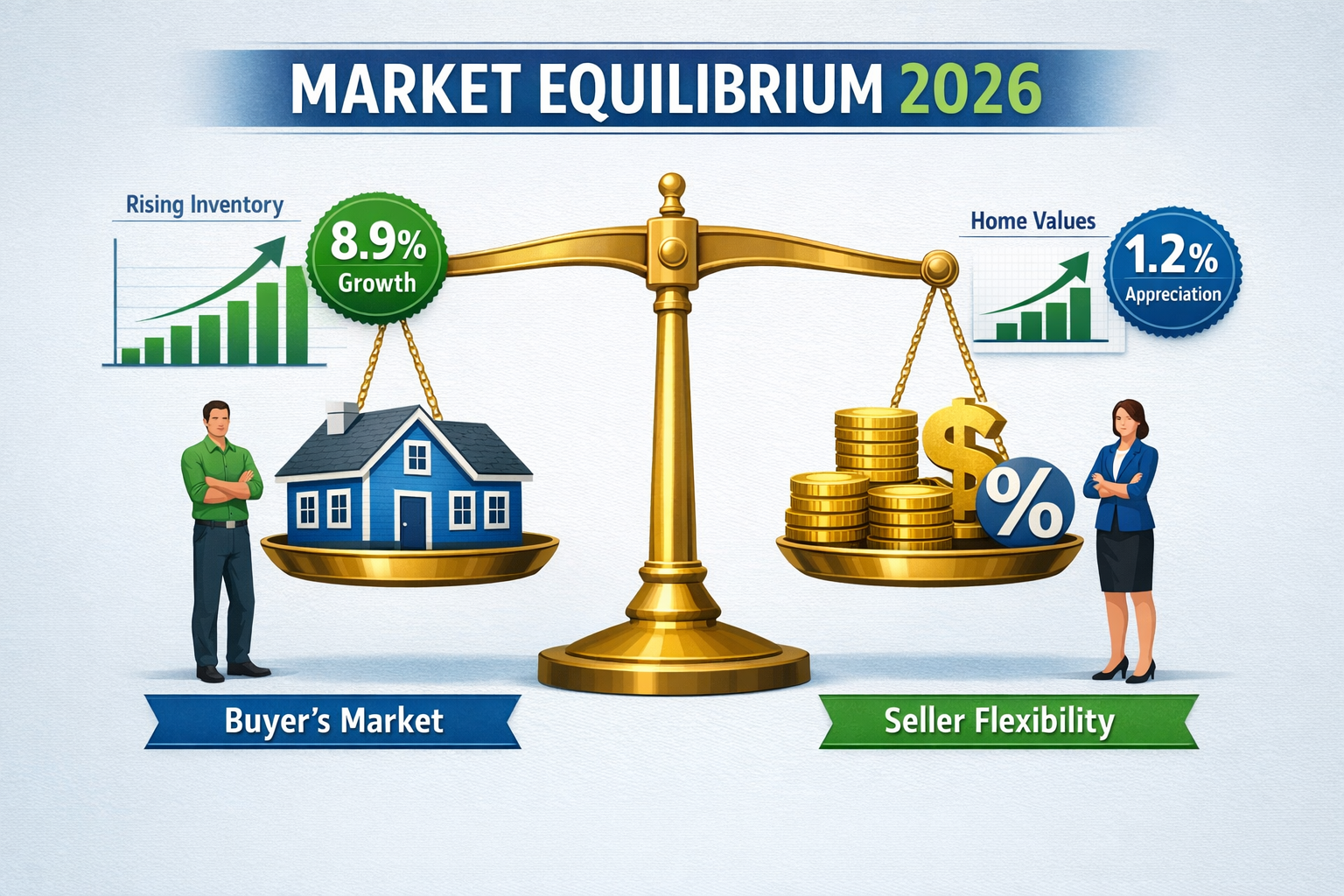
Seller concessions in 2026 will shift from rare exceptions to standard negotiating tools as rising inventory (up 8.9%) and modest price growth (1.2%) create the most balanced market in nearly a decade[2][4]. Sellers can offer 3-9% of purchase price for conventional loans and up to 6% for FHA loans to cover buyer closing costs, rate buydowns, and repairs[1]. This strategy helps sellers close deals faster while buyers reduce upfront costs without weakening their offers in an increasingly competitive bidding environment.
What Are Seller Concessions and Why Do They Matter in 2026?
Seller concessions are contributions sellers make toward buyer closing costs, prepaid expenses, or other transaction fees as part of the purchase agreement. In 2026, these concessions matter more than ever because they solve a critical problem: buyers want homes but struggle with upfront cash requirements, while sellers need to differentiate their properties in a market with 8.9% more inventory than the previous year[4].
Allowable concessions typically include:
- Attorney fees and title insurance costs
- Appraisal and inspection fees
- Loan origination fees and points
- Prepaid property taxes and homeowners insurance
- HOA transfer fees and assessments
- Temporary rate buydowns (reducing interest rates for 1-3 years)
The amount sellers can contribute depends on the loan type and buyer’s down payment. For conventional loans, sellers may offer 3% of the purchase price when buyers put down less than 10%, up to 9% when buyers put down 25% or more[1]. FHA loans allow up to 6% regardless of down payment, making them particularly attractive for buyers seeking maximum concessions[1].
Choose seller concessions if:
- Your home has been on the market longer than local average days on market
- Comparable homes in your area are offering buyer incentives
- You want to attract buyers who have strong credit but limited cash reserves
- Closing quickly matters more than maximizing net proceeds
The market dynamics in 2026 make concessions especially strategic. With home values growing at just 1.2% and inventory rising significantly, sellers who offer concessions can stand out without drastically cutting their asking price[2].
Rank IQ: 7 Predictions on Seller Concessions in 2026 – The Complete Forecast
Based on current market trends and expert forecasts, these seven predictions will reshape how buyers and sellers approach concessions throughout 2026.
Prediction #1: Concessions Become the New Price Cut
Rather than reducing listing prices, sellers will increasingly use concessions as their primary negotiating tool. This strategy preserves perceived home value while addressing buyer affordability concerns. Builders are already leading this trend, relying heavily on rate buydowns and closing cost help instead of price reductions[2].
Why this works: A $400,000 home with a $12,000 concession (3%) maintains its $400,000 comparable value for appraisal purposes, while a $388,000 list price creates a lower comp that affects neighborhood values. Smart sellers understand this distinction.
Prediction #2: Rate Buydowns Will Dominate Concession Requests
Temporary rate buydowns, where sellers pay upfront to reduce the buyer’s interest rate for 1-3 years, will become the most requested concession type. With mortgage rates still elevated, a 2-1 buydown (2% lower in year one, 1% lower in year two) provides immediate monthly payment relief that makes homes more affordable.
Example scenario: On a $400,000 loan at 6.5%, a 2-1 buydown costs the seller approximately $12,000 but reduces the buyer’s first-year payment by roughly $450/month. That’s an impeccable value proposition for cash-strapped buyers.
Prediction #3: FHA Buyers Will Have Maximum Leverage
FHA buyers will command the strongest negotiating position for concessions because FHA loans allow up to 6% of purchase price regardless of down payment[1]. In a market where inventory is rising and sellers need to be “more flexible,” FHA buyers can request comprehensive concession packages that cover virtually all closing costs plus rate buydowns[3].
This prediction challenges the traditional bias against FHA offers. In 2026, sellers who dismiss FHA buyers may be leaving serious money on the table by extending their market time.
Prediction #4: Geographic Concession Disparities Will Widen
Not all markets will experience equal concession activity. Markets with the highest inventory growth will see concession rates 2-3 times higher than supply-constrained markets. Sellers in markets experiencing population growth and new construction booms will need to offer more aggressive concessions to compete.
Markets likely to see highest concession rates:
- Secondary markets with significant new construction
- Areas where remote work has reduced demand
- Markets with above-average inventory-to-sales ratios
- Regions experiencing job market softening
Conversely, markets with continued supply constraints and strong job growth will maintain seller leverage with minimal concessions.
Prediction #5: Inspection Repair Concessions Will Replace Actual Repairs
Sellers will increasingly offer cash credits for repairs rather than completing repairs themselves. This trend accelerates closing timelines and eliminates disputes over repair quality. Buyers prefer cash because they can choose their own contractors and potentially negotiate better rates than sellers would pay.
The typical inspection repair concession in 2026 will range from $2,000-$8,000 depending on home age and condition. Sellers who build this into their pricing strategy from the start will negotiate more effectively than those who react defensively to inspection requests.
Prediction #6: Concession Caps Will Become Negotiating Points
Loan-type concession limits will become strategic negotiating elements rather than automatic maximums. Savvy buyers will structure offers that combine different concession types to maximize value within loan limits, while sellers will use partial concessions as counteroffers to preserve net proceeds.
Strategic concession structuring example:
- 3% toward closing costs
- 1% toward rate buydown
- $3,000 repair credit
- $500 home warranty
This approach stays within most loan limits while addressing multiple buyer concerns simultaneously.
Prediction #7: Sellers Who Refuse Concessions Will Pay in Extended Market Time
The most balanced market in nearly a decade means buyers have “more leeway” to walk away from inflexible sellers[3]. Homes that refuse reasonable concession requests will sit on market significantly longer, ultimately costing sellers more in carrying costs (mortgage, taxes, insurance, utilities) than the concession would have cost.
The math is so based: A seller who refuses a $10,000 concession but extends their market time by 60 days pays approximately $4,000-$6,000 in carrying costs plus risks market depreciation. That’s not strategy; that’s ego.
For detailed strategies on maximizing seller contributions, check out our guide on how to get a home seller to pay closing costs upfront.
How Do Different Loan Types Affect Seller Concession Limits in 2026?
Loan type determines the maximum seller concession allowed, making it a critical factor in negotiation strategy. Understanding these limits helps both buyers and sellers structure offers that maximize value while staying within lender guidelines.
Conventional Loan Concession Limits:
- Less than 10% down payment: 3% of purchase price maximum[1]
- 10-24.99% down payment: 6% of purchase price maximum[1]
- 25% or more down payment: 9% of purchase price maximum[1]
FHA Loan Concession Limits:
- Any down payment amount: 6% of purchase price maximum[1]
- Particularly advantageous for buyers with smaller down payments
- Covers all closing costs plus rate buydowns and prepaid items
VA and USDA Loan Concession Limits:
- VA loans: 4% of purchase price maximum
- USDA loans: 6% of purchase price maximum
- Both programs allow sellers to pay all buyer closing costs within these limits
The strategic implication for 2026: FHA buyers with minimal down payments can request the same 6% concession as conventional buyers putting down 10-24.99%, making FHA offers more competitive than many sellers realize.
Common mistake to avoid: Sellers often assume conventional loans are “safer” than FHA, but in 2026’s balanced market, the buyer’s financial strength and concession structure matter more than loan type. An FHA buyer with excellent credit and stable employment plus a 6% concession request may close more reliably than a conventional buyer with marginal credit and minimal reserves.
When Should Buyers Request Seller Concessions vs. Lower Purchase Price?
Buyers should request seller concessions rather than lower purchase prices when they need to preserve cash for reserves, want to reduce monthly payments through rate buydowns, or are purchasing in competitive markets where price reductions signal weakness.
Request concessions instead of price cuts when:
- You have limited cash reserves and need to preserve funds for emergencies
- Interest rates are high and rate buydowns provide better long-term value
- The home appraises at or above asking price (concessions don’t affect appraisal)
- You want to maintain negotiating flexibility with multiple concession types
- Closing costs and prepaid items exceed your available cash
Request price reductions instead of concessions when:
- You have ample cash reserves and want to minimize loan amount
- You’re making a cash offer without financing contingencies
- The home is overpriced relative to comparable sales
- You want to build instant equity from day one
- Lower loan amount reduces PMI or qualifies you for better rates
The 2026 market dynamics favor concession requests because they address the primary buyer challenge: cash flow constraints. With home sales predicted to increase 14% nationwide, buyers who structure offers strategically using concessions will win more bidding wars than those who simply offer lower prices[3].
Decision rule: If your monthly payment matters more than your loan balance, choose concessions. If your total loan amount matters more than upfront costs, choose price reductions.
For more insights on effective negotiation strategies, explore our negotiation power moves that save thousands.
What Closing Costs Can Sellers Pay Through Concessions?
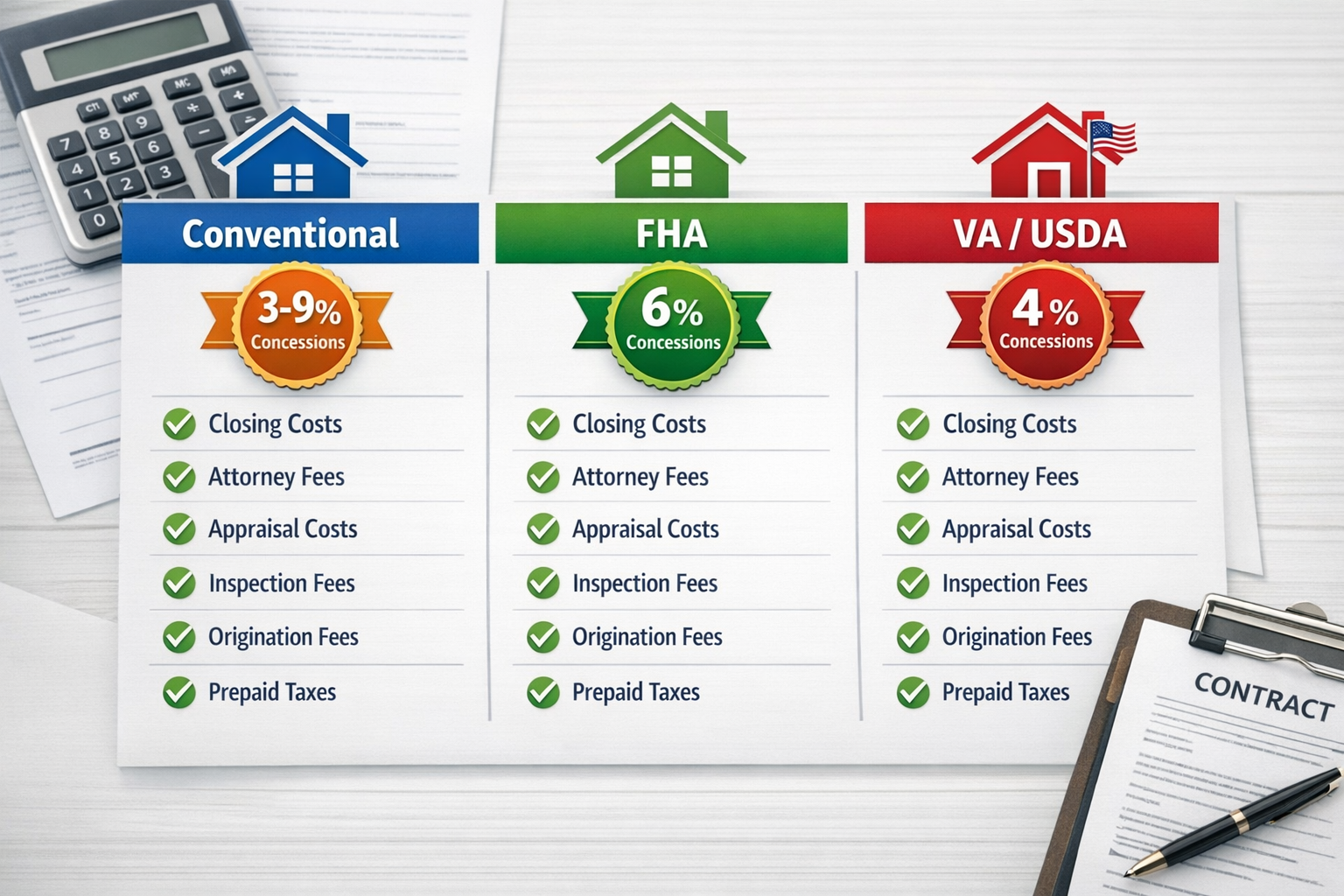
Sellers can pay virtually all buyer closing costs through concessions, subject to loan-type limits. Understanding which costs are allowable helps buyers structure comprehensive concession requests that maximize value.
Allowable seller-paid closing costs include:
Lender fees:
- Loan origination fees (typically 0.5-1% of loan amount)
- Underwriting fees ($400-$900)
- Processing fees ($300-$500)
- Discount points for rate buydowns
- Credit report fees ($25-$75)
Third-party fees:
- Appraisal fees ($400-$800)
- Home inspection fees ($300-$600)
- Title search and insurance ($1,000-$3,000)
- Attorney or escrow fees ($500-$2,000)
- Survey fees if required ($350-$600)
Prepaid items and reserves:
- Prepaid property taxes (varies by location and timing)
- Prepaid homeowners insurance (annual premium)
- Prepaid mortgage interest (from closing to month-end)
- Initial escrow deposits for taxes and insurance
Other allowable costs:
- HOA transfer fees and first-year dues
- Home warranty premiums ($400-$800)
- Recording fees ($50-$250)
- Flood certification fees ($15-$25)
Non-allowable items (sellers cannot pay):
- Buyer’s down payment (except through specific down payment assistance programs)
- Buyer’s personal debts or obligations
- Costs exceeding loan-type concession limits
- Fees unrelated to the property transaction
The total closing costs for buyers typically range from 2-5% of purchase price. A strategic seller concession can cover most or all of these costs, making homeownership accessible to buyers with limited cash reserves.
Edge case: In some states with high transfer taxes or attorney fees, closing costs can exceed typical concession limits. Buyers in these markets should prioritize which costs matter most and structure concession requests accordingly.
Learn more about managing these expenses in our comprehensive guide to seller closing costs and how to cut them.
How Do Seller Concessions Affect Home Appraisals and Loan Approval?
Seller concessions do not directly affect home appraisals because appraisers value the property based on comparable sales, not the terms of the purchase contract. However, concessions can indirectly impact loan approval if they signal potential overpayment or if the home doesn’t appraise for the purchase price.
How appraisers treat concessions:
- Concessions are noted in the appraisal report but don’t reduce appraised value
- Appraisers compare the property to similar homes regardless of concession amounts
- If comparable sales also included concessions, appraisers may adjust values accordingly
- The purchase price must still be supported by market data
How lenders view concessions:
- Lenders verify concessions don’t exceed loan-type limits
- Excessive concessions may trigger additional scrutiny of purchase price
- Lenders ensure concessions are used for allowable costs only
- Concessions within normal market ranges rarely cause approval issues
Potential red flags for underwriters:
- Concessions at maximum limits combined with minimal buyer reserves
- Purchase price significantly above recent comparable sales
- Multiple contract amendments increasing concession amounts
- Concessions paired with seller-paid repairs that weren’t disclosed
Best practice for 2026: Structure concessions as part of the initial offer rather than adding them through amendments. This demonstrates strategic planning rather than reactive problem-solving, which underwriters view more favorably.
Common mistake: Buyers sometimes think concessions reduce the amount they’re “really” paying. In reality, concessions are part of the purchase price—you’re borrowing more to cover closing costs rather than paying them out of pocket. This increases your loan amount and monthly payment slightly but preserves cash reserves.
What Are the Tax Implications of Seller Concessions for Buyers and Sellers?
Seller concessions create different tax implications for buyers and sellers, though neither party typically faces immediate tax consequences from the concession itself.
For sellers:
- Concessions reduce net proceeds from the sale
- Lower net proceeds may reduce capital gains (if applicable)
- Concessions are not separately deductible expenses
- They effectively reduce the sales price for tax calculation purposes
For buyers:
- Concessions increase the loan amount but not the cost basis
- Cost basis equals purchase price minus concessions for future capital gains calculations
- Closing costs paid through concessions are generally not deductible
- Mortgage interest and property taxes remain deductible (subject to standard limits)
Example tax scenario:
A seller accepts $400,000 with $12,000 in concessions. For tax purposes, the seller’s proceeds are reduced by the $12,000 concession amount. The buyer’s cost basis is $388,000 ($400,000 minus $12,000 concessions), which matters when calculating capital gains upon future sale.
Important distinction: Points paid for rate buydowns through seller concessions may be tax-deductible for buyers if they meet IRS requirements. Buyers should consult tax professionals to determine eligibility.
2026 consideration: With home values growing only 1.2%, capital gains implications are minimal for most sellers[2]. The tax benefits of concessions primarily come from their effect on net proceeds rather than creating new deductions.
How Should Sellers Price Homes When Planning to Offer Concessions?
Sellers should price homes at full market value when planning to offer concessions, not artificially inflate prices to “cover” concession costs. This strategy maximizes appraisal success while maintaining negotiating flexibility.
Optimal pricing strategy with planned concessions:
- Determine true market value using recent comparable sales
- List at or slightly above market value (within 2-3%)
- Advertise concession availability in listing remarks
- Structure concessions as negotiating tool rather than automatic offering
Why this approach works in 2026:
- Appraisers compare to market comps, not inflated prices
- Buyers perceive value when concessions come from fair-priced homes
- Over-pricing to cover concessions typically extends market time
- The balanced market gives buyers power to reject overpriced homes[3]
Pricing framework:
- Fair market value: $400,000
- List price: $405,000 (1.25% above market)
- Planned concession: $12,000 (3%)
- Net proceeds target: Same as listing at $393,000 without concessions
- Buyer perception: Getting deal on $405,000 home vs. overpaying for $393,000 home
Let it cook: This strategy takes patience. Sellers who advertise concession availability upfront attract more showings and often receive multiple offers, creating competition that may reduce the concession amount needed or eliminate it entirely.
Common pricing mistakes to avoid:
- Listing $15,000 above market to “cover” a $10,000 concession
- Hiding concession availability until negotiations begin
- Refusing to adjust strategy when market time exceeds local averages
- Treating concessions as losses rather than marketing investments
For sellers preparing their homes for maximum market appeal, our 60-day home selling plan provides a comprehensive roadmap.
What Market Conditions Make Seller Concessions Most Effective?
Seller concessions are most effective in balanced-to-buyer’s markets with rising inventory, moderate price growth, and buyers facing cash flow constraints. The 2026 market conditions align perfectly with these factors.
Ideal market conditions for concessions:
Rising inventory levels:
- 2026 inventory is forecast to grow 8.9%[4]
- More choices give buyers leverage to request concessions
- Sellers must differentiate properties through incentives
- Concessions become competitive necessities rather than exceptions
Modest price appreciation:
- 2026 home values forecast to grow just 1.2%[2]
- Slow appreciation reduces seller urgency to hold out
- Buyers feel less pressure to waive concession requests
- Market balance favors negotiation over bidding wars
Elevated financing costs:
- Higher mortgage rates increase buyer payment sensitivity
- Rate buydowns through concessions provide immediate relief
- Closing cost assistance preserves buyer cash reserves
- Financing challenges create concession opportunities
Increased days on market:
- Longer market times increase seller flexibility
- Carrying costs make concessions more attractive
- Buyer perception shifts when homes sit unsold
- Strategic concessions can restart showing activity
2026 market assessment: The combination of these factors creates “the most balanced market in almost a decade,” making concessions a fresh and effective strategy for sellers who want to close deals efficiently[3].
Concessions are less effective when:
- Inventory is severely constrained (multiple offer situations)
- Prices are rising rapidly (sellers have maximum leverage)
- Buyers have ample cash reserves (concessions provide minimal value)
- Days on market are minimal (demand exceeds supply)
For insights into broader market trends affecting these conditions, explore our 2026 real estate predictions.
How Can Real Estate Agents Help Clients Navigate Seller Concessions?
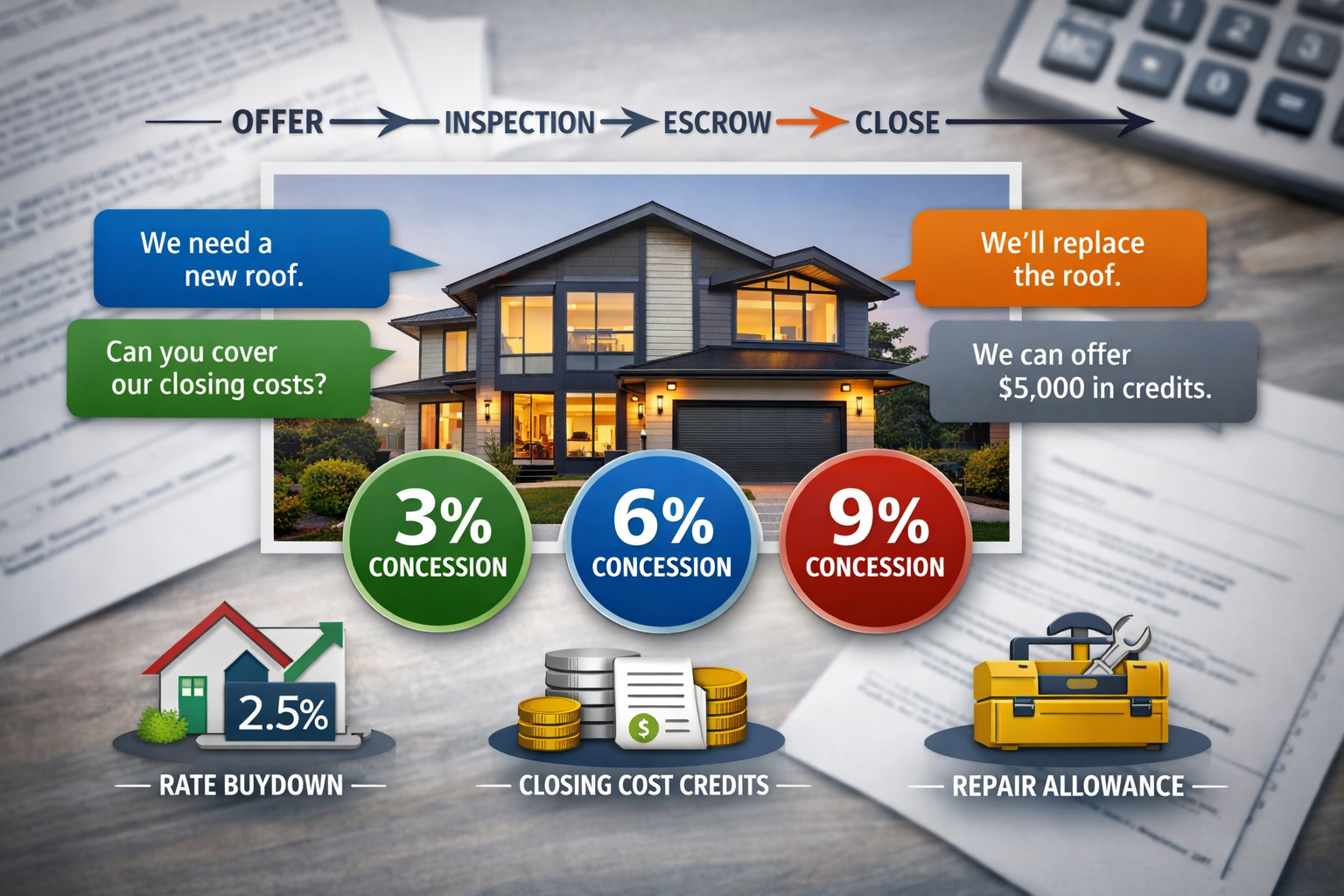
Real estate agents should educate clients on concession strategies early in the transaction process, structure offers that maximize value within loan limits, and use concessions as negotiating tools rather than last-resort compromises.
For buyer’s agents:
Pre-approval consultation:
- Review loan type and concession limits with lender
- Calculate total closing costs to determine concession needs
- Discuss rate buydown options and monthly payment impact
- Develop offer strategy that balances price and concessions
Offer structuring:
- Request concessions in initial offer when market conditions support it
- Specify exactly how concessions will be applied (closing costs, rate buydown, repairs)
- Ensure concession amounts stay within loan-type limits
- Include language protecting concessions if price is renegotiated after appraisal
Negotiation tactics:
- Use concessions as counteroffers to price reduction requests
- Structure escalation clauses that maintain concession amounts
- Prioritize concession types based on buyer’s financial situation
- Document all concession agreements clearly in contract amendments
For seller’s agents:
Listing preparation:
- Analyze local market to determine if concessions are strategically necessary
- Calculate net proceeds with various concession scenarios
- Advise on pricing strategy that accommodates planned concessions
- Market concession availability to attract qualified buyers
Offer evaluation:
- Compare net proceeds across offers with different concession structures
- Assess buyer qualification strength relative to concession requests
- Advise sellers on strategic counteroffers using partial concessions
- Explain long-term costs of refusing reasonable concessions
Market positioning:
- Highlight concession availability in listing descriptions
- Use concessions to differentiate properties in competitive markets
- Adjust concession strategy based on showing feedback and market time
- Track local concession trends to advise sellers accurately
Agent value proposition: In 2026’s balanced market, agents who master concession strategies provide extraordinary value to clients by structuring deals that close successfully while maximizing financial outcomes for all parties.
Agents looking to enhance their marketing and client communication should explore our guide on using social media and AI tools to sell real estate.
What Are the Biggest Mistakes Buyers and Sellers Make with Concessions?
The biggest mistakes involve misunderstanding concession limits, poor timing of requests, and treating concessions as adversarial rather than collaborative solutions.
Common buyer mistakes:
Requesting excessive concessions:
- Asking for amounts that exceed loan-type limits
- Requesting concessions on already-discounted properties
- Combining maximum concessions with weak offers
- Not understanding how concessions affect loan amount and monthly payments
Poor request timing:
- Waiting until after inspection to request concessions
- Adding concession requests through multiple amendments
- Requesting concessions without market data justification
- Surprising sellers with unexpected concession demands
Structural errors:
- Not specifying how concessions will be applied
- Requesting non-allowable items through concessions
- Failing to coordinate concession requests with lender requirements
- Assuming all sellers will automatically agree to concessions
Common seller mistakes:
Automatic rejection:
- Refusing all concession requests regardless of market conditions
- Treating concessions as “giving away money” rather than strategic tools
- Not calculating true cost of extended market time vs. concession amount
- Letting ego override financial logic in negotiations
Pricing errors:
- Over-pricing to “cover” planned concessions
- Not advertising concession availability to attract buyers
- Offering concessions on overpriced properties instead of adjusting price
- Inconsistent concession policies across multiple offers
Negotiation mistakes:
- Offering concessions too early without buyer requests
- Not countering with partial concessions as middle ground
- Failing to verify buyer qualification before agreeing to concessions
- Not documenting concession agreements clearly in contracts
The most expensive mistake both parties make: Letting transactions fall apart over concession disagreements that cost less than the financial impact of starting over with new buyers or continuing the home search.
Edge case to avoid: Sellers sometimes agree to concessions but then resist necessary repairs or contract terms, creating tension that undermines the goodwill concessions should create. Concessions work best when both parties approach them as collaborative problem-solving rather than adversarial negotiation.
For more on what buyers value most, read about the home seller credit buyers ask for most.
Frequently Asked Questions About Seller Concessions in 2026
Can seller concessions be used for down payment?
No, seller concessions cannot be used for down payment on conventional, FHA, VA, or USDA loans. Concessions can only cover closing costs, prepaid items, rate buydowns, and other allowable transaction fees. Down payment must come from the buyer’s own funds or approved down payment assistance programs.
Do seller concessions reduce the purchase price?
Seller concessions do not reduce the purchase price for appraisal purposes, but they do reduce the seller’s net proceeds and may reduce the buyer’s cost basis for future tax calculations. The home still must appraise at the full purchase price regardless of concession amount.
What’s the maximum seller concession for FHA loans in 2026?
FHA loans allow seller concessions up to 6% of the purchase price regardless of the buyer’s down payment amount[1]. This makes FHA loans particularly attractive for buyers seeking maximum closing cost assistance.
Are seller concessions common in 2026?
Yes, seller concessions are becoming increasingly common in 2026 as inventory rises 8.9% and creates the most balanced market in nearly a decade[3][4]. Sellers are using concessions as strategic tools to differentiate properties and close deals faster without reducing list prices.
Can sellers offer concessions on new construction homes?
Yes, builders are increasingly relying on rate buydowns and closing cost help as primary incentives in 2026[2]. New construction concessions often include rate buydowns, closing cost assistance, and upgraded features rather than price reductions.
How do seller concessions affect monthly mortgage payments?
Seller concessions increase monthly payments slightly because they increase the loan amount. However, if concessions are used for rate buydowns, they can significantly reduce monthly payments for the buydown period. A $10,000 concession used for closing costs adds approximately $50-60 to monthly payments, while the same amount used for a 2-1 buydown can reduce payments by $400-500 in year one.
Can you negotiate seller concessions after the home inspection?
Yes, inspection-related concessions are common and expected. Buyers typically request repair credits or closing cost assistance to address inspection findings. This is separate from initial concession requests and often negotiated as part of the inspection contingency resolution.
Do seller concessions expire if not used?
Unused seller concessions typically cannot be refunded to buyers as cash back at closing. If actual closing costs are less than the concession amount, the excess concession is removed from the transaction. Buyers should accurately estimate closing costs to avoid requesting excessive concessions.
Are seller concessions taxable income?
No, seller concessions are not taxable income for buyers. They simply reduce the seller’s net proceeds and may affect the buyer’s cost basis for future capital gains calculations. Concessions are part of the transaction structure, not separate income.
Can sellers offer different concession amounts to different buyers?
Yes, sellers can negotiate different concession amounts with different buyers based on offer strength, buyer qualification, and overall terms. Concessions are negotiable elements like price and closing date, not fixed amounts that must be offered equally to all buyers.
What happens if the home doesn’t appraise with seller concessions?
If the home doesn’t appraise for the purchase price, buyers and sellers typically renegotiate the price, concession amount, or both. Common solutions include reducing the purchase price while maintaining concessions, reducing concessions while maintaining price, or buyers bringing additional cash to close the appraisal gap.
Should sellers advertise concession availability in listings?
Yes, advertising concession availability in 2026’s balanced market attracts more qualified buyers and generates additional showing activity. Listings that mention “seller will contribute to closing costs” or “rate buydown available” typically receive more inquiries from buyers with limited cash reserves who might otherwise skip the property.
Conclusion: Mastering Seller Concessions in 2026’s Evolving Market
Rank IQ: 7 Predictions on Seller Concessions in 2026 reveals a market transformation that savvy buyers, sellers, and agents can leverage for better outcomes. With inventory rising 8.9%, home values growing just 1.2%, and the most balanced market conditions in nearly a decade, seller concessions are evolving from rare exceptions to standard negotiating tools[2][3][4].
The seven predictions—concessions replacing price cuts, rate buydowns dominating requests, FHA buyers gaining leverage, geographic disparities widening, repair credits replacing actual repairs, concession caps becoming negotiation points, and inflexible sellers paying through extended market time—provide a roadmap for navigating 2026’s real estate landscape.
Actionable next steps for buyers:
- Consult with your lender to understand loan-type concession limits before making offers
- Calculate total closing costs to determine optimal concession request amounts
- Structure initial offers with concessions rather than adding them through amendments
- Prioritize rate buydowns if monthly payment matters more than loan amount
- Work with agents who understand concession strategies and market dynamics
Actionable next steps for sellers:
- Price homes at true market value, not inflated to “cover” concessions
- Advertise concession availability to attract qualified buyers with limited cash
- Calculate net proceeds with various concession scenarios before receiving offers
- View concessions as marketing investments rather than losses
- Respond to market feedback by adjusting concession strategy if showing activity is low
Actionable next steps for agents:
- Educate clients on concession strategies during initial consultations
- Track local concession trends to provide data-driven advice
- Structure offers and counteroffers that maximize value within loan limits
- Use concessions as collaborative problem-solving tools rather than adversarial tactics
- Stay current on lending guidelines and allowable concession uses
The 2026 market is so based in its balance between buyer and seller interests. Those who understand and strategically deploy seller concessions will close more deals, achieve better financial outcomes, and navigate the market with confidence while others struggle with outdated strategies.
The extraordinary opportunity in 2026 isn’t about gaming the system or finding loopholes. It’s about understanding market dynamics, structuring deals intelligently, and using concessions as the powerful tools they’ve become in this evolving real estate landscape. Stop gatekeeping your negotiating strategies and start implementing these predictions to achieve better results in every transaction.
For additional resources on maximizing your real estate success, explore our comprehensive guides on home selling strategies, best home buying sites, and expert market predictions.
References
[1] What Are Seller Concessions – https://www.consumeraffairs.com/finance/what-are-seller-concessions.html
[2] Market Report 2026 Predictions – https://www.zillow.com/agents/market-report-2026-predictions/
[3] 2026 Real Estate Outlook What Leading Housing Economists Are Watching – https://www.nar.realtor/magazine/real-estate-news/2026-real-estate-outlook-what-leading-housing-economists-are-watching
[4] Expert Forecasts Point To Affordability Improving In 2026 – https://reidrealtors.com/expert-forecasts-point-to-affordability-improving-in-2026/
{“@context”:”https://schema.org”,”@type”:”Article”,”headline”:”Rank IQ: 7 Predictions on Seller Concessions in 2026″,”description”:” Discover how seller concessions will reshape 2026 real estate. Expert predictions on rates, limits, and strategies to save thousands on your next transaction.”,”image”:”https://zsxkvszxbhpwnvzxdydv.supabase.co/storage/v1/object/public/generated-images/kie/d9fa12be-d94e-437f-ba1b-14310ed8861c/slot-0-1771913263821.png”,”datePublished”:”2026-02-24T06:03:32.34797+00:00″,”dateModified”:”2026-02-24T06:08:31.048Z”,”author”:{“@type”:”Organization”,”name”:”real estate rank iq”},”publisher”:{“@type”:”Organization”,”name”:”real estate rank iq”}}