


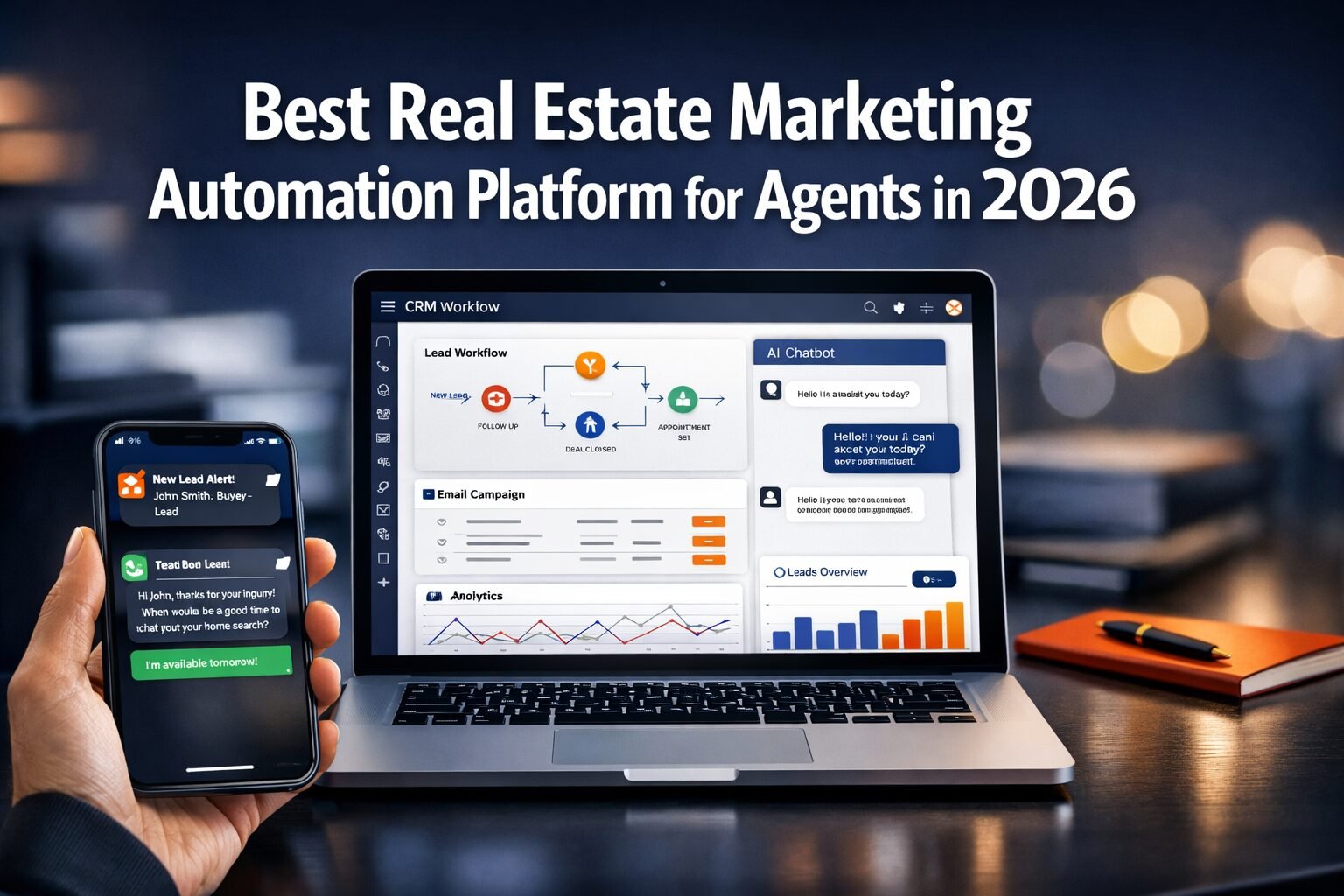
Picture this: It's 2026, and while some agents are still manually typing individual follow-up texts at 11 PM, top producers are closing deals from their phones while their Real Estate Marketing Automation Platform handles lead nurturing, appointment scheduling, and personalized drip campaigns—all on autopilot. The gap between agents who embrace automation and those who don't? It's not just widening; it's becoming a canyon.

The real estate game has fundamentally changed. In 2026, the question isn't whether you need a Real Estate Marketing Automation Platform—it's which one will give you the competitive edge when every second counts and the first agent to respond wins the listing. With AI agents now handling everything from prospect research to social media content creation, the platforms that seemed cutting-edge just two years ago are now table stakes.
This comprehensive guide cuts through the noise to reveal which platforms are actually delivering results for agents, brokers, and investors in 2026. No gatekeeping here—just the extraordinary tools and impeccable strategies that separate six-figure agents from seven-figure producers.
Key Takeaways
- Speed wins deals: Modern automation platforms respond to leads within seconds via text and email, giving agents a decisive advantage since the first responder captures most opportunities in 2026's competitive market.
- AI agents are now essential: Specialized AI handles prospecting research, instant customer queries, and platform-optimized social media content—transforming what individual agents can accomplish without full marketing teams.
- Integration ecosystems matter: Top platforms seamlessly connect with MLSs (Zillow, Realtor.com), marketing tools (Mailchimp, ActiveCampaign), and valuation services to create unified workflows that eliminate manual data entry.
- Lead scoring drives efficiency: Predictive analytics analyze prospect behavior and engagement signals to trigger personalized follow-ups automatically, helping agents prioritize high-intent buyers and sellers.
- Scalability through automation: The best platforms enable successful individual agent workflows to scale across entire teams and brokerages without proportional increases in administrative staff.
Why Real Estate Marketing Automation Platform Technology Matters More Than Ever in 2026
Let's be real: 2026 marks the turning point where AI adoption shifts from experimental to essential. Agents are no longer just testing automation tools—they're building their entire business operations around them.[4] This isn't about keeping up with trends; it's about survival in a market where consumer expectations have fundamentally changed.
The competitive landscape has been completely rewritten. When a potential buyer submits an inquiry on Zillow at 9:47 PM, they're not waiting until tomorrow morning for a response. They're expecting—and receiving—instant engagement from agents whose platforms automatically send personalized texts and emails within seconds.[1] The agents still manually checking leads once or twice daily? They're not even in the game anymore.
The Speed-to-Lead Revolution
Research consistently shows that lead response speed is the single most critical competitive advantage in modern real estate. The first agent to reply wins most of the time—not because they're necessarily better, but because they demonstrated they're available, attentive, and ready to help.[1] Automation platforms have transformed this reality from a nice-to-have into a must-have capability.
Modern Real Estate Marketing Automation Platform solutions don't just send faster responses; they send smarter ones. These systems analyze the prospect's search behavior, saved properties, and engagement history to craft personalized initial outreach that feels human, not robotic. When someone clicks "schedule showing" multiple times within a week, the platform flags them as high-intent and triggers specialized follow-up sequences.[1][3]
From Administrative Burden to Strategic Focus
Here's what's so based about automation in 2026: it's not replacing the human relationship-building that defines great real estate service. Instead, it's eliminating the soul-crushing administrative tasks that prevent agents from focusing on those relationships.
Workflow automation now handles:
- Automatic task creation based on lead status changes
- Contact record updates across integrated systems
- Contract generation and document routing
- Status update distribution to clients and team members
- Calendar synchronization and appointment confirmations[3]
This means agents can spend their time on high-value activities—property showings, negotiation strategy, market analysis, and client consultation—while the platform manages the operational infrastructure. For agents looking to expand their business, understanding how to build a strong sphere of influence becomes far more achievable when automation handles routine communication.
The Integration Imperative
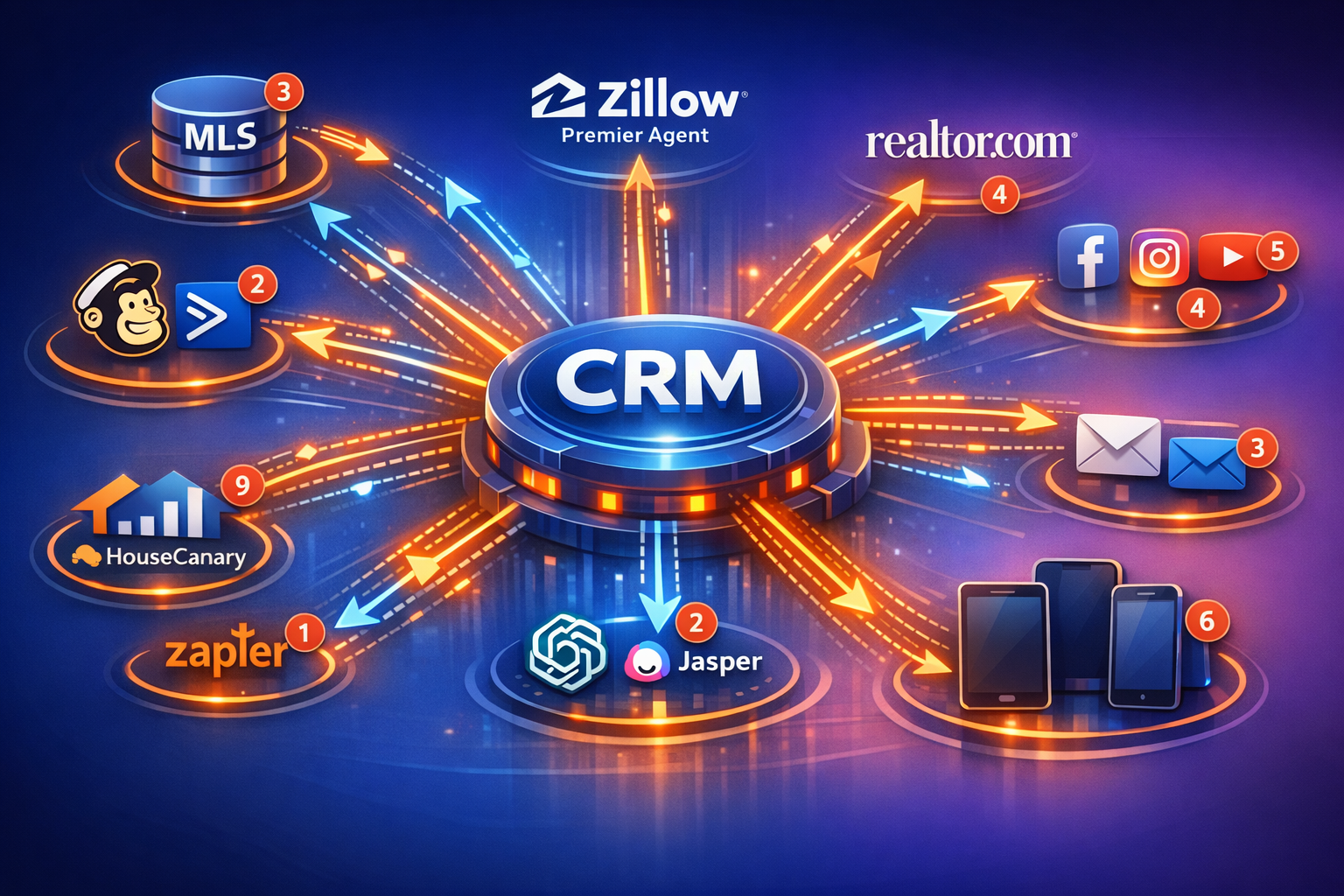
The best Real Estate Marketing Automation Platform solutions in 2026 aren't standalone tools—they're ecosystem orchestrators. Top-tier platforms integrate seamlessly with:
- MLS and lead sources: Zillow, Realtor.com, direct website captures
- Marketing automation: Mailchimp, ActiveCampaign for sophisticated campaigns
- Valuation services: HouseCanary for instant property analysis
- Connector platforms: Zapier and Make for custom workflow creation
- Communication tools: SMS platforms, email services, video messaging[3]
This integration ecosystem eliminates the data silos that plagued earlier CRM systems. When a prospect interacts with your Zillow listing, that activity automatically flows into your CRM, triggers appropriate follow-up sequences, and updates your team dashboard—no manual data entry required.
Top Real Estate Marketing Automation Platform Solutions for 2026
The market has matured significantly, and several platforms have emerged as clear leaders. These aren't just CRM systems with email capabilities tacked on—they're comprehensive automation ecosystems built specifically for real estate workflows.
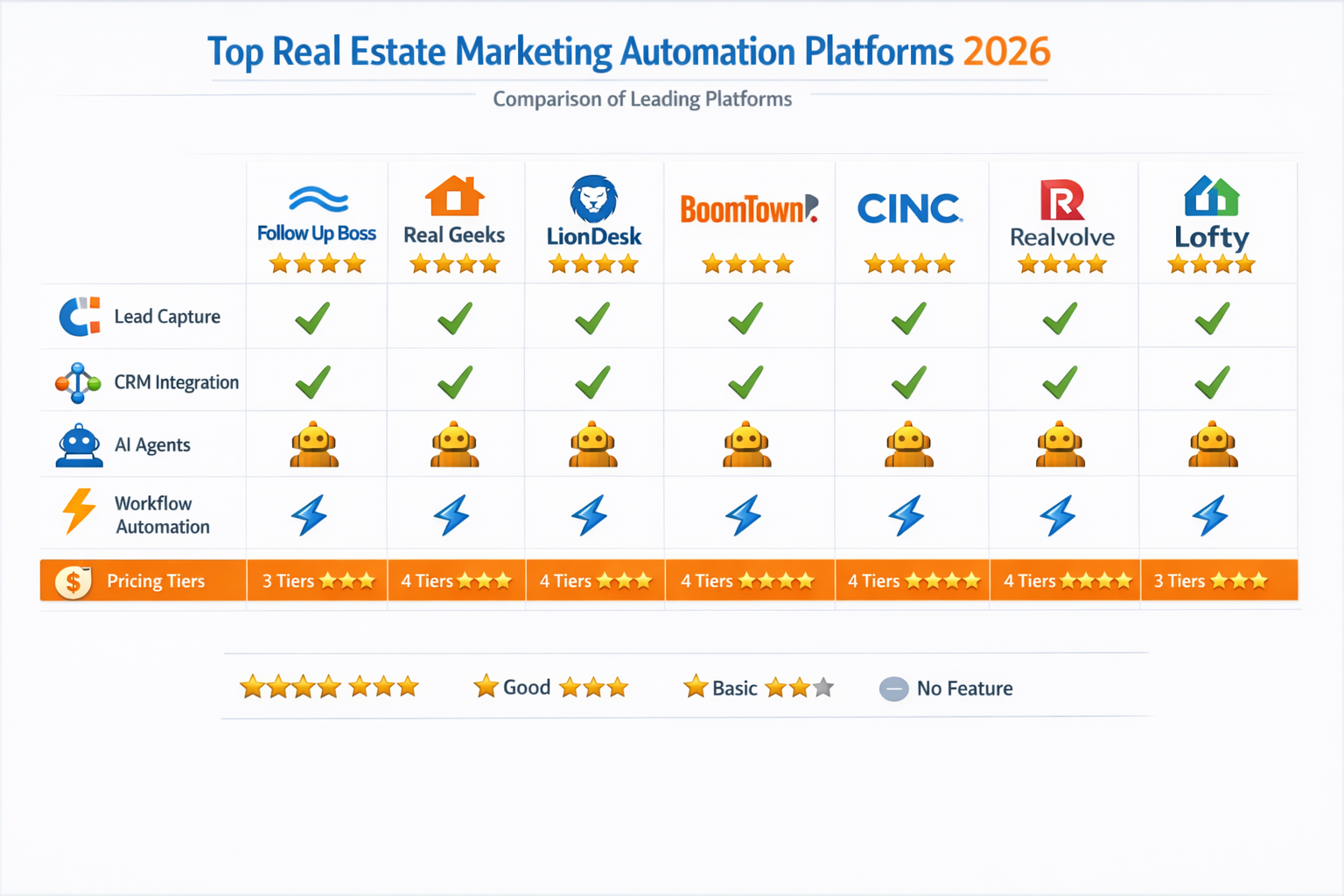
Follow Up Boss: The Lead Response Champion
Follow Up Boss has earned its reputation as the go-to platform for agents obsessed with lead response speed. The system excels at capturing leads from multiple sources and immediately routing them to the right agent with instant notification and automated initial outreach.[1][4]
Key strengths:
- Lightning-fast lead routing with customizable assignment rules
- Integrated texting and calling directly from the platform
- Action plans that automate follow-up sequences based on lead source and behavior
- Team collaboration features for brokerages managing multiple agents
- Robust reporting showing response times, conversion rates, and agent activity
The platform's mobile app is particularly impressive, allowing agents to respond to leads, update contact records, and manage their pipeline from anywhere. For teams, Follow Up Boss provides transparency into who's responding to leads and how quickly—creating natural accountability that drives performance.
Real Geeks: The Website-to-CRM Powerhouse
Real Geeks differentiates itself by combining high-converting IDX websites with integrated CRM and automation capabilities. The platform is built on the premise that your website should be your primary lead generation engine, and every visitor interaction should feed directly into automated nurture sequences.[1][4]
What makes Real Geeks extraordinary:
- Customizable IDX websites optimized for lead capture
- Behavioral tracking that monitors which properties prospects view and how often
- Smart drip campaigns triggered by specific visitor actions
- Market reports automatically sent to leads based on their search criteria
- Valuation tools that capture seller leads through home value estimates
The platform's strength lies in its ability to keep leads engaged over time. When a prospect saves properties or sets up search alerts, Real Geeks automatically sends updates about new listings, price changes, and market insights—keeping the agent top-of-mind without manual effort.[1]
LionDesk: The All-in-One Automation Solution
LionDesk has built a comprehensive platform that combines CRM, video messaging, transaction management, and marketing automation in a single interface. It's particularly popular among solo agents and small teams who want powerful capabilities without complexity.[4]
Core capabilities:
- Video email integration for personalized outreach at scale
- Transaction management with automated milestone tracking
- Customizable drip campaigns for different lead types
- Social media posting scheduled across multiple platforms
- Lead capture tools including text codes and landing pages
LionDesk's video messaging feature deserves special attention. Agents can record personalized video introductions and property tours that automatically embed in emails and texts, creating authentic connection that text-only messages can't match. This capability pairs perfectly with strategies for using social media and AI tools to sell real estate more effectively.
BoomTown: The Enterprise-Grade Platform
BoomTown targets high-producing agents and larger brokerages with sophisticated lead generation, CRM, and automation capabilities. The platform is known for its powerful lead nurturing engine and comprehensive analytics.[1][4]
Enterprise features:
- Proprietary lead generation through BoomTown's advertising network
- Advanced lead scoring using behavioral analytics and engagement signals
- Automated nurture tracks customized by lead source and stage
- Team management tools with performance dashboards and coaching features
- API access for custom integrations and workflow development
BoomTown's lead scoring system is particularly impeccable—it analyzes dozens of signals (email opens, property views, search frequency, response patterns) to identify which prospects are most likely to transact soon. This allows agents to focus their personal attention where it matters most while automation handles longer-term nurturing.
CINC (Commissions Inc.): The Conversion-Focused System
CINC has built its platform around a single obsession: converting internet leads into closed transactions. The system combines lead generation websites, CRM, and automation with a heavy emphasis on accountability and follow-up discipline.[1][4]
Conversion-focused features:
- High-converting landing pages for paid advertising campaigns
- Mandatory follow-up tasks that hold agents accountable
- Automated calling campaigns with built-in dialer
- Conversion tracking from initial lead to closed deal
- Coaching and training included with platform subscription
CINC's approach is more prescriptive than other platforms—it doesn't just provide tools; it enforces best practices through required activities and structured follow-up sequences. This makes it particularly effective for newer agents who need guidance on lead conversion processes.
Realvolve: The Workflow Automation Specialist
Realvolve stands out for its sophisticated workflow automation capabilities and real-time task management. The platform is designed for agents who want to systematize every aspect of their business operations.[2][3]
Workflow strengths:
- Visual workflow builder for creating custom automation sequences
- Real-time task management with automatic assignment and routing
- Transaction coordination with automated milestone tracking
- Document management with e-signature integration
- Customizable pipelines for different business lines (buyer, seller, investor)
Realvolve's workflow engine allows agents to build "if-this-then-that" automation sequences that handle complex business logic. For example: "If a lead hasn't responded to three emails, switch to text messaging and assign a follow-up call task to the agent." This level of sophistication enables truly hands-off automation for routine processes.
Lofty (formerly Chime): The IDX-to-CRM Integration Leader
Lofty (formerly known as Chime) offers customizable IDX websites that feed visitor activity directly into the CRM for targeted lead nurturing. The platform excels at capturing and converting website visitors through intelligent automation.[2][3]
IDX integration advantages:
- Fully customizable websites with advanced IDX search functionality
- Visitor tracking showing which properties prospects view and when
- Automated campaigns triggered by specific property interests
- AI-powered lead scoring based on engagement patterns
- Mobile app for managing leads and pipeline on the go
Lofty's approach recognizes that modern buyers spend weeks or months researching properties online before contacting an agent. The platform captures these early-stage prospects and nurtures them with relevant property updates and market information until they're ready to engage—ensuring you're the agent they call when decision time arrives.
Zillow Premier Agent: The Exclusive Lead Access Advantage
Zillow Premier Agent operates differently from traditional CRM platforms—it provides exclusive access to active buyers and sellers in specific ZIP codes, combined with real-time notifications of prospect interactions.[2]
Unique positioning:
- Exclusive ZIP code leads from Zillow's massive consumer traffic
- Real-time alerts when prospects view your profile or listings
- Integration with major CRMs for automated lead management
- Performance analytics showing lead quality and conversion rates
- Brand visibility on the most-visited real estate platform
While Zillow Premier Agent requires integration with a separate CRM for full automation capabilities, its access to exclusive, high-intent leads makes it a powerful component of a comprehensive marketing automation strategy. Agents who combine Zillow leads with a robust platform like Follow Up Boss or Real Geeks create a formidable lead generation and conversion engine.
Essential AI and Automation Tools Complementing Your Real Estate Marketing Automation Platform
Beyond comprehensive CRM platforms, several specialized AI tools have become essential components of the modern agent's tech stack in 2026. These tools handle specific functions with extraordinary efficiency, allowing agents to produce professional marketing materials without dedicated creative staff.
AI Content Generation: ChatGPT, Jasper, and Canva Magic Write
Content creation has been revolutionized by AI writing assistants. These tools enable agents to produce compelling listing descriptions, social media captions, email campaigns, and blog posts at scale.[4]
ChatGPT excels at:
- Generating property descriptions that highlight unique features
- Creating email sequences for different buyer and seller personas
- Drafting social media posts optimized for different platforms
- Answering common client questions with detailed responses
Jasper specializes in:
- Brand-consistent content across multiple channels
- Long-form content like market reports and neighborhood guides
- Ad copy for Facebook, Google, and Instagram campaigns
- SEO-optimized blog posts for agent websites
Canva's Magic Write integrates with design:
- Social media captions that match visual content
- Property brochure copy with professional formatting
- Email newsletter content with design templates
- Quick content generation within the design workflow
These tools don't replace the agent's market expertise and personal touch—they amplify it. An agent can describe a property's key features to ChatGPT and receive three different listing descriptions in different tones (luxury, family-friendly, investment-focused) in seconds. This capability is particularly valuable when combined with strategies for analyzing local real estate markets with AI.
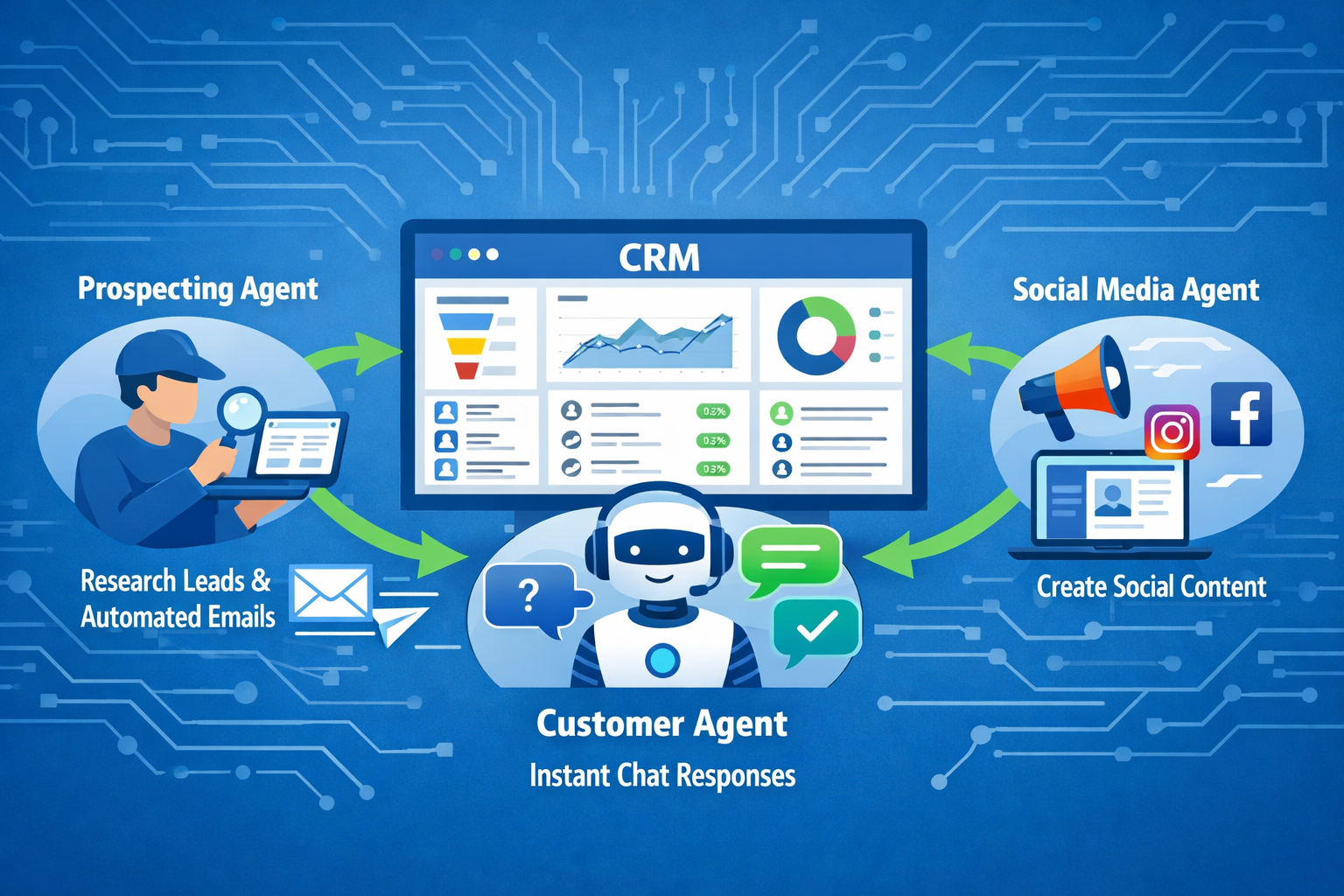
Specialized AI Agents: The Next Frontier
The most advanced Real Estate Marketing Automation Platform solutions now feature specialized AI agents that handle specific business functions autonomously.[3]
Prospecting Agents handle:
- Research on potential leads and their property history
- Automated outreach with personalized messaging
- Follow-up sequences based on prospect responses
- Lead qualification through conversational AI
Customer Service Agents provide:
- Instant responses to website visitor questions 24/7
- Qualification of incoming leads through chat conversations
- Scheduling of property showings and consultations
- Answers to common questions about listings and processes
Social Media Agents create:
- Platform-optimized content for Instagram, Facebook, LinkedIn
- Posting schedules based on audience engagement patterns
- Hashtag strategies for maximum reach
- Content variations testing for performance optimization
These AI agents represent the cutting edge of automation in 2026. They don't just execute predefined sequences—they make decisions, adapt to responses, and continuously improve based on results. Let it cook, and these systems become increasingly effective over time.
Marketing Automation Sequences: Keeping Leads Engaged
Integrated email and text drip campaigns are the backbone of effective lead nurturing. Modern platforms deliver timely updates based on client activity and saved properties, replacing the impossible task of manually messaging every lead.[1][3]
Effective automation sequences include:
New lead welcome series:
- Immediate response acknowledging inquiry
- Introduction to agent and services
- Market insights relevant to search criteria
- Call-to-action for consultation or property tour
Property match campaigns:
- Automatic alerts for new listings matching criteria
- Price reduction notifications for saved properties
- Open house invitations for properties of interest
- Market updates for target neighborhoods
Seller nurture sequences:
- Home valuation updates showing market changes
- Seasonal selling tips and preparation guides
- Success stories from recent sales in the area
- Market timing insights based on local trends
Long-term stay-in-touch campaigns:
- Monthly market reports and neighborhood news
- Holiday greetings and personal milestone recognition
- Annual home value updates for past clients
- Referral requests with incentives
The fresh approach in 2026 is personalization at scale. These sequences aren't generic broadcasts—they're customized based on the recipient's property interests, search behavior, timeline, and previous interactions. When done right, recipients feel like they're receiving personal attention from their agent, even though the system is handling the heavy lifting.
Implementation Strategy: Choosing and Deploying Your Real Estate Marketing Automation Platform
Selecting the right platform requires honest assessment of your business needs, technical capabilities, and growth objectives. Here's a framework for making the decision and implementing successfully.
Assessment: Know Your Business Requirements
Start by evaluating:
Business size and structure:
- Solo agent vs. small team vs. large brokerage
- Transaction volume (current and 12-month goal)
- Geographic focus (single market vs. multiple territories)
- Specialization (residential, commercial, luxury, investment)
Current pain points:
- Lead response time and follow-up consistency
- Manual tasks consuming productive time
- Lead source tracking and ROI measurement
- Team coordination and accountability
- Client communication and satisfaction
Technical considerations:
- Existing tools requiring integration (email, MLS, marketing platforms)
- Team technical proficiency and training needs
- Mobile vs. desktop usage patterns
- Budget for platform subscription and implementation
Growth objectives:
- Lead generation volume targets
- Conversion rate improvement goals
- Team expansion plans
- Market expansion strategy
This assessment helps narrow platform options to those that match your specific situation. A solo agent focused on geographic farming needs different capabilities than a team leader managing 15 agents across multiple markets.
Platform Selection: Matching Capabilities to Needs
Use this decision framework:
For speed-focused solo agents: Follow Up Boss or LionDesk provide powerful automation without overwhelming complexity. Both excel at instant lead response and mobile functionality.
For website-centric strategies: Real Geeks or Lofty offer integrated IDX websites with CRM automation, ideal for agents investing heavily in SEO and paid advertising.
For enterprise teams and brokerages: BoomTown or CINC provide sophisticated lead distribution, team management, and accountability features necessary for larger operations.
For workflow automation specialists: Realvolve offers the most sophisticated automation engine for agents who want to systematize every business process.
For exclusive lead access: Zillow Premier Agent (integrated with a CRM platform) provides access to high-intent leads unavailable through other channels.
Most successful agents in 2026 use a combination approach: a core Real Estate Marketing Automation Platform for CRM and automation, supplemented with specialized tools for content creation, social media management, and specific lead sources.
Implementation: The 90-Day Launch Plan
Successful platform deployment follows a structured timeline:
Days 1-30: Foundation and Migration
- Complete platform setup and customization
- Import contact database with proper segmentation
- Configure lead sources and capture forms
- Set up basic automation sequences (welcome series, property alerts)
- Train team on core platform functions
- Establish naming conventions and data standards
Days 31-60: Automation and Integration
- Build advanced drip campaigns for different lead types
- Configure workflow automation for transaction management
- Integrate with existing tools (email, MLS, marketing platforms)
- Set up lead scoring and assignment rules
- Create reporting dashboards for key metrics
- Develop standard operating procedures for team
Days 61-90: Optimization and Scaling
- Analyze campaign performance and adjust messaging
- A/B test subject lines, send times, and content
- Refine lead scoring based on conversion data
- Expand automation to additional business processes
- Train team on advanced features and best practices
- Document successful workflows for replication
The key is progressive implementation—don't try to activate every feature on day one. Start with core functions (lead capture, instant response, basic nurture), prove value, then expand capabilities systematically.
Measurement: Tracking What Matters
Monitor these critical metrics:
Lead management efficiency:
- Average response time to new leads
- Contact rate (percentage of leads reached)
- Conversion rate by lead source
- Cost per lead by channel
- Lead-to-appointment conversion rate
Automation effectiveness:
- Email open and click-through rates
- Text message response rates
- Drip campaign completion rates
- Automated task completion percentage
- Time saved on administrative tasks
Business outcomes:
- Total transactions closed from automated leads
- Revenue generated by lead source
- Client satisfaction scores
- Referral rates from automated nurture
- ROI on platform investment
Modern platforms provide built-in analytics for most of these metrics. The goal isn't just collecting data—it's using insights to continuously improve automation sequences, lead qualification, and resource allocation. For agents serious about maximizing investment returns, this data-driven approach is non-negotiable.
Common Pitfalls and How to Avoid Them
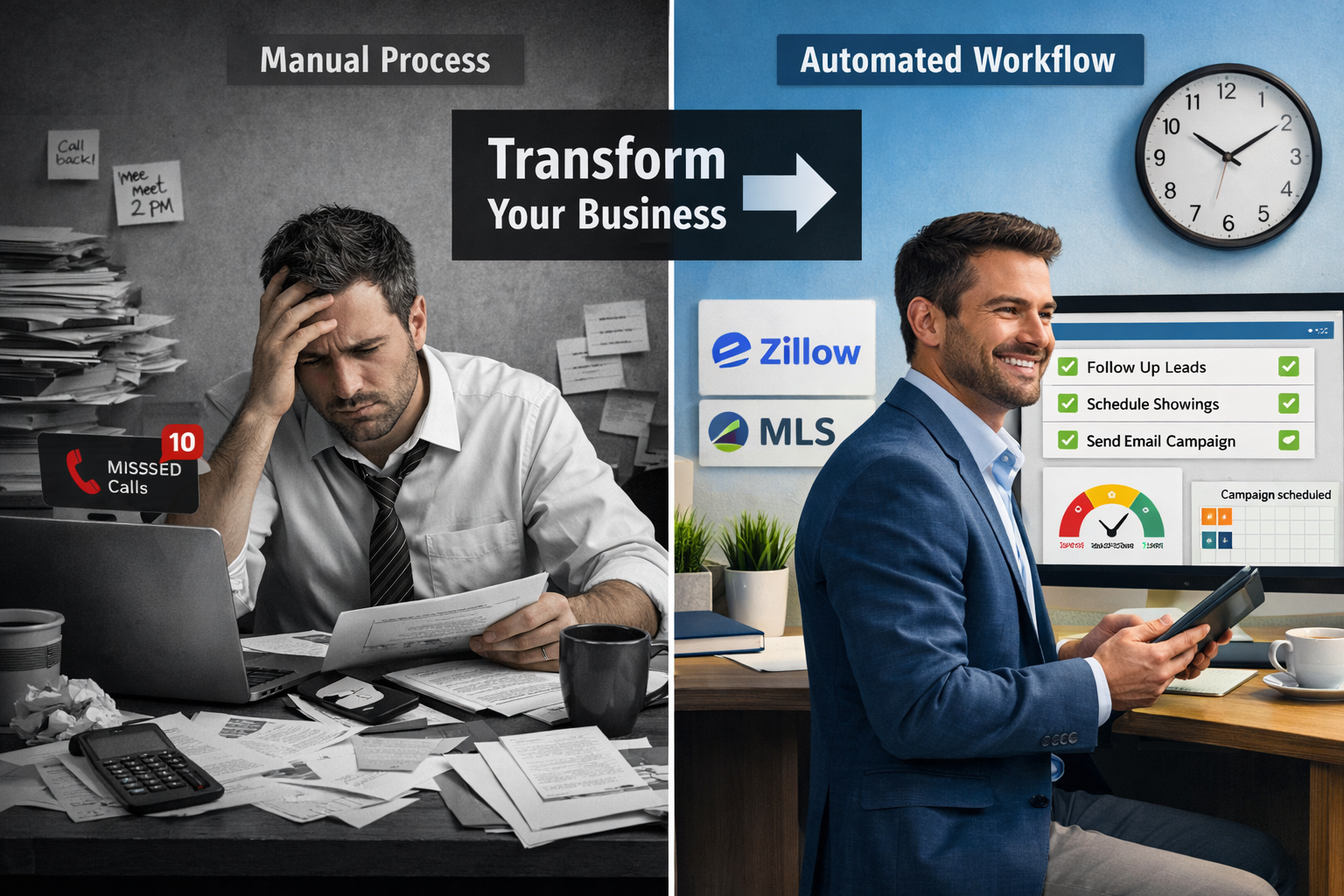
Even the best Real Estate Marketing Automation Platform can fail to deliver results if implemented poorly. Here are the most common mistakes and how to avoid them.
Over-Automation: Losing the Human Touch
The problem: Some agents automate everything, creating robotic interactions that feel impersonal and generic. Prospects can tell when they're receiving automated messages, and excessive automation damages relationships rather than building them.
The solution: Use automation for speed, consistency, and scale—but inject personalization at critical touchpoints. Automated initial responses are perfect; automated responses to specific questions are not. Review automation sequences monthly and add personal video messages, handwritten notes, or phone calls at key moments in the customer journey.
The rule: Automate the routine; personalize the meaningful.
Poor Data Hygiene: Garbage In, Garbage Out
The problem: Importing messy contact data, failing to update records, and allowing duplicate entries creates chaos. Automated campaigns send to wrong numbers, outdated addresses, and duplicate contacts—damaging credibility and wasting resources.
The solution: Establish data standards before migration. Clean existing databases, removing duplicates and updating contact information. Create protocols for data entry, requiring specific fields and formats. Schedule quarterly data audits to identify and fix issues.
The rule: Your automation is only as good as your data quality.
Set-It-and-Forget-It Syndrome
The problem: Agents set up automation sequences once and never review or update them. Market conditions change, messaging becomes stale, and performance degrades—but the same campaigns run indefinitely.
The solution: Schedule monthly reviews of automation performance. Analyze open rates, click-through rates, and conversion metrics. Update messaging to reflect current market conditions, seasonal factors, and new listings. Test new subject lines, content formats, and send times.
The rule: Automation requires ongoing optimization, not one-time setup.
Ignoring Mobile Experience
The problem: Agents focus on desktop platform functionality but ignore mobile experience—even though most leads are contacted via mobile devices and agents work primarily from phones.
The solution: Test all automation sequences on mobile devices. Ensure emails render properly on small screens, text messages include appropriate links, and landing pages are mobile-optimized. Use the platform's mobile app extensively and train team members on mobile workflows.
The rule: If it doesn't work on mobile, it doesn't work.
Inadequate Training and Adoption
The problem: Brokerages invest in powerful platforms but provide minimal training. Agents use only basic features, ignore automation capabilities, and revert to manual processes—negating the platform's value.
The solution: Invest in comprehensive training during implementation and ongoing education afterward. Create video tutorials for common tasks, establish platform champions who support team members, and include platform proficiency in performance reviews.
The rule: Technology adoption is a training challenge, not just a technology purchase.
The Future of Real Estate Marketing Automation: What's Next
Looking beyond 2026, several trends are reshaping what's possible with Real Estate Marketing Automation Platform technology.
Predictive Analytics and Proactive Outreach
Next-generation platforms will predict when homeowners are likely to sell—before they list—based on life events, property equity, market conditions, and historical patterns. Agents will receive alerts: "This homeowner in your farm area has 78% probability of selling within 6 months based on job change, school enrollment, and equity position."
This enables proactive relationship-building rather than reactive lead response. Imagine contacting potential sellers months before they start interviewing agents, positioning yourself as a trusted advisor rather than one of many competing for their business.
Hyper-Personalization at Scale
AI-powered personalization will extend beyond inserting names and property addresses. Future platforms will analyze communication preferences (text vs. email, morning vs. evening, detailed vs. concise), content interests (school ratings vs. investment returns), and personality types to customize every interaction.
The same listing could be presented to different prospects with completely different messaging—emphasizing family features to one buyer, investment potential to another, and architectural details to a third—all automatically based on their demonstrated preferences and behavior patterns.
Voice and Conversational AI Integration
Voice-activated assistants will handle initial prospect conversations, qualify leads through natural dialogue, and schedule appointments—all without human intervention. These systems will sound increasingly human, understanding context and nuance in ways current chatbots cannot.
Prospects will call an agent's number, interact with an AI assistant that answers questions about listings and neighborhoods, and book a showing—all while the agent is conducting another showing or in a listing presentation. The AI will then brief the agent on the conversation, prospect qualifications, and specific interests before the scheduled appointment.
Blockchain-Enabled Transaction Automation
Smart contracts and blockchain will automate transaction processes that currently require extensive manual coordination. Offer submission, acceptance, inspection contingency management, and closing coordination will execute automatically based on predefined conditions.
This reduces transaction timelines, minimizes errors, and allows agents to handle higher transaction volumes without proportional increases in administrative support. The Real Estate Marketing Automation Platform becomes not just a marketing and CRM tool but a complete transaction management system.
Augmented Reality Property Marketing
AR integration with automation platforms will allow prospects to virtually tour properties, visualize renovations, and experience neighborhoods—all triggered automatically based on their search criteria and engagement level.
When a prospect views a listing multiple times, the platform automatically sends an AR tour link. When they express interest in renovations, the system sends AR visualization tools showing potential improvements. This creates immersive experiences that keep prospects engaged and moving through the sales funnel.
Conclusion: Your Next Steps to Automation Excellence
The transformation happening in real estate in 2026 isn't subtle—it's a fundamental restructuring of how successful agents operate. The Real Estate Marketing Automation Platform you choose and how effectively you implement it will largely determine whether you thrive or struggle in this new landscape.
Here's your action plan:
Immediate (This Week):
- Audit your current lead management process and identify time drains
- Calculate your average lead response time and conversion rates
- Research 2-3 platforms that match your business model
- Schedule demos with platform representatives
- Review integration requirements with existing tools
Short-term (This Month):
- Select your primary Real Estate Marketing Automation Platform
- Develop your implementation timeline and resource allocation
- Clean and organize your contact database for migration
- Identify team members who will champion platform adoption
- Create initial automation sequences for testing
Medium-term (This Quarter):
- Complete platform implementation following the 90-day plan
- Train team thoroughly on core and advanced features
- Launch initial automation campaigns and monitor performance
- Integrate complementary AI tools for content and social media
- Establish measurement dashboards and review schedules
Long-term (This Year):
- Continuously optimize automation based on performance data
- Expand automation to additional business processes
- Scale successful workflows across team members
- Invest in advanced training and certification
- Stay current with emerging automation capabilities and trends
The agents who will dominate their markets in 2026 and beyond aren't necessarily the most charismatic or experienced—they're the ones who leverage technology to deliver extraordinary service at impeccable scale. They respond instantly, communicate consistently, and stay top-of-mind through automated systems that never sleep, never forget, and never miss a follow-up.
The question isn't whether automation will reshape real estate—it already has. The only question is whether you'll lead the transformation or be left behind by agents who embraced it earlier.
Stop gatekeeping your own success. The platforms, tools, and strategies outlined in this guide are available to every agent willing to invest the time and resources to implement them properly. The technology is fresh, the opportunity is so based, and the competitive advantage is waiting for agents ready to claim it.
Your future clients are searching for properties right now. Your competition is responding to them within seconds using automated systems. What's your next move?
For more insights on building a technology-enabled real estate business, explore our guides on hiring virtual assistants for your real estate business, generating qualified home buyer leads, and navigating high financing costs in any market condition.
References
[1] Real Estate Marketing Automation Tools 038 Strategies For 2026 – https://jorgensonrealestate.com/blog/Real-Estate-Marketing-Automation–Tools—038–Strategies-for-2026
[2] Real Estate Automation Tools – https://parseur.com/blog/real-estate-automation-tools
[3] Ai Crm Real Estate – https://blog.hubspot.com/sales/ai-crm-real-estate
[4] 5 Tools Every Real Estate Agent Needs To Win In 2026 – https://www.realtor.com/marketing/resources/5-tools-every-real-estate-agent-needs-to-win-in-2026/