

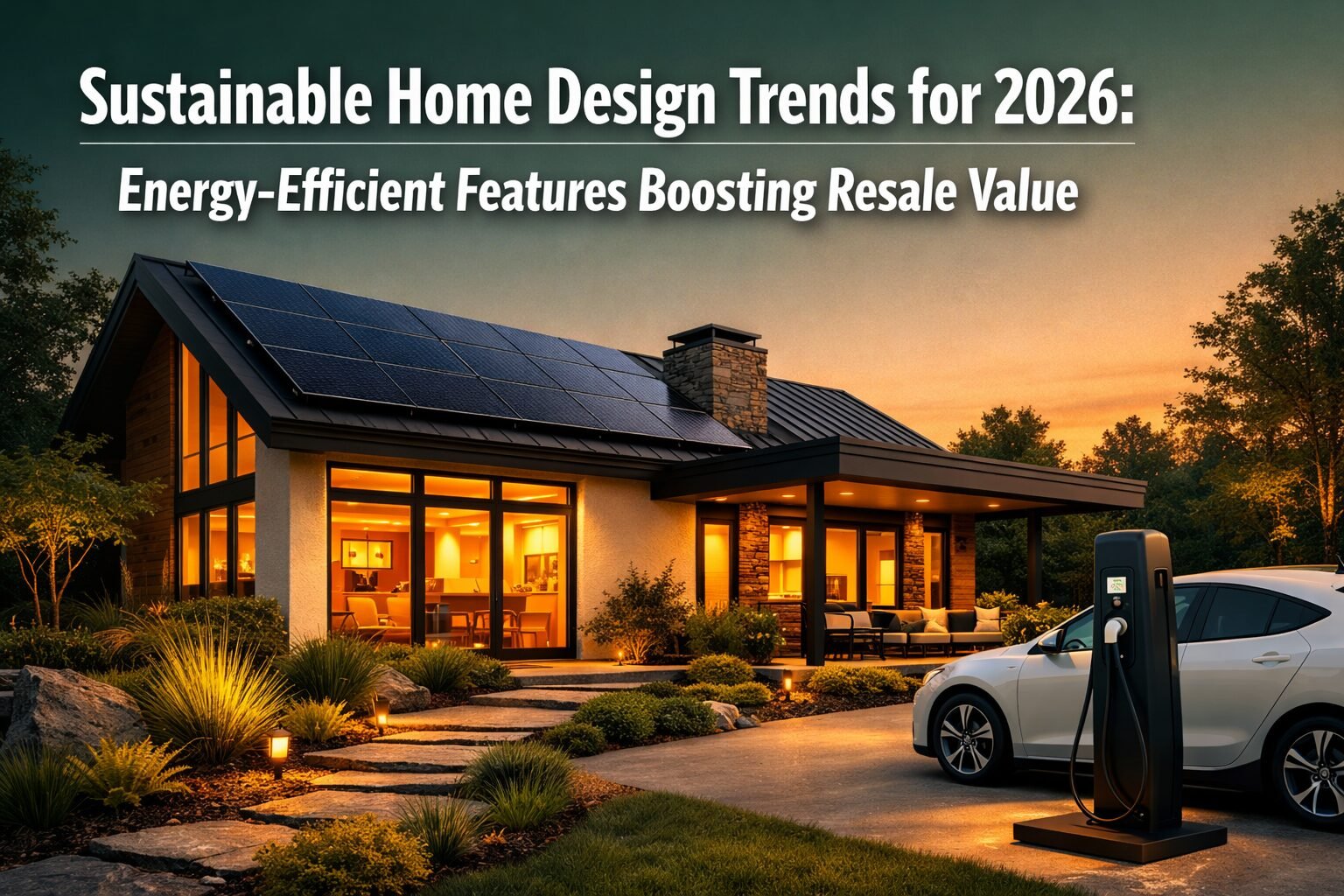
Let's be real—homebuyers in 2026 aren't just looking for granite countertops and walk-in closets anymore. They're hunting for homes that won't drain their wallets every time the AC kicks on or the heating bill arrives. Sustainable Home Design Trends for 2026: Energy-Efficient Features Boosting Resale Value represent a seismic shift in what makes a property desirable, and the data is absolutely extraordinary. Green home listings surged 21% in 2025, with buyers explicitly searching for "sustainable" and "energy-efficient" features[1]. This isn't some fleeting trend that'll disappear faster than avocado toast—this is the new baseline for competitive real estate.

The market has spoken, and it's saying: let it cook on those solar panels, because they're about to become as standard as a two-car garage. Licensed brokers with over 15 years of experience at Real Estate Rank IQ are witnessing firsthand how energy-efficient upgrades are transforming both buyer expectations and property valuations. Whether you're a homeowner preparing to sell, an agent advising clients, or an investor calculating ROI, understanding these sustainable design trends isn't optional—it's essential for staying competitive in 2026's evolving market.
Key Takeaways
- Green home listings jumped 21% in 2025, with zero-energy-ready homes seeing a 70% increase in references, signaling mainstream adoption of sustainable features[1][3]
- Energy-efficient upgrades deliver measurable ROI: homes with solar panels, heat pumps, and advanced insulation command premium prices and sell faster than conventional properties
- Top sustainable features for 2026 include triple-glazed windows (73% adoption), whole-home battery systems (40% increase), EV charging capabilities (25% rise), and smart home automation (33% planning)[2][3]
- Homebuyers prioritize lower running costs: over 90% cite energy efficiency and reduced utility bills as primary motivations for sustainable upgrades[2]
- Strategic implementation matters: focusing on envelope improvements (insulation, air sealing, efficient windows) before adding renewable energy systems maximizes both comfort and resale value
Why Sustainable Home Design Trends for 2026 Matter More Than Ever
The real estate landscape is experiencing a fundamental transformation, and it's not just about being trendy or virtue-signaling your eco-consciousness. The numbers tell an impeccable story: 92% of homeowners are budgeting for higher insulation levels, and 82% are planning heat pump installations[2]. This isn't gatekeeping information for luxury buyers—these upgrades are becoming standard expectations across all price points.
The Economics Behind Energy Efficiency
Here's where things get so based: sustainable features aren't just good for the planet; they're extraordinary for your bottom line. When buyers search for homes in 2026, they're calculating total cost of ownership, not just the purchase price. A property with $150/month utility bills will consistently outperform an identical home with $300/month costs, even if the energy-efficient version carries a slightly higher asking price.
Zero-energy-ready homes saw a 70% increase in listing references throughout 2025[3], indicating that properties designed to produce as much energy as they consume are transitioning from novelty to necessity. For real estate investors analyzing rental properties, this shift creates opportunities to differentiate portfolios and command premium rents from environmentally conscious tenants.
Market Demand Is Driving Design Decisions
The surge in sustainable home searches reflects broader demographic shifts. Millennial and Gen Z buyers—now the largest homebuying cohorts—prioritize environmental impact and long-term savings over short-term aesthetics. They're not impressed by energy-guzzling McMansions; they want homes that align with their values and budgets.
This generational preference is reshaping home buying trends for 2026, with sustainability features becoming non-negotiable rather than optional. Real estate agents who understand this shift can better serve clients and close deals faster by highlighting energy-efficient features in listings and marketing materials.
Energy-Efficient Features Boosting Resale Value: The Top Performers
Not all sustainable upgrades deliver equal returns. Some features provide immediate visual appeal and measurable savings, while others offer long-term value that's harder to quantify. Let's break down the fresh contenders that are actually moving the needle on resale values in 2026.
Solar Integration and Battery Storage: The Power Couple
Whole-home battery systems jumped 40% in 2025 listings[3], and when paired with solar panels, they create an energy independence package that buyers find irresistible. Modern solar installations aren't the clunky eyesores of yesteryear—they're sleek, integrated systems that enhance curb appeal while slashing utility costs.
The real game-changer? Battery storage systems that allow homeowners to store excess solar energy for use during peak pricing hours or power outages. This capability resonates particularly strongly in regions experiencing grid instability or frequent weather events. Buyers see these systems as insurance policies that happen to pay dividends through energy savings.
Key considerations for solar integration:
| Feature | Buyer Appeal | ROI Timeline | Market Premium |
|---|---|---|---|
| Rooftop Solar Panels | High | 7-12 years | 3-4% above comparable homes |
| Whole-Home Battery | Very High | 8-15 years | 4-6% premium |
| Combined Solar + Battery | Exceptional | 6-10 years | 8-12% premium |
| EV Charging Station | Growing Rapidly | 5-8 years | 2-3% premium |
Electric vehicle charging capabilities rose 25% in home listings[3], reflecting the automotive industry's shift toward electrification. Installing Level 2 EV charging during construction or renovation costs a fraction of retrofitting later, and buyers increasingly view this feature as essential infrastructure rather than luxury add-on.
Triple-Glazed Windows and Advanced Envelope Systems
Here's where sustainable design gets seriously technical—and seriously profitable. Energy-efficient windows and doors remain the most impactful single upgrade for reducing heating and cooling costs[1][4]. But we're not talking about your standard double-pane replacements anymore.
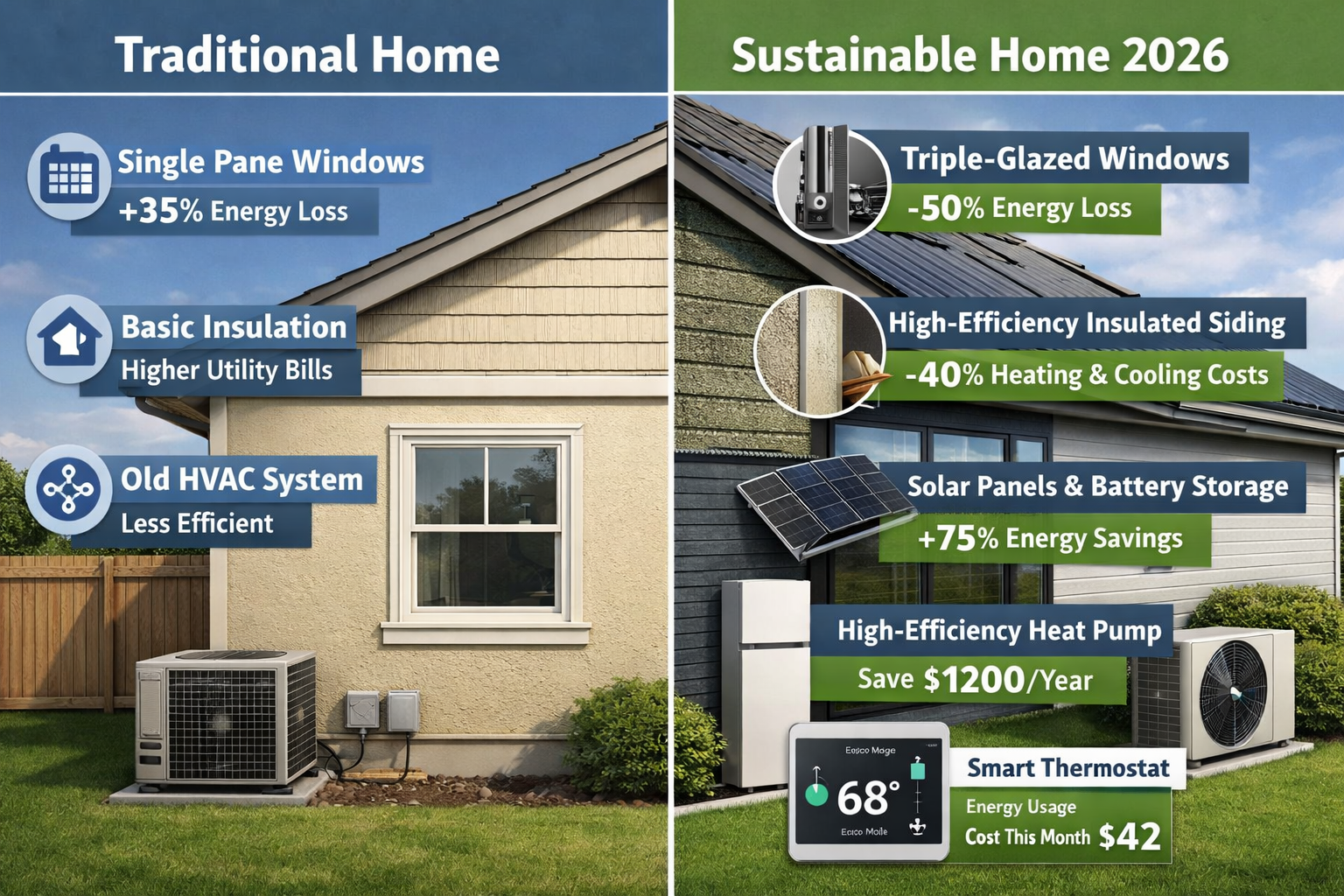
Triple glazing windows have achieved 73% adoption among homeowners planning sustainable projects[2], representing a massive shift from just five years ago. These advanced window systems feature:
- 🔹 Three layers of glass with insulating gas fills
- 🔹 Low-emissivity (Low-E) coatings that reflect heat
- 🔹 Thermally broken frames that prevent temperature transfer
- 🔹 Improved sound insulation as a bonus benefit
The aesthetic trend within this category? Black-frame windows are experiencing explosive growth as the fastest-growing design trend[1]. They deliver modern, sophisticated curb appeal while providing superior thermal performance. For sellers looking to maximize impact, replacing dated windows with contemporary black-framed, triple-glazed units checks both the efficiency and style boxes.
Air tightness improvements are planned by 74% of respondents in sustainable home surveys[2], demonstrating that homeowners understand the critical connection between envelope sealing and energy performance. You can install the most efficient HVAC system on the market, but if your home leaks air like a sieve, you're essentially heating and cooling the outdoors.
High-Efficiency Insulated Siding: The Exterior Upgrade That Pays
High-efficiency insulated siding is transitioning from "nice-to-have" to "must-have" status as energy costs continue rising[4]. This upgrade addresses multiple concerns simultaneously:
✅ Energy Performance: Continuous exterior insulation eliminates thermal bridging through wall studs
✅ Curb Appeal: Fresh, modern appearance that enhances first impressions
✅ Maintenance Reduction: Durable materials that resist weathering and require minimal upkeep
✅ Moisture Management: Improved water resistance protecting structural integrity
When combined with proper air sealing and quality windows, insulated siding completes the thermal envelope—the protective barrier between conditioned interior space and outdoor elements. Homes with comprehensive envelope upgrades consistently outperform properties with piecemeal improvements when it comes to both energy savings and resale value.
For homeowners preparing to sell, exterior improvements deliver disproportionate returns because they create powerful first impressions while addressing buyer concerns about future maintenance and utility costs.
Smart Technology and Passive Design: The Invisible Upgrades
The most sophisticated sustainable features in 2026 are the ones buyers barely notice—until they see the utility bills. Smart controls and home automation are selected by 33% of homeowners planning sustainable upgrades[2], but the real value lies in how seamlessly these systems integrate into daily life.
Heat Pumps: The HVAC Revolution
Heat pump adoption is exceptionally strong, with 82% of survey respondents budgeting for heat pumps or similar low-carbon heating technologies[2]. This represents perhaps the single most significant shift in residential HVAC systems in decades.
Modern heat pumps deliver:
- Heating and cooling from one system: eliminating the need for separate furnace and AC units
- 3-4x efficiency compared to traditional systems: converting electricity to thermal energy far more effectively than resistance heating
- Reduced carbon footprint: especially when powered by renewable energy sources
- Zoned climate control: allowing different temperatures in different areas of the home
The technology has evolved dramatically. Cold-climate heat pumps now function efficiently even in sub-zero temperatures, addressing the primary limitation that previously restricted their geographic viability. For buyers in northern markets, this advancement removes a major objection while delivering year-round comfort and savings.
Smart Thermostats and Energy Monitoring
Smart lighting and advanced appliances are evolving to appear seamlessly integrated rather than obviously "techy"[6]. The goal in 2026 isn't to showcase how many gadgets your home contains—it's to demonstrate how effortlessly the home manages its own energy consumption.
Smart thermostats learn household patterns, automatically adjusting temperatures based on occupancy and time of day. They provide detailed energy usage reports, helping homeowners identify waste and optimize performance. When buyers tour homes equipped with these systems, agents can pull up real-time data showing actual monthly energy costs—transforming abstract efficiency claims into concrete dollar figures.
Zoned heating and cooling systems allow precise temperature control in different areas, preventing energy waste in unused spaces. Combined with smart controls, these systems deliver comfort where and when it's needed while minimizing consumption elsewhere.
Passive Solar Design: Architecture That Works With Nature
The most elegant sustainable features require no electricity at all. Passive solar design leverages fundamental physics—thermal mass, natural convection, solar orientation—to regulate indoor temperatures naturally.
Key passive design strategies include:
🌞 Strategic window placement: maximizing southern exposure in northern climates for winter heat gain
🏠 Thermal mass: concrete floors, masonry walls, or water features that absorb heat during the day and release it at night
🌳 Natural shading: deciduous trees, overhangs, or pergolas that block summer sun while allowing winter light
💨 Cross-ventilation: window and vent placement that encourages natural air circulation
These features cost little to nothing when incorporated during initial design or major renovation, yet they deliver decades of energy savings. For buyers evaluating new construction or extensively renovated properties, passive design elements signal sophisticated planning that extends beyond surface-level upgrades.
Homes incorporating passive strategies alongside active systems (solar, heat pumps, smart controls) achieve the lowest operating costs and highest buyer appeal. This comprehensive approach to sustainable home design represents the gold standard in 2026's market.
Implementing Sustainable Home Design Trends for 2026: A Strategic Approach
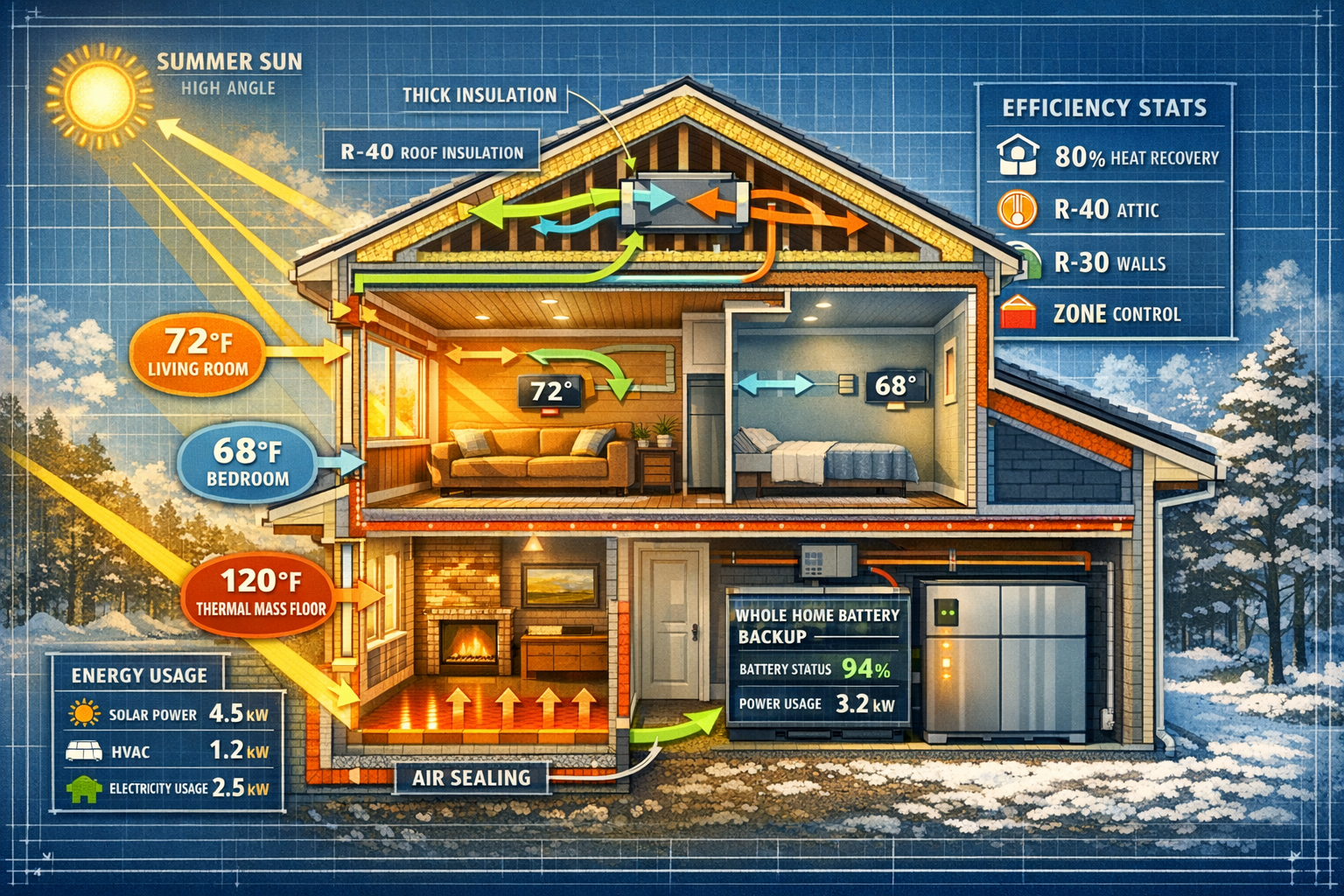
Understanding which features boost resale value is one thing; implementing them strategically is another. Homeowners and investors need a clear roadmap that prioritizes upgrades based on ROI, budget, and timeline.
The Envelope-First Strategy
Before installing solar panels or upgrading to a heat pump, focus on the building envelope. This "envelope-first" approach ensures that expensive mechanical systems aren't compensating for preventable energy losses.
Priority sequence for maximum impact:
- Air sealing: caulking, weatherstripping, and sealing penetrations (immediate ROI, low cost)
- Insulation upgrades: attic, walls, basement/crawlspace (high ROI, moderate cost)
- Window and door replacement: triple-glazed, thermally broken frames (moderate ROI, higher cost)
- Efficient HVAC: heat pump or high-efficiency system (moderate ROI, high cost)
- Renewable energy: solar panels, battery storage (long-term ROI, highest cost)
This sequence maximizes efficiency gains while minimizing system sizing requirements. A well-insulated, air-sealed home needs a smaller (less expensive) HVAC system and solar array than a leaky, poorly insulated one.
Budget-Conscious Upgrades That Still Deliver
Not every seller has $50,000 for a complete energy overhaul. Fortunately, several high-impact upgrades deliver impressive returns on modest investments:
Under $5,000:
- Smart thermostat installation ($200-400)
- LED lighting throughout ($300-800)
- Attic insulation boost ($1,500-3,000)
- Air sealing and weatherstripping ($500-1,500)
- Low-flow fixtures and water-saving devices ($400-1,000)
$5,000-$15,000:
- Energy-efficient window replacement (partial, high-visibility areas)
- Heat pump water heater ($2,500-4,500 installed)
- Smart home energy monitoring system ($1,000-3,000)
- Exterior door replacement with high-performance models ($3,000-8,000)
$15,000-$40,000:
- Complete window replacement with triple-glazed units
- Heat pump HVAC system installation
- Insulated siding on primary facades
- Solar panel array (smaller system, 3-5kW)
For budget-conscious homeowners preparing to sell, focusing on visible, measurable upgrades delivers the strongest marketing impact. Buyers may not notice your improved attic insulation during a showing, but they'll definitely see those sleek black-frame windows and modern solar panels.
Marketing Sustainable Features Effectively
Having extraordinary energy-efficient features means nothing if buyers don't know about them. Real estate agents and sellers must communicate these upgrades effectively through:
📊 Quantifiable Data:
- Include actual utility bills in listing materials
- Provide energy audit results and home performance scores
- Calculate annual savings compared to similar non-upgraded homes
- Display solar production data and battery storage capacity
📸 Visual Presentation:
- Professional photography highlighting solar panels, modern windows, smart thermostats
- Drone footage showcasing roof-mounted systems and property orientation
- Before/after comparisons for renovated properties
- Infographics explaining energy systems and savings
📝 Compelling Descriptions:
- Lead with energy features in listing copy
- Quantify savings: "Save $2,400 annually on utilities"
- Highlight modern, low-maintenance aspects
- Emphasize environmental impact for values-driven buyers
Agents looking to improve their listing presentations should consider creating dedicated sections for sustainability features, complete with documentation, warranties, and performance data.
Regional Considerations and Climate-Specific Strategies
Sustainable design isn't one-size-fits-all. The most effective energy-efficient features vary significantly based on climate zone, local utility costs, and regional building codes.
Hot Climate Priorities (Southwest, Southeast)
In regions where cooling dominates energy consumption:
- High-performance windows with Low-E coatings that reflect solar heat
- Reflective roofing materials and adequate attic ventilation
- Whole-house fans for nighttime cooling
- Strategic shading through landscaping, awnings, or architectural features
- High-SEER air conditioning or heat pump systems
- Thermal mass that moderates temperature swings
Solar panels deliver exceptional ROI in sunny climates with high electricity rates. Battery storage becomes particularly valuable in regions with time-of-use pricing or unreliable grids.
Cold Climate Priorities (Northeast, Upper Midwest, Mountain West)
Where heating costs dominate:
- Maximum insulation in walls, attic, and foundation
- Triple-glazed windows with low-U-factor ratings
- Air sealing to prevent infiltration of cold air
- Cold-climate heat pumps rated for sub-zero performance
- Passive solar gain through south-facing windows
- Heat recovery ventilation to maintain air quality while minimizing heat loss
In these regions, envelope improvements deliver faster payback than in moderate climates. Every dollar invested in insulation and air sealing prevents ongoing heating costs throughout long winters.
Mixed Climate Strategies (Mid-Atlantic, Pacific Northwest, Midwest)
Regions experiencing both heating and cooling seasons benefit from:
- Balanced window specifications that manage both heat gain and loss
- Heat pump systems providing efficient year-round climate control
- Moderate insulation levels appropriate to local climate
- Programmable/smart thermostats optimizing for seasonal variations
- Cross-ventilation design reducing shoulder-season mechanical cooling needs
Understanding these regional nuances helps homeowners prioritize upgrades and helps agents communicate value to buyers familiar with local climate challenges. For investors building portfolios across multiple markets, climate-appropriate sustainable features become crucial differentiators in competitive rental markets.
The Investment Perspective: Calculating ROI on Sustainable Upgrades
For real estate investors evaluating sustainable improvements, the calculation extends beyond simple resale premiums. Multiple value streams contribute to total return:
Direct Resale Value Increase
Studies consistently show homes with comprehensive sustainable features command 3-12% premiums over comparable properties, depending on market, feature quality, and implementation comprehensiveness. In a $400,000 home, that translates to $12,000-$48,000 in additional equity.
Reduced Time on Market
Energy-efficient homes sell faster. Properties with documented low utility costs and modern sustainable features average 15-25% fewer days on market compared to conventional listings. In competitive markets, this velocity advantage can be worth thousands in carrying costs and opportunity cost.
Rental Income Premiums
Investment properties with sustainable features command 5-15% higher rents while experiencing lower vacancy rates. Tenants increasingly prioritize total housing costs (rent + utilities) over base rent alone, making energy-efficient units more attractive even at premium pricing.
Operational Cost Savings
For buy-and-hold investors, reduced utility costs (in landlord-paid situations) or reduced maintenance calls (efficient systems require less service) directly improve cash flow. Heat pumps, for example, eliminate furnace maintenance while providing both heating and cooling.
Tax Incentives and Rebates
Federal, state, and local incentives significantly improve ROI on sustainable upgrades:
- Federal Solar Investment Tax Credit: 30% of installation costs through 2032
- Energy Efficient Home Improvement Credit: up to $3,200 annually for qualifying upgrades
- State and utility rebates: vary by location but can cover 10-50% of certain improvements
- Property tax exemptions: some jurisdictions exclude renewable energy systems from property tax assessments
These incentives can reduce effective costs by 20-50%, dramatically accelerating payback periods and improving overall returns.
Future-Proofing: Anticipating 2027 and Beyond
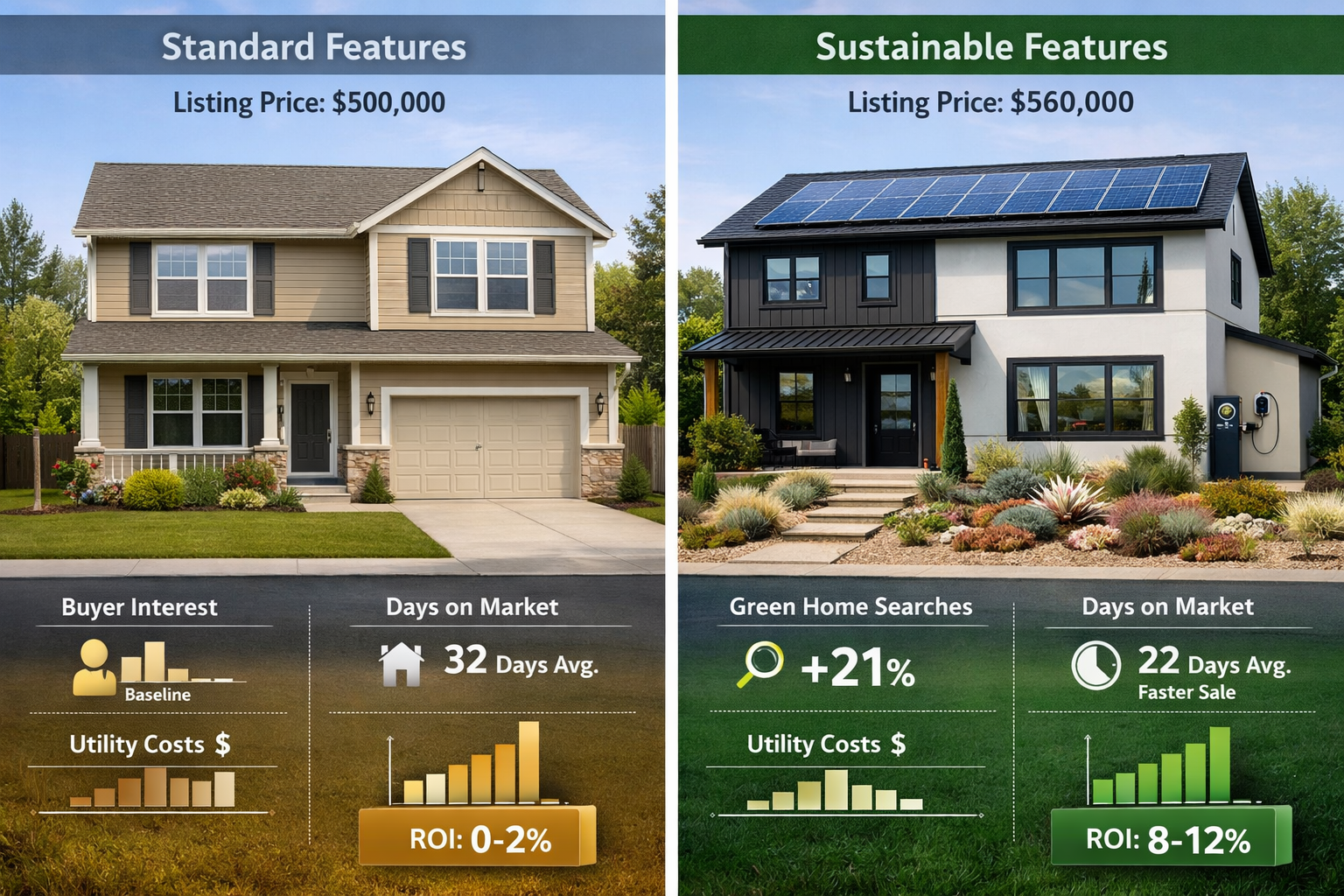
The sustainable home design trends dominating 2026 are just the beginning. Forward-thinking homeowners and investors should consider where the market is heading, not just where it stands today.
Emerging Technologies to Watch
Several technologies are transitioning from experimental to mainstream:
🔋 Vehicle-to-Home (V2H) Integration: Using EV batteries as backup power sources during outages or peak pricing periods
🌡️ Geothermal Heat Pumps: Ground-source systems offering even higher efficiency than air-source alternatives, with costs declining as installation expertise grows
🏠 Building-Integrated Photovoltaics: Solar shingles and facade materials that generate electricity while serving structural purposes
💧 Greywater Systems: Recycling water from sinks and showers for irrigation, reducing both water consumption and utility costs
🪟 Electrochromic Windows: Smart glass that adjusts tinting based on sunlight intensity, optimizing both natural light and thermal performance
Homes designed with infrastructure to accommodate these technologies—even if not immediately installed—will maintain competitive advantages as adoption accelerates.
Regulatory Trends Driving Adoption
Building codes and energy standards continue tightening:
- Net-zero energy requirements for new construction in leading states
- Mandatory energy disclosure during real estate transactions
- Efficiency standards for appliances and systems becoming more stringent
- Grid-interactive capabilities required for new solar installations in some jurisdictions
Properties already meeting or exceeding emerging standards avoid costly future retrofits while benefiting from first-mover advantages in markets where these features remain uncommon.
The Resiliency Factor
Climate change is making energy resilience increasingly valuable. Homes with solar + battery systems, efficient envelopes, and backup heating/cooling capabilities maintain habitability during grid outages—a feature that resonates strongly with buyers in regions experiencing infrastructure challenges.
This "resilience premium" is difficult to quantify but increasingly influences buyer decisions, particularly in areas affected by wildfires, hurricanes, extreme heat events, or winter storms. For properties in these regions, sustainable features transition from nice-to-have amenities to essential risk mitigation.
Common Mistakes to Avoid When Implementing Sustainable Features
Even well-intentioned sustainable upgrades can backfire if poorly executed. Avoid these pitfalls:
❌ Prioritizing Aesthetics Over Performance
Those gorgeous floor-to-ceiling windows might look impeccable in photos, but if they face west without adequate shading, they'll create massive cooling loads and glare issues. Design decisions should balance visual appeal with thermal performance.
❌ Piecemeal Upgrades Without Holistic Planning
Installing solar panels on a poorly insulated home with air leaks is like putting a bandaid on a broken bone. The envelope-first strategy exists for good reason—address the fundamentals before adding expensive systems.
❌ Ignoring Maintenance and Longevity
Some "sustainable" materials or systems require specialized maintenance or have shorter lifespans than conventional alternatives. Factor total lifecycle costs, not just initial installation expenses.
❌ Over-Improving for the Neighborhood
In some markets, extensive sustainable upgrades may exceed what buyers will pay premiums for. Research comparable sales and understand local market dynamics before investing $100,000 in improvements for a home in a $300,000 neighborhood.
❌ Poor Documentation
Failing to document upgrades, retain warranties, or preserve energy audit results undermines the ability to market these features effectively. Create a comprehensive file with all installation records, performance data, and warranty information.
❌ Neglecting Curb Appeal
Energy efficiency matters, but buyers still need to fall in love with the home. Balance sustainable upgrades with aesthetic improvements that create emotional appeal. Those black-frame windows serve both purposes perfectly.
Conclusion: Taking Action on Sustainable Home Design in 2026
The evidence is overwhelming: Sustainable Home Design Trends for 2026: Energy-Efficient Features Boosting Resale Value aren't just environmentally responsible—they're financially savvy. With green home listings up 21%, zero-energy-ready homes surging 70%, and buyers explicitly prioritizing energy efficiency in their searches[1][3], the market has definitively shifted.
For home sellers, the path forward is clear: prioritize envelope improvements (insulation, air sealing, efficient windows), upgrade to modern heating and cooling systems (heat pumps), and consider renewable energy integration (solar, battery storage) based on budget and timeline. Document everything, quantify savings, and market these features prominently in listings.
For real estate agents, developing expertise in sustainable features creates competitive advantages. Educate clients about ROI, connect them with qualified contractors, and learn to communicate energy efficiency in compelling, data-driven ways. The agents who master this niche will capture the growing segment of eco-conscious buyers driving market demand.
For investors, sustainable upgrades offer multiple value streams: resale premiums, rental income advantages, operational savings, and future-proofing against tightening regulations. Calculate total returns across all these dimensions, not just simple resale comps.
For homebuyers, understanding these trends helps identify properties offering long-term value. Look beyond surface aesthetics to evaluate thermal envelopes, mechanical systems, and renewable energy infrastructure. A home with comprehensive sustainable features will deliver comfort, savings, and resale value for decades.
Your Next Steps
Ready to implement sustainable design strategies? Here's your action plan:
- Conduct an energy audit to identify your home's biggest efficiency opportunities
- Prioritize envelope improvements before investing in expensive mechanical systems
- Research available incentives at federal, state, and local levels to maximize ROI
- Document everything to support future marketing and resale efforts
- Consult with experts including energy auditors, qualified contractors, and experienced real estate professionals
The sustainable home design revolution isn't coming—it's already here. The only question is whether you'll lead the trend or scramble to catch up. Based on the data, the smart money is on getting ahead of this wave.
For more insights on maximizing your property's value through strategic improvements, explore our guides on high-ROI home renovations and architectural design trends. The Real Estate Rank IQ team is here to help you navigate every aspect of buying, selling, and investing in today's dynamic market.
References
[1] 2026 Home Design Trends Eco Friendly Upgrades That Lower Energy Bills – https://www.getproedge.com/blog/p.260129000/2026-home-design-trends-eco-friendly-upgrades-that-lower-energy-bills/
[2] Sustainable Home Improvement Trends 2026 – https://www.goodenergy.co.uk/blog/sustainable-home-improvement-trends-2026/
[3] Trending Home Design Feature 2026 – https://www.axios.com/2025/12/27/trending-home-design-feature-2026
[4] Top Exterior Home Trends For 2026 And Expert Tips To Pull Them Off – https://digiorgiinc.com/home-improvements/top-exterior-home-trends-for-2026-and-expert-tips-to-pull-them-off/
[5] Residential Interior Trends In 2026 – https://creativeinterioranddecor.com/residential-interior-trends-in-2026/
[6] Eco Friendly Home Trends 2026 – https://www.elledecor.com/design-decorate/trends/a69977652/eco-friendly-home-trends-2026/
[7] Sustainable Interior Design Trends 2026 – https://www.reimaginehome.ai/blogs/sustainable-interior-design-trends-2026
[8] The Top 2026 Home Design Trends – https://www.modernflames.com/the-top-2026-home-design-trends/