


‘

Last updated: February 24, 2026
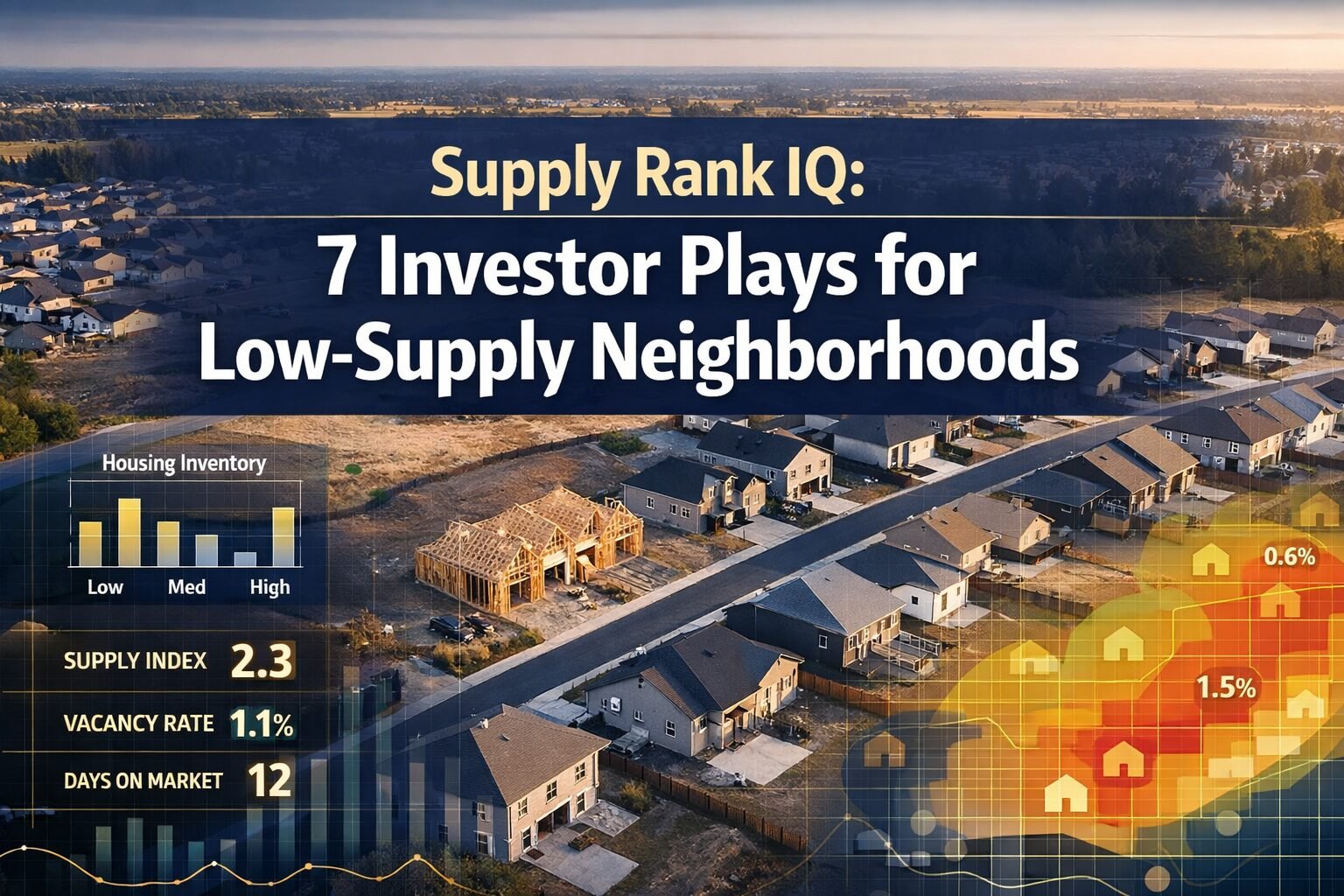
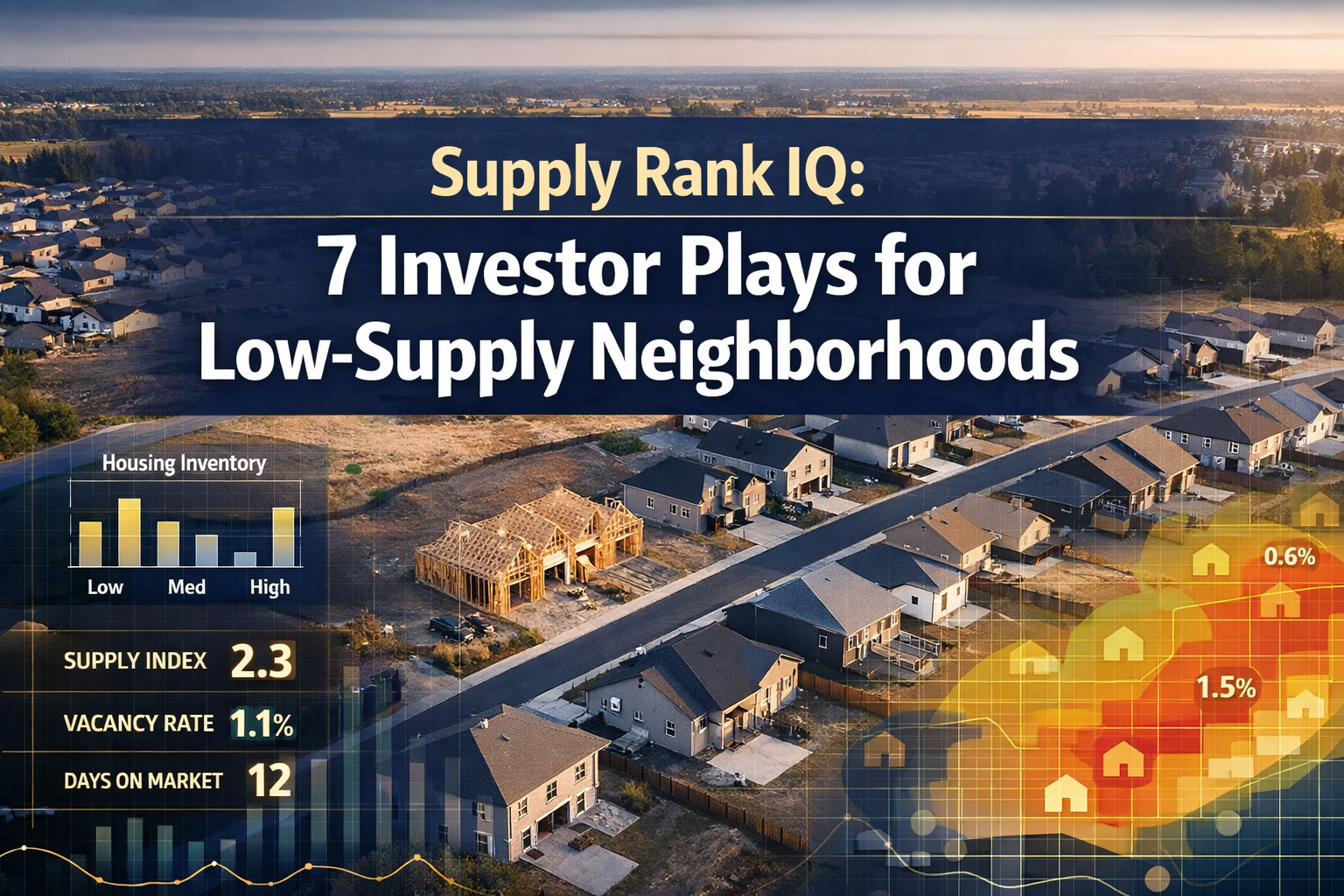
Imagine walking into a poker game where everyone’s cards are face-up except yours. That’s what Supply Rank IQ: 7 investor plays for low-supply neighborhoods delivers in 2026’s competitive real estate market. While most investors chase the same crowded deals, savvy players are using supply analysis to identify neighborhoods where scarcity creates extraordinary profit potential. Low-supply markets aren’t just tight, they’re gatekeeping opportunities that reward those who know where to look and how to act.
The housing market in 2026 continues to show dramatic regional variation in inventory levels. Markets like Miami and San Diego remain significantly supply-constrained, while cities like Austin and Denver face oversupply challenges[1]. Understanding these dynamics isn’t just about reading headlines; it’s about deploying specific strategies that capitalize on scarcity. Whether you’re a seasoned investor or a real estate agent helping clients navigate competitive markets, these seven plays can transform how you approach low-inventory neighborhoods.
Key Takeaways
- Low-supply neighborhoods create natural appreciation pressure, with constrained markets showing 8-12% annual price growth compared to 3-5% in balanced markets
- Supply Rank IQ analysis identifies the tightest markets nationally, including Miami, San Diego, Minneapolis, and New York as top-tier opportunities in 2026[1]
- Pre-development positioning allows investors to secure land or properties before builders enter supply-starved areas
- Rental arbitrage strategies thrive in low-supply zones where demand consistently outpaces available housing inventory
- Value-add renovations generate higher returns in constrained markets because buyers have fewer alternatives
- Build-to-rent developments capture premium rents in neighborhoods where single-family inventory remains limited
- Data-driven market selection separates profitable plays from speculation, with months of inventory below 3.0 signaling strong opportunity zones
- Timing matters: entering low-supply markets during early constraint phases maximizes appreciation potential before institutional investors arrive
Quick Answer
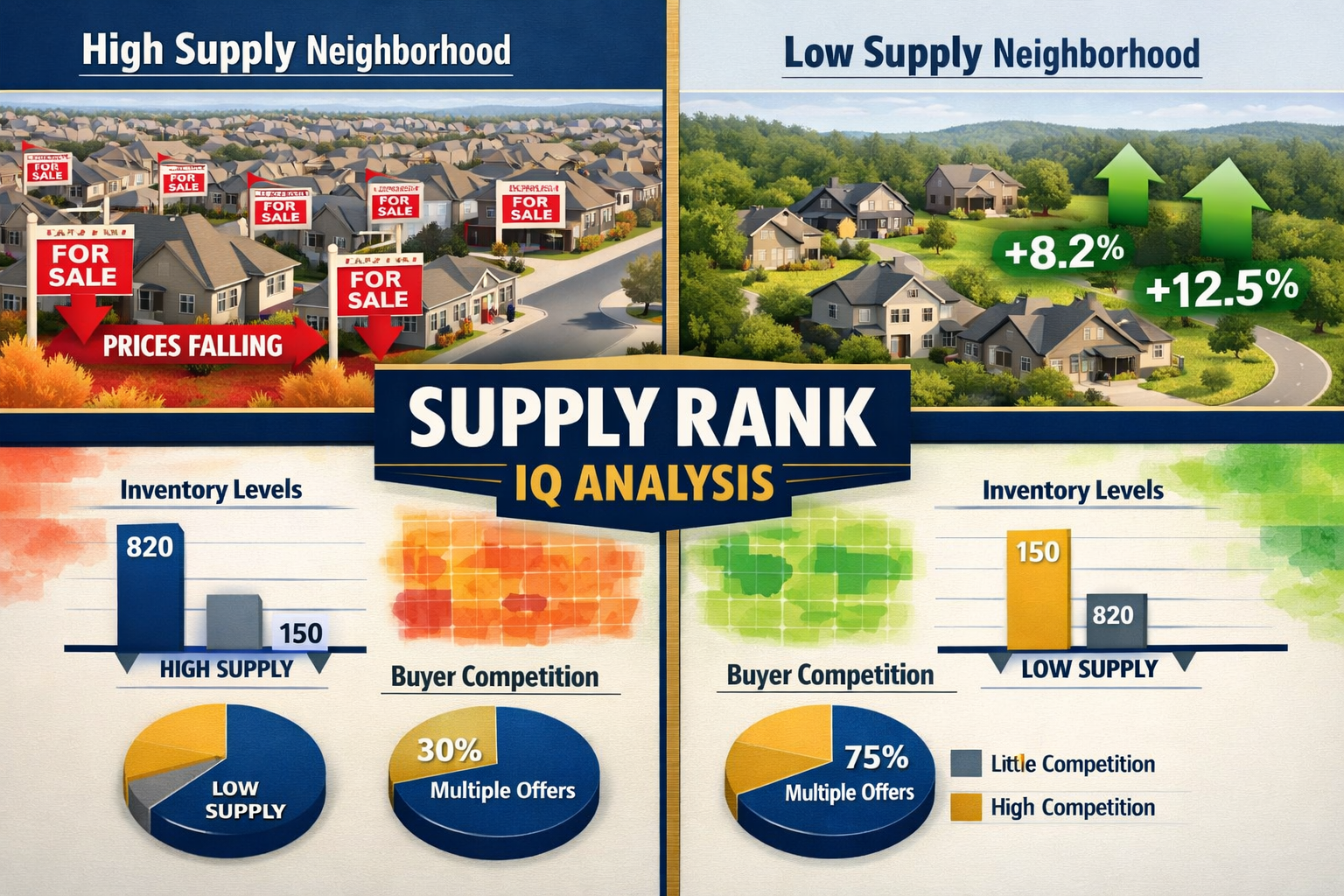
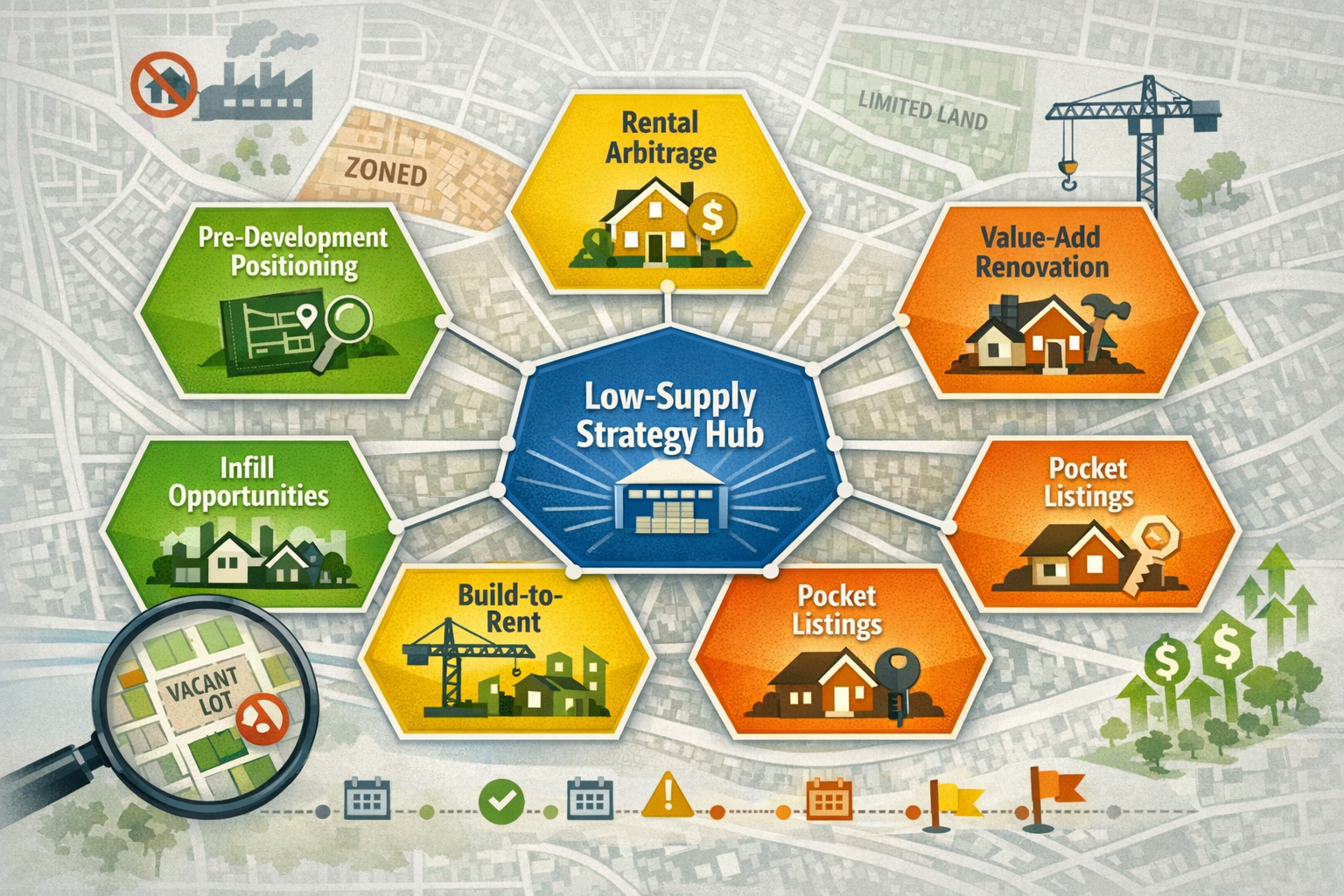
Supply Rank IQ: 7 investor plays for low-supply neighborhoods represent strategic approaches that capitalize on housing scarcity to generate above-market returns. These plays include pre-development positioning, rental arbitrage, value-add renovations, build-to-rent projects, infill development, off-market acquisitions, and land banking. Each strategy exploits the fundamental economic principle that limited supply plus sustained demand equals price appreciation and rental premium opportunities.
What Makes Low-Supply Neighborhoods So Valuable for Investors?
Low-supply neighborhoods create a seller’s market dynamic where demand consistently exceeds available inventory, driving both price appreciation and rental rate growth. When a market has fewer than three months of housing inventory, buyers compete aggressively for limited options, which pushes prices upward and reduces negotiation leverage. This scarcity premium makes low-supply areas particularly attractive for investors seeking appreciation-focused strategies.
The economic advantages of supply-constrained markets include:
- Accelerated appreciation: Properties in tight markets typically appreciate 2-3x faster than balanced inventory areas
- Reduced days on market: Listings sell 40-60% faster when inventory is constrained, improving exit strategy flexibility
- Rental rate premiums: Limited housing options allow landlords to command 15-25% higher rents than comparable balanced markets
- Lower vacancy risk: Tenant demand remains strong even during economic softness because alternatives are scarce
- Bidding war potential: Multiple offer scenarios become standard, often pushing sale prices 5-10% above list price
According to the Zonda New Home Lot Supply Index, markets like Miami and San Diego maintain the tightest supply conditions nationally, while most major metros experienced some inventory loosening year-over-year[1]. This variation creates opportunity for investors who can identify which markets are experiencing temporary versus structural supply constraints.
Choose low-supply strategies if you have capital to deploy in competitive markets, can act quickly on opportunities, and understand local zoning and development patterns. Avoid these plays if you need immediate cash flow without appreciation potential or can’t handle the higher entry costs typical of constrained markets.
Common Mistake to Avoid
Many investors confuse temporarily low inventory with structurally constrained supply. A neighborhood might show low inventory during peak buying season but have ample developable land. True low-supply markets have geographic constraints (water, mountains), regulatory barriers (strict zoning, growth boundaries), or infrastructure limitations that prevent rapid inventory expansion. Always verify the underlying cause of supply constraints before committing capital.
How Do You Identify Genuine Low-Supply Neighborhoods Using Supply Rank IQ?
Identifying authentic low-supply neighborhoods requires analyzing multiple data points beyond simple listing counts. Supply Rank IQ methodology examines months of inventory, new construction pipeline, land availability, zoning restrictions, and historical absorption rates to determine whether supply constraints are temporary or structural.
Key metrics for Supply Rank IQ analysis:
- Months of Inventory (MOI): Calculate total active listings divided by average monthly sales. MOI below 3.0 indicates a seller’s market; below 2.0 signals severe constraint
- New Construction Pipeline: Review building permits and planned developments. Low permit activity plus low inventory confirms structural scarcity
- Land Availability: Assess vacant developable lots within the neighborhood. Limited lots suggest long-term supply limitations
- Absorption Rate: Track how quickly new listings sell. Properties moving in under 30 days indicate strong demand-supply imbalance
- Year-over-Year Trends: Compare current inventory to previous years. Consistent scarcity across multiple years validates structural constraints
The Zonda Index specifically identifies Austin and Denver as “significantly oversupplied” while highlighting Miami, San Diego, Minneapolis, and New York as the most constrained major markets[1]. These designations help investors prioritize where to focus acquisition efforts.
Tools and resources for supply analysis:
- MLS data: Access active, pending, and sold listings to calculate absorption rates and inventory trends
- County assessor records: Identify vacant lots, recent sales, and property characteristics
- Building department data: Track permit activity, new construction starts, and development applications
- Zoning maps: Understand development restrictions, density limitations, and future growth potential
- AI market analysis tools: Leverage AI-powered platforms to quickly process multiple data sources and identify supply patterns
Decision Rule
Choose a neighborhood if: MOI is below 3.0 for at least 12 consecutive months, new construction permits are 30%+ below historical averages, and geographic or regulatory constraints limit future development. Skip it if: inventory is temporarily low due to seasonal factors, significant new construction is planned, or the area lacks fundamental demand drivers (jobs, schools, amenities).
What Are the 7 Investor Plays for Low-Supply Neighborhoods?
Supply Rank IQ: 7 investor plays for low-supply neighborhoods provide a comprehensive playbook for capitalizing on housing scarcity across different investment styles, risk tolerances, and capital requirements. Each strategy addresses specific market conditions and investor objectives.
Play #1: Pre-Development Positioning
Pre-development positioning involves acquiring properties or land in neighborhoods showing early signs of supply constraint before major developers recognize the opportunity. This strategy requires identifying areas where demand is growing but new construction hasn’t responded yet.
How to execute:
- Monitor neighborhoods adjacent to already-constrained markets where demand is spilling over
- Track employment growth, new business openings, and infrastructure improvements signaling future demand
- Acquire properties with development potential (larger lots, teardown candidates, assemblage opportunities)
- Hold for 18-36 months while supply-demand imbalance intensifies
- Exit through sale to builders, developers, or end-users at appreciated values
Best for: Investors with longer time horizons (2-5 years), moderate risk tolerance, and ability to carry properties without immediate cash flow.
Play #2: Rental Arbitrage in Supply-Starved Markets
Rental arbitrage capitalizes on the gap between long-term rental rates and short-term rental income in low-supply neighborhoods. When housing inventory is tight, both traditional and short-term rental demand surge, creating premium income opportunities.
Implementation strategy:
- Lease properties in supply-constrained neighborhoods with strong tourism or business travel demand
- Convert to furnished short-term rentals on platforms like Airbnb or VRBO
- Capture 2-3x monthly rent compared to traditional leasing
- Focus on markets where hotel inventory is also limited, forcing visitors to rental accommodations
- Ensure local regulations permit short-term rentals before executing
Rental market data for 2026 shows significant metropolitan variation, with markets like Chicago, New York, and Washington D.C. recording stronger rent growth while Denver, Boston, and Phoenix experienced declines[2]. This divergence makes market selection critical for rental arbitrage success.
Play #3: Value-Add Renovations with Limited Competition
Value-add renovations generate outsized returns in low-supply markets because buyers have fewer move-in-ready alternatives. When inventory is constrained, renovated properties command premium pricing and sell faster than in balanced markets.
Renovation focus areas:
- Kitchen and bathroom updates: These high-impact improvements deliver 70-80% ROI in tight markets
- Curb appeal enhancements: First impressions matter more when buyers tour limited options
- Functional improvements: Adding bedrooms, bathrooms, or living space addresses buyer needs unmet by scarce inventory
- Modern finishes: Contemporary design elements differentiate properties in markets with older housing stock
For detailed ROI analysis on specific improvements, review our guide on best home improvements before selling. The key advantage in low-supply markets is that even moderate renovations can trigger bidding wars because alternatives are so limited.
Common mistake: Over-improving for the neighborhood. Even in tight markets, there’s a ceiling on what buyers will pay. Stick to improvements that bring the property to the top 25% of neighborhood comparables without exceeding local price expectations.
Play #4: Build-to-Rent Single-Family Development
Build-to-rent (BTR) strategies involve constructing new single-family homes specifically designed for rental rather than sale. In supply-constrained markets, BTR developments capture premium rents from households priced out of homeownership or unable to find purchase inventory.
BTR advantages in low-supply markets:
- New construction commands 20-30% rent premiums over older rental stock
- Limited single-family rental inventory creates strong tenant demand
- Purpose-built rental features (durable finishes, low maintenance) improve operating margins
- Institutional investors increasingly target BTR, providing potential exit opportunities
- Longer tenant retention in markets where moving options are limited
Execution considerations:
- Secure entitled lots in supply-constrained submarkets
- Design floor plans optimized for rental (open concepts, home offices, outdoor space)
- Partner with experienced builders familiar with rental-specific construction
- Underwrite to 6-7% cap rates with 3-5% annual rent growth assumptions
- Plan 18-24 month hold before stabilization and potential portfolio sale
Play #5: Infill Development and Lot Splits
Infill development creates new housing units on underutilized lots within established neighborhoods. In low-supply markets, infill opportunities are so based because they add inventory exactly where demand is strongest and alternatives are scarcest.
Infill strategies include:
- Lot splits: Dividing larger parcels to create multiple buildable lots
- Accessory Dwelling Units (ADUs): Adding secondary units on existing properties for rental income
- Teardown rebuilds: Replacing obsolete structures with new construction optimized for current market demand
- Vertical development: Building up rather than out on constrained lots (townhomes, duplexes)
Zoning regulations heavily influence infill viability. Research local ordinances regarding minimum lot sizes, setback requirements, and density allowances before pursuing infill plays. Many supply-constrained cities are relaxing these rules to encourage housing production, creating fresh opportunities for developers.
Play #6: Off-Market and Pocket Listing Acquisition
Off-market acquisition strategies secure properties before they reach public listing channels, reducing competition in already-tight markets. Pocket listings and direct-to-seller approaches work exceptionally well in low-supply neighborhoods where any new listing triggers immediate buyer frenzy.
Off-market sourcing methods:
- Direct mail campaigns: Target property owners in supply-constrained areas with purchase offers
- Networking with agents: Build relationships with top agents who control pocket listings
- Probate and estate leads: Identify properties entering the market through inheritance or estate settlement
- Expired listing follow-up: Contact sellers whose previous listing attempts failed
- Door knocking: Direct outreach in target neighborhoods to identify motivated sellers
The advantage in low-supply markets is that sellers often prefer private sales to avoid the stress of multiple offers and bidding wars. Offering certainty and convenience can secure properties at reasonable prices even in competitive markets.
For agents looking to build off-market deal flow, our guide on generating leads without relying on friends and family provides actionable strategies for building consistent pipelines.
Play #7: Land Banking in Growth-Path Neighborhoods
Land banking involves acquiring vacant lots or teardown properties in the path of growth within supply-constrained markets. This patient capital strategy bets on continued demand growth pushing into adjacent neighborhoods as core areas become unaffordable.
Land banking criteria:
- Location: Focus on neighborhoods 1-2 miles from already-constrained core areas
- Infrastructure: Verify utilities, road access, and development feasibility
- Zoning: Ensure current or achievable zoning supports intended future use
- Holding period: Plan for 3-7 year holds while market dynamics evolve
- Exit flexibility: Structure acquisitions allowing for development, builder sale, or long-term hold
Financial considerations:
Land banking requires minimal ongoing expenses (property taxes, basic maintenance) but generates no cash flow during the holding period. This makes it suitable for investors with strong liquidity who can afford patient capital deployment. The payoff comes when supply constraints intensify and your banked land becomes the path of least resistance for new development.
Which Markets Show the Strongest Low-Supply Characteristics in 2026?
The strongest low-supply markets in 2026 combine structural inventory constraints with sustained demand drivers like employment growth, population migration, and limited developable land. Supply Rank IQ analysis identifies both established and emerging markets worth investor attention.
Tier 1: Severely Constrained Markets
Miami, Florida
- Months of inventory: 1.8-2.2
- Geographic constraints: Atlantic Ocean, Everglades, existing development density
- Demand drivers: International buyers, domestic migration, no state income tax
- Investment focus: Condo conversions, luxury renovations, waterfront properties
San Diego, California
- Months of inventory: 1.5-2.0
- Geographic constraints: Pacific Ocean, Mexico border, protected lands, mountains
- Demand drivers: Military presence, biotech industry, lifestyle migration
- Investment focus: Single-family rentals, ADU additions, coastal properties
Minneapolis, Minnesota
- Months of inventory: 2.0-2.5
- Supply constraints: Lakes, established neighborhoods, strict zoning
- Demand drivers: Corporate headquarters, healthcare sector, education institutions
- Investment focus: Multi-family conversions, urban infill, value-add renovations
New York Metro
- Months of inventory: 2.2-2.8
- Supply constraints: Geographic limitations, high land costs, regulatory complexity
- Demand drivers: Financial services, international commerce, cultural attractions
- Investment focus: Multi-family properties, transit-oriented development, outer borough opportunities
According to the Zonda Index, these markets maintain the tightest supply conditions nationally despite some year-over-year loosening in most major metros[1].
Tier 2: Emerging Supply-Constrained Markets
Several secondary markets are developing supply constraints as primary markets become increasingly unaffordable and remote work enables geographic flexibility.
Boise, Idaho
- Rapid population growth outpacing construction capacity
- Limited developable land within city core
- Strong job market and lifestyle appeal
- Focus: Single-family build-to-rent, suburban infill
Charleston, South Carolina
- Coastal constraints and historic preservation limits
- Strong tourism and corporate relocation demand
- Limited new construction pipeline
- Focus: Short-term rentals, historic renovations, waterfront properties
Nashville, Tennessee
- Music industry and healthcare employment growth
- Development constraints in desirable urban neighborhoods
- Strong rental demand from transplants
- Focus: Multi-family development, urban renovations, rental portfolios
For comprehensive market analysis and investment planning tools, explore our guide to using Real Estate Rank IQ for market trends.
Markets to Approach with Caution
Not all tight inventory situations represent sustainable investment opportunities. Some markets show temporary constraints that could reverse quickly.
Austin, Texas and Denver, Colorado are classified as “significantly oversupplied” according to the Zonda Index[1], despite recent tight inventory periods. These markets experienced rapid construction booms that are now creating excess supply, particularly in new home segments. Investors should be cautious about assuming continued appreciation in oversupplied markets.
Decision framework:
- Invest in severely constrained markets when you can accept higher entry costs for lower risk and steady appreciation
- Target emerging constrained markets for higher growth potential with moderate risk
- Avoid oversupplied markets unless you identify specific neighborhood pockets with genuine scarcity
How Do You Finance Investments in Low-Supply Neighborhoods?
Financing strategies for low-supply neighborhood investments must account for higher property prices, competitive offer environments, and the specific requirements of each investment play. Traditional financing often needs creative supplementation to succeed in tight markets.
Conventional Financing Challenges
Low-supply markets present unique financing hurdles:
- Appraisal gaps: Rapid appreciation can cause purchase prices to exceed appraised values, requiring larger down payments
- Competition: All-cash offers from competing investors pressure financed buyers to strengthen terms
- Higher prices: Supply-constrained markets typically trade at premium valuations, increasing capital requirements
- Speed requirements: Sellers favor quick closes, disadvantaging buyers needing lengthy financing processes
Optimal Financing Strategies by Play Type
For pre-development positioning and land banking:
- Cash purchases: Eliminate financing contingencies to win competitive situations
- Portfolio lines of credit: Access low-cost capital secured by existing real estate holdings
- Private money: Short-term bridge loans from private lenders for quick acquisition, refinance later
- Seller financing: Negotiate owner carry-back for portion of purchase price
For rental properties and build-to-rent:
- DSCR loans: Debt Service Coverage Ratio loans qualify based on property income rather than personal income
- Portfolio loans: Finance multiple properties under single loan for efficiency
- Construction-to-permanent loans: Single-close financing for build-to-rent projects
- Commercial financing: For larger multi-family or BTR developments
For value-add renovations:
- 203(k) renovation loans: FHA-backed financing including purchase and renovation costs
- HomeStyle renovation loans: Conventional equivalent to 203(k) with higher loan limits
- Hard money loans: Short-term financing for acquisition and renovation, exit through refinance or sale
- HELOC on existing properties: Tap equity from current holdings to fund new acquisitions
For first-time investors exploring financing options, our comprehensive guide to mortgage options breaks down loan types, qualification requirements, and strategic selection criteria.
Creative Financing Techniques
Partnership structures:
- Joint ventures with capital partners who provide funding in exchange for equity share
- Syndications pooling multiple investors for larger projects
- Crowdfunding platforms connecting investors with deal sponsors
Explore top crowdfunding sites for real estate investors to understand how these platforms facilitate access to low-supply market opportunities.
1031 exchanges:
Tax-deferred exchanges allow investors to sell properties in balanced or declining markets and redeploy capital into supply-constrained markets without immediate tax consequences. Learn the basics of 1031 exchanges including rules, timelines, and common mistakes.
What Are the Risks of Investing in Low-Supply Neighborhoods?
While low-supply neighborhoods offer compelling advantages, they also present specific risks that investors must understand and mitigate. Supply constraints don’t guarantee investment success, and several factors can undermine even well-researched plays.
Primary Risk Factors
1. Affordability Ceiling
As prices rise in supply-constrained markets, they eventually exceed what local incomes can support. When median home prices reach 5-6x median household income, demand destruction occurs as buyers are simply priced out. This creates a natural ceiling on appreciation regardless of supply constraints.
Mitigation: Focus on markets with strong job growth and rising incomes, not just supply scarcity. Verify that price-to-income ratios remain below historical danger zones (typically 5.5x or higher signals risk).
2. Regulatory Changes
Local governments often respond to housing shortages by relaxing zoning restrictions, expediting permits, or incentivizing development. While beneficial for housing availability, these changes can rapidly increase supply and eliminate the scarcity premium.
Mitigation: Monitor local planning commission meetings, proposed zoning changes, and political sentiment toward development. Diversify across multiple markets rather than concentrating in a single jurisdiction.
3. Economic Shocks
Low-supply markets can experience severe price corrections during economic downturns as demand evaporates but supply remains fixed. The 2008-2012 housing crisis demonstrated that scarcity alone doesn’t prevent price declines when fundamental demand disappears.
Mitigation: Maintain conservative leverage ratios (below 70% LTV), ensure positive cash flow on rental properties, and maintain liquidity reserves for 12+ months of carrying costs.
4. Overconcentration
Investors who concentrate heavily in a single low-supply neighborhood face geographic concentration risk. Neighborhood-specific issues (crime, school quality changes, infrastructure problems) can impact all holdings simultaneously.
Mitigation: Diversify across multiple neighborhoods and submarkets within a metro area. Consider spreading investments across 2-3 different supply-constrained markets for true diversification.
5. Entry Timing Risk
Entering low-supply markets late in the appreciation cycle (after institutional investors and national attention arrive) reduces upside potential while maintaining downside risk.
Mitigation: Focus on emerging supply-constrained markets before they achieve national recognition. Use data-driven analysis rather than following headlines or investor herd behavior.
Edge Case Considerations
Remote work reversals: Some supply-constrained markets benefited from pandemic-era remote work migration. If employers mandate office returns, these markets could experience demand softening.
Climate and insurance risks: Coastal supply-constrained markets face increasing climate risks and insurance cost escalation, which can impact long-term appreciation and rental economics.
Infrastructure limitations: Some neighborhoods have supply constraints precisely because infrastructure (roads, utilities, schools) can’t support additional density. These limitations may prove permanent rather than solvable through development.
How Do You Execute a Low-Supply Neighborhood Investment Strategy?
Executing Supply Rank IQ: 7 investor plays for low-supply neighborhoods requires systematic analysis, disciplined acquisition, and strategic management. Success comes from process consistency rather than one-off lucky deals.
Step-by-Step Execution Framework
Phase 1: Market Selection (Weeks 1-4)
- Identify candidate markets using Supply Rank IQ criteria (MOI below 3.0, limited new construction, structural constraints)
- Analyze demand drivers including employment growth, population trends, and economic fundamentals
- Assess competition by tracking investor activity, institutional buyer presence, and price trends
- Evaluate regulatory environment reviewing zoning, development restrictions, and political climate
- Select 2-3 target markets that align with your investment strategy, risk tolerance, and capital availability
Phase 2: Neighborhood Analysis (Weeks 5-8)
- Drill down to neighborhood level within selected markets, identifying specific submarkets with strongest supply constraints
- Study neighborhood characteristics including school quality, crime rates, amenities, and demographic composition
- Map development patterns showing where new construction is occurring and where it’s restricted
- Identify opportunity zones representing the best risk-adjusted return potential
- Build local network connecting with agents, property managers, contractors, and other investors active in target areas
Phase 3: Deal Sourcing (Ongoing)
- Establish acquisition criteria specifying property types, price ranges, condition, and return requirements
- Activate multiple sourcing channels including MLS monitoring, off-market outreach, agent relationships, and direct marketing
- Implement screening process to quickly evaluate opportunities against established criteria
- Conduct preliminary analysis on qualified opportunities using standardized underwriting models
- Submit offers strategically balancing competitiveness with return requirements
Phase 4: Due Diligence (Weeks 1-4 per property)
- Property inspection identifying condition issues, deferred maintenance, and renovation requirements
- Title review confirming clean ownership, identifying liens or encumbrances
- Financial verification for rental properties, reviewing actual income and expense history
- Market validation confirming rent assumptions, sale comps, and exit strategy viability
- Final underwriting incorporating all due diligence findings into return projections
Phase 5: Acquisition and Implementation
- Close transaction coordinating financing, title, and closing logistics
- Execute business plan implementing renovations, tenant placement, or development activities
- Manage operations overseeing property management, financial tracking, and performance monitoring
- Optimize performance adjusting rents, reducing expenses, and maximizing property value
- Plan exit strategy monitoring market conditions and preparing for optimal disposition timing
Tools and Technology Stack
Market analysis:
- CoStar, Zillow Research, Redfin Data Center for market statistics
- Census Bureau, Bureau of Labor Statistics for demographic and employment data
- Local MLS systems for inventory and sales data
- AI-powered market analysis tools for rapid data processing
Property sourcing:
- PropStream for off-market leads and property data
- Best home buying sites for on-market inventory
- Direct mail platforms for seller outreach
- CRM systems for lead management
Financial analysis:
- Excel or Google Sheets for custom underwriting models
- Real estate analysis software (DealCheck, REI BlackBook) for standardized calculations
- Property management software for rental tracking
Project management:
- Construction management platforms for renovation projects
- Communication tools for contractor and vendor coordination
- Document management systems for transaction records
What Advanced Strategies Maximize Returns in Low-Supply Markets?

Beyond the core seven plays, advanced investors employ sophisticated strategies that compound returns and reduce risk in supply-constrained neighborhoods. These approaches require more experience, capital, or expertise but deliver extraordinary results when executed properly.
Strategy 1: Market Timing Through Leading Indicators
Sophisticated investors identify supply constraints before they become obvious by tracking leading indicators that predict future scarcity.
Leading indicators to monitor:
- Building permit trends: Declining permits while population grows signals emerging supply constraints
- Lot inventory: Builders running low on developed lots indicates future construction slowdowns
- Zoning application patterns: Decreasing development applications suggests regulatory or land availability challenges
- Price-to-rent ratios: Rising ratios indicate purchase prices outpacing rental economics, often preceding supply-driven appreciation
- Migration patterns: Net in-migration without corresponding construction increase predicts supply pressure
By entering markets 12-24 months before supply constraints become widely recognized, investors capture maximum appreciation while avoiding peak pricing.
Strategy 2: Assemblage and Redevelopment
Property assemblage involves acquiring multiple adjacent parcels to create larger development sites. In supply-constrained neighborhoods, assemblage unlocks density and value impossible on individual lots.
Assemblage execution:
- Identify target blocks with redevelopment potential (aging structures, underutilized land)
- Quietly acquire parcels over 12-36 months to avoid tipping off owners and inflating prices
- Secure entitlements for higher-density development (apartments, townhomes, mixed-use)
- Exit through sale to developer or execute development yourself
- Capture value from density increase plus supply-constrained market appreciation
This strategy requires significant capital, patience, and development expertise but generates exceptional returns in the right markets.
Strategy 3: Master Lease and Rent-to-Own Programs
Master lease strategies allow investors to control properties without ownership, reducing capital requirements while capturing upside in appreciating markets.
How it works:
- Negotiate long-term leases (5-10 years) with purchase options on properties in supply-constrained neighborhoods
- Sublease to end tenants at market rates, capturing spread between master lease rate and market rent
- Exercise purchase option when appreciation makes ownership attractive
- Benefit from appreciation without initial acquisition capital
This approach works best with owners who want stable income without management responsibilities and in markets where appreciation is predictable due to structural supply constraints.
Strategy 4: Vertical Integration
Vertical integration involves controlling multiple aspects of the investment process (acquisition, renovation, property management, disposition) to capture additional profit margins and improve execution quality.
Integration opportunities:
- In-house property management: Eliminate third-party management fees (8-10% of rent) and improve tenant quality
- Renovation crews: Control costs, quality, and timelines rather than relying on external contractors
- Real estate brokerage: Reduce transaction costs on acquisitions and dispositions
- Lending operations: Provide financing to other investors while deploying capital at attractive returns
Vertical integration requires scale to justify overhead but significantly improves unit economics in competitive low-supply markets.
Frequently Asked Questions
What is Supply Rank IQ and how does it identify low-supply neighborhoods?
Supply Rank IQ is a methodology for analyzing housing market supply constraints by examining months of inventory, new construction pipeline, land availability, zoning restrictions, and absorption rates. It identifies neighborhoods where structural factors limit housing supply while demand remains strong, creating appreciation and rental premium opportunities for investors.
How much capital do I need to invest in low-supply neighborhoods?
Capital requirements vary by strategy and market. Pre-development positioning and land banking may require $50,000-$200,000 for vacant lots. Single-family rental acquisitions in supply-constrained markets typically need $75,000-$150,000 down payments. Build-to-rent projects require $500,000+ for meaningful scale. Start with strategies matching your available capital and experience level.
Can low-supply neighborhood strategies work in small markets?
Absolutely. Small markets often develop supply constraints faster than large metros because limited construction capacity can’t respond quickly to demand increases. Focus on small markets with strong job growth, limited developable land, and population growth exceeding 1% annually. These markets frequently offer better risk-adjusted returns than competitive large metros.
What’s the biggest mistake investors make in low-supply markets?
Overpaying based on appreciation assumptions rather than current income. Even in supply-constrained markets, properties must generate acceptable returns from day one. Never buy solely for appreciation speculation. Ensure rental income covers expenses or renovation projects generate sufficient profit independent of future price increases.
How long should I plan to hold properties in low-supply neighborhoods?
Holding periods depend on strategy. Rental properties in supply-constrained markets benefit from 5-10 year holds to capture sustained appreciation. Value-add renovations typically hold 6-18 months from acquisition through renovation to sale. Land banking requires 3-7 years. Match holding period expectations to your liquidity needs and tax strategy.
Do low-supply neighborhoods always appreciate faster than balanced markets?
Not always. Supply constraints must combine with sustained demand to drive appreciation. Markets with low supply but declining employment, poor schools, or rising crime won’t appreciate regardless of scarcity. Always verify that fundamental demand drivers support the supply-constrained thesis before investing.
How do I know if supply constraints are temporary or structural?
Temporary constraints result from seasonal factors, construction labor shortages, or short-term demand spikes. Structural constraints stem from geographic limitations (water, mountains), regulatory barriers (growth boundaries, strict zoning), or infrastructure capacity limits. Research the underlying cause through zoning analysis, topographic review, and development pipeline assessment.
What role do real estate agents play in low-supply neighborhood investing?
Agents provide critical market intelligence, off-market deal flow, and transaction expertise. In supply-constrained markets, top agents often control pocket listings before public marketing. Build relationships with agents specializing in your target neighborhoods who understand investor needs and can move quickly when opportunities arise.
Can I use these strategies with a full-time job?
Yes, but choose strategies matching your available time. Rental property acquisition and management work well with full-time employment, especially using professional property managers. Value-add renovations and development projects require more active involvement. Start with passive strategies and scale into active approaches as experience and systems develop.
How do rising interest rates affect low-supply neighborhood investments?
Higher rates reduce buyer purchasing power and can slow appreciation even in supply-constrained markets. However, low-supply neighborhoods typically maintain relative outperformance versus balanced markets during rate increases because scarcity provides price support. Focus on positive cash flow rather than appreciation-only strategies when rates are elevated.
What are the best markets for fix-and-flip projects in low-supply neighborhoods?
Markets combining supply constraints with strong buyer demand for renovated properties perform best for flipping. Review our ranking of the best cities for fix and flip opportunities to identify optimal markets. Focus on neighborhoods where renovation quality differentiates properties because buyers have limited alternatives.
Should I invest in low-supply neighborhoods during economic uncertainty?
Low-supply markets typically demonstrate more price resilience during economic downturns because scarcity provides a floor under values. However, severe recessions can overwhelm supply constraints as demand collapses. Maintain conservative leverage, ensure positive cash flow, and focus on markets with diverse employment bases rather than single-industry economies.
Conclusion
Supply Rank IQ: 7 investor plays for low-supply neighborhoods represent a comprehensive framework for capitalizing on housing scarcity in 2026’s dynamic real estate market. From pre-development positioning to land banking, these strategies address different risk profiles, capital requirements, and investment objectives while sharing a common foundation: identifying and exploiting the fundamental economic principle that limited supply plus sustained demand equals opportunity.
The markets showing the strongest supply constraints in 2026, including Miami, San Diego, Minneapolis, and New York, offer established opportunities with lower risk profiles[1]. Emerging markets like Boise, Charleston, and Nashville provide higher growth potential for investors willing to accept moderate additional risk. Meanwhile, oversupplied markets like Austin and Denver require careful neighborhood-level analysis to identify pockets of genuine scarcity[1].
Success in low-supply neighborhood investing requires more than recognizing tight inventory. It demands systematic market analysis, disciplined acquisition processes, creative financing strategies, and risk management through diversification and conservative underwriting. The investors who thrive aren’t necessarily those with the most capital but those with the best systems for identifying opportunities, executing efficiently, and managing properties effectively.
Actionable next steps:
- Conduct Supply Rank IQ analysis on 3-5 markets of interest using the metrics outlined in this guide
- Select your primary investment strategy from the seven plays based on your capital, experience, and objectives
- Build your local network in target markets by connecting with agents, property managers, and other investors
- Establish acquisition criteria specifying exactly what properties you’ll pursue and at what returns
- Activate deal flow through multiple sourcing channels including MLS, off-market outreach, and agent relationships
- Execute your first deal using the frameworks provided, starting conservatively and scaling as competence develops
The low-supply neighborhoods of 2026 aren’t gatekeeping opportunities from investors, they’re rewarding those who do the work to identify them, analyze them properly, and execute with discipline. Whether you’re deploying your first investment dollar or managing a multi-million dollar portfolio, these seven plays provide a roadmap for capitalizing on scarcity in an increasingly competitive market.
For ongoing market insights, investment strategies, and real estate education, explore additional resources at Real Estate Rank IQ and subscribe to our updates at news@realestaterankiq.com.
Let it cook. The extraordinary returns from low-supply neighborhood investing come to those who combine impeccable analysis with patient execution. Fresh opportunities emerge continuously as markets evolve, so based investors stay ready to act when the data signals it’s time to move.
References
[1] New Home Lot Supply Index 2 – https://zondahome.com/new-home-lot-supply-index-2/
[2] Dwellsy Iq Releases 2026 Rental Housing Index Report On U S Rent Trends – https://blog.iq.dwellsy.com/dwellsy-iq-releases-2026-rental-housing-index-report-on-u-s-rent-trends/
{“@context”:”https://schema.org”,”@type”:”Article”,”headline”:”Supply Rank IQ: 7 investor plays for low-supply neighborhoods”,”description”:” Discover 7 proven investor strategies for low-supply neighborhoods in 2026. Learn how Supply Rank IQ identifies scarce markets for maximum returns and apprecia”,”image”:”https://zsxkvszxbhpwnvzxdydv.supabase.co/storage/v1/object/public/generated-images/kie/0b977d53-1fbb-4f85-88f2-cd3066de490e/slot-0-1771913306201.png”,”datePublished”:”2026-02-24T06:03:31.202435+00:00″,”dateModified”:”2026-02-24T06:09:24.531Z”,”author”:{“@type”:”Organization”,”name”:”real estate rank iq”},”publisher”:{“@type”:”Organization”,”name”:”real estate rank iq”}}