



Last updated: February 24, 2026
Picture this: you're scrolling through home listings on a lazy Sunday morning, and suddenly every property you saved last week has a "pending" banner slapped across it. Your agent's phone won't stop buzzing. Open houses look more like concert ticket lines than casual weekend browsing. Welcome to spring 2026, where the housing market is officially letting it cook after a year of stagnation. The National Association of Realtors projects a 14% nationwide increase in home sales this year[1], and mortgage applications for home purchases just surged 31% compared to last year[1]. Whether you're looking to buy, sell, invest, or simply stay ahead of market shifts, understanding the Spring Rank IQ: 9 signs your local housing market is heating up can help you make extraordinary decisions with impeccable timing.
Key Takeaways
- Mortgage applications surged 31% year-over-year, signaling intense buyer demand returning to the market[1]
- Mortgage rates dropped from 7% to 6.24% in early 2026, with forecasts averaging around 6% throughout the year[1]
- Home prices expected to gain 4% nationally in 2026 with no danger of declines, supported by strong fundamentals[1]
- Inventory is rising as homebuilders continue adding supply and more sellers list during spring season[1]
- Days on market shrinking as properties move faster, creating competitive bidding situations in hot markets
- Multiple offer scenarios increasing across markets, particularly for well-priced, move-in ready homes
- Job growth remains steady, supporting buyer purchasing power and market confidence[1]
- Government shutdown delays resolved, removing transaction bottlenecks that slowed early 2026 closings[1]
- Affordability improving due to modest rate relief and slower price growth compared to 2025[2]
Quick Answer
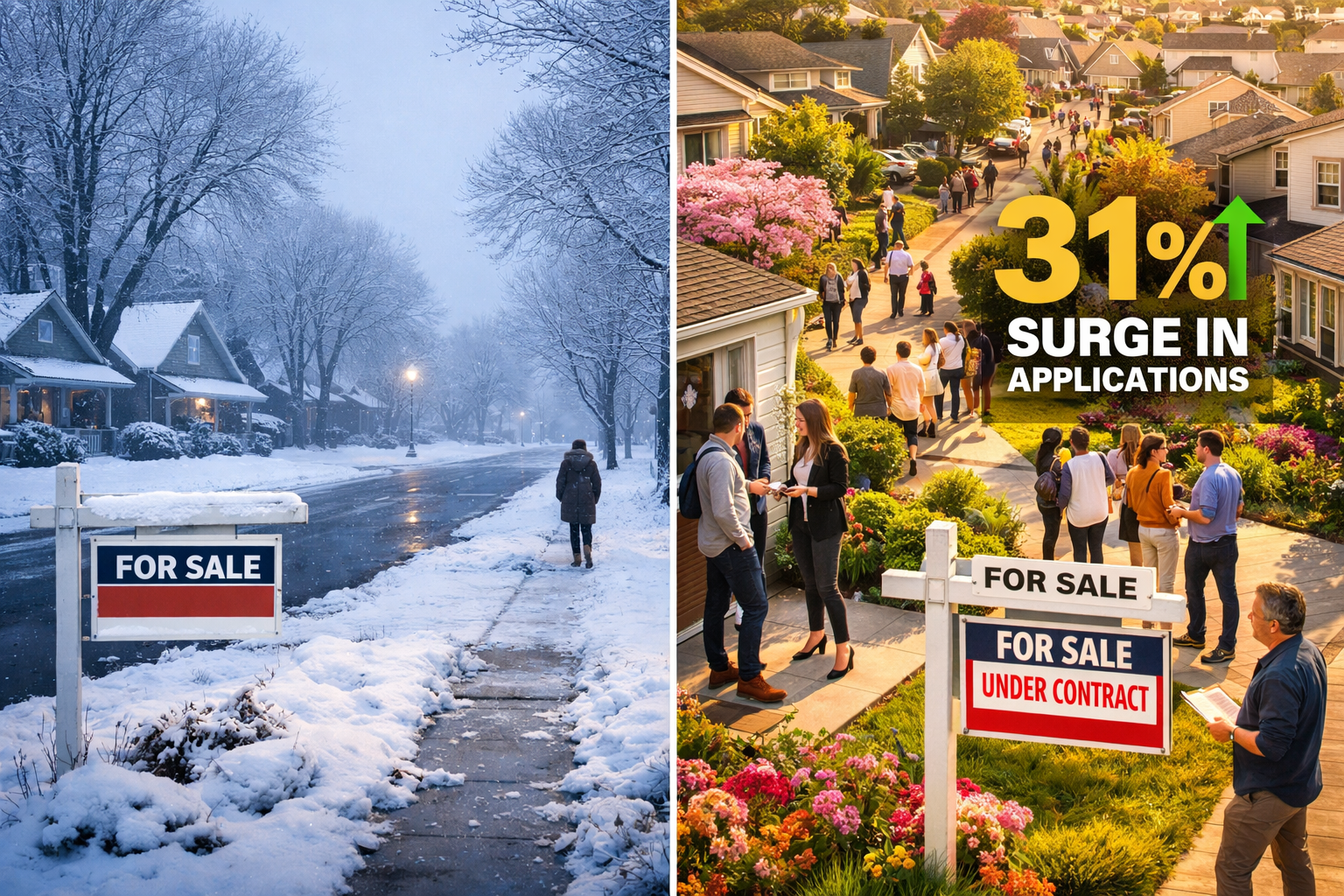
The Spring Rank IQ: 9 signs your local housing market is heating up include surging buyer activity (31% increase in mortgage applications), declining mortgage rates (now at 6.24%), shrinking inventory, faster sales cycles, multiple offer situations, rising home prices (4% projected gain), increased new listings, improving affordability conditions, and strong economic fundamentals like steady job growth and low mortgage delinquencies. These indicators collectively signal that spring 2026 represents the market comeback many have been anticipating after 2025's sluggish performance.
What Does a "Heating Up" Housing Market Actually Mean?
A heating housing market means buyer demand is outpacing available inventory, creating competitive conditions that favor sellers. In spring 2026, this translates to homes selling faster, prices stabilizing or rising, and buyers needing to act quickly to secure properties.
The current market shift represents a significant departure from 2025's stagnation. After months of elevated mortgage rates keeping both buyers and sellers on the sidelines, conditions are finally aligning for increased transaction volume. The NAR predicts 14% more home sales in 2026[1], driven by improving affordability and pent-up demand from buyers who delayed purchases.
Key characteristics of a hot market include:
- Properties receiving multiple offers within days of listing
- Sellers gaining negotiating leverage on price and terms
- Buyers waiving contingencies or offering above asking price
- Inventory levels dropping as homes sell faster than new listings appear
- Price appreciation accelerating beyond inflation rates
For property investors, a heating market creates both opportunities and challenges. Competition increases for quality properties, but appreciation potential also rises. Timing becomes crucial when deploying capital.
Common mistake: Assuming every local market heats up uniformly. National trends don't guarantee your specific neighborhood will experience the same dynamics. Always analyze local data before making decisions.
Sign 1: Mortgage Applications Are Surging Beyond Last Year's Numbers
When mortgage applications for home purchases jump 31% compared to the previous year[1], it's not just a blip on the radar. This metric directly measures buyer intent and purchasing power, making it one of the most reliable early indicators of market momentum.
Applications have been trending consistently higher than last year throughout early 2026[1], suggesting sustained demand rather than a temporary spike. This pattern indicates buyers are serious about purchasing, having already secured pre-approval and started their search in earnest.
Why this matters for different market participants:
- Buyers: Increased competition means you'll face more bidders on desirable properties. Getting pre-approved becomes non-negotiable.
- Sellers: Higher application volumes translate to larger buyer pools, giving you pricing power and negotiating leverage.
- Agents: More applications mean more serious clients ready to transact, but also fiercer competition for listings.
- Investors: Application surges often precede price appreciation, making early positioning advantageous.
The surge is particularly fresh because it follows 2025's lackluster performance. Many buyers sat out last year waiting for better conditions, and that pent-up demand is now flooding the market.
Decision rule: If mortgage applications in your local market exceed last year's numbers by 20% or more for three consecutive months, expect competitive bidding and faster sales cycles.
Sign 2: Mortgage Rates Are Declining and Creating Buyer Opportunities
Mortgage rates have dropped from 7% at the start of 2026 to 6.24% as of recent reporting[1], with forecasts expecting rates to average around 6% through 2026[1]. This gradual decline is removing one of the biggest barriers that kept buyers sidelined in 2024 and 2025.
Even a half-point rate reduction significantly impacts monthly payments. On a $400,000 mortgage, the difference between 7% and 6.5% saves buyers approximately $120 per month or $1,440 annually. Over 30 years, that's substantial savings.
Rate decline impact by buyer type:
| Buyer Type | Impact | Strategy |
|---|---|---|
| First-time buyers | Monthly payments become affordable | Lock rates when comfortable, don't wait for perfection |
| Move-up buyers | Can afford larger homes or better locations | Consider selling current home simultaneously |
| Investors | Cash flow improves on rental properties | Run numbers on previously marginal deals |
| Refinancers | May not benefit yet if purchased at 5% or lower | Monitor for further declines |
The rate environment is so based right now because it's creating a sweet spot: rates are low enough to improve affordability but not so low that they trigger excessive speculation or bidding wars reminiscent of 2020-2021.
Common mistake: Waiting for rates to hit some arbitrary "perfect" number like 5%. Markets heat up as rates decline, so waiting may mean facing higher home prices that offset rate savings. For more context on navigating current market conditions, check out our 2025 housing market insights.
Sign 3: Days on Market Are Shrinking Across Neighborhoods
When the average time a home sits on the market starts dropping week over week, you're witnessing real-time evidence of increasing buyer demand. Properties that previously lingered for 45-60 days are now going under contract in 20-30 days or less.
This compression happens because more buyers are actively searching while inventory remains constrained. Sellers who price correctly are seeing immediate interest, often with multiple showings scheduled within the first weekend.
What shrinking DOM tells different stakeholders:
- Sellers: Your window to maximize exposure is narrower. Professional photography, staging, and strategic pricing matter more than ever.
- Buyers: You can't afford to "sleep on" a property you like. Weekend warriors who casually browse will lose out to decisive buyers.
- Agents: Your responsiveness becomes a competitive advantage. Delays in scheduling showings or submitting offers cost clients opportunities.
- Investors: Quick decision-making frameworks and pre-arranged financing separate successful acquisitions from missed deals.
The trend is particularly pronounced for move-in ready homes in desirable school districts and neighborhoods with strong amenities. Fixer-uppers still sit longer, but even those are moving faster than in 2025.
Edge case: In luxury markets above $1 million, DOM may not shrink as dramatically because the buyer pool is smaller and purchase decisions take longer. Don't panic if high-end properties still take 60-90 days.
For sellers preparing to list, our guide on preparing your home to attract buyers offers actionable strategies to minimize your time on market.
Sign 4: Multiple Offer Situations Are Becoming the Norm
When three, five, or even ten buyers compete for the same property, you know the market has shifted decisively in sellers' favor. Multiple offer scenarios are increasing across markets in spring 2026, particularly for well-priced homes in good condition.
This dynamic creates stress for buyers who must make quick decisions with limited negotiating power. Sellers, meanwhile, can choose not just the highest price but the best overall terms, including fewer contingencies, flexible closing dates, or cash offers.
Anatomy of a multiple offer situation:
- Property hits market priced at or slightly below comparable sales
- Showings flood in within first 48-72 hours
- Offers arrive before first weekend open house concludes
- Seller reviews typically 3-7 competing offers
- Highest and best requests go out, escalating prices 3-8% above list
- Winner selected based on price, terms, and buyer strength
Strategies for buyers in multiple offer scenarios:
- Get pre-approved by a reputable local lender, not just pre-qualified
- Write a personal letter explaining why you love the home (where legally permitted)
- Offer earnest money above the standard 1-2% to show commitment
- Limit contingencies to only the most essential (inspection, financing, appraisal)
- Be flexible on seller's preferred closing and possession dates
- Consider an escalation clause that automatically increases your offer up to a maximum
For sellers: Don't automatically accept the highest price. Cash offers or those with fewer contingencies often close more reliably than highly leveraged buyers stretching their budget.
Our article on negotiation power moves can help buyers compete effectively without overpaying.
Sign 5: Home Prices Are Stabilizing and Beginning to Appreciate
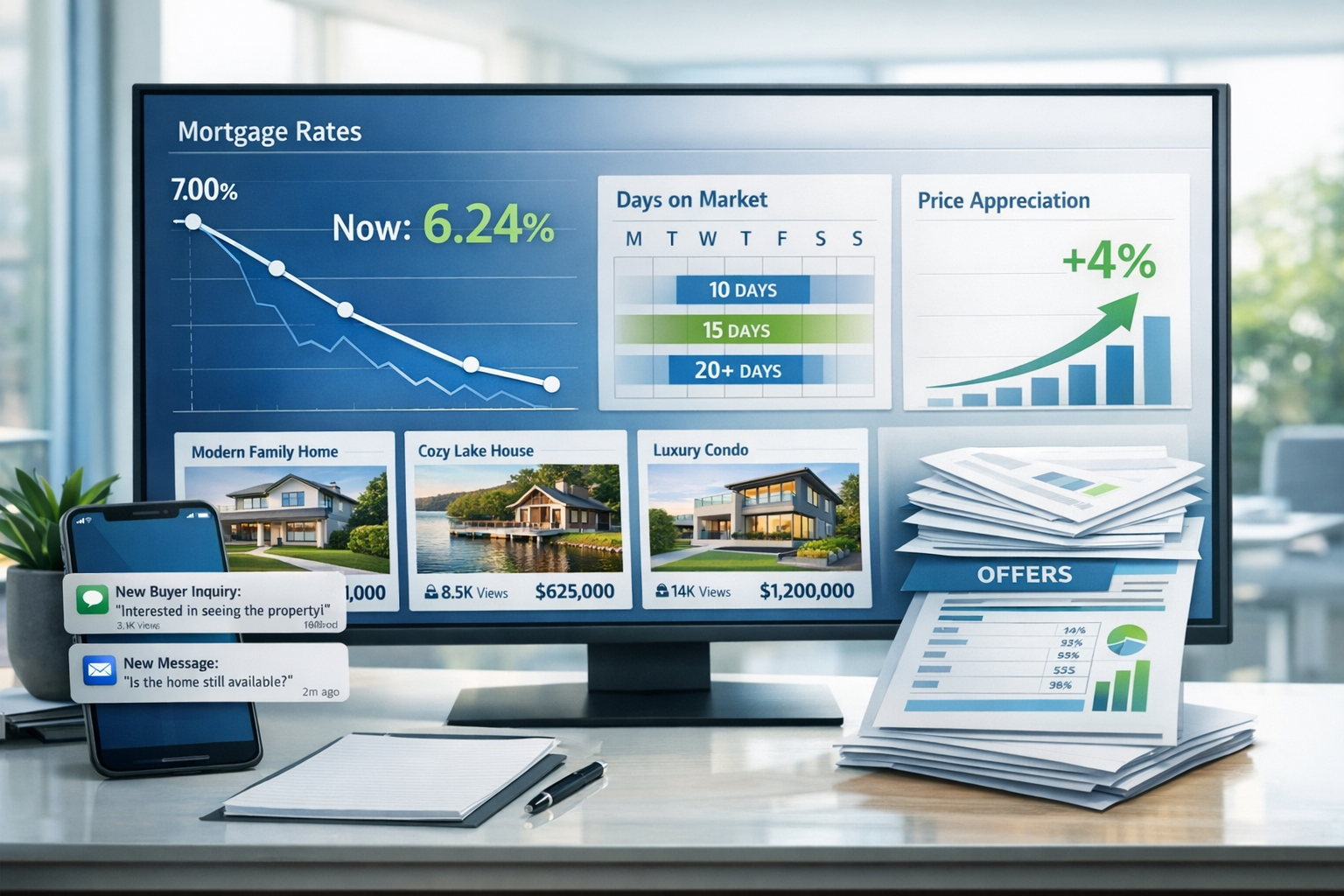
After months of uncertainty, home prices are finding solid footing with a projected 4% median gain expected for 2026 nationally, with no danger of price declines[1]. This stabilization signals that the market has absorbed previous rate shocks and adjusted to the new normal.
Price appreciation at 4% represents healthy, sustainable growth rather than the unsustainable double-digit gains that characterized 2020-2021. It reflects genuine demand supported by economic fundamentals rather than speculative fever.
What 4% appreciation means in real numbers:
- $300,000 home → $312,000 (gain of $12,000)
- $500,000 home → $520,000 (gain of $20,000)
- $750,000 home → $780,000 (gain of $30,000)
For homeowners, this appreciation builds equity and wealth. For buyers, it means purchasing power erodes if you wait, but not at an alarming rate. For investors, it provides modest appreciation to complement rental income.
Market-specific variations matter: While the national median is 4%, individual markets vary significantly. Some hot markets may see 6-8% gains while others remain flat. The top housing markets for 2026 show median list prices of $384,000, below the national median of $415,000[2], suggesting affordability opportunities in specific locations.
Choose price appreciation markets if: You prioritize long-term wealth building over immediate cash flow. Choose stable or declining markets if you're a cash flow investor willing to sacrifice appreciation for higher rental yields.
Understanding how to value your home in any market helps sellers capitalize on appreciation without overpricing.
Sign 6: Inventory Is Rising But Still Getting Absorbed Quickly
Inventory is rising as homebuilders continue adding supply[1], and more sellers decide to list during the spring selling season. However, this increased supply is being absorbed quickly by the surge in buyer demand, preventing the market from tipping into oversupply.
This balance is extraordinary for market health. Too little inventory creates unsustainable price spikes and locks out buyers. Too much inventory leads to price declines and seller distress. The current equilibrium allows transactions to occur while maintaining price stability.
New listings and quick move-in homes are expected during spring season[4], giving buyers more options than they had in winter months. Builders are particularly active, offering incentives like rate buydowns or closing cost credits to compete with resale homes.
Inventory dynamics by property type:
- Single-family homes: Moderate inventory growth, absorbed within 30-45 days in hot markets
- Condos/townhomes: Higher inventory levels, taking 45-60 days to sell
- New construction: Builders ramping up completions, offering incentives
- Luxury ($1M+): Inventory accumulating in some markets, creating buyer opportunities
For buyers: Rising inventory means more choices and slightly less pressure than in ultra-tight markets. You can be selective without missing every opportunity.
For sellers: List early in spring before inventory peaks. The first properties on market often attract the most attention from buyers eager to start their search.
Edge case: If inventory rises faster than demand can absorb it (unlikely in 2026 based on current trends), markets can shift quickly from seller-favorable to balanced or buyer-favorable. Monitor monthly inventory reports in your area.
Investors should leverage local real estate analysis tools to track inventory trends and identify emerging opportunities before they become obvious.
Sign 7: Economic Fundamentals Are Supporting Sustained Buyer Demand
Housing market fundamentals remain solid with mortgage delinquencies at historical lows and homeowners holding substantial equity[1]. These underlying conditions provide confidence that the spring market surge isn't a temporary bubble but rather sustainable growth.
Job growth continues steadily[1], giving buyers the income stability and confidence needed to make major purchase decisions. When employment is strong, buyers feel secure committing to 30-year mortgages and taking on homeownership responsibilities.
Key economic indicators supporting the housing market:
- Unemployment rate: Remains low, supporting buyer purchasing power
- Wage growth: Continuing to outpace inflation, improving affordability over time
- Mortgage delinquencies: At historical lows, indicating homeowners can afford their payments
- Homeowner equity: Substantial cushion built up from years of appreciation
- Consumer confidence: Improving as inflation moderates and economic outlook stabilizes
The 43-day government shutdown that concluded earlier in 2026[1] had temporarily delayed pending transactions, but that bottleneck is now cleared. The resolution removed uncertainty and allowed deals that were in limbo to proceed.
Why fundamentals matter more than headlines: Markets can experience short-term volatility based on news cycles, but long-term performance tracks economic fundamentals. Strong employment, low delinquencies, and substantial homeowner equity create a resilient market that can weather temporary disruptions.
For investors: Strong fundamentals reduce risk in both fix-and-flip and buy-and-hold strategies. Markets with solid job growth and low unemployment typically see stronger rental demand and price appreciation. Our ranking of the best cities for fix and flip opportunities considers these economic fundamentals.
Common mistake: Focusing solely on interest rates while ignoring employment, income growth, and equity positions. A complete market analysis considers all economic factors, not just financing costs.
Sign 8: Affordability Is Improving Despite Rising Prices
Affordability improvements are occurring despite price appreciation, driven by modest mortgage rate relief and slower home price growth compared to 2025[2]. This might seem contradictory, but it reflects the reality that rates have a more immediate impact on monthly payments than gradual price increases.
When rates drop from 7% to 6.24%, the monthly payment savings often exceed the cost of a 4% price increase. This creates a window where buying becomes more accessible even as prices edge higher.
Affordability calculation example:
Scenario A (Early 2026): $400,000 home at 7% rate
- Monthly P&I payment: $2,661
- Income needed (28% ratio): $114,043
Scenario B (Spring 2026): $416,000 home (4% higher) at 6.24% rate
- Monthly P&I payment: $2,558
- Income needed (28% ratio): $109,629
Despite the home costing $16,000 more, the monthly payment is actually $103 lower, and the required income is $4,414 less. This is how affordability improves even as prices rise.
Markets with strongest affordability gains:
The top 10 markets for 2026 show a median list price of $384,000, significantly below the national median of $415,000[2]. These markets offer better entry points for first-time buyers and investors seeking cash flow.
For first-time buyers: Affordability improvements create opportunities to enter the market before prices rise further. Waiting for "perfect" conditions often means missing the window entirely. Our first-time homebuyer guide walks through mortgage options and market strategies.
For sellers: Improved affordability expands your buyer pool. More households can qualify for financing, increasing demand for your property.
Sign 9: Spring Selling Season Is Bringing Fresh Listings and Renewed Energy
The spring selling season traditionally brings the highest volume of new listings and the most active buyers. Spring 2026 is no exception, with more new listings and quick move-in homes expected[4] as sellers emerge from winter hibernation.
This seasonal pattern creates momentum and energy in the market. Open houses are well-attended, agents are busy, and the overall market psychology shifts from cautious to optimistic. This psychological component matters because real estate is as much about confidence and timing as it is about numbers.
Why spring matters for each stakeholder:
Sellers: Maximum buyer competition occurs in spring. Families want to move during summer break, and buyers who've been searching all winter are ready to commit. List in March-May for optimal results.
Buyers: More inventory gives you choices, but you also face maximum competition. Come prepared with financing, flexible schedules for showings, and quick decision-making ability.
Agents: Spring is prime earning season. The professionals who prepared during winter with marketing materials, client relationships, and market knowledge will capture the most business.
Investors: Spring offers opportunities to acquire properties from motivated sellers (relocations, life changes) while also being the best time to sell renovated properties to retail buyers.
Seasonal market patterns to expect:
- March-April: Listings begin increasing, buyer activity accelerates
- May-June: Peak activity, multiple offers common, fastest sales
- July-August: Activity remains strong but moderates slightly
- September-October: Second mini-peak as buyers rush before holidays
- November-February: Slowest period, but serious buyers and motivated sellers
Edge case: In warm-weather markets like Florida, Arizona, and Southern California, seasonal patterns are less pronounced. In these areas, winter can actually be quite active due to snowbird migration and year-round pleasant weather.
For sellers looking to maximize spring momentum, our 60-day home selling plan provides a step-by-step preparation strategy.
How to Use Spring Rank IQ Signs to Make Smarter Real Estate Decisions
Understanding the Spring Rank IQ: 9 signs your local housing market is heating up is only valuable if you translate knowledge into action. Each market participant should develop specific strategies based on these indicators.
For Home Buyers:
- Get pre-approved immediately if you haven't already, not just pre-qualified
- Expand your search criteria slightly to include more inventory options
- Be ready to move quickly on properties that meet your core requirements
- Work with an experienced local agent who knows how to win in multiple offer situations
- Don't waive inspection contingencies unless you're an experienced investor who can assess risk
- Consider new construction as builders are offering incentives to compete
For Home Sellers:
- List early in spring (March-April) before inventory peaks
- Price strategically at or slightly below market to generate multiple offers
- Invest in professional preparation: staging, photography, minor repairs
- Be flexible on showing schedules to accommodate maximum buyer traffic
- Review all offer terms, not just price—contingencies and closing dates matter
- Don't get greedy when you have multiple offers; accept strong, clean offers over slightly higher but risky ones
For Real Estate Agents:
- Ramp up marketing efforts now to capture spring momentum
- Educate clients on current market conditions and realistic expectations
- Build relationships with lenders who can close quickly and reliably
- Invest in technology that helps you respond faster and serve more clients
- Specialize in your local market to provide superior neighborhood expertise
- Create urgency with buyer clients who are still fence-sitting
For Property Investors:
- Analyze deals quickly but thoroughly—speed matters in hot markets
- Have financing pre-arranged whether conventional, hard money, or cash
- Focus on markets with strong fundamentals (job growth, population growth, affordability)
- Consider value-add strategies like cosmetic renovations that maximize ROI
- Run conservative numbers assuming rates and prices at current levels, not best-case scenarios
- Build relationships with wholesalers and agents who can bring off-market deals
Our comprehensive guide on real estate investment strategies provides deeper analysis for investors navigating heating markets.
Common Mistakes to Avoid in a Heating Housing Market

Even experienced market participants make errors when conditions shift quickly. Avoiding these common mistakes can save thousands of dollars and significant stress.
Mistake 1: Waiting for the "perfect" moment
Markets don't ring a bell at the bottom or top. Trying to time perfection usually means missing good opportunities. If conditions meet your core requirements, act.
Mistake 2: Overextending financially
Just because you're pre-approved for a certain amount doesn't mean you should spend it all. Leave cushion for unexpected expenses, market changes, or life events.
Mistake 3: Skipping due diligence in competitive situations
Multiple offer pressure can tempt buyers to waive inspections or skip proper analysis. This creates massive risk. Always maintain core protections.
Mistake 4: Overpricing as a seller
Even in hot markets, overpriced homes sit. The first two weeks on market are crucial. Price right initially rather than chasing the market down with reductions.
Mistake 5: Ignoring local market variations
National trends don't guarantee local performance. A neighborhood can underperform even when the broader metro area is hot. Always analyze local data.
Mistake 6: Forgetting about transaction costs
Buyers often focus on down payment and forget about closing costs, moving expenses, and immediate home needs. Sellers forget about commissions, repairs, and staging costs. Budget completely.
Mistake 7: Making emotional rather than financial decisions
Real estate is both personal and financial. Don't let emotion override sound financial analysis, especially for investment properties.
Mistake 8: Not having backup plans
What happens if your offer isn't accepted? If your home doesn't sell? If rates rise? If the appraisal comes in low? Think through contingencies before you need them.
For sellers specifically, our article on pricing mistakes that trigger price cuts identifies the most common errors and how to avoid them.
Regional Market Variations: Where Spring Rank IQ Signs Are Strongest
While national trends provide useful context, real estate is inherently local. The Spring Rank IQ: 9 signs your local housing market is heating up manifest differently across regions and even neighborhoods within the same metro area.
Markets showing strongest heat signals:
According to recent analysis, the top housing markets for 2026 feature a median list price of $384,000, below the national median of $415,000[2]. These markets combine affordability with strong fundamentals, creating ideal conditions for both buyers and investors.
Characteristics of the hottest markets:
- Strong job growth in diverse industries (not dependent on single employer)
- Population growth from domestic migration (people moving from expensive coastal cities)
- Affordability relative to income levels (median home price 3-4x median household income)
- Quality of life factors (good schools, low crime, amenities, weather)
- New construction activity (builders investing signals confidence)
Markets experiencing moderate heat:
Many established metros are seeing steady activity without the frenzy of top-tier markets. These areas offer stability and may be preferable for risk-averse buyers or investors seeking cash flow over appreciation.
Markets still cooling or flat:
Some expensive coastal markets and areas with economic challenges may not experience the spring surge. High-priced markets where affordability remains severely constrained may see continued sluggish activity despite rate improvements.
How to analyze your specific local market:
- Track monthly sales volume compared to previous year
- Monitor median and average sale prices for trend direction
- Calculate months of inventory (total listings ÷ monthly sales rate)
- Review days on market trends over 3-6 month periods
- Analyze sale-to-list price ratios (above 100% indicates bidding wars)
- Study new listing volume and absorption rates
- Follow local economic indicators (employment, wages, business openings)
For detailed local market analysis techniques, our guide on analyzing real estate markets by location provides AI-powered strategies for gathering and interpreting data.
Technology Tools to Track Market Heat in Real Time
Modern technology allows market participants to monitor the Spring Rank IQ: 9 signs your local housing market is heating up in real time rather than relying on lagging reports. Leveraging these tools creates competitive advantages.
Essential market tracking tools:
MLS access (for agents and some investors): The most comprehensive and current data source. Track new listings, price changes, pending sales, and closed transactions daily.
Public real estate portals: Zillow, Realtor.com, Redfin provide market trend data, heat maps, and inventory tracking for free. While not as current as MLS, they're accessible to everyone.
Market analytics platforms: CoreLogic, ATTOM Data, and similar services provide deep data including foreclosures, distressed properties, ownership history, and predictive analytics.
AI-powered analysis tools: ChatGPT, Claude, and specialized real estate AI can analyze market data, identify trends, and provide insights when given proper prompts and data. Our guide on AI tools for real estate agents covers the best options for 2026.
Local MLS reports: Most MLSs publish monthly market reports with key statistics. Subscribe to these for your target markets.
Economic data sources: Bureau of Labor Statistics (employment), Census Bureau (population), and local economic development organizations provide fundamental data.
How to create a market monitoring system:
- Identify 3-5 key metrics most relevant to your goals (DOM, inventory, price trends, etc.)
- Set up automated alerts for new listings, price changes, and market reports
- Review data weekly to spot emerging trends early
- Compare current data to same period last year and previous month
- Document observations to build historical perspective
- Share insights with your team, clients, or investment partners
For investors specifically: Tools like PropStream, DealMachine, and REIPro combine market data with property-level details, ownership information, and distressed property identification. Our PropStream 2026 review evaluates whether it's still worth the investment for wholesalers.
FAQ: Spring Rank IQ and Heating Housing Markets
What does "Spring Rank IQ" mean in real estate?
Spring Rank IQ refers to the intelligence and insights needed to identify when local housing markets are heating up during the spring selling season. It combines data analysis, market indicators, and strategic thinking to recognize opportunities before they become obvious to everyone.
How quickly can a housing market shift from cold to hot?
Markets can shift in 30-90 days when conditions align. The spring 2026 surge happened relatively quickly as mortgage rates declined and pent-up buyer demand was released simultaneously. However, sustained heat requires supporting fundamentals like job growth and inventory balance.
Should I wait for mortgage rates to drop further before buying?
Waiting for perfect rates often means missing opportunities as home prices rise. If rates are within your affordability range and you find a suitable property, buying now is typically better than waiting. You can always refinance later if rates drop significantly, but you can't go back in time to buy at today's prices.
How do I know if my local market is heating up or if it's just national trends?
Analyze local data specifically: track sales volume, days on market, inventory levels, and price trends in your target neighborhoods. National trends provide context, but local data determines your actual market conditions. Work with agents who specialize in your specific area.
What's the biggest risk of buying in a heating market?
Overpaying due to competitive pressure and emotional decision-making. Combat this by setting a maximum price based on comparable sales and your financial limits before you start shopping. Stick to your numbers even when facing multiple offer situations.
As a seller, should I wait until my market gets even hotter?
Trying to time the absolute peak is risky. If your market is showing heat signals now, listing in early spring captures maximum buyer activity. Waiting could mean missing the seasonal peak or facing increased inventory competition.
How long will the spring 2026 market surge last?
Based on seasonal patterns, peak activity typically runs March through June, with strong conditions continuing through summer. However, if mortgage rates rise significantly or economic conditions deteriorate, the surge could end earlier. Monitor fundamentals monthly.
Are all property types heating up equally?
No. Single-family homes in good school districts typically heat up fastest. Condos, luxury properties, and fixer-uppers may experience less dramatic surges. New construction competes with resale homes but often offers incentives that make them attractive.
What's the difference between a heating market and a bubble?
A heating market is supported by fundamentals like job growth, limited inventory, and genuine buyer demand. A bubble is characterized by speculation, unsustainable price growth, loose lending standards, and buying based on expectation of quick profits rather than use value. Spring 2026 shows heating, not bubble characteristics.
How can real estate agents capitalize on a heating market?
Increase marketing efforts, educate clients on current conditions, respond quickly to inquiries, build lender relationships for fast closings, and specialize in local market expertise. Speed and knowledge become competitive advantages. Our guide on building referral networks helps agents scale their business.
Should investors focus on appreciation or cash flow in heating markets?
This depends on your strategy and timeline. Heating markets often favor appreciation plays, but don't sacrifice cash flow entirely. Run conservative numbers assuming current rates and prices. Markets can cool unexpectedly, so properties should still perform on fundamentals, not just appreciation speculation.
What happens if I'm selling and buying simultaneously in a hot market?
This creates timing challenges. Consider contingent offers, rent-back agreements, or bridge financing to manage the transition. Work with an experienced agent who can coordinate both transactions. Sometimes selling first and renting temporarily is the safest approach, though inconvenient.
Conclusion: Taking Action on Spring Rank IQ Market Signals
The Spring Rank IQ: 9 signs your local housing market is heating up provide a comprehensive framework for understanding and responding to changing market conditions in 2026. With mortgage applications surging 31% year-over-year[1], rates declining to 6.24%[1], and the NAR projecting 14% more home sales[1] this year, the evidence is clear: spring 2026 represents a significant market shift after 2025's stagnation.
But knowledge without action is just entertainment. The extraordinary opportunities available right now won't last indefinitely. Markets that heat up can also cool down when conditions change. The professionals and investors who recognize these signals early and execute decisively will capture the best deals, the highest returns, and the most satisfied clients.
Immediate action steps based on your role:
If you're a home buyer: Get pre-approved this week if you haven't already. Start touring properties immediately. Prepare to make quick decisions on homes that meet your core criteria. Don't wait for perfect conditions that may never arrive.
If you're a home seller: Schedule a consultation with a top local agent to discuss pricing strategy and preparation needs. List in the next 30-45 days to capture peak spring activity before inventory peaks. Invest in professional presentation.
If you're a real estate agent: Ramp up your marketing now. Educate your database about current market conditions through email, social media, and personal outreach. Position yourself as the local market expert who helps clients navigate competitive conditions.
If you're an investor: Analyze your target markets using the nine signs framework. Identify neighborhoods showing the strongest heat signals with the best fundamentals. Secure financing and build deal flow pipelines. Move quickly on properties that meet your criteria.
The spring 2026 housing market is letting it cook, and the results are looking fresh. Affordability is improving despite rising prices, fundamentals remain solid, and buyer demand is surging. This combination creates opportunities for those prepared to act.
Real Estate Rank IQ is committed to providing the impeccable, expert-backed guidance you need to make informed decisions. Whether you're buying your first home, selling a property, building your real estate business, or growing an investment portfolio, we're here to inform and inspire with actionable content from licensed brokers with over 15 years of experience.
Don't let market momentum pass you by. The signs are clear, the data supports action, and the spring selling season is here. Use these insights to make smarter, more confident real estate decisions in 2026.
For ongoing market analysis, investment strategies, and real estate education, visit Real Estate Rank IQ or subscribe to our YouTube channel. Have questions? Contact us at news@realestaterankiq.com.
The market is heating up. Are you ready?
References
[1] Housing Market Set For A 2026 Comeback Nar Predicts – https://www.nar.realtor/magazine/real-estate-news/economy/housing-market-set-for-a-2026-comeback-nar-predicts
[2] Realtorcom Reveals The Top Housing Markets For 2026 302637142 – https://www.prnewswire.com/news-releases/realtorcom-reveals-the-top-housing-markets-for-2026-302637142.html
[4] Top Trends For The 2026 Spring Selling Season What Buyers Should Watch Now – https://www.newhomesource.com/news/housing-market-trends/top-trends-for-the-2026-spring-selling-season-what-buyers-should-watch-now/
{“@context”:”https://schema.org”,”@type”:”Article”,”headline”:”Spring Rank IQ: 9 signs your local housing market is heating up”,”description”:” Discover the 9 key signs your local housing market is heating up in spring 2026. Expert insights on mortgage rates, buyer demand, and pricing trends for succes”,”image”:”https://zsxkvszxbhpwnvzxdydv.supabase.co/storage/v1/object/public/generated-images/kie/0617e4d3-6965-464b-aedc-2d252fe966d4/slot-0-1771913299548.png”,”datePublished”:”2026-02-24T06:03:31.000061+00:00″,”dateModified”:”2026-02-24T06:08:54.375Z”,”author”:{“@type”:”Organization”,”name”:”real estate rank iq”},”publisher”:{“@type”:”Organization”,”name”:”real estate rank iq”}}