


The housing market is finally letting it cook, and the results are looking extraordinary for buyers who've been waiting on the sidelines. After years of sky-high mortgage rates and inventory so tight it felt like sellers were gatekeeping the entire market, the Spring 2026 Housing Market Outlook: Lower Rates and Rising Inventory Signal Buyer Opportunities that haven't existed since before the pandemic. With mortgage rates dipping to their lowest levels since 2022 and active listings climbing for the 27th consecutive month, the conditions are aligning for a more balanced market where buyers actually have negotiating power again.[1]

But here's the fresh take: this isn't your typical spring bounce. The data tells a story of improving affordability, cooling home prices, and an inventory rebuild that's happening amid mortgage rates hovering around 6%—a far cry from the 3% days, but also significantly better than the 7%+ nightmare of 2023. According to leading economists, we're entering a phase of balanced supply-demand dynamics with modest price rises on the horizon, creating what some are calling the sweet spot for strategic buyers.[4]
Real Estate Rank IQ has been tracking these shifts with impeccable precision, and the signals are so based: this spring could mark the turning point where patient buyers finally catch a break. Whether you're a first-time homebuyer, a seasoned investor, or a real estate agent preparing your clients for the season, understanding these market dynamics isn't just helpful—it's essential.
Key Takeaways
- 📈 Inventory is up 10% year-over-year for the 27th consecutive month, with 46 of the 50 largest metros showing growth, though supply remains 17.2% below pre-pandemic levels[1]
- 💰 Mortgage rates hit their lowest point since 2022 in January 2026, triggering an 8% surge in home purchase applications to three-year highs[1][5]
- 🏘️ Regional markets show dramatic variation: Northeast prices are up 3.8% while West Coast and Sun Belt markets experience declines following construction booms[1][4]
- 📊 National home prices are projected to stall at 0% growth in 2026, with balanced supply-demand offsetting each other according to J.P. Morgan[4]
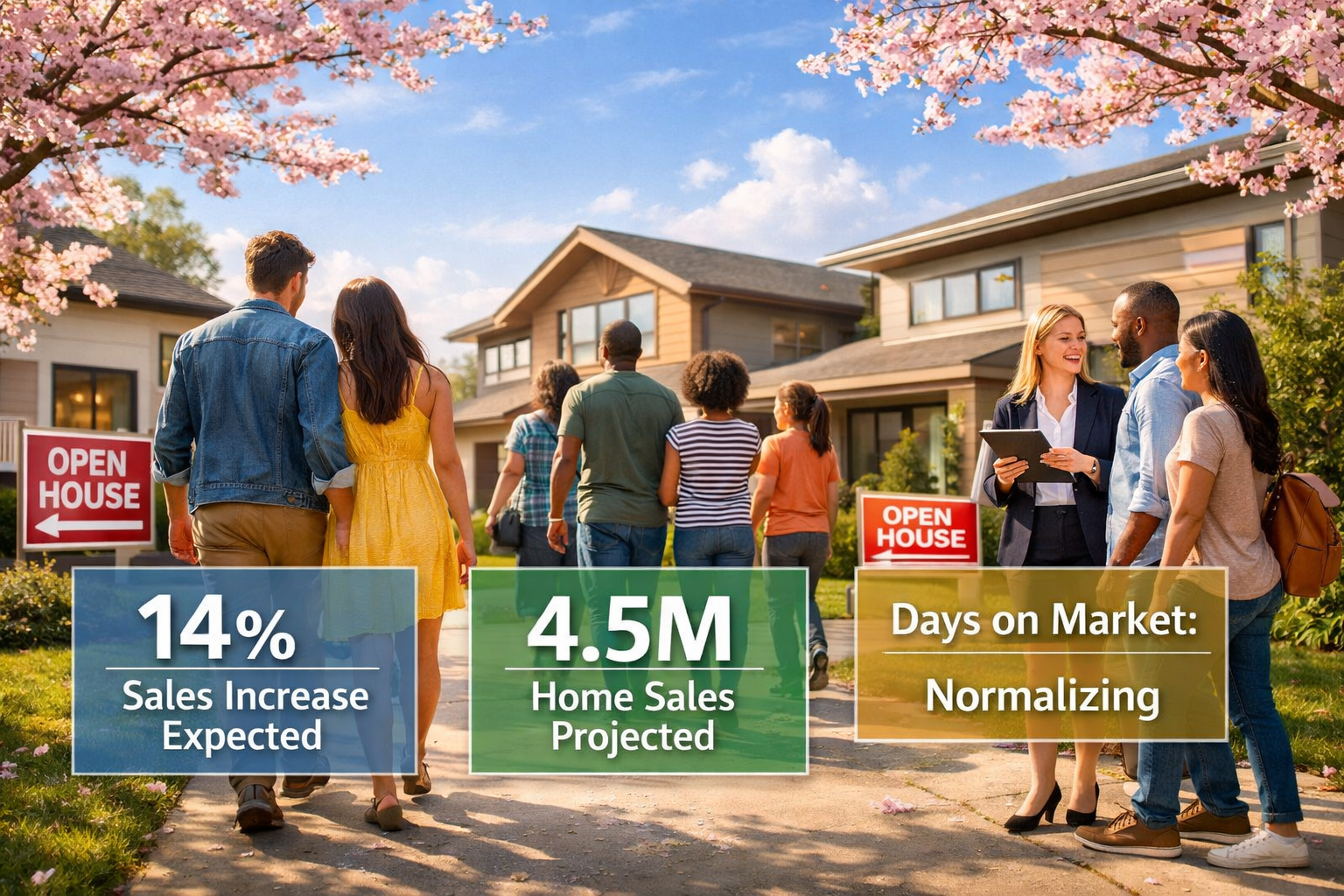
- 🎯 Home sales are expected to increase 14% nationwide in 2026 as the "lock-in effect" weakens and inventory normalizes, per NAR Chief Economist Lawrence Yun[3]
Understanding the Spring 2026 Housing Market Outlook: Lower Rates and Rising Inventory Signal Buyer Opportunities
The transformation happening in real estate right now is nothing short of remarkable. For the first time in years, buyers aren't just competing in bidding wars—they're actually getting time to think, negotiate, and make informed decisions. This shift represents a fundamental rebalancing of market power that's been tilted heavily toward sellers since the pandemic began.
The Inventory Recovery: Progress with Perspective
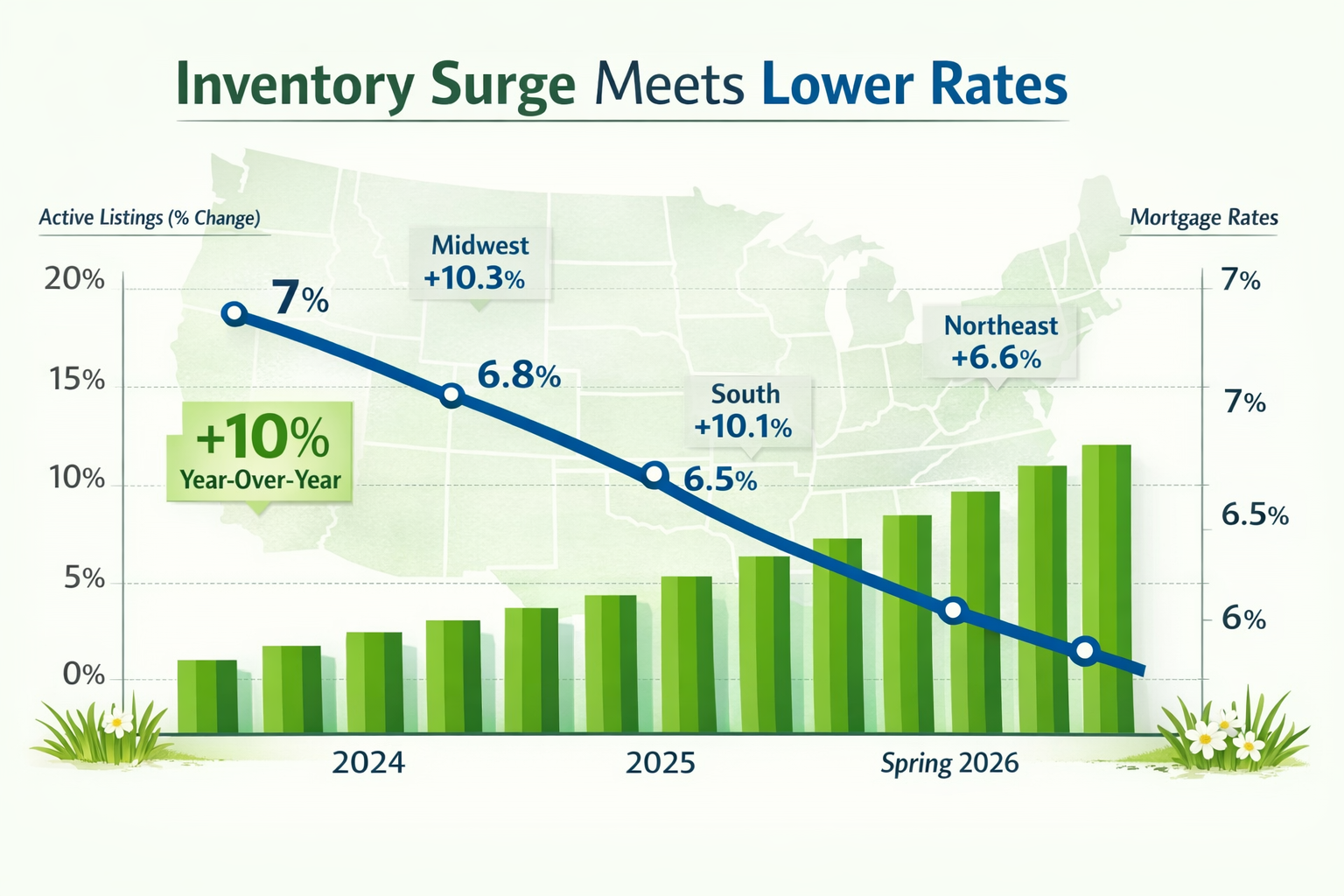
Active listings increased 10% year-over-year in January 2026, marking an impressive 27 consecutive months of inventory gains.[1] That's more than two years of consistent improvement, and it's creating real opportunities for buyers who need choices. However, context matters: while inventory growth is positive, it has actually decelerated for nine consecutive months, suggesting the rapid recovery phase may be slowing.[1]
Here's where it gets interesting: inventory levels are approximately 20% above one year ago, providing substantially more consumer choices than we saw throughout 2024 and 2025.[3] But—and this is crucial—the market remains in a slight housing shortage condition relative to pre-pandemic norms, with active listings still 17.2% below pre-pandemic levels.[1] This represents the widest gap since spring 2025, indicating that while progress has been made, we've actually lost some ground recently.
Regional Inventory Variations:
| Region | Year-Over-Year Growth | Market Characteristics |
|---|---|---|
| West | +12.2% | Strongest inventory recovery, driven by new construction |
| Midwest | +10.3% | Steady growth, balanced market conditions emerging |
| South | +10.1% | Robust growth despite continued population influx |
| Northeast | +6.6% | Slowest growth, persistent supply constraints |
The standout metro markets tell an even more compelling story. Seattle leads with +32.4% inventory growth, followed by Charlotte at +28.6% and Washington, DC at +26.8%.[1] In fact, 46 of the 50 largest metros recorded inventory growth, demonstrating this is a nationwide phenomenon, not just isolated pockets.[1]
For buyers, this means more options, more time to evaluate properties, and less pressure to make snap decisions. For sellers and agents, it signals the need for more strategic pricing and marketing approaches—the days of listing a property and watching offers roll in within hours are largely behind us in most markets.
Mortgage Rates: The Affordability Game-Changer
Let's talk about what's really moving the needle for buyers: mortgage rates in January dipped to their lowest levels since 2022.[1] This might not sound revolutionary if you remember the 3% days, but for anyone who's been shopping in the 7%+ environment of recent years, this represents a significant affordability improvement.
The impact has been immediate and measurable. Home purchase mortgage applications rose 8% in January 2026 to their highest level in three years.[1][5] This uptick reflects genuine demand that's been pent up, waiting for rates to become more manageable. According to Capital Economics, this improved rate environment could push existing home sales to approximately 4.5 million annualized in the coming months—though they caution this may represent the peak for 2026 before rates potentially rebound later in the year.[5]
"The declining mortgage rates entering 2026 have unlocked demand that's been sitting on the sidelines. We're seeing buyers who postponed their plans in 2023 and 2024 finally moving forward." – Market Analysis, Real Estate Rank IQ
For context on how to maximize these lower rates, check out our comprehensive guide on Best Mortgage Options for Gen Z Home Buyers 2026 Guide, which breaks down strategies that work across all buyer demographics.
What Lower Rates Mean in Real Dollars:
- A 6% mortgage rate versus 7% on a $400,000 home saves approximately $240 per month or $86,400 over 30 years
- The difference between 6% and 7.5% rates translates to roughly $350 monthly savings on the same property
- These savings can mean the difference between qualifying for a home or not for many buyers
However, it's important to maintain realistic expectations. Housing affordability remains 35% below pre-COVID levels as of November 2025, according to J.P. Morgan's analysis.[4] While rates have improved from their peaks, the combination of elevated home prices and higher-than-historical rates means affordability is still challenged compared to the 2019 baseline.
For those looking to understand broader market dynamics, our article on Master the 2025 Housing Market: Expert Insights provides essential context for how we arrived at this spring 2026 position.
Price Dynamics: The Great Regional Divide
If there's one thing that makes the Spring 2026 Housing Market Outlook: Lower Rates and Rising Inventory Signal Buyer Opportunities complex, it's the dramatic regional variations in pricing. The national narrative of "flat prices" masks extraordinary differences depending on where you're looking.
National median list prices remain essentially flat, with the price per square foot actually falling nationally.[1] J.P. Morgan projects U.S. house prices will stall at 0% growth in 2026, with slight demand improvement offsetting increased supply.[4] This represents a dramatic shift from the double-digit appreciation rates that characterized 2021-2022.
But here's where location becomes everything:
Regional Price Trends:
🔴 Northeast: Sharp Appreciation
- Year-over-year price growth: +3.8%[1]
- Driver: Persistent supply constraints
- Outlook: Continued seller's market characteristics
- Buyer strategy: Expect competition, need strong offers
🔵 West Coast & Sun Belt: Price Declines
- Experiencing price corrections following pandemic-era construction booms[1][4]
- Markets like Phoenix, Austin, and Boise seeing notable softening
- Driver: Oversupply from speculative building during peak demand
- Buyer strategy: Negotiating power, inspection contingencies viable
🟢 Midwest & Secondary Markets: Balanced Conditions
- Modest price movements in either direction
- More normalized buyer-seller dynamics
- Driver: Steady inventory growth meeting stable demand
- Buyer strategy: Traditional negotiation tactics effective
This regional variation creates what economists call a "tale of two markets." In Boston or New York, buyers are still facing competitive conditions with limited inventory and rising prices. Meanwhile, in markets like Las Vegas or Tampa, buyers have genuine negotiating leverage with sellers who may have purchased at peak prices and are now facing a softer market.
For investors evaluating opportunities across different markets, our guide on Discover the Ultimate Real Estate Investment Strategies for a Global Market! offers frameworks for analyzing these regional variations.
Market Dynamics: Supply, Demand, and the Path to Balance
Understanding the Spring 2026 Housing Market Outlook: Lower Rates and Rising Inventory Signal Buyer Opportunities requires looking beyond headline numbers to the underlying supply-demand dynamics that drive market behavior. The spring 2026 market represents a transitional phase—no longer the extreme seller's market of 2021-2022, but not quite the balanced market of pre-pandemic years.
The Supply Side: Modest Growth, No Flood
One of the most persistent questions buyers and agents ask is: "When will we see a flood of listings?" The short answer based on current data: we won't.[2]
Supply is growing only modestly, with no "flood of listings" materializing in most markets.[2] Newly listed homes increased just 0.7% year-over-year in January, though they did surge 41% seasonally from December as year-end listing declines normalized.[1] This modest growth pattern tells us several things:
Why Supply Remains Constrained:
- The Lock-In Effect Persists: Homeowners with 3-4% mortgages remain reluctant to sell and take on 6% rates, even as the rate differential narrows
- Demographic Factors: Baby boomers aging in place rather than downsizing at historical rates
- Equity Preservation: Many homeowners prefer to hold properties that have appreciated significantly rather than sell into uncertain conditions
- New Construction Limitations: Single-family building and new-home sales expected to grow only 1% in 2026, constrained by labor shortages and regulatory hurdles[3]
Regional new listing patterns show interesting variations:
- Midwest: +1.1% year-over-year[1]
- West: +1.1% year-over-year[1]
- South: +0.3% year-over-year[1]
- Northeast: -1.9% year-over-year[1]
The Northeast's declining new listings help explain its continued price appreciation—when fresh inventory actually contracts while demand remains steady, prices have nowhere to go but up.
For sellers wondering how to position their properties in this environment, our article on Get Expert Tips For Preparing Your Home To Attract Buyers provides actionable strategies for standing out in a market with growing but still limited inventory.
The Demand Side: Awakening After Hibernation
Demand metrics in early 2026 show a market that's waking up after years of suppressed activity. Pending home sales grew 1.2% year-over-year in January, representing the strongest annual gain since December 2024.[1] While some sources report declining pending sales trends overall, the directional improvement is notable.[6]
However, the demand picture includes some cautionary signals:
- National closed sales were down 10% in January 2026 compared to one year ago, suggesting lingering market weakness[2]
- Homes are spending 6 more days on the market than a year ago, indicating buyers are taking more time and have less urgency[1]
- Properties are taking more than two months to find buyers in many markets[6]
This creates what economists call a "normalization" rather than a "boom." Buyers are returning to the market, but they're doing so cautiously, with realistic expectations and a willingness to walk away from deals that don't meet their criteria.
Demand Drivers for Spring 2026:
✅ Improved Affordability: Lower rates making monthly payments more manageable
✅ Pent-Up Demand: Years of deferred household formation and moves
✅ Weakening Lock-In Effect: More homeowners willing to move for life changes despite rate differential
✅ Seasonal Factors: Spring traditionally brings peak buying season activity
❌ Affordability Challenges: Prices still elevated relative to incomes
❌ Economic Uncertainty: Concerns about job market and recession risks
❌ Rate Volatility: Fear that current lower rates may not last
❌ Down Payment Barriers: Savings requirements remain substantial
For first-time buyers navigating these dynamics, our guide on Fast-Track Your Homeownership with Pre-Approval & Market Trends offers practical steps for positioning yourself competitively.
Expert Forecasts: What the Economists See
Leading housing economists are cautiously optimistic about the Spring 2026 Housing Market Outlook: Lower Rates and Rising Inventory Signal Buyer Opportunities, though their projections vary based on different assumptions about rates, employment, and consumer behavior.
Lawrence Yun, NAR Chief Economist, expects home sales to increase approximately 14% nationwide in 2026, citing improved inventory levels and the declining "lock-in effect" as more people list properties for life-changing moves like job relocations, family changes, or retirement.[3] This represents a significant rebound from the depressed sales volumes of 2023-2024.
Capital Economics projects existing home sales could rise to approximately 4.5 million annualized in coming months, though they note this level likely represents the expected peak for 2026 before potential decline later in the year as mortgage rates rebound.[5] Their analysis suggests the current window of lower rates may be temporary.
J.P. Morgan takes a more conservative stance, projecting 0% house price growth nationally in 2026, with balanced supply-demand dynamics offsetting each other.[4] Their model suggests:
- Slight demand improvement from lower rates
- Increased supply from new construction and existing homeowners listing
- Net result: stable prices with regional variations
These forecasts align on several key points:
- Sales volume will increase from recent lows
- Price appreciation will be modest or flat nationally
- Regional variations will be significant
- The market is transitioning toward better balance
For real estate professionals preparing strategies based on these forecasts, our article on Using Real Estate Rank IQ for Market Trends & Investment Planning 2025 provides tools for tracking and analyzing local market conditions.
Strategic Opportunities for Buyers, Sellers, and Investors
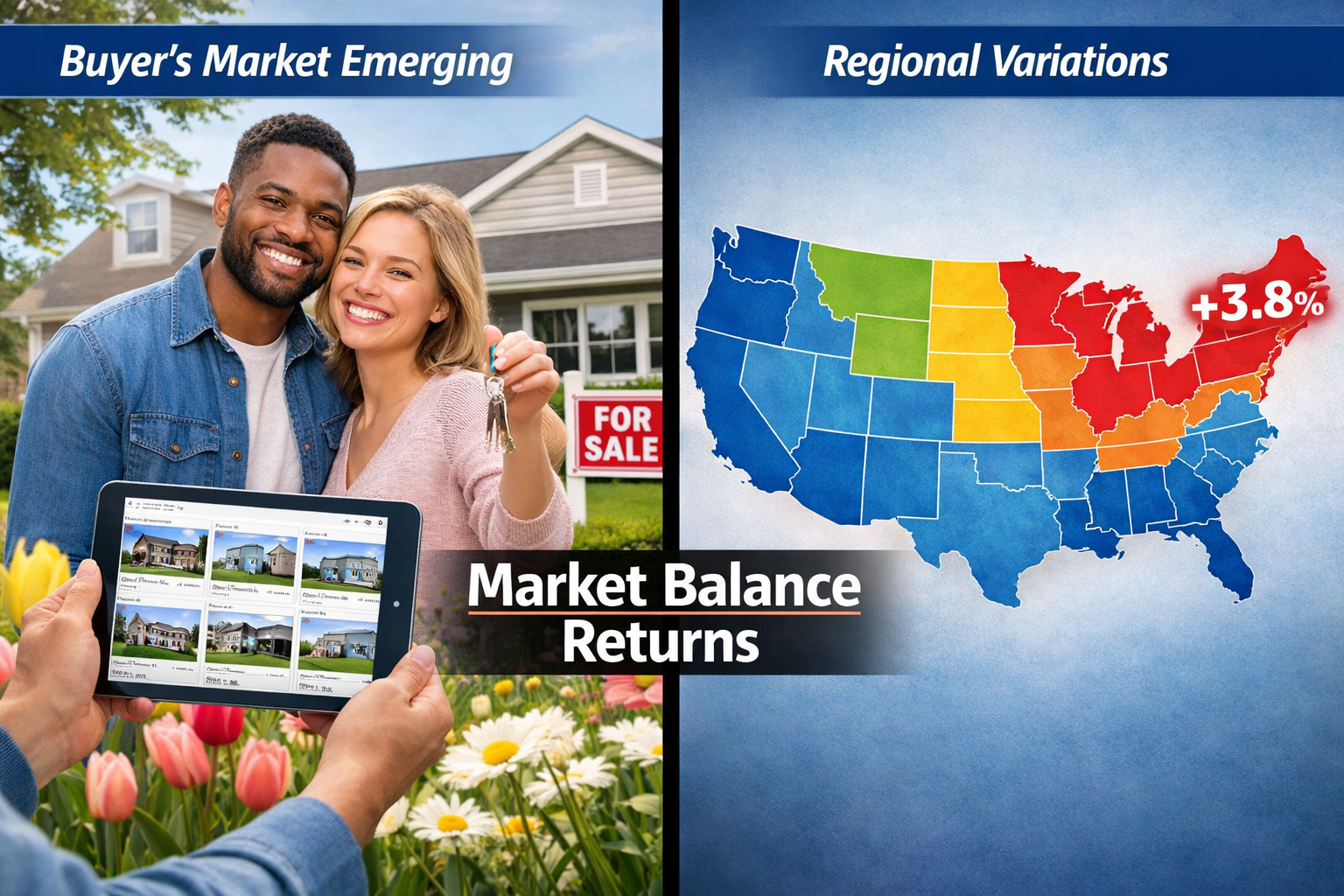
The Spring 2026 Housing Market Outlook: Lower Rates and Rising Inventory Signal Buyer Opportunities that smart market participants can leverage. Whether you're buying your first home, selling a property, or building an investment portfolio, understanding how to position yourself in this transitional market is crucial.
Buyer Strategies: Maximizing Your Advantage
For buyers, spring 2026 represents the best market conditions in years. Here's how to capitalize:
🏡 Take Your Time
With homes spending 6 more days on market than last year and inventory up significantly, the pressure to make instant decisions has evaporated.[1] Use this time to:
- Conduct thorough inspections
- Research neighborhood trends and future development
- Compare multiple properties before making offers
- Negotiate repairs and concessions that were impossible in 2021-2022
💰 Leverage Rate Improvements
Current mortgage rates at their lowest since 2022 create genuine affordability improvements.[1] Strategies include:
- Getting pre-approved now to lock in current rate environments
- Considering adjustable-rate mortgages (ARMs) if you plan to move or refinance within 5-7 years
- Exploring down payment assistance programs that have expanded in many markets
- Calculating total cost of ownership, not just monthly payments
For detailed mortgage strategies, our Guide to Types of Mortgage Loans & Comparing Lenders in 2026 breaks down every option available to modern buyers.
🎯 Target the Right Markets
Regional variations create opportunities for strategic buyers:
- West Coast/Sun Belt markets with inventory surpluses: Maximum negotiating power, potential for price concessions
- Midwest balanced markets: Traditional negotiation dynamics, fair pricing
- Northeast constrained markets: Need competitive offers but more inventory than previous years
📊 Use Data to Negotiate
Armed with information about days on market, price reductions, and local inventory levels, buyers can negotiate from a position of knowledge:
- Request seller-paid closing costs
- Negotiate price reductions on properties sitting longer than average
- Include inspection contingencies without fear of losing deals
- Ask for home warranties or repair credits
The seasonal advantages of spring buying are also worth considering. According to Florida Realtors, spring traditionally offers the best selection of inventory as sellers list before summer, creating optimal conditions for buyers who want choices.[7]
Seller Strategies: Adapting to New Realities
Sellers in spring 2026 face a different market than recent years, but opportunities still exist for those who adapt their strategies:
💡 Price Realistically from Day One
With national median list prices essentially flat and price per square foot falling,[1] overpricing is a recipe for extended market time and eventual price reductions. Strategies include:
- Analyzing recent comparable sales (not listings) in your specific neighborhood
- Accounting for current market conditions, not 2021 peak prices
- Considering that homes are taking 6+ more days to sell than last year[1]
- Understanding that buyers now have time to compare and negotiate
Our guide on Avoid Pricing Pitfalls: How To Value Your Home In Any Market – Expert Tips provides frameworks for setting competitive prices that attract qualified buyers.
🏠 Preparation is Non-Negotiable
With more inventory available, buyers are selective. Standing out requires:
- Professional staging and photography
- Addressing obvious maintenance issues before listing
- Creating compelling listing descriptions that highlight unique features
- Leveraging virtual tours and high-quality marketing materials
For comprehensive preparation strategies, see our Complete Home Sale Checklist with AI Tips & Market Insights.
⏰ Timing Matters
With newly listed homes up only 0.7% year-over-year,[1] sellers who list early in the spring season may capture pent-up buyer demand before inventory peaks. Consider:
- Listing in March-April before peak inventory months
- Avoiding major holiday periods when buyer activity drops
- Timing your listing to coincide with local market patterns
🤝 Flexibility Creates Opportunities
In a more balanced market, sellers who offer flexibility often achieve better outcomes:
- Consider offering seller-paid closing cost assistance
- Be open to reasonable inspection repair requests
- Offer flexible closing timelines that accommodate buyer needs
- Price competitively rather than testing the high end of the range
Investor Opportunities: Finding Value in Transition
For real estate investors, transitional markets like spring 2026 create unique opportunities to acquire properties at reasonable valuations while positioning for future appreciation.
📈 Focus on Fundamentals
With 0% projected national price growth in 2026,[4] investors should prioritize:
- Cash flow over appreciation: Rental properties that generate positive monthly income
- Value-add opportunities: Properties needing cosmetic updates in strong rental markets
- Emerging markets: Secondary cities with job growth and population influx
- Diversification: Spreading investments across different property types and locations
Our comprehensive guide on Unlock the Best Real Estate Investment Strategies Now! provides frameworks for evaluating opportunities in various market conditions.
🏘️ Target Markets with Inventory Surpluses
Markets experiencing price declines following construction booms offer potential value:
- West Coast markets with +12.2% inventory growth[1]
- Sun Belt cities that overbuilt during pandemic migration
- Suburban areas where work-from-home trends have stabilized
💼 Consider Alternative Strategies
Beyond traditional buy-and-hold, spring 2026 conditions support:
- House hacking: Buying multi-family properties and living in one unit
- Short-term rentals: In markets with strong tourism and business travel
- Fix-and-flip: In markets with price stability and buyer demand
- BRRRR method: Buy, Rehab, Rent, Refinance, Repeat in cash-flow markets
For tax-advantaged strategies, our guide on Master 1031 Exchange Basics: Rules, Timelines, and Common Mistakes! explains how to defer capital gains while building portfolio value.
🔍 Perform Rigorous Due Diligence
In a market where properties sit longer and sellers may be more motivated:
- Conduct thorough property inspections
- Analyze neighborhood trends and future development plans
- Verify rental demand and achievable rent levels
- Calculate conservative return projections accounting for vacancy and maintenance
Navigating Regional Market Variations
One of the most critical aspects of the Spring 2026 Housing Market Outlook: Lower Rates and Rising Inventory Signal Buyer Opportunities is understanding that national trends mask significant regional differences. Success in real estate has always been about location, and 2026 is no exception.
West Region: Inventory Leader with Price Corrections
The West leads all regions with +12.2% inventory growth year-over-year,[1] creating the most favorable conditions for buyers in years. Markets like Seattle (+32.4% inventory growth) exemplify this trend.[1]
Market Characteristics:
- Substantial inventory increases creating buyer leverage
- Price corrections in markets that experienced pandemic-era overbuilding
- New construction adding to supply in many metro areas
- Tech sector employment volatility affecting demand in some markets
Opportunities:
- Buyers: Maximum negotiating power, ability to include contingencies, time to evaluate options
- Sellers: Need competitive pricing and strong marketing to stand out
- Investors: Value opportunities in quality properties experiencing temporary price softness
Midwest Region: Balanced Market Emerging
The Midwest shows +10.3% inventory growth with relatively stable pricing,[1] creating what many consider ideal market conditions.
Market Characteristics:
- Balanced supply-demand dynamics
- Affordable price points relative to coastal markets
- Steady population growth in major metros
- Strong rental demand from younger demographics
Opportunities:
- Buyers: Fair pricing, traditional negotiation dynamics, good selection
- Sellers: Reasonable expectations yield successful sales
- Investors: Cash-flow opportunities with stable appreciation potential
South Region: Growth with Complexity
The South demonstrates +10.1% inventory growth[1] despite continued population influx, creating a complex market with pockets of opportunity and challenge.
Market Characteristics:
- Continued migration from higher-cost regions
- Robust new construction in many markets
- Varied economic drivers across different metros
- Climate and insurance considerations affecting some coastal markets
Opportunities:
- Buyers: Growing inventory providing choices in previously tight markets
- Sellers: Strong underlying demand supports reasonable pricing
- Investors: Population growth supporting rental demand, though careful market selection essential
Notable markets like Charlotte (+28.6% inventory growth) and Washington, DC (+26.8%) show dramatic inventory increases,[1] creating buyer-favorable conditions in traditionally competitive markets.
Northeast Region: Persistent Constraints
The Northeast shows the slowest inventory growth at +6.6% year-over-year, with new listings actually declining -1.9%.[1] This creates continued seller-favorable dynamics.
Market Characteristics:
- Limited land availability constraining new construction
- Regulatory hurdles limiting housing development
- Strong employment in major metros maintaining demand
- Price appreciation of +3.8% year-over-year[1]
Opportunities:
- Buyers: Need competitive offers but more inventory than 2024-2025
- Sellers: Strongest pricing power of any region
- Investors: Appreciation potential but higher entry costs and lower yields
For investors and agents analyzing these regional variations, our article on Neighborhood Market Data & Real Estate Investment Strategies provides AI-powered tools for deep-dive market analysis.
The Role of Technology and Market Intelligence
In the Spring 2026 Housing Market Outlook: Lower Rates and Rising Inventory Signal Buyer Opportunities, having access to real-time data and market intelligence is more important than ever. The difference between a good decision and a great one often comes down to information quality and timing.
Data-Driven Decision Making
Modern buyers, sellers, and investors have access to extraordinary tools:
For Buyers:
- Real-time inventory tracking showing new listings within minutes
- Automated price reduction alerts identifying motivated sellers
- Neighborhood analytics revealing school ratings, crime statistics, and future development
- Mortgage calculators incorporating current rates and tax implications
For Sellers:
- Comparative market analysis (CMA) tools using AI to identify optimal pricing
- Marketing platforms reaching qualified buyers across multiple channels
- Virtual staging and photography enhancement tools
- Performance analytics showing listing views, saves, and engagement
For Investors:
- Cash flow calculators incorporating local rent data and expense estimates
- Market trend analysis identifying emerging neighborhoods
- Property management platforms streamlining operations
- Tax optimization software maximizing deductions and deferrals
Real Estate Rank IQ provides comprehensive market analysis and educational resources to help all market participants make informed decisions. Our platform combines expert insights from licensed brokers with over 15 years of experience with cutting-edge data analysis.
AI and Automation in Real Estate
Artificial intelligence is transforming how market participants operate in 2026:
- Chatbots providing instant answers to buyer questions
- Predictive analytics forecasting neighborhood appreciation potential
- Automated valuation models (AVMs) supplementing traditional appraisals
- Virtual tours allowing remote property viewing
- Document automation streamlining transaction paperwork
For agents looking to leverage these technologies, our guide on AI-Driven Real Estate Lead Generation and Virtual Tours 2025 provides practical implementation strategies.
Conclusion: Seizing the Spring 2026 Opportunity
The Spring 2026 Housing Market Outlook: Lower Rates and Rising Inventory Signal Buyer Opportunities that haven't existed in years. After enduring the extreme seller's market of 2021-2022 and the high-rate environment of 2023-2024, the market is finally transitioning toward better balance.
The data is clear:
- ✅ Inventory up 10% year-over-year for 27 consecutive months[1]
- ✅ Mortgage rates at their lowest levels since 2022[1]
- ✅ Home purchase applications surging 8% to three-year highs[1][5]
- ✅ Sales projected to increase 14% nationwide in 2026[3]
- ✅ Regional markets offering diverse opportunities for different strategies
But this window may not last indefinitely. Capital Economics warns that current rate levels may represent the peak for 2026, with potential increases later in the year.[5] Buyers who wait for the "perfect" market may miss the genuine opportunities available right now.
Actionable Next Steps
For Buyers:
- Get pre-approved today to understand your purchasing power and lock in current rate environments
- Research target neighborhoods using data-driven tools to identify value opportunities
- Work with experienced agents who understand current market dynamics and negotiation strategies
- Act decisively when you find the right property—improved conditions don't mean unlimited time
- Review our Best Mortgage Options for Gen Z Home Buyers 2026 Guide for financing strategies
For Sellers:
- Price realistically based on current market data, not 2021 peak values
- Prepare your property to stand out in a market with growing inventory
- List early in the spring season to capture pent-up buyer demand
- Be flexible with terms, timelines, and reasonable buyer requests
- Consult our Expert Tips For Preparing Your Home To Attract Buyers for preparation strategies
For Investors:
- Focus on cash flow over speculative appreciation in a 0% growth environment
- Target markets with inventory surpluses offering negotiating leverage
- Perform rigorous due diligence on properties, neighborhoods, and rental demand
- Diversify across property types, locations, and investment strategies
- Explore our Unlock the Best Real Estate Investment Strategies Now! for comprehensive frameworks
For Real Estate Agents:
- Educate clients about current market realities versus outdated perceptions
- Leverage technology for lead generation, marketing, and transaction management
- Specialize in specific neighborhoods or property types to build expertise
- Adapt strategies to regional market conditions in your area
- Review our Digital Platforms & Networking for Real Estate | Attract Qualified Home Buyers in 2025 for lead generation tactics
The spring 2026 housing market represents a rare alignment of improved affordability, increased inventory, and balanced conditions. While challenges remain—affordability is still 35% below pre-COVID levels and supply remains below pre-pandemic norms—the trajectory is positive for buyers who've been waiting for their moment.
This is not the time for paralysis by analysis or waiting for the "perfect" market that may never materialize. The extraordinary opportunities available this spring require informed action, strategic thinking, and the willingness to move when conditions align with your goals.
Real Estate Rank IQ is here to guide you through every step of your real estate journey with impeccable expert insights, actionable strategies, and real-time market intelligence. Whether you're buying your first home, selling a property, building an investment portfolio, or growing your real estate business, we provide the education and tools you need to succeed.
The spring 2026 market is fresh, the opportunities are so based, and the gatekeeping that characterized recent years is finally ending. Let's make this your breakthrough season in real estate.
References
[1] January 2026 Data – https://www.realtor.com/research/January-2026-data/
[2] The Housing Market Is Waking Up In 2026 – https://sacramentoappraisalblog.com/2026/02/05/the-housing-market-is-waking-up-in-2026/
[3] 2026 Real Estate Outlook What Leading Housing Economists Are Watching – https://www.nar.realtor/magazine/real-estate-news/2026-real-estate-outlook-what-leading-housing-economists-are-watching
[4] Us Housing Market Outlook – https://www.jpmorgan.com/insights/global-research/real-estate/us-housing-market-outlook
[5] Us Mortgage Applications Jan 2026 – https://www.capitaleconomics.com/publications/us-housing-market-rapid-response/us-mortgage-applications-jan-2026
[6] Housing Market Update 2026 Housing Market Mood – https://www.redfin.com/news/housing-market-update-2026-housing-market-mood/
[7] Seasonal Advantages Buyers May Miss – https://www.floridarealtors.org/news-media/news-articles/2026/02/seasonal-advantages-buyers-may-miss
[8] Watch – https://www.youtube.com/watch?v=fdZh1bd-wTg