





Last updated: February 24, 2026
Spring 2026 is shaping up to be an extraordinary opportunity for home buyers. After years of sky-high mortgage rates and brutal competition, the market is finally showing signs of balance. Mortgage rates have dropped from 6.63% in March 2025 to around 6.11% in early February 2026, inventory is up nearly 9% from last year, and home sales are projected to jump 14% nationwide. But here's the thing: spring still brings competition, especially in April and May when listings peak. Success in this market requires strategy, preparation, and knowing exactly when to move. This comprehensive guide ranks the 13 most critical spring home buying tips for the 2026 U.S. market, giving buyers the playbook they need to secure their dream home without overpaying or getting caught in bidding wars.
Key Takeaways
- Mortgage rates have improved significantly – dropping from 6.63% to 6.11%, making homeownership more affordable than in 2024-2025
- Pre-approval is non-negotiable – sellers prioritize ready-to-close buyers in competitive spring markets
- Q1 shopping offers strategic advantages – less competition than peak spring, though April-May brings maximum inventory
- Inventory is up 9% year-over-year – more choices available but well-priced homes still move fast
- Home price appreciation will be minimal – expect just 1% growth or flat prices, reducing FOMO pressure
- Quick action matters in spring – peak season properties receive multiple offers within days of listing
- Rate lock strategies are evolving – floating rate options let buyers capitalize on potential drops during closing
- Neighborhood research requires multiple visits – understanding areas at different times prevents buyer's remorse
- Technology accelerates the search – targeted property alerts ensure you see new listings immediately
- Budget testing against rate scenarios – preparing for multiple outcomes creates realistic expectations
Quick Answer
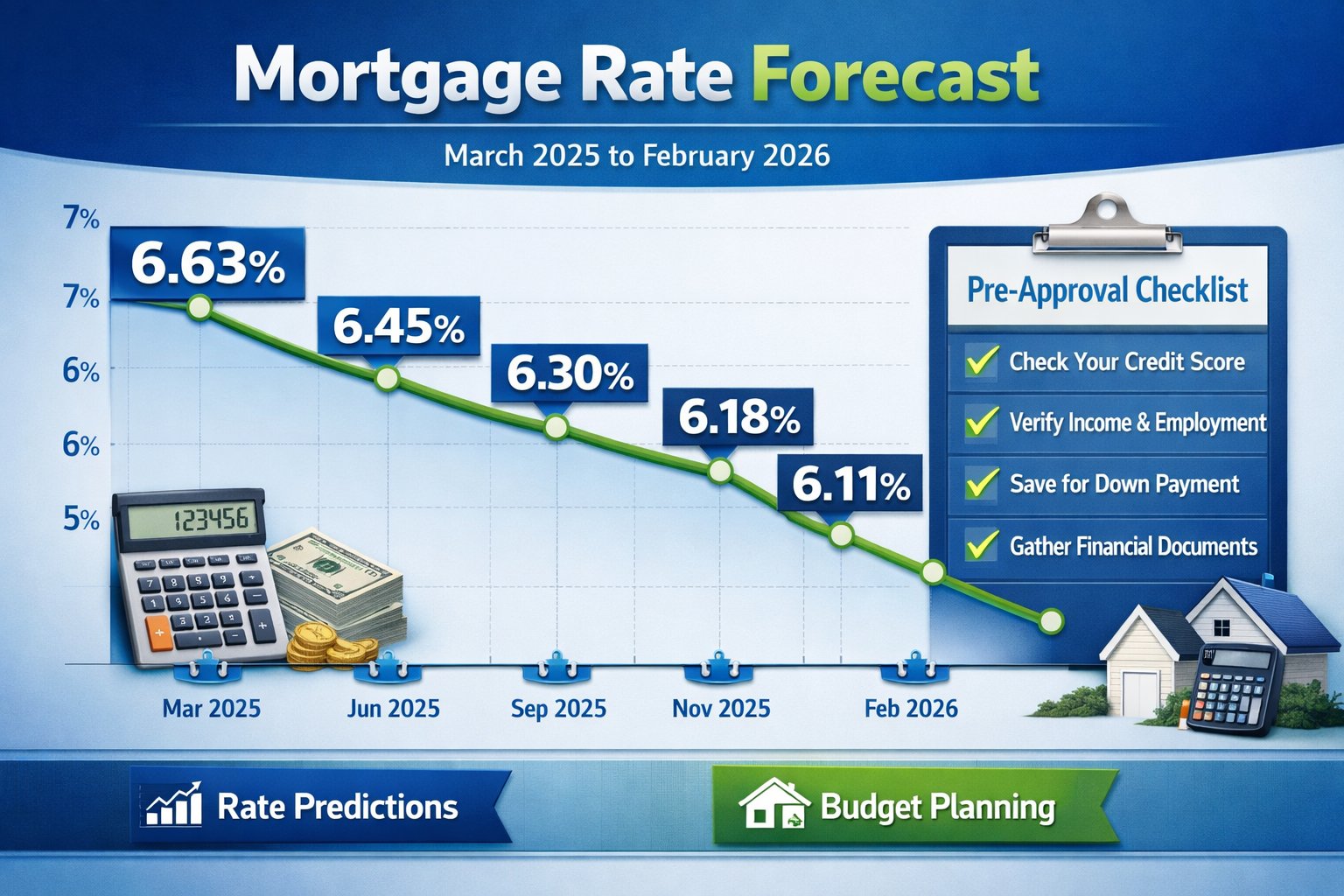
The ranked 13 spring home buying tips for the 2026 U.S. market prioritize financial preparation first (pre-approval, rate scenarios, budget stress-testing), strategic timing second (Q1 vs. peak spring shopping), and tactical execution third (quick action, property alerts, negotiation leverage). With mortgage rates hovering around 6.11-6.3% and inventory up 9%, buyers have better conditions than recent years, but spring competition remains fierce for move-in-ready homes in desirable neighborhoods. Success requires getting pre-approved early, defining clear priorities, acting decisively on quality listings, and leveraging improved market conditions without rushing into poor decisions.
What Makes Spring 2026 Different for Home Buyers?
Spring 2026 represents a fresh start after several challenging years in the housing market. The combination of lower mortgage rates, increased inventory, and minimal price appreciation creates conditions buyers haven't seen since before the pandemic surge.
The 2026 spring market stands out because:
- Mortgage rates declined substantially – The average 30-year fixed-rate mortgage dropped from 6.63% in March 2025 to 6.11% as of early February 2026, with expectations to hover around 6.3% through early spring[2][4]
- Inventory levels improved – Available homes are up nearly 9% compared to last year, giving buyers more options and negotiating power[1]
- Price growth is minimal – Median U.S. home-sale prices are expected to rise just 1% year-over-year in 2026, or potentially remain flat according to some forecasts[5][6]
- Transaction volume is rebounding – Home sales are projected to increase 14% nationwide in 2026 as affordability improves[7]
This environment favors prepared buyers who understand how to leverage these conditions. Unlike 2021-2022 when homes sold within hours for tens of thousands over asking, the 2026 market rewards patience, research, and strategic timing. However, spring still brings seasonal competition that requires buyers to be ready to act when the right property appears.
The key difference? Buyers now have breathing room to make informed decisions without the panic-driven FOMO that dominated recent years. But that doesn't mean you can be complacent—well-priced homes in desirable areas still attract multiple offers, especially during the April-May peak.
Ranked Tip #1: Get Pre-Approved Before You Start Searching
Mortgage pre-approval is the foundation of any successful home search in 2026. This isn't just a suggestion—it's the difference between being taken seriously and watching your dream home go to someone else.
Why pre-approval ranks first:
Pre-approval demonstrates to sellers that you're a qualified, serious buyer who can actually close the deal. In competitive spring markets where well-priced homes attract significant interest, sellers and their agents prioritize offers from pre-approved buyers[1][2]. Without pre-approval, your offer might not even receive consideration, regardless of how attractive your terms are.
What pre-approval accomplishes:
- Establishes your true budget – You'll know exactly how much house you can afford based on your income, debts, credit score, and down payment
- Identifies potential issues early – Credit problems, income documentation gaps, or debt-to-income ratio concerns surface before you fall in love with a property
- Strengthens your negotiating position – Sellers view pre-approved buyers as lower-risk transactions more likely to close on time
- Speeds up the closing process – Much of the mortgage underwriting work is already complete
Pre-approval vs. pre-qualification:
Don't confuse these terms. Pre-qualification is a quick estimate based on self-reported information. Pre-approval involves actual verification of your financial documents, credit check, and preliminary underwriting. Only pre-approval carries weight with sellers.
Common mistake: Waiting until you find a house to get pre-approved. By then, you've wasted time touring homes outside your budget or missed opportunities because you couldn't act quickly. Get pre-approved first, then start your search. For more guidance on fast-tracking your path to homeownership, check out our complete pre-approval guide.
Ranked Tip #2: Define Your Priorities and Must-Haves Clearly
Before touring a single property, create a detailed list distinguishing between non-negotiable requirements and flexible preferences. This clarity prevents emotional decision-making and keeps your search focused.
Why priority definition ranks second:
Without clear criteria, buyers waste time viewing unsuitable properties, get overwhelmed by choices, or make impulsive offers on homes that don't actually meet their needs. The improved inventory in 2026 makes this even more critical—more options mean more potential for confusion[1].
How to structure your priorities:
Must-haves (non-negotiable):
- Number of bedrooms and bathrooms
- Location/school district requirements
- Maximum commute time
- Essential accessibility features
- Budget ceiling (including maintenance costs)
Nice-to-haves (flexible):
- Home office or dedicated workspace
- Updated kitchen or bathrooms
- Outdoor space specifications
- Garage or parking arrangements
- Smart home features or EV charging capability
- Sustainable/energy-efficient features
Decision rule: If a property lacks any must-have, eliminate it immediately. If it has all must-haves but few nice-to-haves, consider it seriously. If it has all must-haves plus several nice-to-haves, act quickly.
2026-specific considerations:
Modern buyers increasingly prioritize home offices, high-speed internet capability, and sustainable features. Decide upfront whether these are must-haves or nice-to-haves for your situation. The rise of hybrid work makes dedicated workspace more valuable, while energy efficiency impacts long-term ownership costs.
Common mistake: Creating a list so restrictive that no properties qualify, or so vague that everything seems acceptable. Strike a balance between realistic expectations and clear standards. Remember, cosmetic issues are fixable—location and layout are not.
Ranked Tip #3: Test Your Budget Against Multiple Rate Scenarios
Even with improved rates in 2026, mortgage costs remain a significant factor in affordability. Smart buyers prepare for multiple rate outcomes rather than betting everything on a single scenario.
Why rate scenario planning ranks third:
Mortgage rates fluctuate during your home search and closing process. What starts at 6.1% when you get pre-approved might be 6.4% when you close, or potentially lower if rates continue declining. Testing your budget against various scenarios prevents surprises and creates realistic expectations[4].
How to stress-test your budget:
Scenario 1: Current rates (baseline)
- Calculate monthly payment at today's rates (approximately 6.1-6.3%)
- Include principal, interest, taxes, insurance, HOA fees, and maintenance reserves
- Verify this fits comfortably within your budget (ideally 28% or less of gross income)
Scenario 2: Rates increase 0.5%
- Recalculate payment if rates rise to 6.6-6.8%
- Determine if this remains affordable or requires reducing your price range
- Consider this your "worst case" planning scenario
Scenario 3: Rates decrease 0.5%
- Calculate savings if rates drop to 5.6-5.8%
- Understand potential refinancing opportunities
- Don't count on this scenario, but know the upside potential
Example calculation:
On a $400,000 mortgage:
- At 6.1%: $2,425/month (principal + interest)
- At 6.6%: $2,545/month (principal + interest)
- At 5.6%: $2,307/month (principal + interest)
That $120-$240 monthly swing might not seem huge, but over 30 years it represents $43,200-$86,400 in total cost difference.
Smart move: Ask your lender about rate lock options and floating rate strategies. Some lenders offer float-down provisions that let you capture rate decreases during your closing period[2]. This flexibility can save thousands if rates continue declining through spring 2026.
Ranked Tip #4: Consider Shopping in Q1 Before Peak Spring Competition
Timing your home search strategically can mean the difference between multiple bidding wars and reasonable negotiations. While spring brings maximum inventory, it also brings maximum competition.
Why strategic timing ranks fourth:
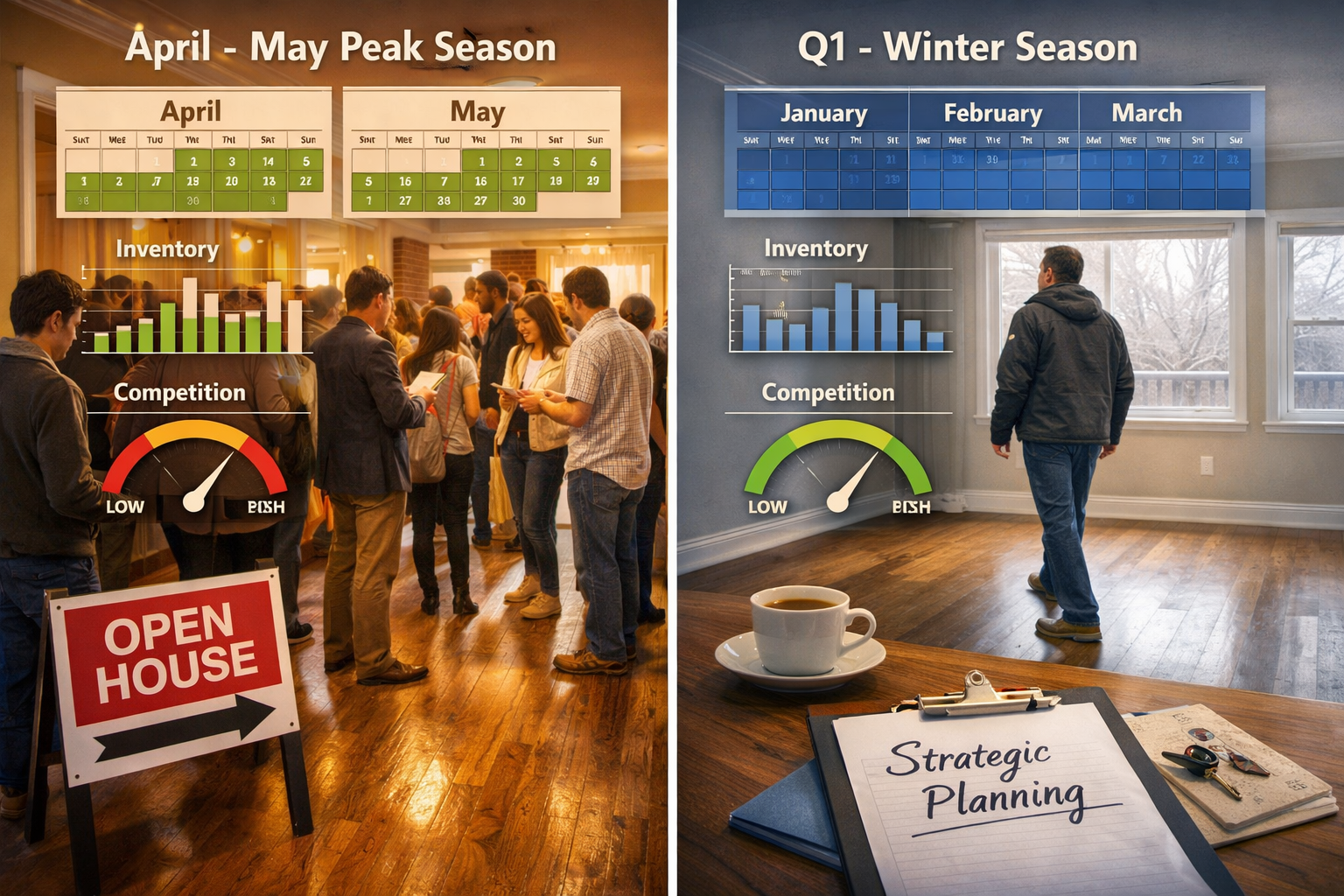
First-quarter home shopping (January-March) generally experiences lower competition than spring and summer, though prices tend to be slightly lower than later in the year. For buyers who can move quickly, Q1 offers a sweet spot of reduced competition before the April-May rush[4].
Q1 advantages:
- Fewer competing buyers – Many people wait for spring, reducing competition for available properties
- Motivated sellers – Homes listed in winter often involve sellers who need to move for job transfers, life changes, or financial reasons
- Faster negotiations – Less competition means more time to conduct due diligence and negotiate terms
- Better inspector availability – Home inspectors, appraisers, and contractors have more scheduling flexibility
Spring peak season realities (April-May):
- Maximum inventory – Most new listings hit the market during peak spring[2][3]
- Highest competition – More buyers compete for properties, especially move-in-ready homes in desirable locations
- Faster-moving market – Well-priced homes receive multiple offers within days
- Potentially higher prices – Seasonal demand can push prices slightly higher than winter months
Decision rule: If you're ready to buy now and find suitable properties, don't wait for spring just because "that's when everyone buys." If you need more time to prepare or want maximum selection, plan to shop in April-May but be ready for competition.
Common mistake: Assuming spring automatically offers better deals. Sometimes the best value comes from being the only serious buyer on a January listing rather than one of five competing offers in May.
Ranked Tip #5: Be Prepared to Act Quickly on Quality Listings
Spring's peak season brings both opportunity and urgency. Properties that check all the boxes move fast, and hesitation costs buyers their dream homes.
Why quick action ranks fifth:
Even with improved inventory in 2026, well-priced homes in desirable neighborhoods still attract multiple offers within days of listing. The difference between success and disappointment often comes down to who can move fastest with a strong offer[2][3].
How to prepare for quick action:
Before you find the right property:
- Complete your pre-approval process
- Have earnest money funds readily accessible
- Choose your real estate agent and establish communication protocols
- Research neighborhoods thoroughly so you can evaluate quickly
- Understand local market conditions and typical offer strategies
When you find a strong candidate:
- Tour the property within 24-48 hours of listing
- Have your agent pull comparable sales immediately
- Conduct preliminary research on property history, taxes, and neighborhood
- Make your offer decision within 24 hours of touring
- Submit a clean, competitive offer with minimal contingencies (while protecting yourself appropriately)
What "competitive" means in spring 2026:
With rates around 6.1-6.3% and minimal price appreciation expected, the market is more balanced than recent years. However, competitive offers still include:
- Full or near-asking price – Lowball offers rarely work on quality properties
- Reasonable contingencies – Inspection and financing contingencies are standard, but avoid unusual requests
- Flexible closing timeline – Accommodate the seller's preferred timeline when possible
- Strong earnest money deposit – Typically 1-3% of purchase price demonstrates commitment
- Pre-approval letter included – Mandatory in competitive situations
Common mistake: Taking a week to "think about it" on a property that checks all your boxes. In spring markets, that property will likely be under contract before you decide. Trust your preparation and act decisively when the right home appears.
Ranked Tip #6: Lock in Favorable Rates or Consider Floating Options
Rate lock strategies have evolved beyond simple "lock and hope" approaches. In 2026's declining rate environment, understanding your options can save thousands.
Why rate strategy ranks sixth:
The difference between locking immediately at 6.3% and floating to potentially capture 6.0% could mean $50-100 monthly savings on a typical mortgage. Conversely, failing to lock and watching rates rise to 6.6% costs you the same amount. Smart rate management protects your budget while capitalizing on favorable trends[2].
Rate lock basics:
A rate lock guarantees your interest rate for a specified period (typically 30-60 days) while your purchase closes. This protects you from rate increases but also prevents you from benefiting if rates drop.
Traditional lock strategy:
- Lock your rate when you have a signed purchase contract
- Choose a lock period that extends slightly beyond your expected closing date
- Pay for an extended lock if your closing gets delayed
Float-down options for 2026:
Some lenders now offer float-down provisions that let you capture rate decreases during your lock period if rates fall by a specified amount (typically 0.25-0.5%). This strategy works well in declining rate environments like early 2026.
Float-down considerations:
- Usually costs 0.125-0.25% of loan amount upfront
- Only triggers if rates drop by the specified threshold
- May have restrictions on timing (e.g., only available in first 30 days of lock)
- Not all lenders offer this option
Decision rule: If you're closing in 30-45 days and rates appear stable, a standard lock makes sense. If you're closing in 60+ days and rates are trending downward, explore float-down options. If rates are volatile or rising, lock immediately.
Common mistake: Trying to time the market perfectly by floating without protection. Rates can move quickly, and the stress of watching daily rate changes isn't worth the potential savings for most buyers. Choose a strategy and commit to it.
For buyers navigating the 2026 mortgage landscape, understanding your mortgage options is essential to making informed decisions.
Ranked Tip #7: Research Neighborhoods Thoroughly at Different Times
Location determines your daily quality of life, resale value, and long-term satisfaction with your purchase. Surface-level research isn't enough—you need boots-on-the-ground investigation.
Why neighborhood research ranks seventh:
A house can be renovated, but you can't change the neighborhood. Thorough research prevents buyer's remorse and ensures your home fits your lifestyle, commute needs, and future plans[1].
Multi-dimensional research approach:
Visit at different times:
- Weekday mornings – Assess commute traffic, school bus activity, neighborhood noise levels
- Weekday evenings – Observe after-work traffic, street parking availability, evening activity
- Weekend days – Understand recreational use, neighbor interactions, maintenance standards
- Weekend nights – Evaluate noise levels, nightlife impact, safety perception
Research categories:
Schools and education:
- School ratings and test scores (even if you don't have kids—affects resale value)
- School district boundaries and potential redistricting plans
- Private school options and proximity
Commute and transportation:
- Actual drive time during your typical commute hours (not GPS estimates)
- Public transportation access and reliability
- Future infrastructure projects that might impact traffic
Amenities and services:
- Grocery stores, restaurants, shopping within reasonable distance
- Parks, recreation facilities, walking trails
- Healthcare facilities and emergency services
Future development:
- Zoning regulations and planned developments
- Commercial projects that might impact traffic or character
- Infrastructure improvements or deterioration trends
Property-specific factors:
- Historical property tax trends
- HOA rules, fees, and financial health (if applicable)
- Flood zone status and insurance requirements
- Crime statistics and trends
Common mistake: Relying solely on online research or a single daytime visit. Neighborhoods reveal their true character over multiple visits at various times. A quiet Tuesday afternoon might become a noisy Friday night. A pleasant weekend drive might be a nightmare weekday commute.
Ranked Tip #8: Set Up Targeted Property Alerts and Monitor New Listings
In spring 2026's competitive market, seeing properties first gives you a critical advantage. Technology makes this easier than ever, but you need to configure it correctly.
Why property alerts rank eighth:
The best properties receive offers within 24-48 hours of listing. Buyers who see listings immediately have time to tour, research, and submit competitive offers. Those who discover properties days later often find them already under contract[4].
How to set up effective alerts:
Use multiple platforms:
- Zillow, Redfin, Realtor.com – Set up accounts on major platforms with specific search criteria
- Your agent's MLS access – Real estate agents can create custom MLS searches that update in real-time
- Local brokerage websites – Some brokerages list their properties before syndicating to major platforms
Configure precise search criteria:
Geographic parameters:
- Specific neighborhoods, school districts, or zip codes
- Commute radius from your workplace
- Proximity to specific amenities or family
Property specifications:
- Bedroom/bathroom minimums
- Square footage range
- Lot size requirements
- Property type (single-family, condo, townhouse)
- Age of home or construction period
Financial filters:
- Price range (set slightly above your maximum to catch price reductions)
- HOA fee limits
- Property tax estimates
Alert frequency settings:
- Instant alerts – For highly competitive markets or very specific criteria
- Daily digests – For broader searches or less urgent timelines
- Weekly summaries – For long-term planning or market monitoring
Alert management strategy:
Start with broader criteria to understand market inventory, then narrow as you identify patterns. If you receive 20+ alerts daily, your criteria are too broad. If you receive fewer than 2-3 weekly, they might be too restrictive.
Common mistake: Setting alerts so broad that you're overwhelmed with irrelevant properties, or so narrow that you miss good options. Review and adjust your criteria weekly based on what you're seeing. Also, don't rely solely on automated alerts—manually search platforms every few days to catch listings that might slip through filters.
For buyers looking to streamline their search, exploring the best home buying sites in the U.S. for 2026 can provide additional tools and resources.
Ranked Tip #9: Understand Your Negotiation Leverage in Spring 2026
Negotiation power shifts based on market conditions, property characteristics, and timing. Understanding your leverage helps you craft competitive offers without overpaying.
Why negotiation leverage ranks ninth:
Even in competitive markets, not all properties receive multiple offers. Knowing when you have leverage and when you don't determines whether you can negotiate price, repairs, or concessions successfully.
Factors that increase buyer leverage:
Property characteristics:
- Days on market – Properties listed 30+ days typically have more flexible sellers
- Price reductions – Homes that have dropped price signal motivated sellers
- Unique features – Highly specialized properties (unusual layouts, very large/small) have smaller buyer pools
- Condition issues – Properties needing significant work attract fewer conventional buyers
- Seasonal timing – Listings in November-February face less competition
Market conditions:
- Local inventory levels – Areas with 6+ months of inventory favor buyers
- Interest rate trends – Rising rates reduce buyer competition
- Economic uncertainty – Job market concerns or recession fears slow buyer activity
Factors that decrease buyer leverage:
- New listings – Properties in first week typically receive maximum interest
- Move-in ready condition – Updated homes in desirable areas attract multiple offers
- Competitive pricing – Homes priced at or below comparable sales
- Desirable locations – Top school districts, walkable neighborhoods, low-inventory areas
- Peak season – April-May spring rush brings maximum competition
Negotiation strategies by leverage level:
High leverage (few competing buyers):
- Request price reductions based on comparable sales
- Negotiate seller-paid closing costs or repairs
- Include inspection contingencies with repair negotiation rights
- Request home warranty or other concessions
- Take time for thorough due diligence
Moderate leverage (some competition):
- Offer near asking price with reasonable contingencies
- Focus on one or two key concessions rather than multiple requests
- Be flexible on closing timeline
- Demonstrate strong financial qualifications
Low leverage (multiple offers expected):
- Offer at or above asking price
- Minimize contingencies while protecting yourself appropriately
- Accommodate seller's preferred timeline
- Include escalation clause if appropriate for your market
- Submit offer quickly with clean terms
Common mistake: Trying to negotiate aggressively when you have no leverage, or failing to negotiate when you do. Read the situation accurately and adjust your strategy accordingly. Our guide on negotiation power moves provides additional strategies for saving thousands on your purchase.
Ranked Tip #10: Factor in Total Ownership Costs, Not Just Mortgage Payments
The mortgage payment is just one component of homeownership costs. Buyers who focus exclusively on the monthly payment often find themselves financially stretched by the total cost of ownership.
Why total cost analysis ranks tenth:
Unexpected ownership costs cause financial stress and sometimes force owners to sell prematurely. Accurate budgeting for all expenses ensures sustainable homeownership and prevents buyer's remorse.
Complete ownership cost breakdown:
Monthly fixed costs:
- Principal and interest – Your mortgage payment based on loan amount and rate
- Property taxes – Verify actual tax bills, not online estimates (can vary significantly)
- Homeowners insurance – Get actual quotes for properties you're considering
- HOA fees – If applicable, including any special assessments
- Mortgage insurance – PMI if down payment is less than 20%
- Flood insurance – Required in flood zones, recommended in moderate-risk areas
Monthly variable costs:
- Utilities – Electric, gas, water, sewer, trash (ask sellers for average bills)
- Internet/cable – Essential services for modern living
- Lawn care/snow removal – If you'll hire services rather than DIY
- Pest control – Regular service in many regions
Annual/periodic costs:
- Maintenance reserve – Budget 1-2% of home value annually for repairs and maintenance
- Major system replacements – HVAC, roof, water heater (plan for eventual replacement)
- Appliance replacement – Refrigerator, washer, dryer, dishwasher
- Exterior maintenance – Painting, siding repair, gutter cleaning, deck maintenance
Example total cost calculation:
$400,000 home with $80,000 down (20%):
- Mortgage payment (P&I at 6.1%): $1,940
- Property taxes: $500
- Homeowners insurance: $150
- Utilities: $250
- Maintenance reserve: $500
- Total monthly cost: $3,340
Compare to the $1,940 mortgage payment alone—the true cost is 72% higher.
Decision rule: Your total monthly ownership costs should not exceed 28-30% of your gross monthly income for comfortable affordability. If you're stretching to 35-40%, you're at risk of financial stress when unexpected repairs arise.
Common mistake: Using online mortgage calculators that only show principal and interest, ignoring taxes, insurance, and maintenance. Always calculate total ownership costs before committing to a purchase price. Understanding closing costs is also critical to budgeting accurately.
Ranked Tip #11: Don't Skip the Home Inspection, Even in Competitive Markets
Home inspections protect buyers from expensive surprises and provide negotiation leverage. Even when facing competition, skipping this critical step is rarely wise.
Why home inspections rank eleventh:
A $400-600 inspection can uncover $10,000-50,000+ in hidden problems. While waiving inspections might make your offer more competitive, it transfers all risk to you and eliminates your ability to negotiate repairs or walk away from serious issues.
What inspections reveal:
Major systems:
- HVAC condition, age, and remaining lifespan
- Electrical system safety and capacity
- Plumbing condition, water pressure, drainage issues
- Roof condition and estimated replacement timeline
Structural concerns:
- Foundation cracks or settling issues
- Framing problems or structural modifications
- Water intrusion or moisture damage
- Pest damage or active infestations
Safety hazards:
- Radon levels (separate test often required)
- Mold or air quality concerns
- Lead paint (in homes built before 1978)
- Asbestos (in older homes)
- Carbon monoxide risks
Code violations:
- Unpermitted work or additions
- Electrical or plumbing not up to code
- Safety railing or stair issues
Inspection strategies for competitive markets:
Option 1: Include inspection contingency with short timeline
- Request 5-7 day inspection period instead of standard 10-14 days
- Demonstrate you'll move quickly but maintain protection
- Agree to only renegotiate for major issues (define threshold, e.g., repairs over $5,000)
Option 2: Pre-offer inspection
- If the seller allows, conduct inspection before submitting offer
- Make offer without inspection contingency since you've already inspected
- Provides maximum competitiveness while maintaining due diligence
Option 3: Inspection for information only
- Include inspection contingency but agree not to request repairs
- Maintain right to walk away if major issues discovered
- Use inspection to plan future maintenance and repairs
What to never waive:
Even in the most competitive situations, maintain your right to walk away if the inspection reveals:
- Major structural issues (foundation, framing)
- Significant safety hazards (electrical, radon, mold)
- Expensive system failures (HVAC, roof, plumbing)
Common mistake: Waiving inspections entirely to compete with other offers, then discovering major problems after closing with no recourse. If you must waive the inspection contingency, at least conduct an inspection for information purposes so you know what you're buying.
Ranked Tip #12: Understand the Difference Between Assessed Value and Market Value

Property tax assessments and market values serve different purposes and rarely align perfectly. Confusion between these figures leads to poor pricing decisions and negotiation mistakes.
Why value understanding ranks twelfth:
Buyers who rely on tax-assessed values to evaluate pricing often overpay or miss good deals. Understanding how properties are valued for different purposes helps you make informed offers and avoid common pitfalls.
Tax-assessed value:
Purpose: Determines property tax liability
How it's calculated:
- Mass appraisal methods applied to thousands of properties
- Updated periodically (annually, every 2-3 years, or when sold, depending on jurisdiction)
- Based on general property characteristics, not specific condition or updates
- Often lags behind current market conditions
Why it differs from market value:
- Assessment may be based on data from 1-3 years ago
- Doesn't account for recent renovations or deterioration
- Uses standardized formulas rather than individual property analysis
- May be artificially low in areas with infrequent reassessments
Market value:
Purpose: Determines what buyers will actually pay
How it's determined:
- Recent comparable sales of similar properties
- Current market conditions and buyer demand
- Specific property condition, updates, and features
- Location factors (school district, neighborhood amenities)
- Current economic conditions and mortgage rates
Example scenario:
Property A:
- Tax-assessed value: $350,000
- Market value: $425,000
- Why the difference: Assessment based on 2023 data before recent market appreciation and kitchen renovation
Property B:
- Tax-assessed value: $380,000
- Market value: $360,000
- Why the difference: Assessment based on 2022 peak market, but area has softened and property needs updates
How to use each value:
Tax-assessed value is useful for:
- Estimating annual property tax liability
- Comparing relative tax burdens between properties
- Identifying potential assessment appeals if significantly higher than market value
Market value is useful for:
- Determining appropriate offer price
- Evaluating whether a property is overpriced or underpriced
- Securing mortgage financing (lender appraisal based on market value)
Decision rule: Never use tax-assessed value as your primary pricing guide. Always research recent comparable sales and current market conditions to determine fair market value. For more details on this critical distinction, read our guide on tax-assessed value vs. market value.
Common mistake: Offering based on tax-assessed value without researching comparable sales, then either overpaying (if assessment is outdated) or insulting sellers with lowball offers (if assessment lags market appreciation).
Ranked Tip #13: Work with an Experienced Buyer's Agent Who Knows the Local Market
Real estate agents aren't all created equal. An experienced buyer's agent who specializes in your target market provides value that far exceeds their commission.
Why agent selection ranks thirteenth (but remains important):
While you can technically buy a home without an agent, the right representation provides market knowledge, negotiation expertise, and transaction management that saves time, money, and stress. In competitive spring markets, agent quality often determines success.
What exceptional buyer's agents provide:
Market expertise:
- Deep knowledge of neighborhoods, schools, and local trends
- Access to off-market listings and upcoming properties
- Realistic pricing guidance based on recent comparable sales
- Understanding of local customs and negotiation norms
Strategic advantage:
- Relationships with listing agents that can provide insight
- Knowledge of which properties have issues or motivated sellers
- Guidance on competitive offer strategies
- Experience with multiple-offer situations
Transaction management:
- Coordination of inspections, appraisals, and closing timeline
- Problem-solving when issues arise
- Contract expertise to protect your interests
- Vendor recommendations (inspectors, lenders, attorneys)
How to find the right agent:
Interview multiple agents:
- Ask about experience in your target neighborhoods
- Request recent buyer client references
- Discuss their availability and communication style
- Understand their approach to competitive situations
Key questions to ask:
- How many buyers have you represented in [target area] in the past year?
- What's your average days-to-close timeline?
- How do you handle multiple-offer situations?
- What's your strategy for finding off-market properties?
- How do you communicate during the search and transaction?
Red flags to avoid:
- Agents who push you toward properties outside your criteria
- Lack of availability or slow response times
- Pressure to make offers without adequate research
- Unwillingness to provide references
- Part-time agents with limited recent experience
Buyer's agent compensation in 2026:
Following recent industry changes, buyer's agent compensation is now negotiable and may not be automatically paid by sellers. Discuss compensation structure upfront:
- Seller-paid commission – Traditional model where seller pays both agents
- Buyer-paid commission – Buyer pays their agent directly
- Hybrid arrangements – Combination or negotiated splits
Understand your financial obligation before starting your search.
Common mistake: Choosing an agent based solely on personal relationships (friend, family member) without evaluating their actual market expertise and recent transaction experience. Your agent should be selected based on competence, not just familiarity.
For real estate professionals looking to enhance their practice, exploring AI marketing tools can provide a competitive edge in 2026.
How Do These Tips Work Together for Spring 2026 Success?
These 13 ranked spring home buying tips for the 2026 U.S. market form a comprehensive strategy when implemented together. Success requires both preparation (tips 1-4) and execution (tips 5-13).
The strategic sequence:
Phase 1: Foundation (Weeks 1-2)
- Get pre-approved (#1)
- Define priorities and must-haves (#2)
- Test budget against rate scenarios (#3)
- Research neighborhoods thoroughly (#7)
- Select your buyer's agent (#13)
Phase 2: Active search (Weeks 3-8)
- Set up property alerts (#8)
- Consider Q1 vs. spring timing (#4)
- Monitor new listings and tour properties
- Understand value differences (#12)
Phase 3: Offer and negotiation (Days 1-3 after finding right property)
- Assess your negotiation leverage (#9)
- Prepare to act quickly (#5)
- Implement rate lock strategy (#6)
- Submit competitive offer
Phase 4: Due diligence (Weeks 1-4 under contract)
- Conduct home inspection (#11)
- Calculate total ownership costs (#10)
- Finalize financing and prepare for closing
How market conditions affect the strategy:
In the improving but still competitive spring 2026 market, buyers need to balance preparation with decisiveness. The days of instant offers without research are gone, but so are the days of leisurely six-month searches. The sweet spot is thorough preparation followed by quick execution when the right property appears.
Success metrics:
You're executing this strategy effectively if you:
- Tour 8-15 properties before making an offer
- Submit your first offer within 24-48 hours of finding the right property
- Stay within your predetermined budget despite competition
- Close within 30-45 days of offer acceptance
- Feel confident in your purchase decision without buyer's remorse
Frequently Asked Questions
When is the best time to buy a home in spring 2026?
The best time depends on your priorities. Q1 (January-March) offers less competition but smaller inventory. April-May brings maximum listings but also peak competition. If you're ready to buy and find suitable properties in Q1, you'll face fewer competing offers. If you want maximum selection, plan for April-May but prepare for faster-moving markets[2][4].
How much should I offer on a home in the 2026 spring market?
Offer strategy depends on property characteristics and competition level. For new listings in desirable areas, expect to offer at or near asking price. For properties listed 30+ days or needing work, you may have room to negotiate 3-5% below asking. Always base offers on recent comparable sales, not tax assessments or listing price alone[1].
Are mortgage rates expected to drop further in spring 2026?
Rates are expected to hover around 6.3% in early 2026 after declining from 6.63% in March 2025. While further decreases are possible, most forecasts suggest relative stability rather than dramatic drops. Focus on what you can afford at current rates rather than betting on significant future decreases[2][4].
Should I waive the home inspection to compete in spring 2026?
Waiving inspections entirely is risky and rarely necessary in the 2026 market. Instead, consider shortened inspection timelines (5-7 days instead of 10-14), pre-offer inspections, or inspection-for-information-only clauses that maintain your right to walk away from major issues while showing sellers you're serious[1].
How much inventory will be available in spring 2026?
Inventory is up nearly 9% from last year, providing more choices than recent years. Spring typically brings the most new listings, with April-May seeing peak inventory. However, well-priced homes in desirable areas still move quickly despite improved inventory levels[1][3].
What down payment do I need to buy a home in 2026?
Down payment requirements vary by loan type. Conventional loans can require as little as 3-5% down, FHA loans require 3.5%, and VA/USDA loans offer zero-down options for qualified buyers. However, putting down 20% eliminates mortgage insurance and strengthens your offer. Choose based on your financial situation and savings timeline. For comprehensive down payment strategies, see our ranked guide to down payment options.
How competitive will the spring 2026 market be?
Spring 2026 will be moderately competitive—less intense than 2021-2022 but more active than winter months. Well-priced homes in desirable locations will still receive multiple offers, but the market is more balanced than recent years due to improved inventory and stabilized rates. Prepared buyers who act decisively will succeed without the extreme competition of previous years[2][3].
Should I buy now or wait for better market conditions?
If you find a home that meets your needs at a price you can afford, buying now makes sense. Waiting for "perfect" conditions often means missing opportunities, and timing the market perfectly is nearly impossible. With rates around 6.1-6.3% and minimal price appreciation expected, 2026 offers reasonable conditions for buyers who are financially prepared[5][6].
What's the difference between pre-qualification and pre-approval?
Pre-qualification is a quick estimate based on self-reported financial information without verification. Pre-approval involves actual documentation review, credit checks, and preliminary underwriting. Only pre-approval carries weight with sellers and should be obtained before starting your home search[1][2].
How can I make my offer stand out without overpaying?
Stand out through non-price factors: quick closing timeline (or flexibility to match seller's needs), minimal contingencies while protecting yourself, strong earnest money deposit, pre-approval letter from reputable lender, and personal letter to sellers (where appropriate). These elements demonstrate you're a serious, qualified buyer without necessarily paying more than competing offers.
What closing costs should I expect as a buyer?
Buyer closing costs typically range from 2-5% of the purchase price and include loan origination fees, appraisal, title insurance, attorney fees, recording fees, and prepaid items (property taxes, homeowners insurance, interest). On a $400,000 purchase, expect $8,000-20,000 in closing costs. Some costs are negotiable, and you can sometimes request seller concessions to offset these expenses.
How long does the home buying process take in 2026?
From offer acceptance to closing typically takes 30-45 days, though cash purchases can close faster (2-3 weeks) and complex transactions might take 60 days. Add your search timeline (varies widely based on market and criteria) to determine total time from starting your search to getting keys. Pre-approval and clear criteria significantly shorten the search phase.
Conclusion
The ranked 13 spring home buying tips for the 2026 U.S. market provide a comprehensive roadmap for navigating what's shaping up to be an extraordinary opportunity for prepared buyers. With mortgage rates around 6.11%, inventory up 9%, and minimal price appreciation expected, the conditions are fresh and more balanced than we've seen in years. But let it cook—spring still brings competition, especially in April and May when listings peak.
Success in this market isn't about luck or perfect timing. It's about preparation meeting opportunity. Get pre-approved before you start searching. Define your priorities clearly so you don't waste time on properties that don't fit. Test your budget against multiple rate scenarios to ensure realistic expectations. Consider shopping in Q1 to avoid peak competition, but be ready to act quickly when you find the right property regardless of when it appears.
The impeccable buyer in spring 2026 understands negotiation leverage, calculates total ownership costs beyond just the mortgage payment, never skips the home inspection, and knows the difference between tax-assessed value and market value. They work with an experienced agent who knows the local market and set up targeted property alerts to see new listings immediately.
This isn't about gatekeeping the process or making it seem more complicated than necessary. These strategies are based on real market conditions and proven tactics that work. The 2026 spring market rewards buyers who do their homework, stay patient during the search, and move decisively when the right opportunity appears.
Your next steps:
- This week: Get pre-approved with at least two lenders to compare rates and terms
- Create your must-have list: Distinguish between non-negotiable requirements and flexible preferences
- Research neighborhoods: Visit target areas at different times to understand their true character
- Set up property alerts: Configure searches on multiple platforms with precise criteria
- Interview agents: Talk to 2-3 buyer's agents who specialize in your target market
- Calculate your true budget: Include all ownership costs, not just the mortgage payment
- Start your search: Begin touring properties to calibrate your expectations and refine criteria
The spring 2026 housing market offers a window of opportunity that prepared buyers can leverage for successful homeownership. Whether you're a first-time buyer, moving up to a larger home, or relocating to a new area, these ranked tips provide the foundation for making informed decisions and avoiding costly mistakes.
So based on current market conditions and expert insights, now is the time to act. The combination of improved affordability, increased inventory, and stabilizing prices creates conditions we haven't seen since before the pandemic surge. Don't let analysis paralysis prevent you from taking action when you find the right property.
For more expert guidance on navigating the real estate market, exploring market trends and investment strategies, and accessing licensed broker insights with over 15 years of experience, visit Real Estate Rank IQ at realestaterankiq.com or follow us on YouTube @Realestaterankiq. Have questions? Contact us at news@realestaterankiq.com.
The spring 2026 market is ready. Are you?
References
[1] Spring Into Your New Home The Ultimate Buyer S Guide For 2026 – https://www.angelasonrealty.com/articles/buyers/spring-into-your-new-home–the-ultimate-buyer-s-guide-for-2026
[2] What Spring 2026 Homebuying Season Looks Like With Rates Lower – https://www.cbsnews.com/news/what-spring-2026-homebuying-season-looks-like-with-rates-lower/
[3] Top Trends For The 2026 Spring Selling Season What Buyers Should Watch Now – https://www.newhomesource.com/news/housing-market-trends/top-trends-for-the-2026-spring-selling-season-what-buyers-should-watch-now/
[4] Home Buyer Preparation 2026 – https://themortgagereports.com/125202/home-buyer-preparation-2026
[5] Housing Market Predictions 2026 – https://www.redfin.com/news/housing-market-predictions-2026/
[6] Us Housing Market Outlook – https://www.jpmorgan.com/insights/global-research/real-estate/us-housing-market-outlook
[7] Housing Market Set For A 2026 Comeback Nar Predicts – https://www.nar.realtor/magazine/real-estate-news/economy/housing-market-set-for-a-2026-comeback-nar-predicts