


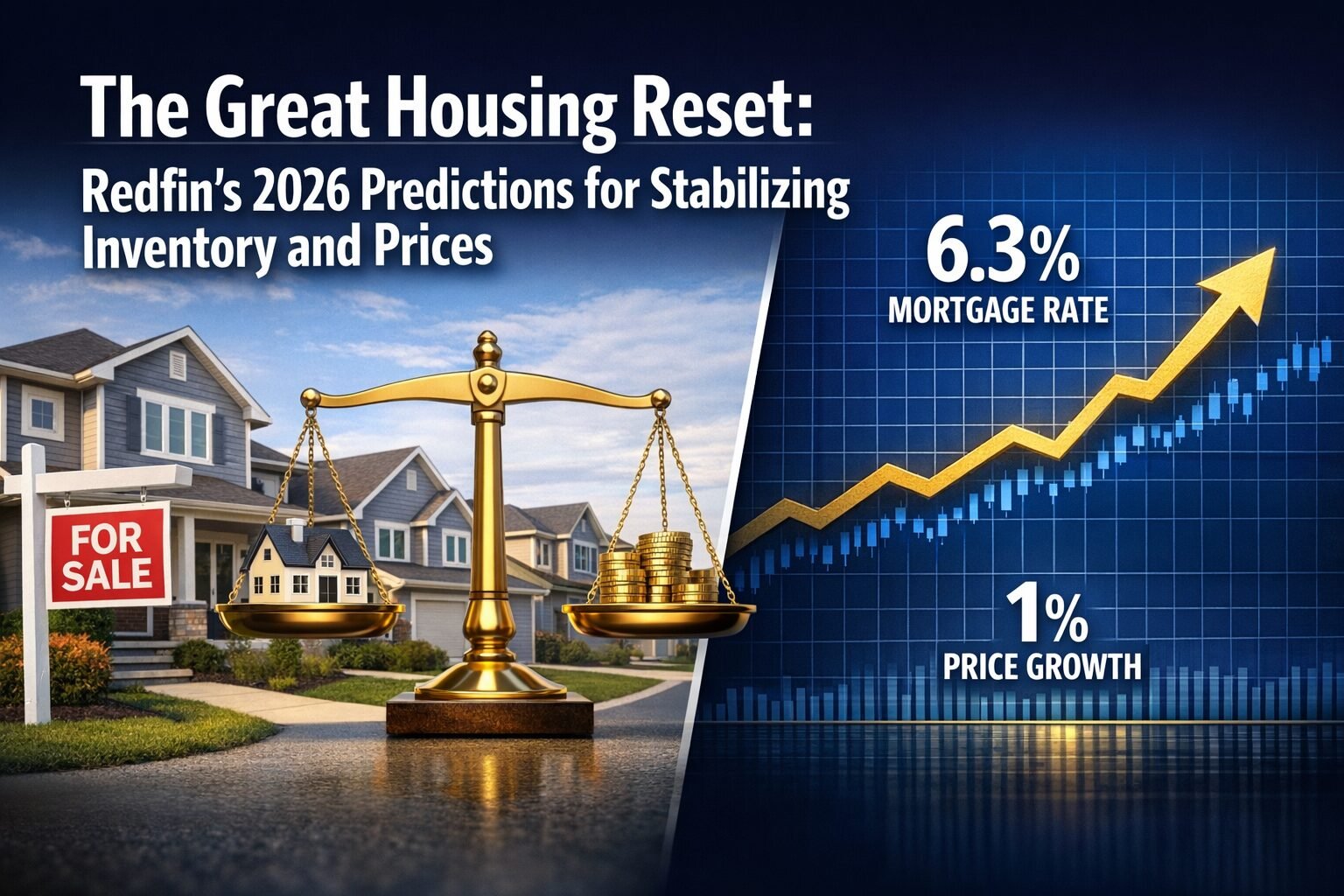
Let's be real—the housing market has been giving everyone whiplash since the pandemic turned everything upside down. One minute homes were selling in bidding wars for $50K over asking, the next minute buyers ghosted open houses like a bad Tinder date. But here's where things get extraordinary: Redfin just dropped their 2026 predictions, and they're calling it "The Great Housing Reset." Think of it as the market finally taking a breath after running a marathon in stilettos.

The Great Housing Reset: Redfin's 2026 Predictions for Stabilizing Inventory and Prices signals a pivotal shift in real estate dynamics. After years of volatile swings, sky-high mortgage rates, and inventory shortages that made finding a home feel like hunting for Bigfoot, the market is entering a phase of stabilization. Mortgage rates are expected to average 6.3% for the full year[1][6], home price growth will slow to just 1%[1][4], and existing home sales will tick up 3% to reach 4.2 million homes[1][3]. Translation? The market is finally letting it cook.
But here's the kicker: this reset isn't happening uniformly across the country. While NYC suburbs are heating up, South Florida and Texas markets are cooling faster than your coffee on a Monday morning. The refinance market is about to explode with a projected 30% surge to $670 billion[1], and buyers finally have some negotiating power back. Whether you're a first-time buyer who's been waiting on the sidelines, a seller wondering if now's the time, or an investor looking for opportunities, understanding these predictions is absolutely crucial for making smart moves in 2026.
Key Takeaways
✅ Mortgage rates will average 6.3% in 2026, down from 6.6% in 2025, providing meaningful relief for buyers and triggering a $670B refinance boom[1][6]
✅ Home price growth slows to just 1% year-over-year, while wages grow at 4%, marking the first time in years that income growth outpaces housing costs[1][4]
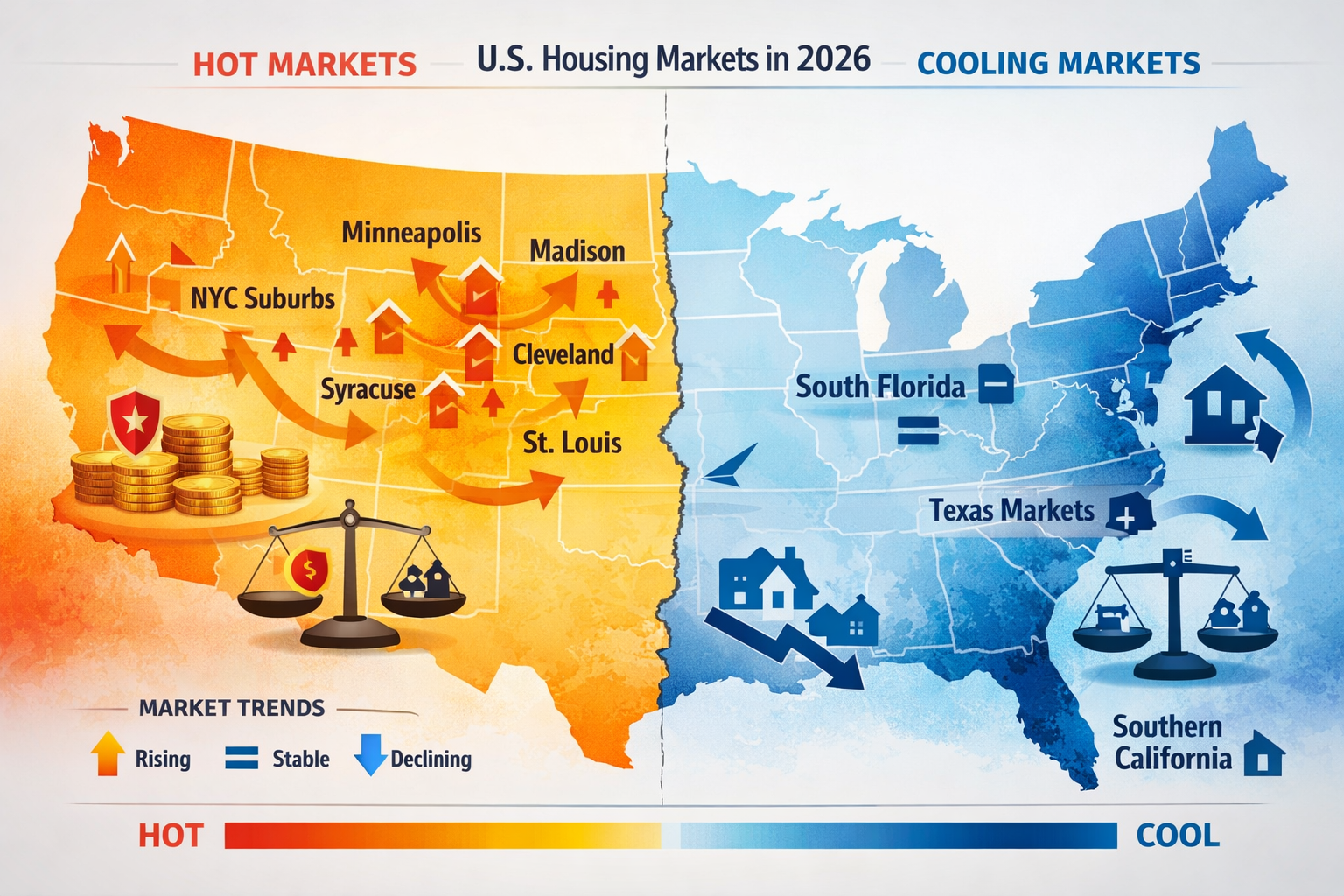
✅ Regional markets diverge dramatically: NYC suburbs, Cleveland, and Minneapolis emerge as hot markets while South Florida and Southern California cool due to insurance costs and migration shifts[1]
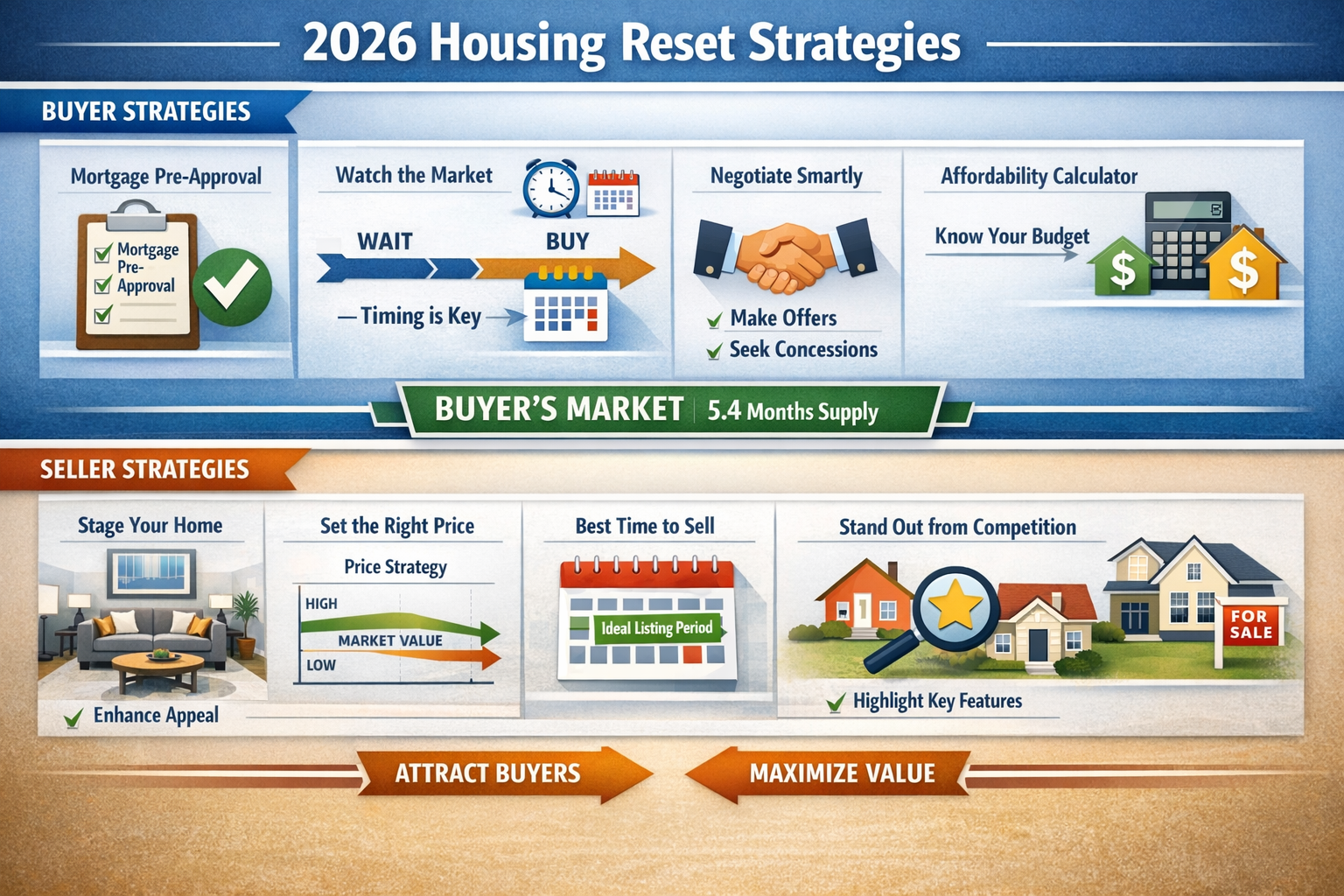
✅ Inventory increases to 5.4 months of supply, creating a buyer's market where homes take 64 days to sell—the longest period in 6 years[3][7]
✅ Existing home sales rise 3% to 4.2 million, signaling modest recovery despite persistent affordability challenges[1][3]
Understanding The Great Housing Reset: Redfin's 2026 Predictions for Stabilizing Inventory and Prices
The term "reset" gets thrown around a lot in real estate, but what Redfin is predicting for 2026 is genuinely different from the typical market cycle chatter. This isn't a crash, and it's not a boom—it's a recalibration of expectations, affordability metrics, and regional dynamics that have been out of whack since 2020.
What Makes This a "Reset" and Not Just Another Market Cycle?
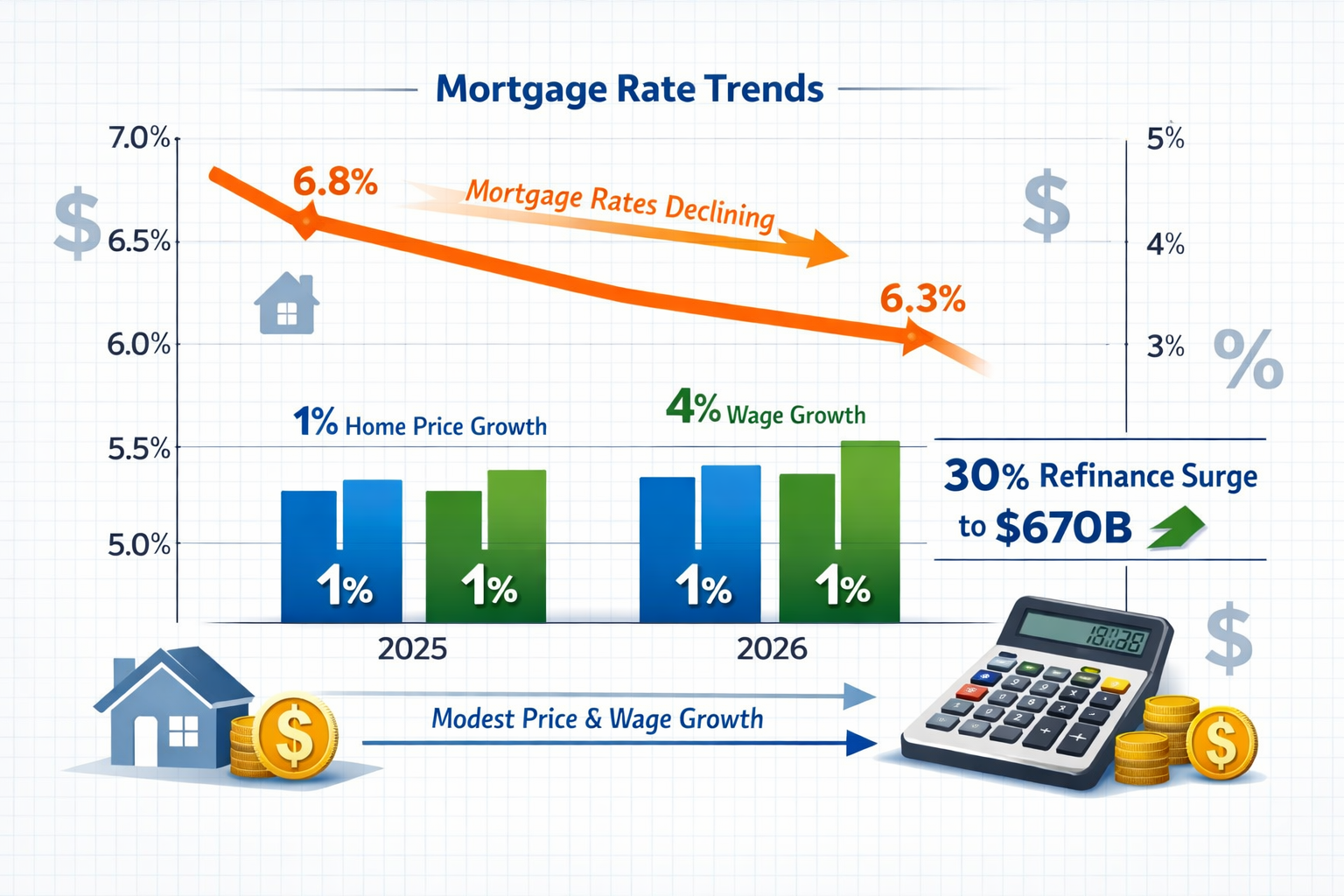
Here's what's so based about this prediction: for the first time since the pandemic, housing payment growth will lag behind wage growth[4]. Let that sink in. While home prices are expected to inch up only 1% in 2026 compared to 2% in 2025[1][4], wages are projected to grow at 4%[4]. This represents a fundamental shift in the affordability equation that's been crushing buyers for years.
Think of it like this: imagine you've been running on a treadmill that keeps speeding up while you're trying to save money for a down payment. Suddenly, the treadmill slows down while you're getting faster. That's the reset—the gap between what you earn and what homes cost is finally narrowing instead of widening.
The numbers tell an impeccable story:
| Metric | 2025 | 2026 | Change |
|---|---|---|---|
| Average Mortgage Rate | 6.6% | 6.3% | -0.3% ⬇️ |
| Median Home Price Growth | 2% | 1% | -1% ⬇️ |
| Wage Growth | ~3% | 4% | +1% ⬆️ |
| Existing Home Sales | 4.08M | 4.2M | +3% ⬆️ |
| Months of Supply | 5.2 | 5.4 | +0.2 ⬆️ |
This data paints a picture of a market that's stabilizing rather than crashing or exploding. It's the Goldilocks scenario many economists have been hoping for—not too hot, not too cold, just right for sustainable growth.
The Mortgage Rate Relief Everyone's Been Waiting For
Mortgage rates averaging 6.3% for the full year might not sound like a party, but compared to the 6.8% rates we saw in spring 2025[1], it's actually significant relief. Here's why this matters more than you might think:
Fresh perspective: A drop from 6.8% to 6.3% on a $400,000 mortgage saves buyers approximately $120 per month or $43,200 over a 30-year loan. That's not pocket change—that's a new car, a kitchen renovation, or a seriously nice vacation fund.
This rate environment is triggering what Redfin predicts will be a 30% surge in refinance volume to $670 billion[1]. Millions of homeowners who bought or refinanced when rates were in the 7% range will finally have an opportunity to lower their monthly payments. For context, that's an extraordinary increase in refinance activity that will inject liquidity back into household budgets.
"The housing market is finally stabilizing after years of volatility. Buyers will have more negotiating power, and sellers will need to adjust their expectations to match the new reality." — Redfin Chief Economist
If you're wondering how this compares to broader 2025 housing market trends, the key difference is that 2026 represents a continuation of cooling rather than a reversal. The market isn't bouncing back to pandemic-era frenzy—it's finding a new, more sustainable equilibrium.
Regional Market Divergence: The Great Housing Reset's Winners and Losers
Here's where The Great Housing Reset: Redfin's 2026 Predictions for Stabilizing Inventory and Prices gets really interesting. Not all markets are created equal in 2026, and the regional differences are more pronounced than we've seen in years.
Hot Markets: NYC Suburbs and Midwest Cities Lead the Pack
Redfin's analysis identifies several markets poised for growth in 2026[1]:
🔥 NYC Metro Suburbs:
- Long Island
- Hudson Valley
- Northern New Jersey
- Fairfield County, Connecticut
🔥 Midwest Affordability Champions:
- Syracuse, NY
- Cleveland, OH
- St. Louis, MO
- Minneapolis, MN
- Madison, WI
What's driving demand in these markets? Several factors are converging:
Relative Affordability: These markets offer significantly lower entry prices compared to coastal cities while still providing access to jobs, culture, and amenities.
Remote Work Flexibility: Even as some companies mandate return-to-office, hybrid arrangements remain common, allowing workers to live farther from urban cores.
Migration Patterns: People are moving from high-cost coastal areas to these regions seeking better value and quality of life.
Infrastructure Investment: Many of these cities are seeing renewed investment in downtown revitalization and transit improvements.
The NYC suburbs story is particularly compelling. After years of being gatekeeping their appeal to only the ultra-wealthy, these areas are becoming accessible to middle-class buyers fleeing Manhattan and Brooklyn's astronomical prices. A three-bedroom home in Hudson Valley that costs $450,000 would easily run $1.5 million in Brooklyn—and suddenly that commute doesn't look so bad.
For investors considering fix-and-flip opportunities, these emerging markets offer compelling entry points with renovation upside.
Cooling Markets: Florida and California Face Headwinds
On the flip side, markets that dominated headlines during the pandemic boom are experiencing a cooldown:
🧊 Cooling Markets:
- South Florida (Miami, Fort Lauderdale, West Palm Beach)
- Southern California (Los Angeles, San Diego, Orange County)
- Parts of Texas (Austin, Dallas)
The reasons for this shift are multifaceted:
Insurance Crisis: Florida's property insurance market has become a nightmare. Premiums have doubled or tripled in some areas, with some insurers pulling out of the state entirely. When you're paying $6,000-$10,000 annually just for homeowners insurance, the "no state income tax" benefit starts looking less attractive.
Climate Concerns: Increased hurricane activity and flooding risks are making buyers think twice about coastal properties. It's not just about current conditions—it's about long-term value and insurability.
Migration Reversal: Redfin specifically notes that tightened immigration enforcement may dampen rental demand growth in South Florida and Southern California[1]. These areas have historically seen strong population growth from both domestic and international migration, and policy changes are affecting those patterns.
Oversupply in Some Segments: Luxury condo markets in Miami and Los Angeles are experiencing inventory buildup as speculative buyers from the pandemic era try to exit positions.
Property Tax Increases: As home values skyrocketed during the pandemic, property tax bills followed. Combined with insurance costs, the total cost of ownership has become prohibitive for many buyers.
This doesn't mean these markets are "bad" investments—they're just normalizing after extraordinary growth. If you're still debating whether to rent or buy in 2026, these regional differences should heavily influence your decision.
The Inventory Situation: More Supply, Slower Sales
One of the most significant aspects of The Great Housing Reset: Redfin's 2026 Predictions for Stabilizing Inventory and Prices is the inventory story. After years of historically tight supply, the market is finally loosening up—but not in the way many expected.
Months of Supply Hits 5.4: What This Means for Market Balance
The current 5.4 months of supply[3] represents a crucial threshold. In real estate terms:
- Less than 4 months = Seller's market (high demand, low supply)
- 4-5 months = Balanced market (equilibrium)
- More than 5 months = Buyer's market (lower demand, higher supply)
At 5.4 months, we're officially in buyer's market territory for the first time since before the pandemic. This is up 0.2 months from previous measurements[3], and the trend is continuing upward as more sellers list their homes.
Homes Taking 64 Days to Sell: The Longest Wait in 6 Years
Here's a stat that perfectly captures the reset: homes are taking a median of 64 days to find a buyer[3][7]—the longest period in six years. During the pandemic frenzy, homes were selling in days, sometimes hours. Now, sellers are experiencing what "normal" actually looks like.
What's causing the slowdown?
✋ Buyer Caution: With economic uncertainty and still-elevated rates, buyers are taking their time and being more selective.
✋ Pricing Mismatches: Many sellers still have pandemic-era price expectations that don't align with current market realities.
✋ Affordability Constraints: Even with improving wage growth, many buyers are still stretched thin by student loans, car payments, and everyday inflation.
✋ Increased Inventory: More choices mean buyers can afford to be picky and negotiate harder.
For sellers, this means the days of multiple offers and bidding wars are largely over. The strategies for prepping your home for a quick sale matter more than ever when buyers have options.
New Listings Rising as Sellers Adjust Expectations
The fresh data shows new listings are trending upward as sellers come to terms with the new market reality[3]. This is actually healthy for the market—it means the "lock-in effect" (where homeowners with 3% mortgages refused to sell and buy at 7%) is finally loosening.
Sellers are realizing that:
Waiting for "perfect" conditions may mean waiting forever: Rates might not drop to 5% anytime soon, and prices aren't returning to 2021 levels.
Life doesn't stop for mortgage rates: Job changes, family growth, downsizing needs—these life events eventually outweigh rate considerations.
Pricing competitively is essential: Overpriced listings sit for months, accumulating stigma and eventually selling for less than if they'd been priced right initially.
This adjustment period is creating opportunities for buyers who understand how to negotiate effectively and for sellers who price strategically rather than emotionally.
Rent Trends: Modest Growth Ahead
While much of the focus is on homeownership, The Great Housing Reset: Redfin's 2026 Predictions for Stabilizing Inventory and Prices also addresses the rental market, which directly impacts millions of Americans and influences the buy-versus-rent calculation.
Rent Increases Projected at 2-3% by End of 2026
Redfin forecasts rent growth of 2-3% year-over-year by the end of 2026[1], which roughly tracks with overall inflation. This is a dramatic slowdown from the double-digit rent increases many markets experienced in 2021-2022.
Why the moderation?
🏢 Apartment Supply Surge Aftermath: The construction boom of 2021-2022 flooded many markets with new units. While construction has slowed, those units are still absorbing demand.
🏢 Affordability Limits: Renters simply can't afford much more. When rent consumes 40-50% of income, there's no room for continued aggressive increases.
🏢 Competition from Homeownership: As mortgage rates improve and home prices stabilize, some renters will transition to ownership, reducing rental demand.
🏢 Economic Uncertainty: Landlords are being more cautious about pricing themselves out of the market during uncertain economic times.
For renters, this is impeccable news. Modest increases mean budgets become more predictable and the rent-versus-buy equation becomes clearer. Speaking of which, our guide on whether to rent or buy in 2026 breaks down the financial analysis in detail.
Regional Rental Market Variations
Just like the sales market, rental markets vary significantly by region:
Strong Rental Demand:
- Midwest cities with growing job markets
- College towns with limited student housing
- Secondary markets attracting remote workers
Softening Rental Demand:
- South Florida and Southern California (due to immigration policy changes)[1]
- Markets with significant new apartment construction
- High-cost coastal cities seeing out-migration
Investors need to understand these dynamics when evaluating rental property opportunities. A 2-3% rent increase in a market with 8% vacancy is very different from the same increase in a market with 2% vacancy.
Buyer Strategies for The Great Housing Reset
So how should buyers navigate The Great Housing Reset: Redfin's 2026 Predictions for Stabilizing Inventory and Prices? Here are actionable tactics based on the current market dynamics:
1. Leverage Your Negotiating Power 💪
With 5.4 months of supply and homes sitting for 64 days, buyers have leverage they haven't had in years. Use it:
- Request seller concessions: Ask for closing cost credits, home warranties, or repair credits
- Negotiate price reductions: Especially on homes that have been listed for 30+ days
- Include contingencies: Don't waive inspection or financing contingencies unless absolutely necessary
- Take your time: Don't feel rushed—inventory is increasing, not decreasing
Our comprehensive guide on negotiation power moves provides specific scripts and tactics for these conversations.
2. Get Pre-Approved Early and Shop Rates Aggressively 🏦
With rates averaging 6.3% but varying by lender, credit score, and loan type, shopping around is crucial:
- Compare at least 3-5 lenders: Rates can vary by 0.25-0.5%, which adds up significantly
- Improve your credit score: Even a 20-point increase can lower your rate
- Consider points: Buying down your rate might make sense if you plan to stay long-term
- Explore different loan types: FHA, VA, conventional, and specialized programs each have advantages
Check out our detailed breakdown of mortgage loan types and lender comparisons to understand your options.
3. Focus on Hot Markets with Fundamentals 📍
Rather than chasing headlines, focus on markets with strong fundamentals:
- Job growth: Markets adding diverse, well-paying jobs
- Affordability: Places where median home prices align with median incomes
- Infrastructure investment: Cities improving transit, schools, and amenities
- Population trends: Markets attracting young professionals and families
The Midwest cities and NYC suburbs Redfin identified check these boxes. Using AI tools to analyze local markets can help identify opportunities before they become obvious.
4. Time Your Purchase Strategically ⏰
Market timing isn't everything, but it's not nothing either:
- Spring market: Expect more inventory but also more competition
- Summer slowdown: Often better deals as families settle before school starts
- Fall opportunities: Motivated sellers who didn't sell in spring/summer
- Winter deals: Least competition, most motivated sellers, but limited inventory
5. Don't Forget Total Cost of Ownership 💰
With insurance costs rising and property taxes adjusting to higher valuations, look beyond the mortgage payment:
- Research insurance costs: Especially in Florida, Texas, and California
- Understand property tax trends: Many areas are reassessing based on pandemic-era sales
- Factor in HOA fees: These can add hundreds per month
- Consider maintenance: Older homes may be cheaper upfront but costlier long-term
Seller Strategies for The Great Housing Reset
Sellers face a different landscape in 2026 than they did even a year ago. Here's how to adapt to The Great Housing Reset: Redfin's 2026 Predictions for Stabilizing Inventory and Prices:
1. Price Realistically from Day One 🎯
This is the most important strategy in a buyer's market:
- Study comparable sales: Focus on recent sales (last 60-90 days), not active listings
- Adjust for market conditions: What sold in 2024 may not reflect 2026 values
- Consider days on market: Overpriced homes sit, accumulate stigma, and sell for less
- Be willing to adjust: If you're not getting showings within 2 weeks, your price is wrong
Our guide on seller closing costs and pricing strategies helps you understand the full financial picture.
2. Invest in Strategic Improvements 🔨
With homes taking longer to sell, condition and presentation matter more:
High-ROI improvements:
- Fresh paint (neutral colors)
- Updated lighting fixtures
- Minor kitchen updates (hardware, backsplash)
- Landscaping and curb appeal
- Deep cleaning and decluttering
Low-ROI improvements to skip:
- Major renovations unless needed for functionality
- Luxury upgrades in moderate-price markets
- Trendy designs that may not appeal broadly
Check out our analysis of kitchen upgrades to skip before selling to avoid wasting money on projects that don't pay off.
3. Be Flexible on Terms 🤝
Price isn't the only negotiating point:
- Offer closing cost credits: Helps buyers with cash constraints
- Be flexible on closing dates: Accommodate buyer needs
- Consider rent-back arrangements: Gives you time to find your next home
- Include home warranty: Provides buyer peace of mind
Understanding what seller credits buyers ask for most helps you prepare for negotiations.
4. Market Aggressively 📱
With more inventory, standing out is crucial:
- Professional photography: Non-negotiable in 2026
- Virtual tours: Many buyers screen homes online first
- Social media promotion: Especially effective for unique properties
- Open houses: Still generate buzz and urgency
Learn about social media and neighborhood marketing strategies that actually work.
5. Choose the Right Agent 👔
In a buyer's market, agent expertise matters more than ever:
- Track record in current conditions: Past success in seller's markets doesn't predict current success
- Marketing sophistication: Look for agents using modern tools and strategies
- Negotiation skills: You need someone who can handle multiple counteroffers
- Communication style: Regular updates and responsiveness are essential
Investor Opportunities in The Great Housing Reset
For real estate investors, The Great Housing Reset: Redfin's 2026 Predictions for Stabilizing Inventory and Prices presents specific opportunities and challenges:
Buy-and-Hold Rental Strategy
With rent growth at 2-3%[1] and home price growth at 1%[1][4], the numbers need to work from day one:
Pros:
- More negotiating power on purchase price
- Stable, predictable rent growth
- Less competition from flippers and speculators
- Better financing options than in recent years
Cons:
- Limited appreciation potential in the short term
- Rising insurance and property tax costs
- Tenant affordability constraints
- Property management challenges
Focus on markets with strong job growth and rental demand fundamentals. Our guide on analyzing real estate markets by location helps identify these opportunities.
Fix-and-Flip Considerations
The fix-and-flip market requires careful analysis in 2026:
Opportunities:
- Distressed properties from sellers who overextended
- Less competition from amateur flippers
- Buyers seeking move-in ready homes in a market with older inventory
Challenges:
- Limited price appreciation means tighter margins
- Longer holding periods (64-day average sale time)
- Rising renovation costs
- Buyer financing constraints
Check out our ranking of the best cities for fix-and-flip opportunities to find markets with the right fundamentals.
The Refinance Opportunity
The predicted 30% surge in refinance volume to $670 billion[1] creates opportunities for:
- Mortgage brokers and loan officers: Massive volume increase
- Real estate agents: Refinancing homeowners may be ready to move
- Home improvement contractors: Homeowners pulling equity for renovations
- Financial advisors: Helping clients optimize their refinance decisions
Looking Beyond 2026: Long-Term Implications
While The Great Housing Reset: Redfin's 2026 Predictions for Stabilizing Inventory and Prices focuses on the immediate future, understanding longer-term trends helps with strategic planning:
The "New Normal" for Housing
Several pandemic-era changes appear permanent:
🏡 Remote work flexibility: Hybrid arrangements are here to stay, affecting location preferences
🏡 Housing as investment: More Americans view homeownership as wealth-building, not just shelter
🏡 Geographic flexibility: Technology enables living farther from traditional job centers
🏡 Generational wealth transfer: Baby boomers passing wealth to millennials will impact demand
Affordability Remains the Central Challenge
Even with the reset, housing affordability is still strained:
- First-time buyer challenges: Down payment requirements and student debt remain obstacles
- Missing middle housing: Shortage of homes priced for median-income families
- Construction costs: Labor and material costs keep new construction expensive
- Zoning constraints: Many desirable areas restrict new housing supply
Climate and Insurance Will Shape Markets
The Florida and California cooling trends highlight a longer-term reality:
- Insurance availability: Some areas may become effectively uninsurable
- Climate migration: People moving from high-risk to lower-risk areas
- Infrastructure investment: Cities adapting to climate change will attract residents
- Disclosure requirements: Increasing transparency about climate risks
Understanding global real estate trends helps contextualize these local market shifts.
Conclusion: Navigating The Great Housing Reset with Confidence
The Great Housing Reset: Redfin's 2026 Predictions for Stabilizing Inventory and Prices represents a pivotal moment in real estate. After years of volatility, speculation, and affordability crises, the market is finding a new equilibrium. Mortgage rates averaging 6.3%[1][6], home price growth slowing to 1%[1][4], and inventory rising to 5.4 months of supply[3] create conditions that favor patient, strategic buyers while requiring sellers to adjust expectations.
The regional divergence—with NYC suburbs and Midwest cities heating up while Florida and California cool—reminds us that real estate is fundamentally local. National trends provide context, but your specific market determines your opportunities and constraints.
Your Next Steps
If you're a buyer:
- Get pre-approved and shop rates aggressively
- Research hot markets with strong fundamentals
- Practice negotiation strategies and don't be afraid to walk away
- Calculate total cost of ownership, not just mortgage payments
- Use AI tools to beat house hunting fatigue
If you're a seller:
- Price realistically based on current market data
- Invest in high-ROI improvements and professional marketing
- Be flexible on terms and timing
- Choose an agent with current market expertise
- Prepare for longer sale timelines (60+ days)
If you're an investor:
- Focus on cash flow markets with strong rental fundamentals
- Analyze deals conservatively with minimal appreciation assumptions
- Consider the refinance boom's indirect opportunities
- Avoid markets with insurance or climate challenges
- Build relationships with contractors and property managers now
If you're a real estate professional:
- Educate clients about the reset—manage expectations
- Develop expertise in negotiation and creative deal structures
- Build systems for longer sales cycles
- Consider virtual assistant support to handle increased volume
- Stay informed through resources like Real Estate Rank IQ
The housing reset isn't something to fear—it's an opportunity to make smarter, more strategic decisions based on fundamentals rather than FOMO. Whether you're buying your first home, selling to downsize, or building a rental portfolio, understanding these predictions and adapting your strategy accordingly will position you for success.
The market is stabilizing, inventory is increasing, and affordability is slowly improving. That's so based. Now it's time to take action.
For ongoing updates, expert analysis, and actionable strategies, subscribe to Real Estate Rank IQ at news@realestaterankiq.com or follow us on YouTube @Realestaterankiq.
References
[1] Housing Market Predictions 2026 – https://www.redfin.com/news/housing-market-predictions-2026/
[2] Redfin Shares Major Real Estate Prediction For 2026 – https://www.thestreet.com/real-estate/redfin-shares-major-real-estate-prediction-for-2026
[3] Housing Market Update 2026 Housing Market Mood – https://www.redfin.com/news/housing-market-update-2026-housing-market-mood/
[4] Housing Reset Income Growth Home Price Growth 2026 Redfin – https://fortune.com/2025/12/06/housing-reset-income-growth-home-price-growth-2026-redfin/
[5] Watch – https://www.youtube.com/watch?v=YI1PprGkxQo
[6] Redfins 2026 Mortgage Rate Prediction Just Dropped – https://www.thetruthaboutmortgage.com/redfins-2026-mortgage-rate-prediction-just-dropped/
[7] 2026 Housing Market Mood Buyers Are Cautious Sellers Are Showing Up And Agents See Signs Of Busier Spring Ahead – https://www.redfin.com/news/press-releases/2026-housing-market-mood-buyers-are-cautious-sellers-are-showing-up-and-agents-see-signs-of-busier-spring-ahead/