



Remember when mortgage rates felt like a rollercoaster that only went up? Well, 2026 is serving up something extraordinary: stability. With rates hovering around 6% and showing signs of staying put, the housing market is experiencing a vibe shift that's reshaping how buyers hunt and sellers strategize. This isn't your typical market correction—it's a recalibration that's giving both sides of the transaction fresh opportunities to make moves.

The 2026 Real Estate Trends: How Stable 6% Rates Are Reshaping Buyer and Seller Strategies story is one of adaptation, negotiation power, and strategic timing. After years of rate volatility that left everyone feeling whiplashed, the market is finally letting participants catch their breath and plan with confidence. Monthly mortgage payments dropped 8.4% compared to January 2025, pending sales hit a 14-month high, and buyers are discovering they have 10-15% more purchasing power than they did just months ago.[1][2]
But here's where it gets interesting: this stability isn't creating a feeding frenzy. Instead, it's fostering a more balanced market where impeccable strategy matters more than speed, where cash buyers command serious discounts, and where sellers need to bring their A-game to stand out. Let's dive into how these stable 6% rates are rewriting the playbook for everyone involved in real estate transactions.
Key Takeaways
- 💰 Mortgage affordability improved dramatically with monthly payments declining 8.4% year-over-year, giving qualified buyers significantly more purchasing power in 2026
- 📈 Pending sales momentum reached a 14-month high in January 2026, signaling renewed buyer confidence as rates stabilized around 6%
- 🏠 Inventory continues growing but at a decelerating pace, with active listings up 10% year-over-year but growth slowing for nine consecutive months
- 💵 Cash buyers command substantial seller discounts averaging 9% in 2025 (up from 4% in 2021), making all-cash offers increasingly attractive
- 🎯 Strategic positioning matters more than ever as homes spend longer on market (78 days median) and 22% of listings require price reductions
Understanding the 6% Rate Environment and What It Means for Your Strategy
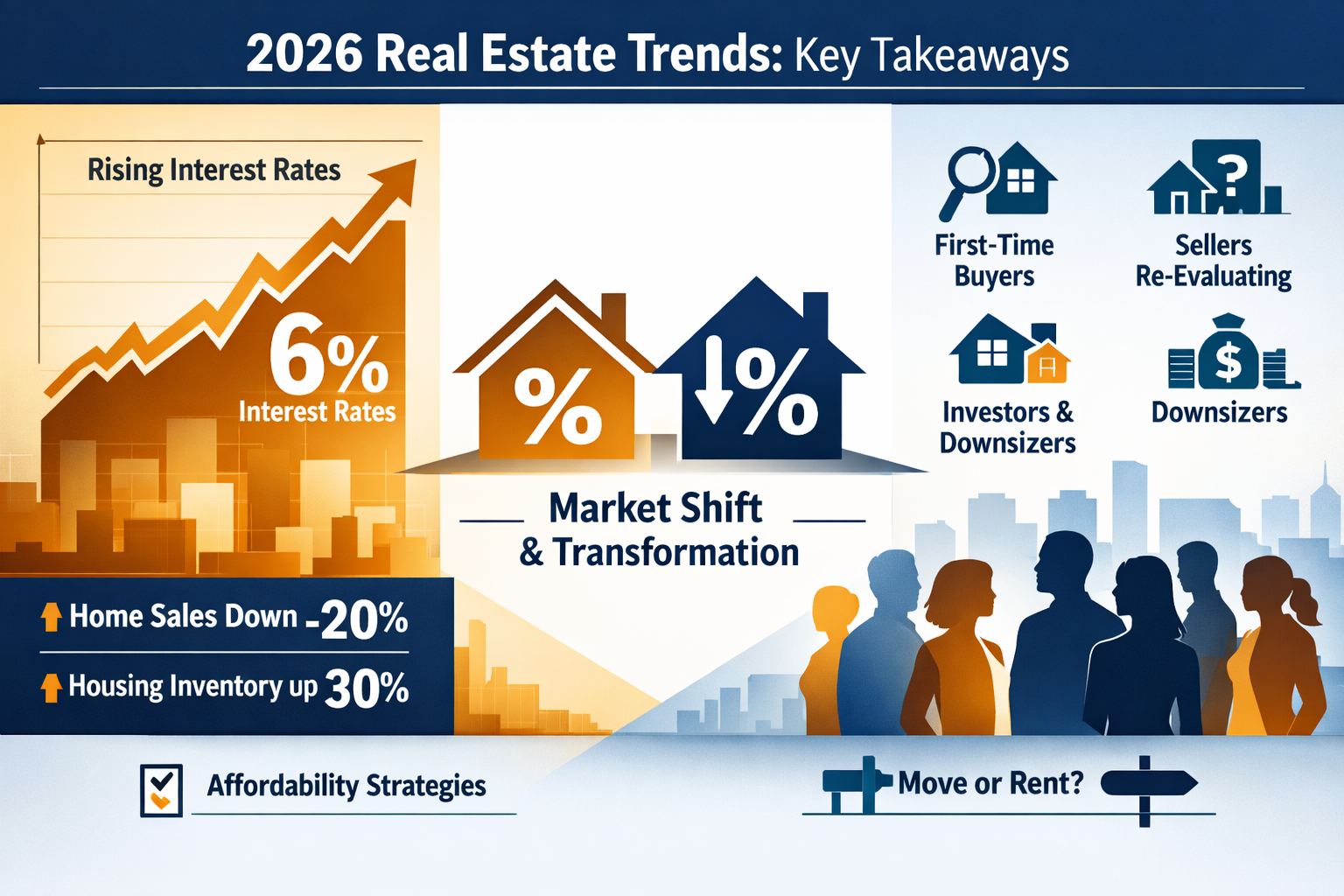
The stabilization of mortgage rates around 6% represents a fundamental shift in market psychology. Unlike the panic-inducing spikes of 2023-2024 or the artificially low rates of the pandemic era, 6% rates are creating what industry experts call a "new normal"—a baseline that both buyers and sellers can actually plan around.
Here's what makes this so based: mortgage rates at 6% aren't historically high. They're actually close to the 50-year average. What's changed is our collective memory. After years of sub-3% rates, 6% felt shocking. But as 2026 unfolds, market participants are realizing that 6% rates paired with improved affordability metrics create genuine opportunities.[5]
The Affordability Equation Has Shifted
Monthly mortgage payments declining 8.4% year-over-year isn't just a statistic—it's a game-changer for household budgets.[1] For a median-priced home, that translates to roughly $200-300 less per month compared to early 2025. Combined with wage growth and adjusted home prices in many markets, buyers are discovering they can afford approximately 10-15% more home than they could afford just six months ago.
This improved affordability is driving the fresh momentum in pending sales, which rose 1.2% year-over-year in January—the strongest annual gain since December 2024.[2] Buyers who were sitting on the sidelines are recognizing that waiting for 3% rates again might mean missing years of homeownership and equity building.
"The 2026 market rewards those who understand that perfect conditions never arrive. The best time to buy is when you're financially ready and rates are predictable." — Real Estate Rank IQ Market Analysis
For those exploring whether to rent or buy in 2026, the stability of 6% rates makes the math considerably clearer than it was during the volatile 2023-2024 period.
How 2026 Real Estate Trends Are Transforming Buyer Strategies
Buyers in 2026 aren't just adapting to stable 6% rates—they're leveraging them as strategic advantages. The playbook has evolved significantly from the frenzied bidding wars of the low-rate era and the paralysis of the high-rate spike period.
Negotiation Power Is Back (And It's Extraordinary)
With homes spending a median of 78 days on market—six days longer than a year ago—buyers have time to conduct thorough due diligence and negotiate terms.[2] This extended timeline marks the 22nd consecutive month of year-over-year increases in days-on-market, signaling a fundamental shift away from the "offer-in-24-hours" pressure of previous years.
Smart buyers are capitalizing on this shift by:
- 🔍 Conducting comprehensive property inspections without feeling rushed
- 💬 Negotiating not just on price but on closing costs, repairs, and contingencies
- 📊 Requesting seller concessions that were unthinkable during the seller's market
- ⏰ Taking time to compare multiple properties without fear of missing out
The data backs this up: 22% of listings experienced price reductions in January 2026, down slightly from a year earlier but still representing significant negotiation opportunities.[1] Sellers who priced aggressively are being forced to adjust, creating openings for buyers who do their homework.
The Cash Buyer Advantage Has Never Been Stronger
Here's something that's not getting enough attention: sellers provided an average 9% discount on all-cash purchases in 2025, up dramatically from just 4% in 2021.[4] This trend is accelerating into 2026 as sellers increasingly value certainty and speed over maximum price.
For buyers with cash reserves or access to creative financing strategies, this creates extraordinary opportunities. Even buyers who need financing can explore bridge loans or real estate investment financing options that allow them to present as cash buyers, then refinance after closing.
Regional Strategies: Not All Markets Are Created Equal
The 2026 Real Estate Trends: How Stable 6% Rates Are Reshaping Buyer and Seller Strategies vary significantly by region. While the West saw inventory growth of 12.2%, the Midwest 10.3%, and the South 10.1%, the Northeast lagged at just 6.6% year-over-year growth.[2]
What this means for buyers:
| Region | Inventory Growth | Strategic Approach |
|---|---|---|
| West | +12.2% | More selection, stronger negotiation position |
| Midwest | +10.3% | Balanced market, focus on value |
| South | +10.1% | Growing options, watch for new construction |
| Northeast | +6.6% | Tighter market, move quickly on quality listings |
Buyers targeting the Northeast need to maintain more urgency, while those in Western markets can afford to be more selective. Understanding these regional dynamics is crucial for developing winning strategies in 2026.
For investors specifically, exploring the best real estate investment strategies tailored to regional market conditions can maximize returns in this stabilized rate environment.
Seller Strategies in the Stable 6% Rate Market
If you're selling in 2026, the landscape demands a different approach than what worked in 2021-2022. The days of listing at any price and receiving multiple over-asking offers within hours are gone. But that doesn't mean sellers can't succeed—it means they need to be strategic, realistic, and willing to compete on value.
Pricing Strategy: The Make-or-Break Decision
With national home prices forecast to remain flat at 0% appreciation for 2026, pricing strategy has become the single most critical factor in selling success.[5] The market isn't rewarding aspirational pricing—it's punishing it with extended days-on-market and eventual price reductions.
The impeccable pricing approach for 2026:
- Start with data, not emotions – Use comparative market analysis from the past 60-90 days, not what your neighbor sold for in 2022
- Price slightly below market – Homes priced 2-3% below comparable properties attract more showings and often receive multiple offers
- Build in negotiation room strategically – Rather than overpricing, price fairly and offer seller concessions that appeal to buyers
- Monitor feedback religiously – If you're not getting showings within the first two weeks, your price is wrong
Sellers who understand how to value their home in any market gain a significant advantage over those who let ego or outdated comparables drive their pricing decisions.
Presentation and Marketing: Standing Out Matters More Than Ever
With inventory up 10% year-over-year and homes sitting on market longer, presentation quality directly impacts selling speed and final price.[2] Buyers have options now, and they're choosing homes that show well both online and in person.
Essential presentation strategies:
- 📸 Professional photography is non-negotiable – Your listing photos compete against hundreds of others in buyer searches
- 🎨 Strategic staging highlights lifestyle – Focus on creating spaces that help buyers envision their life in the home
- 🔧 Pre-listing inspections prevent surprises – Address major issues before listing to avoid negotiation leverage problems
- 💻 Digital marketing reaches qualified buyers – Leverage AI marketing tools to target the right audience
The expert tips for preparing your home to attract buyers haven't changed fundamentally, but their importance has intensified. In a balanced market, execution quality separates homes that sell quickly from those that languish.
The Timing Question: When to List in 2026
Seasonal patterns still matter, but stable 6% rates have reduced some of the traditional spring surge intensity. Pending listings rose 1.8% year-over-year in January, suggesting that motivated buyers are active even in traditionally slower months.[1]
Strategic timing considerations:
- Early spring (March-April) remains the highest-traffic period, but also brings the most competition from other sellers
- Late winter (January-February) attracts serious buyers with less listing competition
- Summer works well for family-friendly homes as buyers want to close before school starts
- Fall can be ideal for unique properties that appeal to specific buyer profiles
Rather than gatekeeping the "perfect" listing time, successful sellers in 2026 are focusing on being market-ready when their personal circumstances align with favorable local conditions.
Investment Opportunities in the 2026 Stable Rate Environment
For real estate investors, stable 6% rates are creating a landscape rich with opportunities that didn't exist during either the ultra-low-rate frenzy or the high-rate paralysis periods. The 2026 Real Estate Trends: How Stable 6% Rates Are Reshaping Buyer and Seller Strategies include several investor-specific dynamics worth exploring.
The New Construction Window: A Rare Buyer Opportunity
The National Association of Realtors forecasts approximately 1% growth in both single-family home building and new home sales for 2026—modest growth constrained by policy uncertainty and lingering tariff effects.[3] This subdued construction pace, combined with improved buyer affordability, creates what industry experts call "a rare opportunity for buyers."
Why new construction deserves investor attention in 2026:
- 🏗️ Builder incentives are substantial – Builders are offering rate buydowns, closing cost assistance, and upgrades to move inventory
- 🏘️ Townhome construction is surging – Townhomes now represent approximately 18% of single-family construction (up from less than 10% a decade ago), offering affordable entry points
- 📍 Location advantages – New developments often target growing suburbs with strong employment and infrastructure
- 💰 Predictable costs – New homes come with warranties and lower maintenance costs in early ownership years
The townhome trend specifically represents what planners call "light-touch density"—attractive to younger buyers seeking walkable communities and homeownership pathways without the price tag of detached single-family homes.[3]
Investors exploring fix-and-flip opportunities should also consider that new construction competition affects resale pricing in surrounding areas, creating both challenges and opportunities depending on market positioning.
Rental Investment Strategy: Let It Cook
With the National Association of Realtors' affordability index remaining 35% below pre-COVID levels despite rate improvements, rental demand continues strong across most markets.[5] This creates sustained opportunities for buy-and-hold investors who can secure financing at stable 6% rates.
The rental investment calculus in 2026:
The improved affordability for buyers hasn't eliminated rental demand—it's shifted it. Many households that could theoretically qualify for mortgages are choosing to rent longer while building larger down payments or waiting for their ideal property. This "renter by choice" segment tends to be higher-quality tenants willing to pay premium rents for well-maintained properties.
Key rental investment considerations:
- 📊 Cash flow matters more than appreciation – With 0% projected price growth, rental income becomes the primary return driver
- 🎯 Target markets with employment growth – Job growth drives both rental demand and eventual appreciation when the market turns
- 🏠 Single-family rentals outperform – Families seeking yard space and school districts pay premium rents and stay longer
- 💡 Technology integration attracts tenants – Smart home features and efficient systems justify higher rents
For those new to rental investing, understanding real estate investment strategies specific to stable-rate environments helps optimize property selection and financing structures.
The Cash Discount Arbitrage Play
Remember that 9% average discount sellers are providing to cash buyers?[4] Sophisticated investors are exploiting this spread through creative financing structures:
- Partner with private lenders for short-term cash purchases at 8-10% interest
- Negotiate the 9% seller discount by presenting as a cash buyer
- Refinance into conventional financing at 6% within 6-12 months
- Capture the spread between the purchase discount and refinancing costs
This strategy requires careful execution and understanding of real estate investment financing options, but the math is compelling for investors with access to short-term capital.
Regional Market Dynamics: Where the 2026 Opportunities Are Hiding
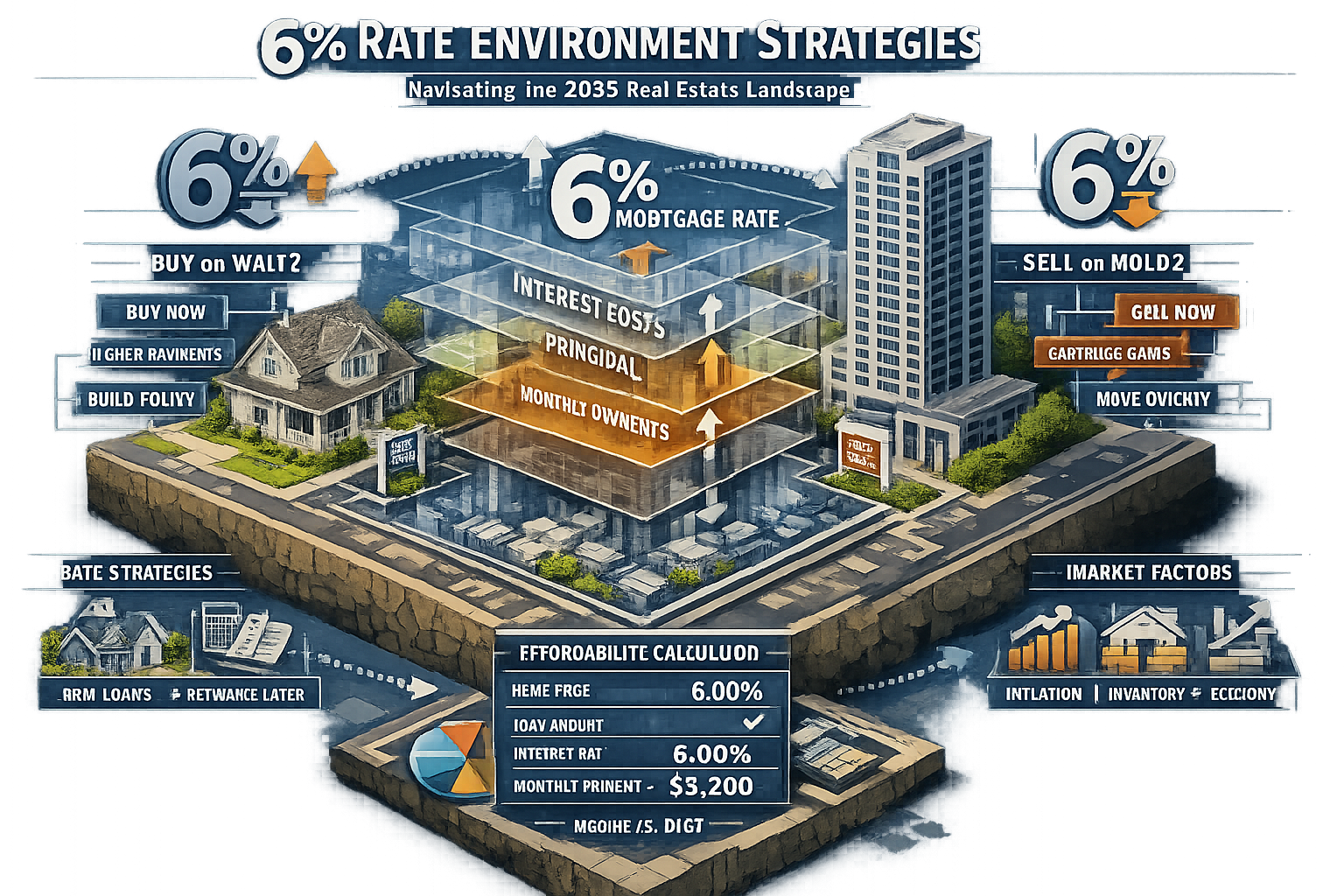
The 2026 Real Estate Trends: How Stable 6% Rates Are Reshaping Buyer and Seller Strategies play out very differently depending on geography. While national trends provide useful context, local market conditions determine actual opportunities.
The Northeast Puzzle: Tight Inventory, Persistent Demand
The Northeast's modest 6.6% inventory growth—significantly below other regions—creates a unique dynamic.[2] Thirty of the top 50 metros in the Northeast have actually seen inventory regress since May 2025, suggesting supply constraints that could support prices even as national appreciation stalls.
Northeast market characteristics:
- Limited new construction due to land constraints and regulatory hurdles
- Strong employment in finance, healthcare, and education sectors
- Higher price points but also higher household incomes
- Seasonal volatility more pronounced than other regions
Buyers in Northeast markets need to maintain urgency despite the broader market's shift toward balance. Sellers in these markets retain more pricing power than their counterparts in inventory-rich Western markets.
Western Markets: Inventory Growth Creates Buyer Leverage
The West's 12.2% inventory growth represents the strongest supply increase among all regions, fundamentally shifting negotiation dynamics.[2] Markets like Phoenix, Las Vegas, and parts of California that saw explosive growth during the pandemic are now experiencing meaningful inventory normalization.
Strategic implications for Western markets:
- Buyers can be more selective and negotiate harder on price and terms
- Sellers must compete on condition, location, and value rather than relying on scarcity
- Investment opportunities exist in markets that overshot fundamentals during 2021-2022
- New construction is more active, providing additional buyer options
For investors analyzing local real estate markets with AI tools, Western markets offer rich data sets for identifying neighborhoods where inventory growth creates temporary pricing inefficiencies.
Midwest and South: The Balanced Middle Ground
The Midwest (+10.3%) and South (+10.1%) are experiencing nearly identical inventory growth rates, creating what many consider the most balanced market conditions in the country.[2] These regions offer the sweet spot for both buyers and sellers—enough inventory for choice, but not so much that sellers face desperate conditions.
Why the Midwest and South deserve attention:
- 🏭 Manufacturing and logistics growth driving employment and population increases
- 💵 Relative affordability compared to coastal markets attracts first-time buyers and relocators
- 🌆 Emerging secondary cities offering urban amenities at suburban prices
- 📈 Steady appreciation potential as coastal buyers discover value
Markets like Nashville, Charlotte, Indianapolis, and Austin continue attracting both residents and investors seeking growth potential without the volatility of coastal markets. Understanding how global economies shape real estate helps contextualize why these markets are positioned for sustained growth.
Technology and Tools: Gaining an Edge in the 2026 Market
The stable 6% rate environment has shifted competitive advantage from speed to strategy, and technology is the great equalizer. Both buyers and sellers who leverage modern tools gain significant advantages over those relying solely on traditional methods.
AI-Powered Market Analysis for Buyers
Buyers in 2026 have access to analytical capabilities that were exclusive to institutional investors just a few years ago. AI marketing tools and market analysis platforms can:
- Predict price trends at the neighborhood level using machine learning models
- Identify undervalued properties by comparing listing prices against comparable sales and rental income potential
- Analyze school districts, crime rates, and amenities to project long-term appreciation
- Calculate total cost of ownership including taxes, insurance, maintenance, and opportunity costs
For buyers willing to invest time in learning these tools, the 5 AI hacks to beat house hunting fatigue can transform the search process from overwhelming to systematic.
Digital Marketing Excellence for Sellers and Agents
Sellers and their agents who master digital marketing are capturing disproportionate attention in the crowded 2026 marketplace. With 22% of listings requiring price reductions, standing out digitally often means the difference between selling at list price and taking a discount.[1]
Digital marketing strategies that work in 2026:
- 🎥 Video tours and 3D walkthroughs capture buyer attention and qualify interest before showings
- 📱 Social media targeting reaches buyers in specific demographic and geographic segments
- 💌 Email marketing to agent networks ensures maximum exposure to buyer agents
- 📊 Data-driven ad optimization allocates marketing budget to highest-converting channels
Real estate agents specifically should explore modern strategies to grow their sphere of influence and networking platforms to attract qualified home buyers.
Transaction Management and Efficiency Tools
The longer transaction timelines in 2026—with homes spending 78 days on market—create more opportunities for deals to fall apart due to poor communication or missed deadlines.[2] Technology that streamlines transaction management provides competitive advantages:
- Digital document signing eliminates delays and allows parties to execute agreements from anywhere
- Transaction coordination platforms keep all parties informed and accountable to timelines
- Automated deadline tracking prevents missed contingency removal dates or inspection periods
- Secure cloud storage maintains organized records accessible to all authorized parties
For sellers preparing homes for market, AI-powered 60-day checklists ensure nothing is overlooked in the preparation process.
Financing Strategies Beyond the Standard 30-Year Fixed
While 6% rates on 30-year fixed mortgages dominate headlines, savvy buyers and investors are exploring alternative financing structures that optimize for the specific conditions of 2026.
Rate Buydowns and Seller Concessions
Builder and seller-funded rate buydowns have become increasingly common as sellers compete for buyers. These arrangements temporarily reduce the buyer's interest rate for the first 1-3 years of the loan, improving affordability during the critical early ownership period.
Common buydown structures:
- 2-1 Buydown: 2% below market rate in year one, 1% below in year two, then full rate
- 1-0 Buydown: 1% below market rate in year one, then full rate
- Permanent Buydown: Seller pays points to reduce the rate for the entire loan term
For buyers exploring mortgage options as Gen Z home buyers, buydowns can make the difference between qualifying and falling short of debt-to-income requirements.
Creative Financing for Investors
Real estate investors aren't limited to conventional financing, and 2026's stable rates make alternative structures more predictable to underwrite:
- Portfolio loans from local banks offering flexibility on property condition and borrower qualifications
- DSCR loans (Debt Service Coverage Ratio) that qualify based on rental income rather than personal income
- Hard money bridge loans for fix-and-flip projects with 6-12 month timelines
- Seller financing where motivated sellers act as the lender for all or part of the purchase price
Understanding real estate investment financing strategies specific to different property types and investment goals is essential for optimizing returns in the stable rate environment.
The Refinance Timing Game
With rates stabilized around 6%, the traditional "refinance when rates drop 1%" rule needs updating. Instead, investors and homeowners should consider:
- Cash-out refinancing to fund additional investments while rates are predictable
- Portfolio consolidation refinancing multiple properties into a single loan with better terms
- Term optimization switching from 30-year to 15-year mortgages to build equity faster
- Removing PMI once equity reaches 20% through appreciation or principal paydown
For those managing multiple properties, exploring real estate investment tax strategies alongside financing optimization can significantly improve after-tax returns.
Future Outlook: What Comes After Stable 6% Rates?
While 2026 is characterized by rate stability, market participants should prepare for eventual changes. Understanding potential scenarios helps inform both short-term tactics and long-term strategies.
The Case for Continued Stability
Several factors suggest 6% rates could persist longer than many expect:
- Federal Reserve policy remains focused on inflation control, limiting aggressive rate cuts
- Strong employment reduces pressure for stimulative monetary policy
- Persistent inflation concerns in housing and services keep the Fed cautious
- Global economic uncertainty makes dramatic policy shifts risky
If this scenario plays out, the 2026 Real Estate Trends: How Stable 6% Rates Are Reshaping Buyer and Seller Strategies become the new playbook for years to come. Market participants who master these conditions gain sustained competitive advantages.
The Gradual Decline Scenario
J.P. Morgan and other forecasters suggest mortgage rates could drift lower to 5.5-5.75% by late 2026 or early 2027 if inflation continues moderating.[5] This gradual decline would:
- Incrementally improve affordability without triggering a buying frenzy
- Support modest price appreciation in supply-constrained markets
- Encourage fence-sitters to enter the market before rates fall further
- Maintain market balance rather than swinging to extreme buyer or seller advantage
This scenario favors buyers who act in early-to-mid 2026 before incremental rate improvements bring additional competition.
The Volatility Return Scenario
Less likely but possible: economic shocks or policy changes could return volatility to rate markets. Geopolitical events, unexpected inflation spikes, or financial system stress could push rates higher or create wild swings.
Preparing for potential volatility:
- 🛡️ Lock rates when approved rather than floating in uncertain conditions
- 💰 Maintain cash reserves to weather payment increases or opportunity costs
- 📋 Structure flexible financing with options to refinance or adjust terms
- 🎯 Focus on fundamentals like location, condition, and cash flow rather than betting on rate movements
Understanding real estate investment risks helps investors prepare for multiple scenarios rather than betting everything on a single outcome.
Actionable Strategies: Your 2026 Real Estate Game Plan
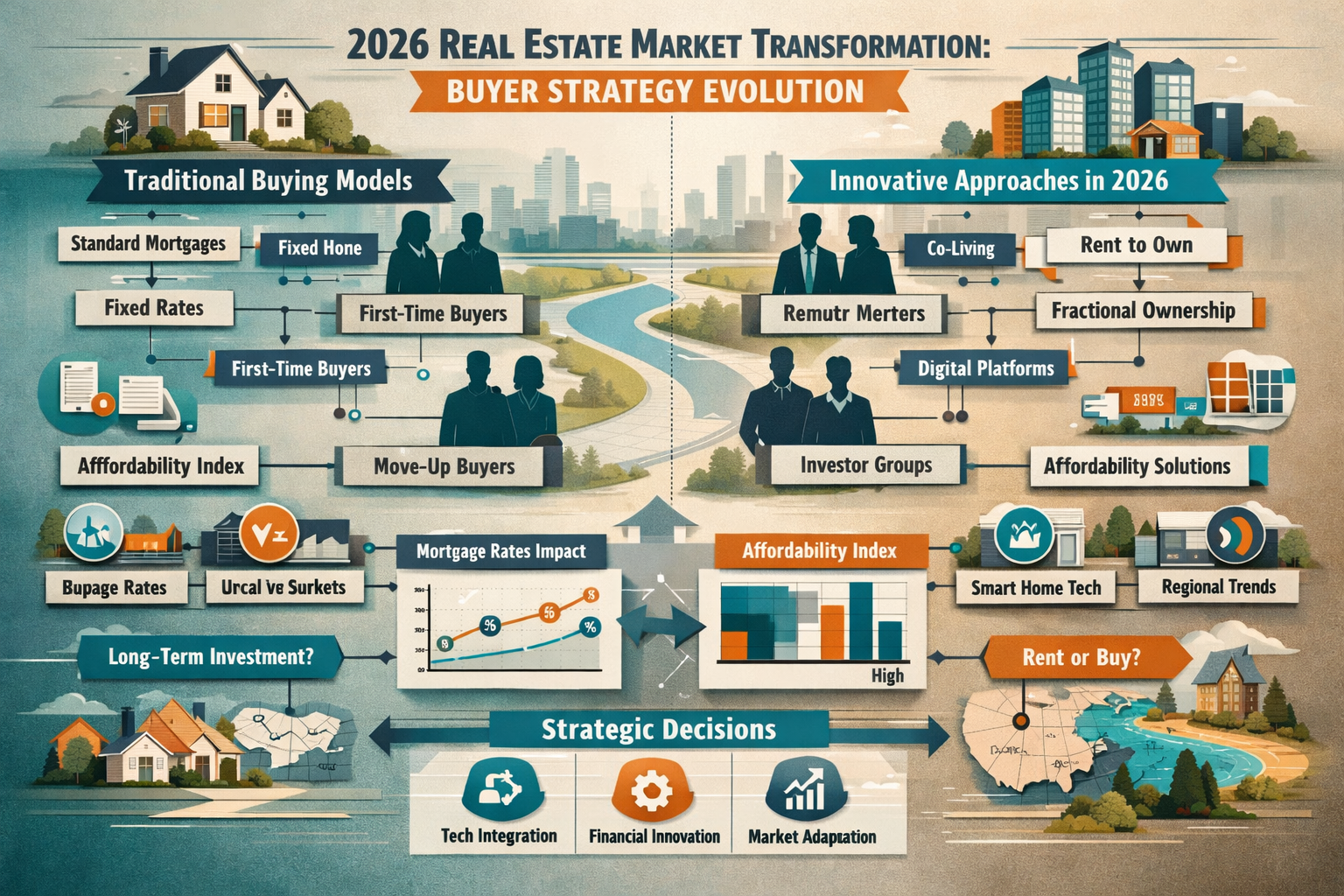
Let's bring this all together with concrete action steps for buyers, sellers, and investors navigating the 2026 Real Estate Trends: How Stable 6% Rates Are Reshaping Buyer and Seller Strategies.
For Buyers: The Strategic Acquisition Playbook
Immediate actions (Next 30 days):
- ✅ Get pre-approved with multiple lenders to compare rates and terms
- ✅ Define your must-haves vs. nice-to-haves to avoid decision paralysis
- ✅ Research target neighborhoods using AI market analysis tools
- ✅ Build your team: agent, inspector, attorney, insurance agent
During your search (30-90 days):
- 🏠 View properties systematically, taking notes and photos for comparison
- 🔍 Conduct thorough due diligence on finalists—don't rush despite improved timelines
- 💬 Negotiate confidently, knowing sellers face longer market times and price reduction pressure
- 📊 Run the numbers on total cost of ownership, not just monthly payment
Closing and beyond:
- 🔐 Lock your rate when you're approved and comfortable with terms
- 📋 Complete inspections and negotiate repairs or credits based on findings
- 🏡 Plan for the first year: maintenance, improvements, and financial reserves
- 📈 Monitor your equity and refinance opportunities as your situation evolves
For first-time buyers specifically, exploring down payment strategies can make the difference between buying in 2026 or waiting years longer.
For Sellers: The Competitive Positioning Playbook
Pre-listing preparation (60-90 days before listing):
- ✅ Conduct a pre-listing inspection to identify and address issues
- ✅ Complete strategic improvements with high ROI (paint, landscaping, minor repairs)
- ✅ Declutter and stage to highlight your home's best features
- ✅ Research comparable sales and interview multiple agents
Listing and marketing (First 30 days):
- 📸 Invest in professional photography and virtual tours
- 💰 Price strategically based on current market data, not past sales
- 📱 Leverage digital marketing across multiple platforms
- 🏠 Keep your home show-ready and be flexible with showing times
Negotiation and closing:
- 💬 Respond to offers promptly and professionally
- 🤝 Consider the full package: price, terms, contingencies, and buyer qualifications
- 🔧 Be reasonable about inspection negotiations—buyers have leverage in 2026
- 📅 Maintain flexibility on closing timelines to accommodate qualified buyers
The home selling strategies that worked in 2021 need updating for 2026's balanced market conditions.
For Investors: The Value Creation Playbook
Market analysis and selection:
- 🎯 Identify markets with employment growth, inventory balance, and favorable landlord laws
- 📊 Run detailed cash flow projections assuming 6% rates persist for 3-5 years
- 🏘️ Focus on neighborhoods showing early gentrification signals or infrastructure investment
- 💡 Consider emerging property types like townhomes or small multifamily
Acquisition and financing:
- 💰 Explore creative financing: DSCR loans, portfolio loans, seller financing
- 🤝 Build relationships with private lenders for cash purchase capabilities
- 📋 Negotiate aggressively using the 9% cash discount data as leverage
- ⚖️ Structure deals for tax efficiency using 1031 exchanges and cost segregation
Operations and growth:
- 🏠 Implement systems for tenant screening, maintenance, and financial tracking
- 📈 Monitor performance metrics: cash-on-cash return, cap rate, appreciation
- 🔄 Refinance strategically to pull equity for additional acquisitions
- 🎓 Continue education on real estate investment strategies and market trends
For investors just starting, understanding the best real estate investments for current market conditions helps avoid costly mistakes.
Conclusion: Embrace the Opportunity in Stability
The 2026 Real Estate Trends: How Stable 6% Rates Are Reshaping Buyer and Seller Strategies represent a fundamental shift from the volatility and uncertainty that characterized recent years. While 6% rates felt shocking after the pandemic-era lows, they're creating a market environment where strategy, preparation, and execution matter more than timing the perfect rate.
For buyers, this means extraordinary opportunities to negotiate, conduct thorough due diligence, and make informed decisions without the pressure of bidding wars. The 8.4% decline in monthly mortgage payments and 10-15% increase in purchasing power create genuine affordability improvements for qualified buyers.[1]
For sellers, success in 2026 requires impeccable presentation, realistic pricing, and competitive marketing. The days of passive selling are over, but motivated sellers who execute well are still achieving their goals—they're just working harder for them.
For investors, stable 6% rates create predictable underwriting conditions that support strategic portfolio growth. Whether pursuing fix-and-flip, buy-and-hold, or creative financing strategies, the ability to model returns with confidence is invaluable.
The market isn't gatekeeping opportunities—it's rewarding those who adapt to new conditions and execute with excellence. Whether you're buying your first home, selling to upgrade, or building a real estate portfolio, 2026 offers a fresh start with stable foundations.
Your next steps:
- 📚 Educate yourself on current market conditions in your target area
- 💰 Get your finances in order: credit, savings, and pre-approval
- 🤝 Build your team of professionals who understand 2026's dynamics
- 🎯 Take action based on your personal goals and circumstances
The real estate market rewards those who act with knowledge, preparation, and confidence. Let it cook, stay based, and make 2026 the year you achieve your real estate goals.
For ongoing market insights, investment strategies, and expert guidance, explore the resources at Real Estate Rank IQ or reach out to our team at news@realestaterankiq.com.
References
[1] Zillow Predicts New 2026 Change In Us Housing Market Real Estate – https://www.thestreet.com/real-estate/zillow-predicts-new-2026-change-in-us-housing-market-real-estate
[2] January 2026 Data – https://www.realtor.com/research/January-2026-data/
[3] The 2026 New Home Market A Rare Opportunity For Buyers – https://www.nar.realtor/magazine/real-estate-news/the-2026-new-home-market-a-rare-opportunity-for-buyers
[4] 10 Things To Know About The Property Market January 2026 – https://www.cotality.com/press-releases/10-things-to-know-about-the-property-market-january-2026
[5] Us Housing Market Outlook – https://www.jpmorgan.com/insights/global-research/real-estate/us-housing-market-outlook