



Last updated: February 28, 2026
Spring 2026 is shaping up to be a seller’s market with a twist—inventory is climbing, buyers are pickier than ever, and the homes that aren’t prepared are getting left behind. Nearly 1 in 5 sellers had to slash their asking price in 2025 after listing at unrealistic levels, and that trend is accelerating.[1] The difference between a smooth spring sale and a financial disaster often comes down to avoiding a handful of costly mistakes that drain thousands from your final proceeds. This guide ranks the eight most expensive spring home selling mistakes 2026 sellers are making right now, from smallest financial hit to the ones that can cost you five figures or more.
Key Takeaways
- Overpricing based on outdated comparables triggers buyer dismissal and forces price cuts that cost $8,000–$15,000 in lost equity and extended carrying costs.
- Poor quality listing photos reduce showing requests by up to 80% and often require $10,000–$20,000 in price reductions to regain buyer interest.
- Skipping expected repairs before listing loses buyers who compare homes side-by-side, costing $5,000–$12,000 in negotiation leverage.
- Ignoring curb appeal in spring—when outdoor spaces matter most—can reduce offers by $3,000–$8,000 compared to well-maintained competitors.
- Being present during showings makes buyers uncomfortable and cuts showing-to-offer conversion rates, indirectly costing $2,000–$5,000 in lost negotiation power.
- Rejecting strong first offers in a shifting market costs sellers an average of $7,000–$18,000 when subsequent offers come in lower.
- Failing to disclose known issues leads to deal cancellations, legal exposure, and renegotiations that cost $10,000–$30,000+ in repairs, credits, or price cuts.
- Poor negotiation strategy is the most expensive mistake, costing sellers $15,000–$40,000 through unnecessary concessions, weak counteroffers, and leaving money on the table.
💰 Spring Home Selling Mistake Cost Calculator
Check the boxes below to see how much these mistakes could cost you

Being Present During Showings
Makes buyers uncomfortable and reduces showing-to-offer conversion rates
$2,000 – $5,000Ignoring Curb Appeal in Spring
Poor first impressions during peak outdoor season reduce offers and extend time on market
$3,000 – $8,000Skipping Expected Repairs Before Listing
Visible damage and deferred maintenance lose buyers to better-prepared competitors
$5,000 – $12,000Rejecting Strong First Offers
Waiting for "better" offers in rising inventory markets backfires with lower subsequent offers
$7,000 – $18,000Using Poor Quality Listing Photos
Amateur photos reduce online engagement by 60-80% and force price reductions
$10,000 – $20,000Failing to Disclose Known Issues
Hidden defects lead to deal cancellations, renegotiations, and potential legal liability
$10,000 – $30,000+Overpricing Based on Outdated Comparables
Listing above market value creates stale listings and forces larger price cuts later
$8,000 – $15,000+Poor Negotiation Strategy
Unnecessary concessions, emotional responses, and weak counteroffers drain equity at closing
$15,000 – $40,000Quick Answer
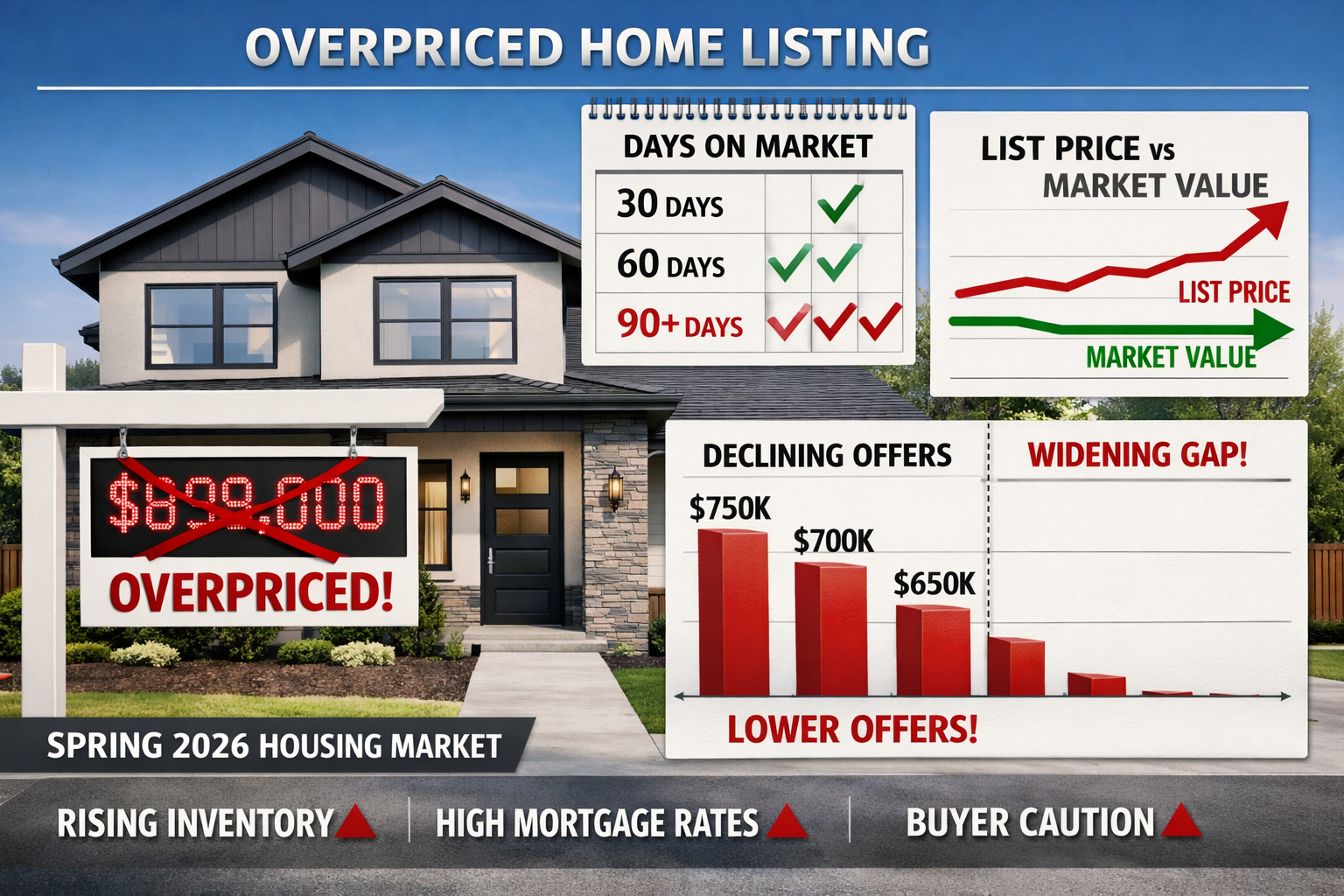
The eight most costly spring home selling mistakes in 2026 range from minor tactical errors to deal-killing strategic failures. Being present at showings (#8) costs the least at $2,000–$5,000 in indirect losses, while poor negotiation (#1) can drain $15,000–$40,000 from your proceeds. Overpricing, skipping repairs, bad photos, ignoring curb appeal, rejecting first offers, and failing to disclose issues each carry specific dollar costs that compound when sellers make multiple mistakes. Two-thirds of sellers now make at least some repairs before listing because buyers have more options and higher expectations.[1] The homes that sell quickly and for top dollar in spring 2026 are the ones that avoid these ranked pitfalls.
What Are the Most Common Spring Home Selling Mistakes 2026 Sellers Make?
Spring 2026 sellers are repeating the same costly errors despite increased inventory and more selective buyers. The most common mistakes include overpricing based on outdated neighborhood sales, listing with deferred maintenance visible in photos, using amateur photography, neglecting curb appeal during peak outdoor season, hovering during showings, dismissing strong early offers, hiding known defects, and entering negotiations without a clear strategy.[1][2]
These aren’t just inconveniences—they’re financial traps. Each mistake has a measurable cost in lost equity, extended time on market, or forced price reductions. With spring traditionally offering a 13.1% seller’s premium over other seasons, the stakes are higher than ever to get your listing strategy right.[2]
Why Spring 2026 Is Different
Buyers in 2026 have shifted their behavior dramatically. With more inventory available compared to the pandemic-era feeding frenzy, homebuyers are:
- More selective and willing to walk away
- Comparing homes side-by-side with higher expectations
- Avoiding properties that feel overpriced or require work
- Demanding clarity and fewer unknowns before committing[1][3]
This means mistakes that might have been forgiven in 2021 now cost real money. Let’s break down exactly how much.
#8: Being Present During Showings (Cost: $2,000–$5,000)
The mistake: Staying home during showings or hovering nearby makes buyers uncomfortable and prevents honest conversations with their agent.
When sellers are present, buyers rush through rooms, skip opening closets, and avoid discussing concerns or making offers. They can’t envision the home as theirs when the current owner is watching. This discomfort reduces showing-to-offer conversion rates by an estimated 15–25%, meaning you need more showings to generate the same number of offers.
The real cost: While not a direct dollar loss, being present extends your time on market by 7–14 days on average. Those extra days mean additional mortgage payments, utilities, insurance, and opportunity cost. For a $400,000 home with a $2,500 monthly carrying cost, that’s $583–$1,167 in hard costs plus the indirect cost of your home feeling “stale” to new buyers who see it’s been listed longer. Total estimated impact: $2,000–$5,000 in lost negotiation leverage and carrying costs.
What to Do Instead
- Leave completely during showings—go to a coffee shop, run errands, or visit a friend
- Take pets with you so buyers can explore freely
- Turn on lights, open blinds, and set comfortable temperature before leaving
- Trust your agent to handle questions and feedback professionally
Buyers want to imagine their furniture in your living room and their kids in the backyard. Give them space to fall in love without feeling like they’re intruding.
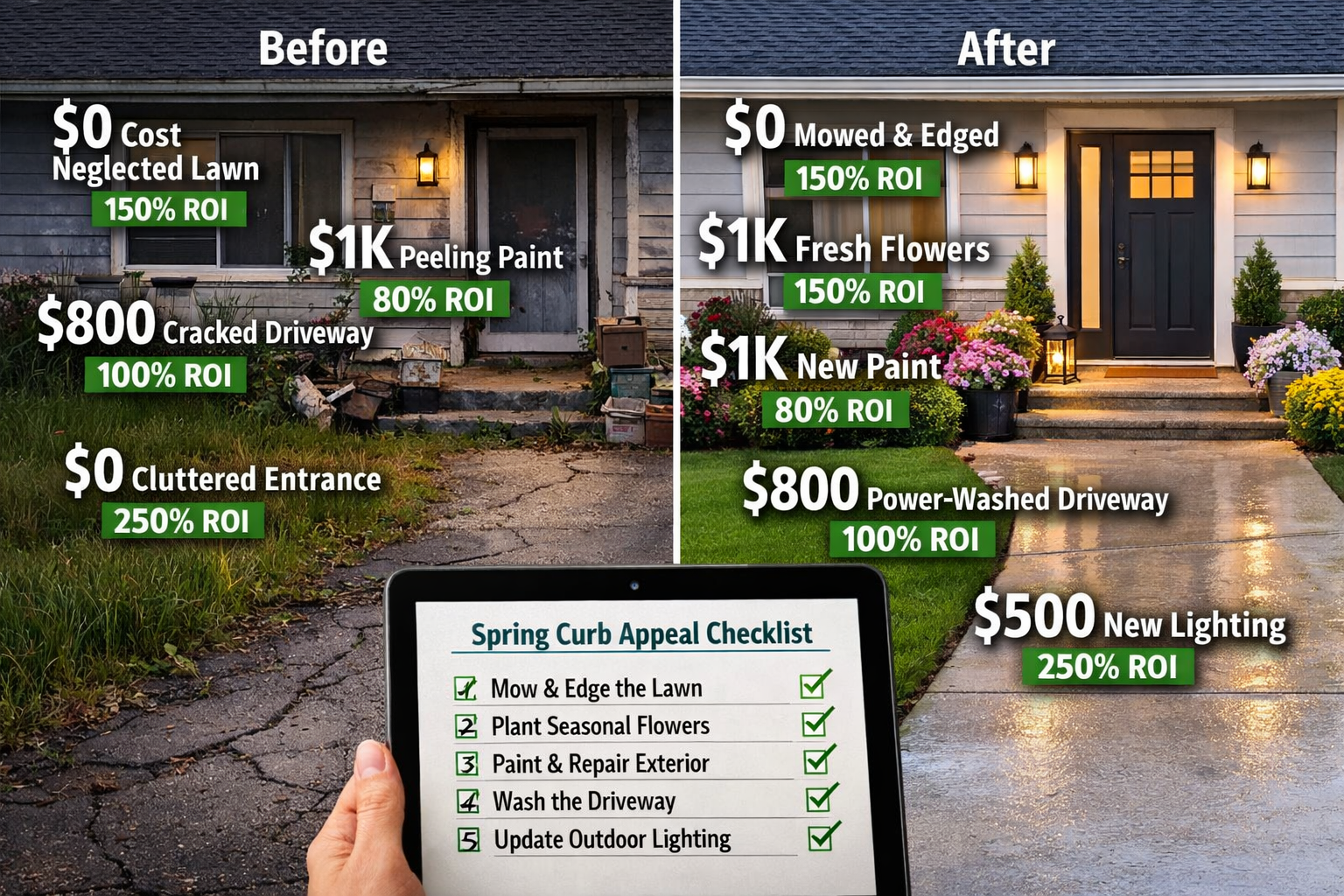
#7: Ignoring Curb Appeal in Spring (Cost: $3,000–$8,000)
The mistake: Listing with overgrown landscaping, faded paint, cracked walkways, or dim exterior lighting during the season when outdoor spaces matter most.
Spring is when buyers notice yards, gardens, and outdoor living areas. A home with poor curb appeal gets dismissed before buyers even walk through the door. In spring 2026, when inventory is higher and buyers are comparing multiple properties, first impressions determine which homes get second showings and serious offers.[2]
The real cost: Homes with weak curb appeal typically sell for 3–5% less than comparable properties with well-maintained exteriors. On a $400,000 home, that’s $12,000–$20,000 in lost value. Even if you don’t lose that much, you’ll likely need to reduce your price by $3,000–$8,000 to compensate for the negative first impression, or you’ll sit on the market longer and pay extended carrying costs.
High-ROI Curb Appeal Fixes for Spring
| Improvement | Cost | Potential Return | Time Required |
|---|---|---|---|
| Fresh mulch and flowers | $200–$500 | $1,500–$3,000 | 1 day |
| Power wash exterior | $150–$400 | $2,000–$5,000 | 4 hours |
| Paint front door | $50–$150 | $1,000–$2,500 | 3 hours |
| Outdoor lighting | $300–$800 | $2,500–$4,000 | 1 day |
| Lawn care/edging | $100–$300 | $1,000–$2,000 | Ongoing |
Pro tip: Spring buyers want to see blooming flowers, green grass, and a welcoming entrance. Invest $500–$1,500 in landscaping and exterior touch-ups to avoid losing $3,000–$8,000 in negotiation power. For more guidance, check out our complete curb appeal upgrade guide.
#6: Skipping Expected Repairs Before Listing (Cost: $5,000–$12,000)
The mistake: Listing with visible damage, deferred maintenance, or outdated systems that buyers can easily spot during showings.
Two-thirds of sellers in 2025 made at least some repairs before listing because they recognized that buyers compare homes side-by-side.[1] The sellers who skip repairs lose buyers to better-prepared competitors. Common issues include scratches, buckling floors, gaps in trim, water damage, mold, outdated HVAC systems, and roof problems.[2]
The real cost: When buyers see obvious repairs needed, they either:
- Walk away and choose a move-in-ready home instead
- Submit lowball offers that account for repair costs plus a “hassle discount” of 20–30%
- Renegotiate hard after inspection, demanding credits or repairs
A $3,000 repair left undone typically costs you $5,000–$8,000 in negotiation leverage. Buyers assume the worst and pad their estimates. Total impact: $5,000–$12,000 in lost equity compared to making strategic repairs upfront.
Which Repairs to Prioritize
Must-fix before listing:
- Visible damage (holes, cracks, stains)
- Water damage or mold
- Non-functioning appliances included in sale
- Safety hazards (loose railings, electrical issues)
- Roof leaks or obvious wear
Consider fixing:
- Outdated HVAC systems (if over 15 years old)
- Flooring damage in main living areas
- Kitchen or bathroom fixtures that look dated
- Exterior paint peeling or siding damage
Skip (low ROI):
- Full kitchen remodels (see what to skip before selling)
- Luxury upgrades buyers may not want
- Cosmetic changes based on personal taste
Common mistake: Delaying repairs until after contract. Listing with known issues and planning to address them post-inspection loses buyers who want confidence before committing.[3] Fix the obvious problems before your first showing.
For a complete breakdown of which improvements actually pay off, see our ROI projects ranking.
#5: Rejecting Strong First Offers (Cost: $7,000–$18,000)
The mistake: Dismissing early offers because you believe better ones are coming, or countering too aggressively and losing motivated buyers.
In spring 2026, with rising inventory and more selective buyers, the first offer is often the best offer. Motivated buyers who submit early offers have done their research, know the market, and are ready to close. When sellers reject or counter too high, those buyers move on to other properties and don’t return.[1][3]
The real cost: Sellers who reject strong first offers wait an average of 3–6 additional weeks for the next comparable offer, which typically comes in $7,000–$18,000 lower than the initial offer. Why? Because the home now looks “stale” on the market, buyers assume something is wrong, and you’ve lost your negotiation leverage.
How to Evaluate First Offers
A strong first offer typically includes:
- Price within 3–5% of asking (in balanced or buyer’s markets)
- Reasonable contingencies (inspection, appraisal, financing)
- Proof of financing or pre-approval
- Flexible closing timeline
- Earnest money deposit of 1–3%
Red flags in any offer:
- No pre-approval letter
- Excessive contingencies or extended timelines
- Lowball price with no justification
- Requests for personal property not included in listing
Decision rule: If the first offer is within 5% of your target price and comes from a qualified buyer, seriously consider accepting or countering modestly. Waiting for a “better” offer in a market with rising inventory often backfires.
For advanced negotiation tactics, see our spring negotiation guide.
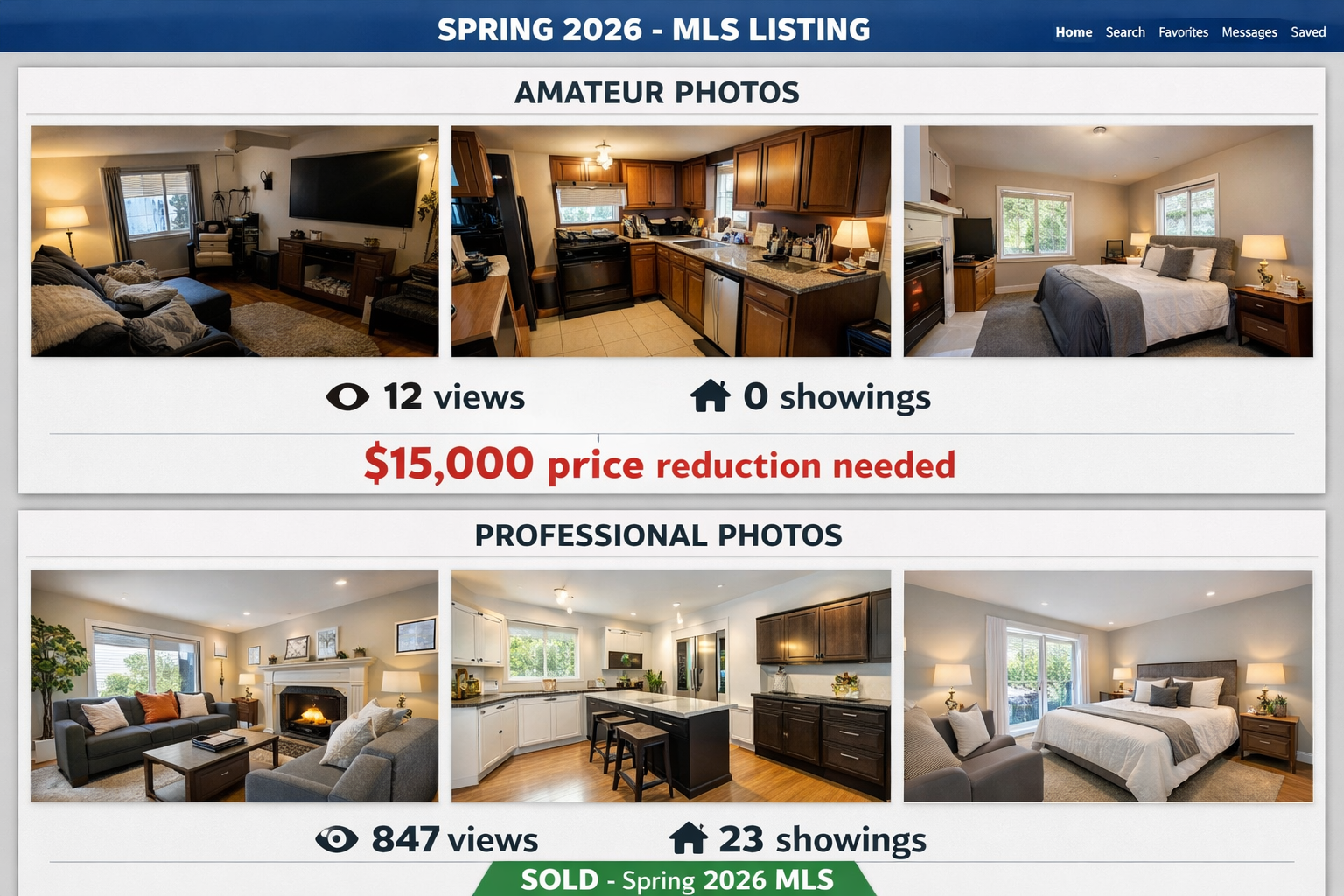
#4: Using Poor Quality Listing Photos (Cost: $10,000–$20,000)
The mistake: Listing with amateur smartphone photos, poor lighting, cluttered rooms, or unflattering angles instead of hiring a professional photographer.
In 2026, 95% of buyers start their home search online. Your listing photos are your first—and often only—chance to make an impression. Homes with amateur photos get 60–80% fewer showing requests than comparable homes with professional photography. Buyers scroll past listings that don’t grab attention in the first three seconds.
The real cost: Poor photos extend time on market by 2–4 weeks and often force price reductions of $10,000–$20,000 to compensate for the negative first impression. Even after reducing the price, homes with bad photos still sell slower because buyers assume the home itself is problematic.
Professional Photos vs. Amateur: The Numbers
| Metric | Amateur Photos | Professional Photos |
|---|---|---|
| Online views | 120–300 | 800–2,000 |
| Showing requests | 3–8 | 15–35 |
| Days on market | 45–75 | 20–35 |
| Final sale price | -2% to -5% vs asking | -0% to +2% vs asking |
Investment: Professional real estate photography costs $200–$600 depending on home size and market. Virtual staging adds another $50–$150 per room. Total investment: $300–$900 to avoid losing $10,000–$20,000 in price reductions and carrying costs.
What Professional Photos Include
- Wide-angle shots that make rooms look spacious
- Natural light optimization (shooting during “golden hour”)
- Decluttered, staged rooms
- Exterior shots during best weather/lighting
- Twilight photos with interior and exterior lights on
- Drone shots for properties with land or views
Pro tip: Combine professional photos with AI enhancement tools for listing optimization. See our AI photo guide for sellers for step-by-step instructions.
#3: Failing to Disclose Known Issues (Cost: $10,000–$30,000+)
The mistake: Hiding or downplaying known defects, system problems, or property issues hoping buyers won’t discover them until after contract.
This is both a financial disaster and a legal liability. When buyers discover undisclosed issues during inspection, they either:
- Cancel the contract and you start over with a stigmatized listing
- Demand major price reductions or repair credits
- Close and sue you later for fraudulent misrepresentation
Inspection and repair issues were cited as a major reason home sales fell through in 2025, often because sellers weren’t willing to negotiate after hiding problems.[1]
The real cost: Failed deals cost you 4–8 weeks of lost time, continued carrying costs, and a damaged reputation. When the home goes back on the market, buyers ask “what went wrong?” and submit lower offers. Renegotiations after inspection typically cost $10,000–$30,000 in credits or repairs. Legal settlements for undisclosed defects can reach $50,000+ depending on the issue.
Common Disclosure Failures
Must disclose:
- Past water damage or flooding
- Foundation or structural issues
- Roof age and known leaks
- HVAC system age and problems
- Mold or pest infestations
- Solar panel leases or liens
- HOA restrictions or pending assessments
- Property line disputes
- Past insurance claims
How to disclose properly:
- Complete disclosure forms honestly and thoroughly
- Provide documentation (receipts, permits, inspection reports)
- Explain repairs already completed
- Clarify lease terms for solar, HVAC, water softeners, etc.
- Document monthly costs buyers will inherit
Common mistake: Sellers frequently lack critical details about leases, system transfers, and monthly impacts before listing. For example, solar panel lease terms, transferability, and savings calculations should be documented upfront, not discovered during negotiations.[3]
Decision rule: When in doubt, disclose. Transparency builds trust and prevents deal-killing surprises. Buyers want clarity and fewer unknowns to “feel safe saying yes.”[3]
#2: Overpricing Based on Outdated Comparables (Cost: $8,000–$15,000+)
The mistake: Pricing your home based on what neighbors sold for months or years ago instead of current spring 2026 market conditions with increased inventory and more selective buyers.
Nearly 1 in 5 sellers in 2025 had to reduce prices after listing at unrealistic levels.[1] The “list high and negotiate down” strategy backfires in 2026 because motivated buyers dismiss overpriced homes immediately and move on to better-prepared competitors. By the time you reduce the price, your listing feels stale and subsequent offers start lower than they should.[3]
The real cost: Overpriced homes sit on the market 30–60 days longer than correctly priced homes, costing $2,500–$5,000 in carrying costs (mortgage, utilities, insurance, taxes). When you finally reduce the price, you typically need to drop $8,000–$15,000 below where you should have started to overcome the “stale listing” stigma. Total impact: $10,500–$20,000 in lost equity and extended costs.
Why Sellers Overprice
Common pricing mistakes:
- Using price-per-square-foot instead of comparable sales data
- Relying on Zillow estimates or outdated appraisals
- Adding emotional value for renovations or memories
- Pricing based on what you “need” to net
- Listing with “room to negotiate” built in
The reality: Buyers, appraisers, and lenders focus on comparable sales data, not price-per-square-foot metrics or your personal financial needs. When pricing feels “explained instead of proven,” buyer hesitation kills deals before they start.[3]
How to Price Correctly in Spring 2026
Step 1: Analyze recent sales (last 90 days) of comparable homes in your neighborhood
- Similar square footage (±15%)
- Same number of bedrooms/bathrooms
- Comparable condition and updates
- Sold (not listed) prices
Step 2: Adjust for current market conditions
- Rising inventory = more buyer options = lower prices
- Spring demand = slight premium (historically 13.1%)[2]
- Interest rates = buyer purchasing power
- Local economic factors (employers, schools, relocation)
Step 3: Price at or slightly below market value
- Generates multiple showings in first week
- Creates urgency and potential bidding
- Attracts serious buyers who are ready to move
- Appraises at contract price
Decision rule: If comparable homes sold for $380,000–$395,000 in the last 60 days, list at $389,900, not $425,000. The extra $35,000 on your listing price costs you more than that in lost time, carrying costs, and forced reductions.
For a deep dive into pricing strategy, see our pricing mistakes guide.
#1: Poor Negotiation Strategy (Cost: $15,000–$40,000)
The mistake: Entering negotiations without a clear strategy, making unnecessary concessions, responding emotionally instead of strategically, or failing to understand what buyers actually value.
Poor negotiation is the most expensive spring home selling mistake 2026 sellers make. It compounds every other error on this list and can cost you $15,000–$40,000 in unnecessary concessions, weak counteroffers, and leaving money on the table. Sellers who negotiate poorly:
- Accept lowball offers without countering strategically
- Give away closing cost credits without getting anything in return
- Agree to repairs that cost more than offering a credit
- Waive contingencies that protect them
- Respond emotionally instead of using data
The real cost: Every $1,000 in unnecessary concessions is $1,000 out of your pocket at closing. Common negotiation failures include:
- $5,000–$10,000 in closing cost credits that could have been negotiated down
- $3,000–$8,000 in repair credits for items that cost less to fix yourself
- $7,000–$15,000 in price reductions accepted without exploring alternatives
- $2,000–$7,000 in home warranty or appliance concessions that weren’t necessary
Total impact: $17,000–$40,000 in lost equity compared to sellers who negotiate strategically.
The 5 Pillars of Strong Negotiation
1. Know your walk-away number before negotiations start
- Calculate your minimum acceptable net proceeds
- Factor in all closing costs, commissions, payoffs
- Understand your BATNA (Best Alternative To Negotiated Agreement)
2. Understand what buyers actually value
- Closing cost credits (buyers ask for this most)[7]
- Flexible closing dates
- Included appliances or furniture
- Home warranties
- Quick responses and clear communication
3. Counter strategically, not emotionally
- Every offer deserves a thoughtful response
- Counter with data (comparables, inspection reports, market conditions)
- Give on low-cost items, hold firm on high-value points
- Bundle concessions instead of giving them away one at a time
4. Use time as leverage
- Strong buyers want to close quickly
- Delays benefit the party with less urgency
- Spring sellers often have more leverage than they realize
5. Know when to accept and move forward
- Perfect offers don’t exist
- Waiting for “just a little more” often backfires
- Calculate the cost of extended time on market vs. accepting current offer
Negotiation Scenarios and Responses
| Buyer Request | Weak Response | Strong Response |
|---|---|---|
| $8,000 closing cost credit | Accept immediately | Counter with $4,000 credit if buyer waives inspection for minor items |
| $12,000 price reduction after inspection | Accept or refuse | Offer $6,000 credit, provide repair quotes showing actual cost is $4,500 |
| Appliances included | Throw them in for free | Include if buyer increases offer by $2,000 or waives other contingency |
| Extended closing (60+ days) | Accept without question | Accept if buyer increases earnest money and removes financing contingency |
Pro tip: The best negotiators prepare multiple scenarios before receiving offers. They know their priorities, understand market leverage, and respond with data instead of emotion. For advanced tactics, see our negotiation power moves guide.
When to Bring in Expert Help
Hire a skilled listing agent if:
- You’re unfamiliar with current market conditions
- You struggle with confrontation or emotional responses
- Your home has unique features or challenges
- You’re selling in a competitive spring market
- You want to maximize net proceeds
Agent commission (5–6%) is worth it when:
- They price correctly from day one (avoiding mistake #2)
- They negotiate $15,000–$40,000 in better terms (avoiding mistake #1)
- They manage showings, marketing, and buyer questions professionally
- They have data and experience you don’t
DIY selling makes sense when:
- You have real estate experience or training
- Your market is hot with low inventory
- You have time to manage showings and paperwork
- You’re comfortable with negotiation and contracts
How Do Spring Home Selling Mistakes 2026 Compound Each Other?
The mistakes ranked above don’t exist in isolation—they compound and multiply losses when sellers make multiple errors simultaneously.
Common combinations that devastate proceeds:
Overpricing + Poor Photos + Skipped Repairs = The “Triple Threat”
- Home sits on market 60+ days
- Forced price reduction of $15,000–$25,000
- Extended carrying costs of $5,000–$8,000
- Buyers assume something is seriously wrong
- Total impact: $20,000–$33,000 in lost equity
Bad Curb Appeal + Being Present + Weak Negotiation = The “Amateur Hour”
- Fewer showings generate fewer offers
- Uncomfortable buyers submit lowball offers
- Seller accepts bad terms emotionally
- Total impact: $10,000–$20,000 in unnecessary concessions
Undisclosed Issues + Rejected First Offer + Poor Negotiation = The “Deal Killer”
- Strong first offer rejected
- Inspection reveals hidden problems
- Buyer renegotiates or walks
- Listing stigmatized, subsequent offers 10-15% lower
- Total impact: $25,000–$50,000+ in lost equity and legal exposure
The Multiplier Effect
Each mistake reduces your negotiation leverage for the next one. An overpriced home that sits on the market gives buyers more power to demand concessions. Poor photos that reduce showings mean you have fewer offers to choose from. Skipped repairs discovered during inspection justify lowball renegotiations.
The solution: Address all eight mistakes systematically before listing. The homes that sell quickly and for top dollar in spring 2026 are the ones that avoid these compounding errors.
What Should Sellers Do Right Now to Avoid These Spring Home Selling Mistakes 2026?
Start with a comprehensive pre-listing strategy that addresses each ranked mistake before your first showing.
60-Day Spring Selling Timeline
Days 1-14: Assessment and Planning
- Get pre-listing inspection to identify issues (#3, #6)
- Research comparable sales from last 60 days (#2)
- Interview 3 listing agents or prepare DIY strategy (#1)
- Create repair and improvement budget
- Schedule professional photographer (#4)
Days 15-35: Preparation and Repairs
- Complete priority repairs identified in inspection (#6)
- Enhance curb appeal with landscaping, paint, lighting (#7)
- Declutter, deep clean, and stage interior
- Gather disclosure documents and system information (#3)
- Prepare answers to common buyer questions
Days 36-50: Marketing Preparation
- Professional photography session (#4)
- Create compelling listing description
- Set strategic pricing based on current data (#2)
- Plan showing schedule and arrange to be absent (#8)
- Review negotiation strategy and walk-away numbers (#1)
Days 51-60: Launch and Negotiation
- List property with fresh spring photos
- Respond to showing requests within 2 hours
- Collect and evaluate offers objectively (#5)
- Negotiate strategically using data (#1)
- Accept strong offer and move to closing
For a complete step-by-step guide, see our 60-day home selling checklist.
Spring 2026 Market Timing
Best time to list: Late February through mid-April
- Buyers are actively searching before summer
- Spring premium historically adds 13.1% to sale prices[2]
- Inventory is rising but hasn’t peaked yet
- Families want to close before school year ends
Avoid listing: Late May through June
- Inventory peaks, reducing your competitive advantage
- Buyers become more selective with more options
- Summer vacations reduce serious buyer traffic
Working with Real Estate Professionals
When to hire experts:
- Listing agent: Pricing strategy, negotiation, marketing (#1, #2, #4)
- Home inspector: Pre-listing inspection to identify issues (#3, #6)
- Photographer: Professional listing photos (#4)
- Landscaper: Curb appeal improvements (#7)
- Contractor: Strategic repairs that boost value (#6)
DIY alternatives:
- Use AI tools for market analysis and pricing research
- Learn negotiation frameworks from expert resources
- Invest in photography equipment or use smartphone tips
- Handle minor repairs and staging yourself
The key is knowing your limits. A $500 investment in professional help often saves $5,000–$15,000 in avoided mistakes.
How Does Spring 2026 Inventory Affect These Mistakes?
Rising inventory in spring 2026 makes every mistake more expensive because buyers have more options and less urgency.
The inventory shift:
- 2021-2022: Extreme seller’s market, inventory at historic lows
- 2023-2024: Gradual inventory recovery, market balancing
- 2025-2026: Continued inventory growth, buyer selectivity increasing[1]
What this means for sellers:
In low inventory (2021-2022):
- Overpricing was forgiven within days
- Poor photos still generated showings
- Skipped repairs were negotiated post-contract
- First offers often had competition
In rising inventory (2026):
- Overpricing = immediate buyer dismissal
- Poor photos = 60-80% fewer showings
- Skipped repairs = buyers choose better-prepared homes
- First offers may be the only offers
Market-Specific Adjustments
Hot markets (low inventory, high demand):
- Pricing mistakes cost less but still matter
- Professional photos are table stakes
- Repairs can sometimes be negotiated post-contract
- Multiple offers provide negotiation leverage
Balanced markets (moderate inventory, steady demand):
- All eight mistakes carry full ranked costs
- Competition requires impeccable preparation
- Buyers compare homes side-by-side carefully
- Negotiation skill determines final proceeds
Buyer’s markets (high inventory, low demand):
- Mistakes cost 20-30% more than ranked estimates
- Only perfectly prepared homes sell quickly
- Buyers have extreme negotiation leverage
- First offers may be generous compared to alternatives
Decision rule: Check your local spring 2026 inventory levels and adjust your preparation accordingly. In rising inventory markets, avoiding these mistakes isn’t optional—it’s required to sell at market value. For current market insights, see our spring 2026 housing market outlook.
Frequently Asked Questions
What is the most expensive spring home selling mistake in 2026?
Poor negotiation strategy is the costliest mistake, draining $15,000–$40,000 through unnecessary concessions, weak counteroffers, and emotional responses. It compounds every other mistake on this list because it determines your final net proceeds regardless of how well you prepared.
How much does overpricing a home actually cost sellers?
Overpricing based on outdated comparables costs $8,000–$15,000+ in combined carrying costs and forced price reductions. Homes listed above market value sit 30-60 days longer, then require deeper cuts to overcome the “stale listing” stigma that makes buyers suspicious.
Should I accept the first offer on my home in spring 2026?
If the first offer is within 5% of your target price and comes from a qualified buyer with reasonable contingencies, seriously consider accepting or countering modestly. In rising inventory markets, first offers are often the best offers. Rejecting strong early offers costs an average of $7,000–$18,000 when subsequent offers come in lower.
How much do professional listing photos increase sale price?
Professional photos don’t directly increase sale price, but they prevent the $10,000–$20,000 in price reductions needed to compensate for poor amateur photos. Homes with professional photography get 60-80% more online views and sell 20-40 days faster than comparable homes with amateur photos.
What repairs should I make before listing in spring 2026?
Prioritize visible damage (holes, cracks, stains), water damage, non-functioning appliances, safety hazards, and obvious deferred maintenance. Skipping expected repairs costs $5,000–$12,000 in lost negotiation leverage because buyers either walk away or submit lowball offers that pad repair estimates by 20-30%.
How important is curb appeal for spring home sales?
Extraordinarily important. Spring is when buyers notice outdoor spaces most, and poor curb appeal costs $3,000–$8,000 in reduced offers or extended time on market. Invest $500–$1,500 in landscaping, power washing, and exterior touch-ups to avoid losing thousands in negotiation power.
What happens if I don’t disclose known issues?
Failing to disclose known defects costs $10,000–$30,000+ in renegotiations, deal cancellations, and potential legal liability. When buyers discover undisclosed issues during inspection, they either walk away (stigmatizing your listing) or demand major credits. Legal settlements for fraudulent misrepresentation can exceed $50,000.
Should I stay home during showings?
No. Being present during showings makes buyers uncomfortable and reduces showing-to-offer conversion rates by 15-25%. This extends your time on market by 7-14 days, costing $2,000–$5,000 in carrying costs and lost negotiation leverage. Leave completely so buyers can explore freely.
How do I price my home correctly in spring 2026?
Analyze recent sales (last 60-90 days) of comparable homes, adjust for current market conditions with rising inventory, and price at or slightly below market value. Use sold prices from similar homes, not Zillow estimates or price-per-square-foot calculations. Buyers, appraisers, and lenders focus on comparable sales data.
Can I negotiate repairs after going under contract?
Yes, but listing with known issues and planning to address them post-inspection loses buyers who want confidence before committing. This strategy backfires in spring 2026 when buyers have more options. Fix obvious problems before listing to avoid losing motivated buyers who choose better-prepared homes instead.
How does rising inventory in 2026 affect home sellers?
Rising inventory gives buyers more options and less urgency, making every mistake on this list more expensive. Overpriced homes get dismissed immediately, poor photos reduce showings by 60-80%, and skipped repairs lose buyers to competitors. Sellers must prepare impeccably to sell at market value in rising inventory conditions.
What’s the best time to list a home in spring 2026?
Late February through mid-April offers the best combination of buyer demand and manageable inventory. Spring listings historically receive a 13.1% seller’s premium, and families want to close before the school year ends. Avoid listing in late May or June when inventory peaks and buyer selectivity increases.
Conclusion
The difference between a smooth spring 2026 home sale and a financial disaster comes down to avoiding these eight ranked mistakes. From being present at showings (#8, $2,000–$5,000 cost) to poor negotiation strategy (#1, $15,000–$40,000 cost), each error carries a specific dollar amount that compounds when sellers make multiple mistakes simultaneously.
The extraordinary opportunity: Spring 2026 still offers sellers a premium over other seasons, but only if your home is prepared to compete in a market with rising inventory and more selective buyers. Two-thirds of sellers now make repairs before listing because they recognize that buyers compare homes side-by-side and avoid properties that don’t show well.[1]
Your action plan:
- Price correctly using recent comparable sales, not outdated data or price-per-square-foot (#2)
- Invest in professional photos to avoid losing $10,000–$20,000 in reduced engagement (#4)
- Complete strategic repairs before listing to maintain negotiation leverage (#6)
- Enhance curb appeal during peak outdoor season to capture spring buyers (#7)
- Disclose all known issues upfront to prevent deal-killing surprises (#3)
- Leave during showings so buyers can explore comfortably (#8)
- Evaluate first offers seriously instead of waiting for “better” offers that may not come (#5)
- Negotiate strategically using data and clear priorities, not emotion (#1)
The homes that sell quickly and for top dollar in spring 2026 are the ones that avoid these costly mistakes. Start your preparation now using our complete 60-day selling checklist, and let the data—not emotion—guide your decisions.
So based. The sellers who study these mistakes, prepare systematically, and execute strategically are the ones who maximize their spring 2026 proceeds while others leave tens of thousands on the table.
References
[1] Top Mistakes Homeowners Are Making In 2026 And How To Avoid Them – https://activerain.com/blogsview/5924129/top-mistakes-homeowners-are-making-in-2026–and-how-to-avoid-them-
[2] Mistakes Home Sellers Should Avoid To Sell Quickly In 2026 – https://northpennnow.com/news/2025/dec/09/mistakes-home-sellers-should-avoid-to-sell-quickly-in-2026/
[3] Watch – https://www.youtube.com/watch?v=PuFtgoXHUI0