

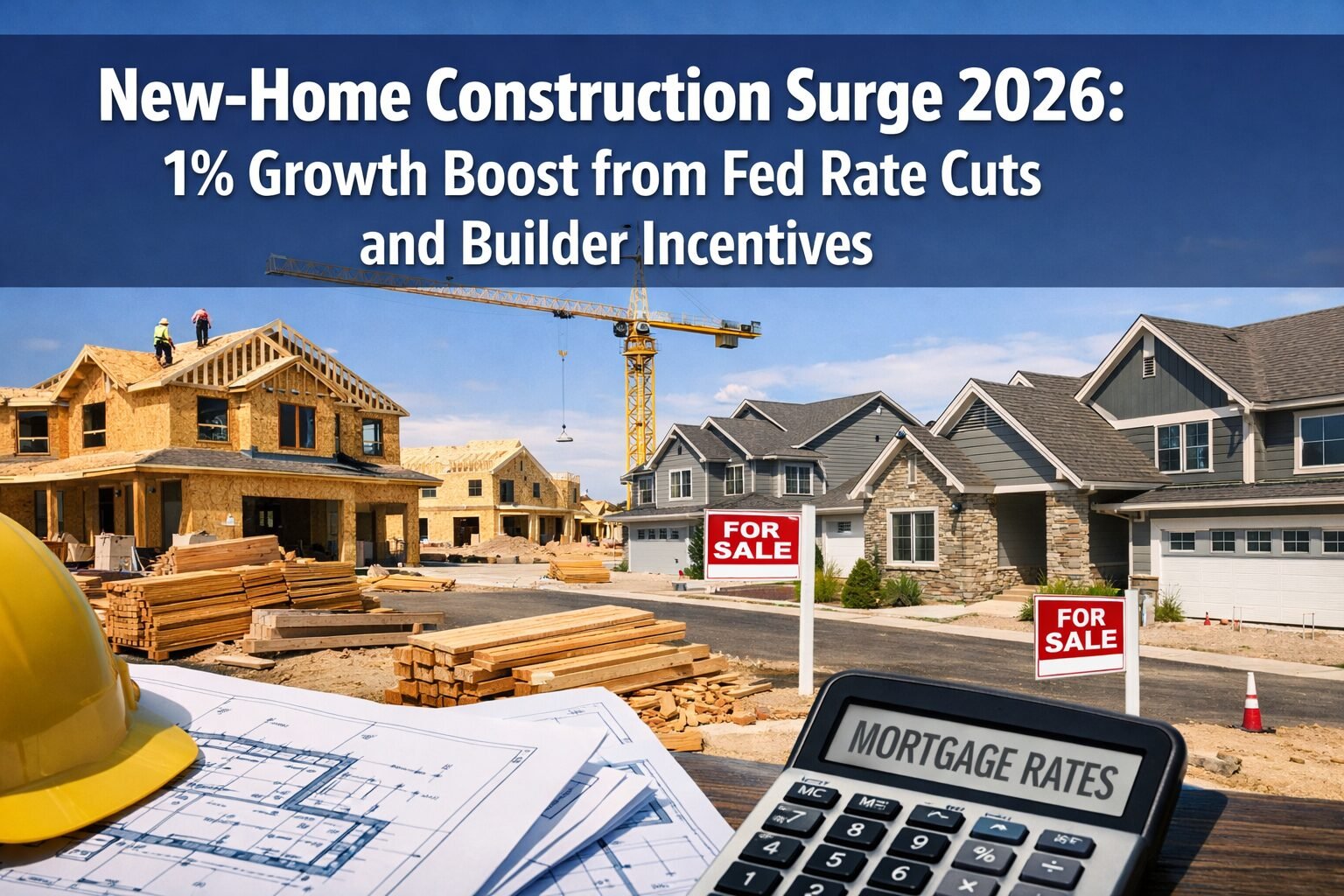

If you've been gatekeeping your home buying dreams because the market felt like an impossible puzzle, 2026 might just be the year to let it cook. The New-Home Construction Surge 2026: 1% Growth Boost from Fed Rate Cuts and Builder Incentives represents a modest but meaningful shift in the housing landscape—one that's creating fresh opportunities for buyers who know where to look. While the National Association of Home Builders (NAHB) projects only a 1.0% growth in single-family starts for 2026, reaching 940,000 units[3], this incremental gain comes with extraordinary builder incentives and improved financing conditions that could make new construction your most strategic play.
The housing market in 2026 isn't delivering the dramatic surge some headlines might suggest, but it's offering something potentially more valuable: strategic opportunities for informed buyers. With December 2025 housing starts rebounding 6.2% monthly to a seasonally adjusted annual rate of 1.404 million units[1][2], builders are cautiously optimistic and increasingly willing to negotiate. This creates an impeccable environment for first-time buyers and savvy investors who understand how to leverage builder incentives against the backdrop of persistent affordability challenges.
Key Takeaways
- Modest but meaningful growth: NAHB forecasts 1.0% growth in single-family construction for 2026, reaching 940,000 units, while multifamily construction faces a 5% decline[3]
- Builder incentives are extraordinary: With builder confidence at 36 in February 2026, sellers are offering mortgage rate buydowns, closing cost assistance, and upgrade packages to move inventory[5]
- New construction offers pricing advantages: Fresh homes come with warranties, customization options, and often better financing terms than competing for limited resale inventory
- Regional hotspots exist: Specific metro areas show stronger construction activity and better opportunities for first-time buyers leveraging builder concessions
- Financing remains challenging: Mortgage rates aren't expected to sustain below 6% until 2027, making builder-assisted financing programs crucial[3]
Understanding the New-Home Construction Surge 2026 Reality Check
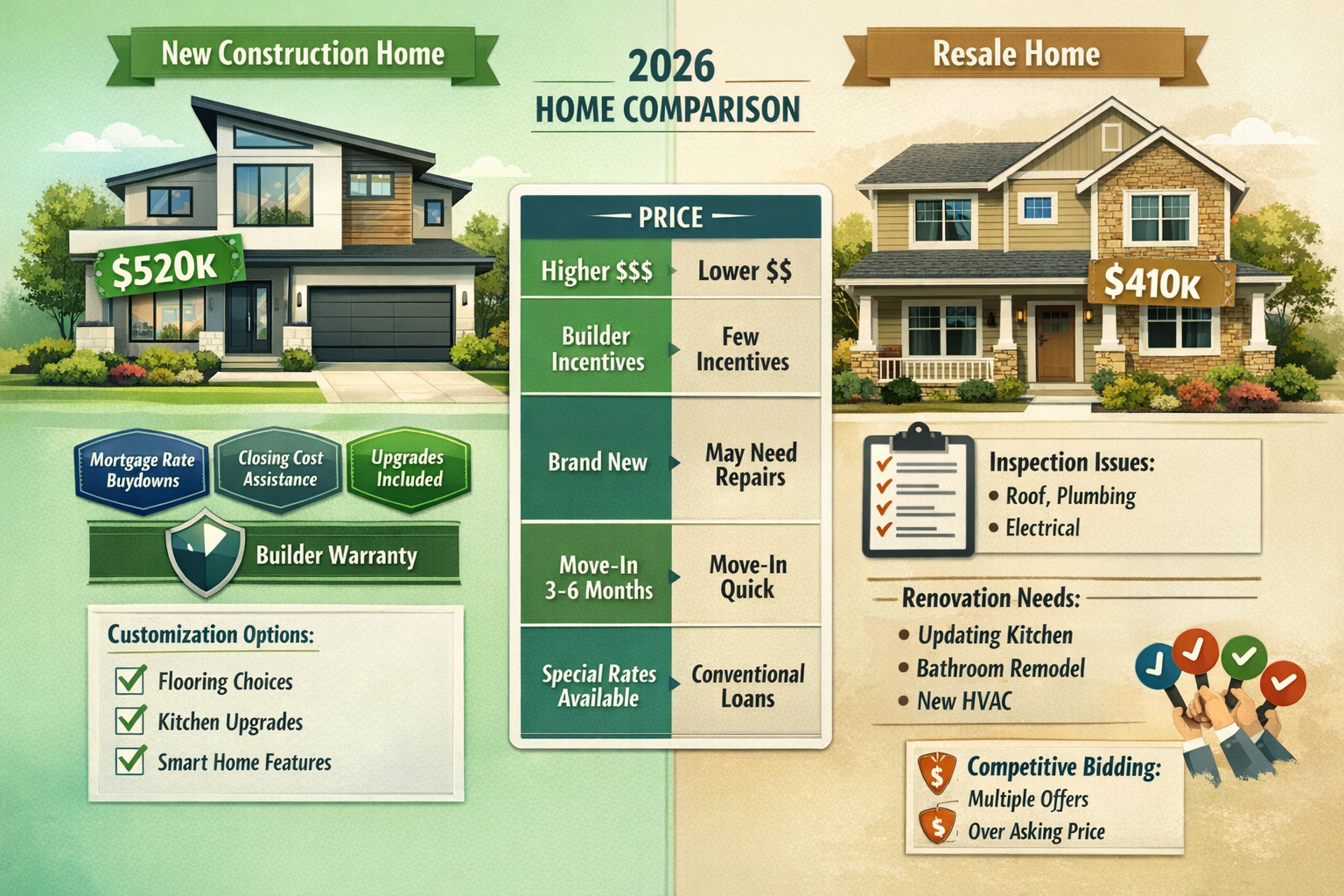
Let's be real about what's happening in 2026. The New-Home Construction Surge 2026: 1% Growth Boost from Fed Rate Cuts and Builder Incentives isn't exactly a construction boom—it's more like a strategic recovery. Full-year 2025 starts totaled 1.36 million units, down 0.6% from 2024[1][2], and full-year 2025 building permits totaled 1.43 million, representing a 3.6% annual decline from 2024[1]. So based on these numbers, calling it a "surge" might seem generous, but the real story lies in the quality of opportunities rather than sheer volume.
The Single-Family Construction Landscape
Single-family starts in December 2025 reached 981,000, up 4.1% monthly[1][2], showing builders' willingness to keep constructing despite affordability headwinds. This matters because new construction inventory has become a critical relief valve in markets where resale homes remain scarce. When you're competing against cash buyers and investors for existing homes, new construction offers a different playing field entirely.
Here's what makes the 2026 construction environment unique:
- Townhouse construction continues gaining market share at a multidecade high of more than 18%[3], offering more affordable entry points than traditional single-family detached homes
- Builder confidence fell to 36 in February 2026[5], meaning sellers are motivated to negotiate and offer concessions
- Nearly 300,000 construction job openings existed in December 2025, with the residential construction sector needing approximately 740,000 new workers annually[3], creating timeline uncertainties that savvy buyers can leverage
The multifamily market tells a different story. Multifamily starts (5+ units) came in at 402,000 in December 2025[1][2], and multifamily starts are expected to fall 5% in 2026 to an annual pace of 392,000 units, with an additional 6% decline projected for 2027[3]. This follows the pandemic-era boom that peaked at 547,000 units in 2022, and reflects tighter financing conditions and rising construction costs that are constraining the multifamily development environment.
Federal Rate Cuts and Construction Financing
The Federal Reserve's monetary policy has created a complex environment for construction financing. While rate cuts have provided some relief, mortgage rates are not expected to sustain below 6% until 2027[3], limiting the immediate affordability improvements many buyers hoped for. This creates an interesting dynamic: builders can access slightly better construction loans, but end buyers still face elevated mortgage rates.
This gap is where builder incentives become so based. Builders with access to better construction financing can offer mortgage rate buydowns, effectively subsidizing buyers' interest rates for the first few years. This strategy helps builders move inventory while giving buyers breathing room on monthly payments—a win-win that wouldn't exist without the current rate environment.
For those exploring mortgage options and real estate market trends, understanding how builder financing works differently from traditional home purchases is crucial.
New Construction vs. Resale: The 2026 Pricing Battle
The New-Home Construction Surge 2026: 1% Growth Boost from Fed Rate Cuts and Builder Incentives creates a fascinating competitive dynamic between new construction and resale homes. Let's break down the real numbers and strategic advantages of each option.
Price Point Comparison
| Category | New Construction | Resale Homes |
|---|---|---|
| Median Price | Typically 10-20% higher base price | Lower list price, but often requires immediate repairs |
| Effective Price | Lower after builder incentives | Higher after bidding wars and inspection-driven negotiations |
| Closing Costs | Often partially or fully covered by builder | Buyer responsibility, negotiable in slow markets |
| Immediate Repairs | None—everything is new with warranty | Average $5,000-$15,000 in first-year repairs |
| Customization | Included or discounted during construction | Costly post-purchase renovations |
The pricing advantage of new construction in 2026 isn't immediately obvious from sticker prices. A new home might list for $425,000 while a comparable resale home lists for $395,000. But when you factor in:
- $10,000-$20,000 in builder-paid closing costs
- Mortgage rate buydowns reducing your effective rate by 1-2% for the first 2-3 years
- $15,000-$30,000 in included upgrades (granite countertops, premium flooring, smart home features)
- Zero immediate repair costs versus the resale home's aging HVAC, roof, or appliances
The new construction home's effective price often comes in lower, with better monthly payment terms. This is extraordinary for first-time buyers who are cash-strapped but income-qualified.
Builder Incentive Packages in 2026
With builder confidence at historically low levels[5], incentive packages have become impeccable. Here's what builders are offering in competitive markets:
Financing Incentives:
- 🏦 Mortgage rate buydowns: 2-1 or 3-2-1 buydowns reducing your rate by 2-3% in year one
- 💰 Closing cost assistance: $5,000-$25,000 depending on home price
- 📋 Preferred lender credits: Additional $2,000-$5,000 for using builder's mortgage partner
Upgrade Incentives:
- 🎨 Free design center upgrades: $10,000-$30,000 in flooring, countertops, fixtures
- 🏡 Lot premiums waived: $5,000-$15,000 savings on corner lots or cul-de-sac locations
- 🔧 Smart home packages: Included security systems, smart thermostats, video doorbells
Timing Incentives:
- ⚡ Quick close bonuses: $5,000-$10,000 for closing within 30-45 days on completed inventory homes
- 🏗️ Spec home discounts: 5-10% off homes already under construction to move inventory faster
These incentives aren't advertised publicly—you need to negotiate and understand what builders in your target market are offering. Working with agents experienced in new construction is crucial, as outlined in our guide on building trust and growing your real estate sphere of influence.
The Hidden Costs of Resale Homes
While resale homes appear cheaper upfront, the total cost of ownership in the first 3-5 years often exceeds new construction. Consider:
- Inspection repairs: Average $8,000-$12,000 in immediate fixes
- Deferred maintenance: Roof, HVAC, water heater replacements averaging $15,000-$25,000 within first 5 years
- Energy inefficiency: Older homes cost $150-$300 more monthly in utilities compared to 2026-built homes with modern insulation and HVAC
- Renovation costs: Most buyers spend $20,000-$50,000 updating kitchens, bathrooms, or flooring to match their preferences
New construction eliminates these costs entirely. Everything comes with warranties (typically 1-year builder warranty, 2-year mechanical systems, 10-year structural), and modern building codes ensure energy efficiency that translates to lower monthly operating costs.
For buyers focused on long-term value, our article on home design trends and architectural styles that boost property value explains how modern construction techniques and design elements appreciate differently than older homes.
Regional Hotspots and Market Opportunities for First-Time Buyers
The New-Home Construction Surge 2026: 1% Growth Boost from Fed Rate Cuts and Builder Incentives isn't distributed evenly across the country. Specific metro areas are experiencing stronger construction activity, better builder incentives, and more favorable conditions for first-time buyers. Let's identify where the fresh opportunities exist.
Top Metro Markets for New Construction in 2026
While comprehensive 2026 data is still emerging, construction patterns from late 2025 and early 2026 reveal clear winners:
Sunbelt Dominance Continues:
- 🌵 Phoenix, Arizona: Strong job growth, affordable land, and builder-friendly regulations keep construction active despite national slowdowns
- 🌴 Tampa-St. Petersburg, Florida: Population influx and limited resale inventory drive new construction demand
- 🤠 Austin, Texas: Tech sector growth and no state income tax attract buyers; builders offer aggressive incentives to compete
- ⛰️ Boise, Idaho: Remote work migration continues; townhouse construction particularly strong at 20%+ market share
- 🏔️ Charlotte, North Carolina: Banking sector growth and affordable cost of living support steady construction activity
Midwest Value Markets:
- 🌽 Indianapolis, Indiana: Exceptional affordability with new construction median prices $50,000-$75,000 below coastal markets
- 🏈 Columbus, Ohio: University and healthcare sector stability; builders offering 3-2-1 buydowns to compete
- 🌾 Des Moines, Iowa: Underrated market with strong job growth and builder inventory that needs to move
Secondary Markets with Opportunity:
- 🎸 Nashville, Tennessee: High resale prices make new construction competitively priced after incentives
- ⚓ Charleston, South Carolina: Limited land creates scarcity; builders in suburbs offering better deals than downtown resale
- 🏀 Raleigh-Durham, North Carolina: Research Triangle job growth supports construction despite higher interest rates
What Makes a Market "Hot" for New Construction Buyers
Not all construction activity benefits buyers equally. The best markets for leveraging the New-Home Construction Surge 2026 share these characteristics:
✅ Builder inventory exceeding absorption rates: When builders have more completed or near-completion homes than buyers, incentive packages improve dramatically
✅ Multiple competing builders: Markets with 8-12+ active builders create competitive pressure that benefits buyers through better pricing and concessions
✅ Job growth outpacing housing supply: Employment growth of 2%+ annually with housing starts lagging creates fundamental demand that supports values
✅ Reasonable land costs: Markets where land represents 15-25% of total home cost (versus 40-50% in coastal markets) allow builders more flexibility on pricing
✅ Townhouse and attached home construction: Markets embracing higher-density single-family products offer better entry-level pricing
For investors evaluating these markets, our comprehensive guide on real estate investment strategies provides frameworks for analyzing regional opportunities.
First-Time Buyer Strategies by Market Type
Your approach should vary based on market conditions:
In High-Inventory Builder Markets (Phoenix, Tampa, Boise):
- 💪 Negotiate aggressively: Builders need to move inventory; ask for maximum closing cost assistance and upgrades
- ⏰ Target spec homes: Completed inventory homes offer immediate move-in and strongest incentives
- 🎯 Play builders against each other: Get quotes from 3-4 builders in the same community to leverage competition
In Balanced Markets (Charlotte, Columbus, Indianapolis):
- 📋 Focus on to-be-built homes: Select your lot and floor plan for better customization without paying premium for quick inventory
- 🤝 Build relationships with sales agents: Repeat visits and genuine interest often unlock "unadvertised" incentives
- 💳 Use preferred lenders strategically: Builder-affiliated lenders often provide best rate buydowns and closing cost credits
In Supply-Constrained Markets (Nashville, Charleston, Coastal California):
- 🏘️ Expand geographic search: Look 15-20 miles further from urban core where land costs allow better builder pricing
- 🏠 Consider townhouses: The 18%+ market share of townhouse construction[3] creates more inventory and better pricing than detached homes
- ⚡ Act quickly on releases: New phase releases in popular communities sell fast; be pre-approved and ready to commit
The Labor Shortage Impact on Timelines
Here's something builders won't advertise: the residential construction sector needs approximately 740,000 new workers annually to maintain growth and replace departures[3], with nearly 300,000 construction job openings in December 2025 alone. This labor shortage creates:
- Extended build timelines: 6-8 months becoming 9-12 months for completion
- Quality control concerns: Rushed work to meet deadlines can compromise craftsmanship
- Negotiation opportunities: Builders behind schedule may offer incentives to buyers willing to wait
Smart buyers use this to their advantage by:
- Negotiating completion date penalties: $100-$200 per day if builder misses contracted completion date
- Requesting additional inspections: Third-party inspections at framing, mechanical rough-in, and pre-closing stages
- Building buffer time: If you need to move by a specific date, don't cut timeline too close
For those preparing to navigate the home buying process, our best home buying sites guide includes resources specifically for new construction searches.
Material Costs and Builder Profitability: The Hidden Market Forces
Understanding the economics behind the New-Home Construction Surge 2026: 1% Growth Boost from Fed Rate Cuts and Builder Incentives requires looking at what builders face on the cost side. Building material prices have grown above 3% since June 2025 despite weakness in the new residential construction market[3], creating a profit squeeze that directly impacts buyer opportunities.
The Material Cost Paradox
It seems counterintuitive: construction activity is down, yet material costs are rising. Here's what's happening:
Supply Chain Factors:
- 🌲 Lumber: Volatile pricing due to Canadian tariff uncertainties and wildfire impacts on supply
- 🔩 Steel and metals: Global demand from infrastructure projects keeping prices elevated
- 🧱 Concrete and masonry: Labor-intensive production facing same worker shortage as construction trades
- 🪟 Windows and doors: Manufacturing capacity hasn't expanded to meet pandemic-era demand surge
Inflation and Transportation:
- 🚚 Diesel costs remain 20-30% above pre-pandemic levels
- 📦 Shipping and logistics costs haven't fully normalized
- 💵 General inflation in manufacturing sector pushing all inputs higher
This cost pressure means builders have squeezed margins in 2026. Public builders are reporting gross margins of 19-22% (down from 24-26% in 2021-2022), while private builders face even tighter constraints. This creates the extraordinary incentive environment—builders would rather offer $20,000 in buyer incentives than drop base prices that would reset comps and hurt future margins.
How Savvy Buyers Leverage Builder Economics
Understanding builder profitability creates negotiation leverage:
Timing Your Purchase:
- 📅 Quarter-end pushes: Public builders face Wall Street pressure to hit quarterly closing targets; negotiate hardest in late March, June, September, December
- 🎄 Holiday periods: November-December and July-August see slower traffic; builders more willing to negotiate
- 📊 Inventory aging: Spec homes sitting 90+ days become "problem inventory" with maximum incentive potential
What Builders Can't Discount (But Will Subsidize):
- Base home prices (affects comps and future sales)
- Lot premiums (affects land valuation)
What Builders Will Discount:
- Upgrades (high markup items they can discount 30-50%)
- Closing costs (one-time expense that doesn't affect base price)
- Rate buydowns (financed through lender, not direct builder cost)
Negotiation Strategy:
Instead of asking for $20,000 off the base price, ask for:
- $10,000 in closing cost assistance
- $15,000 in design center upgrades
- 2-1 mortgage rate buydown (worth $8,000-$12,000 in monthly payment savings over two years)
Total value: $33,000-$37,000 versus the $20,000 discount they'd never give on base price.
For sellers looking to understand market dynamics from the other side, our ultimate home selling strategies provide comparable insights into pricing and negotiation psychology.
Multifamily Construction Decline: What It Means for Renters and Investors
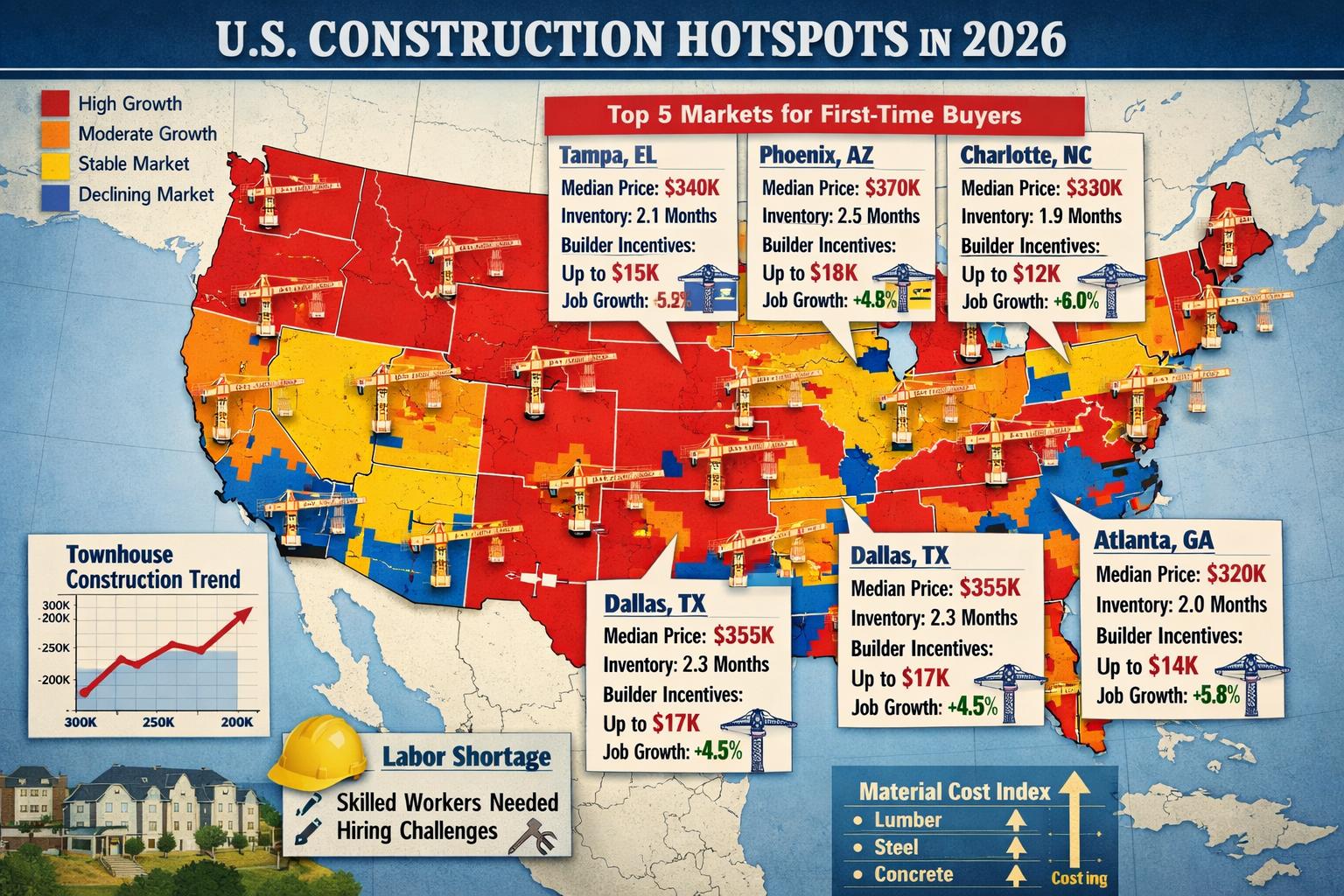
While single-family construction shows modest growth, the multifamily market is constrained by tighter financing and rising construction costs[3], with starts expected to fall 5% in 2026 to 392,000 units and decline an additional 6% in 2027. This matters enormously for both renters considering buying and investors evaluating opportunities.
The Multifamily Slowdown Explained
Multifamily construction boomed during the pandemic, peaking at 547,000 units in 2022[3]. That surge created:
- Oversupply in some markets: Luxury apartment glut in Austin, Nashville, Phoenix
- Rent stabilization or decline: Class A rents down 5-10% in oversupplied markets
- Financing challenges: Higher interest rates making development pro formas unworkable
- Construction cost increases: Multifamily projects more sensitive to labor and material cost inflation
The 2026 decline represents a market correction that will eventually tighten rental supply and push rents higher in 2027-2028, creating urgency for renters considering homeownership.
Rent vs. Buy Decision in 2026
For renters evaluating whether to jump into homeownership during the New-Home Construction Surge 2026, the math is getting more favorable:
Rental Market Trends:
- 📈 Rents stabilizing or declining in oversupplied markets (2026)
- 📈 Rents expected to rise 4-6% annually starting 2027 as new supply dries up
- 🏢 Landlords offering concessions (1-2 months free) to fill vacancies in competitive markets
Homeownership Math:
- 🏠 New construction with builder incentives creating effective monthly payments competitive with rent
- 💰 Mortgage rate buydowns making first 2-3 years especially affordable
- 📊 Building equity versus paying landlord's mortgage
- 🔒 Payment stability (fixed-rate mortgage) versus annual rent increases
Example Scenario:
- Renting: $2,200/month for 2-bedroom apartment, increasing 5% annually
- Buying new construction: $385,000 home, 5% down ($19,250), with builder-paid closing costs and 3-2-1 buydown
- Year 1: $2,150/month (3% below market rate)
- Year 2: $2,380/month (2% below market rate)
- Year 3: $2,610/month (1% below market rate)
- Year 4+: $2,840/month (market rate)
After 5 years:
- Renter: Paid $140,000+ in rent, owns nothing
- Buyer: Paid $145,000 in mortgage payments, owns ~$60,000-$80,000 in equity (depending on appreciation and principal paydown)
Our detailed analysis on whether to rent or buy in 2026 explores these scenarios across different markets and buyer profiles.
Investor Opportunities in the Multifamily Slowdown
For real estate investors, the multifamily construction decline creates specific opportunities:
Buy Existing Multifamily:
- 🏢 Developers who overbuilt in 2022-2023 facing cash flow pressure
- 💵 Potential to acquire below replacement cost
- ⏰ 2-3 year hold until supply-demand rebalances and rents rise
Single-Family Rentals:
- 🏘️ New construction townhouses and single-family homes make excellent rentals
- 👨👩👧👦 Renters priced out of apartments seeking single-family options
- 📈 Less competition from new multifamily supply
Build-to-Rent Communities:
- 🏗️ Emerging asset class combining single-family living with rental convenience
- 💰 Institutional capital flowing into this sector as multifamily development slows
- 🎯 Targets renters who want yards and space but aren't ready to buy
For investors exploring these strategies, our comprehensive guide on real estate investment strategies for a global market provides frameworks for evaluating opportunities.
Financing Strategies: Making the Most of Builder-Assisted Programs
The New-Home Construction Surge 2026: 1% Growth Boost from Fed Rate Cuts and Builder Incentives creates unique financing opportunities that don't exist in resale transactions. Understanding how to leverage builder-affiliated lenders and creative financing structures is crucial.
Builder-Preferred Lender Advantages
Builders partner with specific mortgage lenders for good reasons—and buyers can benefit:
Why Builders Prefer Certain Lenders:
- ⚡ Faster closing timelines: Builder-lender coordination streamlines the process
- 📋 Construction loan familiarity: Understanding of builder-specific documentation and timelines
- 💰 Incentive funding: Lenders contribute to buyer incentive packages to win builder relationships
Buyer Benefits:
- 💵 Additional closing cost credits: $2,000-$5,000 beyond standard builder incentives
- 📉 Better rate buydown terms: 3-2-1 buydowns that might not be available through outside lenders
- 🔄 Flexibility on contingencies: Builder-lender teams can coordinate timing better than third parties
Potential Drawbacks:
- ❓ Possibly higher base rates: Preferred lender's standard rates might be 0.125-0.25% higher than best available
- 🔒 Less negotiation leverage: Builder incentives often contingent on using preferred lender
- 📊 Limited product options: Preferred lender might not offer every loan program
The Rate Buydown Strategy
With mortgage rates not expected to sustain below 6% until 2027[3], temporary rate buydowns are the most impeccable financing tool in 2026:
2-1 Buydown:
- Year 1: Rate reduced by 2% (e.g., 6.5% becomes 4.5%)
- Year 2: Rate reduced by 1% (e.g., 6.5% becomes 5.5%)
- Year 3+: Full rate (6.5%)
3-2-1 Buydown:
- Year 1: Rate reduced by 3% (e.g., 6.5% becomes 3.5%)
- Year 2: Rate reduced by 2% (e.g., 6.5% becomes 4.5%)
- Year 3: Rate reduced by 1% (e.g., 6.5% becomes 5.5%)
- Year 4+: Full rate (6.5%)
Cost and Who Pays:
- Buydown cost: Typically $8,000-$15,000 depending on loan amount and buydown structure
- Builder usually pays: Part of incentive package to make monthly payments affordable
- Buyer benefit: Lower payments during first 2-3 years to build savings, adjust to homeownership costs
Strategic Refinance Plan:
If rates drop below 6% in 2027-2028 as projected, buyers who locked in 6.5% with a buydown can refinance to a permanent lower rate, effectively getting the best of both worlds—low payments now AND later.
For first-time buyers navigating these complex financing options, our fast-track homeownership guide with pre-approval tips provides essential preparation steps.
Alternative Financing Structures
Beyond traditional mortgages and rate buydowns, creative financing options exist in new construction:
Builder Financing Programs:
- 🏦 Some large builders (D.R. Horton, Lennar) offer in-house financing with unique terms
- 💰 Can include deferred payment structures or graduated payment mortgages
- ⚠️ Read fine print carefully—terms might include prepayment penalties or balloon payments
Lease-Purchase Arrangements:
- 🏠 Rent the new home for 1-2 years with option to purchase
- 💵 Portion of rent credits toward down payment
- ⏰ Gives time to improve credit, save additional funds, or wait for rate improvements
- ⚠️ Ensure contract clearly specifies purchase price and credit terms
Assumable Mortgages:
- 🔄 If builder used FHA or VA financing for spec homes, loans might be assumable
- 📉 Rare but possible to assume a lower rate from builder's construction loan
- 💰 Requires paying builder's equity in cash
Down Payment Assistance Programs:
- 🏛️ Many states and municipalities offer DPA for new construction
- 💵 $5,000-$25,000 in grants or forgivable loans
- 📋 Income limits typically $75,000-$125,000 depending on area
- 🎯 Builders often know which programs work in their communities
Our guide on top down payment strategies ranks these and other approaches for maximizing buying power.
Quality Control and Warranty Considerations in New Construction
The New-Home Construction Surge 2026: 1% Growth Boost from Fed Rate Cuts and Builder Incentives comes with a critical caveat: the labor shortage of 740,000 needed workers annually[3] impacts construction quality. Smart buyers implement quality control measures to protect their investment.
The Labor Shortage Quality Impact
When builders can't find enough skilled tradespeople:
- ⚠️ Less experienced workers: Apprentices and new hires replacing veteran craftspeople
- ⏰ Rushed timelines: Pressure to complete homes quickly to meet closing commitments
- 🔄 Subcontractor turnover: Frequent changes in who's doing the work
- 📉 Quality inconsistency: Same builder, same floor plan, different quality depending on crew
This doesn't mean new construction is poor quality—it means buyers must be proactive about inspections and quality verification.
Essential Inspection Points
During Construction (if possible):
- Foundation inspection: Before concrete pour, verify proper grading, rebar placement, moisture barriers
- Framing inspection: Check lumber quality, proper spacing, structural elements before drywall
- Mechanical rough-in: Verify HVAC ducting, plumbing, electrical before walls close
- Insulation inspection: Ensure proper R-value and complete coverage before drywall
Pre-Closing Inspection:
- 🔍 Hire independent inspector: Don't rely solely on builder's inspections
- 💰 Cost: $400-$600, best money you'll spend
- 📋 Create punch list: Document every issue, no matter how minor
- ⏰ Schedule 7-10 days before closing: Gives builder time to address issues
Common New Construction Issues:
- Drywall cracks from settling (cosmetic but should be repaired)
- HVAC imbalance (some rooms too hot/cold)
- Plumbing leaks (especially at fixtures and connections)
- Electrical issues (outlets not working, switches wired incorrectly)
- Exterior grading problems (water pooling near foundation)
- Incomplete or sloppy finish work (paint, trim, caulking)
Understanding Builder Warranties
Typical Warranty Structure:
- 🏠 1-year comprehensive: Everything in the home (workmanship and materials)
- 🔧 2-year mechanical systems: HVAC, plumbing, electrical
- 🏗️ 10-year structural: Foundation, framing, major structural elements
What's Usually NOT Covered:
- ❌ Cosmetic issues after acceptance
- ❌ Normal wear and tear
- ❌ Homeowner-caused damage
- ❌ Landscaping and irrigation (often separate 30-90 day warranty)
- ❌ Appliances (covered by manufacturer warranty, not builder)
Warranty Claim Best Practices:
- 📸 Document everything: Photos, videos, written descriptions
- 📧 Submit in writing: Email creates paper trail
- ⏰ Act quickly: Don't wait until warranty is about to expire
- 👥 Be reasonable: Distinguish between defects and personal preferences
- 💪 Be persistent: Follow up if builder doesn't respond within 7-10 days
For buyers preparing their homes for eventual resale, understanding these warranty and quality factors helps with future home selling strategies.
Energy Efficiency and Long-Term Operating Costs
One of the most underrated advantages in the New-Home Construction Surge 2026: 1% Growth Boost from Fed Rate Cuts and Builder Incentives is the energy efficiency of modern construction. This translates to significant long-term savings that offset higher purchase prices.
2026 Building Code Advantages
Modern building codes require:
- 🏠 Superior insulation: R-15 to R-21 in walls, R-38 to R-60 in attics (versus R-11 and R-19 in older homes)
- 🪟 Energy-efficient windows: Low-E double or triple-pane (versus single-pane in homes built before 2000)
- ❄️ High-efficiency HVAC: 16+ SEER rating (versus 10-13 in older systems)
- 💡 LED lighting: Standard in new construction, uses 75% less energy than incandescent
- 🚰 Low-flow fixtures: Water conservation built in
- 🔌 Modern electrical: 200-amp service supporting efficient appliances and future EV charging
Monthly Cost Comparison
Typical 2,000 sq ft home operating costs:
| Expense | New Construction (2026) | Resale Home (Built 2005) | Monthly Savings |
|---|---|---|---|
| Heating/Cooling | $120-$150 | $220-$280 | $100-$130 |
| Water/Sewer | $60-$80 | $80-$110 | $20-$30 |
| Electricity (other) | $40-$60 | $70-$100 | $30-$40 |
| Maintenance/Repairs | $50-$100 | $200-$400 | $150-$300 |
| Total | $270-$390 | $570-$890 | $300-$500 |
Annual savings: $3,600-$6,000
Over a 30-year mortgage, that's $108,000-$180,000 in operating cost savings—more than enough to offset a higher purchase price.
Solar and Renewable Energy Options
Many builders in 2026 offer solar packages:
- ☀️ Included solar: Some builders (especially in California, Arizona, Texas) include solar as standard
- 💰 Solar financing: Rolled into mortgage at better rates than standalone solar loans
- 🔋 Battery storage: Increasingly common in areas with time-of-use electricity rates
- ⚡ EV charging: Pre-wired for Level 2 home charging stations
Financial Analysis:
- Solar system cost: $15,000-$25,000 (financed in mortgage)
- Monthly mortgage increase: $75-$125
- Monthly electricity savings: $100-$200
- Net monthly benefit: $0-$125 (plus environmental benefits)
For homeowners interested in sustainable upgrades, our guide on green building materials and insulation upgrades explores additional efficiency opportunities.
Real Estate Agent Strategies for the New Construction Market
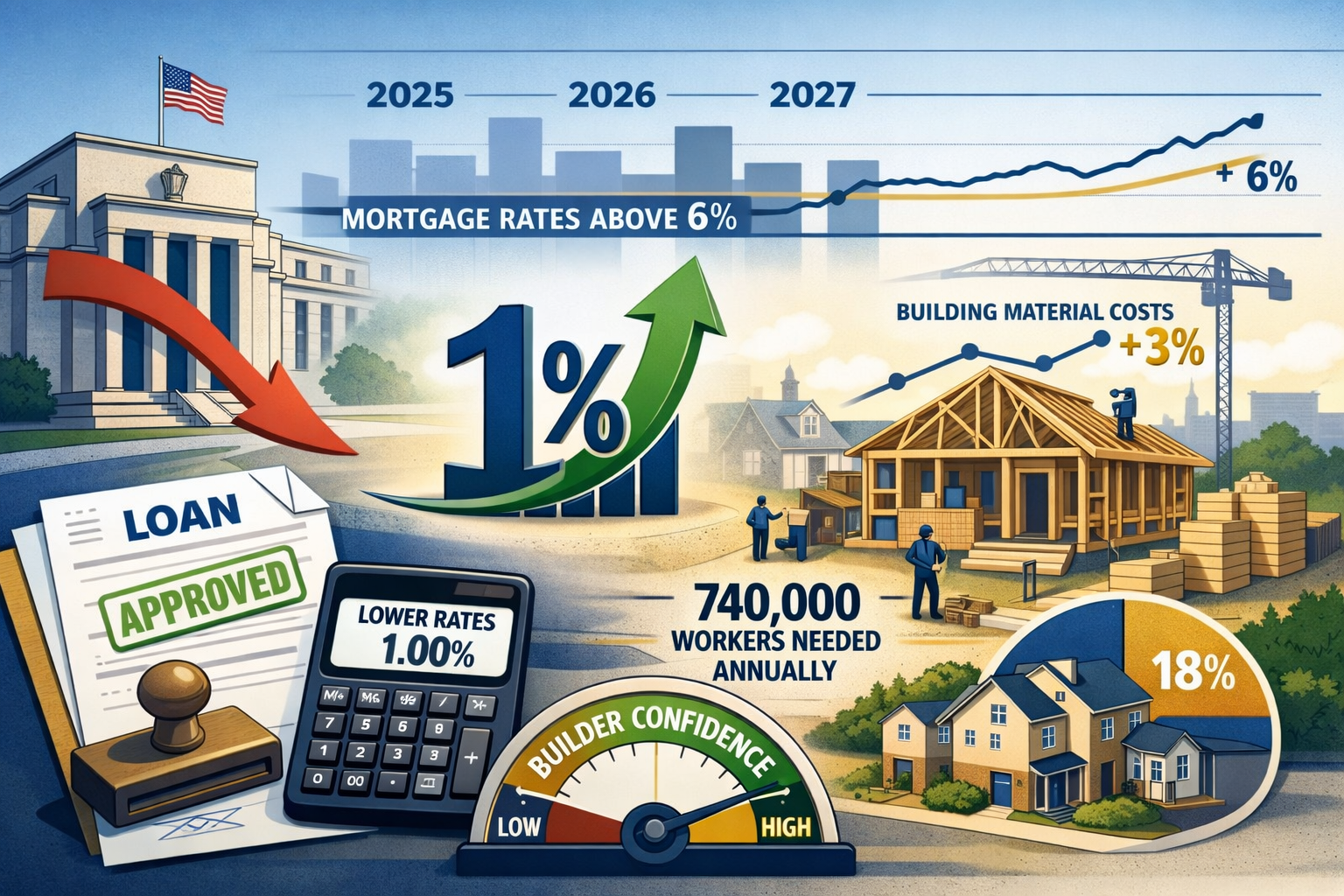
The New-Home Construction Surge 2026: 1% Growth Boost from Fed Rate Cuts and Builder Incentives creates unique opportunities and challenges for real estate agents. Understanding how to effectively represent buyers in new construction transactions is crucial for agent success.
Why Buyer Representation Matters in New Construction
Many buyers mistakenly believe they'll get a better deal by working directly with the builder's sales agent. This is rarely true because:
- 💰 Commission is already built in: Builders budget 2.5-3% for buyer agent commission
- ⚖️ Builder's agent represents builder: Their loyalty is to the seller, not you
- 🤝 Buyer's agent adds leverage: Professional representation strengthens negotiation position
- 📋 Contract expertise: New construction contracts heavily favor builders; experienced agents protect buyer interests
Agent Value Proposition:
- Navigate complex builder contracts and addendums
- Negotiate incentive packages and upgrades
- Coordinate inspections and quality control
- Manage timeline and construction delays
- Ensure warranty claims are properly documented
Agent Best Practices for New Construction
Pre-Visit Preparation:
- 📞 Call sales office first: Register your buyer before they visit to ensure commission protection
- 📧 Get registration confirmed in writing: Avoid disputes about who brought the buyer
- 📋 Research builder reputation: Check BBB, online reviews, local agent networks
During Model Home Visits:
- 👥 Attend with your client: Show builders your buyer has professional representation
- 📝 Take detailed notes: Document promises, incentives, timelines discussed
- 🎯 Ask strategic questions: Construction timeline, warranty details, incentive flexibility, lot availability
Negotiation Strategy:
- 💪 Leverage competing builders: Get quotes from multiple builders to create competitive pressure
- 📊 Know the market: Research builder's inventory levels, sales pace, and pressure points
- 🎁 Focus on incentives over price: Builders more flexible on upgrades and closing costs than base price
- ⏰ Time negotiations strategically: Quarter-end, month-end, and holiday periods offer best leverage
Contract Review:
- ⚖️ Engage real estate attorney: Builder contracts need legal review, especially in non-attorney states
- ⏱️ Negotiate completion dates: Include penalties for builder delays
- 🔍 Clarify upgrade allowances: Get specific dollar amounts and approved vendors in writing
- 🏠 Verify included features: Ensure model home features match what's included in base price
For agents looking to expand their new construction expertise, our article on building your referral empire with networking secrets includes strategies for developing builder relationships.
Marketing New Construction to Buyers
Positioning New Construction Advantages:
- ✨ Customization: "Design your dream home from the ground up"
- 🛡️ Warranty protection: "Move-in ready with 10-year peace of mind"
- 💰 Incentive packages: "Builder paying $20K in closing costs—like getting a discount without affecting your home's value"
- ⚡ Energy efficiency: "Save $300-$500 monthly in operating costs versus resale homes"
- 🏡 Modern living: "Smart home technology, open floor plans, and contemporary design standard"
Overcoming Buyer Objections:
- 😟 "New construction costs more": Show total cost of ownership including repairs, energy, and incentives
- ⏰ "I don't want to wait 6-9 months": Highlight spec homes and quick-delivery inventory
- 😰 "I'm worried about quality": Explain inspection process and warranty coverage
- 🤔 "I prefer established neighborhoods": Show new communities with amenities and master planning
For agents seeking to improve their marketing effectiveness, our guide on AI marketing tools for real estate agents in 2026 includes strategies specifically applicable to new construction marketing.
Conclusion: Actionable Steps to Capitalize on the 2026 New Construction Market
The New-Home Construction Surge 2026: 1% Growth Boost from Fed Rate Cuts and Builder Incentives may not be the dramatic boom some headlines suggest, but it represents a strategic opportunity for informed buyers, savvy investors, and professional agents who understand the market dynamics at play.
Let's be clear: this isn't about waiting for perfect conditions that may never arrive. Mortgage rates won't sustain below 6% until 2027[3], affordability challenges persist, and the labor shortage of 740,000 needed workers annually[3] creates timeline and quality uncertainties. But for those willing to navigate these challenges, the combination of builder incentives, improved inventory, and strategic financing options creates extraordinary value.
For Home Buyers: Your Action Plan
Immediate Steps (Next 30 Days):
- 🏦 Get pre-approved with multiple lenders: Compare conventional, FHA, VA, and builder-preferred lenders to understand your options
- 🎯 Identify target markets: Research the regional hotspots discussed in this article—Phoenix, Tampa, Austin, Boise, Charlotte, Indianapolis, Columbus
- 📍 Visit 3-5 builders: Tour model homes, ask about incentive packages, and register with a buyer's agent
- 💰 Calculate total cost of ownership: Use our comparison framework to evaluate new construction versus resale homes
- 📋 Research down payment assistance: Many programs specifically support new construction purchases
Within 90 Days:
- 🤝 Negotiate incentive packages: Focus on closing cost assistance, rate buydowns, and upgrade credits rather than base price reductions
- 🔍 Hire independent inspector: Budget $400-$600 for professional quality verification
- 📊 Compare at least 3 builders: Create competitive pressure to maximize incentives
- ⚡ Consider spec homes: Completed inventory offers strongest incentives and immediate occupancy
- 📝 Review contracts with attorney: Protect yourself from builder-favorable terms
Long-Term Strategy:
- 🏠 Plan for 5+ year hold to build equity and weather market fluctuations
- 💵 Maintain emergency fund for unexpected expenses despite warranty coverage
- 📈 Monitor refinance opportunities if rates drop below 6% in 2027-2028
- 🔧 Document all warranty claims and maintain relationship with builder service department
For buyers ready to take action, our best home buying sites guide provides resources to begin your search.
For Real Estate Investors: Strategic Opportunities
Single-Family Rental Strategy:
- 🏘️ Target townhouse construction in high-growth markets
- 💰 Leverage builder incentives to reduce acquisition costs
- 🎯 Focus on markets where multifamily oversupply pushes renters to single-family options
- 📊 Underwrite conservatively: 1.2%+ debt service coverage ratio minimum
Multifamily Value-Add:
- 🏢 Identify developers who overbuilt in 2022-2023 and face cash flow pressure
- ⏰ Plan 2-3 year hold until supply-demand rebalances
- 📈 Position for rent growth when new construction declines 5-6% annually[3]
Build-to-Rent Development:
- 🏗️ Partner with builders on dedicated rental communities
- 💵 Institutional capital increasingly available for this asset class
- 🎯 Target suburban markets with strong job growth
For investors seeking comprehensive frameworks, our real estate investment strategies guide provides detailed analysis methodologies.
For Real Estate Agents: Building New Construction Expertise
Skill Development:
- 📚 Learn builder contracts, construction timelines, and warranty structures
- 🤝 Develop relationships with 5-10 local builders
- 🎓 Consider new construction specialist certifications (NAHB, local builder associations)
Business Development:
- 🎯 Position yourself as the local new construction expert
- 📱 Create content comparing new construction versus resale in your market
- 💼 Develop referral relationships with builders' sales teams
- 📊 Track builder inventory, incentives, and sales pace systematically
Client Service Excellence:
- ⚡ Register buyers immediately to protect commission
- 🔍 Coordinate independent inspections at key construction phases
- 📋 Maintain detailed documentation of all promises and incentives
- 🛡️ Advocate aggressively for quality and warranty issues
For agents committed to growth, our guide on growing your sphere of influence with modern strategies includes new construction networking tactics.
The Bottom Line
The New-Home Construction Surge 2026: 1% Growth Boost from Fed Rate Cuts and Builder Incentives won't solve the housing affordability crisis, but it creates tactical opportunities for those who act strategically. Builder confidence at 36[5], combined with inventory pressure and competitive dynamics, means incentive packages are impeccable right now.
Don't wait for perfect market conditions—they don't exist. Instead, leverage the tools, strategies, and insights in this guide to make informed decisions that align with your financial goals and timeline. Whether you're a first-time buyer tired of renting, an investor seeking cash flow opportunities, or an agent building expertise, the 2026 new construction market offers fresh possibilities for those willing to let it cook.
The question isn't whether the market is perfect—it's whether you're prepared to capitalize on the opportunities that exist right now. So based on everything we've covered, the answer should be clear: get educated, get pre-approved, and get moving.
About Real Estate Rank IQ
Real Estate Rank IQ is a real estate education platform built to inform and inspire with expert-backed, actionable content. Our articles are written by licensed brokers with over 15 years of experience, providing clear, step-by-step guidance on real estate market trends, home buying and selling strategies, property investment tactics, and financial education fundamentals.
Need personalized guidance? Contact us at news@realestaterankiq.com or visit Real Estate Rank IQ for comprehensive resources on navigating the 2026 housing market.
References
[1] 02182026 Housing Starts Building Permits New Residenti – https://www.mortgagenewsdaily.com/news/02182026-housing-starts-building-permits-new-residenti
[2] Newresconst – https://www.census.gov/construction/nrc/pdf/newresconst.pdf
[3] 2026 Housing Outlook Ongoing Challenges Cautious Optimism And Incremental Gains – https://www.nahb.org/news-and-economics/press-releases/2026/02/2026-housing-outlook-ongoing-challenges-cautious-optimism-and-incremental-gains
[5] eyeonhousing – https://eyeonhousing.org/2026/02/17/