


nn

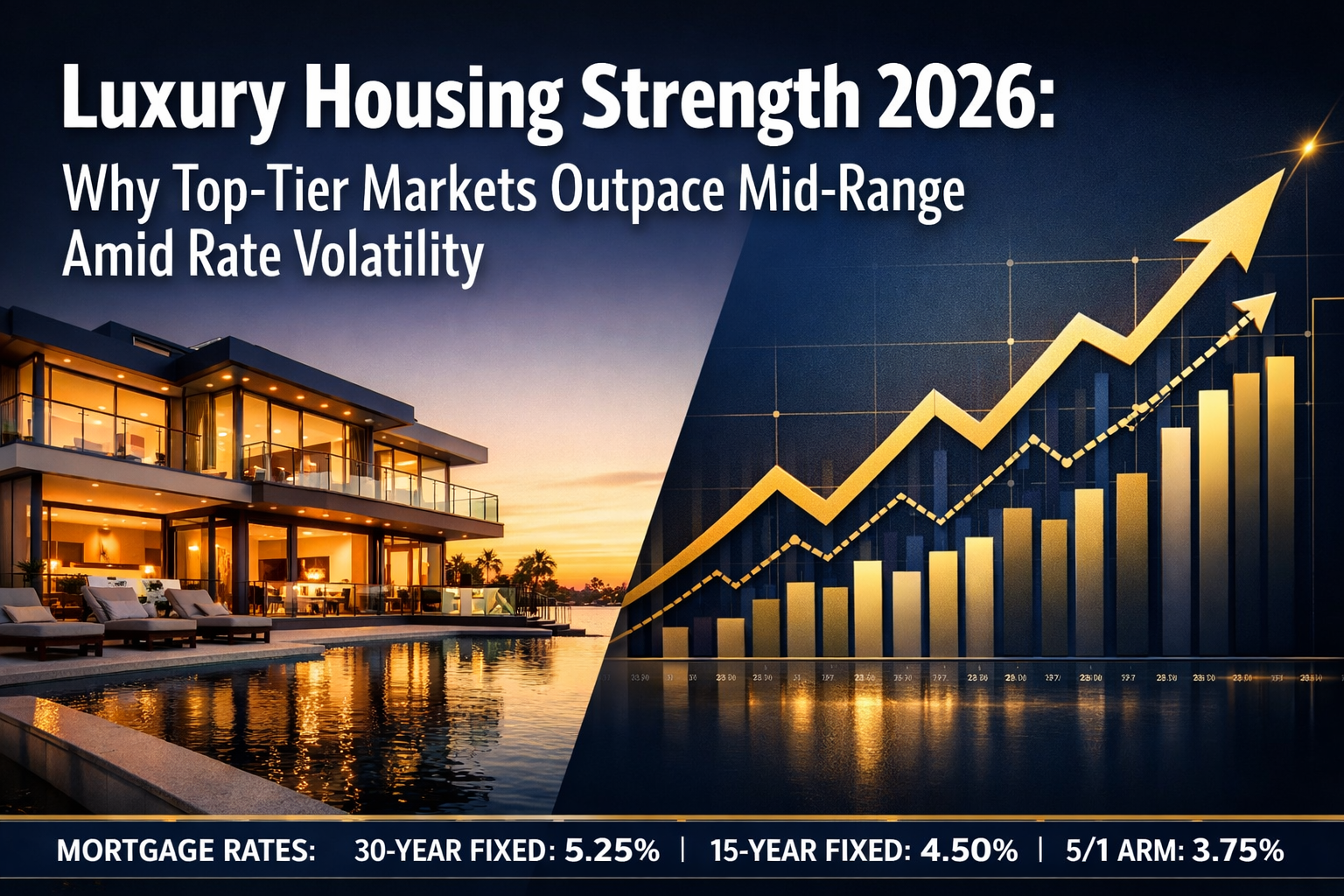
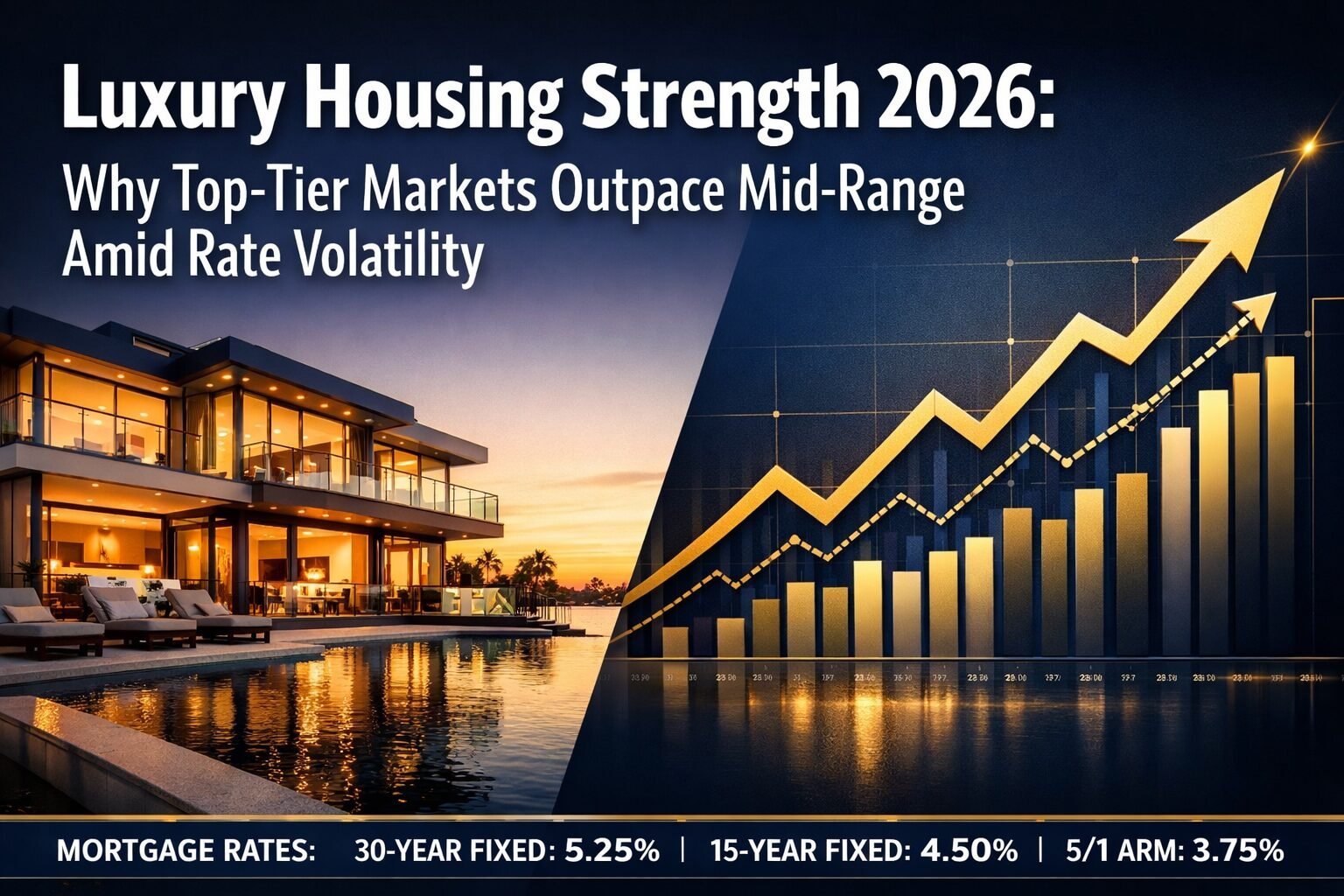
The luxury real estate market just pulled off something extraordinary in early 2026—and it's leaving mid-range properties in the dust. While mortgage rates hover stubbornly above 6% and the broader housing market grapples with affordability challenges, Luxury Housing Strength 2026: Why Top-Tier Markets Outpace Mid-Range Amid Rate Volatility reveals a fascinating divergence: high-end sales volumes grew approximately 8% year-over-year despite flat transaction counts, as affluent buyers continue purchasing premium properties with cash and alternative financing that renders traditional rate concerns nearly irrelevant.
This isn't your typical market cycle. The North American luxury segment entered 2026 "from a position of growing maturity—one shaped by balance, structural drivers and long-term decision-making rather than short-term speculation,"[1] according to industry analysis. January 2026 activity closely mirrored January 2025's unusually strong performance, "reinforcing resilience rather than signaling a slowdown,"[1] with single-family luxury sales declining only 1.4% year-over-year while attached properties fell just 6.2%.[1]
Translation? The wealthy are still buying—and they're paying premium prices that continue climbing even as conventional markets stagnate. Let it cook, because this trend is reshaping regional dynamics, buyer demographics, and agent strategies in ways that demand attention from anyone operating in real estate's upper echelons.
Key Takeaways
- 💰 Luxury sales values surged approximately 8% despite near-flat transaction volumes, demonstrating pricing power that mid-range properties cannot match in 2026's rate environment
- 🏦 Cash purchases and private banking solutions insulate luxury buyers from rate volatility, with mortgage rates playing a secondary role in timing rather than demand
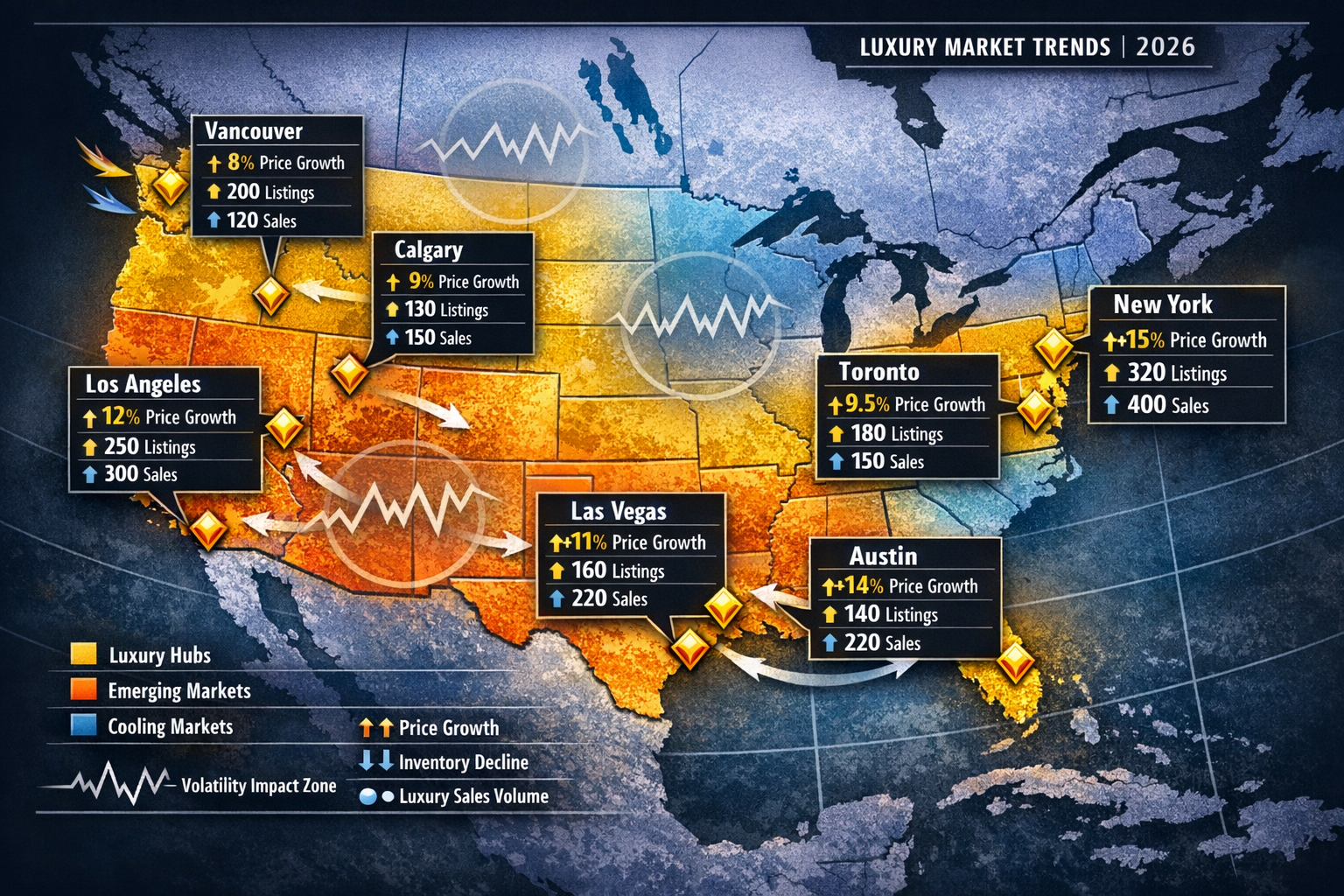
- 🌎 Geographic divergence intensifies: Traditional hubs (NYC, LA, Vancouver) remain resilient while migration-driven markets (Florida, Texas, Nevada) capture new luxury demand—but some Sun Belt markets now show weakness
- 👥 The Great Wealth Transfer reshapes preferences: Younger affluent buyers prioritize functionality and lifestyle platforms over symbolic excess, fueling mid-luxury segment growth
- 📊 Inventory dynamics favor luxury: While national inventory rose 20% year-over-year, competition for well-positioned luxury homes remains intact as new luxury listings actually declined
Understanding Luxury Housing Strength 2026: Why Top-Tier Markets Outpace Mid-Range Amid Rate Volatility
The Pricing Power Phenomenon: Why Luxury Defies Gravity
Here's where things get fresh: while year-over-year price growth across all housing segments slowed to a meager 0.9% in December 2025,[4] luxury properties demonstrated impeccable pricing stability that separated them from broader market trends. Single-family luxury prices held "nearly flat" while attached luxury properties posted "meaningful gains" in early 2026.[1]
This pricing resilience stems from fundamental differences in buyer profiles and transaction mechanics. With many affluent buyers purchasing with cash or utilizing private banking solutions, mortgage rates "are more likely to influence timing and leverage strategies than overall demand."[1] When you're deploying $5 million in liquid assets or accessing portfolio-backed credit lines at institutional rates, the Federal Reserve's policy decisions matter—but they don't determine whether you buy.
Strong economic fundamentals continue supporting confidence at the high end, including "low unemployment, resilient wage growth among top earners and healthy household balance sheets."[1] While middle-income households face stretched budgets from inflation and elevated housing costs, top-tier earners have experienced substantial compensation growth, particularly in technology, finance, and professional services sectors.
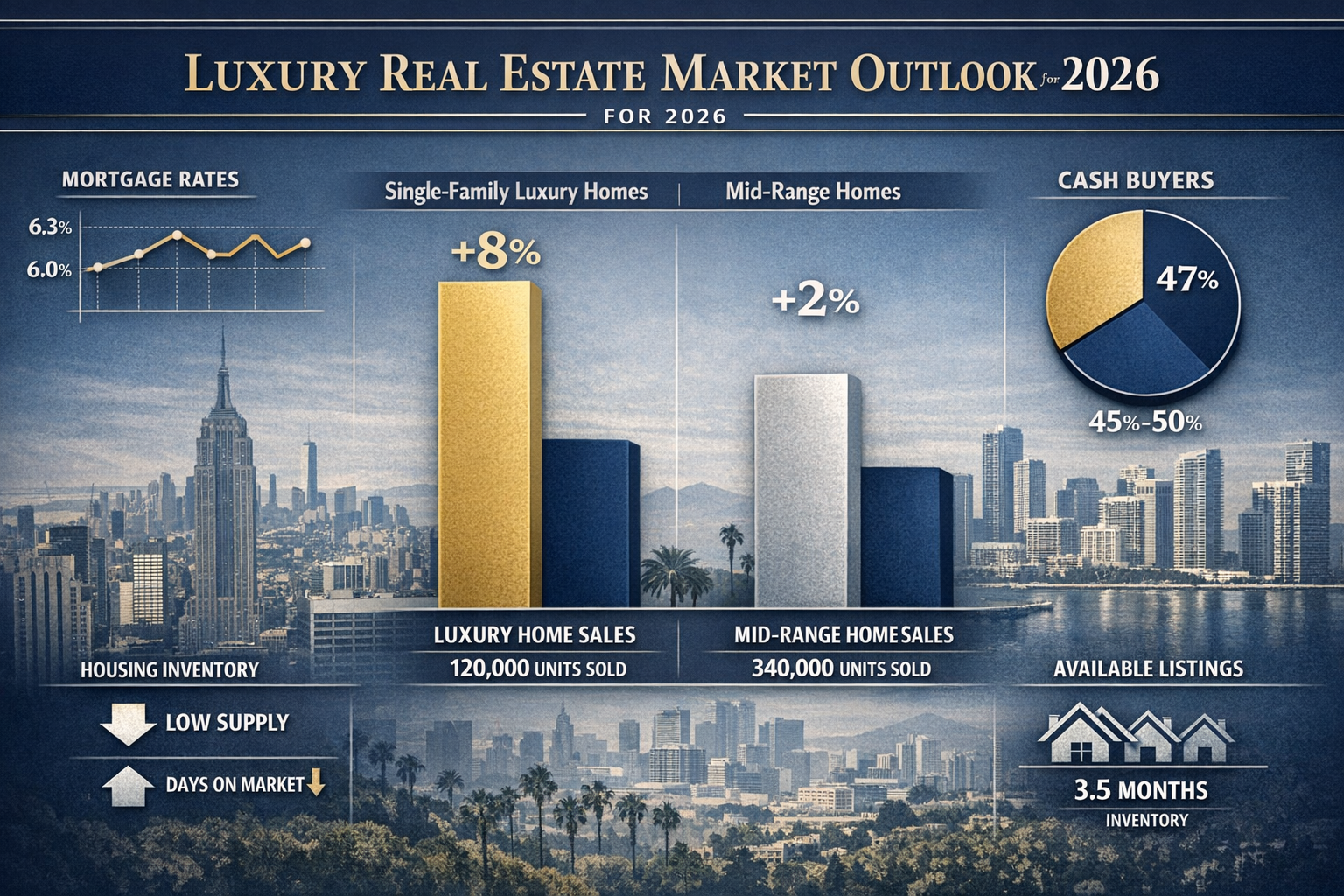
The data speaks volumes: luxury transaction values grew approximately 8% year-over-year even as unit sales remained relatively flat. This means average luxury sale prices climbed substantially—a clear indicator that buyers are willing to pay premium prices for properties meeting their criteria, regardless of rate environment.
For real estate professionals targeting this segment, the implications are so based: focus on value proposition, unique attributes, and lifestyle benefits rather than payment affordability. Your luxury clients aren't running mortgage calculators—they're evaluating whether a property aligns with their wealth preservation strategy and lifestyle goals.
Rate Volatility's Nuanced Impact on Luxury Segments
Mortgage rates are expected to stabilize around 6.0% to 6.3% throughout 2026, with some forecasts suggesting a "temporary mid-year dip into the high-5% range" but emphasizing "the window may be brief."[2] For conventional buyers, these elevated rates represent a significant affordability barrier. For luxury buyers? It's complicated.
Cash purchase prevalence in luxury markets fundamentally alters rate sensitivity. Industry estimates suggest 40-50% of luxury transactions close without mortgage financing, compared to roughly 25% in mid-range segments. Among financed luxury purchases, many utilize:
- Portfolio-backed credit lines with rates tied to SOFR or prime rather than conforming mortgage rates
- Private banking relationships offering customized lending solutions unavailable to conventional borrowers
- Strategic leverage decisions where buyers could pay cash but choose financing for tax optimization or liquidity preservation
This creates a bifurcated luxury market where rate movements influence timing and strategy more than fundamental demand. When rates dip toward 5.5%, some affluent buyers accelerate purchases to lock favorable financing. When rates rise above 6.5%, cash buyers gain negotiating leverage against financed competitors.
For agents working with luxury sellers, understanding this dynamic is crucial. Your marketing message shouldn't emphasize "low monthly payments"—it should highlight investment value, appreciation potential, and lifestyle ROI. Check out our guide on real estate investment strategies for a global market to better understand how sophisticated buyers evaluate opportunities.
Inventory Dynamics: The Luxury Exception
National inventory rose more than 10% year-over-year in early 2026, with new listings surging nearly 30% week-over-week in January.[2] Inventory levels nationally are approximately 20% higher than one year ago, "giving buyers more options and reducing competition"[2]—but this dynamic varies dramatically by price point.
Here's the gatekeeping truth most agents miss: competition for well-positioned luxury homes remains intact because new listings declined while inventory rose only modestly in the luxury segment.[1] This creates a paradox where conventional buyers enjoy unprecedented selection while luxury buyers still face competitive bidding on exceptional properties.
Why the divergence? Several factors:
🏠 Luxury sellers are less motivated by rate concerns: They're not trading up to capture low rates or downsizing to escape payment pressure—they're making lifestyle decisions on their own timeline
📍 Geographic concentration: Luxury inventory clusters in specific neighborhoods and markets, creating localized scarcity even amid broader inventory growth
💎 Quality differentiation: The gap between "luxury" and "exceptional luxury" is vast—truly special properties remain scarce regardless of overall inventory trends
🎯 Buyer selectivity: Affluent buyers can afford to wait for the right property, rejecting merely good options in favor of perfect fits
This inventory dynamic creates opportunity for agents who understand positioning. A luxury listing that's priced right, staged impeccably, and marketed to qualified buyers will still generate multiple offers in 2026. A luxury listing that's overpriced or poorly presented will languish despite strong underlying market fundamentals.
For comprehensive strategies on avoiding pricing pitfalls and valuing homes in any market, leverage data-driven approaches that account for luxury market nuances.
Geographic Winners and Losers: Regional Luxury Market Performance in 2026
Traditional Luxury Hubs: Resilience at the Ultra-High End
New York, Los Angeles, Vancouver, and Toronto "will remain resilient, particularly at the ultra-luxury level,"[1] according to market analysis. These established markets benefit from:
Institutional depth: Decades of wealth concentration create self-reinforcing luxury ecosystems with supporting services, cultural amenities, and social infrastructure
Global capital flows: International buyers continue viewing gateway cities as safe-haven assets for wealth preservation, particularly amid global economic uncertainty
Limited supply: Geographic constraints and zoning restrictions in prime neighborhoods create structural scarcity that supports pricing power
Brand value: Prestigious addresses in Manhattan, Beverly Hills, or Vancouver's West Side carry inherent cachet that transcends functional real estate value
However, even traditional hubs show internal divergence. Ultra-luxury properties above $10 million demonstrate extraordinary strength, while the $2-5 million "entry luxury" segment faces more competition and pricing pressure. This reflects broader wealth concentration trends where the ultra-wealthy continue accumulating assets while merely affluent buyers exercise more caution.
Real estate professionals in these markets should focus on differentiation and storytelling. Your luxury listings aren't competing on price—they're competing on narrative, uniqueness, and emotional connection. Emphasize architectural pedigree, historical significance, or celebrity provenance to justify premium pricing.
Migration-Driven Markets: Capturing the New Luxury Wave
States including Florida, Nevada, and Texas, along with Canadian centers Calgary, Ottawa, and Montreal, "are expected to capture increased luxury demand."[1] These markets benefit from:
✈️ Tax-advantaged migration: High-net-worth individuals relocating from high-tax states to favorable jurisdictions
🌴 Lifestyle preferences: Remote work flexibility enabling location choices based on climate, recreation, and quality of life
💵 Relative value: Luxury buyers can acquire significantly more property for equivalent dollars compared to traditional hubs
📈 Economic growth: Business-friendly policies attracting corporate relocations and entrepreneurial activity
Austin, Texas exemplifies this trend, with evolving luxury dynamics reported in February 2026 analysis.[5] The market has matured from rapid appreciation driven by tech migration to more balanced growth supported by established affluent communities.
However, not all Sun Belt markets show strength. Negative home price growth is "dominating the South and the West—including Florida, Texas, Colorado, Washington D.C., Hawaii, Arizona, Utah, Oregon, and California—reflecting the pressure of higher inventory levels and moderating in-migration in markets that previously saw rapid expansion."[4]
This creates a crucial distinction for agents: migration-driven luxury demand is real, but it's concentrating in specific submarkets within broader regions. Miami's waterfront properties may thrive while inland Florida developments struggle. Austin's central neighborhoods may appreciate while exurban luxury communities face inventory gluts.
Success in these markets requires hyperlocal expertise and understanding which specific neighborhoods capture sustained luxury demand versus speculative overbuilding. Our analysis of 2025 housing market trends provides framework for identifying sustainable growth markets.
The Sun Belt Correction: When Growth Markets Stumble
The Sun Belt luxury market correction deserves special attention because it challenges assumptions about perpetual growth in migration destinations. Markets including Phoenix, Las Vegas, Boise, and parts of Texas experienced extraordinary luxury development from 2020-2024, with builders anticipating continued migration and appreciation.
By early 2026, reality has tempered expectations:
📊 Inventory oversupply: Speculative luxury construction exceeded organic demand growth in many submarkets
🏗️ Quality concerns: Rapid construction sometimes prioritized speed over craftsmanship, creating differentiation challenges
💰 Price discovery: Markets that appreciated 40-60% in three years are experiencing natural corrections as valuations align with fundamentals
🌡️ Climate reality: Extreme heat, water scarcity, and insurance costs are tempering enthusiasm for some Sun Belt locations
This doesn't mean Sun Belt luxury is dead—it means the easy money phase has ended. Successful agents in these markets must focus on genuine value propositions rather than appreciation speculation. Emphasize lifestyle amenities, community quality, and property-specific attributes that justify pricing.
For sellers in correcting markets, strategic pricing becomes critical. Our guide to home selling strategies that work every time offers frameworks for positioning properties in challenging conditions.
Demographic Shifts Reshaping Luxury Preferences and Demand Patterns
The Great Wealth Transfer: $84 Trillion in Motion
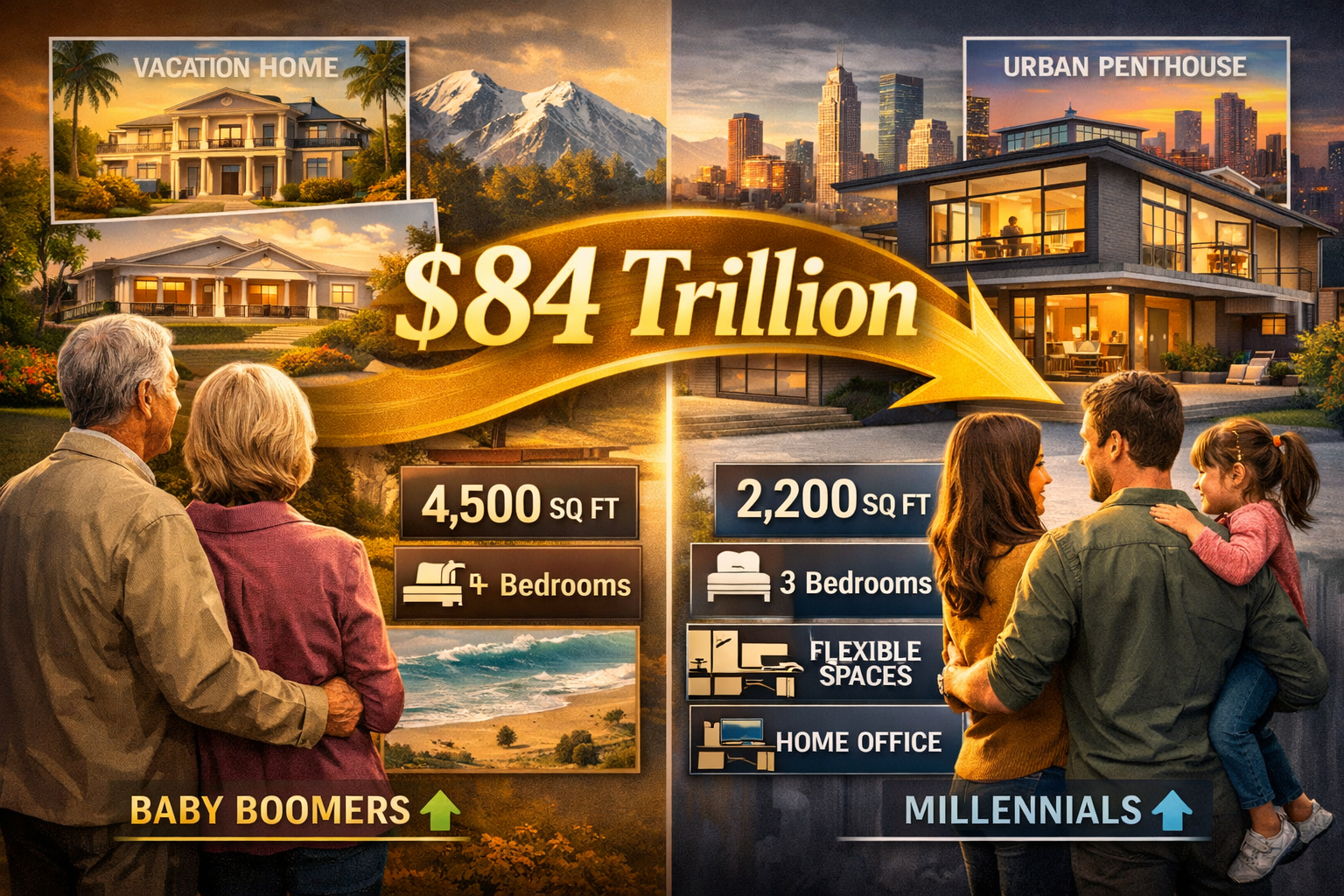
The ongoing "Great Wealth Transfer" of trillions of dollars from Baby Boomers to Gen X and Millennial heirs is fundamentally reshaping luxury real estate preferences.[1] This isn't just about money changing hands—it's about value systems and lifestyle priorities evolving across generations.
Younger affluent buyers are "prioritizing flexibility, functionality and long-term value, viewing homes as lifestyle platforms rather than purely symbolic assets."[1] This represents a philosophical shift from Boomer luxury preferences that emphasized:
- Formal spaces: Dedicated dining rooms, living rooms, and entertaining areas
- Impressive scale: Square footage and room counts as status symbols
- Traditional luxury signals: Marble, chandeliers, and ornate finishes
- Single-purpose rooms: Libraries, music rooms, and specialized spaces
Millennial and Gen X luxury buyers instead prioritize:
🏡 Flexible spaces: Rooms that adapt to multiple uses (home office/guest room, gym/playroom)
🌿 Wellness integration: Home gyms, spa bathrooms, meditation spaces, and outdoor living areas
💻 Technology infrastructure: Robust Wi-Fi, smart home systems, and dedicated tech spaces
🎯 Authentic design: Unique architectural character over generic luxury finishes
♻️ Sustainability: Energy efficiency, renewable materials, and environmental consciousness
This generational preference shift is "fueling demand in the mid-luxury segment, where quality design, usability and location matter more than excess scale."[1] Properties in the $1.5-3 million range that offer exceptional design, prime locations, and functional layouts are outperforming $5+ million estates with dated floor plans and maintenance-intensive features.
For agents and sellers, the implications are clear: right-sizing and modernization matter more than sheer scale. A 3,500-square-foot home with impeccable design, smart technology, and flexible spaces will attract more qualified buyers than a 7,000-square-foot traditional mansion requiring extensive updates.
Boomer Downsizing and the Multi-Property Trend
Simultaneously, younger Boomers (ages 60-70) are downsizing primary residences while acquiring "lifestyle-driven second and third homes."[1] This creates dual luxury demand:
Primary residence downsizing: Moving from large family homes to sophisticated urban condos, walkable neighborhoods, or single-level luxury properties with minimal maintenance
Second home acquisition: Purchasing vacation properties in resort markets, mountain communities, or coastal destinations for seasonal use
Third property investments: Acquiring rental properties, family compound spaces, or future retirement locations
This multi-property trend supports luxury markets in both traditional hubs (where downsizing Boomers purchase luxury condos) and resort destinations (where they acquire vacation homes). It also creates inventory opportunities as Boomers list larger family estates that appeal to younger families seeking space.
Smart agents recognize this cycle and position themselves to capture both sides: listing the family estate while helping the same client acquire a luxury condo and vacation property. This relationship-based approach maximizes lifetime client value while providing comprehensive service.
Living Large is Back: Size and Flexibility Trends
"Living large is back as more bedrooms, more square footage, and more flexibility are experiencing increasing demand by luxury home buyers,"[3] marking a departure from the minimalist preferences that dominated the late 2010s. This trend reflects several converging factors:
👨👩👧👦 Multi-generational living: Affluent families accommodating aging parents or adult children
🏠 Permanent remote work: Home offices, studio spaces, and dedicated work environments becoming essential
🎓 Private education shifts: Homeschooling or hybrid education models requiring dedicated learning spaces
💪 Wellness prioritization: Home gyms, yoga studios, and spa facilities replacing gym memberships
🎮 Entertainment evolution: Gaming rooms, home theaters, and hobby spaces supporting in-home recreation
The key distinction from traditional McMansion excess: flexibility and multi-functionality. Luxury buyers want space, but they want it to serve multiple purposes and adapt to changing needs. A 6,000-square-foot home with seven bedrooms and nine bathrooms feels dated; a 6,000-square-foot home with four bedrooms, flexible bonus spaces, and exceptional common areas feels contemporary.
For sellers, this means reimagining and staging spaces to demonstrate flexibility. That formal dining room? Stage it as a sophisticated home office. The unused bedroom? Show it as a home gym or meditation studio. Help buyers envision how spaces serve modern luxury lifestyles.
Our guide to home design trends and architectural styles that boost property value explores how design choices impact luxury market appeal.
Strategic Implications for Real Estate Professionals Targeting Luxury Markets
Marketing and Positioning: Speaking the Language of Affluence
Luxury marketing in 2026 requires sophistication that transcends traditional real estate promotion. Your affluent clients aren't browsing Zillow—they're receiving curated opportunities from trusted advisors, exploring exclusive networks, and evaluating properties through investment lenses.
Effective luxury marketing strategies include:
🎥 Cinematic video content: Professional videography showcasing lifestyle and emotional experience, not just property features
📸 Exceptional photography: Hiring top-tier photographers who understand luxury aesthetic and architectural photography
📱 Exclusive digital presence: Private property websites, virtual tours with interactive features, and targeted digital advertising
🤝 Relationship-based distribution: Leveraging agent networks, private client lists, and exclusive buyer databases
📰 Strategic media placement: Featuring listings in luxury publications, lifestyle magazines, and targeted online platforms
The language matters too. Replace generic real estate copy with compelling narratives that emphasize:
- Investment thesis: Why this property represents smart capital allocation
- Lifestyle enhancement: How the home elevates daily living and well-being
- Unique attributes: Architectural significance, historical provenance, or irreplaceable features
- Future value: Appreciation potential, market positioning, and long-term outlook
For comprehensive strategies on leveraging AI marketing tools for real estate, explore how technology enhances luxury marketing efficiency without sacrificing personalization.
Pricing Strategy: The Art and Science of Luxury Valuation
Luxury pricing requires balancing comparable market analysis with unique property attributes that defy direct comparison. Unlike mid-range properties where automated valuation models provide reasonable estimates, luxury properties demand nuanced evaluation considering:
💎 Irreplaceable attributes: Waterfront footage, architectural pedigree, historical significance, or celebrity ownership
📍 Micro-location premium: Specific street, block, or building positioning within prestigious neighborhoods
🏗️ Quality differentiation: Construction quality, finish levels, and design execution that separate exceptional from merely good
⏰ Market timing: Current inventory levels, seasonal patterns, and economic conditions affecting buyer urgency
The data shows luxury pricing power remains strong in 2026, with values growing approximately 8% even as transaction volumes hold steady. This suggests well-priced luxury properties achieve premium values while overpriced listings languish.
Best practices for luxury pricing include:
- Comprehensive comparative analysis: Examining closed sales, active listings, and expired listings within relevant parameters
- Adjustment for unique features: Quantifying value premiums for exceptional attributes
- Market positioning strategy: Determining whether to price aggressively for quick sale or optimistically for maximum value
- Flexibility planning: Establishing price adjustment triggers if market response doesn't meet expectations
Remember: luxury buyers are sophisticated. They recognize value and they recognize greed. Price your listings to reflect genuine market positioning, not aspirational wishful thinking.
For detailed guidance on avoiding pricing mistakes that trigger price cuts and lowball offers, apply proven frameworks to luxury market contexts.
Client Qualification and Relationship Development
Not every buyer claiming luxury interest has the financial capacity or serious intent to transact. Effective luxury agents implement qualification processes that respectfully verify buyer capability while building relationships with legitimate prospects.
Qualification strategies include:
📋 Pre-qualification conversations: Discussing budget, timeline, and financing approach before property tours
🏦 Financial verification: Requesting proof of funds or pre-approval letters from recognized private banks
🤝 Referral validation: Understanding how the buyer found you and their connection to your network
🎯 Needs assessment: Conducting detailed consultations about lifestyle requirements, must-haves, and deal-breakers
Once qualified, luxury client relationships require white-glove service that exceeds conventional real estate expectations:
- Concierge-level responsiveness: Immediate communication and flexible scheduling
- Market expertise: Providing insights, data, and analysis that demonstrate deep knowledge
- Discretion and confidentiality: Protecting client privacy and handling sensitive information professionally
- Network access: Connecting clients with attorneys, tax advisors, architects, and other specialists
- Long-term perspective: Building relationships beyond single transactions to capture repeat and referral business
The Great Wealth Transfer means many luxury buyers are first-time luxury purchasers who inherited wealth but lack experience with high-end real estate. These clients need education and guidance to navigate luxury markets confidently. Position yourself as trusted advisor, not transactional salesperson.
Leveraging Technology While Maintaining Personal Touch
Technology enhances luxury real estate practice without replacing the personal relationships that drive high-end transactions. Strategic technology applications include:
🤖 AI-powered market analysis: Using advanced tools to identify emerging luxury markets and investment opportunities (explore how to analyze local real estate markets with AI)
📊 Data visualization: Creating compelling presentations that communicate market trends and investment thesis
🏠 Virtual tour technology: Offering immersive property experiences for out-of-market or international buyers
📱 CRM systems: Managing relationships, tracking preferences, and automating follow-up while maintaining personalization
📸 AI photo enhancement: Optimizing listing photography while maintaining authenticity (see AI photo enhancement for real estate listings)
The key is using technology to enhance efficiency and insights while preserving the high-touch, relationship-driven service luxury clients expect. Your wealthy clients can access property data themselves—they're hiring you for expertise, network access, and personalized guidance that technology cannot replicate.
Investment Perspectives: Why Luxury Real Estate Remains Compelling in 2026
Wealth Preservation and Inflation Hedging
Luxury real estate serves multiple functions in affluent portfolios beyond simple shelter. As an asset class, it offers:
🛡️ Inflation protection: Real assets that typically appreciate with or ahead of inflation over long time horizons
💰 Wealth preservation: Tangible assets less susceptible to currency devaluation or financial market volatility
🏦 Portfolio diversification: Low correlation with stocks and bonds, reducing overall portfolio risk
🌍 Global capital mobility: Ability to transfer wealth across borders through property ownership
In 2026's environment of persistent inflation concerns and geopolitical uncertainty, these attributes make luxury real estate particularly attractive to ultra-high-net-worth individuals seeking safe-haven assets. The 8% value growth in luxury markets despite rate volatility reflects this dynamic—wealthy buyers view premium properties as wealth preservation vehicles that happen to provide lifestyle benefits.
This investment perspective influences buying decisions in ways mid-range buyers don't experience. Luxury buyers evaluate:
- Long-term appreciation potential based on location scarcity, development restrictions, and demographic trends
- Rental income possibilities for second homes or investment properties
- Tax optimization strategies including 1031 exchanges, depreciation benefits, and estate planning
- Legacy value as assets to transfer to heirs or hold multi-generationally
For real estate professionals, understanding these investment considerations enables more sophisticated client conversations. Position properties not just as homes but as strategic portfolio components that serve financial objectives alongside lifestyle goals.
Our comprehensive guide to real estate investment strategies for a global market provides frameworks for evaluating luxury properties through investment lenses.
The Second Home and Vacation Property Boom
Luxury second home markets are experiencing extraordinary strength in 2026, driven by:
🏖️ Lifestyle prioritization: Affluent buyers investing in wellness, recreation, and family experiences
✈️ Remote work flexibility: Ability to spend extended periods at vacation properties
👨👩👧👦 Multi-generational use: Creating family gathering spaces that serve multiple generations
💵 Rental income potential: Short-term rental platforms enabling properties to generate income when not in personal use
Markets benefiting from this trend include traditional resort destinations (Aspen, Jackson Hole, Nantucket, Lake Tahoe) and emerging luxury vacation markets (Scottsdale, Charleston, Coastal Maine, Canadian Rockies). Properties offering exceptional amenities, privacy, and unique experiences command premium pricing with minimal rate sensitivity.
The vacation rental investment angle deserves special attention. Affluent buyers increasingly view second homes through dual-use lenses: personal enjoyment plus income generation. A luxury mountain home that generates $150,000 annually through strategic vacation rentals effectively pays for itself while appreciating.
For agents in resort markets, emphasizing this investment potential alongside lifestyle benefits creates compelling value propositions. Provide data on rental income potential, occupancy rates, and property management options to help buyers evaluate opportunities comprehensively.
Compare Airbnb vs Vacasa property management options to understand how luxury vacation properties can serve dual purposes.
International Buyer Dynamics in 2026
Global capital flows continue influencing North American luxury markets, though patterns have evolved from pre-pandemic norms. Key international buyer trends include:
🇨🇦 Canadian buyers: Continuing to acquire U.S. luxury properties for diversification and lifestyle, particularly in Florida, Arizona, and California
🇲🇽 Mexican buyers: Increasing presence in Texas, California, and Arizona luxury markets
🇨🇳 Chinese buyers: Reduced activity compared to 2015-2019 peak but still present in gateway cities for education and immigration purposes
🇮🇳 Indian buyers: Growing presence, particularly in technology hubs like Seattle, San Francisco, and Austin
🌍 European buyers: Selective acquisitions in traditional luxury markets and resort destinations
International buyers often demonstrate minimal rate sensitivity since they're frequently purchasing with cash or accessing financing in their home countries. They evaluate properties based on currency exchange rates, geopolitical stability, and long-term appreciation potential rather than U.S. mortgage rates.
For agents working with international clients, understanding cross-border transaction complexities is essential: tax implications, FIRPTA withholding, currency exchange, and legal structure considerations all influence purchase decisions.
The rise of luxury real estate in emerging markets provides global context for understanding international buyer motivations and preferences.
Conclusion: Capitalizing on Luxury Housing Strength 2026
The extraordinary resilience of Luxury Housing Strength 2026: Why Top-Tier Markets Outpace Mid-Range Amid Rate Volatility isn't a temporary anomaly—it reflects fundamental shifts in wealth distribution, buyer demographics, and market dynamics that will shape real estate for years to come.
The data tells a compelling story: luxury values growing 8% despite flat transaction volumes, pricing stability while mid-range markets stagnate, and continued buyer demand that treats mortgage rates as secondary considerations. This performance stems from structural advantages: cash buyer prevalence, strong economic fundamentals among top earners, and the Great Wealth Transfer reshaping preferences toward functionality and lifestyle value.
Geographic divergence creates opportunities and challenges. Traditional luxury hubs maintain resilience through institutional depth and global capital flows. Migration-driven markets capture new luxury demand from tax-advantaged relocations and lifestyle preferences. But Sun Belt corrections remind us that not all growth markets sustain momentum—hyperlocal expertise separates successful agents from those caught in correcting submarkets.
For real estate professionals, the implications are clear and actionable:
Immediate Action Steps
-
Refine your luxury positioning: Develop marketing materials, digital presence, and service offerings that speak to affluent buyers' investment perspectives and lifestyle priorities
-
Build strategic networks: Cultivate relationships with private bankers, wealth advisors, tax attorneys, and other professionals serving high-net-worth clients
-
Master your micro-markets: Develop deep expertise in specific luxury neighborhoods, understanding inventory dynamics, pricing trends, and buyer preferences at granular levels
-
Invest in exceptional presentation: Upgrade photography, videography, and staging to meet luxury market expectations—mediocre presentation kills premium pricing
-
Embrace technology strategically: Leverage AI tools for market analysis and efficiency while maintaining the high-touch, relationship-driven service luxury clients demand
-
Educate yourself continuously: Stay current on tax law changes, investment strategies, and wealth management trends affecting luxury buyers' decisions
The luxury market's strength amid broader volatility proves that quality, scarcity, and strategic positioning create value regardless of macroeconomic conditions. Properties offering genuine lifestyle enhancement, investment merit, and irreplaceable attributes will continue commanding premium prices from buyers who view real estate as wealth preservation vehicles and lifestyle platforms.
This is your moment. The Great Wealth Transfer is redistributing trillions of dollars to buyers with different preferences and priorities than previous generations. Markets are diverging based on migration patterns, tax policies, and lifestyle trends. Rate volatility is separating cash-empowered luxury buyers from payment-constrained conventional purchasers.
Those who understand these dynamics, position themselves strategically, and deliver exceptional service will capture disproportionate market share in the most profitable real estate segment. Those who treat luxury as simply "expensive conventional real estate" will struggle to compete.
The luxury market isn't gatekeeping its opportunities—it's rewarding professionals who invest in expertise, relationships, and service excellence. Make that investment, and 2026's luxury housing strength becomes your competitive advantage.
For ongoing insights into market trends, investment strategies, and professional development, explore Real Estate Rank IQ's comprehensive resources designed for agents, investors, and industry professionals committed to excellence.
References
[1] Market Momentum What Lies Ahead For 2026 – https://ace.rismedia.com/2026/02/19/market-momentum-what-lies-ahead-for-2026/
[2] The Current State Of The Real Estate Market February 2026 A Shift Toward Stability – https://libtitle.com/the-current-state-of-the-real-estate-market-february-2026-a-shift-toward-stability/
[3] Top Luxury Home Trends For 2026 Focus Around Location And Size – https://www.luxuryhomes.com/blog/2026/01/29/top-luxury-home-trends-for-2026-focus-around-location-and-size/
[4] Us Home Price Insights February 2026 – https://www.cotality.com/insights/articles/us-home-price-insights-february-2026
[5] 2026 02 11 Americas Oldest Vs Newest Luxury Markets Realtor Com R Report Highlights The Evolving Faces Of U S Luxury – https://mediaroom.realtor.com/2026-02-11-Americas-Oldest-vs-Newest-Luxury-Markets-Realtor-com-R-Report-Highlights-the-Evolving-Faces-of-U-S-Luxury