



Picture this: You’re standing in your kitchen, checkbook in hand, ready to drop $40,000 on a complete renovation because your real estate agent mentioned buyers love updated kitchens. But here’s the plot twist nobody’s gatekeeping anymore—most of those expensive kitchen upgrades won’t return a single dollar of your investment, and some might actually slow down your sale. In the wild world of 2026 real estate, where the housing market moves faster than a trending TikTok sound, knowing which kitchen upgrades to skip isn’t just smart—it’s absolutely based.

The kitchen has long held the crown as the heart of the home, and real estate agents have been preaching the gospel of kitchen renovations for decades. But the game has changed. Today’s buyers operate differently, market dynamics have shifted, and what worked in 2015 might leave you hemorrhaging cash in 2026 with nothing to show for it. The extraordinary truth? Sometimes doing less means selling faster and pocketing more profit.
Key Takeaways
- Most high-end kitchen upgrades return only 30-60% of their investment, making them financial losers before you even list your home
- Buyers increasingly prefer to customize kitchens themselves, meaning your $25,000 marble countertop might actually turn them away
- Strategic cleaning, staging, and minor repairs typically deliver better ROI than major renovations when selling
- Market timing and pricing strategy matter more than granite countertops in determining how fast your home sells
- The sweet spot for pre-sale kitchen work costs under $5,000 and focuses on freshening rather than renovating
The Brutal Truth About Kitchen Upgrades and ROI 💰
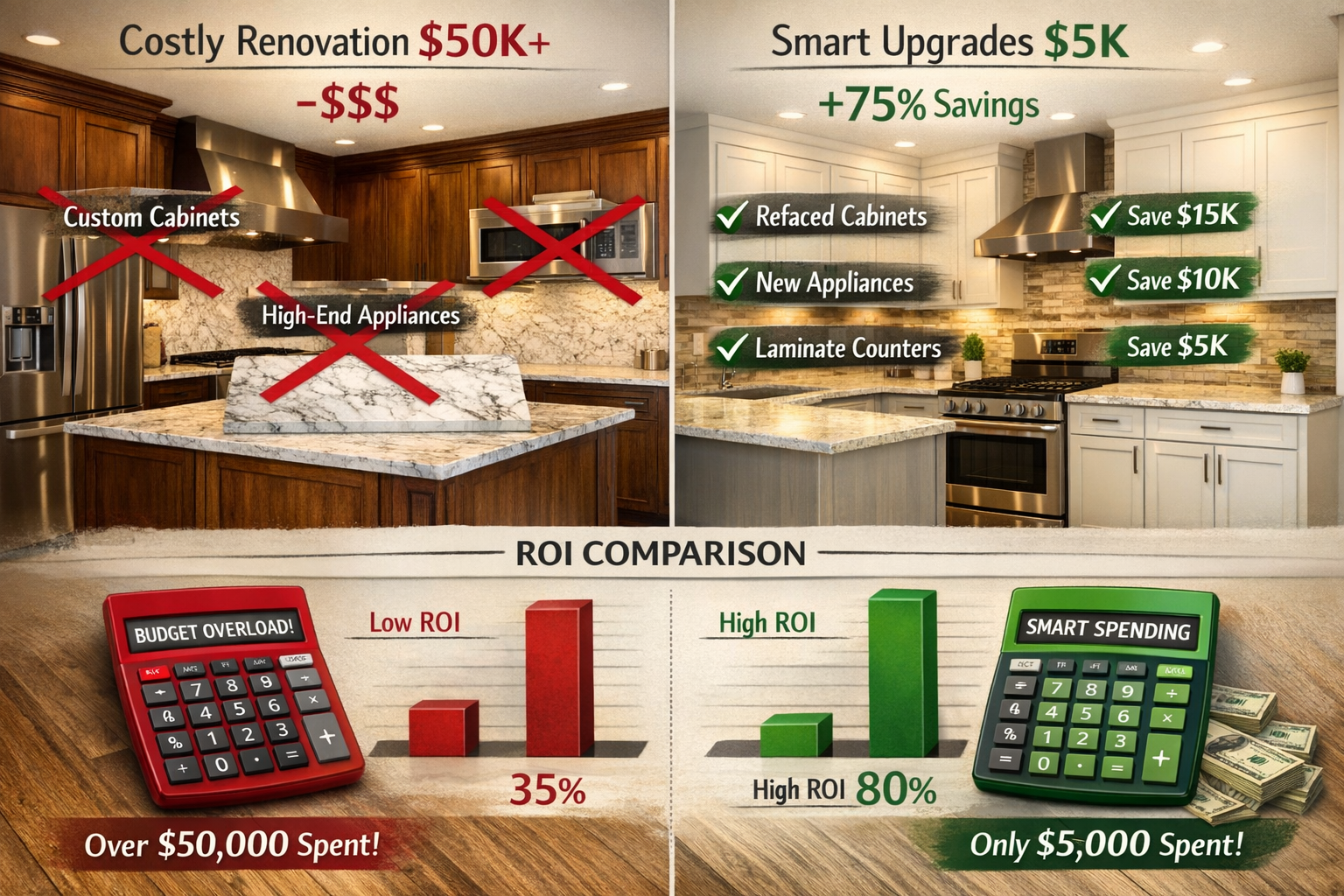
Let’s talk numbers, because in real estate, feelings don’t pay the mortgage—data does. According to Remodeling Magazine’s 2026 Cost vs. Value Report, a major kitchen remodel averaging $75,000 returns approximately $37,500 at resale—that’s a 50% return on investment[1]. Translation? You’re essentially lighting $37,500 on fire and calling it an “investment strategy.”
But wait, it gets worse. That 50% figure represents the national average in a seller’s market. In slower markets or neighborhoods where home values don’t support luxury finishes, that ROI can plummet to 30% or even lower. Imagine spending $50,000 to add $15,000 to your home’s value. That’s not dope—that’s financial self-sabotage.
The Kitchen Upgrade ROI Reality Check
| Upgrade Type | Average Cost | Resale Value Added | ROI Percentage |
|---|---|---|---|
| Major Kitchen Remodel | $75,000 | $37,500 | 50% |
| Minor Kitchen Remodel | $26,000 | $18,200 | 70% |
| Custom Cabinetry | $15,000-$30,000 | $7,500-$12,000 | 40-50% |
| High-End Appliances | $8,000-$15,000 | $3,200-$6,000 | 40% |
| Marble/Quartz Countertops | $5,000-$12,000 | $2,500-$6,000 | 50% |
| New Flooring (Luxury) | $4,000-$8,000 | $2,000-$4,000 | 50% |
The pattern here? You lose money on virtually every kitchen upgrade category. The only question is how much you’re willing to lose.
“The biggest mistake sellers make is over-improving for their neighborhood. Your $20,000 Wolf range doesn’t add $20,000 to your home’s value—it adds maybe $5,000, and that’s if you’re lucky and find a buyer who cares.” — Sarah Mitchell, Real Estate Investment Strategist
Why Kitchen Upgrades Fail to Deliver
The problem with kitchen upgrades stems from three fundamental market realities:
1. Taste is Subjective and Personal 🎨
Your impeccable taste in farmhouse sinks and shiplap might be another buyer’s design nightmare. What you consider a fresh, modern aesthetic might read as “trendy and dated” to someone shopping in 2026. Buyers increasingly want to put their own stamp on a space, especially in the kitchen where personal cooking style, family size, and lifestyle dramatically impact functionality needs.
2. Neighborhood Value Ceilings 📊
Every neighborhood has a value ceiling—the maximum price buyers will pay regardless of upgrades. If comparable homes in your area sell for $350,000, your $75,000 kitchen renovation won’t magically push your home to $425,000. You’ll still sell near $350,000, maybe $365,000 if you’re lucky. The market doesn’t care about your investment; it cares about comparable sales.
3. Buyer Financing Realities 💳
Here’s something most sellers don’t consider: Many buyers can finance renovation costs into their mortgage at historically low rates, but they need cash for down payments. A buyer with $30,000 might prefer a $320,000 home they can slowly upgrade over a $350,000 home with your expensive kitchen that maxes out their budget. You’ve actually made your home less accessible to the buyer pool.
The best home improvements before selling aren’t always the most expensive ones—they’re the strategic ones that appeal to the broadest buyer base without breaking your bank.
Kitchen Upgrades That Waste Your Money (Skip These!) 🚫
Now that we’ve established the ROI problem, let’s get specific about which kitchen upgrades to avoid like they’re expired milk. These are the money pits that sound impressive but deliver disappointment when the closing documents arrive.
1. Custom Cabinetry and Full Cabinet Replacement
Average Cost: $15,000-$30,000
Why Skip It: Unless your cabinets are literally falling apart, replacement is overkill.
Custom cabinetry represents one of the most expensive kitchen upgrades sellers undertake, and it’s almost never worth it. Here’s why: Cabinet construction quality varies wildly, and buyers can’t tell the difference between $15,000 custom cabinets and $8,000 semi-custom options just by looking. They see “new cabinets” and move on.
Even worse, cabinet styles trend faster than fashion. The white shaker cabinets that feel so fresh in 2026 might look dated by 2028. You’re essentially paying premium prices for something that will age quickly.
What to Do Instead:
- Paint or refinish existing cabinets ($1,500-$4,000)
- Replace only the cabinet doors if boxes are solid ($3,000-$6,000)
- Update hardware for a fresh look ($200-$500)
- Focus on cleaning and repair rather than replacement
A professional cabinet painting job can transform a kitchen for a fraction of the cost, delivering 80% of the visual impact at 15% of the price. That’s the kind of math that makes sense.
2. Professional-Grade Appliances
Average Cost: $8,000-$20,000
Why Skip It: Most buyers aren’t professional chefs and won’t pay extra for commercial features.
That 48-inch Wolf range looks extraordinary in a design magazine, but here’s the reality: The average American cooks at home 3-4 times per week[2]. They don’t need or want a $12,000 range that costs $500 annually to maintain. High-end appliances actually narrow your buyer pool to serious cooking enthusiasts—a tiny market segment.
Additionally, professional appliances often require special electrical, gas, or ventilation systems that add thousands more to installation costs. And when something breaks? Repair costs are astronomical compared to standard appliances.
What to Do Instead:
- Keep existing appliances if they’re less than 7-8 years old and functioning
- If replacing, choose mid-range stainless steel options ($3,000-$5,000 for a full set)
- Focus on cleanliness—a spotless 5-year-old appliance beats a dirty new one
- Ensure all appliances work properly; fix anything broken
Buyers care more about appliances that work and match than they do about brand names. A complete set of matching, clean, functional mid-range appliances checks every box without the premium price tag.
3. Luxury Countertop Materials
Average Cost: $5,000-$15,000
Why Skip It: Countertop preferences are intensely personal and trend-driven.
Marble, quartzite, exotic granite—these materials sound impressive and photograph beautifully for Instagram. But countertops represent one of the most personal choices in kitchen design. Your love of Carrara marble might clash completely with a buyer’s modern aesthetic or their fear of marble’s maintenance requirements.
The countertop market has also become incredibly crowded with options. What was “luxury” five years ago is now standard, and what’s trendy today might look dated tomorrow. Waterfall edges, thick slabs, exotic patterns—these design choices are so specific that they appeal to a narrow audience.
What to Do Instead:
- Keep existing countertops if they’re in good condition
- Repair chips, cracks, or stains ($200-$500)
- Deep clean and polish existing surfaces ($100-$300)
- If replacement is absolutely necessary, choose neutral quartz in standard thickness ($3,000-$5,000)
The goal isn’t to have the most impressive countertops; it’s to have countertops that don’t distract or detract from the sale. Neutral, clean, and undamaged beats expensive and trendy every time.
4. Kitchen Layout Reconfiguration
Average Cost: $20,000-$50,000
Why Skip It: Moving walls, plumbing, and electrical rarely adds proportional value.
Knocking down walls to create an open concept or moving the sink to the island sounds transformative, but it’s a financial disaster for sellers. These structural changes involve permits, contractors, plumbers, electricians, and often unexpected issues once walls come down. Costs spiral quickly, and timelines extend indefinitely.
Even worse, layout preferences vary dramatically by buyer. Some want open concept; others prefer defined spaces. Some love kitchen islands; others find them obstructive. Your $40,000 layout change might actually make the kitchen less functional for the next owner.
What to Do Instead:
- Work with the existing layout
- Improve traffic flow by removing unnecessary furniture or items
- Stage the space to highlight functionality
- Focus on making the current layout shine rather than changing it
Remember, the next owner can reconfigure the layout on their own timeline and budget if they choose. Your job is to present a clean, functional space—not to redesign it based on your preferences.
5. High-End Flooring Materials
Average Cost: $4,000-$10,000
Why Skip It: Flooring trends change rapidly, and buyers often replace it anyway.
Heated floors, exotic hardwoods, designer tile patterns—these upgrades sound luxurious but rarely deliver returns. Flooring takes tremendous abuse in kitchens, and buyers know they’ll likely replace it within 5-10 years regardless of what you install. Your $8,000 heated tile floor becomes a “nice feature” that adds maybe $2,000 to perceived value.
Flooring preferences also vary wildly by region, lifestyle, and personal taste. Pet owners want durable, scratch-resistant options. Families with small children prefer soft, forgiving surfaces. Minimalists want clean lines and neutral colors. You can’t please everyone, so why try?
What to Do Instead:
- Clean and repair existing flooring
- Replace only if current flooring is damaged, stained, or outdated (think: 1970s linoleum)
- Choose mid-range, neutral options if replacement is necessary ($2,000-$4,000)
- Focus on consistency—matching flooring throughout main living areas
If your current flooring is reasonably modern, neutral, and undamaged, leave it alone. Spend your money elsewhere or, better yet, don’t spend it at all.
6. Custom Lighting Fixtures and Chandeliers
Average Cost: $1,500-$5,000
Why Skip It: Lighting is intensely personal and easily changed by buyers.
That $2,500 statement chandelier over your island might be your pride and joy, but it’s likely someone else’s first removal project. Lighting fixtures are among the easiest and cheapest items for buyers to replace, which means they place little value on expensive options already installed.
Custom lighting also tends to be very style-specific. Your modern geometric pendant might clash completely with a buyer’s traditional aesthetic. You’ve spent thousands on something they’ll replace with a $200 fixture from their preferred style.
What to Do Instead:
- Install simple, neutral fixtures that provide good light ($300-$800 total)
- Ensure all fixtures work properly with correct bulbs
- Focus on adequate lighting rather than statement pieces
- Remove any highly personal or unusual fixtures before listing
Good lighting matters, but expensive lighting doesn’t. Bright, functional, and neutral beats expensive and distinctive every time when selling.
7. Built-In Coffee Stations and Specialty Features
Average Cost: $2,000-$8,000
Why Skip It: Highly specific features appeal to tiny market segments.
Built-in espresso machines, wine refrigerators, pot fillers, warming drawers—these specialty features sound impressive but appeal to incredibly narrow buyer segments. Most people don’t want or need a $3,000 built-in coffee system, and those who do often have specific brand preferences that don’t match yours.
These features also add complexity to the kitchen, taking up space that buyers might prefer to use differently. Your pot filler might be in exactly the wrong spot for their planned stove location. Your wine fridge might occupy prime cabinet space they need for dishes.
What to Do Instead:
- Skip specialty features entirely unless they’re already installed
- If already installed, highlight them as bonuses but don’t expect premium pricing
- Focus on standard features that work for everyone
- Invest in functionality over novelty
The kitchen should be a blank canvas that buyers can customize to their specific needs. Specialty features limit that canvas and narrow your buyer pool.
For more insights on which improvements actually matter, check out this guide on home improvements that deliver ROI.
Smart Kitchen Upgrades That Actually Help You Sell 🏡
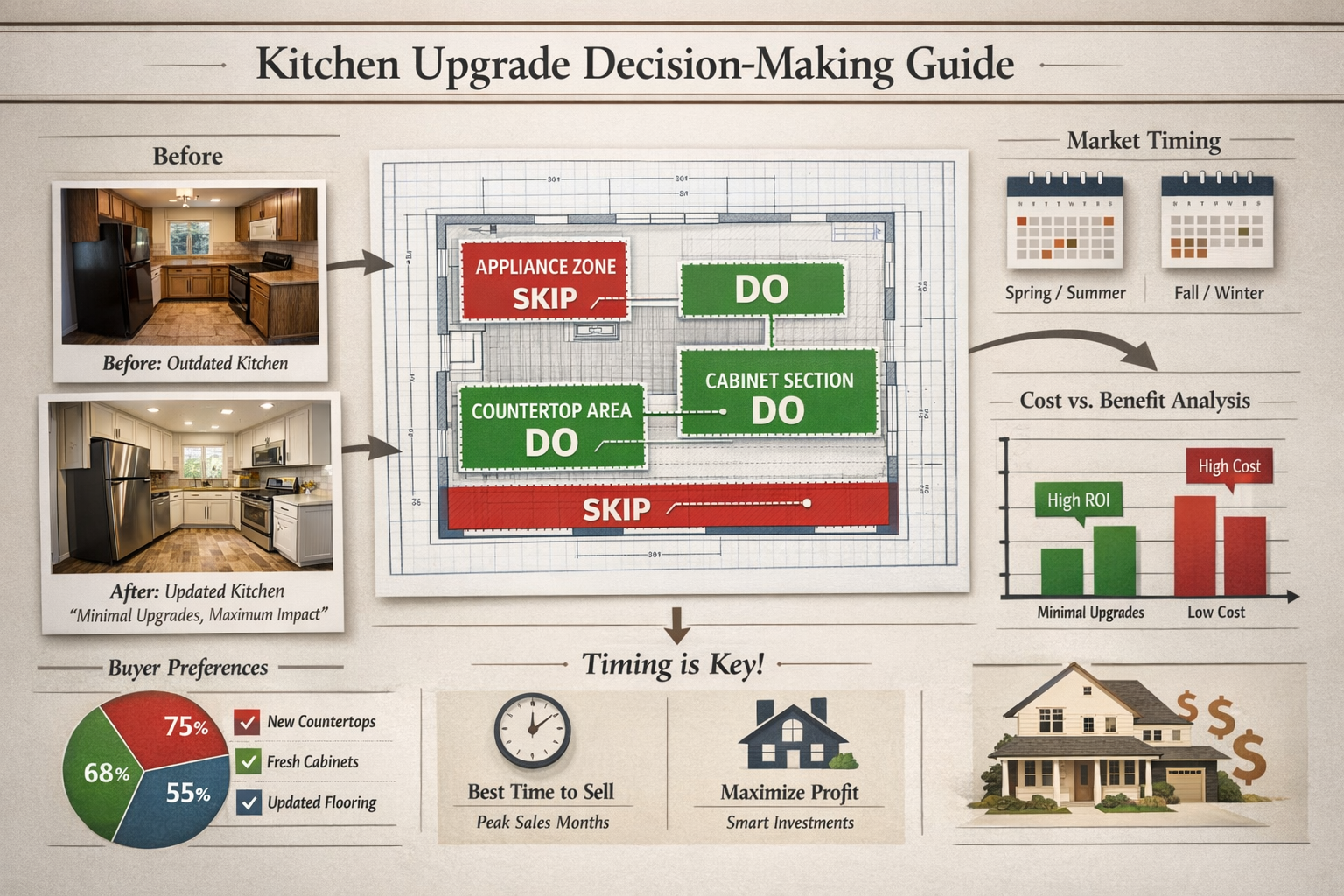
Alright, so we’ve covered what not to do—but what should you do? The goal isn’t to avoid all kitchen work; it’s to invest strategically in changes that deliver maximum impact for minimum cost. These are the moves that actually make sense when you’re preparing to sell.
The $5,000 Sweet Spot Strategy
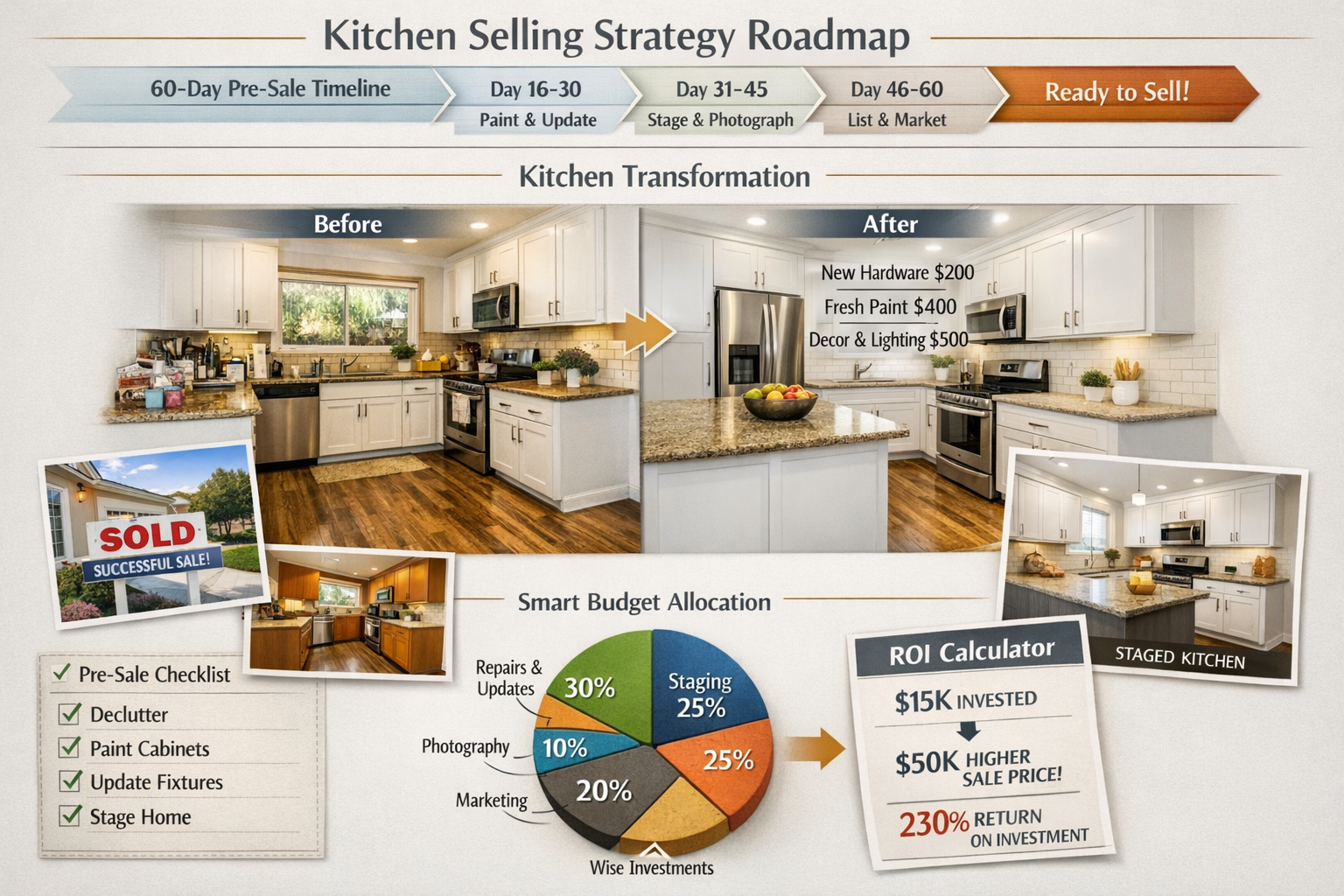
Research consistently shows that kitchen improvements under $5,000 deliver the best ROI for sellers—often returning 80-100% or more of the investment[3]. This sweet spot focuses on freshening, cleaning, and minor repairs rather than renovations. Here’s how to maximize impact while minimizing cost:
1. Deep Professional Cleaning ($300-$500)
This is the single highest ROI investment you can make. A professional deep clean makes everything look newer, brighter, and better maintained. This includes:
- Degreasing all surfaces, especially above the stove
- Cleaning inside all appliances
- Scrubbing grout lines and tile
- Polishing all fixtures and hardware
- Cleaning windows inside and out
- Detailing cabinet interiors
A sparkling clean kitchen signals to buyers that the home has been well maintained throughout. It’s the foundation of every successful kitchen presentation.
2. Fresh Paint ($400-$800)
Paint delivers extraordinary impact for minimal investment. Fresh, neutral paint makes spaces feel larger, brighter, and more modern. Stick to whites, soft grays, or warm neutrals that appeal to the broadest audience.
Focus on:
- Walls and ceiling
- Cabinet interiors (if visible)
- Trim and moldings
- Any scuffed or marked surfaces
Professional painters can typically complete a kitchen in 1-2 days, and the transformation is immediate and dramatic. This is based advice that works every time.
3. Hardware Updates ($200-$500)
New cabinet hardware is the jewelry of the kitchen—small details that make a big impression. Modern, brushed nickel or matte black hardware can make even dated cabinets feel fresh and current.
Replace:
- All cabinet knobs and pulls
- Faucet (if current one is dated or damaged)
- Light switch and outlet covers
- Any visible hinges or catches
This simple upgrade takes a few hours and costs a few hundred dollars, but it signals to buyers that the kitchen is current and well maintained.
4. Strategic Repairs ($500-$1,500)
Fix everything that’s broken, damaged, or dysfunctional. Buyers notice problems and either walk away or use them as negotiation leverage. Common kitchen repairs include:
- Fixing leaky faucets
- Repairing loose cabinet doors or drawers
- Replacing cracked or broken tiles
- Fixing any appliance issues
- Repairing damaged countertops
- Addressing any plumbing or electrical problems
These repairs don’t add value per se, but they prevent value loss. A broken faucet might cost $150 to fix but could cost you $5,000 in negotiating power if buyers discover it during inspection.
5. Lighting Improvements ($300-$800)
Good lighting makes kitchens feel larger, cleaner, and more inviting. This doesn’t mean expensive fixtures—it means adequate, well-placed light.
Simple upgrades:
- Replace any dated or broken fixtures with simple, modern options
- Add under-cabinet lighting ($200-$400)
- Install dimmer switches ($50-$150)
- Use bright, daylight-spectrum bulbs in all fixtures
- Ensure all lights work properly
Lighting is one of those details that buyers might not consciously notice, but it dramatically affects how they feel in the space. A bright, well-lit kitchen feels welcoming; a dim one feels depressing.
6. Decluttering and Staging ($0-$500)
This costs almost nothing but delivers massive impact. Remove everything from countertops except 1-2 decorative items. Clear out cabinets so they appear spacious. Organize the pantry. Remove personal items like family photos or kids’ artwork.
The goal is to create a neutral, spacious canvas that allows buyers to envision themselves in the space. Professional staging techniques can make even modest kitchens feel high-end.
The Fresh vs. Renovated Approach
Here’s a concept that’s revolutionizing how smart sellers approach pre-sale prep: Fresh beats renovated for most buyers. A clean, well-maintained, slightly dated kitchen often sells faster than a partially renovated or inconsistently updated one.
Why? Because buyers can envision themselves updating a dated-but-clean kitchen, but they struggle with spaces that show inconsistent quality. A kitchen with new countertops but old cabinets, or new appliances but damaged flooring, signals poor decision-making and raises questions about what else might be wrong with the house.
The impeccable approach: Make everything clean, functional, and consistent. If you can’t afford to update everything, update nothing and focus on presentation instead.
Understanding Buyer Psychology
Modern buyers, especially in 2026, approach home purchases differently than previous generations. They’ve grown up with HGTV, Pinterest, and Instagram. They have strong opinions about design and often want to customize spaces to their exact preferences.
This shift means:
- Buyers increasingly prefer lower prices over included upgrades so they can customize themselves
- Neutral, blank-canvas spaces appeal more than highly designed ones because they’re easier to envision personalizing
- Functionality and condition matter more than finishes because finishes are easy to change but structural issues aren’t
- Over-upgraded homes in moderate neighborhoods feel out of place and can actually take longer to sell
The psychology of home selling involves understanding what buyers actually value versus what sellers think they value. These two things often diverge dramatically, especially in kitchens.
Kitchen Upgrades: Timing, Market Conditions, and Strategy 📈
Even if you decided to ignore all advice and renovate anyway, timing and market conditions dramatically impact whether kitchen upgrades make any sense at all. The decision to upgrade isn’t just about the upgrade itself—it’s about when you’re selling, what the market looks like, and what your specific goals are.
Market Conditions Matter More Than Granite
In a hot seller’s market, homes sell quickly regardless of kitchen condition. Buyers compete for limited inventory, and they’re willing to overlook dated kitchens if the location, price, and overall condition are right. In this environment, kitchen upgrades are almost always a waste of money because you’ll sell quickly anyway.
Conversely, in a buyer’s market with high inventory, homes sit longer and buyers become pickier. But even here, expensive kitchen upgrades don’t necessarily help because buyers have options. They can simply choose a different home with a kitchen they prefer rather than paying premium prices for your upgrades.
The 2026 Market Reality
The 2026 housing market continues to show regional variation with some markets favoring sellers and others favoring buyers. National trends show:
- Inventory remains below historical averages in most markets
- Buyers are increasingly price-sensitive due to elevated interest rates
- Time on market has increased compared to 2020-2022 but remains below pre-pandemic levels
- Buyers prioritize location and price over finishes and upgrades
In this environment, pricing strategy matters far more than kitchen upgrades. A well-priced home with a dated kitchen will sell faster than an overpriced home with a renovated one.
The Timeline Question
Here’s a critical factor most sellers ignore: Kitchen renovations take time. A major kitchen remodel typically requires 6-12 weeks from start to finish, and that assumes no complications (which is optimistic). Add another 2-4 weeks for planning, contractor selection, and material ordering.
So you’re looking at 3-4 months minimum from decision to completion. During this time:
- You’re paying your mortgage, insurance, and utilities
- You’re not on the market (opportunity cost)
- You’re dealing with contractor management stress
- You’re risking project delays and cost overruns
Let’s do the math: If your monthly carrying costs are $3,000 and the renovation takes four months, that’s $12,000 in additional costs before you even account for the renovation itself. Add a $30,000 renovation, and you’re at $42,000 invested for maybe $15,000 in added value. That’s not a strategy; that’s a financial disaster.
The Opportunity Cost Factor
Every month your home isn’t on the market is a month you’re not selling. In a market where homes sell in 30-45 days, spending four months on a kitchen renovation means you’re missing an entire selling season. This opportunity cost often exceeds the renovation cost itself.
Consider this scenario:
- Option A: Spend $30,000 and four months renovating, then sell for $355,000
- Option B: Spend $3,000 on cleaning and repairs, list immediately, sell in 45 days for $345,000
Option B nets you $342,000 after improvements. Option A nets you $325,000 after improvements. But Option A also cost you four months of carrying costs ($12,000) and four months of your life dealing with contractors. Option B wins by $29,000 and four months of stress.
This is the math that real estate investors understand but emotional homeowners often miss.
Neighborhood Positioning Strategy
Your neighborhood’s price point and typical buyer profile should dictate your entire approach to kitchen upgrades. This is where so many sellers go wrong—they make decisions based on their personal preferences rather than market realities.
Starter Home Neighborhoods ($200,000-$350,000)
In these markets, buyers prioritize affordability over finishes. They’re often first-time buyers stretching to afford the down payment. They want:
- Low purchase price
- Functional kitchen that works
- Opportunity to upgrade later themselves
Strategy: Minimal investment. Clean, repair, and stage. Price competitively. Don’t renovate.
Move-Up Neighborhoods ($350,000-$600,000)
These buyers have owned before and have stronger opinions about what they want. They’re looking for:
- Good bones and layout
- Reasonable condition
- Fair price that allows them to customize
Strategy: Focus on condition and functionality. Fix everything broken. Make it clean and neutral. Minor updates only.
Luxury Neighborhoods ($600,000+)
Luxury buyers expect higher-end finishes and better condition. However, they also have very specific tastes and often plan to customize anyway. They want:
- Quality construction
- Good layout and flow
- High-end neighborhood amenities
Strategy: Ensure everything works impeccably. Update only if current condition is significantly below neighborhood standards. Focus on presentation and staging.
The pattern? In every price point, condition and functionality matter more than expensive upgrades. The home selling strategies that work focus on presenting what you have in the best possible light, not transforming it into something else.
The Real Estate Investor Perspective
Want to know what’s truly based? Ask real estate investors what they do with kitchens before selling. Investors operate on pure ROI calculations without emotional attachment, and their approach is remarkably consistent:
- Clean everything thoroughly
- Fix anything broken
- Paint if needed
- Replace only what’s damaged beyond repair
- Stage strategically
- Price competitively
- Sell quickly
Investors understand that time on market costs money, renovations rarely return full value, and the goal is maximum profit, not maximum impressiveness. They’re not trying to create their dream kitchen—they’re trying to create the most marketable property at the lowest cost.
This investor mindset is exactly what traditional homeowners should adopt when selling. Remove emotion, focus on numbers, and make decisions based on ROI rather than personal preference.
For those interested in the investment approach to real estate, explore real estate investment strategies that actually build wealth rather than destroy it.
Alternative Strategies: Making Your Kitchen Sell Without Breaking the Bank 💡
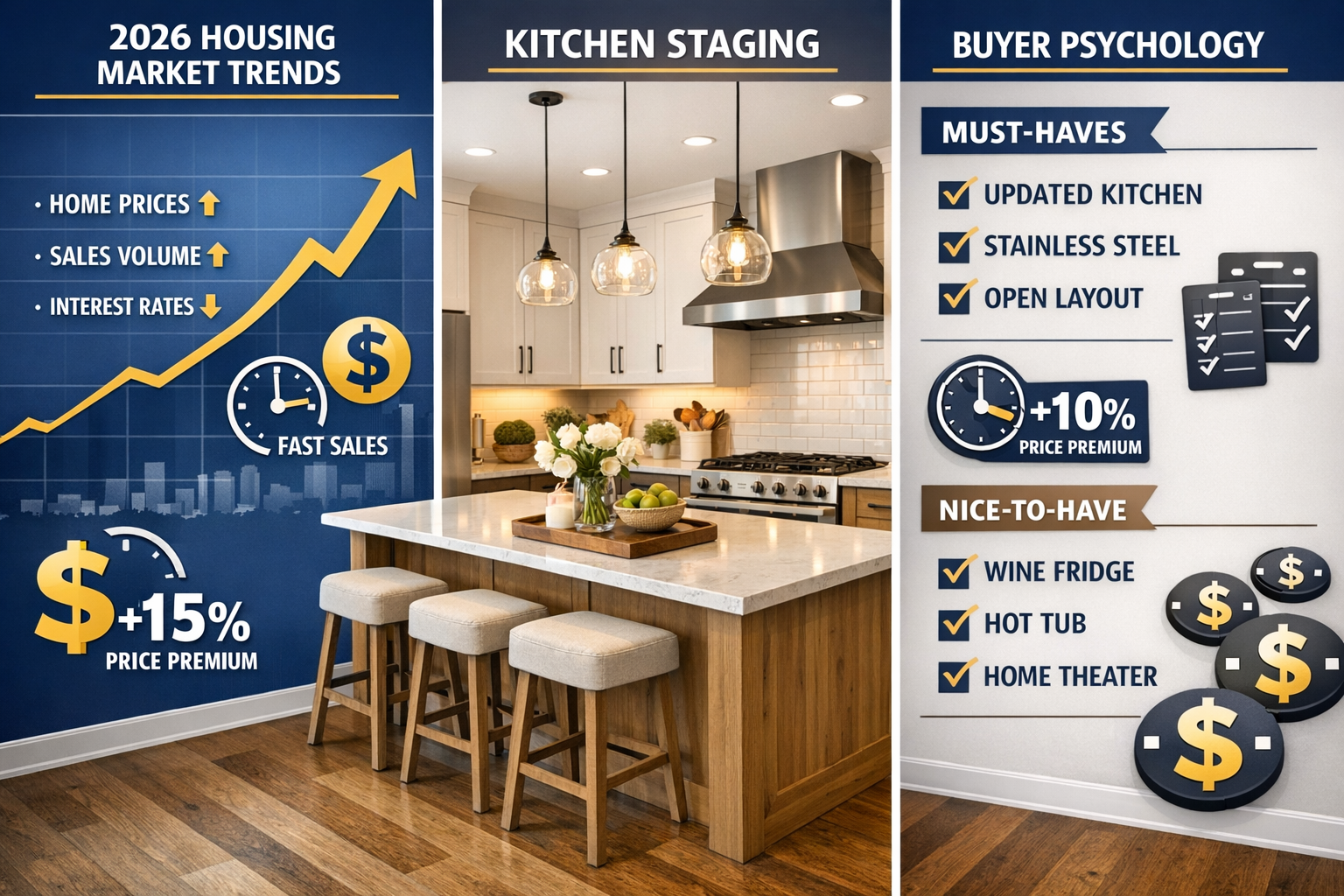
So if major kitchen upgrades are off the table, what actually works? Let’s explore the alternative strategies that deliver results without the financial pain. These approaches focus on presentation, psychology, and smart positioning rather than expensive renovations.
The Power of Professional Staging
Professional staging isn’t just arranging furniture—it’s psychological manipulation in the best possible way. Stagers understand how to make spaces feel larger, brighter, and more aspirational. For kitchens specifically, staging involves:
Visual Expansion Techniques
- Removing everything from countertops except 1-2 carefully chosen items
- Using mirrors or reflective surfaces to bounce light
- Selecting appropriately scaled furniture and accessories
- Creating clear sight lines through the space
- Maximizing natural light through window treatments
Psychological Triggers
- Setting the table for an aspirational meal
- Adding fresh flowers or fruit bowls (the only acceptable countertop items)
- Using neutral, spa-like color schemes
- Creating a “coffee bar” vignette with high-end coffee and minimal accessories
- Ensuring the space smells fresh and inviting
Professional staging typically costs $1,500-$3,000 for a full home, with kitchens being a primary focus. Studies show staged homes sell 73% faster and for 5-15% more than unstaged homes[4]. That ROI is extraordinary compared to renovations.
The dope part? Staging is temporary and reversible. You’re not making permanent changes you can’t undo—you’re simply presenting your existing space in the most appealing way possible.
The Strategic Pricing Approach
Here’s a radical idea: Instead of spending $30,000 on kitchen upgrades, price your home $15,000 below market and let buyers compete for it. This strategy works because:
Buyer Psychology Shifts
- Lower prices generate more showings and offers
- Multiple offers create competition and urgency
- Buyers feel they’re getting a deal and can afford to upgrade themselves
- The “value” positioning attracts more buyer attention than the “premium” positioning
Market Dynamics Favor You
- More showings mean higher probability of finding the right buyer
- Competition often drives final price above asking
- Faster sales mean lower carrying costs
- You avoid months of market time while renovating
Consider this scenario: You’re debating spending $25,000 on kitchen upgrades to sell your $350,000 home for maybe $360,000. Alternative strategy: List at $340,000, generate multiple offers, and sell for $350,000 in two weeks. You net more money, sell faster, and avoid renovation stress.
This is exactly how savvy investors approach selling, and it’s why they consistently outperform emotional sellers who over-improve their properties. Understanding pricing strategies that work can be more valuable than any renovation.
The Disclosure and Transparency Strategy
Another approach gaining traction in 2026: Complete transparency about the kitchen’s condition combined with appropriate pricing. This means:
Full Disclosure
- Clearly stating the kitchen hasn’t been updated
- Providing accurate age information on appliances
- Disclosing any known issues upfront
- Positioning the home as a “customize to your taste” opportunity
Strategic Marketing
- Highlighting the opportunity for buyers to create their dream kitchen
- Emphasizing other home features (location, yard, layout, etc.)
- Providing renovation estimates or contractor contacts
- Showing comparable renovated homes to demonstrate potential
This approach works particularly well with:
- First-time buyers who want to customize gradually
- Investors looking for value-add opportunities
- DIY enthusiasts who enjoy renovation projects
- Buyers with very specific design preferences
By positioning your dated kitchen as an opportunity rather than a liability, you reframe the conversation entirely. Instead of apologizing for what isn’t updated, you’re highlighting the blank canvas potential.
The “Good Bones” Marketing Angle
Smart marketing can transform how buyers perceive your kitchen. Instead of focusing on finishes, focus on fundamentals:
Highlight Structural Advantages
- Great layout and workflow
- Abundant natural light
- Generous storage space
- Good size and proportions
- Quality construction
Emphasize Functionality
- All appliances work properly
- Plenty of counter space
- Good traffic flow
- Adequate electrical and plumbing
- Well-maintained condition
This approach works because it shifts buyer attention from cosmetic details to fundamental qualities that are expensive to change. Buyers can easily update finishes, but they can’t easily change layout, size, or natural light.
The marketing copy might read: “Spacious kitchen with excellent bones ready for your personal touch. Abundant natural light, generous storage, and great workflow make this the perfect canvas for your dream kitchen.”
See what happened there? The dated finishes became “opportunity for personalization,” and the focus shifted to unchangeable positives.
The Incentive Strategy
Rather than spending $25,000 on kitchen upgrades, offer a $15,000 credit toward buyer-chosen upgrades. This strategy delivers multiple advantages:
For Buyers
- They choose finishes they actually want
- They can finance the work into their mortgage
- They control the renovation timeline and contractors
- They feel they’re getting a deal
For Sellers
- Lower upfront cost ($15,000 vs. $25,000)
- No renovation timeline delays
- No risk of choosing wrong finishes
- Faster path to market
This approach works particularly well in competitive markets where buyers are comparing multiple properties. The credit becomes a differentiator that costs you less than renovating would have.
Just ensure the credit is clearly documented in the purchase agreement and that buyers understand how it works. Work with your real estate agent to structure this properly.
The Timing and Seasonality Play
Sometimes the best kitchen upgrade strategy is simply listing at the right time. Spring and early summer consistently show the highest buyer activity and fastest sales. By listing during peak season, you can often sell quickly despite a dated kitchen because:
- Buyer competition is highest
- Inventory moves faster
- Families want to move before school starts
- Weather allows for better showing conditions
Conversely, spending three months renovating during peak season means you miss the optimal selling window entirely. You might finish your renovation in October when buyer activity slows, negating any advantage the updates provided.
Strategic timing often matters more than granite countertops. Understanding market timing can be your secret weapon.
The Comparable Sales Reality Check
Before making any kitchen upgrade decisions, study recent comparable sales in your neighborhood. Look specifically at:
- How quickly did homes with updated kitchens sell vs. homes without?
- What price premium did updated kitchens command?
- Did any homes with dated kitchens sell quickly and at good prices?
- What was the actual price difference between updated and non-updated homes?
Often, you’ll discover that kitchen condition mattered less than you thought. Location, price, overall condition, and market timing typically drive sales more than kitchen finishes. This data-driven approach removes emotion and grounds decisions in market reality.
Your real estate agent should provide this comparative market analysis, but you can also research recent sales yourself through public records and real estate websites. The data often reveals that the kitchen upgrade premium is much smaller than anticipated.
For more insights on preparing your home strategically, check out this expert guide on getting your home ready to sell.
Kitchen Upgrades to Skip Before Selling: Save Money, Sell Faster
Conclusion: The Smart Seller’s Kitchen Strategy 🎯
Let’s bring this all together with some real talk. The kitchen upgrade game before selling is rigged against you. The numbers don’t lie: Most renovations return 30-60% of their cost, meaning you’re guaranteed to lose money. The timeline delays cost you months of market opportunity. The stress of managing contractors while trying to sell is extraordinary. And worst of all, there’s no guarantee buyers will even like your choices.
So what’s the play? The smart seller’s kitchen strategy focuses on three core principles:
1. Maximize Presentation, Minimize Investment
Deep clean everything. Fix what’s broken. Paint if needed. Stage strategically. Make your existing kitchen look its absolute best without changing its fundamental character. This approach costs under $5,000 and delivers 80-100% ROI or better.
2. Price Strategically, Not Emotionally
Your kitchen’s condition should be reflected in your pricing strategy, not your renovation budget. A competitively priced home with a dated kitchen sells faster than an overpriced home with updates. Let buyers compete for value rather than justifying premium pricing.
3. Focus on Speed, Not Perfection
Every month your home sits off the market or unsold costs you money. The fastest path to sold is rarely through a three-month renovation. Get to market quickly with a clean, functional, well-presented home and let the market decide its value.
Your Action Plan
Here’s exactly what to do right now:
Week 1: Assessment
- Honestly evaluate your kitchen’s condition
- Research comparable sales in your neighborhood
- Calculate the actual price premium updated kitchens command
- Determine your timeline and financial goals
Week 2: Strategic Planning
- Consult with a real estate agent about current market conditions
- Get quotes for deep cleaning and minor repairs only
- Identify any broken items that must be fixed
- Plan your staging approach
Week 3: Execution
- Schedule professional deep cleaning
- Complete all necessary repairs
- Paint if needed
- Update hardware if budget allows
- Stage the space
Week 4: Market
- List your home with strategic pricing
- Highlight your kitchen’s strengths in marketing
- Be prepared to offer upgrade credits if needed
- Focus on other home features in showings
This plan gets you to market in one month instead of four, costs under $5,000 instead of $50,000, and positions you for a quick sale at a competitive price.
The Final Word
The real estate market in 2026 rewards speed, strategy, and smart positioning—not expensive renovations. Buyers want value and opportunity, not your personal design choices. By understanding this fundamental shift and acting accordingly, you’ll sell faster, stress less, and keep more money in your pocket.
That’s what we call based financial decision-making.
The kitchen upgrades you skip might just be the smartest investment decision you make in your entire selling process. Clean it, fix it, stage it, price it right, and move on to your next chapter. That’s the dope strategy that actually works.
For more expert guidance on selling your home successfully, explore additional resources that help you navigate the process with confidence and clarity. Your next home is waiting—don’t waste time and money on renovations that won’t pay off.
References
[1] Remodeling Magazine. (2026). Cost vs. Value Report: Kitchen Remodeling ROI Analysis.
[2] U.S. Bureau of Labor Statistics. (2025). American Time Use Survey: Cooking and Food Preparation Trends.
[3] National Association of Realtors. (2026). Remodeling Impact Report: Kitchen Updates and Home Value.
[4] Real Estate Staging Association. (2025). Home Staging Statistics and Market Impact Study.