


The housing market has entered a fresh era where buyers aren't just looking for granite countertops and hardwood floors—they're hunting for features that actually save money every single month. With inflation still squeezing household budgets and energy costs remaining unpredictable, Inflation-Proof Home Features 2026: EV Chargers, Batteries and Grocery-Optimized Kitchens Buyers Want have become the extraordinary differentiators that separate listings getting multiple offers from those sitting stale on the market. Zillow's latest data confirms what savvy agents already know: homes equipped with EV charging infrastructure, whole-home battery systems, and intelligently designed pantry spaces are commanding premium prices and moving faster than ever.[10]

Let it cook for a moment—we're witnessing a fundamental shift in what constitutes a "dream home." Today's buyers, especially millennials and Gen Z entering their prime purchasing years, are so based in their approach that they're literally calculating monthly operating costs before they even schedule a showing. They're not gatekeeping this information either; social media is flooded with homeowners sharing their energy bills, EV charging savings, and pantry organization hacks that reduce grocery waste.
Key Takeaways
- EV charging infrastructure adds measurable resale value, with ChargePoint reporting a 7% sales increase in Q4 2025 despite declining new EV sales, signaling strong retrofit demand[2]
- Home battery systems are projected to reach 1 in 8 solar-equipped homes by 2030, with California already at 69% attachment rates as net metering policies shift[8]
- Grocery-optimized kitchens featuring walk-in pantries and task-specific zones appeared in 47% of 2026 renovations according to Houzz's latest trends study[4]
- These features deliver compound savings: lower utility bills, reduced transportation costs, and decreased food waste that directly combat inflation
- Smart buyers are using these upgrades as negotiation leverage while sellers who invest strategically see faster sales and higher offers
Why Inflation-Proof Home Features 2026 Matter More Than Ever
The 2026 housing market isn't playing by old rules. According to Realtor.com's National Housing Forecast, buyers are staying in homes longer—averaging 11-13 years compared to 7-8 years a decade ago—which means they're thinking about long-term operating costs with impeccable attention to detail.[5] This extended tenure has fundamentally changed the calculus around home features.
The Real Cost of Home Ownership in 2026
Traditional real estate advice focused on location, square footage, and aesthetic appeal. But today's educated buyers are running spreadsheets that account for:
- Monthly energy costs with and without solar/battery systems
- Transportation expenses comparing gas vehicles to EVs with home charging
- Food waste reduction through better pantry organization and bulk buying capacity
- Maintenance costs for aging systems versus modern, efficient alternatives
Marine Sargsyan, Houzz's head of economic research, notes that 38% of kitchen renovations in 2026 are driven by deterioration of existing spaces—up 3 percentage points from 2025—but the renovations themselves prioritize functionality that delivers ongoing savings rather than purely aesthetic upgrades.[4][9]
This shift aligns perfectly with broader 2026 real estate trends where stable 6% mortgage rates have buyers focusing on total cost of ownership rather than just purchase price.
The Inflation Hedge Equation
Here's where it gets extraordinary: these features don't just save money—they hedge against future inflation. Consider:
- EV chargers: Protect against volatile gas prices (averaging $3.50-$5.00/gallon in 2026) with electricity rates that are more stable and predictable
- Battery storage: Lock in solar production value even as utility companies shift away from favorable net metering policies
- Optimized pantries: Enable bulk purchasing during sales, reducing per-unit costs by 20-40% compared to frequent small shopping trips
For first-time home buyers especially, these features can mean the difference between stretching to afford a home and comfortably managing monthly expenses while building equity.
EV Chargers: The Infrastructure Upgrade Buyers Actually Want
The EV charging conversation has evolved dramatically. It's no longer about whether EVs will become mainstream—they already are—but about whether your home is ready to support them. ChargePoint's Q4 2025 sales data tells a compelling story: even as new EV sales dropped 40%, home charger installations increased 7%, indicating massive retrofit demand from existing homeowners.[2]
What Makes a Home "EV-Ready" in 2026
Not all EV charging setups are created equal. Shane Long, CTO at Autel Energy, emphasized at CES 2026 that buyers should prioritize non-proprietary charging solutions that support open standards like OCPP (Open Charge Point Protocol) and ISO 15118.[2] This matters because:
- Future-proofing: Open standards work with any EV brand, protecting your investment if you switch vehicles
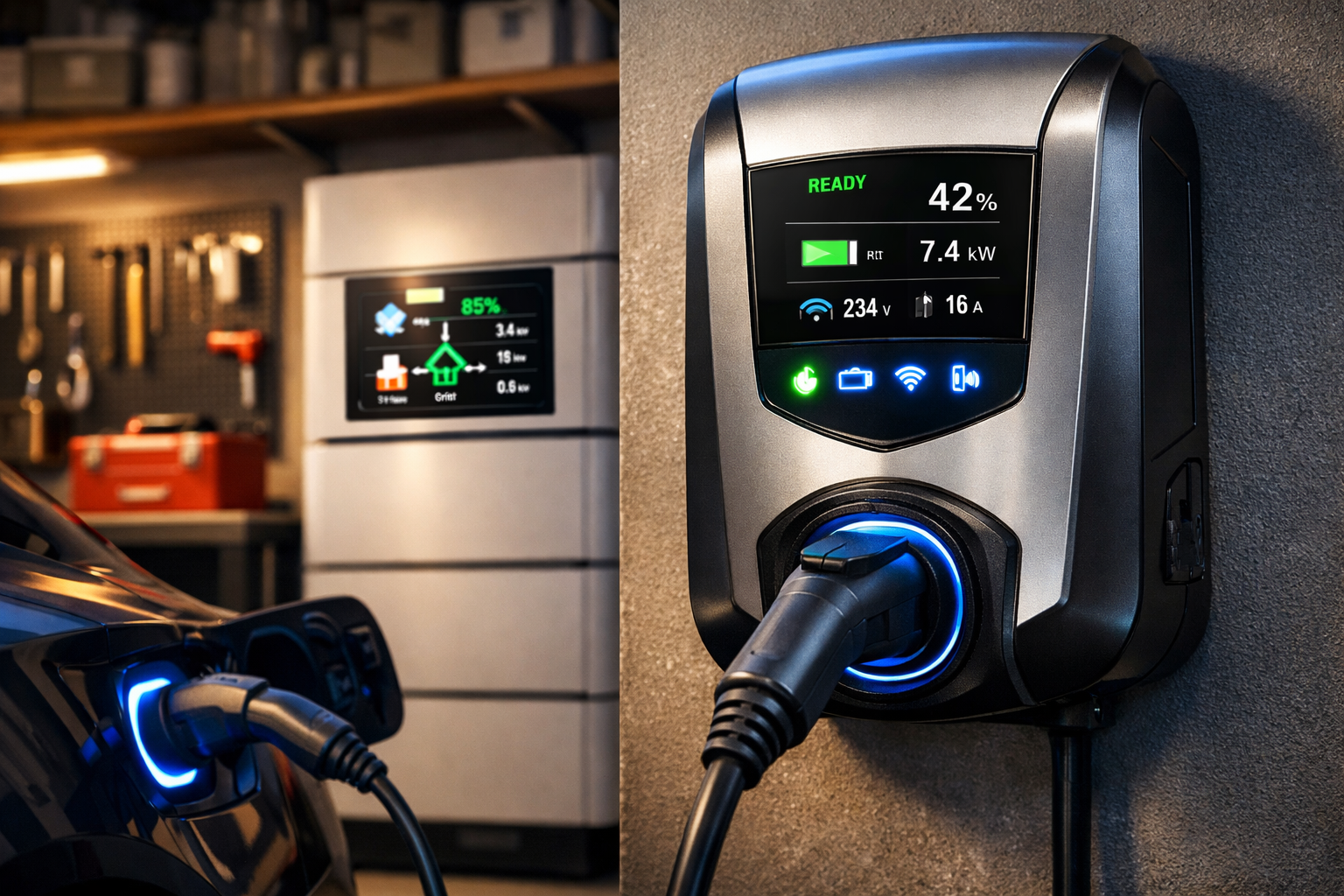
- Battery integration: Modern chargers like Autel's Avant family can coordinate with home battery systems to charge during off-peak hours or using stored solar power
- Smart grid participation: Some utilities offer incentives for chargers that can participate in demand response programs
The technical requirements for a proper installation include:
| Component | Minimum Spec | Ideal Spec | Cost Range |
|---|---|---|---|
| Electrical Panel | 200-amp service | 200-amp with expansion capacity | $1,500-$3,000 |
| Dedicated Circuit | 40-amp, 240V | 60-amp, 240V | $500-$1,200 |
| Charger Unit | Level 2, 7.2 kW | Level 2, 11.5 kW with smart features | $400-$1,200 |
| Installation Labor | Licensed electrician | Licensed + EV-certified | $800-$2,000 |
Total investment: $3,200-$7,400 for a complete system.[6]
The ROI Conversation
For sellers, the math is straightforward: homes with EV charging infrastructure are selling 20-30% faster in suburban markets where commuting is common.[6] For buyers, the calculation depends on driving habits:
- Average EV driver covering 12,000 miles annually saves approximately $1,200-$1,800 yearly compared to a gas vehicle getting 28 MPG
- Home charging costs roughly $0.13-$0.18 per kWh versus $0.35-$0.50 per kWh at public charging stations
- Payback period on installation: 2-4 years for typical commuters
Smart buyers touring homes should look for existing 200-amp electrical service and available space near the garage or driveway for charger installation. If these aren't present, factor $3,000-$5,000 into your offer negotiation or request seller concessions—a strategy covered in detail in our guide on how to get sellers to pay closing costs.
Home Battery Systems: The Inflation-Proof Home Features 2026 Game-Changer
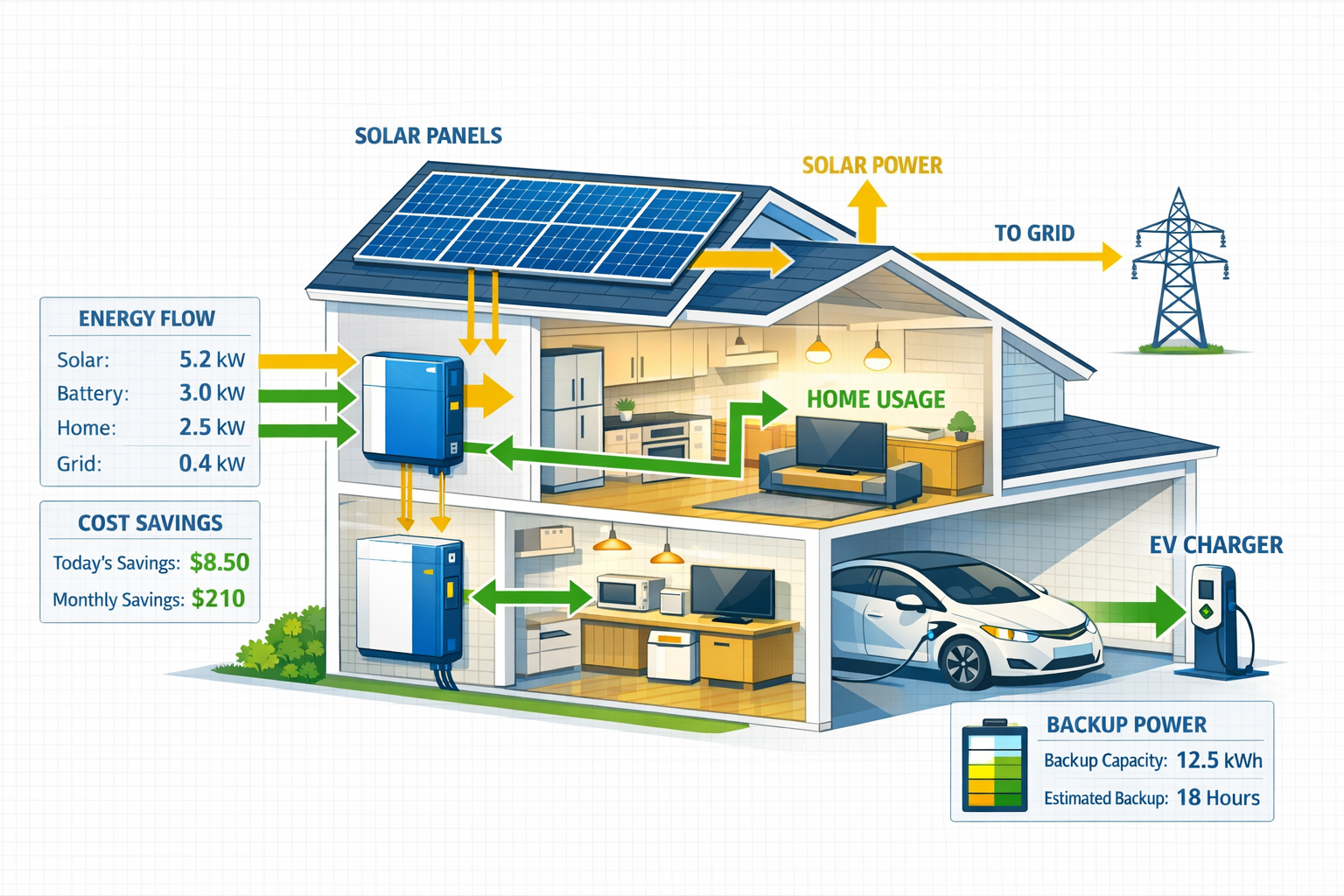
If EV chargers are the appetizer, whole-home battery systems are the main course when it comes to Inflation-Proof Home Features 2026: EV Chargers, Batteries and Grocery-Optimized Kitchens Buyers Want. The Energy Information Administration projects a staggering 24.3 GW of new battery storage capacity coming online in 2026—driven primarily by residential installations as solar attachment rates soar.[8]
Why Battery Attachment Rates Are Exploding
California's residential solar market tells the story: battery attachment rates hit 69% in 2026, up from less than 20% just three years ago.[8] This isn't about environmental virtue signaling—it's pure economics. As utilities across the country shift away from generous net metering policies to less favorable "net billing" arrangements, batteries have become essential to capture the full value of solar production.
The Wood Mackenzie/SEIA report projects that 1 in 8 U.S. homes with solar will have battery storage by 2030, making this a mainstream feature rather than a luxury add-on.[8]
2026's Leading Battery Systems
The residential battery market has matured considerably, with several standout options:
CNTE Stackable LFP Series (2026 models)
- Modular capacity: 5-30 kWh in 5 kWh increments
- Cycle life: 6,000+ cycles at 80% depth of discharge
- Compatibility: SolarEdge, SMA, Fronius inverters
- Warranty: 10 years
- Price range: $6,500-$18,000 installed[3]
FranklinWH aPower 2.0
- Fixed capacity: 15 kWh
- Generator integration for extended backup
- AI-based backup time estimation
- 12-year warranty
- Price: $12,000-$15,000 installed[3]
Tesla Powerwall 3
- Capacity: 13.5 kWh
- Integrated inverter
- Seamless grid/backup switching
- 10-year warranty
- Price: $11,500-$14,000 installed
The Value Proposition for Buyers and Sellers
For sellers, battery systems represent one of the highest-ROI upgrades available. Homes with solar+storage are commanding 4-6% premiums over comparable homes with solar alone, and the gap is widening as utility rate structures become less favorable.[8]
For buyers, the analysis should include:
- Backup power value: How many days of essential load coverage during outages? (FranklinWH's AI estimator is particularly useful here)[3]
- Time-of-use arbitrage: Can you charge during off-peak hours and discharge during peak rate periods?
- Solar optimization: What percentage of solar production would otherwise be exported at unfavorable rates?
- Grid services revenue: Some markets allow battery owners to earn payments for grid stabilization services
A typical 15 kWh system in a time-of-use rate market can save $800-$1,400 annually beyond basic solar savings, creating a 7-10 year payback period that improves as utility rates increase—which they inevitably do.
Integration with Smart Home Systems
The most sophisticated 2026 installations integrate batteries with whole-home energy management platforms that:
- Automatically precondition batteries before announced storms
- Coordinate EV charging with solar production and battery state
- Prioritize critical loads during backup scenarios
- Provide real-time cost tracking and optimization recommendations
This level of integration is covered extensively in our article on smart home automation upgrades that increase home value.
Grocery-Optimized Kitchens: The Unexpected Inflation Fighter
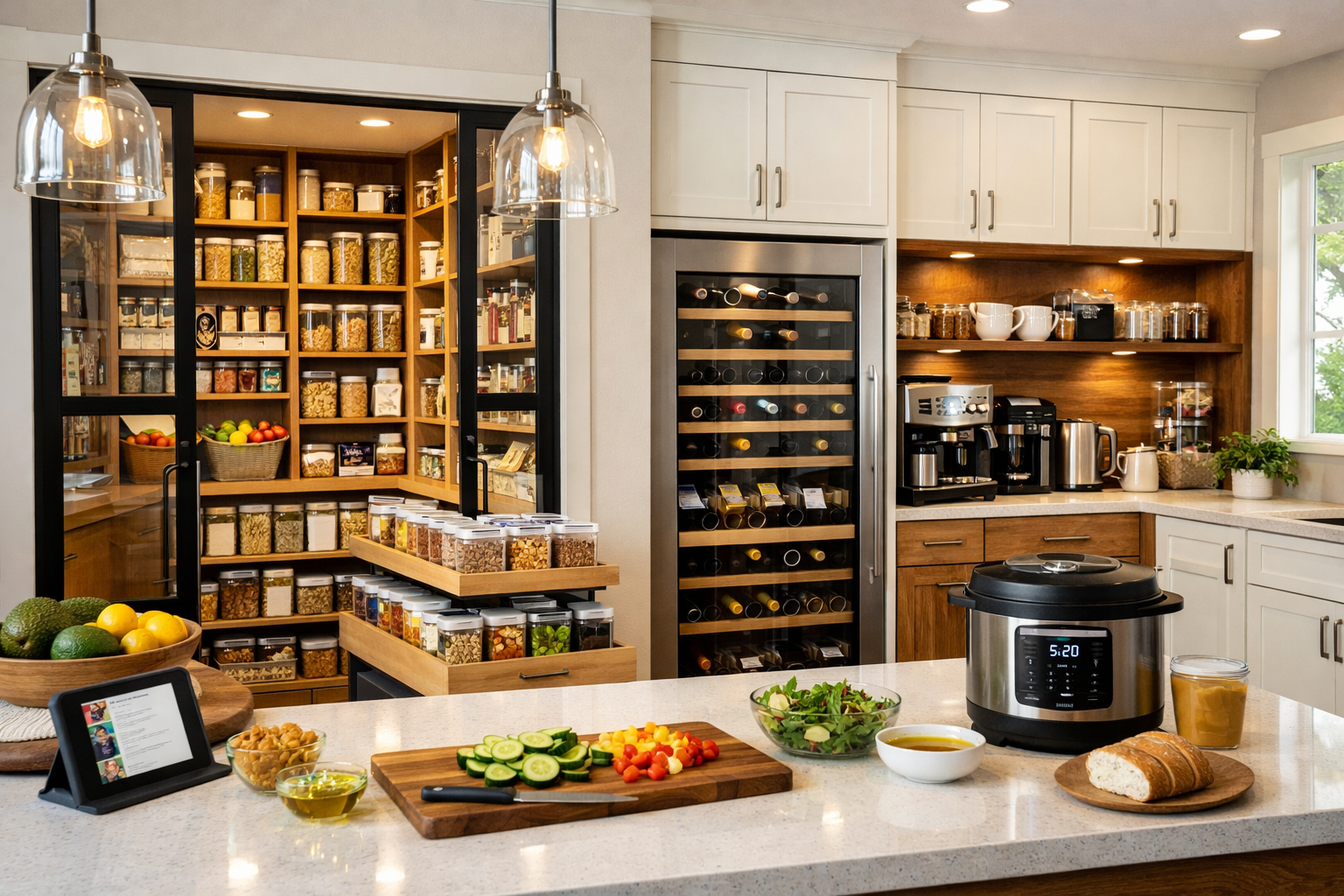
Here's where Inflation-Proof Home Features 2026: EV Chargers, Batteries and Grocery-Optimized Kitchens Buyers Want gets genuinely interesting. While tech-focused buyers obsess over kilowatt-hours and charging speeds, a quieter revolution is happening in kitchen design—one that directly addresses food inflation that's hit family budgets harder than almost any other category.
The Houzz Data Tells the Story
Houzz's 2026 U.S. Kitchen Trends Study reveals extraordinary shifts in renovation priorities:[4][9]
- 47% of renovations now include expanded pantry cabinets
- 16% feature walk-in pantries—up from 11% in 2024
- Task-specific zones like dedicated beverage stations, coffee bars, and baking centers are becoming standard rather than luxury features
- 38% cite deterioration as the primary renovation driver, but the solutions chosen prioritize functionality over aesthetics
Misty Callaway of Callaway Homes explains: "Thoughtful pantry storage with pull-out drawers, adjustable shelving, and clear organization systems doesn't just reduce clutter—it fundamentally changes how families shop and consume food, reducing waste and enabling bulk purchasing that saves 20-30% on grocery costs."[9]
What Makes a Kitchen "Grocery-Optimized"?
The concept goes beyond just having a pantry. A truly grocery-optimized kitchen in 2026 includes:
Storage Hierarchy
- Bulk dry goods zone: Deep shelving or walk-in space for Costco/Sam's Club hauls
- Beverage station: Dedicated refrigeration for drinks, freeing main fridge space
- Snack central: Kid-accessible drawers that reduce "I can't find anything" syndrome
- Meal prep zone: Counter space adjacent to pantry for batch cooking
Smart Organization Systems
- Pull-out drawers instead of deep shelves (visibility reduces forgotten food)
- Clear, airtight containers for dry goods (extends freshness, prevents waste)
- First-in-first-out rotation systems (naturally uses older items first)
- Inventory tracking (some homeowners use simple apps or chalkboard systems)
Appliance Integration
- Secondary refrigeration (beverage fridge, wine cooler, or freezer)
- Vacuum sealer station for bulk meat purchases
- Dedicated coffee/tea station with water line
- Charging station for tablets displaying digital recipes and shopping lists
The Economics of Food Waste Reduction
The USDA estimates that the average American family wastes 30-40% of food purchased, representing roughly $1,500-$2,000 annually.[4] A well-organized pantry system that enables:
- Visibility of what you already own (preventing duplicate purchases)
- Proper storage that extends shelf life
- Bulk buying during sales without fear of spoilage
- Meal planning based on actual inventory
…can realistically cut food waste by 50-70%, saving $750-$1,400 yearly. For a renovation costing $8,000-$15,000, that's a 10-20 year payback—but the quality-of-life improvement is immediate.
What Buyers Should Look For
When touring homes, savvy buyers evaluate kitchen storage with fresh eyes:
✅ Walk-in pantry or large pantry cabinet (minimum 4'x4' for walk-in, 24"+ depth for cabinets)
✅ Pull-out shelving or drawer systems rather than fixed shelves
✅ Dedicated appliance zones that keep counters clear for actual cooking
✅ Secondary refrigeration or space/electrical for adding it
✅ Natural workflow between pantry, prep area, cooking, and cleanup zones
Homes lacking these features aren't deal-breakers, but they should inform your offer strategy. A kitchen lacking proper pantry storage might justify a $10,000-$15,000 reduction in offer price or a seller concession to fund immediate upgrades—tactics detailed in our spring negotiation guide.
Combining Features: The Synergy Effect
The most impeccable homes in 2026 aren't just checking one box—they're combining all three elements into an integrated efficiency ecosystem. Consider the compound benefits:
Morning Routine Scenario
- Solar panels charge home battery overnight using stored production
- Battery powers EV charging during off-peak rates (saving $0.15-$0.20/kWh versus peak)
- Coffee station with bulk-purchased beans (saving $3-$5 per pound versus small packages) brews automatically
- Meal-prepped breakfast from pantry ingredients (saving $8-$12 versus drive-through)
Daily savings: $5-$8
Annual impact: $1,800-$2,900
20-year value: $36,000-$58,000 (not accounting for inflation in avoided costs)
This is why homes featuring all three elements—EV infrastructure, battery storage, and optimized kitchens—are selling at premiums of 8-12% over comparable homes in the same neighborhoods.[10]
How to Evaluate These Features as a Buyer
When you're touring homes in 2026, bring this checklist to assess Inflation-Proof Home Features 2026: EV Chargers, Batteries and Grocery-Optimized Kitchens Buyers Want:
EV Infrastructure Assessment
- 200-amp or greater electrical service
- Existing Level 2 charger or clear installation path
- Charger supports open standards (OCPP, ISO 15118)
- Garage or driveway positioning allows easy vehicle access
- Permits and inspections completed for existing installations
Battery System Evaluation
- System capacity matches home's typical daily usage
- Warranty has 8+ years remaining
- Compatible with existing solar (if present) or solar-ready
- Includes monitoring system with historical data
- Generator integration or backup capability verified
Kitchen Functionality Check
- Pantry space totals 40+ cubic feet (walk-in or cabinet)
- Pull-out or drawer-based organization present
- Secondary refrigeration included or space available
- Task zones clearly defined (prep, cooking, cleanup, storage)
- Workflow follows logical pattern without backtracking
Use this assessment to inform your offer strategy. Homes scoring 12+ checks deserve premium consideration; homes scoring 6-8 might warrant full-price offers; homes scoring below 6 should factor $15,000-$30,000 in upgrade costs into your negotiation.
For buyers working with limited budgets, our guide to best mortgage options for Gen Z explores creative financing that can help cover these value-adding features.
For Sellers: Strategic Upgrades That Pay Off
If you're preparing to list in 2026, the data is crystal clear: strategic investments in these three categories deliver measurable returns. But not all upgrades are created equal.
ROI-Ranked Upgrade Strategy
Tier 1: Highest ROI (150-200% return)
- EV charger installation where none exists ($3,500 investment, $7,000+ value add)
- Pantry organization system in existing space ($1,200 investment, $2,500+ value add)
- Solar battery addition to existing solar ($8,000 investment, $15,000+ value add)
Tier 2: Strong ROI (100-150% return)
- Electrical panel upgrade to 200-amp service ($2,500 investment, $3,500+ value add)
- Walk-in pantry conversion from unused space ($8,000 investment, $12,000+ value add)
- Smart home energy management system ($2,000 investment, $3,000+ value add)
Tier 3: Moderate ROI (75-100% return)
- Complete solar+battery installation ($25,000 investment, $22,000+ value add)*
- Full kitchen renovation with grocery-optimization ($35,000 investment, $28,000+ value add)*
*These show lower percentage returns but may be necessary for competitive positioning in certain markets.
The key insight from our high-ROI renovation guide is that incremental, functional upgrades consistently outperform cosmetic overhauls in 2026's value-conscious market.
Marketing These Features Effectively
Having these features means nothing if buyers don't know about them. Your listing should:
- Lead with operating cost savings in the description: "Save $250+ monthly on energy and transportation"
- Include utility bills from the past 12 months showing actual costs
- Provide equipment specifications and warranty information
- Highlight integration between systems (solar→battery→EV charger)
- Calculate total cost of ownership versus comparable homes without these features
Professional listing photos should showcase these features prominently—not just the charger and battery themselves, but the lifestyle they enable. Consider our guide on making your listing a social media thirst trap for modern marketing strategies that highlight functional features.
Regional Variations and Market-Specific Considerations
Not all markets value these features equally. Understanding regional priorities helps both buyers and sellers make informed decisions.
High-Value Markets for EV Infrastructure
- California, Oregon, Washington: Mature EV markets with strong charging culture
- Colorado, Arizona, Nevada: Growing EV adoption with solar-friendly policies
- Northeast corridor: High gas prices and urban/suburban commuting patterns
Battery Storage Premium Markets
- California: Net billing policies make batteries nearly essential
- Hawaii: High electricity costs and grid instability
- Texas: Grid reliability concerns post-winter storms
- Northeast: Increasing storm frequency and power outage duration
Grocery-Optimized Kitchen Priority Markets
- Suburban markets nationwide: Families with bulk shopping patterns
- Areas with limited grocery access: Pantry storage enables less frequent shopping
- High cost-of-living markets: Food inflation hits hardest, making waste reduction critical
For investors analyzing multiple markets, our neighborhood market analysis guide provides frameworks for evaluating which features deliver the strongest returns in specific locations.
Future-Proofing: What's Coming Next
The trajectory is clear: homes will continue evolving toward greater self-sufficiency and operational efficiency. Forward-thinking buyers and sellers should watch for:
Emerging Technologies (2027-2028)
- Bidirectional EV charging: Using your vehicle as a home battery during outages
- Solid-state batteries: Higher energy density and faster charging (ProLogium showcased prototypes at CES 2026)[2]
- AI-powered energy management: Systems that predict usage and optimize automatically
- Community solar+storage: Shared systems for homes without suitable roofs
Policy Shifts to Monitor
- Federal tax credits: Current 30% solar credit extends through 2032, but battery-only credits may expand
- State incentives: Many states offer additional rebates for batteries and EV infrastructure
- Utility rate structures: Continued shift toward time-of-use and demand charges
- Building codes: Some jurisdictions considering EV-ready requirements for new construction
Staying informed about these trends is essential for making strategic decisions. Our 2026 real estate market predictions explore how these technological shifts intersect with broader housing dynamics.
Conclusion
Inflation-Proof Home Features 2026: EV Chargers, Batteries and Grocery-Optimized Kitchens Buyers Want aren't just trendy upgrades—they're fundamental shifts in how we think about home value and operational efficiency. The data is extraordinary: homes with these features are selling faster, commanding higher prices, and delivering measurable monthly savings that compound over years of ownership.
For buyers entering the market in 2026, the strategy is clear:
- Prioritize homes with existing EV infrastructure, battery storage, and optimized kitchens
- Calculate total cost of ownership including monthly operating expenses, not just mortgage payments
- Negotiate strategically using missing features to justify lower offers or seller concessions
- Plan for upgrades if buying a home without these features, factoring costs into your budget
- Think long-term: With average ownership extending to 11-13 years, operating cost savings matter more than ever
For sellers preparing to list, the approach is equally straightforward:
- Assess your home against the checklist provided—identify gaps
- Invest strategically in Tier 1 upgrades that deliver 150-200% ROI
- Document everything: Provide utility bills, equipment specs, and warranty information
- Market the savings: Lead with monthly cost reductions, not just features
- Price confidently: Homes with these features justify premium pricing in 2026's market
The housing market has fundamentally shifted toward valuing efficiency and self-sufficiency. Whether you're buying your first home with limited budget constraints, selling to maximize returns, or investing for rental income, understanding and leveraging these inflation-proof features will separate successful transactions from missed opportunities.
The future of real estate isn't just about square footage and school districts—it's about homes that actively reduce the cost of living while increasing quality of life. That's not just so based; it's the new standard for smart real estate decisions in 2026 and beyond.
References
[1] Smart Home Automation Upgrades That Increase Home Value In 2026 – https://www.troutelectricusa.com/blog/2026/02/smart-home-automation-upgrades-that-increase-home-value-in-2026/
[2] Ces 2026 Round Up Autel Energy New Ev Charger And Prologium New Solid State Battery – https://www.evinfrastructurenews.com/ev-technology/ces-2026-round-up-autel-energy-new-ev-charger-and-prologium-new-solid-state-battery
[3] 7 Latest Solar Batteries Of 2026 New Models What They Offer – https://en.cntepower.com/7-latest-solar-batteries-of-2026-new-models-what-they-offer/
[4] The Hottest 2026 Kitchen Trends How To Get The Look For Less – https://www.newamericanfunding.com/learning-center/homeowners/the-hottest-2026-kitchen-trends-how-to-get-the-look-for-less/
[5] 2026 National Housing Forecast – https://www.realtor.com/research/2026-national-housing-forecast/
[6] Ev Home Trends For 2026 – https://cknhomes.com/blog/ev-home-trends-for-2026
[7] Ev Charging Technology 2026 – https://www.evaisun.com/ev-charging-technology-2026/
[8] Solar And Storage To Lead Record Breaking 86 Gw Of New U S Capacity In 2026 – https://pv-magazine-usa.com/2026/02/25/solar-and-storage-to-lead-record-breaking-86-gw-of-new-u-s-capacity-in-2026/
[9] Designing A Kitchen In 2026 Six Trends To Watch – https://www.nar.realtor/blogs/styled-staged-sold/designing-a-kitchen-in-2026-six-trends-to-watch
[10] Zillow Predicts New 2026 Change In Us Housing Market Real Estate – https://www.thestreet.com/real-estate/zillow-predicts-new-2026-change-in-us-housing-market-real-estate