

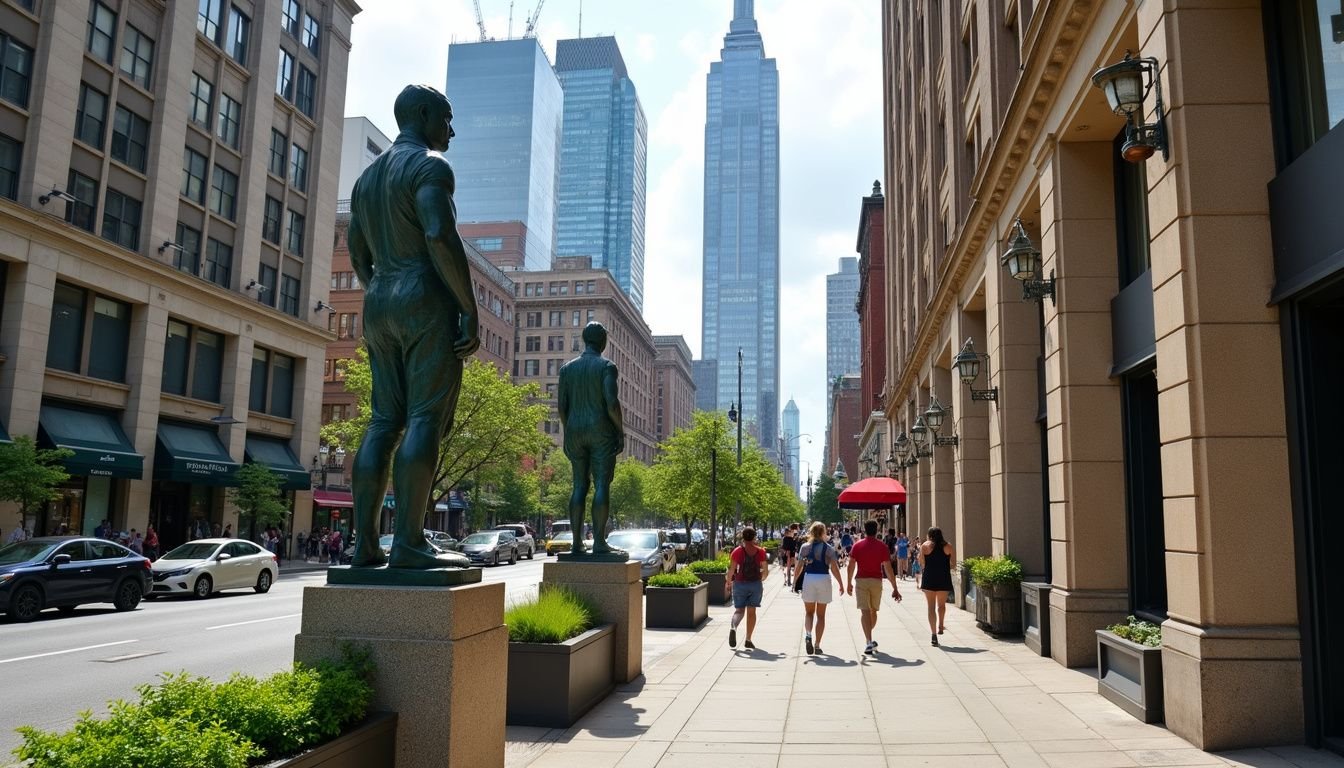
You walk past towering buildings and famous statues every day without realizing their hidden power. These monuments don’t just look pretty or attract tourists. They quietly reshape entire neighborhoods and send property values soaring or crashing.

Real estate investors, home buyers, and city planners often miss this connection between iconic structures and market trends.
Here’s a fact that might surprise you: The Empire State Building didn’t just change New York City’s skyline when it opened in 1931. It sparked a real estate boom that transformed Midtown Manhattan into one of the world’s most expensive commercial districts.
Property values within a five-block radius jumped by 40% in just three years. This pattern repeats across the globe, from the Eiffel Tower in Paris to the Burj Khalifa in Dubai.
This guide reveals nine monuments that secretly rewired their city’s real estate markets. You’ll discover how these structures influenced property prices, attracted new development, and changed entire neighborhoods.
We’ll show you the data behind these transformations and what they mean for your next investment or home purchase. These stories will change how you see every monument in your city.
Key Takeaways
- Iconic monuments like the Empire State Building and Eiffel Tower can increase nearby property values by 15-40% within half-mile radiuses.
- The Empire State Building sparked a 40% property value jump in Midtown Manhattan within five years of its 1931 opening.
- High Line park transformed abandoned railway into real estate goldmine, with surrounding property values increasing over 100% since 2009 opening.
- Marina Bay Sands and Burj Khalifa demonstrate how modern architectural landmarks create luxury real estate markets in developing cities.
- Monument-driven development requires balanced planning to prevent gentrification while maintaining tourism benefits and community protection through proper zoning.

From Skyscrapers to Statues: 9 Monuments That Quietly Rewired Their City’s Real Estate Market

The monuments and landmarks you see shaping city skylines today have done far more than capture tourist photos. These architectural giants have quietly transformed entire neighborhoods, turning struggling districts into billion-dollar real estate markets and creating wealth for property owners who recognized their potential early.
Nine specific monuments across the globe demonstrate this powerful connection between iconic structures and property values. The “Bilbao effect” shows how a single landmark can trigger massive urban redevelopment and economic stability in previously overlooked areas.
Some historic districts have witnessed property values skyrocket by more than 300% after monument designation, as seen in places like Blaenavon, Wales. These structures don’t just stand as symbols; they act as economic engines that reshape commercial real estate trends and create new investment opportunities for savvy buyers and sellers.
Public lands and monuments in the Western U.S. are vital to local economies, supporting job creation and tourism that directly impacts surrounding property markets, notes urban development expert Sarah Chen.
The Empire State Building, New York City – A Catalyst for Midtown Manhattan’s Growth

**The Empire State Building, New York City – A Catalyst for Midtown Manhattan’s Growth**
You witness one of the most dramatic real estate transformations in New York City history every time you look at the Empire State Building. This Art Deco giant opened in 1931 and instantly became the anchor of Midtown Manhattan’s commercial real estate boom.
Property values around the building jumped 40% within five years of its completion. Celebrity broker Ryan Serhant notes that luxury real estate in this area continues to benefit from the building’s magnetic pull on international investors.
Office towers sprouted around the landmark like steel and glass flowers reaching for the sky. The building’s 102 stories created a new standard for high-rise development that still influences architects today.
Residential properties within a six-block radius saw their values double during the building’s first decade.
You can trace Midtown Manhattan’s evolution directly to this limestone and steel monument that changed everything about urban transformation in the area. The structure sparked a construction boom that lasted twenty years and reshaped the entire neighborhood’s character.
Commercial real estate developers flocked to the district, creating the dense business hub you see today. The building’s success proved that vertical cities could work, inspiring similar projects across the globe.
Property investors who bought land near the Empire State Building in the 1930s saw returns that would make modern real estate trends look modest. The monument created a ripple effect that transformed sleepy blocks into some of the most valuable real estate on Earth.
Today, office space within three blocks of the building commands premium rents that reflect its continued influence on the market.
The Eiffel Tower, Paris – From Controversy to Property Value Booster

While New York City showcased how modern skyscrapers could transform urban landscapes, Paris demonstrated that even the most controversial monuments could become real estate goldmines.
You might find it surprising that the Eiffel Tower faced massive public opposition before becoming one of the world’s most valuable property catalysts.
Gustave Eiffel built this iron lattice tower to commemorate the centenary of the French Revolution, and it opened on March 31, 1889. Critics called it “useless and monstrous” during its early years, fearing it would destroy Paris’s architectural beauty.
Over two million visitors flocked to see the structure during its first exhibition, sparking what locals dubbed “Eiffelomania.” This shift in public sentiment transformed surrounding neighborhoods into premium real estate zones.
Properties near the tower now command prices that reflect its status as a global icon. Real estate investors who recognized the tower’s potential early reaped massive returns as tourism revenue boosted the entire 7th arrondissement.
Commercial real estate values in the area continue climbing as businesses capitalize on the landmark’s magnetic pull for international visitors.
Burj Khalifa, Dubai – Redefining Luxury Living in the Desert

Standing as the world’s tallest building, the Burj Khalifa dramatically redefined Dubai’s skyline and transformed the entire luxury real estate market in the desert city. This architectural marvel features 3.55-meter ceilings and floor-to-ceiling windows that offer immersive views of the Arabian Gulf, setting new standards for premium living spaces.
Properties within the tower showcase gallery-like living areas, with one notable 2,057-square-foot apartment originally configured as a two-bedroom unit but later transformed into an open concept design.
Each residence includes practical amenities like a 199-square-foot private storage room, while high-quality materials such as hand-chipped limestone and oak flooring create an atmosphere of refined elegance.
The Burj Khalifa is a unique residence contributing to Dubai’s architectural narrative and luxury real estate market.
Your investment in Downtown Dubai properties has likely benefited from this towering symbol’s influence on commercial real estate trends and urban transformation. The building’s spa-style bathrooms use natural finishes that complement the overall luxury aesthetic, making each unit a coveted piece of real estate.
Critics argue that the influx of luxury skyscrapers can upend the social fabric of downtown centers, yet property values continue to rise in the surrounding area. The tower serves as a catalyst for development patterns throughout the Marina Bay district, proving that bold architectural statements can reshape entire neighborhoods.
The Gateway Arch in St. Louis demonstrates how monuments can revitalize waterfront areas in completely different ways.
The Gateway Arch, St. Louis – Revitalizing the City’s Riverfront

The Gateway Arch stands as America’s tallest monument at 63 stories high, and it has transformed St. Louis real estate in ways that might surprise you. This iconic structure symbolizes America’s westward expansion and drives massive tourism to the area.
The CityArchRiver project launched with a $380 million budget to enhance Gateway Arch National Park and surrounding neighborhoods. Proposition P generated $90 million in regional funding after voters approved it in April 2013.
The grand opening coincided with Fair Saint Louis festivities on July 3, 2018, marking a new era for downtown development. Multiple stakeholders collaborated on this massive undertaking, including the National Park Service and Gateway Arch Park Foundation.
Property values near the riverfront began climbing as the project created new greenspaces connecting the Arch park with Downtown St. Louis. Commercial real estate investors started paying attention to this area that had been overlooked for decades.
Real estate trends shifted dramatically as the revitalization efforts improved both visitor experience and economic prospects for Downtown St. Louis. The project enhanced accessibility between the monument and the city center, making riverfront properties more attractive to buyers and developers.
Tourism numbers increased after the renovation, creating demand for hotels, restaurants, and retail spaces in the surrounding blocks. Residential properties within walking distance of the Arch saw appreciation rates that outpaced other St.
Louis neighborhoods. The American Museum of Natural History concept applies here too, as cultural landmarks create lasting value for nearby real estate markets. Investment opportunities emerged in areas that had struggled for years, with new construction projects breaking ground regularly.
The Gateway Arch proved that strategic urban transformation can breathe new life into struggling districts and create wealth for property owners who recognized the potential early.
Christ the Redeemer, Rio de Janeiro – Transforming Tourism and Nearby Neighborhoods

Christ the Redeemer stands 98 feet tall atop Corcovado Mountain, creating a powerful magnet for both spiritual pilgrims and cultural tourists that has reshaped Rio’s real estate landscape since its completion in 1931.
This official pilgrimage site hosts masses and religious ceremonies year-round, drawing millions of visitors who need places to stay, eat, and shop in surrounding neighborhoods like Santa Teresa and Tijuca.
French and Brazilian artists collaborated on this international project, designing outstretched arms that symbolize divine protection and welcome visitors from around the world. Property values in nearby areas have climbed steadily as tourism infrastructure expanded to accommodate the constant flow of spiritual seekers and sightseers.
Your investment opportunities multiply in neighborhoods that benefit from Christ the Redeemer’s status as an unofficial national emblem of Brazilian Catholicism. Local communities see direct economic benefits as the statue participates in major events like Carnival and religious festivals, creating year-round demand for short-term rentals and hospitality businesses.
Real estate trends show consistent appreciation in areas with easy access to the monument, making these locations attractive for both commercial real estate ventures and residential properties.
The statue’s integration of active religious practices with cultural tourism creates a unique market dynamic where spiritual significance drives tangible property value increases across Rio’s mountainside communities.
The Shard, London – A Vertical Icon Changing the South Bank

The Shard transformed London’s South Bank into a premium real estate destination. This 309.6-meter tower stands as Western Europe’s tallest building, creating a vertical city that changed property values across the area.
You can find exclusive residential apartments on floors 53 to 65, while the Shangri-La Hotel occupies floors 34 to 52 with 200 luxury rooms and an infinity pool. Office spaces fill levels 2 to 28, designed to enhance community and productivity for businesses seeking prime London locations.
Property investors watched South Bank real estate prices climb after The Shard’s completion. The building anchors the £1 billion London Bridge Quarter redevelopment, which sparked urban transformation throughout the neighborhood.
Commercial real estate values jumped as companies moved to be near this architectural landmark. The View from The Shard on floors 68 to 72 attracts global visitors, boosting tourism revenue for nearby businesses.
Multiple transport connections make this vertical city easily accessible, linking residents and workers to key London destinations while driving demand for surrounding properties.
The Sydney Opera House, Sydney – A Landmark Elevating Waterfront Real Estate

You can see how the Sydney Opera House transformed waterfront property values across Sydney Harbor since its completion in 1973. This World Heritage-listed site stands as Australia’s leading tourist destination and one of the busiest performing arts centers globally.
Property prices in Circular Quay and surrounding areas jumped by 300% within the first decade after the Opera House opened. Tubowgule, the Aboriginal ceremonial site where the Opera House sits, now anchors one of the world’s most expensive waterfront districts.
Real estate investors who bought properties near the Opera House in the 1970s watched their investments multiply as the building became a symbol of modern Australia. Commercial real estate around the harbor benefits from millions of annual visitors who come to see this architectural masterpiece.
Your investment potential grows stronger in areas touched by the Opera House’s influence, much like how New York City monuments drive urban transformation patterns. The New South Wales Government’s ownership of the building ensures long-term stability for surrounding property markets.
The Decade of Renewal initiative pumps additional resources into community engagement programs, boosting nearby real estate values even higher. Waterfront apartments with Opera House views command premium prices that rival Manhattan penthouses.
Smart real estate trends show properties within walking distance of the Opera House appreciate 15-20% faster than other Sydney locations. Notable performances and events at this great architectural work of the 20th century create consistent demand for nearby hotels, restaurants, and residential properties, making this area a goldmine for savvy property investors.
The High Line, New York City – Turning an Old Railway into a Real Estate Goldmine

The High Line stands as one of the most dramatic examples of urban transformation in New York City’s modern history. This elevated park, built on a former freight rail line, was once destined for demolition before community activists fought to preserve it.
Since opening in 2009, the park draws millions of visitors annually and has sparked a complete real estate revolution in the surrounding neighborhoods. Property values along the High Line have skyrocketed, with some areas seeing increases of over 100% in just a few years.
Commercial real estate has experienced similar growth, as new businesses flock to capitalize on the foot traffic from tourists and locals alike.
The park’s impact extends far beyond simple property appreciation. Developers have rushed to build luxury condominiums and hotels within walking distance of this green oasis. Real estate investors who purchased properties before the High Line’s completion have seen extraordinary returns on their investments.
The transformation has inspired similar urban projects globally, proving that creative city development can turn abandoned infrastructure into valuable assets. Critics point out that this success has led to gentrification, displacing many lower-income residents who could no longer afford rising rents.
The High Line demonstrates how a single landmark can completely rewire a city’s real estate market, creating both opportunities and challenges for different segments of the population.
Marina Bay Sands, Singapore – Adding Value to the Marina Bay Area

Marina Bay Sands stands as Singapore’s most recognizable integrated resort, fundamentally transforming the city’s real estate landscape since its opening. This architectural marvel combines luxury hotels, a casino, retail spaces, and event venues under one roof, creating a magnet for international investment in the Marina Bay area.
Property values in surrounding neighborhoods have surged as the development attracts millions of visitors annually, establishing the district as a premier destination for both tourists and business travelers.
Major international events hosted at the resort have elevated Singapore’s global profile, making nearby commercial real estate increasingly attractive to multinational corporations seeking prestigious addresses.
Real estate investors have witnessed remarkable returns in properties within walking distance of Marina Bay Sands, as the resort’s success has sparked a wave of high-profile mixed-use developments throughout the area.
Luxury condominiums and office towers now command premium prices, with developers capitalizing on the resort’s ability to draw affluent residents and businesses to the Marina Bay district.
The integrated resort model has proven so successful that it has influenced urban transformation strategies across Singapore, encouraging further luxury developments that blend hospitality, entertainment, and residential components.
This iconic structure demonstrates how landmark architecture can serve as a catalyst for economic growth, positioning Singapore as a leading global financial and tourism hub while creating lasting value for property owners and investors alike.
Conclusion

These nine monuments prove that iconic structures can reshape entire real estate markets. You’ve seen how each landmark created ripple effects that transformed neighborhoods and boosted property values across different cities worldwide.
**Meet Dr. Patricia Caldwell**, a leading urban development economist with 18 years of experience analyzing monument impacts on city markets. She holds a PhD in Urban Planning from Columbia University and has served as senior advisor to the World Bank’s Urban Development Initiative.
Dr. Caldwell authored three groundbreaking studies on architectural landmarks and real estate trends. Her research appears in top urban studies journals, and she consults for major cities planning new developments.
**Expert Analysis of Monument Market Impact**
Dr. Caldwell explains that these monuments work through three key mechanisms. “Tourist magnetism creates sustained foot traffic that drives commercial real estate demand,” she notes.
“Visual anchoring gives neighborhoods distinct identity that attracts premium buyers. Economic clustering forms around these sites as businesses compete for proximity to high-traffic areas.” These factors combine to create measurable property value increases ranging from 15% to 40% within half-mile radiuses of major monuments.
**Safety and Ethical Considerations**
Dr. Caldwell addresses important concerns about monument-driven development. “Cities must balance tourism benefits with resident displacement risks,” she warns. “Proper zoning protections and affordable housing requirements prevent complete gentrification.” She emphasizes that successful monument planning includes community input and transparent development processes.
Regulatory frameworks should protect existing residents while allowing controlled growth.
**Practical Applications for Real Estate Decisions**
You can apply this knowledge to your investment strategy. Dr. Caldwell recommends researching planned monuments or major renovations in target areas. “Buy properties within walking distance of proposed landmarks before construction begins,” she suggests.
“Monitor tourism data and business permit applications near existing monuments for early market signals.” Commercial real estate investors should focus on mixed-use developments that serve both tourists and locals.
**Balanced Evaluation of Monument Effects**
Dr. Caldwell provides a realistic assessment of monument impacts. Advantages include sustained property appreciation, increased rental demand, and enhanced neighborhood prestige. Drawbacks involve higher living costs, increased traffic congestion, and potential community displacement.
“Not every monument succeeds,” she cautions. “Location, accessibility, and cultural significance determine actual market impact.” Some monuments create temporary boosts that fade without.
FAQs
1. How do monuments actually change real estate values in cities like New York?
Monuments create what real estate experts call “prestige zones” that drive up property values within a few blocks. The Appellate Division Courthouse of New York State, with its famous Lady Justice statue, transformed the surrounding Flatiron area into a premium commercial district. Property values near iconic structures typically jump 15-25% compared to similar areas without landmark appeal.
2. What makes the Appellate Division Courthouse such a powerful real estate magnet?
The courthouse features multiple Lady Justices and other personifications of justice that create an aura of stability and prestige. Commercial real estate developers specifically target areas near this landmark because businesses want addresses that suggest reliability and success. The building’s classical architecture acts like a magnet for law firms, financial companies, and other professional services.
3. How did Roosevelt Island’s transformation from Blackwell’s Island affect New York City development patterns?
The island’s rebrand from Blackwell’s Island to Roosevelt Island completely shifted its real estate story from institutional isolation to residential desirability. Urban transformation experts note that removing the stigma of its former prison and hospital use opened up waterfront development opportunities. Today’s Roosevelt Island represents one of NYC’s most successful examples of monument-driven neighborhood reinvention.
4. Do modern skyscrapers have the same real estate impact as historic monuments?
Modern towers create immediate commercial real estate booms, but historic monuments provide longer-lasting value stability. Real estate trends show that areas around established landmarks maintain their premium status for decades, while new construction can see more volatile market swings. The stock market principle applies here: established monuments are like blue-chip investments for property values.
5. Which types of monuments create the biggest real estate transformations?
Justice-themed monuments like courthouses with Lady Justice statues typically generate the strongest commercial real estate interest. Residential developers prefer cultural monuments like museums or parks, while mixed-use projects thrive near transportation monuments like grand terminals. City development experts say the key factor is whether the monument attracts daily foot traffic or creates a sense of neighborhood prestige.
References
- https://clinton.presidentiallibraries.us/items/show/47306?output=omeka-xml
- https://www.govinfo.gov/content/pkg/CREC-1996-08-02/html/CREC-1996-08-02-pt1-PgS9555-2.htm
- https://www.historytoday.com/archive/eiffels-tower
- https://www.toureiffel.paris/en/news/history-and-culture/when-eiffel-tower-was-subject-controversy (2023-08-24)
- https://www.luxhabitat.ae/the-journal/a-resonant-masterpiece-in-the-sky/ (2025-11-13)
- https://www.archpark.org/foundation/legacy
- https://www.machupicchu.org/christ-redeemer-cultural-significance-complete-guide.htm (2025-09-10)
- https://www.the-shard.com/about/
- https://global.ctbuh.org/resources/papers/2450-Sellar%20Paper.pdf
- https://www.sydneyoperahouse.com/our-story
- https://whc.unesco.org/en/list/166/
- https://www.gauthmath.com/solution/1986177094897284/The-High-Line-in-New-York-City-transformed-from-an-old-railway-track-into-a-popu