

The housing market just flipped the script. After years of inventory shortages that left buyers scrambling and sellers calling all the shots, March 2026 is bringing a fresh wave of opportunity that's so based, even the most skeptical market watchers can't deny it. The New Listings Boom March 2026: Why the Housing Market is Suddenly Ripe for Buyers isn't just a catchy headline—it's the reality playing out across neighborhoods from Phoenix to Pittsburgh, where "For Sale" signs are popping up faster than TikTok trends.

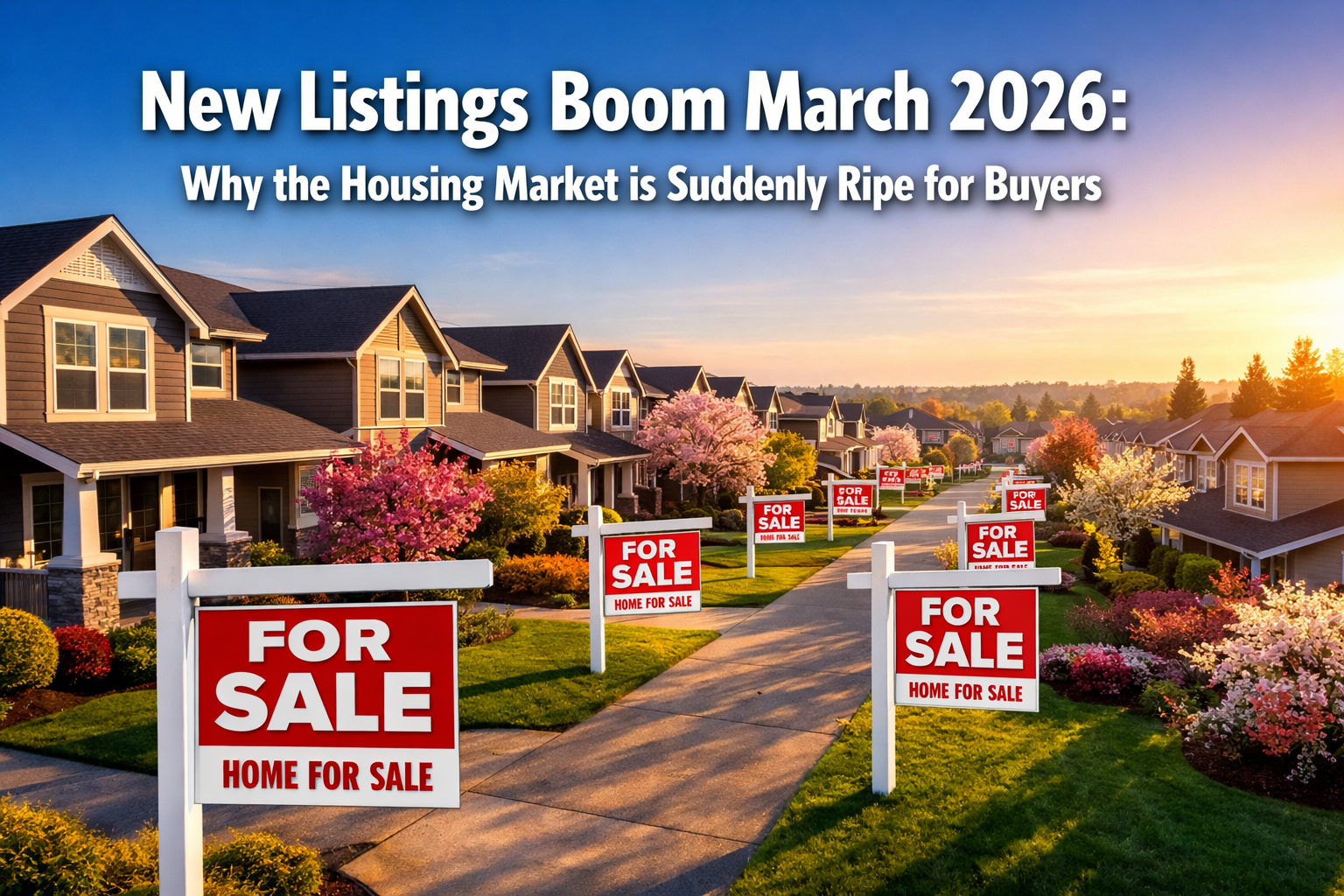
According to Realtor.com's latest February 2026 data, active listings surged 7.9% year over year, marking the 28th consecutive month of inventory gains.[2] Meanwhile, new listings jumped 10% from January to February and climbed 2.4% compared to last year—a seasonal ramp-up that's hitting harder than previous springs.[2] Translation? Sellers who've been gatekeeping their homes for years are finally ready to list, and buyers are about to have options they haven't seen since before the pandemic turned real estate into a gladiator arena.
With mortgage rates dipping below 6% for the first time since 2022 and the national median list price softening to $403,450, the stars are aligning for anyone who's been waiting on the sidelines.[2] Let it cook just a bit longer, and this spring could deliver the most extraordinary buyer conditions in half a decade.
Key Takeaways
- Active inventory is up 7.9% year over year through February 2026, the 28th straight monthly gain, signaling sustained market recovery.[2]
- New listings surged 10% month-over-month from January to February 2026, with year-over-year growth of 2.4%, indicating sellers are finally ready to move.[2]
- Mortgage rates dropped below 6% in late February 2026, unlocking buyer demand and supporting a 4.2% year-over-year increase in pending home sales.[2]
- Regional variations are significant: The Midwest, West, and South saw new-listing gains while the Northeast lagged due to winter storms.[2]
- Buyers now have negotiating power with longer days on market, softer list prices, and more room for contingencies than during the 2021-2022 frenzy.
The Data Behind the New Listings Boom March 2026: Why the Housing Market is Suddenly Ripe for Buyers
Numbers don't lie, and the February 2026 housing data is serving up some impeccable evidence that the market is shifting. Realtor.com's comprehensive monthly report reveals that active listings climbed 7.9% compared to February 2025, continuing a streak of gains that started back in late 2023.[2] While inventory remains 16.8% below pre-pandemic levels, the gap is closing faster than expected, especially in key metros across the Sun Belt and Mountain West.[2]
New listings—the fresh properties hitting the market each month—tell an even more compelling story. February 2026 saw new listings jump 10% from January, a typical seasonal bounce as spring approaches, but the 2.4% year-over-year increase is what really matters.[2] That might sound modest, but it represents a reversal of the multi-year trend where new listings were consistently down compared to prior years. Sellers are no longer sitting tight, paralyzed by the "lock-in effect" of their sub-3% mortgages. Instead, they're recognizing that life happens—job changes, growing families, downsizing—and that waiting indefinitely isn't always the best strategy.
Regional Breakdown: Who's Winning the Inventory Race?
Not all regions are experiencing the New Listings Boom March 2026: Why the Housing Market is Suddenly Ripe for Buyers equally. The data shows clear geographic winners and losers:
| Region | New Listings YoY Change (Feb 2026) | Active Inventory Trend |
|---|---|---|
| Midwest | +7.4% | Strong gains, balanced markets |
| West | +5.8% | Recovering from severe shortages |
| South | +2.6% | Steady growth, high demand persists |
| Northeast | -7.8% | Storm-impacted, lagging recovery |
The Midwest is leading the charge with a 7.4% year-over-year increase in new listings, driven by affordable metros like Indianapolis, Columbus, and Kansas City where sellers are capitalizing on still-strong demand.[2] The West follows with 5.8% growth, as markets like Phoenix, Boise, and parts of California finally see relief after years of brutal inventory shortages.[2]
The South, while posting a more modest 2.6% gain, continues to attract both buyers and sellers thanks to job growth, migration trends, and data center developments driving real estate demand.[2] Meanwhile, the Northeast struggled with a 7.8% decline in new listings, largely due to severe winter storms that delayed spring preparations and kept sellers from listing in February.[2]
According to ResiClub's March 5, 2026 inventory analysis, many Sun Belt and Western metros now exceed 2019 inventory levels, while parts of the Northeast and Midwest remain tighter.[8] This geographic disparity creates extraordinary opportunities for buyers willing to be flexible about location—especially if remote work remains part of the equation.
Mortgage Rates: The Catalyst Nobody Saw Coming
Here's where things get really interesting. By late February 2026, the average 30-year fixed mortgage rate dipped below 6% for the first time since 2022, according to Freddie Mac's Primary Mortgage Market Survey.[2][6] This drop from the 7%-plus rates that dominated much of 2023-2024 has been a game-changer, unlocking demand from buyers who were previously priced out.
As one housing analyst noted, the market "doesn't operate well" above 7% mortgage rates, and the current environment is proving that point.[9] Pending home sales rose 4.2% year over year in February 2026—the largest annual increase since November 2024—directly supported by lower rates and increased listing activity.[2] Buyers are responding quickly when rates move closer to 6%, and sellers are reading the room, realizing that now might be the time to make their move before the window closes.
J.P. Morgan's housing outlook projects that mortgage rates will likely remain "above 6%" on average throughout 2026, which will cap price appreciation but also prevent a severe crash.[3] This creates a Goldilocks scenario: rates low enough to qualify buyers, but not so low that they reignite the bidding war chaos of 2021-2022. For more context on how these rates are shaping buyer opportunities, check out our deep dive on current mortgage rates and what buyers need to know.
Why Sellers Are Finally Listing: Understanding the New Listings Boom March 2026
For years, the housing market has been stuck in a stalemate. Homeowners with ultra-low mortgage rates from 2020-2021 refused to sell, even when they wanted to move, because trading a 3% rate for a 7% rate felt financially insane. This "golden handcuffs" effect kept inventory artificially suppressed and gave existing homeowners every reason to stay put.
So what changed? Why is the New Listings Boom March 2026: Why the Housing Market is Suddenly Ripe for Buyers happening now?
Life Doesn't Wait for Perfect Rates
First, life events don't pause for mortgage rates. Job relocations, family expansions, divorces, retirements, and health issues all continue regardless of Fed policy. After holding out for three-plus years, many homeowners have reached a breaking point where the personal cost of staying exceeds the financial penalty of moving. A 2026 survey cited by housing economists found that nearly 40% of potential sellers said they would list "regardless of rates" if their personal circumstances required it.
The Rate Gap Is Narrowing
Second, the gap between existing mortgage rates and new rates has narrowed enough to make moving feasible again. When rates were 7.5%, the delta between a locked-in 3% and a new 7.5% was unbearable. But with rates now around 6%, and some buyers qualifying for even better rates through buydowns or special programs, the math is less painful. Sellers are running the numbers and realizing that the difference in monthly payment, while still significant, might be worth it for the right home in the right location.
Equity Positions Are Strong
Third, homeowners are sitting on massive equity gains from the 2020-2022 price surge. Even with modest price softening in 2024-2025, most sellers who bought before 2021 have substantial equity cushions. This wealth effect gives them confidence to make a move, knowing they can bring significant down payments to their next purchase or even buy with cash in some cases. According to Zillow's February 2026 forecast, home values are expected to end 2026 roughly unchanged at +0.9% year over year, which means sellers aren't worried about losing value if they list now.[5]
New Construction Is Normalizing
Fourth, the surge in new construction over the past two years has created more move-up inventory. Builders have been aggressive in markets like Austin, Phoenix, and Charlotte, and many existing homeowners are now considering new builds as their next step. This creates a chain reaction: when someone buys new construction, their existing home hits the market, adding to the inventory pool. The Spring 2026 housing market outlook highlights how this dynamic is playing out across multiple metros.
Investor Activity Is Shifting
Finally, real estate investors who bought heavily during the pandemic are reassessing their portfolios. With rental growth slowing in many markets and property management costs rising, some investors are cashing out while prices remain elevated. This is particularly true in markets that experienced explosive growth in 2020-2021 but are now seeing normalization. These investor-owned properties entering the resale market contribute meaningfully to the new listings boom.

What the New Listings Boom March 2026: Why the Housing Market is Suddenly Ripe for Buyers Means for You
Alright, enough data and theory—let's talk about what this fresh inventory surge actually means for real people trying to navigate the 2026 housing market.
For Home Buyers: Your Time Has Arrived
If you've been waiting for a better market, this is it. The combination of rising inventory, moderating prices, and sub-6% mortgage rates creates the most buyer-friendly conditions since 2019. Here's what you can expect:
✅ More Choices: With active listings up nearly 8% and new listings flowing in steadily, you'll actually have options. No more settling for the "least bad" house in your budget or compromising on must-have features because nothing else is available.
✅ Less Competition: Bidding wars aren't extinct, but they're far less common than 2021-2022. Realtor.com data shows that days on market are lengthening compared to last year, meaning homes are sitting longer and sellers are more willing to negotiate.[1] You can actually take time for inspections, appraisals, and thoughtful decisions.
✅ Negotiating Power: Buyers are successfully negotiating on price, closing costs, contingencies, and timelines. Sellers who would have laughed at inspection contingencies two years ago are now accepting them. For proven tactics, see our guide on spring negotiation strategies for seller concessions.
✅ Financing Flexibility: With rates around 6%, you can qualify for more house than you could at 7.5%. Run the numbers with your lender—the monthly payment difference is significant. And if you're strategic about timing and lender shopping, you might even lock in something in the high 5% range.
🎯 Action Steps for Buyers:
- Get pre-approved now while rates are favorable—don't wait for them to drop further, because they might not.Fast-track your pre-approval process here.
- Expand your search radius to include up-and-coming neighborhoods where inventory gains are strongest.
- Work with an experienced buyer's agent who knows how to negotiate in this transitioning market.
- Don't skip inspections or appraisals—you have leverage now, use it.
- Review our 13 spring home buying tips for 2026 for a complete playbook.
For Home Sellers: Timing Is Everything
Sellers still have advantages, but the impeccable market conditions of 2021-2022 are gone. That doesn't mean you can't sell successfully—it just means you need to be smarter about it.
📊 Market Realities for Sellers:
- Pricing matters more than ever: Overpriced homes are sitting while fairly priced homes still move quickly. Work with your agent to price competitively from day one.
- Condition counts: Buyers have choices now, so homes that show well and are move-in ready command premiums. Invest in staging, repairs, and curb appeal.
- Spring is still peak season: List now to catch the wave of buyer activity before summer slowdown. The data shows February-to-March is when new listings surge, and you want to be part of that initial wave, not trailing behind in May.
- Avoid costly mistakes: Our guide on 8 spring home selling mistakes that cost real money can save you tens of thousands.
🎯 Action Steps for Sellers:
- Get a professional market analysis to understand your local micro-market—national trends don't always apply to your specific neighborhood.
- Prepare your home properly with our 60-day selling checklist.
- Consider timing carefully—if you need to buy after selling, coordinate with your agent to avoid being homeless or double-paying.
- Be realistic about contingencies—buyers are asking for them again, and reasonable sellers are accepting them.
- Understand your closing costs with our seller closing costs breakdown.
For Real Estate Investors: Opportunity in Transition
The New Listings Boom March 2026: Why the Housing Market is Suddenly Ripe for Buyers creates interesting dynamics for investors. On one hand, increased inventory means less competition for rental properties and fix-and-flip opportunities. On the other hand, rental growth is moderating in many markets, and financing costs remain elevated.
💡 Investor Considerations:
- Cash-flow markets are shifting: Sun Belt markets that were cash-flow darlings in 2020-2022 are seeing cap rate compression. Run your numbers carefully.
- Value-add opportunities: Homes sitting on market longer create opportunities to negotiate below list and add value through renovations.
- Long-term holds still work: Even with 6% mortgage rates, well-selected rental properties in strong job-growth markets can pencil out for long-term wealth building.
- Portfolio rebalancing: Some investors are selling B-class properties and upgrading to A-class assets as the market stabilizes.
For comprehensive investment strategies, explore our real estate investment hub and analysis of emerging markets.
For Real Estate Agents: Adapt or Get Left Behind
Agents who thrived in the 2021-2022 seller's market by simply listing overpriced homes and watching bidding wars unfold need to level up their skills. The 2026 market rewards agents who can negotiate, market effectively, and provide genuine value to clients on both sides of the transaction.
🚀 Agent Success Strategies:
- Master buyer representation: With more inventory, buyers need guidance on comparative analysis, negotiation, and due diligence—not just someone to unlock doors.
- Elevate your marketing: Sellers have choices in agents now, too. Your listing presentations need to showcase professional photography, strategic pricing, and multi-channel marketing. Check out our marketing resources for agents.
- Leverage technology: From AI-powered CRM tools to virtual assistants, technology can help you scale your business efficiently.
- Educate your clients: Share market data, trends, and realistic expectations. Clients who understand the market are easier to work with and more likely to refer you.
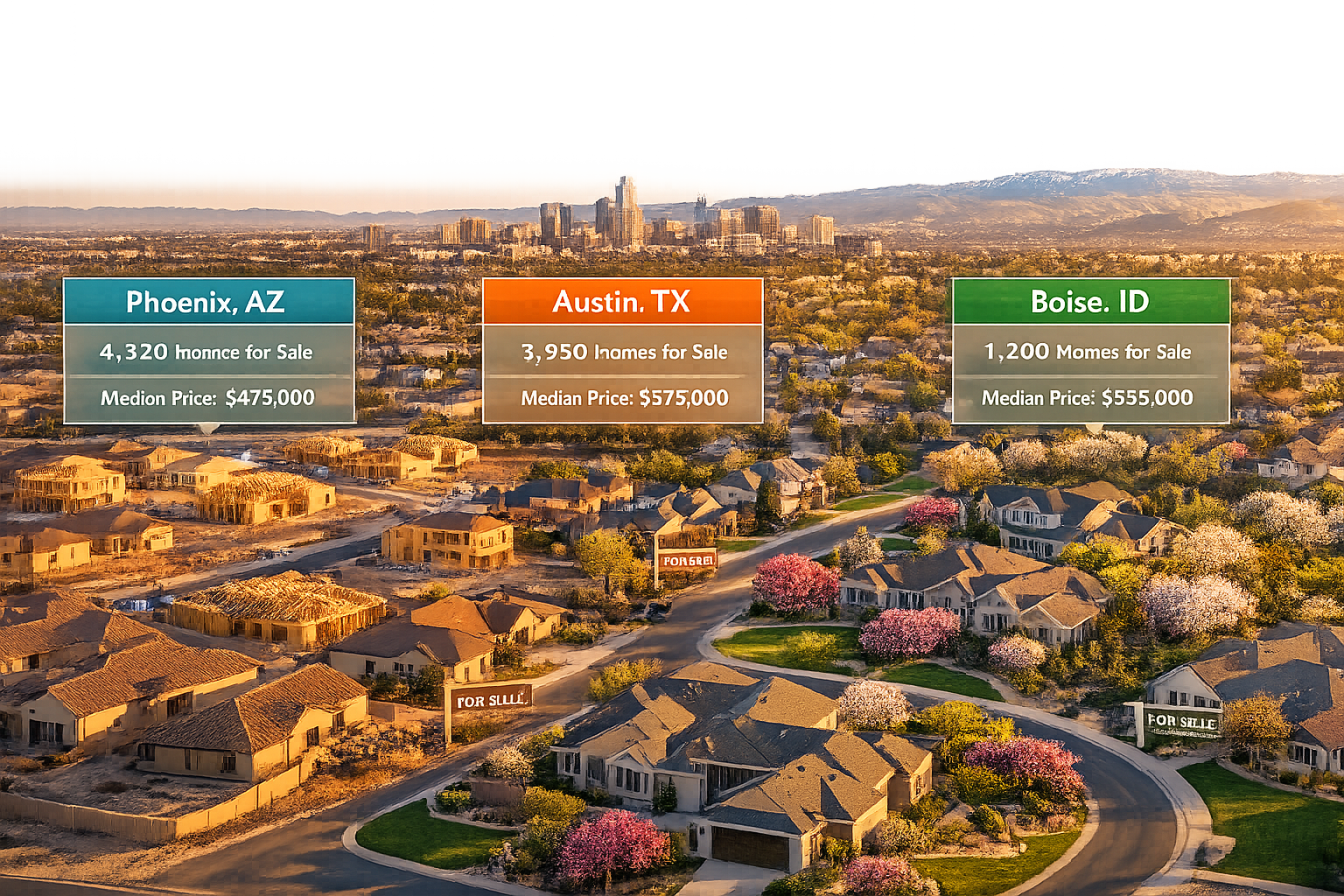
Regional Spotlight: Where the New Listings Boom March 2026 Is Hitting Hardest
While national trends paint a clear picture, real estate is always local. Let's break down where the New Listings Boom March 2026: Why the Housing Market is Suddenly Ripe for Buyers is creating the biggest opportunities.
Sun Belt Metros: From Shortage to Surplus?
Markets like Phoenix, Austin, and Charlotte experienced explosive growth during the pandemic, followed by severe inventory shortages. Now, the pendulum is swinging back. ResiClub's analysis shows many Sun Belt metros now exceed 2019 inventory levels, a dramatic reversal.[8]
Phoenix, for example, saw new listings surge as investors and pandemic transplants reassess. Austin's tech-sector slowdown has cooled demand while new construction continues, creating a buyer's market in many submarkets. Charlotte's inventory is normalizing after years of being one of the tightest markets in the country.
Buyer Opportunity: These markets offer negotiating room and selection that was unthinkable 18 months ago. However, be selective—some neighborhoods are oversupplied while others remain tight.
Midwest: The Balanced Market Blueprint
The Midwest's 7.4% year-over-year new listings gain represents the healthiest market dynamics in the country.[2] Cities like Columbus, Indianapolis, and Kansas City are seeing steady inventory growth without the wild price swings of coastal or Sun Belt markets.
Buyer Opportunity: Affordability plus selection equals excellent value. Midwest markets are ideal for first-time buyers and investors seeking cash flow without the volatility.
West Coast: Recovery Mode
California, Oregon, and Washington are seeing 5.8% new listings growth as the market recovers from brutal shortages.[2] However, high prices and elevated property taxes mean these markets remain challenging for many buyers.
Buyer Opportunity: Look for emerging neighborhoods and consider condos, which are seeing softening demand due to HOA fee concerns but can offer entry points into expensive markets.
Northeast: Weather and Waiting
The Northeast's 7.8% decline in new listings is largely weather-related and temporary.[2] Expect a catch-up surge in March-April as sellers who delayed listing in February come to market.
Buyer Opportunity: Be ready to move quickly when inventory hits in spring—competition will be fiercer here than in other regions initially, but should normalize by summer.
Expert Predictions: What Comes Next After the New Listings Boom March 2026
So where does the market go from here? Let's synthesize the expert forecasts:
🏠 J.P. Morgan's Outlook: Expects roughly flat home prices (0% growth) in 2026 as higher but stabilizing mortgage rates and increased supply balance demand. They estimate a structural housing shortfall of about 1.2 million units nationally, but note localized oversupply risks on the West Coast and in some Sun Belt metros.[3] Their base case is "grinding normalization" rather than boom or bust.
📊 Zillow's Forecast: Projects national home values to end 2026 roughly unchanged at +0.9% year over year, with only modest price movements but an increase in total home sales as buyers re-enter the market.[5] They expect active listings to continue increasing in 2026, though at a slower rate than 2024-2025 as the initial post-pandemic inventory recovery matures.[5]
📈 NAR's Projection: Forecasts roughly a 14% rise in existing home sales in 2026 compared with 2025 as mortgage rates ease and more owners list their homes. Chief economist Lawrence Yun and other housing economists expect lower rates to "qualify more buyers" while inventory improves enough to support higher transaction volume without steep price drops.
💼 Norada Real Estate's Analysis: Concludes that 2026 is likely to be the "most buyer-friendly housing market in years," though closer to a balanced market than a true buyer's market.[4] They point to gradually rising inventory, easing mortgage rates, and stabilizing prices as factors that will give buyers more choices and leverage on contingencies and timelines.[4]
The consensus? Expect stability, not drama. No crash, no boom—just a healthier, more functional market where both buyers and sellers can achieve their goals with reasonable expectations and good strategy. For more expert analysis, see Redfin's 2026 market predictions.
Conclusion: Seize the New Listings Boom March 2026 Opportunity
The New Listings Boom March 2026: Why the Housing Market is Suddenly Ripe for Buyers represents a genuine inflection point after years of dysfunction. With active listings up 7.9% year over year, new listings surging 10% month-over-month, and mortgage rates below 6%, the conditions are aligning for the most balanced and buyer-friendly market since before the pandemic.[2]
This isn't about waiting for the "perfect" market with 3% rates and bargain-basement prices—that's not coming. It's about recognizing that right now, in spring 2026, you have opportunities that didn't exist 12-18 months ago and may not last indefinitely. Inventory gains are decelerating, which means the window of maximum buyer advantage might be narrower than many expect.[5]
Whether you're a first-time buyer finally seeing a path to homeownership, a seller ready to make a move after years of waiting, an investor seeking value-add opportunities, or an agent adapting to new market dynamics, the time to act is now.
Your Next Steps:
Buyers: Get pre-approved, expand your search, and work with experienced representation. Review our complete spring buying guide.
Sellers: Price competitively, prepare your home properly, and list during the spring surge. Avoid costly selling mistakes.
Investors: Run your numbers carefully, focus on cash-flow markets, and don't chase appreciation. Explore our investment strategies hub.
Agents: Elevate your skills, embrace technology, and provide genuine value. Check out our agent resources.
The housing market is finally working again. Don't let this extraordinary opportunity pass you by. 🏡✨
About Real Estate Rank IQ: Real Estate Rank IQ provides clear, step-by-step guidance on real estate market trends, home buying and selling playbooks, property investment strategies, and agent growth. Our articles are written by licensed brokers with over 15 years of experience. For more expert insights, visit realestaterankiq.com or subscribe to our YouTube channel @Realestaterankiq. Questions? Email us at news@realestaterankiq.com.
References
[1] Weekly Housing Trends View Data Week February 28 2026 – https://www.realtor.com/research/weekly-housing-trends-view-data-week-february-28-2026/
[2] February 2026 Data – https://www.realtor.com/research/february-2026-data/
[3] J P Morgan Predicts Whats Next For Mortgage Rates Housing Market – https://www.thestreet.com/real-estate/j-p-morgan-predicts-whats-next-for-mortgage-rates-housing-market
[4] Will 2026 Finally Shift The Housing Market To Buyers – https://www.noradarealestate.com/blog/will-2026-finally-shift-the-housing-market-to-buyers/
[5] Home Value Sales Forecast 33822 – https://www.zillow.com/research/home-value-sales-forecast-33822/
[6] 2026 Housing Outlook Inventory Prices Days On Market – https://localhomebuyersusa.com/2026-housing-outlook-inventory-prices-days-on-market/
[8] State Inventory Update Housing Market March 2026 – https://www.resiclubanalytics.com/p/state-inventory-update-housing-market-march-2026
[9] Watch – https://www.youtube.com/watch?v=c6rCiOLkkXI