


Selling your home should feel exciting, but then you see the closing costs. These fees can eat up thousands of dollars from your sale price. Many sellers get shocked when they learn they’ll pay 6% to 10% of their home’s value in closing costs.

Real estate agent commissions alone typically cost 5% to 6% of the sale price.
The National Association of Realtors reports that seller closing costs have risen 8% in the past year. Property taxes, title insurance, and transfer taxes add up fast. This guide breaks down every fee and shows smart ways to cut costs.
Learn which expenses are negotiable and which ones are set in stone.
Key Takeaways
- Seller closing costs typically range from 6% to 10% of your home’s sale price, with real estate agent commissions making up 5% to 6% alone.
- Recent August 2023 legal changes made buyer agent commissions fully negotiable, giving sellers more control over their total commission expenses.
- Shopping around for title services can save sellers an average of $500, as costs vary widely between different title companies and providers.
- Selling your home “as-is” eliminates repair expenses and buyer-requested concessions, though it may reduce your final sale price from buyers expecting discounts.
- All seller closing costs get deducted from your home sale proceeds at closing, so you don’t pay out-of-pocket expenses at the settlement table.
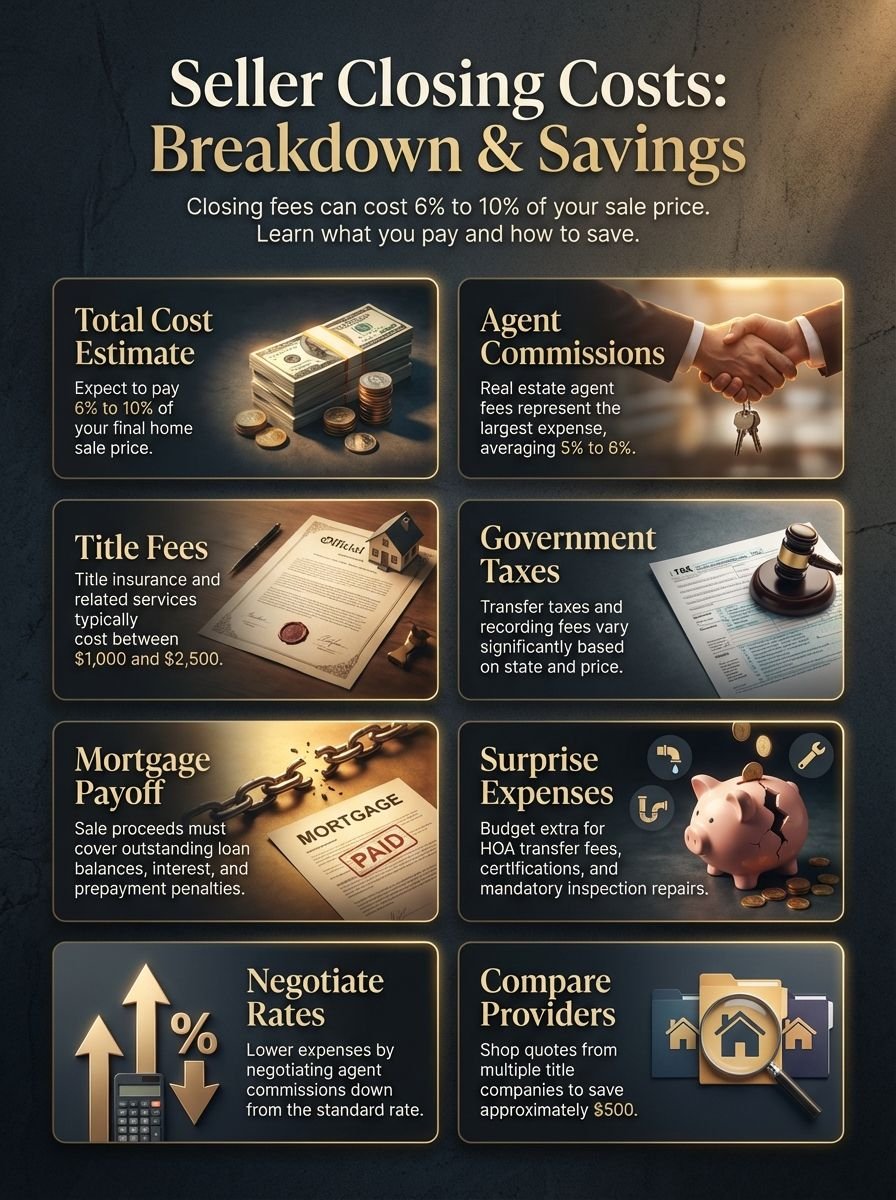
Seller Closing Costs Explained: What You Pay and How to Cut Cost!

Now that you understand the basics, let’s break down exactly what seller closing costs mean for your wallet. Seller closing costs typically range from 6% to 10% of your home’s sale price, which can seriously eat into your profits if you’re not prepared.
Real estate agent commissions make up the biggest chunk of these expenses, often accounting for 5% to 6% of your sale price alone. Title insurance, transfer taxes, and escrow fees add thousands more to your final bill.
Smart sellers plan for closing costs from day one, not the day before closing. – Jay Hernandez, Licensed Real Estate Broker
The good news is that you don’t write a check at the closing table. These costs get deducted from your home sale proceeds, so the money comes out of what you receive rather than your bank account.
Real estate agents, title companies, and local jurisdictions all want their piece of the pie when you sell. Property taxes, attorney fees, and recording fees can vary wildly depending on your local jurisdiction and the complexity of your real estate transaction.
Your mortgage payoff amount also affects your net proceeds, especially if you have a high loan balance or prepayment penalties.
What Are Closing Costs?

Closing costs represent the various fees and expenses you pay during the final stages of a real estate transaction. These costs cover services needed to transfer property ownership from seller to buyer.
You face multiple charges that range from title insurance to attorney fees. Transfer taxes, recording fees, and escrow fees also appear on your closing statement. The national average for closing costs sits at approximately 1.81% of a home’s sale price, excluding real estate agent commissions according to CoreLogic’s ClosingCorp data.
Closing costs typically range from 2% to 5% of the loan amount based on Freddie Mac research. Both buyers and sellers receive a closing disclosure at least three business days before the final settlement.
This document details all transaction costs in your real estate deal. Common fees include loan origination charges, appraisal costs, credit report expenses, and home inspection payments.
Title search fees and mortgage insurance premiums often appear alongside property tax adjustments and homeowners insurance costs on your final bill.
Common Seller Closing Costs

You’ll face several standard costs when selling your home that can eat into your profits faster than a viral TikTok trend spreads across social media.
Real Estate Agent Commissions
Real estate agent commissions represent the largest expense you’ll face when selling your home. These fees typically range from 2.5% to 3% of your home’s sale price for each agent involved in the transaction.
The standard commission structure often falls between 5% and 6% of the total sale price, split between the buyer’s and seller’s agents. On a $400,000 home, paying both listing and buyer’s agents at 3% each results in $24,000 in total commissions.
The August 2023 class-action lawsuit against the National Association of Realtors fundamentally changed how agent commissions work, making buyer agent fees negotiable rather than automatic.
Recent changes in the real estate market have shifted commission responsibilities significantly. Sellers remain responsible for their own agent’s commission but are no longer automatically required to pay the buyer’s agent commission.
This change stems from the class-action lawsuit against the National Association of Realtors that became effective in August 2023. Buyers must now sign contracts with their agents, and commission arrangements have become more flexible.
These modifications give sellers greater control over their closing costs and create opportunities to negotiate lower total commission expenses.
Title Insurance and Fees
Title insurance protects you from legal disputes over property ownership. This coverage shields you from claims that could arise after you sell your home. Title-related fees can range from $1,000 to over $2,500, making them a significant part of your seller closing costs.
Both lender’s and owner’s title insurance policies may be required, though payment varies by region.
Title services usually constitute the largest part of closing costs, including title insurance and closing agent fees. Research suggests that borrowers who shop around for closing services could save as much as $500 on title services alone.
Title insurance fee disclosures differ by state, so comparing costs on the Loan Estimate and Closing Disclosure becomes essential. Smart sellers research multiple title companies before choosing one for their real estate transaction.
Transfer Taxes and Recording Fees
Beyond title insurance fees, you face transfer taxes and recording fees that add to your closing bill. Transfer taxes vary by state and are based on the sale price, creating different costs depending on your property’s location.
States with the highest average closing costs include Washington, D.C., Delaware, and New York, where these taxes can significantly impact your final expenses.
Recording fees are part of the overall closing costs, typically ranging from 2% to 5% of the loan amount. Local jurisdiction offices collect these fees to officially document the property transfer in public records.
The real estate transaction requires proper documentation, and these recording fees ensure your home sale becomes legally binding and publicly recorded for future reference.
Escrow and Settlement Fees
Escrow and settlement fees represent a significant cost you’ll face during your real estate transaction. These fees typically range from 1% to 2% of your home’s sale price when funds are held in escrow.
A closing agent, settlement agent, or title company fills the escrow and settlement agent roles during your property sale. Your responsibility includes paying these escrow and settlement fees at the closing meeting, making proper budgeting essential for understanding your net earnings from the home sale.
Escrow companies act as neutral third parties that hold funds and documents until all conditions of your sale are met. Settlement agents coordinate the final transfer of ownership and ensure all parties receive proper documentation.
Title companies often provide both escrow services and title insurance, streamlining your closing process. Smart sellers shop around for competitive rates on these services since costs can vary significantly between providers.
Your real estate agent can recommend trusted escrow and settlement companies, but you maintain the right to choose your preferred service provider for these crucial closing components.
Additional Costs Sellers May Encounter

Beyond the standard fees, you might face surprise expenses that catch many home sellers off guard. These hidden costs can eat into your profits if you don’t plan ahead and budget properly for your real estate transaction.
Outstanding Mortgage Payoff
You must settle your outstanding mortgage balance before closing on your home sale. This mortgage payoff represents one of the largest seller closing costs you’ll face during the real estate transaction.
Your mortgage lender requires full payment of the remaining loan amount, plus any accrued interest up to the closing date. Most sellers use proceeds from their home sale price to cover this expense.
Your mortgage payoff amount includes more than just the principal balance. Lenders often charge prepayment penalties, processing fees, and daily interest calculations that can add hundreds or thousands to the final amount.
Second mortgages, home equity lines of credit, and any outstanding liens must also be resolved before the property can transfer to the buyer. Smart sellers contact their mortgage lenders at least two weeks before closing to get an accurate payoff statement and avoid last-minute surprises that could delay the sale.
Repairs and Home Inspections
Home inspection fees can catch sellers off guard during the real estate transaction process. Most buyers request professional inspections before closing, and sellers often cover these costs as part of seller concessions or closing expenses.
These inspections typically cost between $300 to $500, depending on your property size and local jurisdiction requirements. Smart sellers budget for potential repair requests that emerge from inspection reports.
Major repair issues discovered during home inspections can derail your sale or force price negotiations. Structural problems, HVAC system failures, or electrical issues often require immediate attention before closing.
Some sellers choose to offer their home “as-is” to avoid repair obligations, but this strategy may limit your buyer pool in competitive real estate markets. Consider getting a pre-listing inspection to identify problems early and address them on your timeline rather than scrambling during escrow.
HOA Fees and Certifications
If your home sits within a homeowners association community, you face specific closing costs that many sellers overlook. Your HOA fees include transfer fees, unpaid dues, and document fees that must be settled before the real estate transaction closes.
Transfer fees typically range from $100 to $500, depending on your local jurisdiction and community rules. Document fees cover the cost of preparing required paperwork and certificates for the new buyer.
Unpaid HOA dues become your responsibility to clear during the closing process. The title search will reveal any outstanding balances that could delay your home sale. Most HOA communities require a certificate of good standing or similar documentation proving all dues are current.
These certificates cost between $50 to $200 and take several days to process. Property management companies often charge additional fees for expedited processing, which can add $25 to $100 to your seller closing costs.
Smart sellers contact their HOA early in the selling process to identify and resolve any outstanding issues before listing their property.
When Are Seller Closing Costs Paid?
You pay seller closing costs at the closing meeting during the transfer of keys and document signing. The good news is that closing costs get deducted directly from your home sale proceeds, so you don’t write a check or pay out-of-pocket at the settlement table.
Your real estate agent and title company handle the math behind the scenes, subtracting all fees from the final sale amount before cutting you a check for the remaining proceeds.
Both you and the buyer receive a closing disclosure at least three business days before the closing date, which details every transaction cost down to the penny. This document shows exactly how much you’ll pay in real estate agent commissions, title insurance, transfer taxes, and other fees.
The escrow company or real estate attorney coordinates with your mortgage lender to pay off your existing home loan and distribute the remaining funds to you. Understanding exactly how much sellers typically pay in closing costs helps you budget for the big day.
How Much Do Sellers Typically Pay in Closing Costs?

Seller closing costs typically eat up 6% to 10% of your home sale price. For a median home price of $413,000, you face costs between $24,780 and $41,300. The national average sits at about 1.81% of the sale price, which means around $7,211 for a median-priced home.
Real estate agent commissions make up the biggest chunk, averaging 5.32% for both listing and buyer’s agent fees.
Title insurance, transfer taxes, and attorney fees add to the total bill. Property taxes and escrow fees also factor into the final amount. Current median home prices of $398,400 mean most sellers pay between $23,904 and $39,840 in total closing costs.
These expenses vary by local jurisdiction and real estate market conditions. Smart sellers budget for these costs early in the home selling process to avoid surprises at closing.
Strategies to Reduce Seller Closing Costs

You can slash your seller closing costs with smart tactics that save thousands of dollars. These proven methods help you keep more money in your pocket at the closing table.
Negotiate Real Estate Agent Commissions
Real estate agent commissions eat up the biggest chunk of your seller closing costs, but you hold more power than most home sellers realize. Traditional agent commissions hover around 6% of your home sale price, split between your listing agent and the buyer’s agent at 3% each.
Recent legal changes from the August 2023 class-action lawsuit have shaken up this system, making buyer agent commissions fully negotiable for the first time in decades.
Smart sellers now approach commission talks with confidence and data. Start by asking your listing agent to reduce their fee from 3% to 2.5%, which saves you thousands on a typical home sale.
Flat-fee listing services and discount brokers offer alternative pricing structures, though these options may come with fewer marketing services and less hands-on support. The key lies in understanding what services matter most for your specific real estate transaction and matching those needs with the right agent pricing model.
Shop Around for Title Services
After cutting agent commissions, your next money-saving move targets title services. Smart sellers compare prices from different title companies before choosing one. You can save an average of $500 by getting quotes from multiple providers, according to industry data.
Title insurance costs vary widely between companies for the same property. Some charge flat fees while others use percentage-based pricing. Use your Loan Estimate to compare title insurance and closing service options from different providers.
Ask for references and check reviews before making your final decision. This simple step puts extra cash back in your pocket at closing.
Offer Limited Seller Concessions
After comparing title service providers, you can take another smart approach to reduce your financial burden. Seller concessions represent a powerful tool that allows you to offer strategic credits while maintaining control over your bottom line.
You can provide limited seller concessions to help buyers with their closing costs or down payment requirements without breaking your budget. These concessions work especially well in a buyer’s market where competition runs high among home sellers.
FHA loans allow seller concessions up to 6% of the home sale price, while conventional loans typically cap them at 3% to 9% depending on the down payment amount. VA loans permit up to 4% in seller concessions, giving military buyers extra flexibility.
Smart sellers use these credits strategically, offering just enough to close the deal while protecting their profit margins from excessive buyer demands.
Sell the Home “As-Is”
Selling your home “as-is” cuts major costs from your real estate transaction. This strategy eliminates repair expenses and buyer-requested concessions that typically drain thousands from your profits.
You avoid paying for home inspections, contractor fees, and lengthy negotiations about property fixes. Cash homebuyers and investors often prefer as-is properties, which speeds up the closing process and reduces escrow fees.
As-is sales do come with trade-offs that affect your final sale price. Buyers expect discounts when purchasing homes without warranties or repair guarantees. Your property may attract fewer traditional mortgage loan applicants since lenders require specific conditions.
Real estate agents might need to adjust marketing strategies, but you still save on potential repair costs that could exceed the price reduction. This approach works best in a seller’s market where inventory stays low and buyer demand remains high.
How Seller Paid Closing Costs Work in Practice

Seller paid closing costs create a win-win scenario during real estate transactions. You cover specific buyer expenses to make your home more attractive in competitive markets. This strategy works like offering a discount without reducing your home sale price directly.
Real estate agents often suggest this approach during buyer’s market conditions. The closing disclosure document shows these costs three business days before the final meeting. Your real estate attorney or escrow company handles the paperwork details.
Smart sellers use this tactic to speed up sales and attract more offers. You might pay for the buyer’s title insurance, loan origination fees, or discount points on their mortgage rates.
Cash flows differently since you reduce your net proceeds instead of lowering the listing price. Real estate brokers report that homes with seller concessions often sell faster than similar properties.
Your mortgage lender coordinates with the buyer’s lender to ensure proper fund transfers. This practice helps buyers who lack sufficient down payment funds or want lower monthly payments through reduced interest rates.
Do Seller Closing Costs Affect the Home Sale Process?

Seller closing costs create a ripple effect throughout your entire home sale process. These expenses directly impact your net proceeds, which means you’ll have less cash available for your next home purchase or other financial goals.
Real estate market conditions play a major role here, as closing costs can significantly reduce profits from a home sale in any market environment. Your pricing strategy must account for these costs upfront to avoid unpleasant surprises at the closing table.
Smart home sellers factor closing costs into their negotiation tactics from day one. High closing costs might push you to price your home higher to maintain desired profit margins, but this approach could backfire in a buyer’s market.
Real estate agent commissions, title insurance fees, and transfer taxes all eat into your bottom line, making it crucial to account for all closing costs when estimating net proceeds.
Contract negotiations become more strategic as you weigh seller concessions against your financial goals. The home sale process becomes smoother once you understand how these costs affect your decisions regarding pricing, timing, and buyer incentives.
Conclusion

You hold the power to control your seller closing costs through smart planning and strategic choices. Real estate agent commissions eat up the biggest chunk of your proceeds, but you can negotiate these fees or explore discount brokers to keep more money in your pocket.
Shopping around for title insurance and attorney fees puts you in the driver’s seat for additional savings. Smart sellers budget for these expenses early and use tactics like selling “as-is” or limiting seller concessions to maximize their final payout.
Armed with this knowledge, you can confidently move forward with your home sale while protecting your hard-earned equity.
FAQs
1. What are seller closing costs and how much do they typically cost?
Seller closing costs are fees you pay when completing a real estate transaction. These costs usually range from 6% to 10% of your home sale price and include real estate agent commissions, title insurance, attorney fees, and transfer taxes.
2. Can I negotiate seller concessions to reduce my closing costs?
Yes, you can negotiate seller concessions with buyers to help cover their buyer closing costs. This strategy works especially well in a buyer’s market where competition is fierce. Smart sellers use concessions to make their property more attractive than similar homes.
3. What are the biggest closing cost expenses I should expect as a home seller?
Real estate agent commission takes the biggest bite, typically 5% to 6% of your sale price. Title insurance, escrow fees, and transfer tax follow as major expenses. Property taxes and recording fees add smaller amounts to your final bill.
4. How can I cut my seller’s closing costs without hurting my sale?
Shop around for title insurance and compare attorney fees from different providers. Consider for sale by owner to eliminate agent commissions, though this requires more work. You can also time your closing strategically to reduce prorated property taxes.
5. Do I need to pay off my mortgage and other loans before closing?
Your mortgage payoff happens automatically at closing using proceeds from the sale. Any remaining loan amount gets deducted from your final check. Line of credit balances and other liens against the property must also be cleared during the real estate transaction.
6. What closing disclosure documents should I review before finalizing the sale?
The closing disclosure shows all final costs, including escrow account details and exact fee breakdowns. Review this document carefully for accuracy in mortgage rates, lender credits, and any unexpected charges. Your real estate attorney can explain complex items like flood insurance requirements or HOA fees transfers.
References
- https://www.realtor.com/advice/finance/realtor-fees-closing-costs/
- https://www.huduser.gov/publications/pdf/fha_closing_cost.pdf
- https://www.bankrate.com/real-estate/closing-costs-for-sellers/ (2025-03-27)
- https://theadamsgrouptx.com/blog/the-complete-guide-to-closing-costs-for-home-sellers-in-houston
- https://physiciansthrive.com/closing-costs/
- https://www.consumerfinance.gov/owning-a-home/close/shop-for-title-insurance-and-other-closing-services/ (2024-12-12)
- https://barneswalker.com/fsbo-closing-costs-florida/
- https://www.realtor.com/advice/sell/sellers-must-pay-closing-costs-too/ (2025-06-26)