



By: Real Estate Rank iQ


Last updated: April 20, 2026
Quick Answer
Gen Z homebuyers are reshaping renovation priorities by focusing on smart home integration, sustainable features, and income-generating spaces that deliver measurable returns. The best home renovations in 2026 combine tech-forward upgrades with energy efficiency, targeting 70-95% ROI while addressing this generation’s unique financial concerns and lifestyle preferences. Kitchen modernization, bathroom updates, and ADU conversions lead the pack as Gen Z buyers—now representing 17-20% of the market—demand properties that work as both homes and investments.
Key Takeaways
✅ Kitchen renovations with smart appliances and quartz countertops return 75-85% ROI and rank as Gen Z’s top priority
✅ Bathroom upgrades featuring water-efficient fixtures and modern aesthetics deliver 60-70% ROI with quick turnaround
✅ ADU (Accessory Dwelling Unit) additions generate passive rental income of $1,200-$1,800 monthly while adding 50-80% ROI
✅ Smart home systems (thermostats, security, lighting) cost $2,000-$5,000 but increase sale speed by 30%
✅ Energy-efficient windows reduce utility costs 15-25% annually and return 70-80% at resale
✅ Home office conversions remain essential post-pandemic, adding $15,000-$25,000 in perceived value
✅ Curb appeal enhancements deliver the highest ROI (90-95%) for the lowest investment ($3,000-$8,000)
✅ Sustainable materials command 15-25% premiums from Gen Z buyers willing to pay for verified eco-features
✅ Open floor plans created through strategic wall removal add $20,000-$40,000 in market value
✅ Fresh paint and flooring updates provide 100%+ ROI when executed with neutral, timeless palettes
Why Gen Z Buyers Are Reshaping Home Renovation Priorities
Gen Z homebuyers approach renovations differently than previous generations. Born between 1997 and 2012, these buyers experienced economic uncertainty during their formative years, making them extraordinarily ROI-focused. Recent data shows 78% of Gen Z buyers consider smart home features essential—a 23% jump from 2023. They’re not just buying homes; they’re buying investment vehicles.
This generation conducts extensive online research before viewing properties, arriving with specific renovation lists based on TikTok, Instagram, and YouTube content. They calculate precise ROI percentages and request detailed cost-benefit analyses at rates 26 percentage points higher than Millennials. Financial advisors report Gen Z clients are more likely to view homes as assets that must perform, not just places to live.
The shift is real: Gen Z buyers prioritize sustainability certifications, income-generating spaces, and tech integration over traditional luxury finishes. They’re willing to tackle fixer-uppers if the numbers work, but they demand transparency about renovation costs and expected returns. This generation’s influence is pushing the entire market toward data-driven, purpose-built upgrades that serve multiple functions.
For first-time investors with limited capital, understanding these preferences isn’t optional—it’s the difference between a property that sits and one that sells in days.
Best Home Renovations: The Complete ROI Breakdown
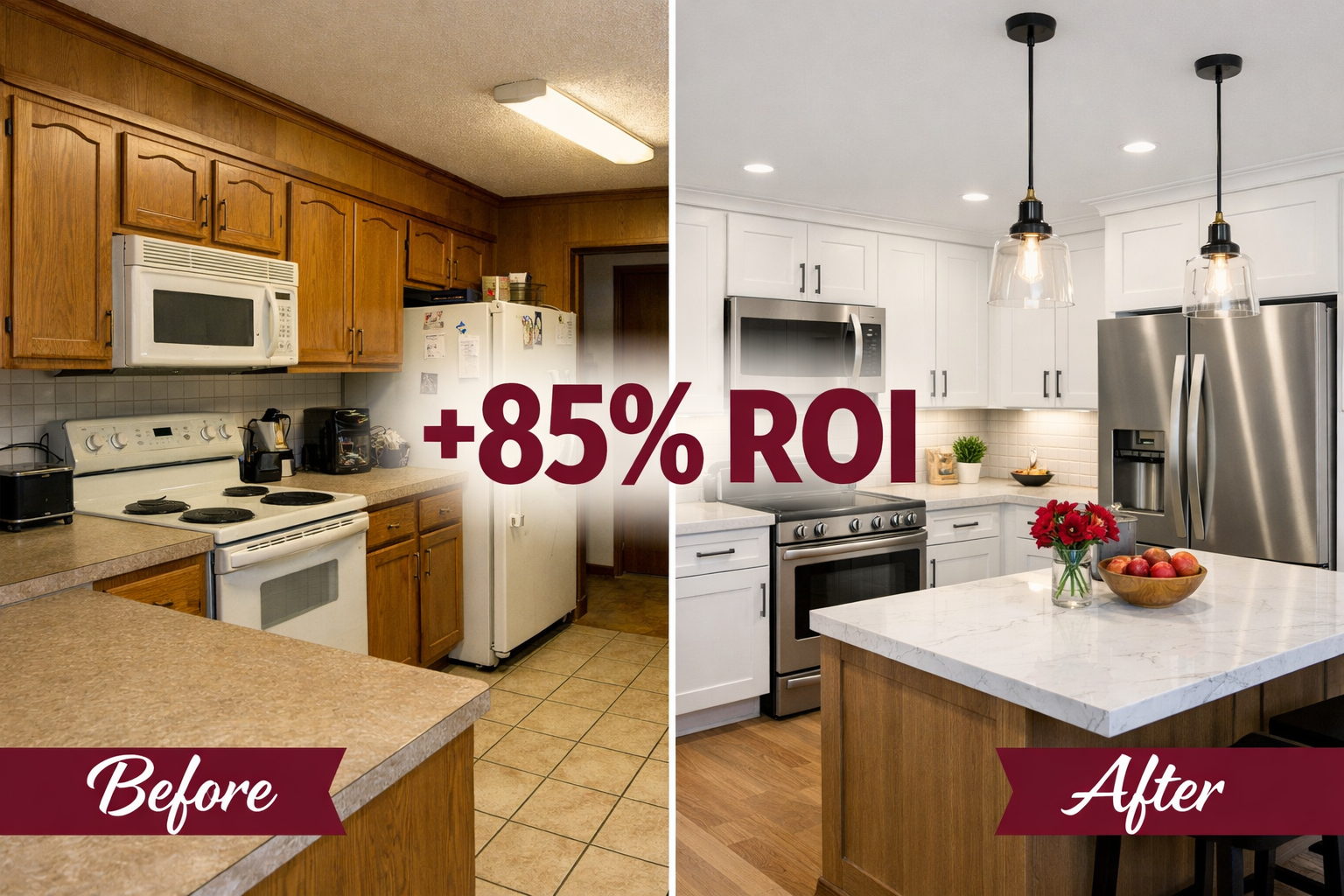
1. Kitchen Modernization: The 75-85% ROI Champion
Kitchen renovations consistently deliver the highest returns, but Gen Z buyers want specific features. Forget granite countertops and ornate cabinetry—this generation demands quartz surfaces (more durable, less maintenance), energy-efficient appliances with smart connectivity, and open shelving for that Instagram-worthy aesthetic.
Budget breakdown for a mid-range kitchen renovation:
- Quartz countertops: $3,000-$5,000
- Shaker-style cabinets (painted white or gray): $4,000-$8,000
- Energy Star appliances: $3,000-$6,000
- Subway tile backsplash: $800-$1,500
- LED under-cabinet lighting: $300-$600
- Hardware and fixtures: $400-$800
Total investment: $11,500-$21,900
Expected ROI: 75-85%
Resale value increase: $15,000-$30,000
Gen Z buyers specifically look for smart refrigerators with inventory tracking, induction cooktops for energy efficiency, and touchless faucets for hygiene. They’re less interested in high-end finishes and more focused on functionality that reduces monthly costs.
Pro move: Install a smart kitchen hub (like Amazon Echo Show or Google Nest Hub) mounted on the wall. Cost: $150-$250. Perceived value to Gen Z buyers: priceless. This signals the entire home is tech-ready.
Choose white or light gray cabinets over trendy colors. Gen Z appreciates bold accents through removable elements (bar stools, pendant lights, wall art) rather than permanent fixtures. This approach maintains resale flexibility while allowing personalization.
For investors targeting Gen Z renters, kitchen upgrades can justify 12-18% higher monthly rent. The math works: a $15,000 kitchen renovation that increases rent by $150/month pays for itself in 100 months (8.3 years), while simultaneously boosting property value for eventual sale.
Common mistake: Over-customizing with ultra-modern designs that won’t age well. Stick to transitional styles that bridge contemporary and traditional aesthetics. Think clean lines, neutral palettes, and quality materials—not trendy tile patterns that’ll look dated in three years.
2. Bathroom Upgrades: 60-70% ROI with Quick Turnaround
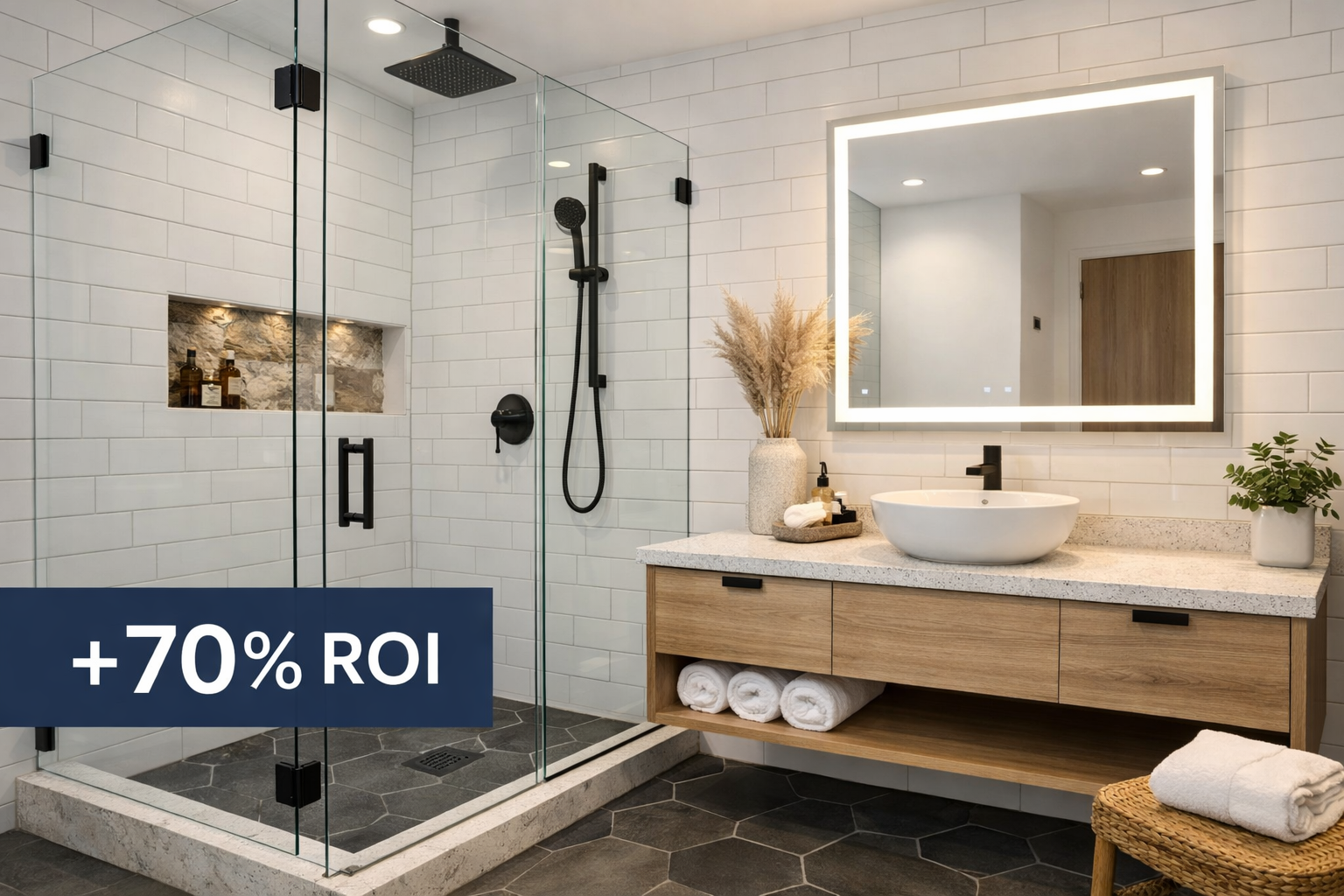
Bathroom renovations rank second for Gen Z priorities, but the focus has shifted from spa-like luxury to water efficiency and modern minimalism. This generation wants bathrooms that look fresh, function flawlessly, and reduce utility bills.
High-impact bathroom upgrades:
- Walk-in shower with frameless glass: $2,500-$5,000
- Water-efficient dual-flush toilet: $300-$600
- Floating vanity with vessel sink: $800-$1,500
- LED mirror with integrated lighting: $200-$500
- Low-flow fixtures (showerhead, faucets): $150-$400
- Hexagonal or subway tile: $1,200-$2,500
Total investment: $5,150-$10,500
Expected ROI: 60-70%
Resale value increase: $8,000-$15,000
Gen Z buyers specifically reject bathtubs in secondary bathrooms, preferring larger showers with rainfall showerheads and handheld wands. They want matte black or brushed gold hardware (not chrome), floating vanities that create visual space, and smart mirrors with defogging and lighting controls.
Sustainability matters: Install WaterSense-certified fixtures that reduce water usage by 20-30%. Gen Z buyers actively seek these certifications and will pay premiums for verified efficiency. Label these features clearly in listings—don’t assume buyers will notice.
Budget-friendly hack: Skip full gut renovations. Focus on refinishing existing tubs ($300-$600), regrouting tile ($200-$400), and replacing fixtures and lighting ($500-$1,000). This “refresh” approach costs $1,000-$2,000 but can increase perceived value by $5,000-$8,000.
For rental properties, bathroom upgrades justify 8-12% rent increases. A $7,000 bathroom renovation that boosts monthly rent by $100 pays for itself in 70 months (5.8 years) while making the property more competitive in tight markets.
Edge case: If your property has only one bathroom, adding a second bathroom (even a small half-bath) delivers 100%+ ROI in most markets. Gen Z buyers with roommates or plans to rent rooms prioritize multiple bathrooms over almost any other feature.
Our complete guide to home improvements before selling breaks down bathroom ROI by market tier and property type.
3. ADU Conversions: The Passive Income Game-Changer
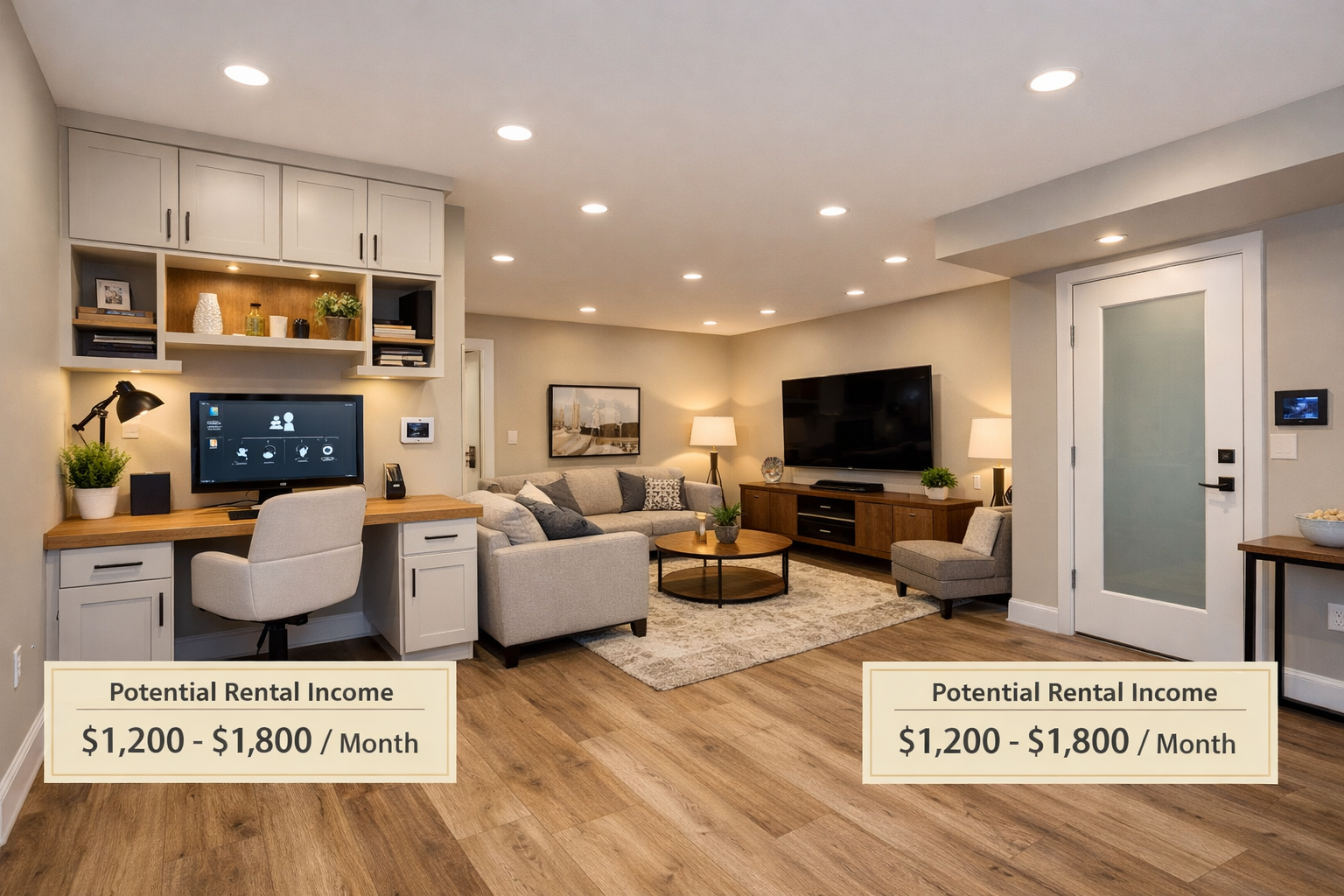
Accessory Dwelling Units represent the most impeccable opportunity for Gen Z buyers seeking passive income. Multiple states streamlined ADU permitting in early 2026, responding directly to this generation’s interest in rental income and multigenerational living. The best home renovations now include spaces that generate monthly cash flow.
ADU options ranked by cost and ROI:
| ADU Type | Investment | Monthly Rent | Annual Income | ROI Timeline |
|---|---|---|---|---|
| Basement conversion | $30,000-$50,000 | $1,200-$1,800 | $14,400-$21,600 | 2-3 years |
| Garage conversion | $25,000-$45,000 | $1,000-$1,500 | $12,000-$18,000 | 2-3 years |
| Detached new build | $80,000-$150,000 | $1,500-$2,500 | $18,000-$30,000 | 4-6 years |
| Attic conversion | $35,000-$60,000 | $1,100-$1,700 | $13,200-$20,400 | 2-4 years |
Basement conversion breakdown:
- Egress window installation: $3,000-$5,000
- Bathroom addition (3/4 bath): $8,000-$12,000
- Kitchenette (mini fridge, microwave, sink): $3,000-$6,000
- Flooring (LVP or carpet): $2,500-$4,500
- Drywall, insulation, electrical: $10,000-$18,000
- Separate entrance (if needed): $3,500-$6,500
Total investment: $30,000-$52,000
Expected ROI: 50-80% at resale + ongoing rental income
Property value increase: $40,000-$70,000
Gen Z buyers view ADUs as hedge strategies against economic uncertainty. If they lose a job, they can rent the space. If they need to move, they can rent the entire property for higher returns. If parents need care, they have built-in multigenerational housing.
Critical requirement: Verify local zoning laws before starting. Some municipalities require owner occupancy in either the main house or ADU. Others mandate minimum lot sizes or parking spaces. Check with your city’s planning department—don’t rely on contractor assumptions.
Smart move: Install separate utilities (electric meter, HVAC zone) so tenants pay their own costs. This increases net rental income by $100-$200 monthly and simplifies landlord responsibilities. Upfront cost: $2,000-$4,000. Long-term value: extraordinary.
For investors, ADU properties command 20-30% premiums in markets with housing shortages. A property worth $350,000 without an ADU might sell for $420,000-$455,000 with a finished, rentable unit. The math is so based that some investors specifically target properties with ADU potential.
Learn more about rental property analysis and portfolio building to maximize ADU returns.
4. Smart Home Integration: The Tech-Forward Essential
Gen Z buyers don’t just want smart home features—they expect them as baseline requirements. A property without smart integration feels outdated to this generation, regardless of other upgrades. The best home renovations in 2026 include tech that reduces costs, increases security, and enables remote management.
Essential smart home upgrades:
- Smart thermostat (Nest, Ecobee): $200-$300
- Video doorbell (Ring, Nest): $150-$250
- Smart locks (August, Schlage Encode): $200-$300
- Smart lighting system (Philips Hue, LIFX): $300-$600
- Security cameras (Arlo, Wyze): $200-$500
- Smart smoke/CO detectors: $100-$200
- Hub/controller (if needed): $100-$150
Total investment: $1,250-$2,300
Expected ROI: 40-60% (but increases sale speed by 30%)
Resale value increase: $3,000-$6,000
The ROI on smart home tech isn’t just about resale value—it’s about competitive positioning. Properties with smart features sell 30% faster than comparable homes without tech integration. In hot markets, that speed advantage can mean the difference between multiple offers and price reductions.
Energy savings matter: Smart thermostats reduce heating/cooling costs by 10-23% annually. For a property with $2,400 annual HVAC costs, that’s $240-$552 in savings. Over five years of ownership, the thermostat pays for itself twice over while increasing property value.
Gen Z-specific preferences:
- Voice control compatibility (Alexa, Google Assistant, Siri)
- Smartphone app management for all systems
- Energy monitoring dashboards showing real-time usage
- Integration between devices (lights turn on when door unlocks)
- Renter-friendly options that don’t require permanent installation
Pro tip: Create a smart home guide for your listing. Document every device, include login credentials (change after sale), and explain automation routines. This $0 addition dramatically increases perceived value because it shows the system actually works—not just exists.
Budget approach: Start with a smart thermostat and video doorbell ($350-$550 total). These two devices deliver the highest perceived value for the lowest investment. Add other features as budget allows, prioritizing security and energy management.
For rental properties, smart locks eliminate key management headaches and allow remote access for maintenance. Smart thermostats prevent tenants from leaving heat at 80°F in winter. The operational benefits justify the investment even without resale considerations.
Check out our guide to sustainable home design trends for 2026 for more tech-forward efficiency upgrades.
5. Energy-Efficient Windows: The 70-80% ROI Upgrade
Window replacement ranks among the best home renovations for Gen Z buyers focused on sustainability and utility cost reduction. New energy-efficient windows reduce heating and cooling costs by 15-25% annually while dramatically improving curb appeal and interior comfort.
Window replacement costs:
- Vinyl double-pane windows: $400-$700 per window
- Fiberglass triple-pane windows: $600-$1,000 per window
- Installation labor: $100-$300 per window
- Typical home (15 windows): $7,500-$15,000 total
Expected ROI: 70-80%
Annual energy savings: $200-$400
Resale value increase: $10,000-$18,000
Gen Z buyers specifically look for Energy Star certification, Low-E coatings, and argon gas fills. They understand these technical specifications because they’ve researched them online. Don’t just install new windows—install the right windows and market them correctly.
Climate-specific choices:
- Cold climates: Triple-pane windows with low U-factors (0.20-0.30)
- Hot climates: Low-E coatings with low Solar Heat Gain Coefficients (SHGC below 0.30)
- Mixed climates: Double-pane with moderate U-factors (0.30-0.40) and SHGC (0.30-0.40)
Fresh perspective: Gen Z buyers view window upgrades as monthly payment reducers. A $12,000 window replacement that saves $300 annually in utilities effectively “pays” $25/month. When comparing offers, they calculate these savings into affordability equations—making energy-efficient homes more competitive even at higher prices.
Financing hack: Many utility companies offer rebates for energy-efficient window installations. Check local programs—rebates of $50-$150 per window are common. Some municipalities offer property tax exemptions for energy upgrades. These incentives can reduce net investment by 15-30%.
Visual impact: New windows transform exterior appearance. Old, drafty windows with peeling paint signal deferred maintenance. Fresh windows with clean lines and modern hardware signal a well-maintained property. This psychological impact drives faster sales and higher offers.
For rental properties, new windows justify 5-8% rent increases while reducing maintenance calls about drafts, condensation, and temperature complaints. Tenant satisfaction improves, reducing turnover costs.
Edge case: If full replacement exceeds budget, consider window film ($5-$10 per square foot installed). Quality films block 99% of UV rays, reduce heat gain by 50-70%, and cost $1,500-$3,000 for a typical home. ROI is lower (30-40%), but the energy savings are immediate.
6. Home Office Conversion: The Post-Pandemic Essential
Remote work isn’t going away, and Gen Z buyers entering the workforce expect dedicated home office spaces. The best home renovations in 2026 include “Zoom-ready” rooms with professional backgrounds, optimal lighting, and tech infrastructure. This isn’t about a desk in the corner—it’s about a functional workspace that enables productivity.
Home office conversion costs:
- Built-in desk and shelving: $1,500-$3,500
- Professional lighting (overhead + task): $300-$600
- Soundproofing (acoustic panels, door seal): $400-$800
- Electrical upgrades (outlets, USB ports): $300-$600
- Paint and flooring: $500-$1,200
- Window treatments (blackout/light control): $200-$500
Total investment: $3,200-$7,200
Expected ROI: 50-70%
Resale value increase: $8,000-$15,000
Gen Z buyers specifically want:
- Ring lights or professional LED panels for video calls
- Neutral, clutter-free backgrounds (built-in shelving, accent walls)
- Soundproofing for privacy and professionalism
- Multiple outlets and USB ports for device charging
- Adjustable lighting for different times of day
- Door that closes (not open-concept workspace)
Strategic room choices:
- Spare bedroom: Most obvious choice, but reduces bedroom count
- Finished basement corner: Maintains bedroom count, adds functionality
- Converted dining room: Works for smaller homes, but reduces formal space
- Large closet conversion: Creative solution for tight spaces (60+ sq ft closets)
Pro tip: Install a barn door or French doors instead of standard doors. Cost: $300-$800. Visual impact: extraordinary. This signals intentional design rather than makeshift workspace.
Tech infrastructure matters: Run Cat6 ethernet cables to the office location ($200-$400 for professional installation). Gen Z buyers understand that hardwired internet is faster and more reliable than WiFi for video calls and large file transfers. This $300 upgrade adds $1,500-$2,500 in perceived value to tech-savvy buyers.
Lighting formula: Combine three light sources:
- Overhead ambient lighting (recessed LEDs or flush mount)
- Task lighting (desk lamp with adjustable arm)
- Background lighting (LED strip behind monitor or shelving)
This three-point setup costs $400-$700 but creates professional video call appearance that Gen Z buyers immediately recognize and value.
For rental properties, dedicated office spaces justify 10-15% rent premiums. Young professionals working remotely will pay significantly more for proper workspace than for extra square footage in other rooms.
Our guide to home office optimization covers additional tech features Gen Z buyers prioritize.
7. Curb Appeal Enhancement: The 90-95% ROI Winner
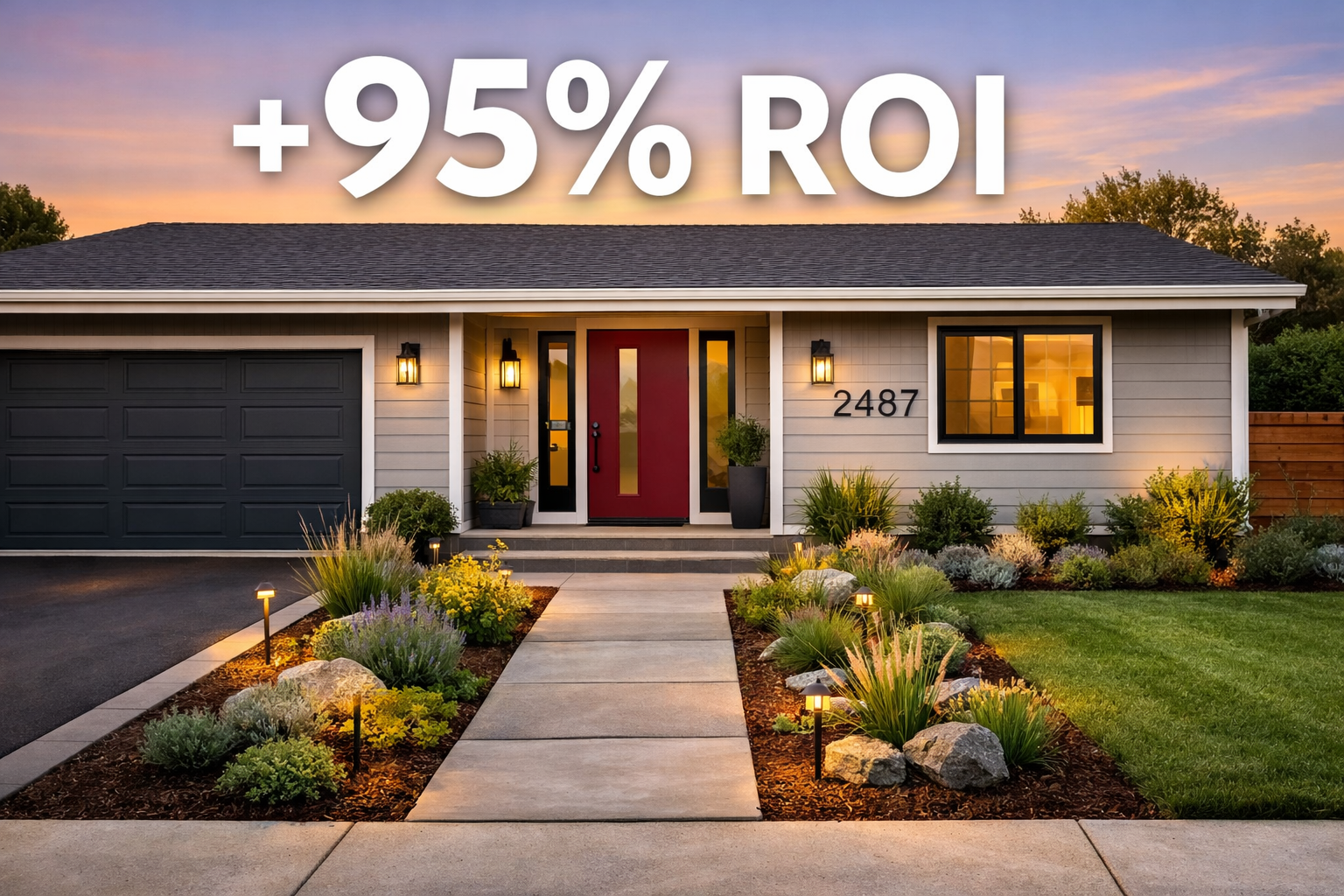
Curb appeal delivers the highest ROI of any renovation category, yet it’s often overlooked by sellers focused on interior upgrades. Gen Z buyers scroll through hundreds of listings online—properties with strong curb appeal get clicked, viewed, and offered on. Properties with weak exteriors get skipped, regardless of interior quality.
High-impact curb appeal upgrades:
- Front door replacement (fiberglass, bold color): $1,200-$2,500
- Professional landscaping (native plants, mulch): $1,500-$3,500
- Exterior lighting (path lights, door fixtures): $400-$800
- House numbers (modern, oversized): $50-$150
- Mailbox replacement: $100-$300
- Pressure washing (siding, driveway, walkway): $300-$600
- Fresh exterior paint or stain: $2,000-$5,000
Total investment: $5,550-$12,850
Expected ROI: 90-95%
Resale value increase: $8,000-$18,000
The psychology is real: First impressions form in 7-10 seconds. Online listing photos capture that moment. If your exterior looks tired, buyers assume the interior and systems are equally neglected—even if you’ve renovated everything inside.
Gen Z-specific preferences:
- Bold front door colors (navy, burgundy, forest green—not red or yellow)
- Modern house numbers (large, minimalist, well-lit)
- Native, low-maintenance landscaping (not water-intensive lawns)
- Outdoor lighting that’s visible in evening photos
- Clean, defined edges (mulched beds, trimmed hedges, edged walkways)
Budget breakdown by priority:
Tier 1 (Must-do, $1,000-$2,000):
- Pressure wash everything
- Fresh mulch in beds
- Trim overgrown shrubs
- Replace worn doormat and hardware
- Add/update house numbers
Tier 2 (High-impact, $2,000-$4,000):
- Paint or replace front door
- Install new outdoor lighting
- Edge and define planting beds
- Add seasonal flowers or plants
Tier 3 (Maximum impact, $4,000-$8,000):
- Professional landscaping redesign
- Exterior paint refresh (if needed)
- Upgrade mailbox and fixtures
- Add pathway lighting
DIY opportunity: Most curb appeal work is DIY-friendly. Pressure washing, mulching, planting, and painting can be done over 2-3 weekends for $800-$1,500 in materials. Labor savings: $2,000-$4,000. ROI on DIY curb appeal often exceeds 150%.
Seasonal timing: Complete curb appeal work 2-4 weeks before listing. This allows plants to establish, paint to cure, and everything to look fresh—not brand new. Gen Z buyers are suspicious of last-minute cosmetic fixes that might hide problems.
Photography matters: Hire a professional real estate photographer ($200-$400) to capture your enhanced curb appeal. The investment pays for itself in faster sales and higher offers. Gen Z buyers make viewing decisions based on photos—amateur iPhone shots don’t cut it.
For rental properties, curb appeal reduces vacancy periods by 20-30%. Properties that look well-maintained attract better tenants who treat the property with respect. The $3,000 you spend on landscaping and exterior updates saves $1,500-$2,500 in vacancy costs and reduces turnover.
Learn more about spring home selling strategies that maximize curb appeal impact.
8. Open Floor Plan Creation: The $20,000-$40,000 Value Add
Gen Z buyers overwhelmingly prefer open-concept layouts that facilitate social interaction and flexible furniture arrangement. Removing walls between kitchen, dining, and living areas remains one of the best home renovations for properties with choppy, closed-off floor plans. The transformation is dramatic, and buyers notice immediately.
Wall removal costs:
- Structural engineer assessment: $500-$1,000
- Non-load-bearing wall removal: $1,200-$3,000 per wall
- Load-bearing wall removal with beam: $3,500-$10,000 per wall
- Electrical/HVAC rerouting: $1,000-$3,000
- Flooring transition work: $800-$2,000
- Drywall finishing and paint: $1,500-$3,000
Total investment: $8,500-$22,000
Expected ROI: 60-75%
Resale value increase: $20,000-$40,000
Critical warning: Never remove walls without professional assessment. Load-bearing walls require engineered beams and proper support—DIY removal can cause catastrophic structural failure. Hire a structural engineer ($500-$1,000) before any demolition. This isn’t optional.
Best candidates for wall removal:
- Wall between kitchen and dining room
- Wall between living room and dining room
- Wall creating small, enclosed den or office
- Partial walls or columns that interrupt sight lines
Poor candidates for wall removal:
- Walls containing plumbing stacks (expensive to reroute)
- Walls with HVAC ductwork (complex to relocate)
- Walls providing necessary privacy (bedroom/bathroom walls)
- Walls in homes with already-open layouts
Gen Z perspective: Open floor plans enable multi-functional use. The same space hosts dinner parties, remote work, exercise, and entertainment. Younger buyers value flexibility over formal, single-purpose rooms. They’d rather have one large, adaptable space than three small, rigid rooms.
Design consideration: Install a support beam with decorative casing rather than leaving exposed steel. Cost difference: $500-$1,200. Visual impact: significant. The beam becomes an architectural feature rather than an industrial eyesore.
Lighting strategy: Open floor plans require layered lighting to define zones. Install:
- Recessed lights throughout (general illumination)
- Pendant lights over kitchen island (task + visual anchor)
- Floor or table lamps in living area (ambient + flexibility)
This lighting approach costs $1,500-$3,500 but prevents the “bowling alley” effect of one large, undefined space.
Flooring continuity: Use the same flooring material throughout the open area. Transitions between different flooring types visually chop the space and reduce the open-concept benefit. Budget $3,000-$8,000 for continuous LVP or hardwood flooring.
Permit requirements: Most wall removals require building permits ($200-$800). Unpermitted work creates title issues at sale and can force expensive corrections. Pull permits, pass inspections, and document everything. Gen Z buyers request permit records—don’t give them reasons to walk away.
For rental properties, open floor plans justify 8-12% rent premiums and attract younger tenants who prioritize modern layouts. The investment pays back through higher rents and reduced vacancy periods.
9. Fresh Paint and Flooring: The 100%+ ROI Foundation
Paint and flooring updates deliver extraordinary returns because they’re relatively inexpensive yet transform entire properties. Gen Z buyers want move-in ready homes with neutral, contemporary finishes—not projects requiring immediate work. The best home renovations often start with these foundational updates that make everything else look better.
Interior paint costs:
- Professional painting (entire home): $3,000-$6,000
- Premium paint (Sherwin-Williams, Benjamin Moore): Included in labor
- Accent walls or special finishes: $200-$500 additional
Flooring costs:
- Luxury Vinyl Plank (LVP): $3-$7 per sq ft installed
- Engineered hardwood: $6-$12 per sq ft installed
- Carpet (bedrooms only): $2-$5 per sq ft installed
- Typical home (1,500 sq ft): $4,500-$10,500 for flooring
Combined investment: $7,500-$16,500
Expected ROI: 100-150%
Resale value increase: $12,000-$25,000
Color strategy for Gen Z buyers:
Wall colors:
- Main areas: Agreeable Gray, Repose Gray, Swiss Coffee (warm neutrals)
- Accent walls: Navy, forest green, burgundy (one per home maximum)
- Avoid: Beige, yellow, orange, purple, bright colors
Flooring choices:
- Best: Medium-tone LVP (gray-brown, not orange-brown)
- Good: Light oak or maple engineered hardwood
- Avoid: Dark espresso (shows scratches), red-toned wood (dated), laminate (cheap appearance)
Why LVP dominates: Luxury Vinyl Plank costs 40-60% less than hardwood, is 100% waterproof, requires zero maintenance, and looks nearly identical to real wood. Gen Z buyers appreciate the practicality and cost savings. They’re not impressed by “real hardwood”—they’re impressed by smart material choices.
Paint finish guide:
- Walls: Eggshell or satin (easy to clean, slight sheen)
- Trim and doors: Semi-gloss (durability, visual contrast)
- Ceilings: Flat white (hides imperfections)
Pro tip: Paint ceilings and trim bright white (not cream or off-white). This creates crisp, modern contrast that Gen Z buyers associate with new construction. Cost difference: $0. Visual impact: significant.
DIY potential: Painting is highly DIY-friendly for investors with time. Materials cost $500-$1,000 for a typical home. Labor savings: $2,500-$5,000. Flooring installation requires more skill—consider DIY for small areas (bathrooms, closets) and professional installation for main spaces.
Timing strategy: Complete paint and flooring before any other renovations. These updates protect your investment in other upgrades and allow accurate staging and photography. Don’t install new countertops and appliances, then paint around them—that’s backwards.
Rental property math: Fresh paint and flooring justify 10-15% rent increases and reduce vacancy periods by 30-40%. A $10,000 investment that increases monthly rent by $150 pays for itself in 67 months (5.6 years) while dramatically improving tenant quality and retention.
Edge case: If existing hardwood floors are in decent condition, consider refinishing ($2-$4 per sq ft) instead of replacement. Cost for 1,500 sq ft: $3,000-$6,000. This preserves original character while achieving the fresh appearance Gen Z buyers want.
Check our complete home renovation guide for additional paint and flooring strategies.
10. Sustainable Material Upgrades: The 15-25% Premium Generator
Gen Z buyers are willing to pay significant premiums for verified sustainable renovations with measurable energy savings. This isn’t greenwashing—it’s documented efficiency that reduces monthly costs and environmental impact. The best home renovations in 2026 include sustainability certifications that command higher prices and faster sales.
High-ROI sustainable upgrades:
- LED lighting throughout: $300-$800
- Low-flow plumbing fixtures: $400-$1,000
- Programmable/smart thermostat: $200-$300
- Insulation upgrades (attic, walls): $2,000-$5,000
- Energy Star appliances: $3,000-$6,000
- Solar panels (if applicable): $15,000-$30,000
- Tankless water heater: $2,500-$4,500
Total investment (without solar): $8,400-$17,600
Expected ROI: 50-70% + 15-25% sale price premium
Annual utility savings: $600-$1,200
Certification matters: Gen Z buyers specifically look for:
- Energy Star certification (appliances, windows, HVAC)
- WaterSense labels (toilets, faucets, showerheads)
- LEED or Green Built certification (whole-home)
- Home Energy Score (DOE program, 1-10 scale)
These certifications aren’t marketing fluff—they’re verifiable standards that Gen Z buyers research and value. Properties with documented efficiency sell 20-30% faster than comparable homes without certifications.
Solar panel consideration: Solar installations deliver 40-60% ROI at resale but provide ongoing energy savings that effectively increase property affordability. A $20,000 solar system that eliminates a $150 monthly electric bill makes the property $150/month more affordable—equivalent to $30,000-$40,000 in additional buying power at current mortgage rates.
Gen Z-specific sustainability priorities:
- Measurable savings (not just “eco-friendly” claims)
- Low-maintenance solutions (not complicated systems)
- Modern aesthetics (not crunchy-granola appearance)
- Smart home integration (monitoring and control)
- Verified certifications (not self-reported efficiency)
Material choices:
- Countertops: Recycled glass or paper composite (not plastic laminate)
- Flooring: Bamboo or cork (not vinyl, despite LVP popularity elsewhere)
- Insulation: Recycled denim or cellulose (not fiberglass)
- Paint: Zero-VOC formulas (not standard paint)
- Cabinets: FSC-certified wood (not particle board)
Cost-benefit reality check: Sustainable materials often cost 10-30% more than conventional options. A kitchen with recycled glass countertops costs $4,500 vs. $3,500 for quartz. But Gen Z buyers will pay $8,000-$12,000 more for the property if sustainability is documented and marketed correctly.
Marketing strategy: Create a sustainability fact sheet listing:
- All Energy Star appliances with model numbers
- Annual energy costs (utility bills from past year)
- Water usage reduction percentages
- Certifications and verification documents
- Estimated monthly savings vs. comparable homes
This $0 document increases perceived value by $10,000-$20,000 because it transforms vague “green features” into concrete financial benefits.
Utility rebate opportunities: Many municipalities offer rebates for:
- Heat pump installations: $500-$2,000
- Insulation upgrades: $200-$1,000
- Energy Star appliances: $50-$200 per appliance
- Solar installations: 26% federal tax credit (2026)
These incentives can reduce net investment by 20-40%, dramatically improving ROI calculations.
For rental properties, sustainable features justify 8-12% rent premiums while reducing operating costs. Lower utility bills mean happier tenants and fewer complaints. The investment pays back through both higher rents and lower expenses.
Learn more about sustainable design trends that Gen Z buyers prioritize.
How to Prioritize Renovations with Limited Capital
First-time investors and passive income seekers rarely have unlimited budgets. Prioritizing the best home renovations requires strategic thinking about ROI, market positioning, and buyer psychology. Here’s how to maximize impact with limited capital:
Priority Framework:
Tier 1: Foundation (Must-do, $5,000-$15,000)
- Fresh paint (neutral colors throughout)
- Deep cleaning and decluttering
- Curb appeal basics (landscaping, front door)
- Minor repairs (leaky faucets, broken fixtures)
- Professional photography
These updates cost the least but deliver the highest ROI. They’re non-negotiable for competitive positioning.
Tier 2: Competitive Positioning ($10,000-$30,000)
- Flooring updates (LVP in main areas)
- Kitchen refresh (paint cabinets, new hardware, countertops)
- Bathroom updates (fixtures, lighting, mirrors)
- Smart home basics (thermostat, doorbell, locks)
These renovations move your property from “acceptable” to “desirable” in Gen Z buyers’ eyes.
Tier 3: Premium Positioning ($30,000-$60,000)
- Full kitchen renovation
- Full bathroom renovation
- Energy-efficient windows
- Home office conversion
- ADU development (if applicable)
These upgrades command premium prices and attract serious buyers with strong financing.
Decision rules:
- Choose Tier 1 if: Property is in good condition but dated; you need quick sale; budget is under $15,000
- Choose Tier 2 if: Property needs modernization; you want competitive positioning; budget is $15,000-$30,000
- Choose Tier 3 if: Property needs major updates; you’re targeting premium buyers; budget exceeds $30,000
Market-specific adjustments:
- Hot markets: Focus on Tier 1 and minimal Tier 2. Properties sell regardless—don’t over-improve.
- Balanced markets: Complete Tier 1 and selective Tier 2 based on comparable properties.
- Slow markets: Consider Tier 3 upgrades to differentiate from competition.
Financing options for renovations:
- Cash: Best option if available (no interest costs)
- Home equity line of credit (HELOC): 7-9% rates, flexible draw schedule
- 203(k) renovation loan: FHA-backed, includes purchase + renovation
- Personal loan: 10-15% rates, quick approval, no collateral
- Credit cards: Last resort, 18-25% rates, only for small projects
ROI calculation formula:
ROI = (Resale Value Increase - Renovation Cost) / Renovation Cost × 100
Example: $15,000 kitchen renovation increases value by $22,000
ROI = ($22,000 – $15,000) / $15,000 × 100 = 46.7%
Time-to-sale consideration: Fast sales reduce carrying costs (mortgage, insurance, utilities, taxes). A renovation that costs $20,000 but sells the property 60 days faster saves $3,000-$5,000 in carrying costs—effectively increasing ROI by 15-25%.
Common mistake: Over-improving for the neighborhood. A $60,000 kitchen renovation in a $250,000 neighborhood won’t return full value. Match renovation quality to neighborhood standards—don’t exceed them by more than 10-15%.
For detailed renovation budgeting, check our 60-day home selling checklist with AI-powered cost estimation tools.
Common Renovation Mistakes That Kill ROI
Even the best home renovations can fail if executed poorly. Gen Z buyers are research-savvy and spot these mistakes immediately:
❌ Mistake #1: Following Trends Instead of Timeless Design
TikTok and Instagram showcase bold, trendy designs that look fresh now but date quickly. Checkerboard floors, colorful grout, and statement tile might generate likes online but reduce resale appeal. Stick to neutral, transitional styles that age well.
✅ Fix: Choose removable trend elements (rugs, artwork, furniture) and permanent neutral foundations (flooring, countertops, cabinets).
❌ Mistake #2: DIY Projects Beyond Your Skill Level
YouTube makes everything look easy. Reality: electrical work, plumbing, and structural modifications require professional expertise. Failed DIY projects cost 2-3× more to fix than professional installation costs upfront.
✅ Fix: DIY paint, landscaping, and cosmetic updates. Hire licensed professionals for electrical, plumbing, HVAC, and structural work.
❌ Mistake #3: Skipping Permits
Unpermitted work creates title issues, insurance problems, and legal liability. Gen Z buyers request permit records—unpermitted renovations can kill deals or force price reductions of $10,000-$30,000.
✅ Fix: Pull permits for all structural, electrical, plumbing, and HVAC work. Budget $500-$2,000 for permit costs and inspections.
❌ Mistake #4: Ignoring Market Comparables
Renovating without researching comparable properties leads to over-improvement or under-improvement. Both kill ROI.
✅ Fix: Tour 5-10 recently sold properties in your price range. Match or slightly exceed their finish quality—don’t dramatically exceed it.
❌ Mistake #5: Cheap Materials That Look Cheap
Laminate countertops, vinyl flooring (not LVP), and builder-grade fixtures scream “budget renovation.” Gen Z buyers notice and discount offers accordingly.
✅ Fix: Invest in mid-grade materials that look premium. Quartz countertops, LVP flooring, and brushed nickel fixtures cost 20-30% more than budget options but deliver 100%+ better ROI.
❌ Mistake #6: Forgetting About Lighting
Dark rooms photograph poorly and feel smaller. Inadequate lighting is the #1 complaint in home tours.
✅ Fix: Install recessed LED lighting ($150-$300 per room). Add dimmer switches ($30-$50 each). Use 3,000K-4,000K color temperature (warm white, not yellow or blue).
❌ Mistake #7: Renovating in Wrong Order
Painting after installing new flooring. Installing countertops before painting cabinets. These sequencing mistakes damage new materials and require expensive repairs.
✅ Fix: Correct renovation order:
- Structural work (walls, windows, doors)
- Electrical and plumbing rough-in
- Insulation and drywall
- Paint (walls, ceilings, trim)
- Flooring
- Cabinets and countertops
- Fixtures and hardware
- Final cleaning and staging
❌ Mistake #8: Neglecting Outdoor Spaces
Gen Z buyers value outdoor living areas for entertaining and relaxation. Neglected yards and patios reduce perceived value by $5,000-$15,000.
✅ Fix: Budget $2,000-$5,000 for patio furniture, outdoor lighting, and landscaping. The ROI on outdoor spaces is 80-100%.
Learn about red flags in contracting to avoid renovation disasters.
Frequently Asked Questions
What home renovations add the most value in 2026?
Kitchen modernization (75-85% ROI), bathroom updates (60-70% ROI), and curb appeal enhancements (90-95% ROI) deliver the highest returns. Gen Z buyers specifically prioritize smart home integration, energy efficiency, and income-generating spaces like ADUs.
How much should I budget for renovations before selling?
Budget 3-5% of home value for basic updates (paint, flooring, landscaping) or 8-12% for competitive positioning (kitchen, bathrooms, smart home). A $300,000 home needs $9,000-$15,000 for basic updates or $24,000-$36,000 for comprehensive renovations.
Do smart home features really increase home value?
Yes. Properties with smart home integration sell 30% faster and command 2-3% price premiums. While ROI is 40-60%, the competitive advantage and reduced time-to-sale justify the $2,000-$5,000 investment.
Should I renovate before selling or sell as-is?
Renovate if your property is dated or needs repairs to compete. Sell as-is only if the market is hot enough that buyers will overlook cosmetic issues. In most 2026 markets, basic renovations (paint, flooring, landscaping) are essential for competitive pricing.
What renovations do Gen Z buyers care about most?
Gen Z buyers prioritize: (1) Smart home integration, (2) Energy efficiency with verified certifications, (3) Modern, move-in ready finishes, (4) Income-generating potential (ADUs), (5) Home office spaces, (6) Sustainable materials with measurable savings.
How long do renovations take before listing?
Basic cosmetic updates (paint, flooring, landscaping): 2-4 weeks. Kitchen or bathroom renovation: 4-8 weeks. Major renovations (multiple rooms, structural work): 8-16 weeks. Plan accordingly to hit optimal listing seasons (spring and fall).
Can I DIY renovations to save money?
DIY paint, landscaping, and minor cosmetic work to save 40-60% on labor. Hire professionals for electrical, plumbing, HVAC, structural, and flooring work. Failed DIY projects cost 2-3× more to fix than professional installation costs upfront.
What’s the best flooring for resale value?
Luxury Vinyl Plank (LVP) in medium-tone gray-brown delivers the best ROI. It costs 40-60% less than hardwood, is waterproof, requires zero maintenance, and appeals to Gen Z buyers who value practicality over traditional materials.
Should I get permits for renovation work?
Yes, always. Unpermitted work creates title issues, insurance problems, and legal liability. Gen Z buyers request permit records—unpermitted renovations can kill deals or force $10,000-$30,000 price reductions. Budget $500-$2,000 for permits and inspections.
How do I calculate ROI on home renovations?
ROI = (Resale Value Increase – Renovation Cost) / Renovation Cost × 100. Example: $10,000 bathroom renovation that increases value by $15,000 = ($15,000 – $10,000) / $10,000 × 100 = 50% ROI. Factor in time-to-sale reduction and carrying cost savings for complete picture.
Are ADUs worth the investment?
Yes, if local zoning allows and market supports rental rates of $1,200-$1,800/month. ADUs deliver 50-80% ROI at resale plus ongoing rental income. A $40,000 basement conversion generating $1,500/month pays for itself in 27 months while adding $50,000-$70,000 in property value.
What paint colors do Gen Z buyers prefer?
Warm neutrals like Agreeable Gray, Repose Gray, and Swiss Coffee for main areas. Navy, forest green, or burgundy for single accent walls. Avoid beige, yellow, orange, and bright colors. Gen Z buyers want neutral canvases they can personalize with removable decor.
Conclusion: Let It Cook Before You See Results
The best home renovations in 2026 aren’t about following trends—they’re about understanding what Gen Z buyers value and delivering it with precision. This generation approaches homeownership as both lifestyle choice and investment vehicle, demanding properties that generate returns through energy savings, rental income, and resale appreciation.
Your action plan:
Week 1-2: Research and Planning
- Tour 5-10 comparable properties in your target market
- Document finish quality, features, and pricing
- Calculate your renovation budget (3-12% of property value)
- Prioritize projects using the Tier framework above
- Get 3-5 contractor quotes for professional work
Week 3-6: Foundation Work
- Complete paint and flooring updates
- Address all deferred maintenance and repairs
- Enhance curb appeal (landscaping, front door, lighting)
- Install smart home basics (thermostat, doorbell, locks)
- Deep clean and declutter entire property
Week 7-12: Major Renovations (if applicable)
- Kitchen or bathroom updates
- Energy-efficient window installation
- Home office conversion
- ADU development
- Open floor plan creation
Week 13-14: Final Touches
- Professional photography
- Create sustainability fact sheet
- Document all permits and certifications
- Stage property for maximum appeal
- List at competitive price based on renovations
The math works: A $300,000 property with $25,000 in strategic renovations can sell for $340,000-$360,000 (13-20% increase) while reducing time-to-sale by 30-45 days. Net profit after renovation costs: $15,000-$35,000. For rental properties, the same renovations justify 10-15% rent increases that pay back the investment in 4-6 years while building equity.
Final thought: Gen Z buyers aren’t gatekeeping their preferences—they’re broadcasting them across social media, in agent conversations, and through their purchasing decisions. The data is fresh, the trends are clear, and the opportunity is extraordinary for investors who execute strategically.
We’ve spent over 15 years in real estate, handling everything from million-dollar luxury listings to helping first-time buyers navigate tight markets. The Gen Z shift is the most significant buyer preference change we’ve seen since Millennials entered the market. Properties that align with these preferences sell faster, command higher prices, and generate better returns—period.
Ready to dive deeper? Explore our complete investment hub for rental property analysis, fix-and-flip strategies, and portfolio building guidance. Check out current market trends to time your renovations with optimal selling seasons. And if you’re targeting Gen Z buyers specifically, our mortgage options guide explains how this generation finances purchases—critical knowledge for pricing and positioning your renovated property.
The market rewards preparation. Start planning your renovations today, and let it cook before you see results. The ROI will speak for itself.
Need expert guidance? Contact Real Estate Rank IQ at news@realestaterankiq.com for personalized renovation strategies, market analysis, and investment planning. Our team of licensed brokers with over 15 years of experience is here to help you maximize returns in today’s Gen Z-driven market.